The X-Files (1993–2002; 2016–2018, USA)
Quick Facts
| Title | The X-Files |
| Years | 1993–2002; revival seasons in 2016 and 2018 |
| Creator | Chris Carter |
| Directors | Multiple episodic directors. The pilot was directed by Robert Mandel; major recurring directors included Rob Bowman, Kim Manners, David Nutter and R. W. Goodwin |
| Writers | Chris Carter, Glen Morgan, James Wong, Darin Morgan, Vince Gilligan, Frank Spotnitz, Howard Gordon, John Shiban and others |
| Principal cast | David Duchovny, Gillian Anderson, Mitch Pileggi, William B. Davis, Robert Patrick and Annabeth Gish |
| Format and runtime | 11 seasons, 218 episodes, generally about 45 minutes per episode. Two related theatrical films were also produced |
| Country | United States |
| Production locations | Principally Vancouver for the first five seasons, followed by Los Angeles during the later original run |
| Genre | Science fiction, horror, paranormal procedural, conspiracy thriller, dark comedy |
| Original network and production companies | Fox; 20th Century Fox Television (now Disney); Ten Thirteen Productions |
| Current availability | Territory-dependent. Disney+ lists the series as 1993–2018 across 11 seasons, while Pluto TV stated in March 2026 that all 218 episodes were available on demand and through a dedicated channel. (Disney+) |
| Release status | Concluded. A separate Ryan Coogler-led Hulu pilot completed production in 2026, starring Danielle Deadwyler and Himesh Patel. It is not treated here as a twelfth season and is not included in the rating. (EW.com) |
| Source material | Original television property drawing on earlier horror, UAP, conspiracy, procedural and Fortean traditions |
| Review type | Retrospective critical review and cultural analysis |
| Review basis | The released series, representative episodes, official production material, creator and crew interviews, contemporary criticism, archival UAP records and scholarship. |
The Basement as a Theory of America
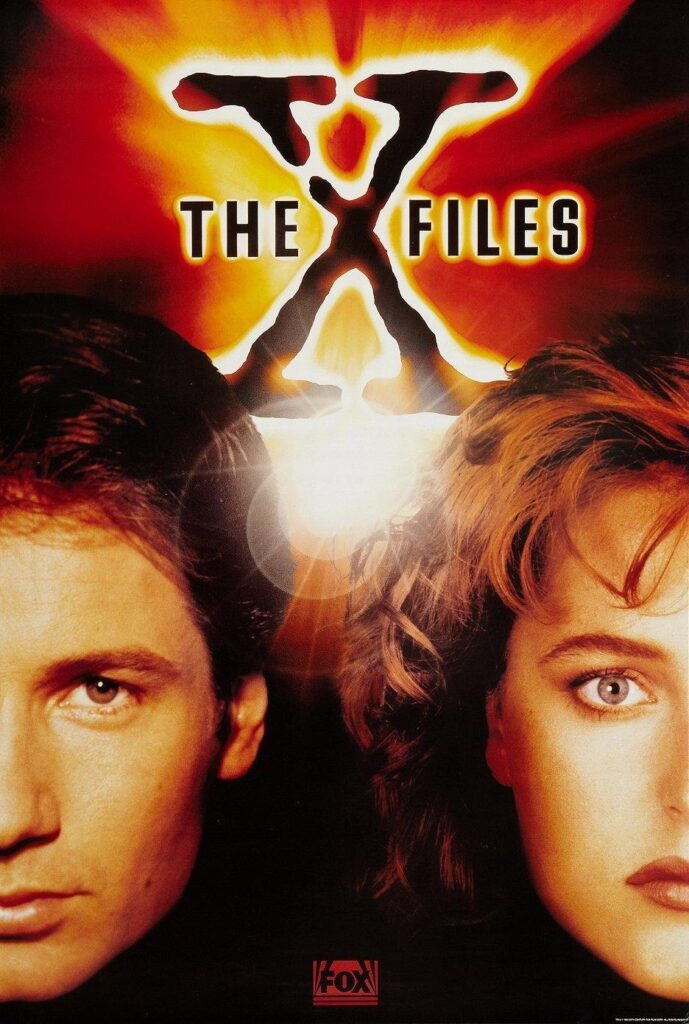
A frightened witness describes something impossible. Dana Scully asks what evidence survived. Fox Mulder asks who had the means and motive to make the rest disappear. An anomalous object flashes across the sky, but the photograph is blurred. An autopsy yields a strange implant, but the sample is stolen. A source offers privileged information, yet may be manipulating the investigation. Every revelation arrives with an expiration date.
That structure became so familiar that it is easy to overlook how radical it felt in network television. The X-Files did not simply alternate between belief and scepticism. It built a weekly drama around the instability of knowledge itself. Evidence could be incomplete without being meaningless. A witness could be traumatised without being delusional. An official denial could be accurate, deceptive, compartmentally sincere or technically true while concealing a larger programme. Mulder could identify the right category of anomaly for the wrong reasons. Scully could reach the wrong final answer while applying the better method.
The central judgment of this review is that The X-Files is strongest when Mulder’s openness and Scully’s discipline correct one another. It is weakest when the series allows every contradiction, missing document or failed prediction to become proof of an even larger conspiracy. At its best, it dramatises epistemic humility. At its worst, it constructs a belief system that cannot be falsified.
That tension makes it indispensable to UAP cultural history. The programme is not evidence for recovered NHI technology, alien colonisation, abduction or a hidden transnational syndicate. It is fiction. Yet fiction can shape the questions a culture knows how to ask, the images it associates with secrecy, and the emotional expectations it brings to real testimony. The X-Files did all three on an extraordinary scale.
From Kolchak to a Basement Office
The series emerged from a specific television environment. Fox was still a comparatively young network when it commissioned the project. Chris Carter had worked as a journalist and television writer, but he was not yet associated with dark speculative drama. Carter’s documented formative influences included The Twilight Zone and, most decisively, Kolchak: The Night Stalker, in which a persistent reporter investigates monsters and supernatural crimes while repeatedly encountering denial and institutional obstruction.
That ancestry matters. The series did not invent the monster-of-the-week structure, the lone investigator or the official cover-up. Its innovation was to combine those elements with the grammar of a serious police procedural. Mulder and Scully did not arrive carrying wooden stakes or occult grimoires. They carried badges, firearms, pathology reports, rental-car keys and travel authorisations. The paranormal entered through chain-of-custody forms and autopsy rooms.
Vancouver, chosen partly for production economics, supplied the early series with much of its identity. Rain, forests, industrial margins, anonymous institutional corridors and a low northern light gave the first five seasons a damp, unsettled beauty. The city could impersonate dozens of American locations without ever ceasing to feel like a borderland. The subsequent move to Los Angeles expanded the visual palette and enabled brighter, more playful episodes, but it also weakened the sense that every ordinary town sat beside an ancient forest capable of swallowing evidence.
The show also found an audience unusually early in online fan culture. Viewers debated mythology clues, tracked production details, exchanged interpretations and helped establish participatory habits that would later become normal around serial television.
Institutional recognition followed. The X-Files received 61 Emmy nominations and won 15, while its 1996 Peabody Award recognised its fusion of the paranormal, character drama and questions about science, spirituality and government conduct.
The response was never unanimous. Tom Shales’s contemporary review of the pilot found its irresolution frustrating and doubted the series’ prospects. That reaction is revealing. What one critic regarded as narrative incompleteness soon became the programme’s signature pleasure. By the mid-1990s, however, the danger was already visible: repeated ambiguity could create atmosphere, but it could also conceal narrative exhaustion.
Television Lit Like a Crime Scene
The cinematography is the first reason The X-Files still works.
Early director of photography John Bartley has described how unusually dark the series looked by contemporary television standards. Scenes routinely preserve areas of near-blackness and allow flashlights, headlights, desk lamps or surgical fixtures to reveal only fragments of a location. The effect is more than decorative gloom. It makes incomplete perception part of the drama.
The familiar flashlight beam serves almost as a visual theory of inquiry. It illuminates one narrow section while emphasising the surrounding darkness. A conventional police procedural gradually reduces uncertainty until a suspect can be named. The X-Files often ends with the illuminated area shrinking again. The body is gone. The specimen is contaminated. A superior closes the file. The final image belongs to someone watching from outside the agents’ field of view.
Mark Snow’s music performs a similar function. The title theme’s whistle is iconic, but the episodic scores are just as important: electronic pulses, suspended tones, choral textures and sounds that resemble machinery heard through a wall. The score rarely tells us simply to be frightened. It tells us that the visible world may have another frequency underneath it.
The other essential effect is quieter: David Duchovny and Gillian Anderson’s control. Mulder’s humour prevents him from becoming only a prophetic obsessive. Scully’s reserve prevents scepticism from becoming smugness. Their intimacy develops through attention rather than declarations. She listens when his theories become expressions of grief. He recognises that her demand for evidence is not cowardice but professional integrity.
The series is also more formally adventurous than its reputation as a grim conspiracy drama suggests. It can become a rural Gothic, a courtroom puzzle, an ecological horror story, a religious mystery, a body-horror film, a black comedy or a self-reflexive parody without abandoning its central pair. Darin Morgan’s episodes in particular expose Mulder’s vanity, the instability of eyewitness memory and the absurdity of treating every mystery as confirmation of one’s preferred theory.
The weaknesses are equally visible. Mythology episodes increasingly rely on solemn corridors, cryptic speeches and delayed explanations. Exposition is mistaken for revelation. Villains speak as though clarity would violate a security oath imposed by the screenplay. The self-contained episodes usually age better because they can preserve ambiguity without carrying the burden of resolving years of serial promises.
Spoiler Notice
The following sections discuss major character developments, the broad direction of the mythology, Scully’s abduction and reproductive storyline, and the revival’s handling of the conspiracy. They avoid disclosing every final resolution, but viewers seeking a completely unspoiled first experience should return after watching the series.
Two Shows Sharing One X
The premise is simple enough to survive almost any genre experiment. Fox Mulder is an exceptional FBI profiler whose belief in anomalous phenomena is tied to the childhood disappearance of his sister. Dana Scully is a physician and FBI agent assigned to evaluate his work. Together they investigate files involving unexplained deaths, apparent UAP encounters, alleged abductions, cryptids, psychic events, religious manifestations, experimental technology and other phenomena rejected or neglected by ordinary investigative channels.
Within that premise are two programmes.
The first is the continuing mythology. It concerns extraterrestrial NHI, abductees, hybrids, biological agents, clandestine experiments and a group of human collaborators usually called the Syndicate. Informants offer fragments of the truth. Evidence is destroyed. Mulder’s family history becomes entangled with state secrecy. Scully moves from external evaluator to direct participant after her own abduction, illness and reproductive trauma.
The second programme consists of largely self-contained investigations. These include creatures, ghosts, genetic mutations, psychic killers, artificial intelligence, folklore, religious mysteries and phenomena that do not fit the extraterrestrial framework. Later seasons bring John Doggett and Monica Reyes into the investigative team, altering the believer-sceptic balance without reproducing it exactly. The 2016 and 2018 revival seasons return Mulder and Scully to the files, sometimes with remarkable creative energy and sometimes with a mythology that appears to be arguing with its own continuity.
The Phenomenon Model: Extraterrestrial at the Centre, Everything at the Edges
The series’ dominant NHI model is extraterrestrial, but its overall cosmology is multiple and ambiguous.
The central mythology proposes technologically advanced beings, long-term biological intervention, competing non-human factions, hybridisation and human collaboration. It borrows imagery from postwar contact and abduction traditions: missing time, medical examination, implants, reproductive procedures, screen memories, luminous craft and government retrieval teams. It then adds Cold War laboratories, intelligence tradecraft and fears of biotechnological control.
Around that extraterrestrial core, however, exists a much less orderly anomalous ecology. Some entities are biological cryptids. Others appear spiritual, demonic, psychic, folkloric, interdimensional or generated by human consciousness. Certain episodes suggest that belief can shape manifestation. Others treat anomalous cognition as an innate human capacity. Still others locate the terror entirely in military experimentation, genetic engineering or artificial intelligence.
This breadth is one of the programme’s pleasures, but it should not be mistaken for a coherent theory. The X-Files regularly collapses distinctions that responsible investigation would preserve. A UAP event, a haunting, an alleged miracle, an unusual animal and a parapsychological effect do not become one phenomenon merely because they are unexplained. The show’s basement filing system is dramatically convenient, not a scientifically useful taxonomy.
Its most sophisticated UAP episode may be “Jose Chung’s ‘From Outer Space.’” Rather than asking which witness possesses the complete truth, it presents memory as vulnerable to fear, authority, suggestion, self-dramatisation and deliberate disinformation. Military personnel, alleged abductees, investigators and storytellers construct incompatible versions of the same event. The episode does not ridicule the experience. It shows why sincerity alone cannot settle ontology.
That distinction is crucial. A person may honestly report missing time, beings, a luminous object or an altered state. The report is evidence that the experience was perceived and remembered. It is not by itself sufficient to determine whether the cause was extraterrestrial NHI, covert technology, sleep-related physiology, psychological trauma, deception, misidentification or another mechanism. “Jose Chung” turns this epistemic problem into comedy without treating every participant as foolish.
“Duane Barry” and “Ascension” approach the same issue through tragedy. Barry is unstable, dangerous and traumatised, but the narrative does not permit his psychiatric history to erase every anomalous detail. That is closer to good witness practice than the common habit of treating diagnosis, fear or social marginalisation as automatic disproof. At the same time, the episodes do not offer a clean evidentiary chain. The viewer is placed in the ethically difficult space between compassion and verification.
“Patient X” and “The Red and the Black” examine communities of contactees and abductees who are vulnerable both to ridicule and manipulation. “Deep Throat” places apparent UAP events beside secret aerospace programmes. “Clyde Bruckman’s Final Repose” treats anomalous cognition less as a superpower than as an unbearable form of knowledge. “Humbug” questions who has the right to designate another person a monster.
Across these episodes, the series’ best contribution is not a particular NHI hypothesis. It is an insistence that anomalous experience has psychological, social and moral consequences even when its cause remains unsettled.
Where the Fiction Meets the Public Record
Government records are useful here as primary evidence for what agencies documented, investigated or officially assessed. They should not be treated as automatically complete or dispositive accounts of the underlying phenomena. Official statements require comparison, where possible, with witnesses, independent records, sensor data, archival context and other evidence.
The fictional X-Files unit is one of popular culture’s most persistent distortions of American UAP history.
The FBI has maintained records connected with unexplained aerial reports, but its publicly released historical material describes the Air Force as the principal investigative body and the Bureau’s involvement as limited and intermittent. There is no publicly documented permanent FBI bureau equivalent to Mulder’s basement operation. That statement concerns the available public record, not a claim of exhaustive knowledge about every classified activity.
That does not make the government UAP investigation fictional. Project Blue Book and its predecessors were real Air Force programmes. National Archives material records 12,618 reports between 1947 and 1969, of which 701 remained classified as “Unidentified.” The Air Force’s institutional conclusion was that the investigated cases showed no evidence of extraterrestrial vehicles, a national-security threat or technology beyond contemporary scientific knowledge.
Those statements require careful interpretation. The number 701 is documented. It means those cases were not satisfactorily identified within the project’s available information and methodology. It does not, by itself, establish NHI. Conversely, an official conclusion is an institutional assessment, not a metaphysical proof that no extraordinary event could exist. The responsible position is narrower: the cited Blue Book record does not demonstrate that its unidentified cases were extraterrestrial craft.
The Majestic 12 papers offer an even clearer example of the difference between a document’s existence and its authenticity. The papers became enormously influential in UAP conspiracy culture and supplied the series with an evocative model of a secret elite overseeing retrievals and contact. National Archives research, however, identified serious provenance problems, including inconsistent markings, missing register information and the absence of corroborating records where researchers expected them to exist. The FBI has stated that an Air Force investigation considered the material fake.
Because advocates have continued to dispute that conclusion, the wider MJ-12 tradition remains contested as a cultural and historical subject. What the publicly available documentary record does not support is treating the circulating MJ-12 material as authenticated evidence of a secret NHI recovery committee.
Roswell is more complicated because it combines an authentic 1947 recovery event, changing military public statements, classified Cold War activity and later witness accounts.
The Air Force’s later investigations attributed the recovered debris to Project Mogul, a classified balloon-borne effort associated with monitoring Soviet nuclear activity. The Roswell Report: Case Closed, issued by the Air Force in 1997, also argued that some later accounts of bodies could have incorporated memories of anthropomorphic test dummies and subsequent military accidents.
Importantly, the dummy explanation concerns later body narratives rather than the original 1947 debris recovery. The Air Force account constitutes substantial documentary evidence for a terrestrial explanation, but its official status does not make it automatically conclusive. Some witnesses and researchers dispute whether the reports account satisfactorily for every later recollection.
No independently authenticated evidence identified in the public record reviewed here establishes recovery at Roswell of an NHI craft or body. The prudent classification is therefore Disputed, with the publicly documented evidence currently weighing toward terrestrial explanations rather than an authenticated NHI recovery.
Modern UAP investigation looks less like the Syndicate and more like a difficult data-management problem. In its FY2025 report, the All-domain Anomaly Resolution Office stated that it received 319 UAP reports and resolved 114 of them. (AARO)
What this does demonstrate is how much real investigation depends on observation geometry, satellite positions, sensor characteristics, collection bias, timing, metadata and corroboration. The real adversary is often not a man smoking in a Pentagon office. It is inadequate data.
The X-Files understands the emotional frustration of that problem. It usually misrepresents its scale. Where real cases may remain unresolved because information is absent or low quality, the series habitually interprets absence as successful suppression. That is dramatically powerful and methodologically dangerous.
Scully’s Method, Mulder’s Wound
The show’s enduring argument is embodied in its protagonists.
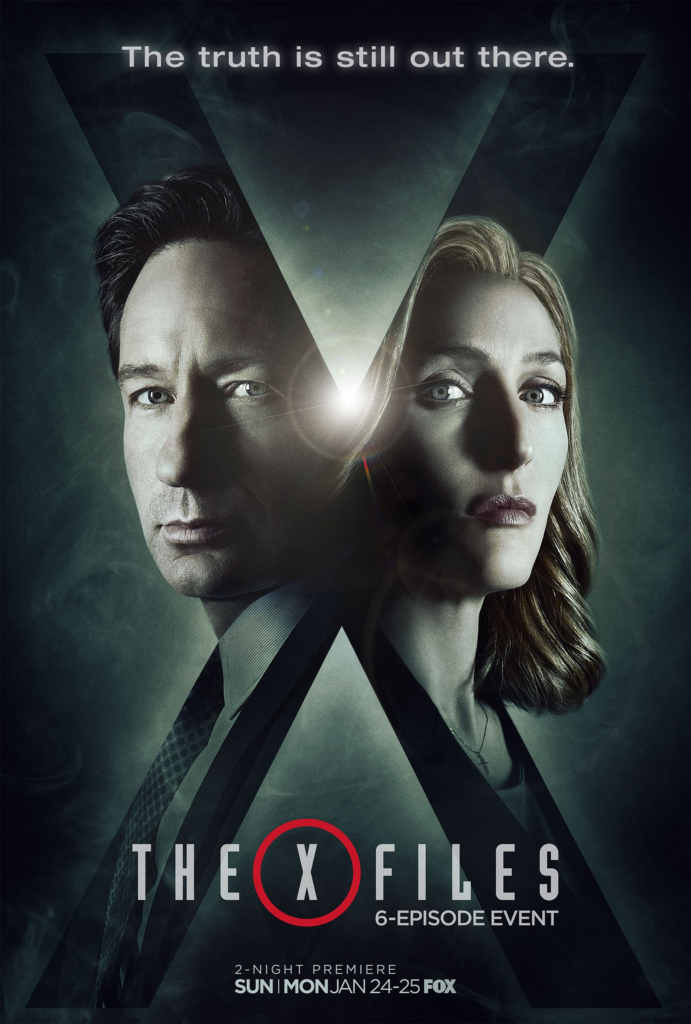
Mulder wants the anomalous explanation to survive premature dismissal. Scully wants it to survive testing. Mulder begins from possibility and searches for correspondence. Scully begins from what can be established and resists moving beyond it. Neither approach is sufficient alone.
Mulder is often ontologically right within the fiction: the monster, psychic ability or non-human presence usually exists. Scully is often methodologically right: the available evidence frequently does not justify Mulder’s exact theory when he first presents it. This distinction is why accusations that Scully is merely “wrong every week” misunderstand her function. Her task is not to guess the episode’s genre. It is to determine what could be defended before another investigator, court, laboratory or oversight body.
The series sometimes cheats this dialectic. Scully fails to see an entity that disappears seconds before she enters a room. Physical evidence evaporates after Mulder has privately observed it. Her scepticism is periodically maintained by staging rather than reasoning. Yet Gillian Anderson gives Scully enough intellectual and emotional continuity that the character rises above the mechanism.
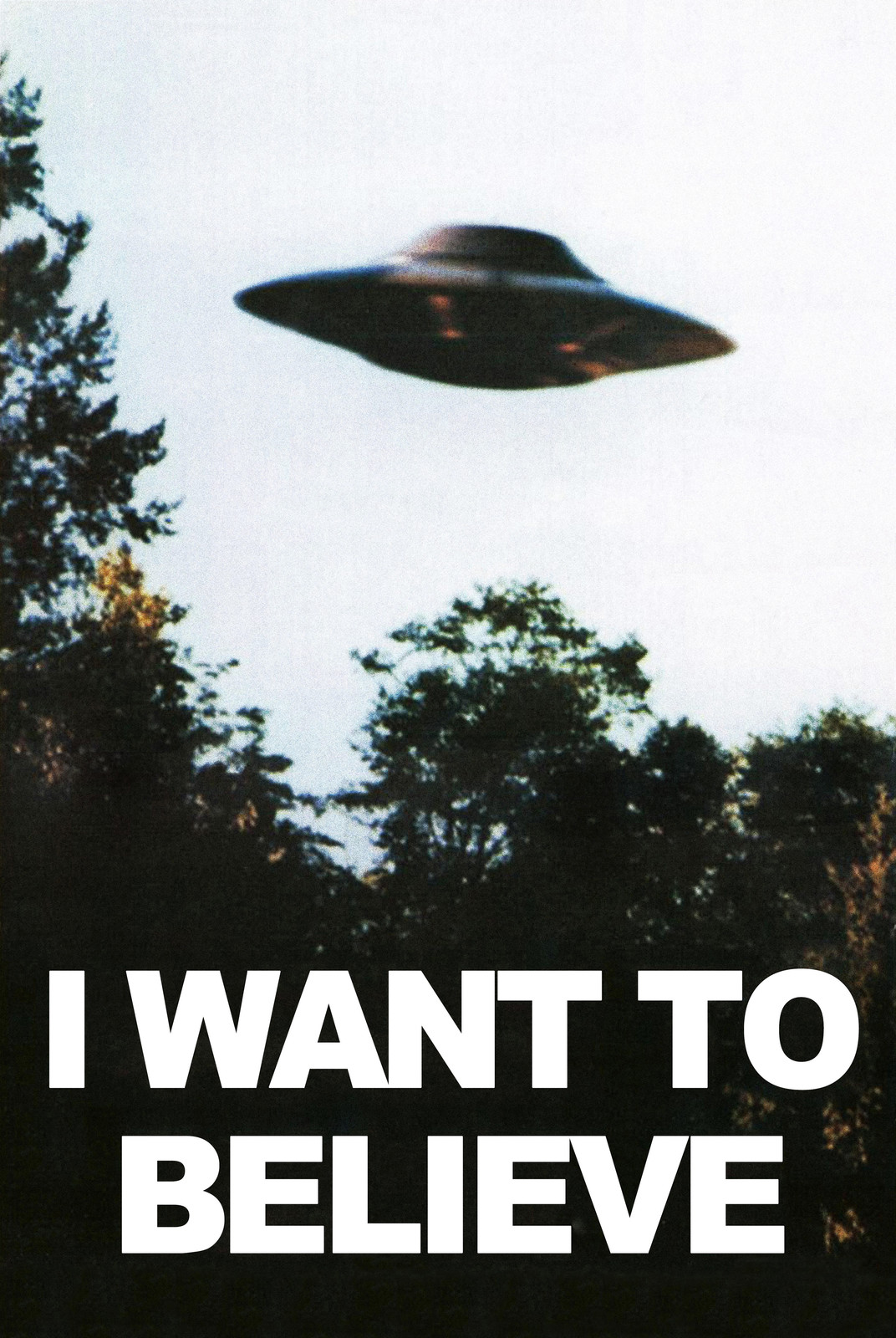
Mulder’s belief, meanwhile, is inseparable from grief. His sister’s disappearance gives an anomalous possibility a moral urgency. To abandon the search would not simply be to change a hypothesis. It would mean accepting that his suffering has no hidden resolution. The conspiracy exploits this vulnerability repeatedly. “I want to believe” is therefore not an innocent declaration of curiosity. It is both Mulder’s strength and the access point through which he can be manipulated.
Scully’s corresponding vulnerability is her trust that responsible institutions can, at least in principle, be made accountable to evidence. The series tests that trust through her abduction, cancer, infertility, pregnancy and the William storyline. Her body becomes a contested site between medicine, state power, religious symbolism and presumed NHI intervention.
This produces some of the programme’s most affecting work, but also one of its deepest ethical weaknesses. Scully’s reproductive trauma is repeatedly used to energise Mulder’s quest or extend the mythology. The revival intensifies the problem by revising paternity and consent in ways that reduce her agency. A character celebrated for intellectual authority is too often denied authority over the meaning of her own body.
That criticism does not erase Scully’s cultural importance. A 2018 survey conducted by the Geena Davis Institute, 21st Century Fox and J. Walter Thompson Intelligence questioned 2,021 American women aged 25 and older. Among respondents familiar with Scully, substantial majorities reported that she affected their perceptions of STEM and that they regarded her as a role model.
Those findings are meaningful but should not be overstated. The research depended on self-report and an opt-in sample, and it cannot demonstrate that exposure to the character caused a particular educational or career choice. “The Scully Effect” is therefore best classified as Probable cultural influence supported by converging testimony and survey evidence, rather than a precisely measured causal effect.
Scully’s larger importance is qualitative. She made scientific competence, scepticism, courage and spiritual complexity coexist in one prime-time woman. She did not need to abandon faith to practise medicine or abandon reason to care about Mulder. That remains a more sophisticated cultural intervention than many of the series’ extraterrestrial revelations.
Faith in a Lab Coat
Chris Carter has explicitly described The X-Files as a science show before a science-fiction show, with Scully functioning as the scientific anchor to Mulder’s more speculative thinking. In the same 2016 Smithsonian interview, he described science and religion as pursuing an ultimate question through different methods, one analytical and systematic and the other grounded in faith. (Smithsonian Magazine)
That philosophy is built into the protagonists.
Scully is a practising scientist whose Catholic formation remains emotionally and morally active. Mulder is less conventionally religious but invests enormous faith in hidden realities. When the subject is extraterrestrial life, Mulder is the believer and Scully the sceptic. When the case suggests a Christian miracle, demonic presence or divine action, their positions can reverse.
The result is not a simple battle between science and religion. It is a continuing inquiry into what each discipline recognises as evidence, what kinds of testimony it permits, and what emotional needs accompany belief.
Interpretation: Mulder’s search resembles a Grail quest in which proof is always one chamber farther inside the castle. Scully repeatedly occupies the structural position of the doubting witness who must confront events that exceed her preferred explanatory system. Her abduction, illness and reproductive storyline also draw on imagery of annunciation, sacrifice, resurrection and the contested sacred body.
These are critical readings of the narrative, not claims that Christian scripture predicts UAP or that the writers encoded a single theological system.
Consciousness is similarly present without becoming a stable explanatory model. The series explores telepathy, precognition, psychokinesis, shared dreams, altered memory, spiritual encounter and thought-generated entities. At times, the anomalous world appears responsive to expectation or belief. Yet The X-Files never develops a coherent consciousness-mediated UAP hypothesis. Its treatment is poetic and episodic rather than theoretical.
That incompleteness is often an advantage. The series understands that a transcendent experience can be psychologically real before its external cause is known. It is less successful when it borrows religious or Indigenous motifs as convenient weekly mechanisms without fully attending to their cultural specificity.
What the Series Gets Right
The series understands witness stigma. Many of its most sympathetic figures know that reporting an experience may cost them credibility, employment, relationships or freedom. Mulder’s willingness to listen is often more important than his eventual theory. The show recognises that ridicule can destroy information before investigation begins.
It also understands that testimony must be evaluated rather than merely accepted. Expertise, opportunity to observe, consistency, corroboration, motive, memory conditions and personal risk all matter. The best episodes allow a witness to be sincere and mistaken, traumatised and observant, manipulated and still in possession of a crucial fact.
Institutionally, The X-Files recognises compartmentalisation, career pressure, selective disclosure, destruction of records, conflicts between agencies and the use of technically accurate language to conceal a larger reality. Governments have historically maintained classified programmes and sometimes issued incomplete or misleading public accounts. It is therefore reasonable for investigators to compare official statements with independent records, witnesses, physical evidence and sensor data rather than treating institutional authority as proof by itself.
The show also gets the emotional rhythm of anomalous investigation right. Leads collapse. A promising photograph proves ambiguous. A source retracts a statement. The same event produces incompatible recollections. The investigator begins to wonder whether the pattern is external or self-created. That psychological uncertainty is more faithful to actual unresolved inquiry than the programme’s spacecraft and super-soldiers.
What It Distorts
The government in The X-Files often behaves as one vast organism. In reality, institutions are fragmented. Agencies compete, records fail to circulate, officials possess partial access, and bureaucratic error can resemble deliberate concealment. A person may issue an inaccurate denial because the relevant information is compartmented beyond that person’s access, but it does not follow that every denial is part of a unified plan.
The Syndicate compounds this distortion. It is at once transnational, technologically advanced, capable of murder almost anywhere and strangely unable to neutralise two conspicuous FBI agents. Its omnipotence expands or contracts according to the week’s dramatic needs. This is effective Gothic symbolism, with the government transformed into an immortal haunted house, but weak institutional realism.
The mythology also treats explanatory revision as inherently suspicious. In responsible inquiry, changing a conclusion after new evidence is not proof of deception. It may be what intellectual honesty looks like. The series’ conspirators do lie and manipulate, but the narrative habit encourages a broader error: when every correction is a cover story, belief becomes immune to evidence.
The revival’s “My Struggle” arc pushes this problem furthest. It attempts to replace or reinterpret large portions of the extraterrestrial mythology through a more diffuse human conspiracy. Instead of clarifying the record, it produces an omnibus theory in which contradictory claims are absorbed faster than they can be assessed.
Interpretation: The resemblance to later online conspiracy aggregation is striking, but it is a cultural parallel, not evidence that the writers predicted subsequent political or UAP developments.
What It Invents
The permanent FBI paranormal division, the central alien-colonisation conspiracy, the black-oil organism, human-alien hybrids, most implants and technologies, the Syndicate and the series’ super-soldier mythology are fictional constructions.
They incorporate motifs from real UAP literature, Cold War history, abduction narratives and rumours about classified programmes, but resemblance is not authentication. The presence of a detail in The X-Files cannot establish that a later witness, document or political development was anticipated through secret knowledge. Writers research culture. Culture absorbs fiction. Later events may resemble earlier stories because both draw on shared imagery and institutional anxieties.
The distinction matters especially with dramatic bodily evidence. Television can show an implant performing an impossible function, a body displaying non-human biology or a spacecraft leaving recoverable material. Real claims require authenticated specimens, documented handling, appropriate controls, reproducible analysis and independent access.
No independently authenticated evidence identified in the public record reviewed here can be inferred merely from fictional parallels in the series.
Fiction bypasses those evidentiary steps because its evidence needs only to persuade an audience for 45 minutes.
The Ethical Limits of the Monster of the Week
The self-contained episodes are often the programme’s artistic peak, but they also expose its representational limits.
“Humbug” deliberately critiques the gaze that turns physical differences into spectacle. Other episodes are less self-aware. Disability, mental illness, rural poverty, foreignness and unfamiliar religious practice can become shorthand for danger. The series’ America is often visited from the viewpoint of two educated federal agents, with local people framed as secretive, irrational or grotesque until the mystery is resolved.
“Home” remains ferociously effective horror, but its imagery merges rural isolation, disability, incest and hereditary degeneration into an extreme nightmare. “Badlaa” draws on Orientalist fears. “The Post-Modern Prometheus” is visually inventive and emotionally generous in some respects, yet its celebratory conclusion sits uneasily beside reproductive violation and compromised consent.
These are not reasons to erase the episodes. They are reasons to read them historically and critically. The X-Files could offer unusual empathy to abductees, contactees and social outsiders while still using other marginalised bodies as horror material. Both are part of its legacy.
Its overwhelmingly white institutional viewpoint is also more visible now. The paranormal United States appears vast and diverse, but Mulder and Scully usually arrive as authorised interpreters rather than members of the communities whose beliefs and experiences become the episode’s material. A contemporary version cannot simply diversify the agents while leaving that interpretive hierarchy untouched.
Did The X-Files Cause Conspiracy Culture?
“The Truth Is Out There,” “Trust No One” and “I Want to Believe” escaped the programme and became cultural shorthand. The series unquestionably popularised an aesthetic of redaction, anonymous sources, black helicopters, hidden laboratories and officials whose denials imply guilt. What is harder to establish is whether it caused viewers to adopt real conspiracy beliefs.
Documented cultural influence is not the same thing as demonstrated psychological persuasion.
A 2018 experimental study examined whether exposure to conspiracist material from The X-Files increased endorsement of related real-world conspiracy propositions. Across its studies, the researchers did not find the predicted immediate persuasive effect. People with a stronger pre-existing conspiratorial mentality did, however, tend to find the material more appealing or realistic.
The study does not settle long-term cultivation, childhood exposure or the cumulative effect of an entire media environment. Its design addressed a much narrower question. It does undermine the easy claim that watching an episode simply turns viewers into conspiracy believers.
The more defensible conclusion is cultural. The X-Files supplied a vocabulary and emotional style through which existing distrust could be expressed. It made suspicion aesthetically attractive. It also modelled a corrective in Scully, although popular memory often retains Mulder’s poster more readily than her laboratory procedure.
That imbalance matters now. “Trust no one” is a useful warning against unquestioned authority, but a disastrous complete epistemology. If no witness, institution, archive, scientist or independent investigator can ever be trusted, then claims can no longer be tested. The individual becomes dependent on whichever storyteller makes distrust feel most satisfying.
The series’ wiser lesson is not that everyone is lying. It is that confidence should be proportionate to evidence, that institutions require scrutiny, and that scrutiny itself requires standards.
Reception, Reputation and Cultural Reach
The pilot’s early reception illustrates how rapidly the series changed television expectations. Some critics regarded its ambiguity as a failure and doubted whether its hybrid of procedural drama, horror and unresolved conspiracy could sustain an audience. The very quality that initially looked like incompleteness became central to the show’s identity.
By 1996, the Peabody Awards were recognising the coexistence of ordinary and paranormal realities, the partnership of the leads, and the series’ willingness to use genre television to explore wider questions about science, spirituality and institutional conduct. Its Emmy record likewise reflects recognition across multiple areas of television craft.
The reputation of the mythology has declined more sharply than that of the standalones. The long conspiracy promised accumulating revelation but often delivered retcons, partial answers and new layers of concealment. The best monster-of-the-week episodes remain accessible because their themes can resolve even when their phenomena do not.
The revival made that division unusually clear. Episodes such as “Mulder and Scully Meet the Were-Monster” and “The Lost Art of Forehead Sweat” use age, memory and self-parody to ask what the franchise had become. The mythology instalments, by contrast, frequently feel burdened by the need to make decades of contradiction appear intentional.
The formal influence is extensive. The series demonstrated that a network procedural could sustain cinematic horror, serial mythology, standalone experimentation and online interpretive culture at once. Later productions did not merely copy aliens or FBI agents. They inherited the idea that procedural investigation could become a vehicle for ontological uncertainty.
The Series Within UAP and Anomalous Screen Culture
Kolchak: The Night Stalker is the clearest documented predecessor. Both series follow investigators who encounter a new anomaly while institutions resist public acknowledgement. The X-Files expands that formula through two protagonists, scientific procedure and a continuing architecture of secrecy.
Close Encounters of the Third Kind treats contact largely as sublime attraction, a call that draws ordinary people toward transcendence. The X-Files turns contact into paperwork, trauma, medical violation and disputed custody. Spielberg’s wonder remains in Mulder, but Scully forces wonder to enter the laboratory.
Twin Peaks is a useful contemporary parallel rather than a securely documented direct source for every similarity. Both place federal investigators in landscapes where local trauma and anomalous reality overlap. Twin Peaks embraces dream logic more fully. The X-Files keeps returning to reports, photographs, bodies and institutional jurisdiction.
Fringe is the clearest later comparison. It combines anomalous cases, speculative science, family trauma and serial conspiracy, but eventually provides a more organised cosmology. Where The X-Files thrives on the failure of closure, Fringe is more willing to convert mystery into system.
The comparison reveals what remains distinctive. The X-Files is not ultimately a catalogue of monsters or an encyclopaedia of extraterrestrial lore. It is a drama about two people trying to stay intellectually and morally intact while evidence, authority and personal need pull them in different directions.
Why It Matters Now
A modern viewer encounters the series after UAP has become standard terminology in official reporting and after government organisations have established formal processes for receiving and evaluating anomalous reports. The contemporary discussion increasingly concerns sensor quality, domain awareness, collection bias, airspace safety, classification and unresolved data.
That makes the programme feel both newly relevant and conspicuously fictional.
It did not predict the present UAP debate in any evidentiary sense. It helped construct the imaginative environment in which that debate is received. When officials discuss unidentified objects, whistleblower procedures or restricted programmes, many viewers instinctively visualise redacted files, threatened witnesses and a room somewhere containing the withheld answer. That expectation comes partly from real history and partly from stories such as this one.
The crucial contemporary question is whether a new production can preserve the original’s openness without repeating its conspiratorial shortcuts.
As of August 2026, Ryan Coogler’s Hulu pilot had completed production, with Danielle Deadwyler and Himesh Patel starring as the two new lead agents. Entertainment Weekly reported on August 4 that production on the pilot had recently concluded. (EW.com)
The earlier February 2026 report established that Hulu had ordered the pilot, that Coogler would write and direct it as well as executive-produce, and that original series creator Chris Carter would serve as a non-writing executive producer. (EW.com)
A completed pilot is not the same thing as a full series order, so the project remains separate from the finished 11-season series evaluated here.
A contemporary X-Files would have richer real-world material but a harder ethical task. It must distinguish secrecy from omnipotence, testimony from confirmation, uncertainty from NHI proof and open inquiry from indiscriminate distrust. It must also understand that experiencers are not simply picturesque witnesses waiting for federal protagonists to interpret them.
The original remains worth watching because it contains that debate within itself. Mulder is the invitation to look. Scully demands to look carefully.
UAPedia UAP Cinema Rating
| Category | Score | Assessment |
|---|---|---|
| Phenomenon Fidelity | 3.5/5 | Strong on witness stigma, ambiguous evidence, missing information, competing interpretations and the emotional cost of anomalous experience. Weaker on multi-sensor analysis, chain of custody and alternative hypotheses. It routinely turns lack of evidence into evidence of suppression. |
| Mythic and Religious Depth | 4.5/5 | Exceptional engagement with faith, doubt, sacrifice, apocalypse, transcendence, death, consciousness and the spiritual implications of non-human life. Its symbolic depth is sometimes undermined by inconsistency or superficial borrowing from traditions. |
| Secrecy and Institutional Realism | 3.5/5 | Persuasive in its depiction of compartmentalisation, career pressure, informants, destroyed records and interagency conflict. Considerably less plausible in its omnipotent Syndicate, unified government agency and almost unlimited capacity for suppression. |
| Experiencer Empathy | 4.0/5 | Frequently grants dignity to frightened, traumatised or socially discredited witnesses and understands the cost of disclosure. It also sometimes exploits abductees, disability, mental illness, cultural difference and Scully’s reproductive trauma as narrative machinery. |
| Cultural Impact | 5.0/5 | Foundational. It transformed the visual language of UAP secrecy, influenced television form and online fandom, created enduring public phrases, and made Scully a widely reported role model for women in science and medicine. |
Total UCR score: 20.5/25
UAPedia verdict: Major UAP film, applied here to a television series
The score falls short of the Essential band because the mythology’s evidentiary logic and institutional omnipotence are too distorted to serve as an accurate guide to real UAP investigation. As cultural analysis, character drama and mythic television, however, its importance is immense.
Non-fictional Claims Taxonomy
The FBI maintained a permanent X-Files-style unit
Claim: The FBI has long operated a standing division devoted to anomalous phenomena.
Classification: Misidentification
Rationale: Publicly released FBI records support limited historical involvement in aerial-anomaly matters, particularly where security or investigative responsibilities overlapped, but do not document a permanent bureau equivalent to the fictional X-Files office. The conclusion is limited to the available public record.
Project Blue Book left 701 cases unidentified
Claim: Of 12,618 reports received by Project Blue Book, 701 remained “Unidentified.”
Classification: Verified
Rationale: The figures are preserved in the official Air Force record available through the National Archives. Verified here means that the programme recorded those figures, not that UAPedia has independently re-investigated all 701 cases.
The Blue Book unidentified cases prove NHI activity
Claim: The 701 unresolved reports establish extraterrestrial or other NHI activity.
Classification: Disputed
Rationale: Unidentified status establishes a failure to reach a satisfactory identification under the available information and methodology. It does not identify the cause. The Air Force concluded that its cases did not demonstrate extraterrestrial vehicles, but that remains an institutional assessment rather than proof concerning every underlying event.
The MJ-12 papers authenticate a secret retrieval committee
Claim: Circulating Majestic 12 documents establish that a high-level government group managed to recover NHI technology and bodies.
Classification: Disputed
Rationale: National Archives research identifies significant provenance problems and an absence of expected corroborating records, while the FBI has reported that an Air Force investigation considered the papers fake. The available public record does not support treating the circulating documents as authenticated government records.
Roswell involved recovered NHI craft or bodies
Claim: The 1947 Roswell event was the recovery of an extraterrestrial craft and occupants.
Classification: Disputed
Rationale: Air Force investigations attribute the original debris to Project Mogul and interpret some later body narratives through subsequent military events, including anthropomorphic test-dummy programmes. Some witnesses and researchers dispute whether those accounts explain all testimony. No independently authenticated NHI material has been identified in the public record reviewed here.
Fictional plot events are not classified as real-world evidence.
Overall Verdict
The X-Files is not a reliable factual primer on UAP history, government organisation or evidentiary standards. Its central conspiracy is too unified, its suppression too efficient, its mythology too elastic and its investigators too frequently rewarded for treating suspicion as confirmation.
It is nevertheless one of the most important works ever made about the cultural experience of the unexplained.
Its greatest achievement is not the suggestion that extraterrestrial NHI is visiting Earth. It is the creation of a sustained moral and intellectual relationship between radical openness and disciplined doubt. Mulder protects inquiry from ridicule and premature closure. Scully protects it from wishful thinking, contamination and unfalsifiable explanation. Each becomes dangerous when separated from the other.
The standalone episodes remain the strongest route into the series, especially those that complicate memory, witness credibility, grief, faith and the investigator’s desire to be right. The mythology is best approached as an evolving American legend about secrecy rather than a coherent fictional disclosure record.
For viewers interested in UAP, contact, Forteana, cryptids, anomalous cognition, religion or government secrecy, The X-Files remains essential cultural history and frequently superb television.
Its final lesson is more demanding than its famous poster suggests. Wanting to believe is human. Knowing how to investigate what one wants to believe is the real work.
References
All-domain Anomaly Resolution Office. (2026). Fiscal Year 2025 consolidated annual report on unidentified anomalous phenomena. U.S. Department of War. AARO congressional report. (AARO)
Carter, C. (Creator). (1993–2002, 2016–2018). The X-Files [Television series]. Ten Thirteen Productions; 20th Century Fox Television.
Disney+. (2026). The X-Files. Disney+ series page. (Disney+)
Federal Bureau of Investigation. (n.d.). UFO [FBI Vault records].
Federal Bureau of Investigation. (2013). UFOs and the Guy Hottel memo.
Fenwick, J., & Rodgers, D. A. (2023). Introduction: A critical reflection on thirty years of The X-Files. In J. Fenwick & D. A. Rodgers (Eds.), The legacy of The X-Files. Bloomsbury Academic.
Geena Davis Institute on Gender in Media, 21st Century Fox, & J. Walter Thompson Intelligence. (2018). The “Scully Effect”: I want to believe in STEM.
Nera, K., Pantazi, M., & Klein, O. (2018). “These are just stories, Mulder”: Exposure to conspiracist fiction does not produce narrative persuasion. Frontiers in Psychology, 9, Article 684.
National Archives and Records Administration. (n.d.). Project BLUE BOOK: Unidentified flying objects.
Paramount Press Express. (2026, March 10). Pluto TV launches “The Fan Is Out There” experience. Paramount/Pluto TV announcement. (Paramount Press Express)
Peabody Awards. (1996). The X-Files.
Pierre, M. (2026, February 23). Ryan Coogler’s X-Files reboot gets pilot order at Hulu, with Danielle Deadwyler to star. Entertainment Weekly. Entertainment Weekly. (EW.com)
Pierre, M. (2026, August 4). The X-Files: I Want to Believe gets scarier, R-rated director’s cut: See the trailer. Entertainment Weekly. Entertainment Weekly. The report also notes that Ryan Coogler had completed production on the Hulu pilot starring Danielle Deadwyler and Himesh Patel. (EW.com)
Shales, T. (1993, September 9). TV preview: For the circular “Files.” The Washington Post.
Tedeschi, D. (2016, April). For Chris Carter, the truth is still out there. Air & Space Magazine. Smithsonian Magazine. (Smithsonian Magazine)
Television Academy. (n.d.). The X-Files: Awards and nominations.
Television Academy Foundation. (2009). John Bartley interview.
Television Academy Foundation. (2016). Mark Snow interview.
United States Air Force. (1997). The Roswell report: Case closed. Headquarters United States Air Force. GovInfo record.
SEO keywords
The X-Files review, Chris Carter, Fox Mulder, Dana Scully, David Duchovny, Gillian Anderson, UAP television, NHI, alien abduction, missing time, Project Blue Book, Roswell Incident, Majestic 12, government secrecy, conspiracy culture, Forteana, cryptids, anomalous phenomena, consciousness, religion, Scully Effect, paranormal television, Media Events Books and News Outlets