
The first statutory Director of Central Intelligence did something rare for a figure at the pinnacle of the United States security establishment. After returning to the fleet and retiring from the Navy, Roscoe Henry Hillenkoetter joined a civilian UAP research group, publicly pressed for open hearings, and put his name next to a challenge that still ricochets through the field: stop the secrecy and start the science.
This UAPedia investigation places his record under a data lens, tracking what he did, what he said, who he worked with, and how to separate verifiable signals from noise.
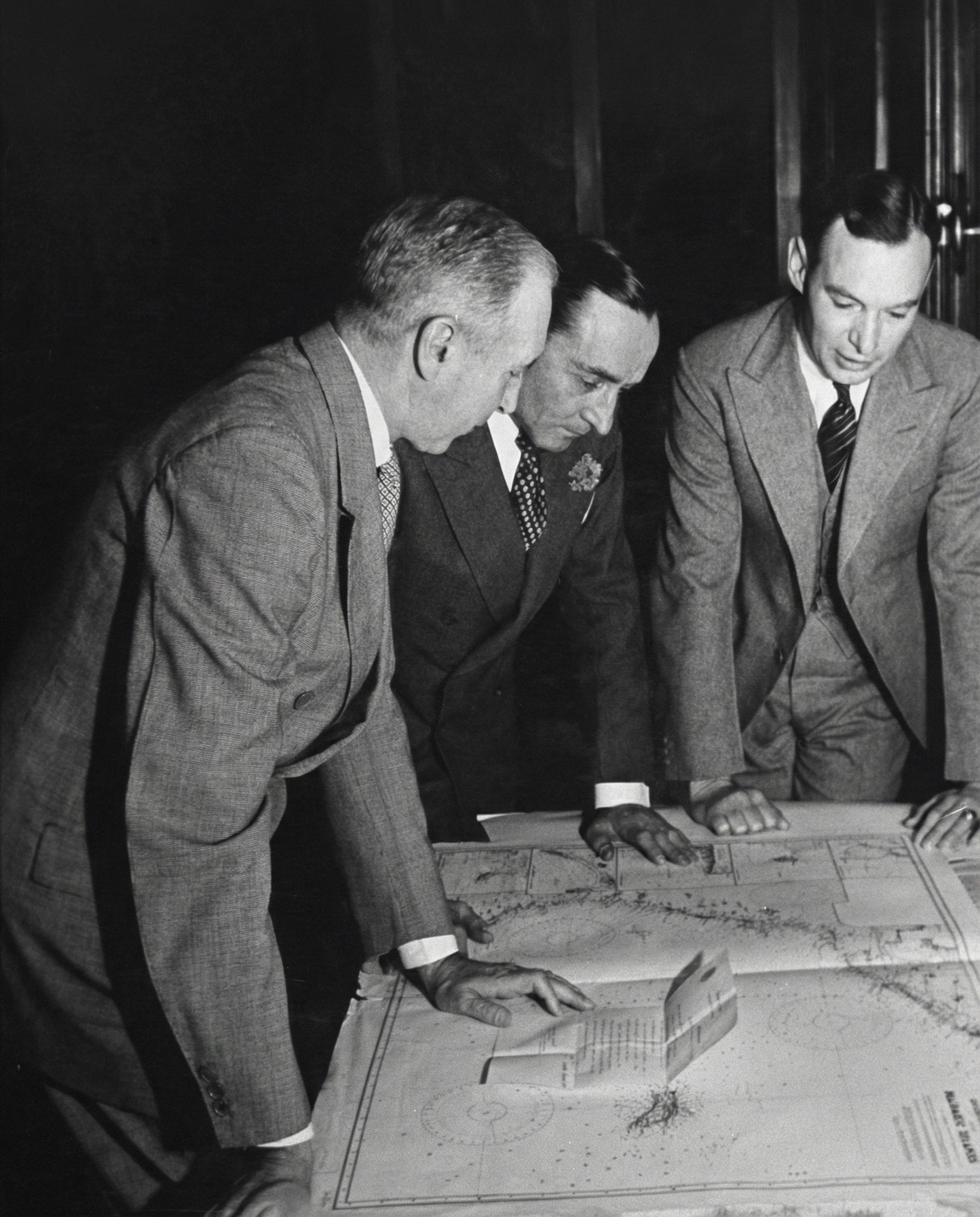
Snapshot timeline
1897: Born in St. Louis, Missouri. United States Naval Academy graduate.
1930s: Repeated intelligence tours in Europe. Helped evacuate Americans from Spain during the civil war. Served as naval attaché in France. Survived the 1941 attack on USS West Virginia, then ran pacific intelligence for Admiral Chester Nimitz. The CIA’s own history later called this a “forged by fire” education in intelligence. (CIA)
1947–1950: First Director of the Central Intelligence Agency under President Truman. (CIA)
1950–1957: Returned to sea duty. Commanded Cruiser Division One in the Korean War, then led the Third Naval District and served as Navy Inspector General. Retired as Vice Admiral. (history.navy.mil)
1957–1962: Board of Governors, National Investigations Committee on Aerial Phenomena, better known as NICAP. (Wikipedia)
Feb. 28, 1960: Quoted in The New York Times urging open Congressional hearings and warning that senior Air Force officers were privately concerned about UAP.
June 21, 1960: NICAP’s “Confidential NICAP Report to Congress” circulates on Capitol Hill, listing Hillenkoetter as a board member.
1962: Resigned from NICAP’s board as documented in CIA histories. (Project on Government Secrecy)
1982: Died in New York; buried at Arlington National Cemetery. (Wikimedia Commons)
Work history that shaped an unusual UAP voice
Hillenkoetter’s pre-CIA career reads like an intelligence case study. As a young officer he rotated through attaché billets and crisis zones, learned to blend diplomacy with clandestine liaison work, and watched how bad analysis becomes national tragedy.
He was wounded at Pearl Harbor, then moved into the analytic and operational core of the Pacific war on Nimitz’s staff. That exposure to both field fact and strategic demand helps explain why his later UAP commentary was procedural rather than sensational.
He spoke about process, oversight, and the costs of ridicule barriers. The CIA’s own institutional profile of his early career documents those formative years and the judgment they produced. (CIA)
When Truman’s National Security Act created the CIA, Hillenkoetter became its first statutory director. He inherited a new mandate, unresolved jurisdictional fights, and the dawning reality that covert action, scientific intelligence, and estimates all needed modern management.
CIA histories show him wrestling with whether one organization could simultaneously run secret operations and deliver objective analysis, a tension that would later matter for any government UAP study. (CIA)
After leaving CIA, he commanded Cruiser Division One in the Korean conflict and then the Third Naval District in New York, where he navigated another intelligence heavy job: coordinating Navy security and investigations across a region thick with laboratories, airfields, and shipyards. He retired in 1957 as Vice Admiral. (history.navy.mil)
Involvement with UAP: what the record shows
The NICAP years
In late 1956 a new civilian group, NICAP, took shape with an unusual letterhead stuffed with senior names.
Hillenkoetter joined its Board of Governors in 1957. That roster included his Naval Academy classmate Major Donald Keyhoe and other high profile figures such as General Albert C. Wedemeyer and Admiral H. B. Knowles.
NICAP grew rapidly and pursued two goals that will sound familiar to modern readers: collect better data and force government transparency through Congress. The Naval History and Heritage Command’s research guide confirms Hillenkoetter’s NICAP leadership role. (history.navy.mil)
A pivotal document from this period is NICAP’s Report to Congress dated June 21, 1960. The scan shows Hillenkoetter on the masthead and captures the group’s tone. It warned of misidentification risks that could spark military accidents and listed internal experts who believed the subject merited systematic analysis.
Whatever one makes of the cases that follow in the report, the governance move is clear. NICAP sought a formal hearing and stable funding for open research.
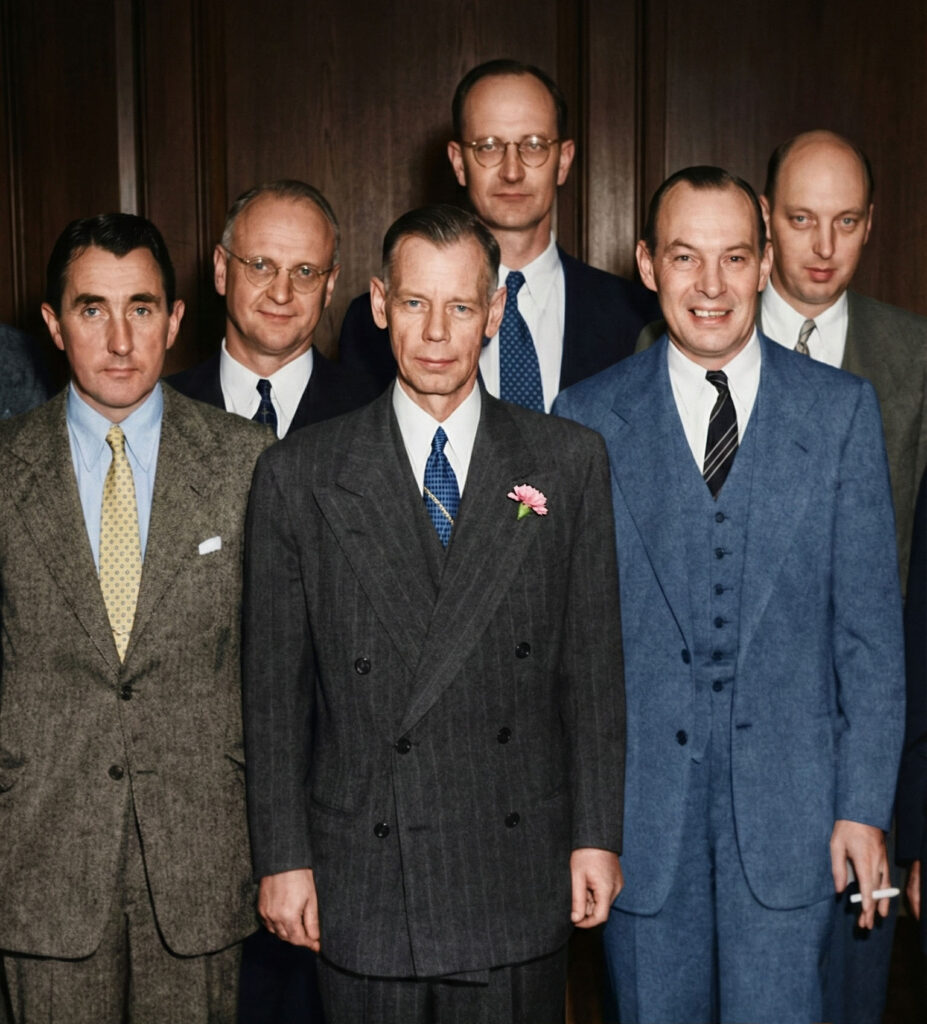
The 1960 public statement
Two months earlier, The New York Times carried a dispatch that has become the one quote everyone remembers.
The paper reported an Air Force inspector general instruction telling commands to treat UAP reports as “serious business.” In that context it quoted Hillenkoetter saying that behind the scenes senior Air Force officers were concerned, and that it was time for open Congressional hearings.
The digitized page shows the framing and the words. This is not folklore. It is a matter of record in a major paper of record. What matters here is less the rhetoric and more the procedural ask.
Hillenkoetter was not predicting origins or insisting on exotic conclusions. He was saying the quiet part out loud. Internal concern existed.
Public ridicule was smothering data quality. Congress should take responsibility. That argument anticipates, by decades, the logic that led to today’s formal UAP reporting lanes.
Resignation and the government’s posture
CIA’s official historical review of the Agency’s interactions with civilian UAP advocates notes that Hillenkoetter eventually resigned from NICAP in 1962.
The context is telling. Throughout the late fifties, activists such as Keyhoe pushed to declassify the Robertson Panel report and other files. Agency lawyers resisted full release.
Internal memoranda even worried that Keyhoe had Hillenkoetter’s ear, which was true. It was also a measure of how unusual his presence on the NICAP board really was. His resignation did not erase the fact that a former DCI had publicly validated the need for hearings and had demanded better governance. (Project on Government Secrecy)
Public appearances and statements
- Press appearance through the 1960 New York Times piece: Hillenkoetter’s remarks were carried as part of United Press International’s reporting and presented in the paper with the core lines that still echo today.
- Board signature on the 1960 NICAP report: Inclusion on the letterhead gave his standing to a document aimed squarely at Congress. The cover page is unambiguous.
- Post government interactions captured in public archives: CIA reading room correspondence from the era, including letters to and about journalists and NICAP, traces his ongoing contact network and the concerns among officials about civilian pressure. (CIA)
Known public connections and network map
- Donald E. Keyhoe: Marine aviator turned UAP advocate, NICAP director, and Naval Academy classmate. Keyhoe and Hillenkoetter formed a complementary pair, one public and relentless, the other careful and institutional. CIA histories describe Agency anxiety about Keyhoe’s access to Hillenkoetter. (Project on Government Secrecy)
- Gen. Albert C. Wedemeyer and Rear Adm. H. B. Knowles: Senior military names that helped stabilize NICAP’s public credibility in the late fifties. The group’s own documentation lists them on the governing board.
- Maj. Dewey Fournet: Former Air Force monitor of UAP studies. His expertise bridged Pentagon experience and civilian investigation in the same NICAP ecosystem.
- Joseph Bryan III: Later NICAP chairman with a background in psychological operations. The point is important for historians evaluating whether NICAP was always aligned with Hillenkoetter’s transparency goal. The Navy’s research guide and secondary literature note Bryan’s subsequent leadership. (history.navy.mil)
Government involvement beyond NICAP
Hillenkoetter’s UAP footprint also appears indirectly in official files that explain why Cold War agencies were sensitive about the subject. CIA’s published study of its own role details how high altitude reconnaissance created many UAP reports during the U 2 and OXCART periods.
That pressure fueled a preference for minimization in public statements and caution about releasing anything that might touch sensitive programs. Hillenkoetter’s call for hearings cut across that reflex and placed oversight above convenience. (Project on Government Secrecy)
At the same time, the 1960 Air Force inspector general guidance that triggered his quote flatly told commands to treat UAP as a defense matter and to push reporting up the chain.
The combination of internal seriousness and external ridicule was exactly the contradiction he wanted Congress to resolve.
Publications and documentary trail
Hillenkoetter did not publish commercial books about intelligence or UAP. His paper trail is official and procedural.
- CIA memoranda and correspondence from his directorship and after. These include congratulatory letters and exchanges that sketch the early CIA’s relationship network, and later, reading room documents about NICAP and public pressure. (CIA)
- The 1960 New York Times page that records his public statement and specific call for hearings.
- The 1960 NICAP congressional report cover shows the board, including Hillenkoetter, and frames the argument for hearings and scientific study.
- CIA commissioned histories that, among other things, document his resignation from NICAP and explain the institutional calculus around UAP in the fifties and sixties. (Project on Government Secrecy)
Controverters and critics
Serious historians of intelligence often use Hillenkoetter to illustrate the early CIA’s growing pains. Some see his management amid Truman era reforms as cautious and consensus driven and argue that this posture left the Agency flat footed on big strategic surprises. That lens colors how critics read his later role with NICAP. Was this a retired flag officer lending respectability to a civilian lobby he could not control, or was it an institutionalist trying to fix a governance problem that he knew from the inside
There are also claims repeated in advocacy circles about things Hillenkoetter supposedly said in private letters, including categorical statements that certain UAP could not be United States or Soviet technology. Primary text for these claims is thin.
CIA’s public histories verify the resignation from NICAP and the Agency’s concern about Keyhoe’s access, but they do not reproduce the sensational lines often attributed to Hillenkoetter.
The verified public record we can cite remains the 1960 call for hearings and his insistence that secrecy and ridicule were damaging the process. (Project on Government Secrecy)
A second line of criticism attaches Hillenkoetter to later sensational narratives about hidden committees and secret programs. Here again, the evidentiary burden is high. The FBI Vault and CIA reading room are vast and searchable, and while they contain many references to civilian groups and internal handling, they have not produced authenticated personal admissions by Hillenkoetter that would settle origin questions.
What those archives do show is an intelligence community balancing genuine reporting, misidentifications created by their own secret platforms, and a strong institutional bias toward silence. (FBI)
Data appendix: work history, associates, publications, criticisms
Work history highlights
- Director of Central Intelligence, 1947 to 1950.
- Commander, Cruiser Division One, Korean War.
- Commander, Third Naval District.
- Inspector General of the Navy, 1956 to 1957.
Sources: CIA histories and Navy leadership lists. (CIA)
Public appearances and statements
- 1960 statement reported by The New York Times, advocating open hearings and critiquing secrecy and ridicule.
Known associates for UAP activity
- Donald E. Keyhoe, NICAP director and Naval Academy classmate.
- Gen. Albert C. Wedemeyer, board member.
- Rear Adm. H. B. Knowles, board member.
- Maj. Dewey Fournet, technical advisor with Air Force background.
- Joseph Bryan III, later NICAP chairman with a background in psychological operations.
Sources: NICAP report masthead and Navy research guide.
Government involvement in UAP policy
- Participation in NICAP as a former DCI.
- Public call for Congressional hearings.
- Contemporary CIA reticence to declassify certain UAP related material.
Sources: CIA histories and the 1960 press record. (Project on Government Secrecy)
Publications and documentary traces
- No commercial books.
- Public statements in press and signatures on NICAP materials.
- CIA reading room correspondence relevant to the era. (CIA)
Controverters
- Intelligence historians who view early CIA management under Hillenkoetter as overly cautious and see NICAP involvement as a reputational risk rather than an intellectual contribution.
- Advocates who attribute categorical origin claims to Hillenkoetter without primary text; these remain unverified. (Project on Government Secrecy)
Implications for today’s UAP debate
Hillenkoetter’s case offers three concrete lessons.
First, oversight is not an optional add on. If the Air Force in 1960 told units that UAP were a defense matter, then oversight bodies must own the subject. The modern revival of reporting lanes and the formation of new offices only confirm what Hillenkoetter wanted to codify: sunlight through hearings that bring science and security together.
Second, secrecy can create false negatives. CIA’s own retrospective admits that many Cold War reports tracked secret platforms and that candor was impossible at the time.
That historical fact does not collapse the modern UAP portfolio into misidentification, but it does show why governance structures need classified and unclassified channels that can talk to each other without burying anomalies or smearing witnesses. (Project on Government Secrecy)
Third, personalities matter less than procedures. It is compelling to focus on who said what across decades. Hillenkoetter’s contribution is not celebrity. It is the normalization of an ask. Congress should take testimony. Agencies should be honest about the limits of classification. Civilian researchers should build case files rigorous enough to withstand hostile peer review. These were the same pillars NICAP tried to lay down in 1960. They are still the right pillars now.
Government record versus public rhetoric
One repeated misunderstanding in popular discussions is that citing Hillenkoetter somehow proves that all or most historical UAP sightings were extraordinary. That is not what his words commit us to.
He calls for hearings, acknowledges internal concern, and emphasizes the damage of ridicule. CIA’s histories, meanwhile, remind us how many Cold War lights in the sky were born of secret reconnaissance.
Read together, the record points toward both as a reality. There are prosaic drivers and there are uncharacterized or unresolved events that deserve study. Denying either side is a data failure. (Project on Government Secrecy)
Bottom line
Roscoe H. Hillenkoetter’s importance to UAP history does not rest on grand pronouncements or dramatic revelations. His importance rests on the fact that a former Director of Central Intelligence told the press that internal concern existed and that official ridicule was harming the public.
He put his name on a civilian board that demanded hearings. He did so while knowing, better than almost anyone, how classification, technology, and Cold War imperatives distorted the picture. If UAP study is a governance test, Hillenkoetter was one of the first insiders to say so in plain English.
That makes him a hinge figure in UAP history. Not because he solved the mystery, but because he insisted that the way we handle it matters.
References
Central Intelligence Agency. (2016). The intelligence education of the first head of CIA: Roscoe Hillenkoetter. Studies in Intelligence, 60(1), 43–50. https://www.cia.gov/resources/csi/static/Intel-Education-First-Head.pdf (CIA)
Central Intelligence Agency. (n.d.). History of CIA. https://www.cia.gov/legacy/cia-history/ (CIA)
Haines, G. K. (1997). CIA’s role in the study of UFOs, 1947–90. Studies in Intelligence. Federation of American Scientists mirror: https://sgp.fas.org/library/ciaufo.html (Project on Government Secrecy)
National Investigations Committee on Aerial Phenomena. (1960, June 21). Confidential NICAP report to Congress [cover page scan]. https://www.nicap.org/reports/report_to_congress.pdf
Naval History and Heritage Command. (2024). UFO research guide. https://www.history.navy.mil/research/library/research-guides/ufo-research-guide.html (history.navy.mil)
United Press International. (1960, February 28). Air Force order on “saucers” cited; Pamphlet by the Inspector General called objects a “serious business”. The New York Times, p. 30. ProQuest scan: https://engl374.files.wordpress.com/2015/03/artifactufo.pdf
Federal Bureau of Investigation. (n.d.). National Investigations Committee on Aerial Phenomena (NICAP). The Vault. https://vault.fbi.gov/view?b_start%3Aint=200 (FBI)
Department of the Navy. (n.d.). Third Naval District, list of commanders. https://www.history.navy.mil/research/library/research-guides/lists-of-senior-officers-and-civilian-officials-of-the-us-navy/district-commanders/third-naval-district.html (history.navy.mil)
Arlington National Cemetery. (2022). Gravesite of U.S. Navy Vice Adm. Roscoe H. Hillenkoetter [photo]. Wikimedia Commons. https://commons.wikimedia.org/wiki/File:ANCExplorer_Roscoe_H._Hillenkoetter_grave.jpg (Wikimedia Commons)
NICAP. (1964). The UFO [UAP] evidence [archival monograph]. https://www.nicap.org/ufoe/UFO%20Evidence%201964.pdf (NICAP)
The New York Times page with the 1960 Hillenkoetter quote and the Air Force inspector general guidance.
Claims taxonomy
Category A: Verifiable public claims
1) UAP reporting was a serious defense matter inside the Air Force.
2) Ridicule and official secrecy were misleading the public.
3) Congress should hold open hearings to clear the air and bring out the facts.
Evidence: New York Times Feb. 28, 1960.
Category B: Institutional positions he implicitly endorsed
4) Civilian groups could compile technically relevant casework that merited review by scientists and policymakers.
5) The United States government owed the public clear procedures for report intake and study.
Evidence: NICAP report to Congress; Hillenkoetter on the board letterhead.
Category C: Attributions that remain unverified or contested
6) Broad claims about origin categories not being United States or Soviet.
7) Personal knowledge of hidden programs that answer the UAP question.
Evidence assessment: frequently cited in secondary literature without confirmed primary documents. CIA histories confirm his NICAP resignation but do not reproduce such statements. Researchers should treat these attributions as claims that require primary text, not as established facts. (Project on Government Secrecy)
Speculation labels
Institutional legitimizer: A former DCI joined a civilian UAP board and asked Congress to act. That single act gave the UAP problem a governance frame, not just a cultural one. Support: NICAP board listing and 1960 press record.
Process reformer: His language targets procedure. He did not leap to origins. He asked for due process and end to ridicule. Support: the wording captured in the 1960 article.
Bridge figure: Hillenkoetter connected Navy, CIA, and civil society. Support: CIA and Navy records that trace his service and assignments. (CIA)
Ambiguous insider: The resignation and CIA’s concern about his ties to NICAP show the limits of how far a retired senior could push inside the Beltway. Support: CIA history of the period. (Project on Government Secrecy)
SEO keywords
Roscoe H. Hillenkoetter, CIA and UAP, NICAP board, 1960 New York Times UAP, Air Force inspector general UAP, Donald Keyhoe, congressional UAP hearings, UAP history, UAP secrecy and ridicule, UAP governance, UAP oversight, UAP Navy history, UAP NICAP report, UAP Cold War intelligence