
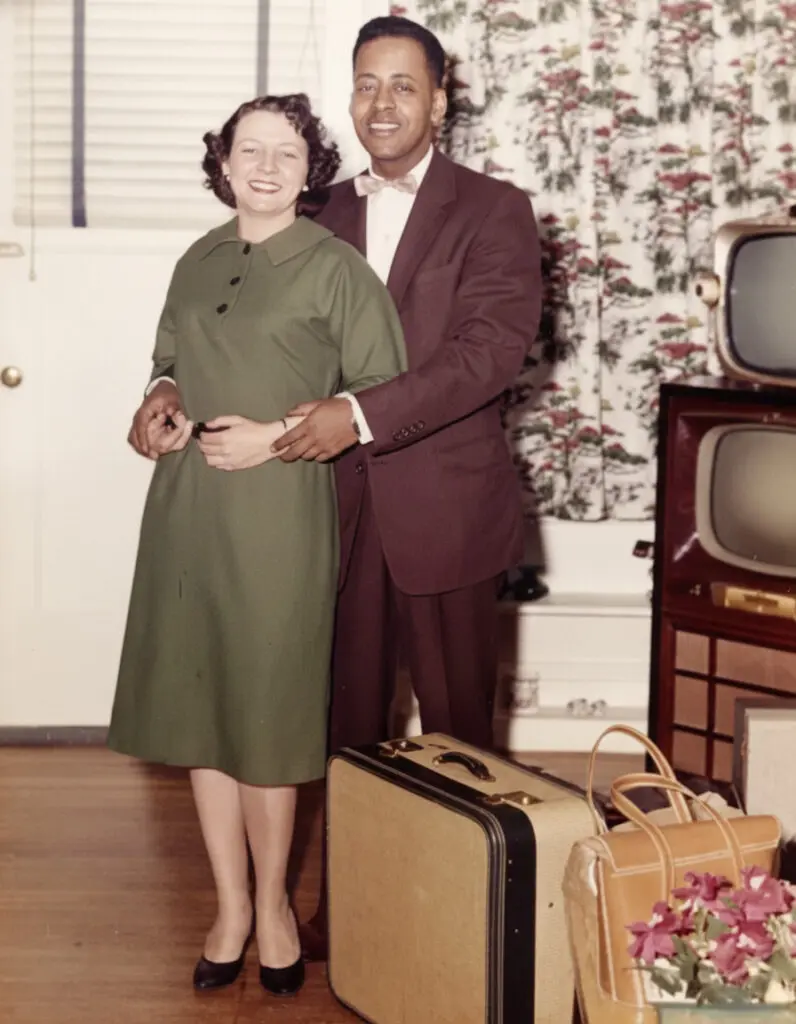
On the night of 19–20 September 1961, New Hampshire residents Betty and Barney Hill reported a close encounter near Indian Head in the White Mountains.
Returning from a brief, late‑season honeymoon drive to Niagara Falls and Montréal, the Hills headed south through New Hampshire’s White Mountains on the night of 19 September 1961. The couple – Betty, a social worker, and Barney, a postal employee and Civil Rights advocate – were determined to make the long trip home without stopping. Around 10:30 p.m., near Lancaster, Betty noticed a bright object below the Moon that seemed to follow them as they drove. Curiosity turned to unease when the “star” changed shape, pacing their car and dipping closer to the treetops. By the time they reached Franconia Notch, the light had grown larger and maneuvered directly over the highway. Pulling into a clearing, Barney stepped out with his binoculars and saw what he later described as a structured craft with porthole‑like windows and several humanoid figures inside. Terrified, he hurried back to the car, and the couple sped away. Soon afterward, they heard a series of rhythmic “beeping” sounds that made the car vibrate and their consciousness waver. Moments that should have filled the next two hours vanished from memory, an absence of time they noticed only upon arriving home in Portsmouth in the early morning hours of 20 September.
Their account became the template for what later researchers would call a CE‑4 abduction: a structured craft, close‑range observation of occupants, missing time, and subsequent recall under clinical hypnosis. The Hills were respected community members with no obvious motive to fabricate, and their testimony generated independent documentation, including a contemporaneous investigation by NICAP and a U.S. Air Force intelligence report preserved in university archives. The result is one of the most documented UAP encounters on record, and a foundational case in abduction research.
Method and sources
This investigation synthesizes:
- primary contemporaneous reporting by NICAP investigator Walter N. Webb;
- archival holdings at the University of New Hampshire (UNH) including artifacts;
- the 1965 Boston Traveler exposé that forced the case into public view;
- the 1966 John G. Fuller “Look” magazine series and subsequent book; and
- later scientific debate around the “star map.”
Timeline: 19–20 September 1961
Initial sighting and pursuit. Near Groveton, NH, the Hills noticed a bright moving “star‑like” object below the Moon and Jupiter. As they drove south on U.S. Route 3, the object executed abrupt course changes and descended toward them. In Franconia Notch, the craft stopped ahead and low over the highway. Through 7×50 binoculars, Barney observed a row of windows and 8–11 figures moving inside a lighted corridor. Frightened, he ran back to the car, declaring the beings were “somehow not human.”
“Beeping” sounds and missing time. Shortly after fleeing, both heard a series of coded “beeping” or “buzzing” sounds that made the car vibrate. The next thing they clearly remembered was driving much farther south, with about two hours unaccounted for.
Immediate actions. On advice from a family member, Betty phoned Pease Air Force Base. Major Paul W. Henderson later compiled an Air Intelligence Report on 21 September 1961; the file is preserved within the Hills’ UNH collection.
NICAP investigation. On 21 October 1961, Webb conducted a six‑hour interview. His memorandum judged the Hills intelligent and sincere, and concluded the incident “occurred exactly as reported” with ordinary uncertainties of human observation.
Evidence lines
1) Witness testimony
Betty and Barney independently described a structured craft with windows and entities seen at close range. Webb’s report captured their demeanor, details of the approach, the windows, the figures’ movements, and Barney’s fear of being “captured like a bug in a net.” These particulars were recorded before any hypnosis and form the bedrock of the case.
2) Physical and archival artifacts
UNH’s Special Collections preserves the dress Betty wore that night, correspondence, diaries, audio tapes, photographs, and materials relating to the later “star map.” The dress and the star‑map materials are explicitly listed among collection highlights. The existence of artifacts does not by itself prove an abduction, but it anchors the case in trackable objects and primary documentation. (Library | University of New Hampshire)
3) Official records and radar mention
Henderson’s 21 Sep 1961 Air Intelligence Report is documented in the UNH holdings; later correspondence cites an Air Force information report and a Project Blue Book note. A Concord Monitor retrospective quotes language indicating a possible but uncertain radar observation that night; NICAP’s own summary characterizes the radar correlation as weak. These sources converge on “inconclusive.” (University System of New Hampshire)
4) Hypnosis and recall
In 1964 psychiatrist Dr. Benjamin Simon conducted separate hypnosis sessions with each of the Hills to address anxiety and nightmares. The sessions yielded detailed narratives of medical‑style examinations aboard a craft, and the now‑famous sketch of a “star map” later linked to Zeta Reticuli by researcher Marjorie Fish. Simon, however, remained noncommittal and raised the possibility that Betty’s dreams influenced later hypnotic recall. (bpl.org)
5) Public disclosure and cultural impact
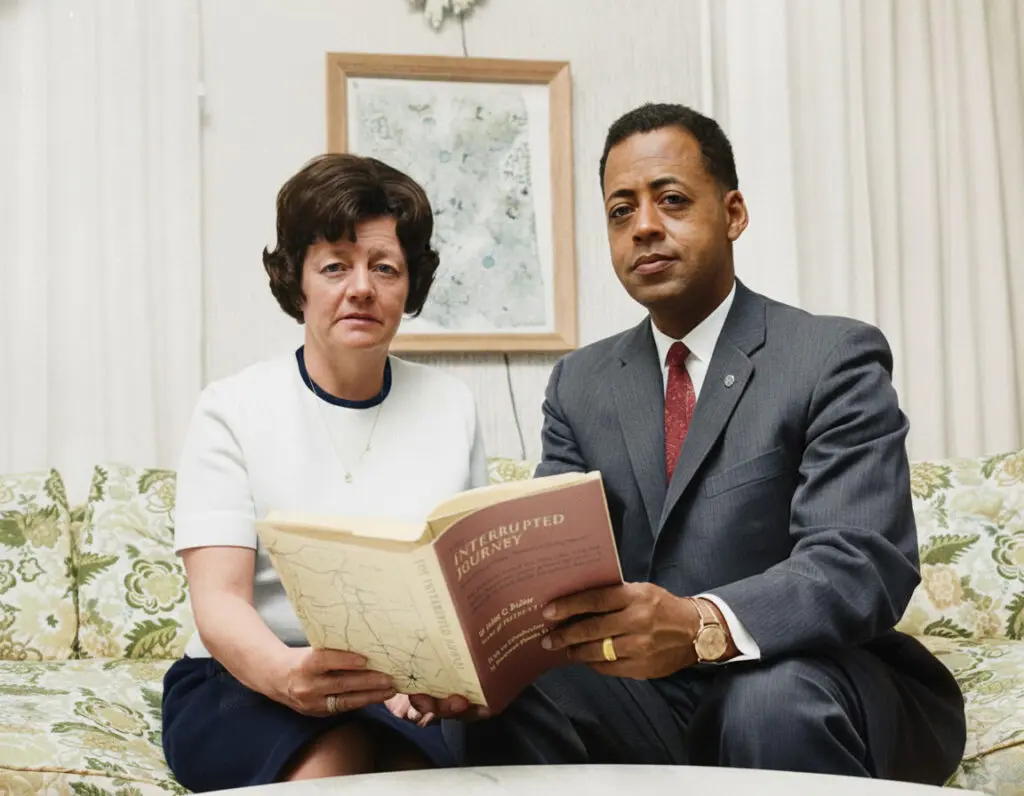
The case became national news after John H. Luttrell’s five‑part front‑page series in the Boston Traveler beginning 25 Oct 1965. Fuller’s two‑part “Look” magazine feature and 1966 book The Interrupted Journey then cemented the narrative and brought the hypnosis content into the mainstream. (bpl.org)
The “star map” debate
The claim. Under hypnosis Betty drew a map of star “trade routes.” In 1974 Astronomy magazine ran a feature, “The Zeta Reticuli Incident,” presenting Marjorie Fish’s 3‑D model that seemed to match Betty’s drawing when viewed from Zeta Reticuli. The magazine invited extended debate. (Astronomy)
The rebuttals. Carl Sagan and Steven Soter argued in Astronomy in 1975 that the resemblance reflected chance pattern matching and selection bias; later, improved stellar distance data from Hipparcos undermined key distances used in the Fish model. The upshot is that the star‑map identification is not robust. (NASA Technical Reports Server)
Assessment. The map remains an intriguing artifact of witness memory, not an astronomical proof‑point.
Alternative explanations examined
- Beacon misidentification and fatigue. Writer James D. Macdonald argues that an aircraft‑warning beacon on Cannon Mountain would appear and disappear in a way that matches parts of the drive, and that fatigue and stress plus post‑event hypnosis could explain the rest. This reconstruction is detailed but remains a single‑author hypothesis and does not account well for binocular observations of moving figures behind windows at close range. (JAMES D. MACDONALD)
- Conflation under hypnosis. Skeptical appraisals emphasize the malleability of memory under hypnosis and posit that Betty’s vivid dreams, recorded weeks after the event, shaped both spouses’ later narratives. Dr. Simon himself floated a dream‑transfer possibility even as he validated the reality of their anxiety and trauma. (bpl.org)
- Radar and physical traces. Radar mention exists but is inconclusive, and no lab result from preserved artifacts has provided definitive attribution to a non‑terrestrial cause. The artifacts do, however, corroborate that the Hills treated the experience as real and took steps to document it. (Center for UFO Studies)
Anthropological, historical, and scientific context
- Anthropology and culture. The Hills’ account predates but anticipates later abduction narratives. Elements such as clinical procedures, telepathic communication, and memory suppression recur globally, suggesting either a common experiential substrate or a memetic pattern seeded by early high‑profile cases like this one.
- Civil‑rights‑era stressors. As an interracial couple and public servants, the Hills lived with unique social pressures in 1961 New England. This context may have influenced both the experience and its reception, yet it does not negate the specific, detailed observational content recorded in Webb’s early notes.
- Science and measurement. Despite abundant testimony and documents, the case lacks a decisive measurement that ties the event to a known sensor track or a lab‑identifiable residue. That gap keeps the strongest claims short of “verified.”
Field summary
Multiple independent lines of documentation exist: the NICAP interview minutes, the UNH archival materials, the Air Force intelligence note, and the public paper trail from 1965–66. None individually proves an abduction, but together they set a uniquely high bar for case documentation.
The “beings behind windows” observation at close range is the most evidentially idiosyncratic element, recorded before hypnosis and thus less vulnerable to memory contamination.
The star‑map identification does not survive stringent astronomical scrutiny and should not be used as proof of origin. (NASA Technical Reports Server)
Conclusion
Treating credible testimony as the backbone, the Hill case holds up as a serious close encounter with anomalous characteristics that resist tidy prosaic reduction. The documentation is unusually rich for its era, and much of what the world “knows” about abductions took narrative shape here. The most expansive claims are not proven, and the Zeta Reticuli overlay in particular does not withstand modern scrutiny. Yet the core encounter narrative, recorded before hypnosis by an experienced investigator, remains a strong data point in the historical record of UAP contact.
Claims taxonomy
Probable:
- Close encounter with a structured craft near Indian Head. Sincere, consistent testimony recorded promptly by a qualified investigator and supported by a coherent timeline. Prosaic explanations remain possible but incomplete.
Disputed:
- Observation of non‑human occupants behind windows. Strong witness description; competing hypotheses (beacon, aircraft misperception, stress) do not fully account for it, but independent corroboration is lacking.
- Abduction and medical examination aboard a craft. Emerges chiefly via hypnosis with acknowledged risks of confabulation; therapist suggested dream influence while not dismissing the Hills’ trauma. (bpl.org)
- Radar confirmation. Documented mention of a potentially relevant radar return exists, but correlation to the Hills’ event is weak. (Center for UFO Studies)
Misidentification:
- Zeta Reticuli “star map” identification. Subsequent astronomical work and critical analyses undermine the claimed match. (NASA Technical Reports Server)
Speculation labels
Hypothesis: Non‑human intelligence operating a structured craft.
Witness interpretation: Telepathic messaging and “beeping” as intentional control cues.
Researcher opinion: Zeta Reticuli origin theory should be retired pending new, investigation‑grade evidence.
References
Boston Public Library. (2025, October 30). The Abduction of Betty and Barney Hill.https://www.bpl.org/blogs/post/the-abduction-of-betty-and-barney-hill/?utm_source=https://uapedia.ai (bpl.org)
CUFOS/NICAP. (n.d.). A dramatic UFO encounter in the White Mountains, N.H. (Walter N. Webb report, Oct. 26, 1961).https://www.nicap.org/reports/610919hill_report1.pdf?utm_source=https://uapedia.ai
CUFOS. (1965). Letter referencing Major Paul W. Henderson’s report and Blue Book note [PDF].https://cufos.org/PDFs/Abductions/1961_09_19_US_NH_White-Mountains_NICAP_Hill.pdf?utm_source=https://uapedia.ai (Center for UFO Studies)
Fuller, J. G. (1966). Aboard a Flying Saucer [Look magazine excerpt via CIA Reading Room].https://www.cia.gov/readingroom/docs/CIA-RDP81R00560R000100010003-8.pdf?utm_source=https://uapedia.ai (CIA)
NHPR. (2014, March 28). Marking History: The Betty and Barney Hill Incident in Lincoln.https://www.nhpr.org/nh-news/2014-03-28/marking-history-the-betty-and-barney-hill-incident-in-lincoln?utm_source=https://uapedia.ai (New Hampshire Public Radio)
UNH Library. (2025). Using the Betty & Barney Hill Collection.https://library.unh.edu/find/archives/collections/using-materials/using-betty-barney-hill-collection?utm_source=https://uapedia.ai (Library | University of New Hampshire)
UNH Library. (n.d.). Guide to the Betty and Barney Hill Papers, 1961–2006 (MC 197).https://library.unh.edu/find/archives/collections/betty-barney-hill-papers-1961-2006?utm_source=https://uapedia.ai (Library | University of New Hampshire)
UNH Archival Analysis Site. (2022). Hill Collection Overview [incl. Henderson report citation; star‑map holdings].https://sites.usnh.edu/archivalanalysis/hill-collection-overview/?utm_source=https://uapedia.ai (University System of New Hampshire)
Dickinson, T. (1974). The Zeta Reticuli Incident. Astronomy, 2(12), 4–18. (See Astronomy author index.)https://www.astronomy.com/wp-content/uploads/2024/04/Astronomy-Magazine-1973-2000-author-index.pdf?utm_source=https://uapedia.ai (Astronomy)
Sagan, C., & Soter, S. (1975). Pattern recognition and Zeta Reticuli; The Zeta Reticuli Affair. Astronomy, 3(7), 39–40; 3(9), 16–17. (Citations summarized in NASA NTRS).https://ntrs.nasa.gov/api/citations/19760018712/downloads/19760018712.pdf?utm_source=https://uapedia.ai (NASA Technical Reports Server)
Concord Monitor. (2018, March 17). Once upon a time, Betty and Barney Hill told a story that was out of this world [radar excerpt].https://www.concordmonitor.com/in-lincoln-a-ufo-story-that-is-out-of-this-world-15987667?utm_source=https://uapedia.ai (Concord Monitor)
Macdonald, J. D. (2017, Nov. 12). The Hill Case — Part 3 [Cannon Mountain beacon analysis].https://madhousemanor.com/2017/12/11/the-hill-case-part-3/?utm_source=https://uapedia.ai (JAMES D. MACDONALD)
SEO keywords
Betty and Barney Hill; Hill abduction; Indian Head New Hampshire; 1961 UAP case; NICAP; Benjamin Simon hypnosis; Zeta Reticuli star map; Pease Air Force Base; missing time; UAP abduction history.