
On the night that 3I/ATLAS brushed past Earth in December 2025, the world mostly saw “just” a distant green fuzz in a telescope livestream. Astronomers called it the third known interstellar visitor, a comet drifting serenely through the inner solar system, 270 million kilometers away and headed on toward Jupiter.(Space)
Avi Loeb saw something else. Anomalies, lots of them.
To him, 3I/ATLAS was a test. Not necessarily a test by an alien civilization, but a test of us: of how our institutions react when the sky sends something genuinely weird. He had already told Newsweek that the object’s orbital plane sat within a few degrees of Earth’s, its path threaded improbably past Venus, Mars and Jupiter, and that the odds of a random comet doing all this were tiny. “It might have targeted the inner Solar System as expected from alien technology,” he argued.(Newsweek)
By late 2025, NASA, ESA and a small army of astronomers had weighed in. Spectroscopy found water ice in the coma and chemistry that fit an exotic, but natural, interstellar comet.(arXiv) A Research Notes of the AAS paper used data from NASA’s Psyche spacecraft and ESA’s Trace Gas Orbiter to show non‑gravitational accelerations consistent with ordinary outgassing.(Chron) NASA even held a briefing to release images and, as multiple outlets put it, “reject alien spacecraft rumors.”(Reuters)
Loeb responded with blog posts, interviews and careful but provocative phrases. He accepted that 3I/ATLAS is “most likely” a comet, yet continued to list a growing catalog of alleged anomalies: a “heartbeat” brightness cycle, a jet that sometimes points toward the Sun, hints of unusual nickel‑rich material, and what he called a suspiciously “designed” trajectory.(Medium) When a new paper argued 3I/ATLAS is definitively cometary, Loeb dismissed it in the press as “superficial” and accused the authors of forcing the data into conventional boxes.(New York Post)
If you are trying to understand why this particular physicist became the lightning rod for every interstellar oddball, you have to start far from Harvard Yard, on a dusty farm road south of Tel Aviv.
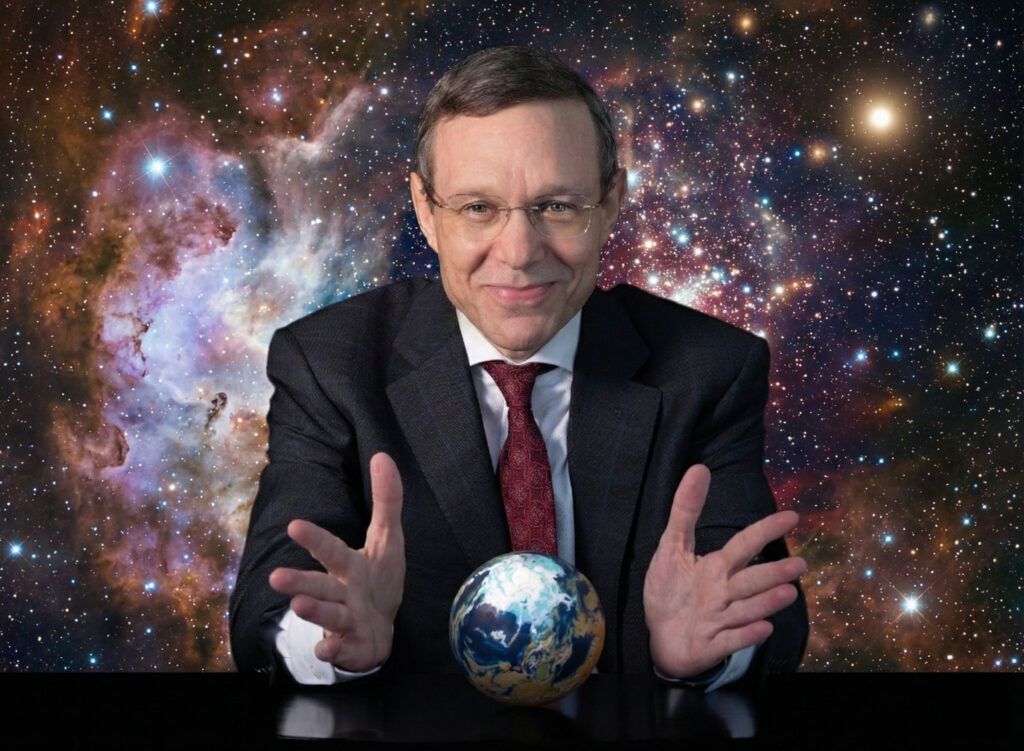
From pecan trees to plasma physics
Abraham “Avi” Loeb was born in 1962 on his family’s farm in Beit Hanan, a small moshav in central Israel known for its pecan orchards and citrus groves.
As he tells it, his childhood was less about telescopes and more about tractors. Every afternoon he collected eggs from the chicken coops. On weekends he would drive a tractor into the low hills, park, and sit alone reading Sartre and Camus, trying to puzzle out why there is something rather than nothing.(AFHU)
He did not initially plan to become an astrophysicist. He wanted to be a philosopher. The Israeli draft changed the trajectory. At eighteen he was accepted into Talpiot, an elite Israeli Defense Forces program that recruits scientifically gifted students to do advanced research for national defense.
While in uniform he raced through his degrees at the Hebrew University of Jerusalem: a BSc in physics and math in 1983, an MSc in 1985 and a PhD in plasma physics in 1986, all by age 24. His doctoral work at the Soreq Nuclear Research Center modeled how electromagnetic fields accelerate charged particles, and from 1983 to 1988 he led a Strategic Defense Initiative–funded international project on novel propulsion concepts for high‑speed projectiles.(Wikipedia)
It was heavy engineering science, closer to railguns than radio telescopes. Philosophy seemed far away.
An “arranged marriage” with astrophysics
The pivot came when legendary astrophysicist John Bahcall invited Loeb to the Institute for Advanced Study in Princeton on one condition: switch fields to astrophysics. Loeb later called it an “arranged marriage” that became a genuine love match, because it let him chase the big philosophical questions with the tools of physics.(Medium)
From 1988 to 1993 he was a long‑term member at the Institute, working on the first stars and the cosmic dawn. Harvard recruited him in 1993 as an assistant professor; he earned tenure three years later and eventually became the Frank B. Baird Jr. Professor of Science.(Wikipedia)
By the late 2000s Loeb had become a central figure in theoretical astrophysics. He directed the Institute for Theory and Computation at the Harvard–Smithsonian Center for Astrophysics, founded Harvard’s Black Hole Initiative, and served as the longest‑tenured chair of Harvard’s astronomy department between 2011 and 2020.(Harvard Astronomy)
On top of that, he chaired the Board on Physics and Astronomy for the U.S. National Academies and joined the White House President’s Council of Advisors on Science and Technology (PCAST).(Harvard Astronomy) Time magazine named him one of the 25 most influential people in space.
Before “alien techno signatures” became his brand, Loeb co‑authored more than 800 scientific papers on subjects such as:
- The first generation of stars and galaxies
- Black hole formation and tidal disruption events
- Reionization of the early universe
- Gravitational lensing by planets
- The eventual collision of the Milky Way and Andromeda
- Techniques to image the “silhouette” of a black hole
These are mainstream, widely cited contributions that helped set the agenda for cosmology and high‑energy astrophysics.(Wikipedia)
All of this matters when UAP watchers encounter Loeb. He is not a marginal outsider screaming from the fringes. He is, in academic terms, about as “inside” as it gets.
Breakthrough Starshot and the “engineering imagination”
In 2016, billionaire Yuri Milner convened Stephen Hawking, Mark Zuckerberg and a group of scientists to answer a blunt question: could we actually send probes to another star in this century? The result was Breakthrough Starshot, a 100‑million‑dollar program to design nanocraft that ride powerful Earth‑based lasers on light sails to the Alpha Centauri system.
Loeb was asked to chair the project’s advisory committee. Starshot sketches out postage‑stamp‑sized spacecraft accelerated to around 20 percent of light speed. The mission architecture reads today like a prototype for what many in the techno signature community expect a mature interstellar civilization to build: lots of small, cheap, robotic craft flung between stars on beams of light.(Wikipedia)
Working backward from Starshot, Loeb began to ask a simple question. If we are designing this sort of one‑gram “space junk” for our own future, what would it look like if someone else’s version wandered into our solar system?
That question found its test subject in October 2017.
ʻOumuamua and the birth of a public alien hunter
The first interstellar object known to pass through the solar system, 1I/ʻOumuamua, was discovered by the Pan‑STARRS telescope in Hawaii in October 2017. It did not look like a normal comet. Its light curve implied a very elongated or flattened shape, it showed no obvious coma, and its motion included a small but definite non‑gravitational acceleration.
Most astronomers worked within the usual natural categories. Maybe ʻOumuamua was a fragment of a Pluto‑like world rich in exotic ices. Maybe it was a “dark comet” whose activity was too faint or unusual to see clearly.
Loeb took a different tack. He and his postdoc Shmuel Bialy published a 2018 paper suggesting that the simplest way to explain ʻOumuamua’s acceleration without visible outgassing was radiation pressure on a very thin object, perhaps a lightsail of artificial origin.(Wikipedia)
The scientific community’s reaction ranged from intrigued to furious. Steve Desch, an astrophysicist at Arizona State University, later described Loeb’s public rhetoric as “ridiculous sensationalism” that, in his view, polluted serious work on interstellar objects.(Medium)
Loeb doubled down with a popular science book, “Extraterrestrial: The First Sign of Intelligent Life Beyond Earth,” arguing that the balance of evidence favored an artificial origin for ʻOumuamua. The book became a bestseller and turned him into what the New York Times later called “the world’s leading alien hunter.”(Wikipedia)
This was the moment when Loeb’s name began to circulate heavily in UAP circles. Here was a Harvard professor openly saying what many experiencers and UAP researchers felt: that elite science underestimates the possibility of non‑human intelligence and overestimates its own certainty.
The Galileo Project and a secular approach to UAP
In July 2021, just weeks after the U.S. Office of the Director of National Intelligence released its first public report on military UAP encounters, Loeb launched the Galileo Project at Harvard.(Wikipedia)
The motto was simple: stop arguing about blurry videos and go build better instruments.
According to the project’s charter, Galileo pursues three main lines of research:
- A global network of custom optical, infrared and radar stations to obtain high‑resolution, multi‑sensor data on UAP in Earth’s atmosphere
- Systematic searches for ʻOumuamua‑like interstellar objects in existing and new survey data
- Searches for potential non‑human satellites or “astro‑archaeological” artifacts in near‑Earth space
The project explicitly aims to treat UAP as physical objects rather than as pure narratives, to use open, unclassified data, and to publish results transparently.(Galileo)
In UAPedia terms, Galileo aligns with our editorial stance that government documents are one data stream among many, not the final word. UAP reports from the Pentagon are useful, but they sit alongside telescope data, eyewitness testimony, and historical cases rather than above them.(UAPedia)
Loeb’s insistence that UAP should be studied with the same rigor as exoplanets or black holes made him a hero to some in the UAP community and a problem child to a subset of his academic peers.
IM1: The interstellar meteor and the spherule hunt
While ʻOumuamua flew back into the dark, Loeb’s attention shifted to something stranger: a bright meteor that had burst above the Pacific north of Papua New Guinea in January 2014, cataloged as CNEOS 2014‑01‑08.
With student Amir Siraj, he combed through a U.S. Department of Defense fireball database and argued that the object’s unusually high speed implied an unbound, interstellar trajectory. In 2022, after years of lobbying, the U.S. Space Command sent a letter stating that the velocity measurements were precise enough to support interstellar origin “at the 99.999 percent confidence level.”(ResearchGate)
Loeb named the object IM1, for “interstellar meteor 1,” and set out to find its remains.
In June 2023 he led an expedition to the predicted impact area, dragging a sled studded with strong magnets along the seafloor. The team recovered around 850 tiny metallic spherules, between 0.1 and 1.3 millimeters across, which were then analyzed by micro‑XRF, electron microprobe and ICP mass spectrometry.
A 2024 paper in Chemical Geology presented a classification of the spherules’ chemistries. Most looked similar to known solar system material, but a subset showed unusual compositions that Loeb described in Medium essays as “of unfamiliar origin,” hinting at the possibility of advanced alloys.(ScienceDirect)
Critics pushed back hard. Meteor specialists argued that the original velocity estimates were too uncertain to prove interstellar origin, that spherules of similar composition have been dredged from many seafloor sites since the 19th century, and that Loeb’s statistical arguments underplayed common terrestrial and industrial sources.(Space)
Some suggested that the radar signal he associated with IM1’s fireball might have been a passing truck.(Scientific American)
Loeb responded by calling for more data. He framed the entire episode as another case of “paradigm resistance,” where scientific culture discourages exploring interpretations that involve technological civilizations, even when the data are odd.(Medium)
Regardless of the eventual verdict on IM1, the expedition produced a real, peer‑reviewed dataset of seafloor spherules with a clear chain of custody. In the history of UAP‑adjacent work, this is rare. Even critics acknowledged that the overall program looked like high‑risk, high‑reward science in action.(ScienceDirect)
3I/ATLAS: An interstellar comet and an argument about how to think
By mid‑2025, astronomers got something Loeb had predicted for years: another interstellar interloper, this time bright enough and slow enough to study in detail.
On 1 July 2025 the NASA‑funded ATLAS telescope in Chile spotted a faint, moving object in Sagittarius. Its hyperbolic orbit made it clear that it came from outside the solar system. It was officially designated C/2025 N1 (ATLAS) and then given the interstellar tag 3I/ATLAS: the third known interstellar object after ʻOumuamua (1I) and 2I/Borisov.(NASA Science)
Within days, telescopes around the world and in space turned their gaze to it. Observers saw a developing coma and tail with a reddish dust color similar to 2I/Borisov. Follow‑up spectroscopy with Gemini South and NASA’s IRTF showed a spectrum consistent with dusty material plus a significant fraction of water ice.(arXiv)
A modeling paper by Hopkins, Bannister, Lintott and colleagues placed 3I/ATLAS within population models of interstellar objects and concluded that its properties made sense as a fragment from an old planetary system in the Milky Way’s disk.(Astrobiology)
NASA organized a coordinated observing campaign involving Hubble, Parker Solar Probe, the ESA/JAXA XRISM X‑ray observatory, XMM‑Newton, Mars orbiters, and even the Europa Clipper spacecraft as it cruised toward Jupiter. Images showed a classic looking cometary coma. X‑ray observations revealed a glow extending roughly 400,000 kilometers as the solar wind interacted with neutral gas from the coma.(NASA Science)
From the standpoint of planetary science, 3I/ATLAS quickly became a dream target: a pristine piece of another planetary system, rich in water ice, passing close enough to characterize in multiple wavelengths, yet far enough away to pose essentially zero danger.(Space)
From Loeb’s standpoint, the dream was different. Here was a vivid test of whether a technosignature hypothesis would be allowed on the table when a dataset was still evolving.
Loeb’s case: low odds and strange behavior
Shortly after discovery, Loeb began publishing blog posts and giving interviews about what he saw as a pattern of improbabilities. He noted that:
- 3I/ATLAS’s orbital plane is retrograde yet lies within about 5 degrees of Earth’s orbital plane
- Its path brings it into the rough neighborhood of Venus, Mars and Jupiter
- Early brightness estimates suggested a large effective size (which is what he found statistically odd that only the third interstellar object observed should be of such size. He put these odds at one in a million.
Combining these factors, he argued to Newsweek and others that the odds of such an object randomly threading the inner solar system in this way were well below one percent, and perhaps far smaller.(Newsweek)
To be clear, Loeb did not claim certainty. He spoke in Bayesian terms, offering rough percentages for the likelihood of artificial origin and inserting caveats that new data could change the picture. But he also told The Times of Israel that “Houston, we have a problem with the natural comet hypothesis,” and warned that the world should not dismiss a potential alien threat simply because the object was far away.(The Times of Israel)
As more observations came in, Loeb focused on features he considered anomalous:
- Reports of a tail structure with components pointing sunward as well as anti‑sunward
- A “heartbeat” modulation in brightness with a period of about 16.16 hours
- Indications from some spectra that nickel emission might be unusually strong compared with iron
In tabloids and on podcasts he floated the idea that these could indicate a spacecraft using directed jets for station‑keeping or pointing a reflective “deflector shield” toward the Sun.(New York Post)
While he occasionally acknowledged that cometary jets could produce complex tails and light curves, he insisted that the total pattern called for explicit consideration of an artificial origin alongside natural models.
Loeb produced a list of 15 anomalies surrounding the evidence about 3i/Atlas which we put into a separate article here.
The scientific consensus: a natural but valuable comet
Meanwhile, peer‑reviewed work piled up in favor of a natural explanation.
Yang and colleagues’ spectroscopy showed a coma composition consistent with dust plus water ice grains.(arXiv) NASA’s fact sheets and FAQs emphasized that size estimates, coma behavior and non‑gravitational accelerations all resemble active comets from our own cloud of icy bodies.(NASA Science)
In November 2025, NASA released images from missions such as Lucy and Mars orbiters and explicitly addressed public speculation. Officials including Amit Kshatriya and Nicola Fox stated that all evidence pointed to 3I/ATLAS being a natural comet, even if some details were still being refined.(Reuters)
A Research Notes of the AAS paper led by Thomas Marshall Eubanks used astrometric data from Psyche and Trace Gas Orbiter to measure a non‑gravitational acceleration of about 5 × 10⁻⁷ m/s², solidly in the range seen for small, active comets. Combined with modeling of the coma, they derived a nucleus radius of roughly 260–370 meters and a total mass around 40 million metric tons. Again, well within natural expectations.(Chron)
Other teams detected radio emissions from hydroxyl radicals in the coma, a standard signature of water molecules broken apart by sunlight and used X‑ray spectra to map interactions between outflowing cometary gas and the solar wind. All of these pointed to ordinary cometary physics transplanted from another star system.(Live Science)
By the time of closest approach on 19 December 2025, the mainstream planetary science verdict was clear: 3I/ATLAS is fascinating, rare, and chemically rich, but not a stealth probe.
The public fight
He accused NASA of releasing “fuzzy” and “misleading” images that, in his view, were insufficiently resolved to settle the argument and were being used rhetorically to close it. He complained that a high‑resolution Mars Reconnaissance Orbiter image taken near the comet’s close pass by Mars had not been released despite repeated requests.(New York Post)
In a widely shared Medium essay titled “The Tale of 3I/ATLAS and Sterile Neutrinos,” he cast the controversy as another example of “dogmatists” who dismiss outlier hypotheses before all the data are in.(Medium)
Newspapers from The Guardian to the Times of India ran explainers on why most experts reject his alien‑probe scenario, carefully walking through how each of his claimed anomalies can be matched by known comet physics or by improved data.(The Guardian) Tabloids highlighted the more dramatic quotes, such as his speculation that 3I/ATLAS might even have “malign intent” if it altered course from behind the Sun.(Wikipedia)
Yet in quieter formats, including Q&A posts on his blog, Loeb adopted a more measured tone. He conceded that the balance of evidence favors a natural comet but maintained that the cost of keeping the door open to artificial explanations is low, and the potential payoff is enormous.(Medium)
From a UAPedia perspective, the 3I/ATLAS saga is less about the exact odds that this particular object is artificial and more about the pattern it reveals:
- Institutions quickly converge on conservative interpretations, especially when any hint of “alien” becomes politically sensitive
- Government and agency statements, while important, are still just one voice and are themselves based on models that can miss genuine anomalies
- Individual researchers who insist on keeping techno signatures on the menu are often framed as sensationalists rather than as hypothesis pluralists
None of that proves Loeb right about 3I/ATLAS. It does show why his work resonates so strongly with communities already attuned to UAP and non‑human intelligence.
Philosophy in a lab coat
Throughout all of this, Loeb has cultivated a distinctive public voice. Profiles in Smithsonian, The Guardian and other outlets emphasize his combination of farm‑kid pragmatism and existential restlessness.(Smithsonian Magazine)
He often tells audiences that he still thinks like the teenager on the tractor, reading philosophy on a hill. He argues that science should behave more like a curious child than like a defensive bureaucracy. In a Harvard Gazette feature, he said he wished tenured professors could unlearn their obsession with prestige and approach anomalies with the humility of kids asking “why” over and over.(Medium)
His later popular book, “Interstellar: The Search for Extraterrestrial Life and Our Future in the Stars,” extends that theme. It argues that becoming an interstellar species is both a moral and practical imperative and that searching for other civilizations’ technology is not fringe but a natural extension of planetary science.
Loeb has even ventured into theological territory, speculating in one 2024 talk that a vastly advanced extraterrestrial civilization could functionally resemble the “Messiah” of religious tradition, arriving from the sky with capabilities that look godlike to us.(Wikipedia)
These comments unsettle some. For others, they represent a refreshing honesty about how paradigm‑shifting true contact with non‑human intelligence would be.
Impact on the UAP and techno signature landscape
He is not a UAP investigator in the classic sense. He does not chase abduction cases or catalog triangle craft. His domain is astrophysical techno signatures: objects and materials that might be artifacts of non‑human technology, whether drifting through interstellar space or falling into Earth’s atmosphere.
His impact on our field falls into several overlapping domains:
- Legitimizing techno signature talk in elite institutions
Loeb’s roles at Harvard, the National Academies, and PCAST gave him a megaphone. When someone with that CV says “ʻOumuamua might be technological,” it becomes harder to dismiss the entire topic as unserious.(Harvard Astronomy) - Reframing the stigma problem
He relentlessly points out that dismissing extraterrestrial explanations a priori is itself unscientific. This aligns with UAPedia’s view that stigma has distorted institutional responses to UAP for decades, especially when government or military sources are involved.(Wikipedia) - Building actual hardware and datasets
The Galileo Project’s UAP sensor arrays and the IM1 spherule expedition are rare examples of well‑documented, instrument‑heavy forays into domains normally left to anecdote. Even when critics disagree with Loeb’s interpretations, they often respect the data‑gathering.(arXiv) - Forcing open conversations about interstellar anomalies
From ʻOumuamua to 3I/ATLAS, Loeb has become the unofficial voice of a straightforward position: when an object from another star does something weird, we should include “artifact” in the list of possibilities, not as a default, but as a live option. That position has helped spawn broader techno signature conferences, white papers and funding lines.(arXiv) - Acting as a cultural bridge between the UAP world and academic astronomy
Many experiencers and UAP researchers mistrust institutions that have historically minimized or ridiculed their reports. Loeb, with one foot firmly in Harvard and another in public podcasts and YouTube channels, gives those communities at least one recognizable face on the inside who is willing to say “we do not know” out loud.(Planetary Society)
None of this means we should take his specific claims on faith. UAPedia treats Loeb the same way we treat any government report or NASA press release: as one stream of evidence to be weighed against others. In keeping with our editorial standards, we track where the data end and where speculation begins.(UAPedia – Unlocking New Realities)
The 3I/ATLAS controversy crystallizes the dynamic. On one side is a rapidly growing set of high‑quality observations that point, quite strongly, to a natural interstellar comet with interesting chemistry. On the other side is Loeb’s insistence that several residual anomalies justify keeping the “artificial probe” hypothesis at non‑zero probability and that the scientific establishment is too quick to declare victory.
History will decide which side of that bet looks wiser.
What is already clear is that, from pecan groves in Beit Hanan to the glass offices of the Center for Astrophysics and the stormy seas north of Papua New Guinea, Avi Loeb has become one of the central biographical threads in the story of how humanity confronts UAP, techno signatures and the possibility that the sky is not just full of rocks and gas, but of other minds.
References
Bin Yang, B., Meech, K. J., Connelley, M., Zhao, R., & Keane, J. V. (2025). Spectroscopic characterization of interstellar object 3I/ATLAS: Water ice in the coma. The Astrophysical Journal, 992(L9). (arXiv)
Chron staff. (2025, December 19). “Alien” comet 3I/ATLAS passes Earth. It’s heading toward Jupiter next. Houston Chronicle. (Chron)
Eubanks, T. M., et al. (2025). Non‑gravitational accelerations of interstellar comet 3I/ATLAS. Research Notes of the AAS. (Summarized in Chron report.) (Chron)
Gritz, J. R. (2021, October). The wonder of Avi Loeb. Smithsonian Magazine. (Smithsonian Magazine)
Harvard Department of Astronomy. (n.d.). Avi Loeb. Harvard University. (Harvard Astronomy)
Loeb, A. (2018). ʻOumuamua as a light sail. See overview in “Avi Loeb” entry. Wikipedia. (Wikipedia)
Loeb, A. (2021). Extraterrestrial: The first sign of intelligent life beyond Earth. Houghton Mifflin Harcourt. (Wikipedia)
Loeb, A. (2023). Interstellar: The search for extraterrestrial life and our future in the stars. Mariner Books. (Wikipedia)
Loeb, A. (2025, October 29). A Q & A on 3I/ATLAS at perihelion. Medium. (Medium)
Loeb, A. (2025, December). The tale of 3I/ATLAS and sterile neutrinos. Medium. (Medium)
Loeb, A., et al. (2024). Chemical classification of spherules recovered from the Pacific Ocean site of the CNEOS 2014‑01‑08 (IM1) bolide. Chemical Geology. (ScienceDirect)
NASA. (2025). Comet 3I/ATLAS: Overview, facts and FAQs. NASA Solar System Exploration. (NASA Science)
Space.com staff. (2023, July 20). Interstellar meteor fragments found? Astronomer’s claim sparks debate, criticism. Space.com. (Space)
Space.com staff. (2025, July 29). Here we go again! Controversial paper questions whether interstellar visitor 3I/ATLAS is “possibly hostile” alien tech in disguise. Space.com. (Space)
Times of Israel staff. (2025, November 9). Astronomer Avi Loeb warns world not to ignore new comet’s potential alien threat. The Times of Israel. (The Times of Israel)
Yang, B., et al. (2025). Spectroscopic characterization of interstellar object 3I/ATLAS: Water ice in the coma. The Astrophysical Journal, 992(L9). (Astrophysics Data System)
SEO keywords
Avi Loeb biography, Avi Loeb UAP, Avi Loeb 3I/ATLAS controversy, interstellar comet 3I/ATLAS alien probe, Galileo Project techno signatures, IM1 interstellar meteor spherules, ʻOumuamua alien technology hypothesis, Breakthrough Starshot Avi Loeb, Harvard astrophysicist alien hunter, techno signatures and UAP, interstellar objects Oumuamua Borisov ATLAS, NASA 3I/ATLAS comet debate, Avi Loeb Pacific Ocean expedition, UAPedia Avi Loeb profile