
From 1966–1968 the University of Colorado’s “Scientific Study of Unidentified Flying Objects” (the Condon Report) became the U.S. government’s most visible, academia-led inquiry into UAP (then labeled UFO). The project’s lead, physicist Edward U. Condon, concluded that little had been learned from 21 years of study and that further extensive research was not justified. The National Academy of Sciences (NAS) panel endorsed that judgment in early 1969. Within months, the U.S. Air Force terminated Project Blue Book and shifted away from public-facing UAP investigation. NCAS Files
Yet the report also contains case analyses that cut against its own summary, most famously the Lakenheath–Bentwaters (1956) radar-visual series, judged by the project’s analysts to have a “fairly high” probability of involving a genuine unknown. The enduring controversy around the Robert J. Low “Some Thoughts on the UFO Project” memorandum, in which the project’s coordinator discussed framing the study so that it would appear objective, fueled charges that skepticism had been baked in from the start. Meanwhile, critical responses from James E. McDonald, J. Allen Hynek, and the AIAA UFO Subcommittee argued that a scientifically interesting residue remained. NICAP
Today, the Condon Report is cited both by skeptics (as a model of caution) and by pro-research scholars (as a cautionary tale on methodology and priors). Contemporary government reviews, most recently AARO’s 2024 Historical Record Report still benchmark against Condon’s process and outcomes. AARO
What the Condon Report was (1966–1968): scope, mandate, and data
Mandate. In 1966, after a wave of UAP reports and criticism of Project Blue Book, the Air Force contracted the University of Colorado to conduct an independent, university-led study under Condon. The resulting hardback ran ~1,500 pages; a widely distributed paperback appeared in early 1969. The report compiled historic cases, investigated contemporary incidents, and added topical chapters on radar, optics, psychology, and physical evidence. NCAS Files
Process and sources. The project examined Air Force files (Blue Book) and material from prominent civilian groups (NICAP, APRO), then ran its own field investigations and analyses. Its editorial structure separated (i) Conclusions & Recommendations, (ii) a Summary, (iii) technical chapters, and (iv) case studies. NCAS Files
Independent review. Before public release, the Air Force asked the NAS to evaluate the study’s scope and findings. The NAS panel affirmed Condon’s principal conclusions on scientific value and federal programmatic priority. WHS Electronic Services Document
Policy sequel. On December 17, 1969 the Air Force closed Project Blue Book, citing results from the Colorado study and prior scientific reviews (Robertson Panel 1953; O’Brien SAB review 1966). WHS Electronic Services Document
Core findings
Condon’s top-line conclusion
Condon’s own summary is unequivocal: “nothing has come from the study of [UAP] in the past 21 years that has added to scientific knowledge” and “further extensive study… probably cannot be justified” while allowing that specific limited topics might still merit work. The NAS panel concurred that no high priority was warranted. NCAS Files
What the casework actually shows
The internal distribution of outcomes is more nuanced. Across radar-visual, photographic, and eyewitness cases, the report contains a non-trivial unidentified remainder. The most cited example is Lakenheath–Bentwaters (1956), where the project’s analyst (Thayer) wrote that the chance at least one “genuine” unknown occurred was “fairly high.” A NICAP-hosted excerpt reproduces the often-quoted judgment that the “intelligent behavior” of the target suggested a “mechanical device of unknown origin.” NICAP
Statistical baseline vs. analytic posture
Condon’s general posture emphasized data insufficiency and observer/sensor limitations (e.g., optics, psychology, radar caveats) and urged caution in inferring exotic technology from ambiguous observations. That stance aligns with the report’s technical chapters (optics, radar, perception) and anticipates many of the artifact-focused cautions raised in modern UAP guidance. NCAS Files
Scientific skepticism as method
Methodological skepticism is not a worldview; it’s a workflow: treat extraordinary claims as requiring extraordinary evidence, and push hard on instrument/perceptual failure modes before positing novel phenomena. On paper, the Colorado project reflected that epistemology (strong priors about misidentification; heavy attention to optics and radar artifacts). NCAS Files
But even within that framework, two tensions define its legacy:
- Global conclusion vs. local anomalies. Several of the report’s strongest case studies (e.g., Lakenheath–Bentwaters) did not cleanly support the global dismissal. Condon’s six-page Conclusions are not a weighted aggregation of case outcomes; they read as a policy brief anchored by prior assumptions about data quality. NCAS Files
- Objectivity vs. optics (the Low memo). The 1966 internal memorandum by project coordinator Robert J. Low, describing a “trick” of structuring the effort to appear objective while emphasizing psychological/social explanations, undermined external trust, even if Condon later said he had been unaware of the memo at the time. Primary reproductions of the memo are preserved by independent archivists. NICAP
Major critiques
Hynek (scientific adviser to Blue Book)
Astronomer J. Allen Hynek, initially a skeptic and later an advocate for disciplined study, criticized the report’s organization and the gap between some case analyses and the summary conclusions. He argued that a scientifically interesting residue persisted and called for instrumented field work rather than paper reviews. (Hynek’s critique is widely summarized in historical treatments of the Committee.)
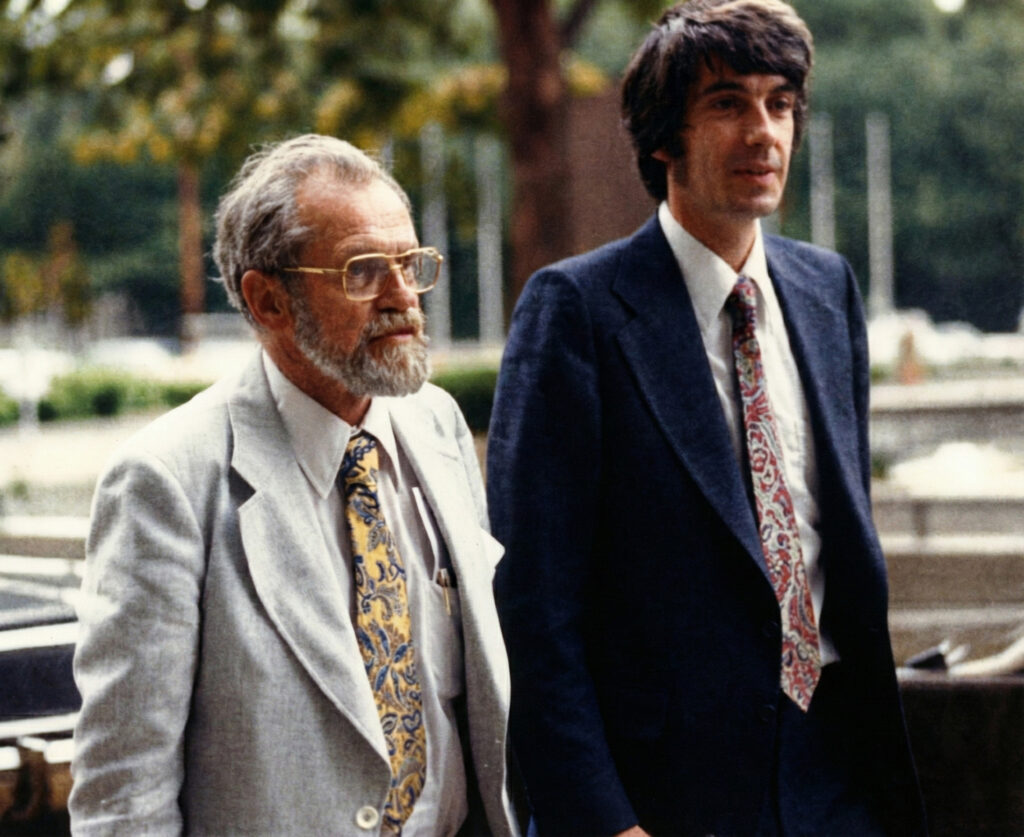
James E. McDonald (atmospheric physicist)
McDonald submitted a detailed critique, testified at the 1968 House “Symposium on Unidentified Flying Objects,” and later delivered “Science in Default” (AAAS, 1969). He contended that Condon’s team under-sampled the best cases, relied too heavily on negative findings from problematic data, and that dozens of high-quality, multi-sensor reports warranted serious investigation. His 1968 Congressional statement remains a key primary document. NICAP
AIAA UFO Subcommittee (engineering community)
In 1970, the American Institute of Aeronautics and Astronautics UFO Subcommittee offered a more open stance than Condon, stressing that a significant fraction of well-documented cases remained unresolved and merited continued study by the aerospace community. (AIAA published statements and appraisals in its Aeronautics and Astronautics outlets around 1968–1970.) Academia
NAS review (establishment affirmation)
Conversely, the NAS panel’s brief review endorsed the study’s headline conclusions (no evidence for extraterrestrial visitation; no basis for a major government program), while acknowledging that specific topics could merit research. This critique is often cited to argue that Condon’s overall skepticism represented mainstream scientific judgment at the time. WHS Electronic Services Document
Media & public perception
Major newspapers and magazines largely echoed the Condon/NAS line in early 1969. The Look magazine exposé (“Flying Saucer Fiasco”) and the Low memo controversy injected doubt into public discourse, but officialdom’s verdict dominated policy. (For primary context on the Low memo and the period’s press, see the reproduced memo and period coverage.) NICAP
What the archives establish
- A comprehensive government-funded university study was conducted; the full text is publicly accessible (NCAS internet edition; DTIC/NTIS mirrors). NCAS Files
- The NAS panel endorsed the report’s general conclusions and policy recommendations. WHS Electronic Services Document
- The Air Force closed Project Blue Book on Dec 17, 1969, explicitly referencing the Colorado study and earlier advisory panels. WHS Electronic Services Document
- Several case chapters judged select incidents to be strong unknowns, including Lakenheath–Bentwaters (1956). NICAP
- The “Low memo” exists and is reproduced from contemporary files, feeding long-running concerns about prior bias. NICAP
- Congress took interest in 1968; technical critics like McDonald argued the best data had been undervalued. NICAP
Lasting impact (1969 → present)
Policy and institutions
- Blue Book termination pivoted the Air Force away from a public, enduring UAP desk. Subsequent federal attention moved sporadically and often behind classification, contributing to the stigma that later ODNI/AARO documents try to counter. U.S. Air Force
- In 2024, the All-domain Anomaly Resolution Office (AARO) explicitly situated the Condon study within the long arc of U.S. government reviews, treating it as a prior against which new processes and standards are measured. AARO
Academia and scientific culture
- For decades, the Condon/NAS line helped normalize the view that UAP offered low scientific yield, discouraging early-career researchers from engagement. Dissenting communities (AIAA subcommittee, later Sturrock panels) kept a thread of inquiry alive, emphasizing multi-sensor evidence and instrumented data capture. Academia
Methods and standards
- The Condon chapters on optics, radar, and perception anticipated today’s attention to sensor artifacts and human factors. Modern guidance from DoD/AARO and national labs echoes this emphasis while insisting on time-synchronized, multi-sensor corroboration before upgrading claims, an approach that both skeptics and open-minded investigators can endorse. NCAS Files
Findings
- Condon’s conclusion: no compelling advance to science from 21 years of UAP study; major new programs not justified. NAS concurred. NCAS Files
- Contrary internal signals: A small number of high-strangeness cases (e.g., Lakenheath–Bentwaters) were assessed by the project’s own analysts as probable unknowns, showing the record is not monolithic. NICAP
- Process optics problem: The Low memo controversy credibly damaged trust among collaborators (e.g., NICAP) and in Congress. NICAP
- Policy effect: Blue Book closure (1969) and decades of low institutional priority followed. WHS Electronic Services Document
- Enduring debate: Engineering and scientific critics (AIAA, McDonald, Hynek) argued for targeted, instrumented research on the unresolved residue. NICAP
Critiques (structured)
- Sample & weighting bias. Critics argue the project under-sampled the strongest radar-visual and multi-sensor cases, then generalized from a mixed corpus to sweeping conclusions. McDonald’s Congressional statement and AAAS paper are primary sources for this line of critique. NICAP
- Mismatch between case chapters and summary. The Lakenheath finding, among others, sits awkwardly beside Condon’s generic dismissal, suggesting the Conclusions reflected prior beliefs more than a meta-analysis of the chapters. NICAP
- Process impartiality (Low memo). The memo’s “trick” phrasing on optics and emphasis (sociology/psychology of witnesses over physical evidence) led stakeholders to suspect pre-commitment to conventional outcomes. Even if Condon was unaware at first, perception mattered. NICAP
- Media effects and stigma. Because the NAS endorsed Condon and the Air Force acted on it, news coverage amplified the line that UAP lacked scientific promise, shaping a generation of academic attitudes that later studies (ODNI, NASA, AARO) now work to reset. WHS Electronic Services Document
Implications for modern UAP work
- Separate policy conclusions from data conclusions. Condon’s policy view (no major program) was adopted, but some project cases still withstand prosaic attribution. Modern programs should quantify how global conclusions are derived (e.g., weight cases by data quality, sensor diversity, and kinematic solvability). NCAS Files
- Demand multi-sensor rigor. The technical chapters’ caution about optical and radar artifacts aged well. Contemporary practice (ODNI/AARO era) should go further: require time-synchronized radar-EO-IR-RF and cooperative surveillance checks (ADS-B/Mode S) before assessing kinematics. (Condon foreshadows, AARO codifies). NCAS Files
- Mitigate stigma effects. The Condon/NAS imprimatur discouraged open research for decades. Destigmatized reporting and transparent case closure schemas (with machine-readable summaries) can prevent another half-century pause. AARO
- Audit priors. The Low-memo episode shows how perceived priors can discredit otherwise serious work. Program charters should declare analytic priors (and how they’ll be updated), include independent red teams, and publish methods before conclusions.
How to read the Condon Report
- Start with the case chapters, not just the six-page Conclusions. Mark outcomes as Resolved / Insufficient Data / Persistently Anomalous.
- Check for multi-sensor support. Give more weight to radar-visual, independent corroboration, and range-solved events.
- Map findings to method. Where optics or radar artifacts suffice, downgrade confidence; where they don’t, document what new data would change your mind.
- Compare with modern standards. Ask how the best Condon cases would fare under AARO-style fusion (radar-EO-IR-RF sync; cooperative surveillance; environment modeling). AARO
Claims taxonomy
Verified
- The University of Colorado conducted the UAP study; the full report is publicly accessible. NCAS Files
- The NAS issued a panel review endorsing the report’s main conclusions. WHS Electronic Services Document
- The USAF closed Project Blue Book on Dec 17, 1969, citing the study and prior panels. WHS Electronic Services Document
Probable
- Condon’s public summary helped institutionalize stigma and lowered academic engagement for decades, even as a residual set of cases remained unresolved. (Inference from NAS endorsement, Blue Book closure, and subsequent literature.) WHS Electronic Services Document
Disputed
- Whether the study was method-neutral: critics cite the Low memo and case-to-summary mismatch; defenders point to NAS endorsement and comprehensive technical chapters. NICAP
Legend
- Over-reads that portray Condon as a monolithic “debunking” treatise ignore internal contrary case findings documented in its own pages. (Use the primary case chapters rather than second-hand summaries.) NICAP
Misidentification
- Many photographic and single-sensor reports cataloged by the project were reasonably attributed to astronomical, meteorological, balloon/UAS, and optical/radar artifacts, patterns echoed by later government reviews. NCAS Files
Speculation labels
- Hypothesis. A meaningful minority of Colorado’s best-documented cases (e.g., Lakenheath–Bentwaters) represent non-trivial anomalies not reducible to known atmospheric, astronomical, or conventional aerospace explanations.
Rationale: The Condon case chapter itself assigns a “fairly high” probability to at least one genuine unknown; the AIAA subcommittee later concurred that a non-zero residue warranted further study. This is not a claim of non-human origin, only that the data justify continued instrumented investigation. NICAP - Witness Interpretation. Some first-hand narratives likely over-estimate speed/size due to parallax, glare, or sensor processing (as Condon emphasized).
Rationale: The report’s optics and radar chapters focus on well-known failure modes; modern analyses confirm these are common. NCAS Files - Researcher Opinion. A balanced reading of Condon suggests that a small, highly curated program, rather than “no program”, would have been the optimal policy in 1969 (focused on multi-sensor capture and method development).
Rationale: The mismatch between case-level unknowns and the global conclusion implies room for a narrow science program rather than a categorical exit.
References
Scientific Study of Unidentified Flying Objects (University of Colorado, 1968) – full text (Internet edition; DTIC/NTIS mirrors). NCAS Files
National Academy of Sciences panel review of the Colorado report (1969). WHS Electronic Services Document
USAF Fact Sheet on Project Blue Book & Dec 17, 1969 termination release. U.S. Air Force
Lakenheath–Bentwaters (1956) radar-visual analysis (project excerpt). NICAP
Robert J. Low memorandum (“Some Thoughts on the UFO Project,” Aug 9, 1966) – reproduction and transcription. NICAP
U.S. House Symposium on Unidentified Flying Objects (July 29, 1968) – full hearing & James E. McDonald statement. GovInfo
AARO (2024) Historical Record Report, Vol. 1 – contextual timeline including Condon. AARO
Condon Report (complete text; NCAS internet edition; DTIC/NTIS mirrors). NCAS Files
NAS Review of the Colorado study (PDF). WHS Electronic Services Document
USAF Fact Sheet / Blue Book termination and Dec 17, 1969 release. U.S. Air Force
Lakenheath–Bentwaters case analysis excerpt (project language). NICAP
Robert J. Low memorandum (“Some Thoughts on the UFO Project,” Aug 9, 1966) reproduction. NICAP
1968 House “Symposium on Unidentified Flying Objects” (full hearing & McDonald’s statement). NICAP
AARO (2024) Historical Record Report, Vol. 1 (contextualizes Condon among prior reviews). AARO
SEO keywords
Condon Report UAP; University of Colorado UAP study; National Academy of Sciences UFO review; Project Blue Book closure 1969; Lakenheath Bentwaters 1956 radar-visual; Robert Low memo; James E. McDonald critique; AIAA UFO Subcommittee 1970; scientific skepticism UAP; UAP research history; Condon conclusions vs case studies; AARO historical report Condon.
Last Update