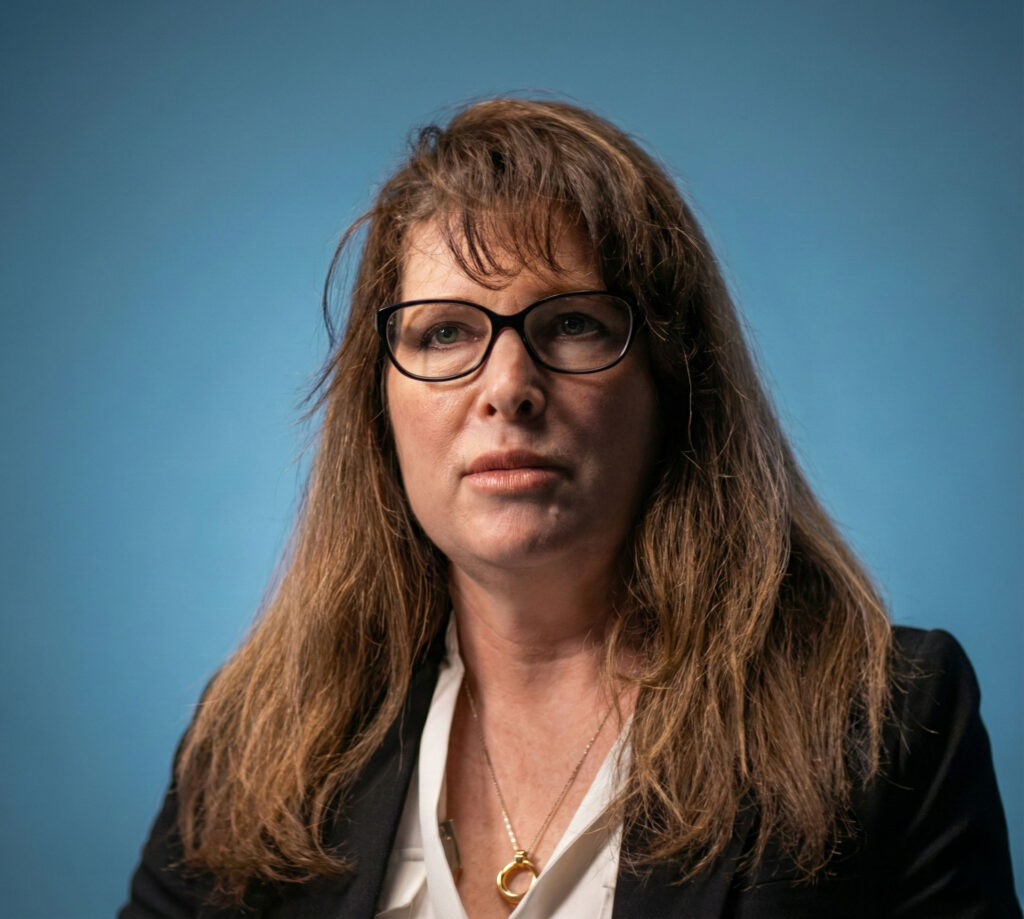
Diana Walsh Pasulka is an American religious studies scholar and writer whose work has become central to how academia and the wider culture think about UAP, non‑human intelligences, and modern belief. She is a Professor of Religious Studies at the University of North Carolina Wilmington (UNCW) and a leading voice on the intersection of religion, technology, media and UAP experiencer narratives.
Her books American Cosmic: UFOs, Religion, Technology (2019) and Encounters: Experiences with Nonhuman Intelligences (2023) helped normalize serious study of UAP within universities and public debate. They frame the phenomenon as a living, evolving religious landscape in which scientists, intelligence insiders, technologists and ordinary experiencers form a de‑facto “contact tradition” around non‑human intelligences and anomalous events. (Oxford University Press)
Pasulka’s work is also anchored in Catholic history, purgatory doctrine and death studies, and she remains a practicing Roman Catholic while engaging deeply with UAP and other anomalous experiences. (Wikipedia)
Early life and education
Public sources reveal little about Pasulka’s birth year or hometown, but she has described growing up in a secular family in California with a Jewish mother and Irish Roman Catholic father. She later embraced Catholicism herself and today identifies as a practicing Roman Catholic. (Wikipedia)
Her formal education tracks a classic path through elite American religious studies programs:
- B.A., University of California, Davis
- M.A., Graduate Theological Union, Berkeley
- Ph.D. in Religion, Syracuse University (degree year 2003) (Wikipedia)
Graduate work at Syracuse focused on Catholic devotional culture, saints, and afterlife beliefs, which became the basis for her first monograph on purgatory. (Syracuse Arts & Sciences)
Early academic career: purgatory, death, and Catholic culture
Pasulka’s first major book, Heaven Can Wait: Purgatory in Catholic Devotional and Popular Culture (Oxford University Press, 2014), examines seven centuries of Catholic reflection on purgatory as a real or symbolic space. The study looks at devotional practices, visions, pilgrimages, material culture and “purgatory apostolates” that continue to treat purgatory as an actual place. (Internet Archive)
This work established several threads that would later reappear in her UAP research:
- How invisible realms become mapped onto real landscapes and physical objects
- How visionary experiences generate new religious movements
- How official Church doctrine and popular, experiential religion interact
By the time Heaven Can Wait was reviewed in journals like The Journal of Religion and Catholic publications, Pasulka was recognized as a specialist in Catholic doctrine, death, and devotional practice. (Chicago Journals)
She also served as principal investigator for a three‑year Teaching American History grant (starting 2009), gaining experience managing publicly funded historical projects and collaborating with educators. (Wikipedia)
Religion, technology, and the road toward UAP
From Catholic afterlife beliefs, Pasulka turned increasingly toward media, digital culture, and what technology does to religious imagination. She co‑edited two influential reference works that bridge emerging technologies with questions about humanity and the supernatural:
- Posthumanism: The Future of Homo Sapiens (2018, Macmillan Reference USA), co‑edited with historian Michael Bess, surveying philosophical and ethical issues around bioenhancement and human modification. (Google Books)
- Believing in Bits: Digital Media and the Supernatural (2019, Oxford University Press), co‑edited with Simone Natale, arguing that religious belief and digital media are now tightly interwoven and that ideas like telepathy and spirit communication have migrated into how we imagine contemporary technologies. (OUP Academic)
On Academia.edu and in journal articles she explored topics like 19th‑century child hagiographies and the impact of film on religious memory, foregrounding how media shape belief and perception. (Academia.edu)
By the early 2010s, she had begun applying these tools to UAP: examining not only what people claim to see, but how those events are framed by film, television, the internet and big‑data infrastructures. A 2016 Oxford University Press blog Q&A with Jacques Vallée already shows her probing how UAP research might change in an era of large, networked datasets. (OUPblog)
Entering the UAP field
According to reporting by the North State Journal, Pasulka began investigating UAP as an academic topic around 2012, at a time when such work was still seen as a professional risk. (The North State Journal)
Rather than approaching UAP as a question of “true or false,” she treated it as a live religious and cultural system, similar to the Marian apparitions, saint cults, and visionary devotions she had already studied in Catholic contexts. (Oxford University Press)
Fieldwork 2014–2018: Vatican, New Mexico, and the “invisible college”
Between 2014 and 2018 Pasulka undertook a series of research trips that later formed the narrative spine of American Cosmic:
- New Mexico, where she traveled with two scientists to what they presented as an “alleged” UAP crash site, treating the location as a modern pilgrimage ground with relic‑like debris. (D.W. Pasulka)
- Rome and other Italian sites, including work in the Vatican Apostolic Archive and the Vatican Observatory (Specola Vaticana), studying historical visionary records and Catholic reactions to celestial phenomena. (D.W. Pasulka)
In her own account, she did not go as a “believer” but as a scholar of belief systems, interested in how highly credentialed scientists and technologists organize their lives around anomalous experiences that they interpret as contact with non‑human intelligences. (D.W. Pasulka)
She anonymized many of her interlocutors with pseudonyms like “Tyler” (a government‑linked aerospace scientist) and “James” (a Silicon Valley entrepreneur), reflecting both ethical commitments to protect sources and the broader climate of secrecy around UAP and advanced technology work. These characters appear as representatives of a hidden “invisible college” of researchers, entrepreneurs, and insiders who treat UAP encounters and alleged materials as central to their scientific and spiritual lives. (Oxford University Press)
American Cosmic (2019): UAP as a new religious formation
Published by Oxford University Press in February 2019, American Cosmic: UFOs, Religion, Technology is the book that made Pasulka a familiar name in the global UAP conversation. (Syracuse Arts & Sciences)
Key themes include:
- A six‑year ethnographic study of scientists, Silicon Valley entrepreneurs, astronauts, and former military and government officials who regard UAP encounters and non‑human intelligences as real and religiously meaningful. (Commonwealth Club World Affairs)
- The idea that UAP belief functions as a new, technologically mediated religion in which media and scientific institutions replace traditional religious authorities as interpreters of the “cosmic.” (Oxford University Press)
- Crash sites and alleged debris fields in New Mexico as modern pilgrimage sites, analogous to Catholic shrines housing relics. (Oxford University Press)
- The claim that what matters most, analytically, is not simply whether any single case is “proven,” but how a network of experiences, secrecy, technology, and media yields a real religious movement. (Oxford University Press)
Sean Illing’s widely read Vox profile dubbed this “the new American religion of UFOs,” emphasizing that the book is less about adjudicating the reality of UAP and more about what their appeal reveals about culture, technology and belief. (Vox)
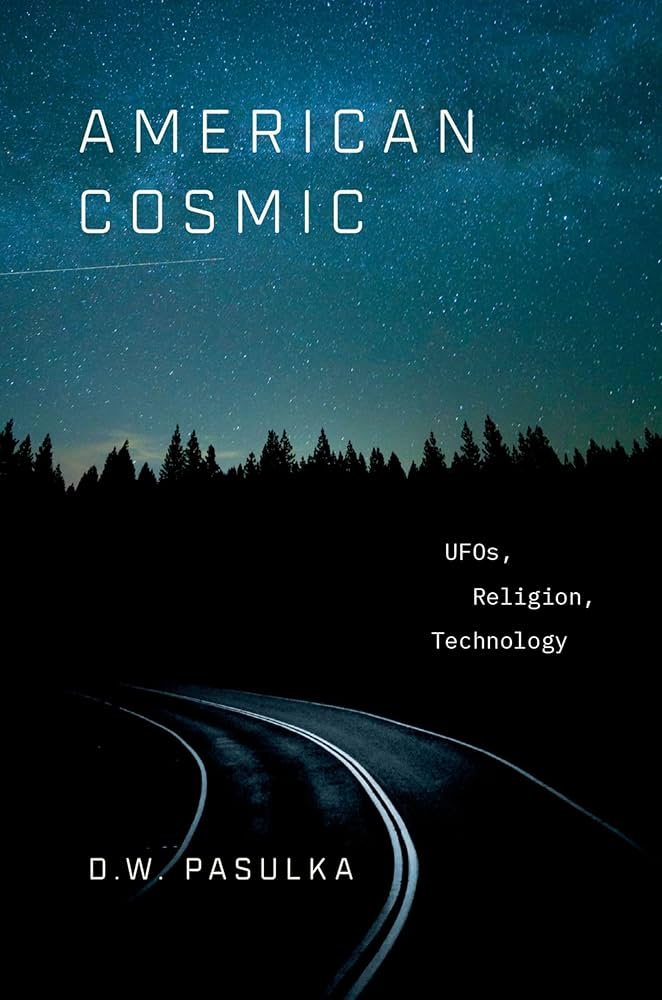
Samuel Loncar’s review in the Los Angeles Review of Books framed American Cosmic as a major intervention that treats UAP culture “like religion centered on science and technology,” crediting Pasulka with showing how contact narratives and crash lore function as myth‑making in a scientific age. (Los Angeles Review of Books)
Critically, Pasulka refuses to reduce UAP testimony to misidentification or hoax, but she also declines to treat government documents as ultimate arbiters of reality. Her stance mirrors UAPedia’s own editorial approach: official reports and insider claims are one evidentiary stream among many, to be weighed alongside experiencer testimony, historical analogues, and independent analysis. (UAPedia – Unlocking New Realities)
Encounters (2023): nonhuman intelligences and experiencer lives
Her follow‑up, Encounters: Experiences with Nonhuman Intelligences (St. Martin’s Essentials), was released in late 2023 and widely circulated through 2024. (Amazon)
Where American Cosmic follows an ethnographic journey into elite “invisible colleges,” Encounters shifts the focus more squarely onto experiencers themselves, across several domains:
- UAP contact cases and close encounters
- Near‑death experiences, apparitions, and Marian visions
- High‑strangeness events that blur the lines between religious, paranormal, and technological narratives
Pasulka looks for patterns in how people describe “nonhuman intelligences,” tracking the after‑effects on their ethics, creativity, and sense of reality. Reviewers have highlighted how the book draws explicit parallels between classic religious experiences and modern contact narratives, suggesting that whatever the ultimate ontology of these intelligences, they behave in ways that are deeply entangled with consciousness and culture. (Title of Site | Rice University)
The book also shows a slightly more forward stance on ontology than American Cosmic: she still brackets definitive claims, but she is more open about treating at least some encounters as genuine interactions with nonhuman agencies that may not fit simple extraterrestrial “nuts and bolts” models. (Title of Site | Rice University)
Upcoming work: The Others and beyond
On her official website, Pasulka lists a forthcoming book titled The Others: AI, UFOs and the Secret Forces Guiding Human Destiny, under contract with St. Martin’s Essentials and projected for July 2026. (D.W. Pasulka)
This project extends her exploration of nonhuman intelligence into two overlapping realms:
- Artificial intelligence and machine agency
- Nonhuman intelligences associated with UAP and related phenomena
Given her previous work on digital media, posthumanism, and UAP, this suggests a synthesis where AI and NHI may be treated as parts of a broader ecology of intelligences in which humans participate rather than sit at the center. (D.W. Pasulka)
Institutional roles and public presence
Pasulka’s institutional footprint now spans several key nodes in the emerging academic study of UAP and anomalous phenomena.
University of North Carolina Wilmington
- Professor of Religious Studies at UNCW, where she has specialized in Catholic studies, religion and new media, digital culture and gender. (ReligionLink)
- Served as Chair of the Department of Philosophy and Religion from 2015 to 2019. (Wikipedia)
Vatican research
- Lead investigator on an ongoing project with the Vatican Apostolic Archive and the Vatican Observatory, translating canonization records for Saint Joseph of Copertino, a levitating 17th‑century mystic often linked in modern discourse to anomalous phenomena. (The Sol Foundation)
The Sol Foundation
- Member of the Social Sciences Advisory Board of The Sol Foundation, a research and policy organization focused on UAP and nonhuman intelligences. The Foundation credits American Cosmic with helping bring academic attention to U.S. government interest in UAP and notes her broader media impact. (The Sol Foundation)
Rice University and the Archives of the Impossible
- Regular speaker at Rice University’s “Archives of the Impossible” initiative, which stewards major collections on UAP, paranormal research and anomalous phenomena. (Title of Site | Rice University)
- Co‑convener of the 2025 conference “The UFO and the Impossible,” where she introduced plenary speakers such as Garry Nolan and Timothy Gallaudet and delivered concluding reflections with Jeffrey Kripal and William Parsons. (Oxford American)
Media and popular culture
Pasulka has actively bridged academic work with mass media:
- Appeared on major podcasts including The Joe Rogan Experience, the Lex Fridman Podcast, and many UAP‑focused shows, often explaining how elite scientists quietly navigate their UAP beliefs. (Podcasts – Your Podcast Transcripts)
- Consultant for supernatural and religious themes in film and television, including work on The Conjuring franchise and as consulting producer on the Emmy‑nominated Netflix series Encounters and the J. J. Abrams‑produced docuseries UFO. (Wikipedia)
- Featured in news outlets and cultural commentary in Vox, Los Angeles Review of Books, North State Journal and others as a key voice helping mainstream the study of UAP. (Vox)
Intellectual contribution to UAP studies
From a UAPedia perspective, Pasulka’s impact can be summarized in several interlocking moves:
- Reframing UAP as religion, not just anomaly.
She argues that modern UAP belief is structurally similar to older religious traditions. There are sacred sites (crash locations, test ranges), relics (alleged metamaterials and debris), saints and visionaries (contactees, scientists with “downloads”), and a mythic narrative about nonhuman intelligences in contact with humanity. (Oxford University Press) - Centering experiencer phenomenology.
In Encounters she foregrounds how people actually describe their interactions with nonhuman intelligences and tracks the long‑term transformation these experiences trigger. This aligns with broader experiencer research traditions while widening the scope beyond classic “abduction” frameworks. (Title of Site | Rice University) - Challenging simple materialist or “it’s all misidentification” explanations.
Without insisting on any single theory, she treats the persistence, coherence, and transformative power of UAP and other anomalous experiences as evidence that something real and active is engaging human consciousness and culture. Her methodological move is to bracket metaphysics, not testimony. (Oxford University Press) - Integrating archives, big data, and secrecy.
Through collaborations with Vallée, Rice’s Archives of the Impossible, and institutions like the Sol Foundation, she highlights how large datasets, declassified materials, and private collections can be studied alongside classical religious archives, rather than treated as fringe curiosities. (OUPblog) - Bridging elite “invisible colleges” and public discourse.
By anonymizing but clearly describing scientists, engineers and insiders who take UAP seriously, she has helped readers understand that belief in nonhuman intelligences is not limited to the margins but is embedded in cutting‑edge research communities, often hidden by classification and stigma. (Oxford University Press)
Taken together, Pasulka has become one of the key interpreters of UAP as a transformative force in religion and culture, comparable in influence (within her domain) to figures like John Mack in abduction research or Jacques Vallée in science and data‑driven UAP studies. (Title of Site | Rice University)
Chronological timeline (selected)
Where exact dates are not publicly documented, entries are approximate or tied to publication years.
Childhood – early adulthood
Grows up in California in a secular household with Jewish and Irish Catholic heritage. (Wikipedia)
1990s – early 2000s
Completes B.A. at University of California, Davis, and M.A. at Graduate Theological Union, Berkeley. (Wikipedia)
2003 – Receives Ph.D. in Religion from Syracuse University. (Syracuse Arts & Sciences)
Mid–2000s
Publishes early scholarly work on Catholic hagiography and children’s literature, including “A Communion of Little Saints: Nineteenth‑Century American Child Hagiographies.” (Academia.edu)
2009–2012
Serves as principal investigator for a three‑year Teaching American History grant. (Wikipedia)
2014
Oxford University Press publishes Heaven Can Wait: Purgatory in Catholic Devotional and Popular Culture. (Syracuse Arts & Sciences)
2014–2018
Conducts fieldwork at alleged UAP crash sites in New Mexico and within the Vatican Apostolic Archive and Vatican Observatory, gathering material that will become central to American Cosmic. (D.W. Pasulka)
2016
Publishes an Oxford University Press blog Q&A with Jacques Vallée on UAP and big data, signaling her emerging interest in the phenomenon. (OUPblog)
2018
Co‑edits Posthumanism: The Future of Homo Sapiens with Michael Bess (Macmillan Reference USA). (Google Books)
2019
Publishes American Cosmic: UFOs, Religion, Technology with Oxford University Press. (Syracuse Arts & Sciences)
Co‑edits Believing in Bits: Digital Media and the Supernatural, further cementing her role in the study of religion and digital media. (OUP Academic)
Receives wide media coverage through Vox (“The new American religion of UFOs”) and Los Angeles Review of Books reviews and essays about American Cosmic. (Vox)
2020
Appears on the Lex Fridman Podcast to discuss aliens, technology, religion and belief, significantly expanding her audience in tech and AI communities. (Podcasts – Your Podcast Transcripts)
2022
Listed by Rice University as a key participant in the first “Archives of the Impossible” conference, connecting her work to major archival and scholarly initiatives on UAP and anomalous phenomena. (Rice News)
2023
North State Journal profile describes her as garnering international attention for UAP research. (The North State Journal)
St. Martin’s Essentials releases Encounters: Experiences with Nonhuman Intelligences. (Amazon)
2024
Continues to promote Encounters through talks, podcasts and academic events, including conversations hosted or amplified by Harvard Divinity School and Rice’s Archives of the Impossible. (Spotify)
2025
Serves as co‑convener and key host for “The UFO and the Impossible” conference at Rice University, introducing and contextualizing high‑profile speakers and summarizing the event’s themes. (Oxford American)
Listed as a Social Sciences Advisory Board member of The Sol Foundation. (The Sol Foundation)
Projected 2026
Scheduled publication of The Others: AI, UFOs and the Secret Forces Guiding Human Destiny with St. Martin’s Essentials. (D.W. Pasulka)
Bibliography
Books by Diana Walsh Pasulka
Pasulka, D. W. (2014). Heaven can wait: Purgatory in Catholic devotional and popular culture. Oxford University Press. (Internet Archive)
Pasulka, D. W. (2019). American cosmic: UFOs, religion, technology. Oxford University Press. (Oxford University Press)
Pasulka, D. W. (2023). Encounters: Experiences with nonhuman intelligences. St. Martin’s Essentials. (Amazon)
Pasulka, D. W. (forthcoming 2026). The others: AI, UFOs and the secret forces guiding human destiny. St. Martin’s Essentials. (D.W. Pasulka)
Co‑edited volumes
Bess, M., & Pasulka, D. W. (Eds.). (2018). Posthumanism: The future of Homo sapiens. Macmillan Reference USA. (Google Books)
Natale, S., & Pasulka, D. W. (Eds.). (2019). Believing in bits: Digital media and the supernatural. Oxford University Press. (OUP Academic)
Selected articles and chapters (illustrative)
Pasulka, D. W. (2007). A communion of little saints: Nineteenth‑century American child hagiographies. Journal of Feminist Studies in Religion, 23(2). (Academia.edu)
Pasulka, D. W. (2016, November 21). Beyond Earth: Research, big data, and unidentified aerial phenomena. OUPblog. (OUPblog)
Loncar, S. (2019, July 27). A quest for the Holy Grail: On D. W. Pasulka’s American Cosmic: UFOs, Religion, Technology. Los Angeles Review of Books. (Los Angeles Review of Books)
Illing, S. (2019, June 4). The new American religion of UFOs. Vox. (Vox)
Daughtry, G. (2023, August 16). UNCW professor garners international attention for UFO research. North State Journal. (The North State Journal)
“Diana Walsh Pasulka.” (2025). Wikipedia. (Wikipedia)
Pasulka, D. W. (n.d.). About. In D. W. Pasulka official site. (D.W. Pasulka)
Sol Foundation. (2025). Diana Pasulka. In People – The Sol Foundation. (The Sol Foundation)
Rice University. (2025). Archives of the Impossible conference program: “The UFO and the Impossible”. (Title of Site | Rice University)
References
Books by Diana Walsh Pasulka
Pasulka, D. W. (2014). Heaven can wait: Purgatory in Catholic devotional and popular culture. Oxford University Press.
Pasulka, D. W. (2019). American cosmic: UAP, religion, technology. Oxford University Press.
Pasulka, D. W. (2023). Encounters: Experiences with nonhuman intelligences. St. Martin’s Essentials.
Pasulka, D. W. (Forthcoming, 2026). The others: AI, UAP, and the forces shaping human destiny. St. Martin’s Essentials.
Edited Volumes
Bess, M., & Pasulka, D. W. (Eds.). (2018). Posthumanism: The future of Homo sapiens. Macmillan Reference USA.
Natale, S., & Pasulka, D. W. (Eds.). (2019). Believing in bits: Digital media and the supernatural. Oxford University Press.
Peer-Reviewed Articles and Scholarly Essays
Pasulka, D. W. (2007). A communion of little saints: Nineteenth-century American child hagiographies. Journal of Feminist Studies in Religion, 23(2), 1–18.
Pasulka, D. W. (2016, November 21). Beyond earth: Research, big data, and unidentified aerial phenomena. Oxford University Press Blog.
Reviews and Academic Commentary
Loncar, S. (2019, July 27). A quest for the holy grail: On Diana Walsh Pasulka’s American Cosmic. Los Angeles Review of Books.
Illing, S. (2019, June 4). The new American religion of UAP. Vox.
Journalism and Institutional Profiles
Daughtry, G. (2023, August 16). UNCW professor garners international attention for UAP research. North State Journal.
University of North Carolina Wilmington. (n.d.). Faculty profile: Diana Walsh Pasulka. Department of Philosophy and Religion.
Research Institutions and Archives
Rice University. (2022–2025). Archives of the Impossible: Conference programs and speaker listings. Humanities Research Center.
Sol Foundation. (2024). Diana Walsh Pasulka. Social Sciences Advisory Board profiles.
Media and Documentary Contributions
Netflix. (2023). Encounters [Television documentary series]. Netflix Studios.
Showtime. (2021). UFO [Television documentary series]. Bad Robot Productions.
Reference Works
Wikipedia contributors. (2025). Diana Walsh Pasulka. Wikipedia, The Free Encyclopedia.
SEO keywords
Diana Walsh Pasulka biography, American Cosmic book, Encounters nonhuman intelligences, UAP religion scholar, Catholicism and UFOs, Archives of the Impossible Rice University, Sol Foundation advisory board, Vatican Archives and anomalous phenomena, Garry Nolan American Cosmic, UAP experiencer research, nonhuman intelligences theology, religion technology and UAP, D. W. Pasulka timeline, The Others AI UFOs, UAPedia key figures