
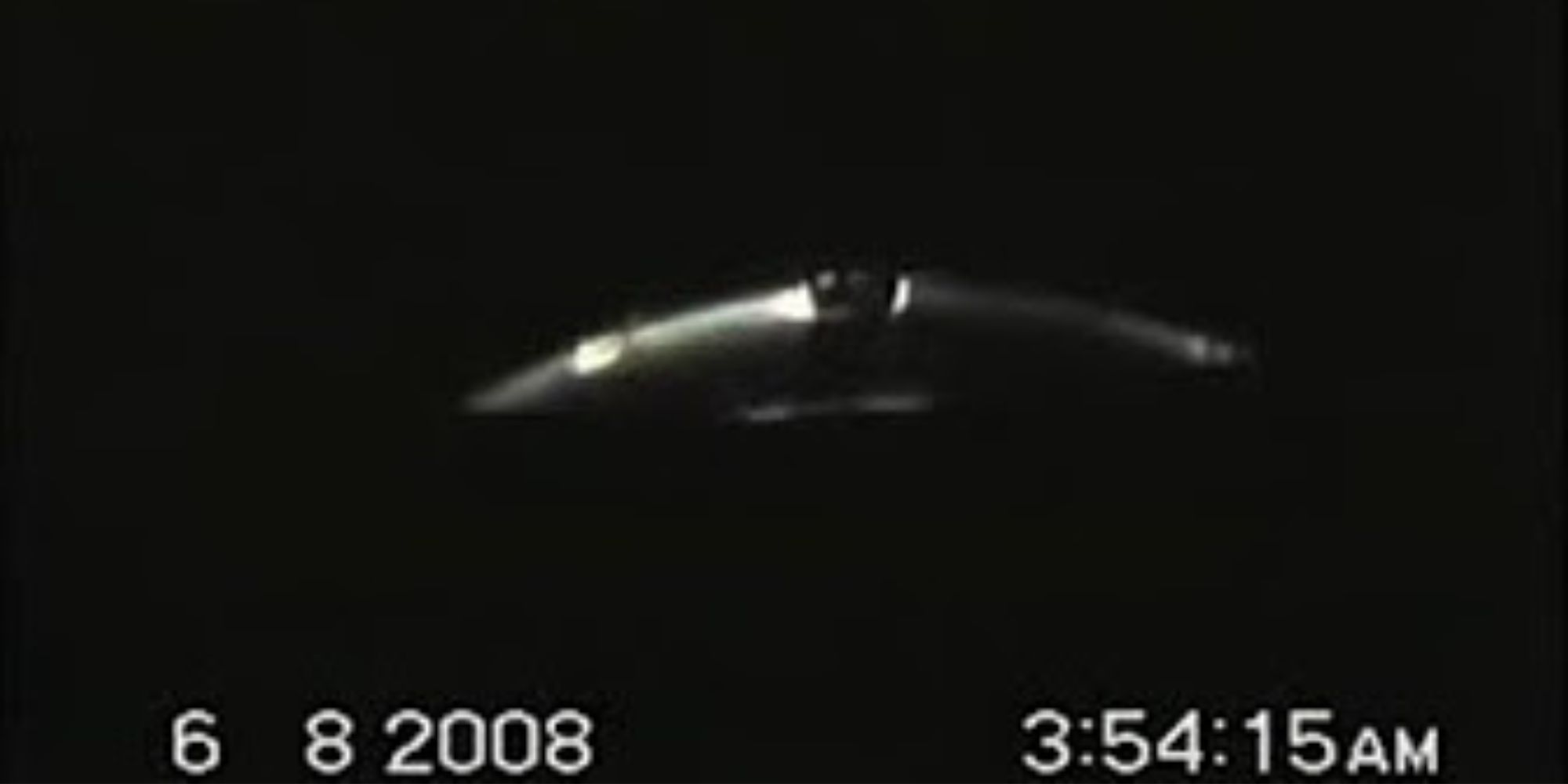
On the Marmara coast west of Istanbul, a night-watchman with a video camera points his lens over the water and records something that looks, depending on your priors, a structured craft, a ship’s superstructure magnified by atmosphere, or a reflection tricking a sensor.
The “Kumburgaz videos” (often framed as 2007-2009) sit in a rare niche: not a single dramatic moment, but a repeatable, revisitable, contentious body of footage that became a national media event in Turkey and later a global internet debate.
What follows is an investigative rewrite in a modern magazine style, built around what can be pinned to dates, statements, and documents, then clearly separated from what can’t.
Dossier quickview
To keep the case grounded, here is the compact dataset the rest of this story draws from.
| Data Field | What we can actually support |
|---|---|
| Location | Kumburgaz (suburban Istanbul holiday area), overlooking the Sea of Marmara |
| Primary witness / videographer | Yalçın Yalman, described in press as a night-watchman; also described as a 51-year-old hobbyist UFO observer |
| Public “release” moments | Turkish press coverage in early 2008 around a TÜBİTAK National Observatory preliminary report; and a June 2009 press briefing where footage was shown to media |
| Institutional involvement (limited) | TÜBİTAK Ulusal Gözlemevi preliminary assessment: not obvious CGI/studio effects; insufficient reference points for distance/size; “UFO” label may be used but does not imply extraterrestrial origin |
| Investigators and interpreters (confirmed in reporting) | Haktan Akdoğan (Sirius UFO Space Science Studies Centre) as organizer/advocate; Nick Pope appears as a speaker/commentator urging analysis to avoid misinterpretation |
| Core controversy | “Humanoid silhouettes” claim vs. mundane explanations (ship/boat lights, reflections, misinterpretation amplified by digital zoom) |
| Hypnosis / polygraph | No credible public record of either being used in this case (and the central evidence is video rather than recovered testimony) |
| Physical trace evidence | No debris, no radar publicly released; the physical “artifact” is primarily the video media and its chain of handling as described in news and online analyses |
The shoreline, the lens, and the thing in the frame
Kumburgaz is not some remote desert test range. It’s close enough to Istanbul to be a weekend exhale, a coastline where distant lights, boats, haze, and horizon trickery are part of the normal nightscape. That matters because this is a camera case. Not a crash-retrieval rumor. Not a single frightened driver on a back road. It’s a recurring act of looking, zooming, and insisting: look again, closer.
The central figure is Yalçın Yalman, described in multiple reports as a night-watchman who filmed “bright crescent-shaped” or structured luminous objects over the Sea of Marmara, beginning in 2007. He is consistently portrayed not as a whistleblower but as a hobbyist, someone passing the night by scanning the sky and waterline.
That framing, ordinary job, persistent hobby, became part of the story’s persuasive power. It’s also the first investigative pitfall: hobbyists can be sincere and still be wrong, and repeat filming can mean “ongoing phenomenon”… or “ongoing misidentification with a consistent vantage point.”
June 2009: when the case becomes a press event
The Kumburgaz material didn’t just drip onto the internet. In early June 2009 it was staged as a media moment.
At a press briefing covered by İhlas Haber Ajansı (İHA), Haktan Akdoğan, head of the Sirius UFO Uzay Bilimleri Araştırma Merkezi, said his organization had evaluated 337 UFO-related reports in 2009 and determined that 5 videos and 9 photographs contained what they categorized as “UFO,” while the rest were attributed to more ordinary causes (smudges, birds, Venus, light reflections).
The reporting also places Yalman at a specific setting: a guard at Kumburgaz Yenikent, filming with his own camera, with Akdoğan describing the result as unusually close and clear, and emphasizing a striking claim: that silhouettes of “living beings” appear inside the object.
Yalman’s own quoted posture, in the same coverage, is steady and almost procedural: he became interested in UFOs around 2007, tries to record what he sees, and will keep filming when he can.
This is a useful anchor point: it tells us what was claimed publicly, by whom, and when—before years of re-uploads and enhancement edits.
The “government confirmed it” problem: what TÜBİTAK did, and did not, say
If you’ve spent time in UAP communities, you’ve seen the claim that “Turkey’s government” or “TÜBİTAK” authenticated the Kumburgaz videos as extraterrestrial craft. That is not what the most-cited Turkish reporting actually says.
A 2008 news report summarizing a TÜBİTAK Ulusal Gözlemevi preliminary assessment is careful and, frankly, lawyerly. The observatory report notes that the footage appears to be genuine capture in open night sky conditions (it is “not” obviously a computer animation, special video effect, or staged studio recreation).
But the same reporting underlines the critical limitation: without reference objects in the same frame and without controlled re-shooting under the same conditions, the analysts could not determine the objects’ true distance, size, or identity.
Airkule’s write-up includes a specific technical red flag from the preliminary review: inconsistent AM/PM indicators in the on-screen time display raise questions about the accuracy of the recorded time data. That’s not a smoking gun for fraud—it’s a reminder that consumer camera overlays are easy to mis-set and easy to over-trust.
And then comes the line that should be stapled to every repost: the report allows that the term “UFO” can be used for such images, but explicitly says this does not mean it is extraterrestrial.
Even Prof. Dr. Zeki Eker, as quoted in that coverage, is depicted as saying the footage is not montage, but also that they cannot understand what it is, and cannot prove whether it is a prank.
So yes, there is a kind of institutional touchpoint here, but it’s best described as “not easily dismissed as CGI” combined with “not identifiable from the available data,” not “confirmed alien craft.”
What the camera seems to show—and why zoom is the real protagonist
The Kumburgaz footage has a signature aesthetic: a dark horizon, an object that can look crescent-like or structured, and aggressive zoom that invites the viewer to interpret compression artifacts as architecture.
Akdoğan’s public interpretation, presented plainly in Turkish press, is that the footage is close and clear, and that it reveals silhouettes of occupants.
The counterpoint, equally important, is that a long-zoom camera pointed at a bright, distant light source over water is an engine for false structure. Atmospheric shimmer, sensor blooming, interlacing/compression, and stabilization artifacts can form edges that feel mechanical. When viewers are primed to “see the cockpit,” they often do.
This is why Kumburgaz is less a single “what was it?” and more a study in how interpretation attaches to pixels.
Witnesses: named, implied, and statistical
A dossier shouldn’t pretend the witness roster is bigger than it is.
The primary named witness in mainstream reporting is Yalçın Yalman. The Turkish and international coverage portrays him consistently: 51 years old at the time, filming since 2007, treating it as a hobby, and even speaking casually about the phenomenon in quasi-protective terms.
The second key figure is Haktan Akdoğan, not as a witness to the filmed events, but as the organizer/curator—someone who receives reports, filters them, interprets them, and stages public releases.
Then there is the wider “witness cloud,” described statistically: Sirius reportedly received 337 UFO reports in the first five months of 2009, with 74 documented, including 16 videos and 58 digital photos, from multiple regions of Turkey. That doesn’t prove the Kumburgaz object, but it tells you this was being positioned as part of a broader domestic wave of reporting.
Investigators in the orbit
Akdoğan is the case’s gatekeeper. In 2009 he not only presented the footage; he framed it as globally significant (“Turkey enters the world literature”) and emphasized the “occupant silhouettes” interpretation.
His role also connects the videos to an institutional ambition: conferences, international participation, and a push to make Turkish UFO study seem modern, serious, and culturally respectable.
Nick Pope: caution from a government-adjacent ufologist
Nick Pope appears in both Turkish and international reporting as a speaker at the Istanbul conference scene around the case. He’s quoted as saying the images are “very interesting,” while warning that without proper analysis there’s a risk of misinterpretation.
In a media ecosystem where “confirmation” language spreads fast, Pope’s stance reads like a brake pedal: intriguing does not equal identified, and analysis does not equal belief.
Physical evidence: what exists, what doesn’t, and what that implies
When people say “physical evidence” in UAP cases, they often mean metal, burns, radar, injuries, trace materials. Kumburgaz is different.
The physical evidence is primarily:
- the recorded video and stills,
- the camera’s on-screen time overlays and whatever metadata survives re-uploads,
- the chain of handling and public presentation described in news coverage,
- and the fact that a state-affiliated observatory publicly assessed at least some of the material as not obviously fabricated effects while still not identifiable.
What is notably missing from public record coverage is just as important: no published radar track, no released raw sensor package, no officially published photogrammetry, no recovered debris.
The skeptical file: cruise ships, windows, and the physics of “looks like a craft”
Online skepticism around Kumburgaz is not a single claim; it’s a stack of competing mundane models.
One of the most persistent is the cruise ship / distant ship superstructure hypothesis, suggesting that bright lights and structural elements, compressed by distance and magnified by zoom, can resemble a “cockpit” silhouette.
Another line of critique argues the footage may involve shooting through a window (or capturing reflections), with discussions pointing to segments where rain or glass artifacts appear to interact with the “object,” implying the object is not in the sky but in the optical path.
These skeptical models matter because they explain why Kumburgaz can look so close: if the “structured” shape is not actually a distant craft, the camera’s zoom and focus behavior can be consistent with nearer optical artifacts.
The believer’s file: “occupants,” the Moon-in-frame argument, and why it convinces people
Believing interpretations also come in layers.
A popular claim in Turkish reporting is that it matters when the Moon and the “UFO” appear in the same frame, presented as a sign the footage is genuinely of the night sky and not studio trickery.
That point is compatible with multiple explanations: yes, it can support “real sky capture” but real sky capture can still record a ship, a plane, or reflections, depending on the optical setup.
The more dramatic believer claim is the “humanoid silhouettes” narrative: that the videos show beings inside a craft. This claim is explicitly made in mainstream reporting as part of Akdoğan’s framing, and it is one of the reasons the case continues to circulate.
From a data-first perspective, the key point is not whether viewers feel they can see occupants; it’s whether the footage supports a stable interpretation under multiple independent analyses using the same original-quality frames. Publicly, that level of controlled analysis is not resolved in the mainstream record.
Government involvement: a soft-touch encounter with official language
Kumburgaz is sometimes portrayed as a “government-confirmed UFO.” The more accurate description is: a government-adjacent scientific body acknowledged the imagery was not clearly faked, but also stated it could not identify the objects, and explicitly rejected the leap to extraterrestrial conclusions.
That is still significant. In many countries, official bodies avoid even engaging. Here, engagement happened, but in a limited, method-bound way.
This case is a lesson in how official language gets memed. “Not CGI” becomes “confirmed.” “UFO term may be used” becomes “UFO approved.” The dossier record should keep returning to the original phrasing..
Appearances and publications: how the case spread
Kumburgaz’s public life can be traced through a few key channels:
In Turkey, the case moved through news reportage and press events, including the June 2009 media briefing and earlier 2008 reporting around the observatory’s preliminary assessment.
Internationally, it entered English-language journalism through reporting that described the Istanbul UFO congress scene and presented Yalman as a symbol of a new Turkish interest in UFOs.
Later, the footage and its controversy became recurring material for online analysis communities, including skeptical forums that treated it as a debunking puzzle (ship/reflection models) and believer communities that treated it as near-holy-grail imagery.
There are also television-style treatments and modern podcast revivals, but the most defensible “publication spine” remains the contemporaneous press coverage above.
Implications: what Kumburgaz teaches even if you never settle “what it was”
A case can be valuable without being solved. Kumburgaz’s main contributions to UAP study are methodological:
It demonstrates how repeat observation can still fail to produce identification when the data capture lacks reference points (range, scale, independent sensors). The TÜBİTAK commentary essentially says this in formal language: without reference objects and controlled re-shooting, size/distance remain indeterminate.
It shows how institutions can be used as rhetorical shields. The observatory’s cautious “UFO term may be used” statement is repeatedly reinterpreted as an endorsement of exotic conclusions, even though the same text warns against that leap.
It highlights the power, and danger, of zoom culture. The more you zoom, the more your brain insists on structure. Kumburgaz is a long-form demonstration of pareidolia meeting consumer optics.
UAPedia claims taxonomy
Below is a compact taxonomy you can paste into a case database. It’s written to preserve who-claimed-what, and what kind of evidence is attached.
case_id: TR-KMB-2007-2009
case_name: “Kumburgaz (Sea of Marmara) UAP Videos”
claim_set:
– Claim Id: TR-KMB-OBS-01
Type: observation
Statement: “A structured luminous object was repeatedly filmed from the Kumburgaz area over the Sea of Marmara beginning in 2007.”
Primary sources: [“Irish Times (2009)”, “Eurasianet (2009)”]
status: Verified
– Claim Id: TR-KMB-ORG-01
type: organizational assessment
statement: “Sirius UFO Center reviewed 2009 reports and categorized 5 videos and 9 photos as ‘UFO’, with other submissions attributed to mundane causes.”
Primary sources: [“İHA (2009)”, “Turkinfo (2009)”]
status: Verified
– claim_id: TR-KMB-INT-01
type: interpretation
statement: “Silhouettes of ‘living beings’ are visible inside the object in some footage.”
primary_sources: [“İHA (2009)”, “Eurasianet (2009)”, “Turkinfo (2009)”]
status: Disputed
– claim_id: TR-KMB-GOV-01
type: institutional review
statement: “TÜBİTAK National Observatory preliminary review found no clear evidence of CGI/studio fabrication, but could not determine distance/size/identity; ‘UFO’ term may be used without implying extraterrestrial origin.”
primary_sources: [“Airkule (2008)”, “Yeni Şafak (2008)”]
status: Verified
– claim_id: TR-KMB-SKEP-01
type: skeptical hypothesis
statement: “The imagery could match a cruise ship or distant maritime lights/superstructure magnified at night.”
primary_sources: [“Metabunk thread (2018–)”]
status: Disputed
– claim_id: TR-KMB-SKEP-02
type: skeptical_hypothesis
statement: “Some segments may involve reflection or filming through glass (e.g., rain-on-window interactions).”
primary_sources: [“Metabunk thread page 6 (reflection/rain discussion)”]
status: Disputed
Speculation labels
To keep this dossier honest, here are the major interpretive buckets with explicit labels.
Supported (documented in mainstream reporting):
The footage was publicly presented and described by Akdoğan; Yalman filmed from Kumburgaz and framed it as a hobby; an Istanbul conference drew large attendance; Nick Pope advised caution about misinterpretation; a TÜBİTAK National Observatory preliminary review said the footage did not appear to be CGI/studio manipulation but could not be identified.
Plausible but unresolved (requires better raw data):
Cruise ship / maritime misidentification; window/reflection involvement; atmospheric distortion over water interacting with zoom and compression. These are repeatedly argued, but not definitively closed in the public record.
High-speculation / interpretation-heavy:
“Humanoid silhouettes” as actual occupants rather than artifact/structure misread; extraterrestrial craft conclusions. This is asserted by proponents but not established by the publicly described analysis constraints.
References
Primary reporting & institutional language
– https://www.iha.com.tr/haber-istanbulda-en-net-ufo-goruntusu-74267
– https://www.turkinfo.nl/istanbul39da-ufo-goruntuleri/674
– https://www.turkiyeegitim.com/istanbulda-ufo-goruntuleri-7781h.htm
– https://www.airkule.com/haber/TUBITAK-GORUNTULERE-UFO-DENEBILIR/2996
– https://www.yenisafak.com/hayat/ufo-olabilir-ama-uzayli-degil-97985
International coverage & conference context
– https://eurasianet.org/turkey-ufo-believers-seek-to-shed-quack-status
Skeptical analysis community (optics / ship / reflection hypotheses)
– https://www.metabunk.org/threads/2008-ufo-footage-from-kumburgaz-turkey.9844/
Methodology lens (Jacques Vallée)
– https://www.wired.com/story/jacques-vallee-still-doesnt-know-what-ufos-are/
Investigator ecosystem context (Roger Leir)
– https://www.telegraph.co.uk/news/obituaries/10836829/Roger-Leir-obituary.html
– https://www.susanblackmore.uk/journalism/scientific-analysis-of-an-alien-implant/
– https://www.paradigmresearchgroup.org/conferences_past_2001.html
SEO Keywords
Kumburgaz, Turkey UFO, Kumburgaz UAP, Sea of Marmara, Yalçın Yalman, Haktan Akdoğan, Sirius UFO, Nick Pope, TÜBİTAK National Observatory, Zeki Eker, UFO video analysis, long-zoom footage, cruise ship hypothesis, window reflection hypothesis, Jacques Vallée, Roger Leir, Istanbul UFO Congress, UAP dossier, investigative ufology