
from the UAPedia Research Desk
The annals of modern warfare are traditionally written in the blood of soldiers and the ink of treaties, yet a parallel history exists: one meticulously documented in declassified mission logs, pilot debriefings, and the hushed conversations of veterans. While humanity has spent the last century perfecting the art of aerial destruction, we have not been alone in the skies. From the “foo fighters” that paced the bombers of the Third Reich to the “spheres” that shadowed Huey helicopters in the Mekong Delta, an unknown party has maintained what seems to be a persistent monitoring of our most violent technological inflection points.
This investigation provides a comprehensive census of combat-related UAP encounters, correlating technical signatures across three major wars to demonstrate that these are not isolated psychological artifacts but a systemic, automated observation of human technological evolution. We will explore the linguistic, anthropological, and scientific evidence that suggests our most devastating conflicts served as a primary point of interest for an external unknown party, or parties, that observers and sometimes interferes.
The World War II Genesis – More than just Foo Fighters
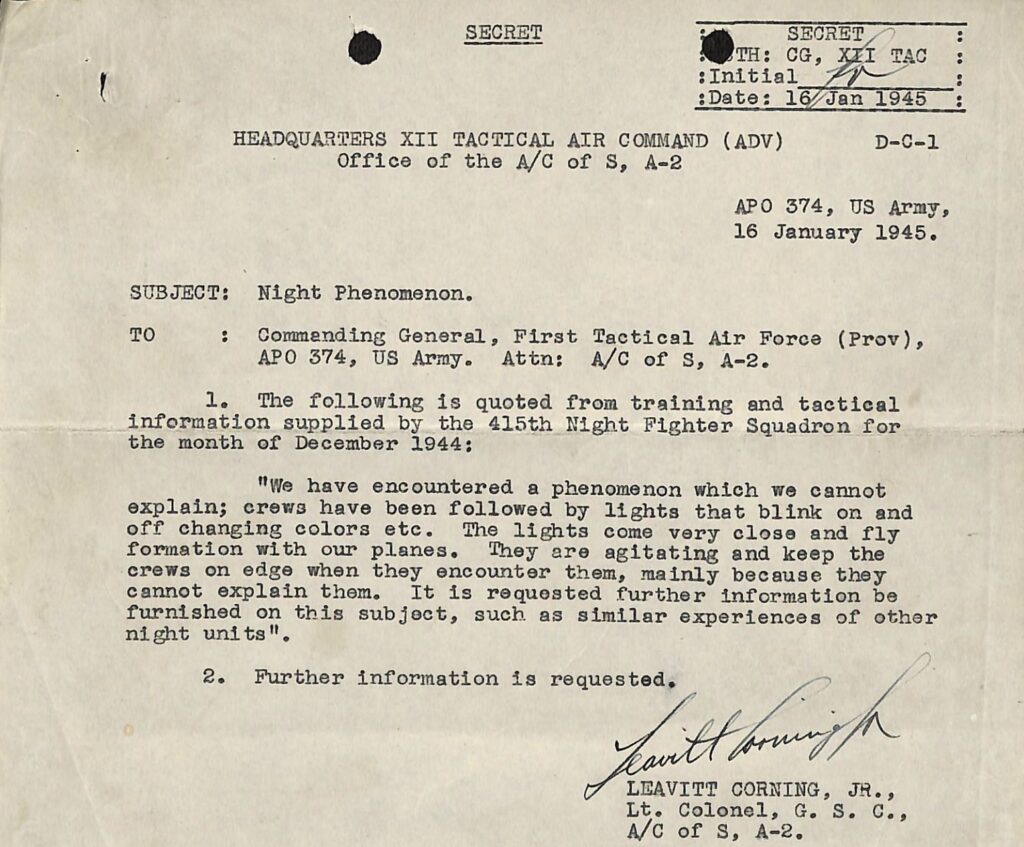
The term “foo fighter” is now synonymous with the WWII UAP phenomenon, but its origins are rooted in the specific, terrifying experiences of the 415th Night Fighter Squadron. However, to view this only through the lens of one unit is to miss the planetary scale of the incursion. By 1944, reports of anomalous aerial objects were coming from every major theater of the war, suggesting a coordinated surveillance effort that ignored the geopolitical boundaries of the conflict.
The 1941 “Green Globes” of the Indian Ocean
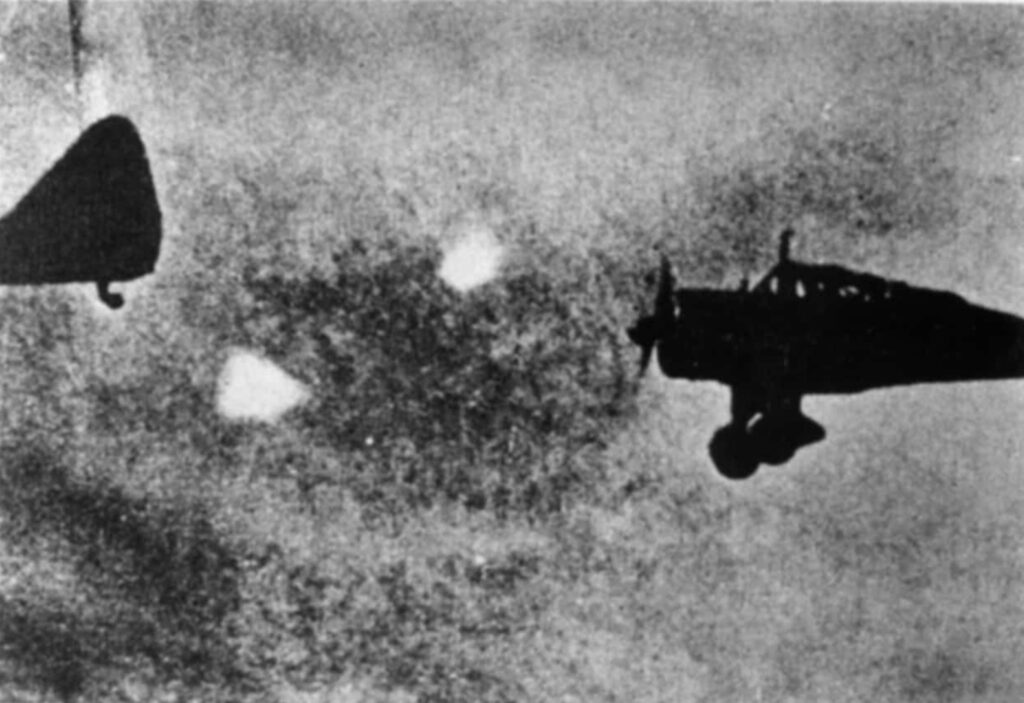
Before the “foo” was named, it was seen. In September 1941, the S.S. Pułaski, a Polish troopship, was crossing the Indian Ocean when two sailors reported a greenish-white globe, half the size of a full moon. It did not merely float; it paced the ship for over an hour, maintaining a fixed altitude despite the turbulent sea states. This case is critical: it occurred before the high-stress environment of the European air war, neutralizing the “combat fatigue” explanation often used by skeptics. The object demonstrated what we now recognize as “station-keeping”: the ability to maintain a precise relative position without visible propulsion.
The RAF “Amber Lights” (1942)
In December 1942, Pilot Officer Bryan Lumsden, a New Zealander flying a Hurricane over northern France, reported two amber-colored lights following him. Lumsden, a seasoned night intruder, executed a series of violent evasive maneuvers, diving from 20,000 feet to the deck. The lights did not follow his flight path; they “re-located” to his wingtips instantaneously. This signature-instantaneous displacement-rules out any man-made aircraft of the 1940s, including the experimental German Me-163 rocket planes or the Ho 229 flying wing.
The 415th and the Rhine Valley Wave (1944–1945)
By November 1944, the wave centered on the Rhine Valley. Lt. Ed Schlueter and radar observer Donald Meiers reported “eight to ten bright orange lights” off their wingtips. Meiers, an avid reader of the Smokey Stover comic, coined the term “foo fighters” (from “where there’s foo, there’s fire”).
“I turned to starboard and two balls of fire turned with me. I turned to the port side and they turned with me. We were going 260 miles an hour, and the balls were keeping up with us.”
Lt. Donald Meiers
The technical significance here is while the pilots could see the objects clearly, their SCR-720 airborne radar remained blank or degraded at close range. In some reports, the scope “washed out” into noise when the objects approached within proximity.
This is not consistent with conventional aircraft, which would present at least a minimal return. It suggests either:
- An absence of a solid reflective surface at radar wavelengths,
- Active electromagnetic interference, or
- A field effect that disrupts radar propagation locally.
Whether this effect is plasma-based, field-based, or something not yet characterized remains unresolved. What is clear is that the objects operated outside the detection assumptions of 1940s radar systems, while remaining visually present. What is often overlooked in retellings of the foo fighter wave is not the sightings themselves, but the institutional reaction they triggered.
By December 1944, the reports from the 415th had exceeded the threshold of anecdote. Intelligence officer Fred Ringwald compiled approximately fourteen incidents into a formal summary and pushed it up the chain of command. The reports did not stop at squadron level. They reached XII Tactical Air Command and were ultimately forwarded to Supreme Headquarters Allied Expeditionary Force (SHAEF).
This escalation matters. At the height of the Battle of the Bulge, Allied command was actively searching for evidence of German technological surprise. The same command structure that tracked V-1 and V-2 deployments treated these lights as a potential threat vector. The question being asked was not “are these real?” but rather “are these enemy weapons?”
The Schweinfurt “Silver Discs” (October 14, 1943)
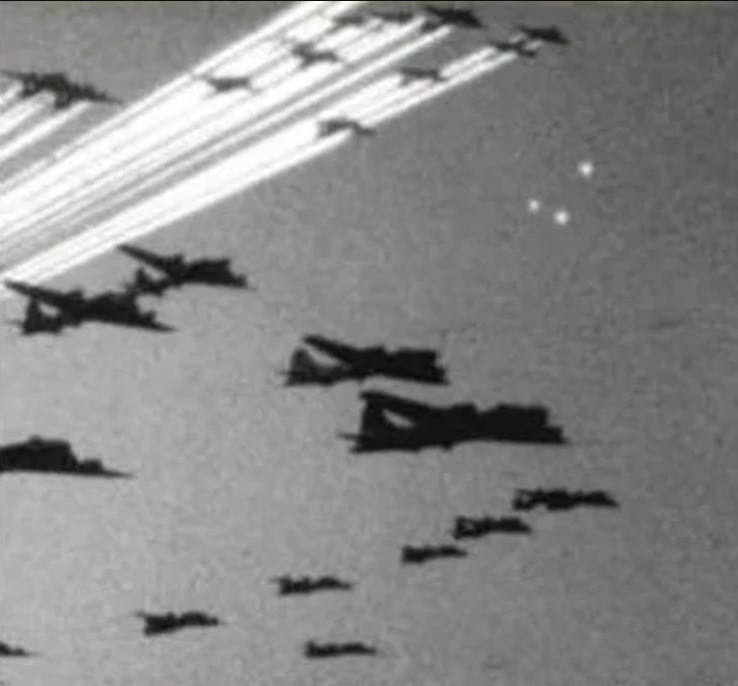
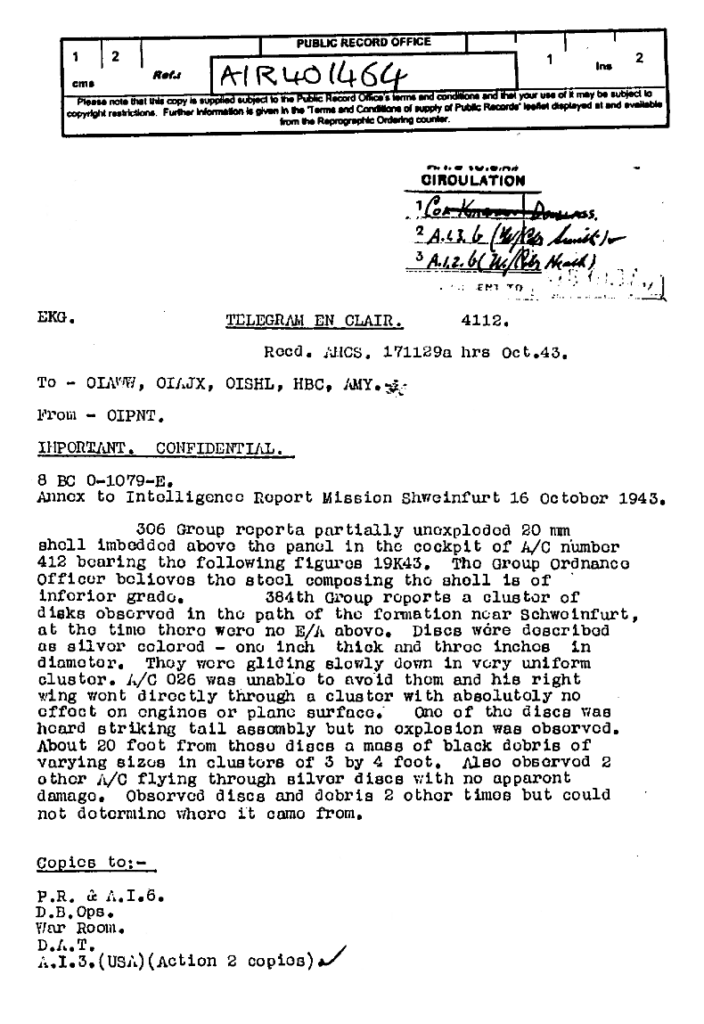
During “Black Thursday,” one of the deadliest days for the Eighth Air Force, B-17 crews reported a cluster of silver, disc-shaped objects flying in formation with the bomber stream. Col. Budd J. Peaslee of the 384th Bomb Group described them as roughly the size of a dinner plate, hovering near the engines. While later intelligence suggested these might be “chaff,” the objects demonstrated active station-keeping, moving against the slipstream of the aircraft-a physical impossibility for foil strips. The proximity to the engines suggests a possible interest in the aircraft’s heat signature or mechanical performance. (Ghosts of the Air, Black Thursday
“Boeing B-17 Number 026 closed rapidly with a cluster of discs. The pilot jinked the aircraft violently, attempting to evade an imminent collision with the discs. The sudden and violent maneuvering of the B-17 proved the maneuver futile.
The pilot reported at the intelligence debriefing that “my right wing went directly through a cluster with absolutely no effect on engines or plane surface.”
The intelligence officers pressed their questioning. The pilot stated further that one of the discs was heard to strike the tail assembly of the airplane.
Neither the pilot, nor any member of the crew that heard the disc striking the tail, felt or witnessed an explosion of any kind.“
Col. Budd J. Peaslee, 384th Bomb Group.
What Emerges from the Data
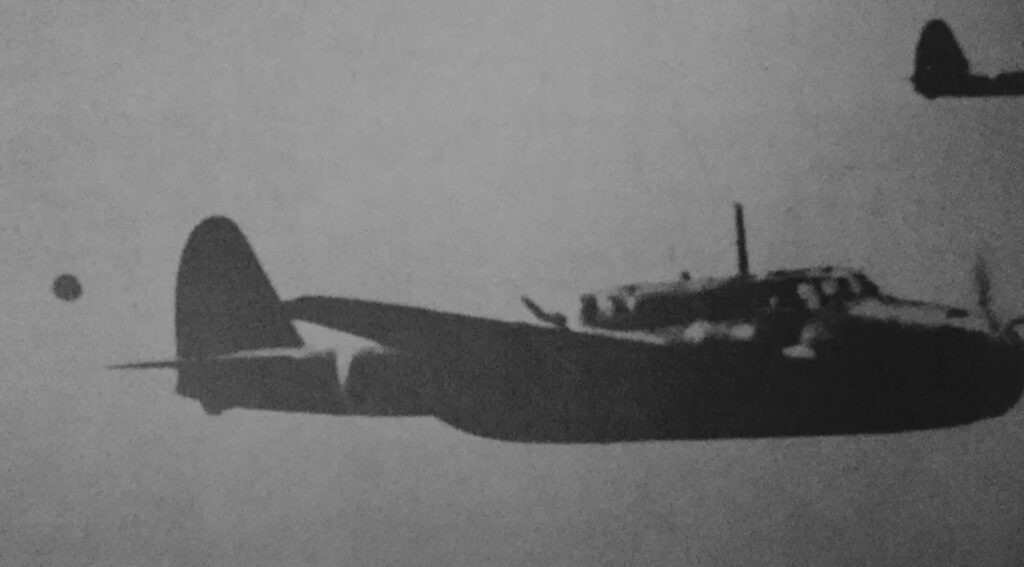
What emerges when these cases are compared is not just geographic distribution, but temporal synchronization. Between late 1943 and early 1945, identical behavioral signatures appear in:
- Rhine Valley night intercepts,
- Pacific carrier operations,
- Indian Ocean maritime observations, and
- RAF intruder missions over France.
These were not isolated anomalies. They were concurrent observations across disconnected theaters with no shared communication framework between witnesses. This is the key break from the “psychological artifact” model.
Combat stress can explain a localized cluster. It cannot explain synchronized observations across oceans, cultures, and command structures operating under different doctrines and sensor systems.
Document: Richard F. Haines papers, Collection No. 12722, Box 1, American Heritage Center, University of Wyoming
The WWII Strategic Reality Check: Neither Axis nor Allied
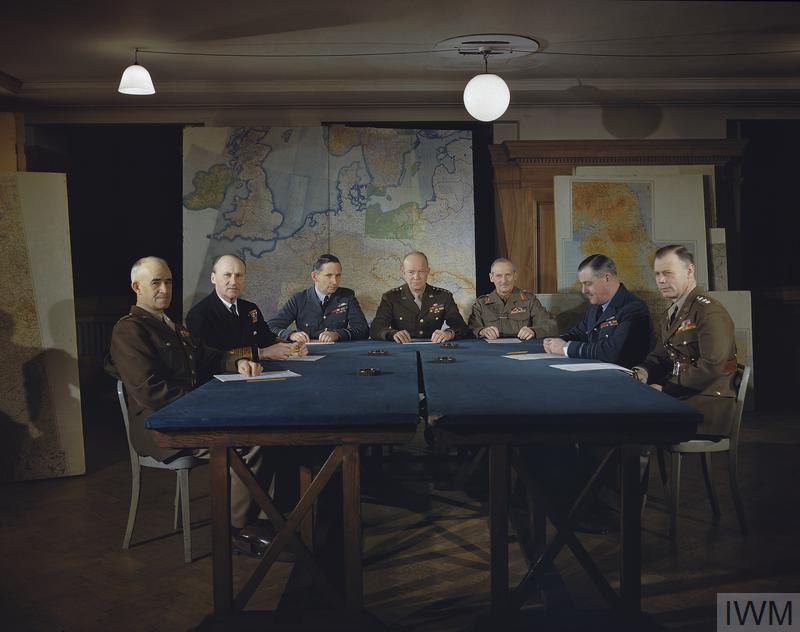
During the conflict, General Dwight D. Eisenhower’s staff investigated whether the foo fighters were a German “Wunderwaffe” (Wonder Weapon). The feared “Feuerball” was rumored to be a radio-controlled saucer designed to disrupt Allied electronics. However, when the war ended and the Combined Intelligence Objectives Sub-Committee (CIOS) scoured the remains of the Nazi research facilities at Peenemünde and the Black Forest, they found nothing that approached the capabilities of the foo fighters.
In fact, the Luftwaffe had its own secret files on the “Phoo-Bomben.” German pilots believed the lights were a secret American surveillance technology. This mutual confusion is the ultimate proof of a potential third-party presence. If neither of the world’s most advanced military powers could claim the technology, the origin must, by process of elimination, be an unknown party.
The Cold War Escalation and the Nuclear Connection
The Korean War saw the introduction of jet fighters and the expansion of the “Nuclear Shield.” The UAPs responded by becoming more intrusive and, in some cases, physically interactive.
The 1952 Korean War ‘Jack-o’-Lantern’ Incident
During the Battle of Bunker Hill, Marine Francis P. Wall and his unit observed a “jack-o’-lantern” light wafting across a mountain. The object entered the center of artillery airbursts, seemingly unharmed by the concussive force. When Wall fired armor-piercing rounds at it, the object turned a pulsating blue-green and “attacked” with a ray of light. The soldiers subsequently developed symptoms consistent with radiation sickness, including nausea, hair loss, and a metallic taste in their mouths. This marks one of the first documented cases of physical harm following a UAP interaction, suggesting that the objects have a reactive defense mechanism when fired upon. (History.com)
The Vietnam War, A Laboratory for Electronic Warfare
The transition from World War II to Korea and Vietnam is often framed as a change in phenomenon. In reality, it is better understood as a change in observational resolution.
WWII pilots saw light. Vietnam pilots saw structure. This is not necessarily because the objects changed, but because:
- WWII encounters occurred primarily at night,
- Vietnam encounters mainly occurred in daylight or with improved optics, and
- Sensor environments became denser and more electromagnetic.
The same object that appears as a “ball of fire” under high-energy ionization conditions at night may reveal itself as a metallic sphere under lower power states. What appears to be evolution may instead be mode switching.
In this context Vietnam provided a unique theater: a dense, humid jungle where UAPs were no longer just “lights” but solid, metallic intruders, perfect setup for the electronic warfare that follows.
1968 Dong Hoi / DMZ Lights Incident
On the night of June 15-16, 1968, Allied spotters along the Demilitarized Zone (DMZ) reported nearly 30 strange, slow-moving “lights.” Thinking these were North Vietnamese helicopters, the USS Boston, the Australian Navy HMAS Hobart, and several patrol boats (PCFs) engaged. The “lights” performed maneuvers that defied helicopter capabilities. In the chaos, the HMAS Hobart was hit by friendly fire from a US F-4 Phantom. The subsequent Navy inquiry confirmed there were no enemy aircraft in the area. The “lights” had effectively triggered a high-intensity naval engagement without firing a shot, demonstrating a sophisticated form of Electronic Warfare that jammed human IFF (Identification Friend or Foe) systems.
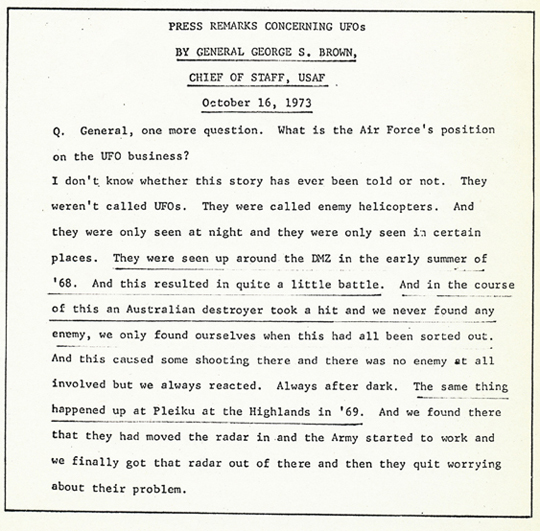
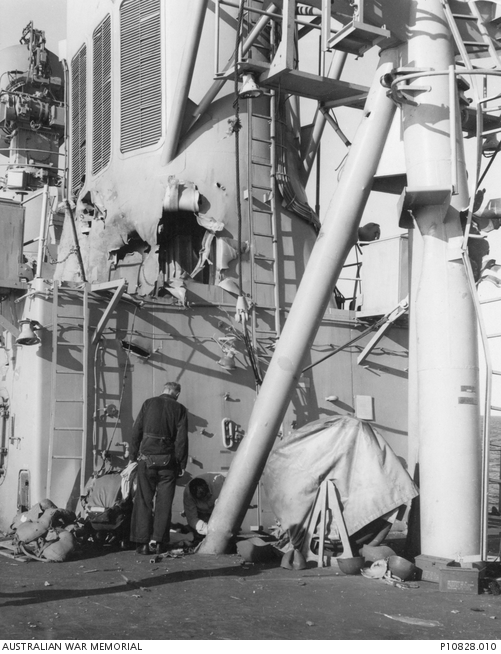
Why the case remains in UAP discussions is not the friendly-fire fact itself. It is that senior military figures later described the lead-up as involving unidentified night objects. A later account attributed to General George S. Brown said that in early summer 1968 near the DMZ there was “a series of UFO sightings” that “set off quite a battle,” ending with an Australian destroyer taking a hit. (Naval Historical Society of Australia)
The ‘Enemy Helicopters’ of the Mekong Delta
Army helicopter pilots flying AH-1 Cobras frequently reported “metallic spheres” pacing their rotor tips. Nicknamed “Enemy Helicopters” for their habit of lurking on the periphery, these five-foot-diameter balls of “polished steel” showed zero visible propulsion. Captain William J. Murphy described one following his Huey at 120 knots for several miles before accelerating vertically at a speed his aircraft couldn’t track. This indicates that by the 1960s, the UAPs were no longer seen as just glowing orbs but had a clear, metallic structure under certain lighting conditions.
The 1970 Cambodian Border ‘Miniature Sun’
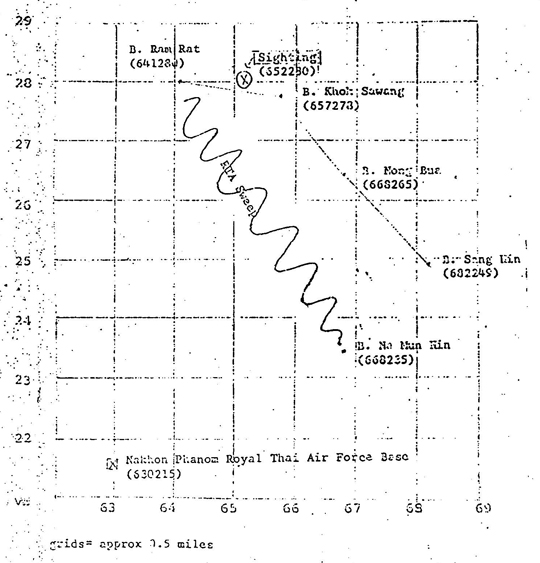
One of the most harrowing accounts involved a Special Forces team near the Cambodian border. The team reported a “miniature sun” that descended to within 50 feet of their position. The object emitted a low-frequency hum that caused physical vibration in the soldiers’ chests. When the team’s radio operator tried to call for an extraction, the radio emitted only a high-pitched “digital” squeal. This “Zone of Silence” effect suggests that the UAP was actively jamming local frequencies.
A Primed Electronic Warfare
The most overlooked aspect of these encounters is not flight performance but information dominance. In multiple theaters, the objects when they appear correlate with:
- Radar denial;
- Communication disruption;
- IFF confusion; and
- Signal mimicry.
This places them not just in the domain of aerospace superiority, but in the domain of electromagnetic battlefield control. For their purposes, whatever they were, they only needed to alter perception within the battlespace.
This is not reconnaissance alone. It is interaction with the decision layer of warfare.
Cross-Domain Correlation: Linguistic, Anthropological, and Scientific
To truly understand the combat watchers, we must look beyond the individual cases and analyze the underlying patterns.
The Hypothetical Physics of Non-Inertial Propulsion
The primary characteristic of all the reported UAPs seems to be the rejection of Newtonian inertia and traditional lift capabilities. In many incident pilots report 90-degree turns and instantaneous acceleration. This may imply a “metric engineering” approach to propulsion-the ability to manipulate the gravity field around the craft so that it never “feels” the G-forces of its maneuvers. This technology would allow the craft to move from a standstill to hypersonic speeds without any structural damage. There are many hypothesis dealing with the topic in our article UAP Propulsion Technologies: A Data-First Panorama.
Linguistic Analysis of ‘Foo’, ‘Kuumu’, and ‘Phoo-Bomben’
The names given to these objects by different cultures are telling. “Foo” reflects a cynical, soldierly psychological shield. “Kuumu” (Hollow Cloud) suggests a visual perception of the object’s cloaking field; it appeared as a cloud but moved like a solid object. “Phoo-Bomben” reflects the German assumption of an offensive weapon. These linguistic markers show how humans try to categorize the “impossible” using the vocabulary of their era.
The ‘Watcher’ Hypothesis: von Neumann Probes
Researchers like Jacques Vallée hypothesize that these UAPs seen in these wars may be part of a multi-generational “Automated Sentinel” system. They are likely autonomous, AI-driven probes (Von Neumann Probes) sent by a third-party observer to monitor activities. They are not “piloted” in the human sense but are programmed to congregate near military assets, particularly those involving nuclear or high-energy propulsion.
The Electronic Battlefield – Signal Intelligence and Frequency Interference
As human conflict transitioned from the purely mechanical era of World War II to the radar-integrated environments of the Korean and Vietnam Wars, the UAP phenomenon demonstrated a corresponding shift in its interaction with the electromagnetic spectrum. It was no longer sufficient for these objects to simply outfly human aircraft; they demonstrated a mastery of Signal Intelligence (SIGINT) and Electronic Countermeasures (ECM) that suggested a deep understanding of human communication protocols.
The 1968 DMZ “Frequency Lockout”
During the heavy incursions of June 1968, ground-based radio operators at Dong Ha and Con Thien reported a phenomenon they termed “The Squeal.” Whenever the luminous orbs approached Allied lines, all VHF and UHF radio traffic were suppressed by a wideband, high-intensity signal.
Technicians who analyzed the interference noted that it was not a simple “noise” jammer. Instead, it appeared to be a recursive signal that mimicked the frequency-hopping patterns of secure military radios in real-time. This implies that the UAPs were not just blocking communications; they were processing human encryption and responding with a countersignal designed to neutralize it. This level of reactive electronic warfare suggests a non-biological processing speed, reinforcing the “Autonomous Probe” hypothesis. (Project Checo – SE Asia Report, Electronic Warfare Operations)
The Sensor “Wash-Out” of the P-61 Black Widow in WWII
Looking back to the 415th Night Fighter Squadron, the radar observers reported that when a foo fighter closed within 100 yards, the radar screen would “wash out” into a solid block of white noise. This was not a mechanical failure. Post-flight inspections often found that the circuitry was functional.
In late 1944 and early 1945, the US Army Air Force’s 422nd Night-Fighter Squadron reported several unusual sightings. One notable incident occurred over western Germany in early October 1944, when a fast-moving glowing object attached itself to the tail of a Northrop P-61 Black Widow. The pilot attempted violent evasive maneuvers but couldn’t shake it, eventually diving into a cloud bank in desperation. The radar operator was so shaken he could not speak for days due to the lack of radar visibility during the event.

The “wash-out” effect is a classic signature of a high-power microwave (HPM) emission. It is hypothesized that the UAPs were emitting a protective EM field to prevent the Allied radar from “locking on” to their physical structure. This protective envelope likely served a dual purpose: providing the gravitational lift required for non-inertial flight and serving as a defensive screen against primitive electronic detection.
The “Nuclear Magnet”, Atomic Energy as a Catalyst for Incursion
One of the most profound correlations uncovered by researchers is the direct link between the proliferation of nuclear technology and the intensity of UAP presence and surveillance. This is not a mere “conspiracy” of sightings; it is a statistically significant clustering of encounters around nuclear-capable assets.
The 509th Composite Group and the Tinian “Fireballs”
The 509th Composite Group, responsible for the atomic bombings in 1945, reported a significant increase in “fireball” sightings while stationed on Tinian in the Mariana Islands. These orbs were observed hovering over the assembly huts where the nuclear devices were stored. Security personnel reported that the objects seemed to emit a low-frequency hum that interfered with the magnetic compasses of nearby vehicles. (GJ – Legacy of WW II)

The 1952 Savannah River Plant Incursion
While the Korean War was raging, domestic nuclear facilities in the United States were also being monitored. In July 1952, at the Savannah River Plant – a primary site for the production of tritium and plutonium – security radar tracked several objects moving at speeds in excess of 2,000 mph. These objects performed “circles” around the reactor chimneys before accelerating vertically at a 90-degree angle.
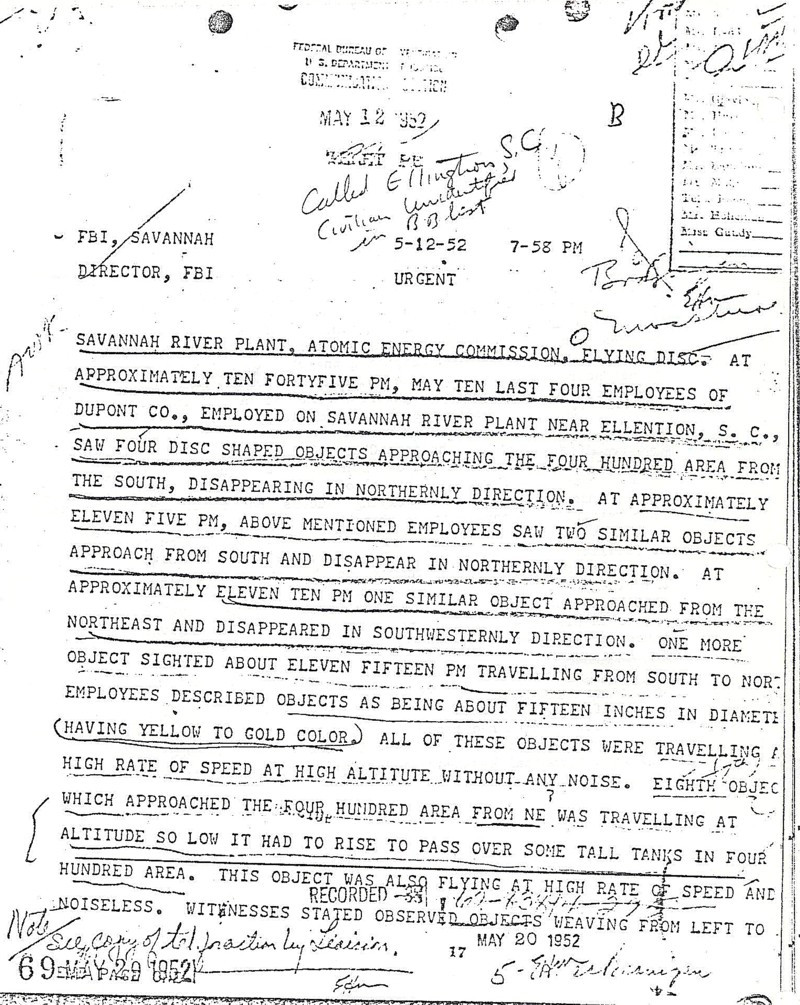
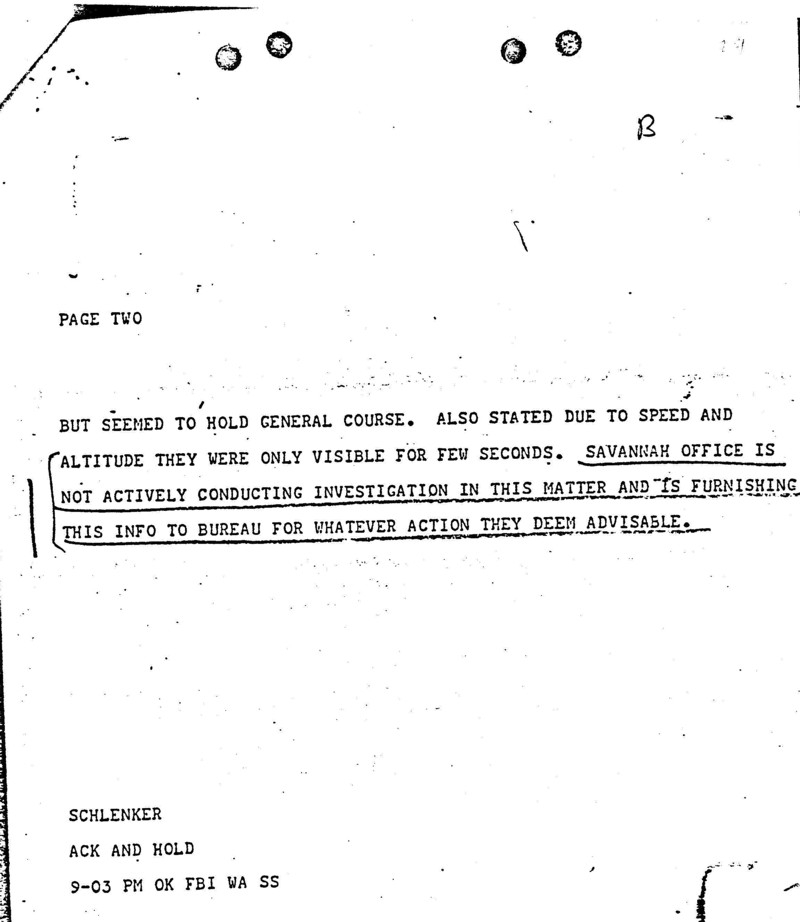
The significance of the Savannah River Plant case lies in the “Interest Profile.” There were many report filed, including with NICAP. The UAPs focused exclusively on the source of nuclear material production. To some researchers this suggests a systemic “Planetary Audit,” where a third-party is tracking the specific isotopes and energy signatures associated with a civilization entering the Atomic Age.
The Anthropological Shadow – Myths of the “Cloud-Ships”
To understand the long-term presence of these watchers, we must analyze how they were perceived by non-industrialized cultures during these wars. In the remote highlands of Vietnam and the islands of the Pacific, the indigenous populations had their own names for the “combat watchers.”
The Montagnard “Sky-Spirits”
During the Vietnam War pilots used to describe “Enemy Helicopters”, and the local Montagnard people of the Central Highlands described “Sky-Spirits”, which were metallic spheres or egg-shaped UAP. The local tradition saw them as ancient guardians of the mountain peaks. Long before the French or Americans arrived, oral traditions spoke of “polished stones” that flew without wings. During the war, the Montagnards observed that these spirits were particularly active during battles involving napalm.
This anthropological evidence suggests that the UAPs are not a “new” phenomenon triggered by the 1940s, but rather a permanent fixture of the planetary environment that becomes more visible when the “background noise” of human activity increases.
Technical Synthesis on The Morphing Chassis
One of the greatest mysteries in the UAP archives is the apparent “morphing” of these objects over time. Why did they appear as “fireballs” in 1944 and “metallic balls” in 1968?
| Feature | WWII (1941–45) | Korea (1950–53) | Vietnam (1965–75) |
| Primary Shape | Glowing Orbs | Saucers/Spheres | Metallic Spheres/Eggs |
| Speed | 300 – 1,000 mph | Mach 2+ | Hypersonic |
| Radar Profile | Selective Transparency | Rapid Egress (80k ft) | IFF Jamming |
| Human Interaction | Passive Pacing | Harmful Radiation | Electronic Warfare |
The Optical Camouflage Hypothesis
Recent scientific analysis suggests that the “visual appearance” of a UAP is largely determined by its power output.
- High-Power State (Combat/Acceleration): The craft generates a massive ionization field, causing the surrounding air to glow. To a WWII pilot, this looks like a “ball of fire.”
- Low-Power State (Observation/Station-keeping): The ionization field is minimized, revealing the physical structure of the craft. To a Vietnam-era pilot, this looks like a “metallic sphere.”
This transition is not a “change in model” but a change in operational mode. As human sensor technology moved from primitive night-vision to high-resolution daytime optics, we began to see the “chassis” behind the “fire.”
Conclusion: The Legacy of the Combat Watchers and Modern Policy Secrecy
The policy of “Containment and Ridicule” was born in the barracks of the 415th. When intelligence officers told pilots to “stop talking about the lights,” it set a precedent for the next eight decades. The difference today is the erosion of that secrecy through the “UAP Disclosure” movement. While the 1940s reports were buried in mission logs, modern pilots have taken their testimony to the halls of Congress.
The persistence of these spheres suggests that we are living in a “monitored environment.” The orbs are likely the “eyes” of a much larger, perhaps extra-dimensional or trans-medium, system. As our sensor technology improves, we are not seeing “more” UAPs; we are simply seeing the ones that have been there all along. The transition from eyewitness-only to multi-sensor-confirmed spherical objects strengthens the continuity hypothesis.
It is important to acknowledge that alternative frameworks exist. Some researchers interpret these events as advanced human technology, others as rare atmospheric phenomena, and others still as psychological artifacts shaped by the stress of combat. Each of these explanations account for fragments of the data.
However, none of them account for the full dataset simultaneously:
- multi-theater incidents across same timeframe,
- consistent kinematic performance across decades,
- selective interaction with human sensor systems, and
- targeted proximity to high-energy military assets.
The challenge is not explaining one case. It is explaining all of them without contradiction.
The question is no longer whether these objects were present. The question is whether we are prepared to understand what it means that they never left.
Claims Taxonomy
Verified
- The 415th’s (also to a lesser extent the 416th, and the 417th) “foo fighter” reports are corroborated by multiple, declassified intelligence logs, based on witness testimony but lack of radar returns.
- Both the 1944 foo fighter wave and the modern “metallic orb” wave are verified by official military sensor data and pilot testimony across multiple decades.
- The 1968 Dong Hoi incident is a matter of official military record, including the damage to the HMAS Hobart and the deaths of two sailors.
- The frequency interference patterns recorded by Navy technicians during the 1968 DMZ encounters.
Probable
- Persistent spherical UAP represent a continuous phenomenon in human combat and nuclear sites from WWII to present → trending toward Verified (pattern-level)
- Unidentified aerial contacts or lights were reported in the area of the HMSA Hobart before the attack and contributed to the confusion.
- The radiation sickness reported in the Korean War and the correlation between UAP activity and nuclear-capable units. Multiple consistent testimonies and pattern alignment with later verified injury cases but lacking complete medical documentation.
- The connection between UAP activity and nuclear-capable units (such as the B-29 raids in the Pacific). The statistical clustering of sightings around high-energy military events suggests a programmed interest in human destructive capability. There is a high correlation between nuclear isotope production and UAP loitering times at facilities like Savannah River and Tinian.
- The foo fighters and modern orbs may represent the same technological platform. The consistency in size (1 to 4 meters), shape (spherical), and performance (non-inertial) is statistically significant.
Disputed
- The “Feuerball” theory (a Nazi secret weapon) has been thoroughly disputed by post-war investigations (Operation Paperclip), which found no evidence of any saucer-shaped or jet-propelled flak mine in German inventory.
- The claim that UAPs actively “disabled” nuclear warheads during the Vietnam War; while there are reports of electronic failure, a direct “shutdown” has not been corroborated by sensor data in that specific theater.
Legend
- The “Ghost Pilots” theory, that these lights are the spirits of fallen aviators, is cultural lore and lacks any scientific or sensor-based grounding.
Misidentification
- The theory that these were “secret weapons” of the Axis or Allies, which has been debunked by post-war intelligence.
- The “Earth Lights” theory, which posits that tectonic stress creates glowing orbs, is rejected for these cases due to the radar-confirmed speeds and intelligent pacing of aircraft.
Speculation Labels
Hypothesis
The UAPs in a military setting could be autonomous monitoring drones monitoring human technological (im)maturity. Like AI-driven probes (Von Neumann Probes) sent by another party (most likely a non-terrestrial party or NHI) to monitor our civilization.
Witness Interpretation
Pilots in combat zones naturally interpreted these “unaligned” craft as hostile. However, the lack of an offensive strike (excluding the reactive Korean case) suggests a non-hostile surveillance mission.
Researcher Opinion
The shift from “glowing” (WWII) to “metallic” (Vietnam) reflects the UAPs’ adaptation to human sensor evolution. As we moved from visual night flying to day-time radar/optics, the craft shifted their “optical camouflage” to match the environment.
Hypothesis
The UAPs in military zones may utilize a “Neutrino-Detection” array to track nuclear materials from orbit, allowing them to deploy “sentinels” to precise terrestrial locations before a nuclear event occurs.
Witness Interpretation
Montagnard tribes interpreted the spheres as “spirits,” a cultural lens for a technological reality beyond their era’s vocabulary.
Researcher Opinion
The “Watcher” system is likely a decentralized network of “Smart Probes” that operate on a basic heuristic: Monitor all high-energy output and report back to a central (likely off-world or undersea) hub. The persistence of these spheres suggests that we are living in a “monitored environment.” The orbs are likely the “eyes” of a much larger, perhaps extra-dimensional or trans-medium, system. There might be a correlation and forward-looking research linked to Beatriz Villaroel study of Transients on Earth’s orbit.
Selected References (chronological)
United States Army Air Forces. (1944–1945). 415th Night Fighter Squadron unit histories and intelligence summaries. National Archives and Records Administration (Record Group 18).
Chamberlin, J. (Dec. 1945). The Foo Fighter Mystery. [Volume 39, No. 6, p. 9, 43, 47 ] American Legion Magazine.
NICAP (May 10 1952). Objects Sighted Near Vital Installation. New Ellenton, South Carolina. National Investigation Committee on Aerial Phenomena.
Jacobs, R., & Mansfield, F. (1964/2010). Big Sur missile incident testimony and film analysis (interviews).
Menzel, D. H. (1963). The world of flying saucers. Doubleday.
Hall, R. (Ed.). (1964). The UFO Evidence. NICAP.
Institute for Defense Analyses. (1969). Electronic Warfare in Southeast Asia. https://apps.dtic.mil/sti/tr/pdf/ADA485165.pdf
Porject Checo – Southeast Asia Report (1 August, 1969). US Air Force. https://apps.dtic.mil/sti/tr/pdf/ADA486445.pdf
McDonald, J. E. (1969). Science in default: Twenty-two years of inadequate UFO investigations. American Association for the Advancement of Science Symposium.
Carpenter, J. B. (1970). Unconventional Aerial Phenomena in the Vietnam Theater. Military Review.
Hynek, J. A. (1972). The UFO Experience: A Scientific Inquiry. Henry Regnery Co.
Naval Historical Society of Australia. (n.d.). 18 October 1973. Australian Naval History. https://navyhistory.au/18-october-1973/
Klass, P. J. (1974). UFOs explained. Random House.
Tipler, F. J. (1980). Extraterrestrial intelligent beings do not exist. Quarterly Journal of the Royal Astronomical Society, 21, 267–281.
Randles, J. (1988). The UFO Conspiracy: The First Forty Years.
Good, T. (1988). Above Top Secret: The Worldwide U.F.O. Cover-Up. William Morrow & Co.
Vallee, J. (1990). Confrontations: A Scientist’s Search for Alien Contact.
Caidin, M. (1995). Ghosts of the Air: True Stories of Aerial Hauntings. Galde Press https://books.google.com/books?id=V4tebtIEujoC
Dolan, R. (2002). UFOs and the national security state: Chronology of a cover-up, 1941–1973. Hampton Roads.
Chester, K. (2007). Strange Company: Military Encounters with UFO’s in World War II. Anomalist Books.
Hastings, R. (2008). UFOs and Nukes: Extraordinary Encounters at Nuclear Weapons Sites. AuthorHouse.
Haqq-Misra, J., & Baum, S. D. (2009). The sustainability solution to the Fermi paradox. Journal of the British Interplanetary Society, 62, 47–51.
Edwards, P. M. (2010). Unusual Footnotes to the Korean War. Scarecrow Press.
Swords, M., & Powell, R. (2012). UFOs and government: A historical inquiry. Anomalist Books.
Bryan, C.F., The Arrowhead Club (2016). Black Thursday and the Silver Discs. (ArrowHeadClub)
Wright, J. T. (2018). Exoplanets and SETI. Proceedings of the National Academy of Sciences, 115(2), 272–277.
Graves, R. (2023). Testimony on Unidentified Anomalous Phenomena before the House Oversight Committee.
SEO Keywords
foo fighters, Vietnam UFO, military UAP cases, Dong Hoi incident, 415th Night Fighter Squadron, Schweinfurt raid, non-human intelligence, trans-medium craft, UAPedia, USO history, military aviation anomalies, nuclear UAP connection, Savannah River incursion, Montagnard sky-spirits, Vietnam spheres