In a moment when UAP are slowly becoming discussable in public-facing institutions, the academy still tends to treat the topic like a social contagion: avoid it, laugh it off, or quarantine it behind “safe” framing.
Rizwan Virk’s, PhD academic paper, UFOs in the Academy: A Case Study in Stigma, Implicit Boundary Work and the Edges of Legitimate Science (March 2025), does not try to “solve” UAP. (OSF)
Instead, it documents something equally consequential for the long arc of UAP research: how professional legitimacy is policed, how stigma reproduces itself, and why that policing can change quickly when authorities signal that a topic is newly acceptable.
What makes this paper unusually readable, even for non-specialists, is its blend of sociology-of-science concepts (especially “boundary work”) with vivid interview testimony from people who have actually taken reputational risk by touching the topic from inside universities and research institutions. Virk’s core argument is simple: the “UAP taboo” is not just a vibe. It functions like an informal governance system for knowledge production, complete with penalties, gatekeepers, and unwritten rules.
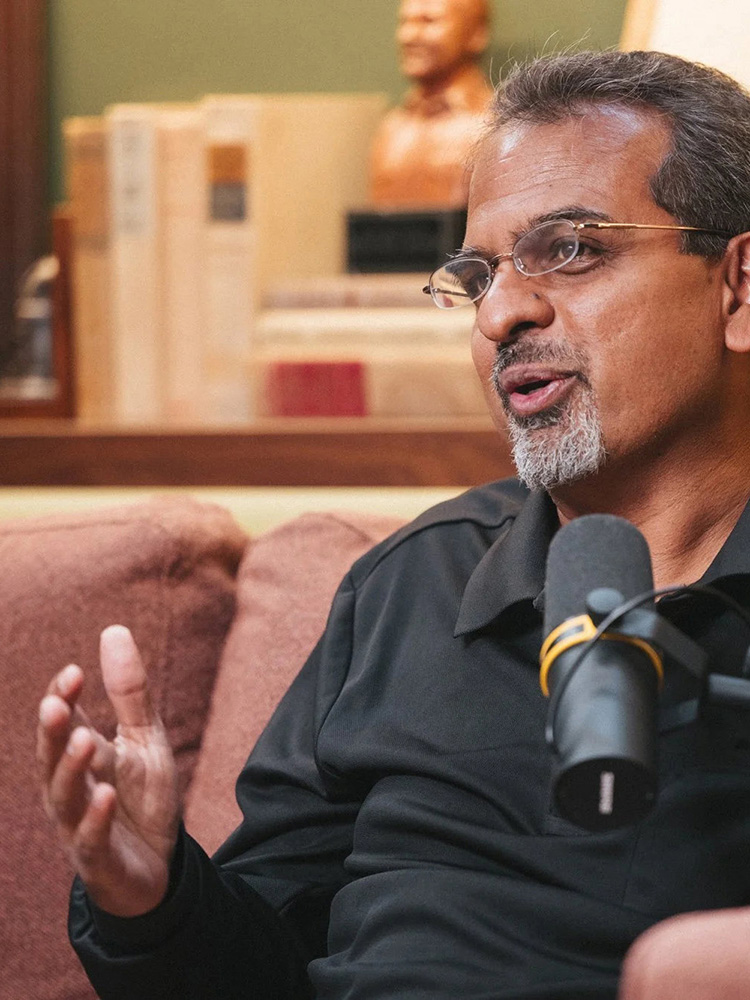
Who is Rizwan Virk in the UAP ecosystem?
Rizwan (“Riz”) Virk. PhD is affiliated with Arizona State University (ASU) and has worked at the boundary between emerging tech, futures thinking, and cultural frameworks of legitimacy. Riz is an MIT and Stanford graduate, and has a Ph.D. from ASU.
In UAP-adjacent circles, Virk is also publicly connected to major “new era” academic UAP efforts. In the paper’s disclosure statement, he notes that he is listed as an advisor to the Galileo Project and that he has written a white paper for, and spoken at, a Sol Foundation symposium.
He also shows up in the live-events layer of the current UAP discourse and was a speaker and panelist at UAPedia’s inaugural UAPCon and is a frequent speaker at other UAP Events.
What the paper is actually asking
Virk frames UAP as an ideal case study for how “legitimate science” draws a line around itself and keeps certain questions outside the fence. The paper’s goal is to understand:
- what stigma looks like on the ground for academics who engage UAP,
- how that stigma forms historically,
- how it is maintained (often without anyone giving explicit orders), and
- whether the taboo is changing in real time as the public conversation evolves.
Importantly, the paper treats stigma as social infrastructure, not merely individual skepticism. In Virk’s telling, the “problem” is not that academics demand evidence. The problem is that entire career incentives can steer researchers away from even asking certain questions, long before evidence is weighed.
Inside the method: a “who’s who” interview sample, with a built-in bias
Virk’s dataset is qualitative: in-depth interviews rather than surveys. He conducted 22 interviews and used 21 (one participant later retracted permission to be quoted).
The sample is notable for two reasons:
- It is cross-disciplinary.
Virk interviews people across physics/astronomy, other sciences, philosophy of science, religious studies, history/STS, and a small “other” category. His own table shows the largest cluster in physics/astronomy/astrophysics. - It is heavily weighted toward career-secure academics.
His tenure-status table shows a strong skew toward tenured full professors, plus emeritus and non-academic researchers. Virk explicitly links this to stigma: the people most willing to speak are often those most insulated from career blowback.
The appendix list reads like a contemporary map of academic UAP adjacency, including names such as Avi Loeb, Garry Nolan, Diana Walsh Pasulka, Jeffrey Kripal, Alexander Wendt, Carol Cleland, and Hal Puthoff (among others).
That star power is also the study’s biggest limitation: snowball sampling plus high-profile participants can illuminate mechanisms of stigma, but it can also miss the everyday experience of junior scholars who never “come out” at all.
The three headline findings, in plain language
Stigma is real, and it changes behavior before it changes outcomes
Virk’s first finding is not that academics are punished constantly, but that the anticipation of punishment shapes decisions: when to publish, how to frame claims, whether to mentor students on UAP topics, and how openly to admit interest.
A recurring pattern is the “wait until safe” strategy: researchers delay public engagement until they have tenure, full-professor status, or emeritus insulation. Even when concrete consequences are rare, the chilling effect happens earlier, at the level of self-censorship.
Virk also captures a specific social mechanism multiple interviewees describe: the “giggle response.” Not a counterargument. Not a critique. A reflexive signal that says “this topic is socially invalid,” and that you should feel embarrassed for bringing it up.
The question is less on “What do professors believe?” and more on “What do professors think their colleagues will do to them socially?” Virk’s interview material makes the stigma feel less like abstract sociology and more like a daily micro-politics of belonging.
The taboo is maintained through boundary work that is often implicit
Virk uses “boundary work” to describe how disciplines police legitimacy, defining what counts as “real” science and what gets pushed into the cultural category of “fringe.”
His strongest move is to insist that boundary work is not only explicit (committee reports, public denunciations, institutional norms). It is also implicit, reproduced through socialization: what grad students learn not to touch, what mentors warn against, what jokes get made at conferences, and what topics become guilt-by-association bundles (UAP lumped with other taboo claims).
He also distinguishes between:
- epistemic objections (data quality, replicability, mechanisms), and
- status objections (fear that association harms credibility, funding prospects, departmental standing).
Virk does not pretend the epistemic issues are fake. But he shows how easily epistemic caution can become career risk management, and how that risk management becomes a silent consensus that “serious people don’t do this.”
The stigma is shifting, but only for the “safer” slice of UAP
Virk argues that the taboo has softened since late 2017, not because academia suddenly changed its standards, but because mainstream media attention and government activity changed the perceived status of the topic, a dynamic he frames as a kind of “reverse boundary work.”
He also reports two finer-grained shifts:
- Younger researchers and students show increasing curiosity, even when professors still caution them not to stake a dissertation or early career on UAP.
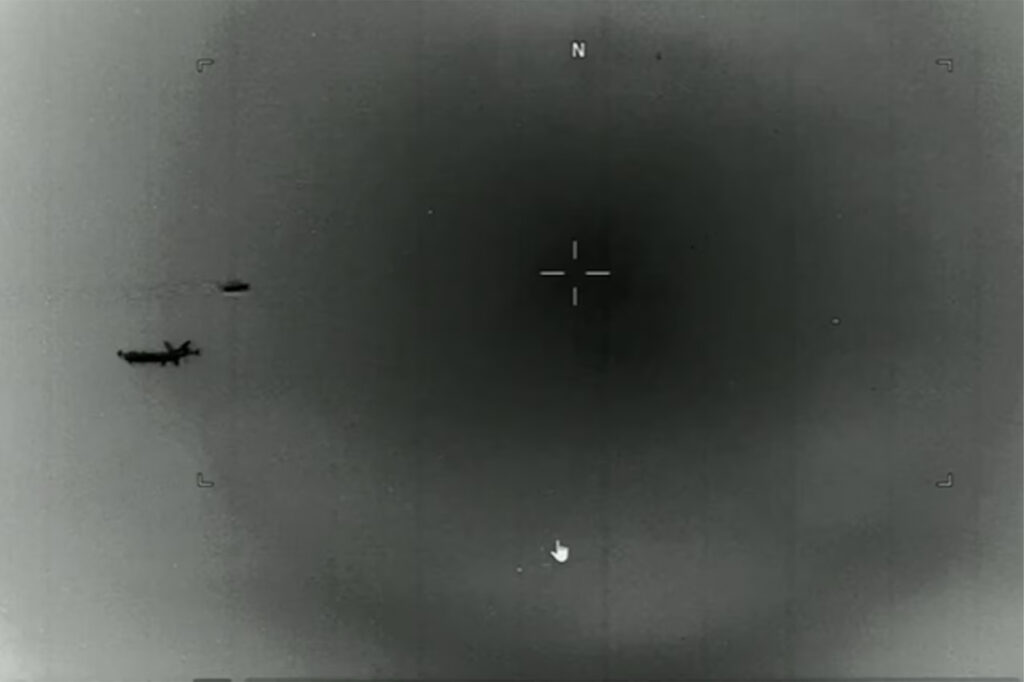
- New internal boundaries form within UAP. “Nuts and bolts” UAP (objects, flight characteristics, sensor data) becomes more discussable, while abduction and entity-contact claims remain far more taboo, even among people willing to take UAP seriously.
Academia is not “opening up to UAP” in one sweep. It is carving out a narrow, defensible corridor where discussion can happen without threatening one’s identity as a serious scholar.
What Virk gets right, and what a sharper follow-up would do
What works exceptionally well
- He treats stigma as a mechanism, not a personality flaw. This avoids the usual dead-end where the conversation becomes “believers vs. skeptics” instead of “how institutions decide what’s thinkable.”
- The interviews ground the theory. The paper is full of moments that show how taboo reproduces itself through small, mundane interactions, not just grand historical narratives.
- He captures a transition period. The study is explicitly about effects changing in real time, which is exactly what makes it useful as the UAP topic continues migrating across institutional boundaries.
What remains unresolved
- Sampling bias is real. Virk acknowledges the limitations: the sample is largely US-based, heavily tenured, and drawn from people he could reach who already engage the topic. A comparative study of academics who are outside of the US would expand the work.
- Perceived vs. measurable consequences. The paper is strongest on perception, caution, and social penalties. A next step would quantify outcomes: hiring decisions, publication acceptance rates, grant success, citation penalties, and tenure-case narratives.
- Discipline-specific differences could be unpacked further. The paper notes variation by field and framing, but a deeper comparative map (physics vs. anthropology vs. religious studies vs. political science) would reveal different “cost structures” for the same topic.
UAP research capacity is being throttled at the training pipeline
If graduate students are quietly warned off UAP, the field does not just lose papers. It loses the next generation of instrument builders, method designers, and data analysts who could normalize rigorous work over time. Virk’s interviews suggest student interest is rising, while institutional caution remains. That mismatch is where future progress stalls.
Publication gatekeeping shapes what “counts” as evidence
Virk highlights that stigma can limit access to mainstream journals and even influence preprint culture, which has become part of modern science’s circulatory system. When publication venues are constrained, “respectability” becomes a bottleneck on knowledge, not just a label.
Authority signaling can move boundaries quickly, for better and worse
One of the paper’s most provocative implications is that academia, despite its self-image of independence, responds strongly to authority cues from media and government. This does not prove anything about UAP by itself, but it does reveal that “legitimacy” is partially socially constructed and can be reallocated rapidly.
From a UAPedia perspective, that should change how we think about “disclosure moments.” They are not only about data release. They are about who gets permission to do research without becoming socially radioactive.
The “abduction boundary” is an early warning sign
Virk’s internal-boundary finding matters because it shows how UAP discourse may split into:
- an institutional, sensor-data-focused track (safer, fundable, publishable), and
- an experiencer-contact track (still culturally dangerous, harder to validate, more likely to be dismissed).
If those lanes never talk, UAP research risks becoming artificially narrow, ignoring recurrent features reported across decades of cases.
Claims taxonomy
Verified (within the scope of this study):
- Academic stigma around UAP is widely perceived by UAP-engaged scholars and shapes career behavior (delayed disclosure, cautious framing).
Probable:
- Stigma is maintained primarily through implicit boundary work (socialization, “giggle response,” reputational fear) as much as through explicit institutional rules.
- Stigma has lessened somewhat since the late-2017 media and government attention, especially for “nuts and bolts” UAP topics.
- Abduction and entity-contact research remains significantly more stigmatized than object-focused UAP research, creating internal sub-boundaries.
Disputed:
- Specific career impacts that are difficult to verify (for example, claims about delayed elite honors or institutional advancement) remain unresolved without external datasets.
Speculation labels
Hypothesis (testable next steps):
- Comparing publication acceptance rates, grant outcomes, and hiring trends for UAP-adjacent work could quantify the stigma effect beyond interviews.
- Cross-national replication could determine whether the US academic ecosystem is uniquely stigmatizing or simply more visible.
Witness Interpretation (from interviewees, summarized by Virk):
- Colleagues’ private attitudes, backstage talk, and career-motivated avoidance are often inferred rather than directly observed.
Researcher Opinion (Virk’s interpretive frame):
- The argument that media and government function as authority signals that shift academic legitimacy boundaries is a persuasive interpretation supported by testimony, but it remains a sociological model rather than a controlled causal demonstration.
References
Virk, R. (2025). UFOs in the Academy: A case study in stigma, implicit boundary work and the edges of legitimate science (Version 20) [Manuscript]. Arizona State University.
Arizona State University. (n.d.). Rizwan Virk (profile). ASU Search. (ASU Search)
Arizona State University, Center for Science and the Imagination. (n.d.). Rizwan Virk. (Center for Science and the Imagination)
UAPCon. (2026). UAPCon Live Online (Schedule and speakers). (UAPCon – Unlocking New Realities)
SEO keywords
Rizwan Virk PhD, UAP in academia, UAP stigma, boundary work science, implicit boundary work, UAP research legitimacy, academic taboo UAP, UAP publishing bias, UAPCon speaker Rizwan Virk, Galileo Project advisor, Sol Foundation symposium, Limina journal UAP studies