Across millennia and continents, a persistent warning echoes through human tradition: do not eat the food of the other realm. From the orchards of the Greek Underworld to the shimmering courts of the Celtic fae, from Japanese spirit banquets to modern experiencer accounts, the act of consumption is rarely trivial. It is a threshold. A contract. A transformation.
This motif sits at the intersection of Contact Modalities, Experiencer Narratives, and Religious Experiences, particularly within the frameworks of reciprocity and altered ontological states. The question may extend beyond symbolism into recurring structural patterns across narratives:
Why does ingestion repeatedly appear as a binding mechanism across unrelated cultures and modern UAP encounters?
This article maps that pattern across myth, anthropology, and contemporary testimony, and evaluates whether it represents a psychological archetype, a cultural encoding of contact rules, or a deeper interface between human consciousness and non-human intelligence (NHI).

I. The Ancient Rule: Food as Binding Contract
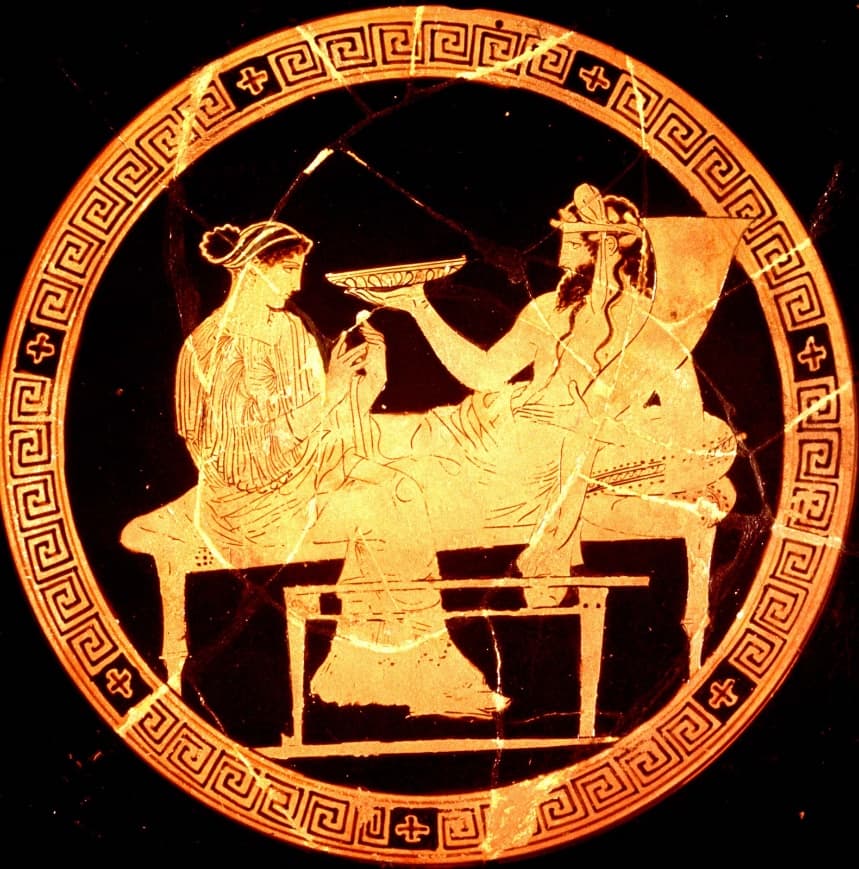
Greek Foundation: Persephone and the Underworld Contract
The canonical case is Persephone, whose consumption of pomegranate seeds in the realm of Hades binds her cyclically to the Underworld.
This is not framed as nourishment. It is framed as jurisdictional submission.
- The Underworld does not merely host Persephone,
- It acquires partial sovereignty over her existence.
The myth encodes three rules:
- Entry into another realm does not imply belonging,
- Consumption is often interpreted as acceptance of local law,
- Even minimal ingestion creates irreversible linkage.
Celtic Otherworld: The Fae Covenant
In Celtic traditions, especially Irish and Scottish lore, humans who consume food in the Otherworld become unable to return or return to find centuries have passed.
Key elements:
- Food is often offered freely, even seductively,
- Time distortion follows consumption,
- Identity erosion is common.
The implication is stark:
The act of eating is not hospitality. It is initiation.
Japanese Spirit Realms: Ontological Drift
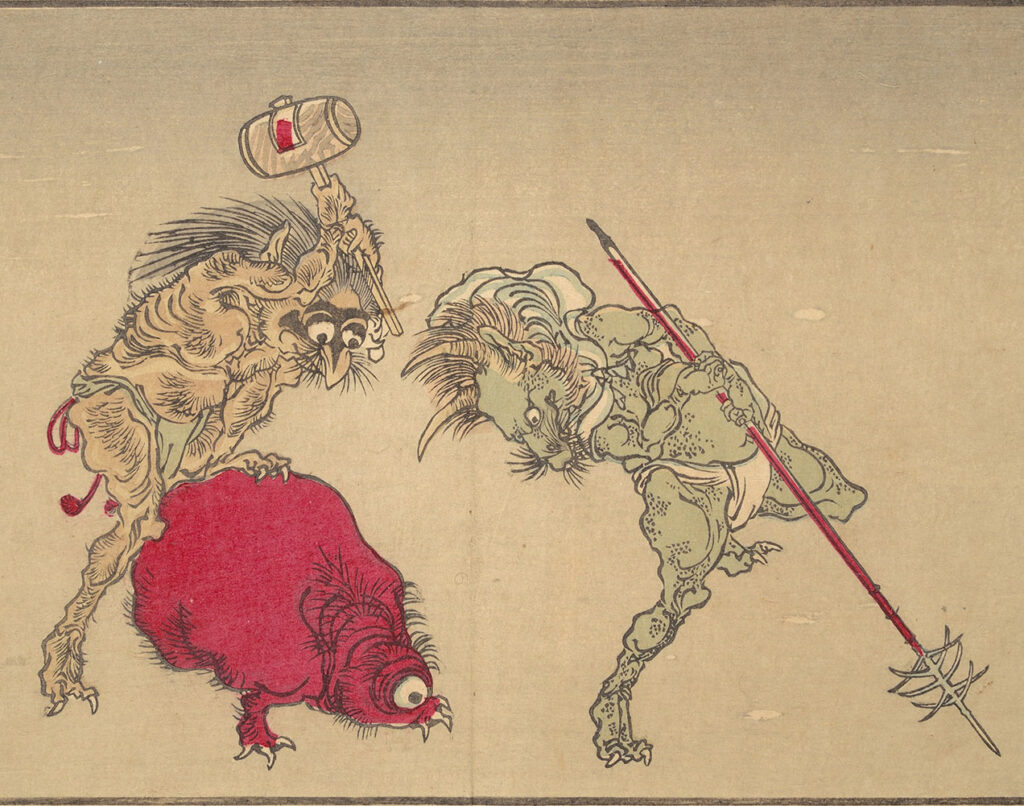
In Japanese folklore involving yōkai and spirit worlds:
- Humans who eat spirit food may forget their origins;
- They may lose their physical body or become spirit-like.
Unlike the Greek model of contractual binding, the Japanese model emphasizes identity dissolution.
Norse and Germanic Echoes
Encounters with elves or hidden folk similarly warn:
- Accepting food creates obligation;
- Obligation becomes entrapment.
Here, the emphasis is on reciprocity debt, a theme that becomes critical in modern UAP interpretations.
II. Structural Pattern Across Cultures
Across these traditions, a consistent pattern emerges:
| Element | Meaning |
|---|---|
| Food | Medium of integration |
| Eating | Acceptance of foreign system |
| After-effect | Loss of autonomy, time distortion, or identity shift |
| Refusal | Preservation of sovereignty |
This pattern appears across multiple cultures, which may suggest either:
- A shared psychological archetype, or
- A recurring experiential reality encoded in narrative form.
However, such similarities may also arise from shared human cognitive structures or archetypal storytelling patterns.
III. Transition to Modern UAP Encounters
In a UAP studies framework, particularly under:
- Contact Modalities;
- Experiencer Research; and
- Patterns & Motifs.
Some researchers interpret a modern analog to this ancient rule. However, instead of “food” in the literal sense, the motif evolves into:
- Substances offered
- Liquids administered
- Symbolic ingestion
- Energetic or informational “downloads”
IV. Case Mapping: Consumption Motifs in UAP Experiencer Narratives
1. The Antonio Villas Boas Case (Brazil, 1957)
One of the earliest modern abduction accounts includes:
- The witness reports being given a thick liquid substance
- He initially resists but later consumes it
- The experience escalates into a biological interaction event
Interpretation suggests
- The substance may function as:
- A physiological preparation
- A symbolic acceptance of participation
- The sequence has been interpreted as resembling ancient motifs:
- Offer → hesitation → acceptance → transformation
2. The Betty and Barney Hill Case (1961)
Betty and Barney Hill Abduction
While not centered on food, the Hills report:
- Medical procedures
- Bodily sampling
- Implied internal alteration
Later interpretations suggest:
- The “ingestion” motif may be bi-directional
- Humans ingest substances
- NHI extracts biological material
This reframes consumption as exchange, not one-way binding. Unlike mythological ingestion motifs, this case emphasizes procedural interaction rather than consumption.
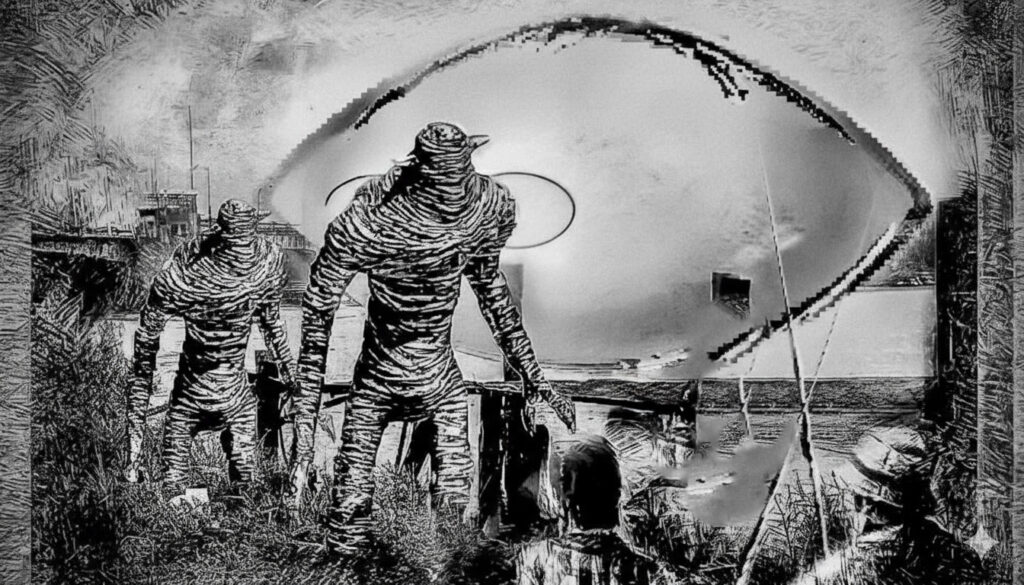
3. The Pascagoula Incident (1973)
Witnesses report:
- Paralysis
- Examination by entities
No explicit food motif appears, but:
- The loss of bodily autonomy parallels the binding effect seen in myth
4. The Allagash Abductions (1976)
Subjects under regression describe:
- Being subjected to procedures
- Possible ingestion or internal interaction
The key pattern:
- Crossing a threshold → altered bodily state → incomplete memory
5. Whitley Strieber’s Communion Accounts
In his book Communion Strieber describes:
- Objects placed in the body
- Substances interacting with physiology
- Experiences that blur physical and symbolic ingestion
His accounts shift the motif into:
- Energetic ingestion
- Information transfer
6. Modern CE-5 and Contact Protocol Narratives
Within CE-5 style interactions:
- Participants report “downloads”
- Sensations described as:
- Liquid light
- Energy entering the body
- Internal resonance shifts
This is ingestion without substance.
7. Counterexamples: Absence of Ingestion
Not all UAP encounters include ingestion or internal interaction. Cases such as the Pascagoula incident and portions of the Hill abduction narrative lack clear ingestion elements, suggesting the motif may not be universal.
V. Reframing the Motif: From Food to Interface
When examined across both mythological traditions and modern UAP encounter reports, the motif of “consumption” appears to extend beyond its literal meaning. Rather than referring solely to nourishment, it may represent a broader category of interaction in which something external is perceived as entering and altering the human system.
In traditional contexts, food serves as one of the most immediate and intimate forms of exchange. It crosses the boundary between external and internal, transforming what is “other” into something incorporated within the self. This quality makes it a powerful narrative device for expressing irreversible change. In myths such as the story of Persephone or accounts of the fae Otherworld, consumption is not merely an act of eating – it is often interpreted as a transition into a different set of rules, relationships, or states of being.
In modern UAP encounter narratives, however, this motif frequently appears in altered forms. Witnesses may describe being offered liquids, exposed to vapors, injected with substances, or experiencing what they interpret as energy or information entering the body. In some cases, there is no conventional ingestion at all, but rather a sensation of internal modification that defies ordinary biological explanation.
One possible interpretation is that these experiences (both ancient and modern) reflect a common structural theme: the crossing of a boundary through internalization. Under this view, what is described as “food” in myth may function as a culturally available metaphor for a more general type of interaction, while modern accounts translate similar experiences into the language of technology, medicine, or energy.
From this perspective, ingestion-like events may be understood as a form of interface, defined broadly as any process through which two systems connect and exchange influence. In human experience, eating is one such interface. However, it is not the only one. In the context of reported UAP encounters, the interface, if such a process is occurring, could take a variety of forms, including biochemical, neurological, or perceptual interactions.
It is important to emphasize that this interpretation remains speculative. There is currently no empirical evidence demonstrating that such ingestion or internalization events function as structured mechanisms of interaction with non-human intelligences. Alternative explanations must also be considered, including the possibility that these experiences arise from altered states of consciousness, during which unfamiliar sensations are interpreted through culturally familiar frameworks such as eating or drinking.
Nevertheless, the recurrence of this motif across disparate contexts raises a question that remains open: why do both ancient narratives and modern testimonies repeatedly describe moments in which the boundary between self and other is crossed through an act perceived as internalization?
Whether this reflects an external interaction, an internal cognitive process, or a combination of both is not yet resolved. What can be said with greater confidence is that, within the structure of these narratives, such moments consistently mark a transition – from observation to participation, from separation to integration, and from stability to transformation.
VI. Reframing the Motif: From Consumption to Integration
When we step back from the literal imagery of fruit, bread, or drink, a deeper pattern begins to emerge. The recurring warning about consuming food in the “other realm” is not simply about sustenance. It is about integration into a foreign system of reality.
The term ‘ingestion’ may represent a broader category of interaction in which external elements are perceived as entering the body, whether physically, neurologically, or symbolically.
In ancient traditions, food is the most immediate and intimate form of exchange. It crosses the boundary between the external and the internal. To eat is to take something outside oneself and make it part of one’s body. In this sense, food is not symbolic. It is transformative by definition. This is precisely why it becomes the chosen mechanism, across cultures, for signaling irreversible change.
In modern UAP encounters, however, the motif evolves. The apple becomes a liquid. The banquet becomes a clinical environment. The act of eating becomes something more ambiguous. Witnesses describe being given substances, inhaling vapors, receiving injections, or experiencing what they can only describe as “energy entering the body.” In many cases, there is no traditional ingestion at all. Instead, the experiencer reports a sensation of internal alteration, as if something has been introduced into their system without passing through the normal biological pathways.
This shift suggests that what ancient cultures encoded as “food” may in fact represent a broader category: interface events.
An interface is any mechanism by which two systems connect and exchange information or influence. In human terms, eating is one such interface. But it is not the only one. In a more advanced or non-human context, the interface could take many forms: biochemical, electromagnetic, neurological, or even purely informational.
From this perspective, the ancient warning becomes more precise:
Do not accept integration from a system whose rules you do not understand.
The act of ingestion, whether literal or experiential, appears to mark the moment when the boundary between self and other begins to dissolve. The experiencer is no longer simply observing or being observed. They are participating. And participation, in every system known to us, carries consequences.
VII. Witness Interpretation vs. Researcher Opinion
One of the central tensions in UAP research lies in how to interpret the testimony of experiencers without diminishing its integrity or overstating its conclusions. The ingestion motif sits directly within this tension.
From the standpoint of the witness, the experience is often unambiguous. A substance was offered or administered. It had a taste, a texture, and a physical presence. It produced effects that were felt in the body. In cases like the Antonio Villas Boas Incident, the ingestion is remembered as a concrete act, embedded within a sequence of events that the witness insists occurred in physical reality.
Witnesses frequently describe these moments with a clarity that stands out even among otherwise fragmented memories. This is significant. In many abduction narratives, memory is partial, disrupted, or recovered through regression. Yet the moments of ingestion or internal interaction often carry a distinct sense of importance and vividness, as if they represent a pivot point in the encounter.
Researchers, however, approach these accounts with a broader toolkit. They must consider neurological, psychological, and cultural factors. Was the substance physically present, or was it perceived within an altered state? Could the experience represent a symbolic rendering of a physiological or cognitive event? Is the mind translating something unfamiliar into the closest available human metaphor, namely food or drink? In some cases, these experiences may arise from altered states such as sleep paralysis, dissociation, or memory reconstruction.
There is also the question of contextual framing. A witness raised within a particular cultural environment may unconsciously draw upon existing symbolic structures when attempting to describe an anomalous experience. The language of ingestion may therefore function as a bridge between the ineffable and the familiar.
Yet to dismiss the ingestion motif as purely symbolic is to overlook its remarkable consistency across cases and cultures. Independent witnesses, separated by geography, language, and belief systems, describe strikingly similar sequences: an offering, a hesitation, an acceptance or forced administration, followed by a shift in bodily or perceptual state.
We treat each account as a data-bearing narrative, where meaning emerges through aggregation rather than isolation. The question is not whether the ingestion “really happened” in a narrow physical sense. The question is:
What function does this motif serve within the structure of the encounter?
When viewed this way, the ingestion event becomes less about material substance and more about process. It marks a transition. It signals a change in the relationship between the experiencer and the phenomenon. Whether that change is biochemical, neurological, or ontological remains open, but the pattern itself is difficult to ignore.
VIII. Cross-Case Pattern Synthesis
Across myth and modern accounts, the following pattern holds:
- Encounter begins with invitation or capture,
- A threshold is presented,
- Ingestion or internal interaction occurs,
- The experiencer undergoes:
- Time distortion,
- Identity shift,
- Memory fragmentation,
- and return is partial or altered.
This pattern appears frequently enough to warrant further investigation.
IX. Implications for UAP Research
If the ingestion motif identified across mythological traditions and modern UAP encounter reports reflects more than narrative coincidence, it may offer a useful lens through which to examine the structure of these experiences. However, any implications drawn from this pattern must be approached with caution, as the underlying mechanisms remain unverified.
One potential implication is that some UAP encounters may involve forms of participatory interaction rather than purely observational events. In many reported cases, experiencers do not simply witness an external phenomenon but describe processes that affect their internal state, whether physiologically, perceptually, or cognitively. If interpreted literally, ingestion or ingestion-like experiences could represent moments in which the boundary between observer and phenomenon becomes less distinct. Alternatively, these descriptions may reflect the mind’s attempt to interpret unfamiliar sensations using familiar biological metaphors.
A second consideration involves the role of reciprocity and exchange, which is prominent in both folklore and encounter narratives. In mythological traditions, accepting food often establishes a relationship, sometimes framed as obligation, alliance, or entrapment. Some researchers have suggested that analogous dynamics may be present in UAP encounters, particularly in cases involving perceived substance administration or internal alteration. However, it remains unclear whether such interpretations reflect external processes or internal narrative structuring imposed after the experience.
A third implication concerns the possibility that consciousness plays a central role in these encounters. The variability in how ingestion is described, ranging from physical substances to intangible “energy” or “information,” suggests that the phenomenon, if real, may not operate solely within conventional material frameworks. At the same time, this variability is also consistent with known features of altered states of consciousness, including dream-like cognition, symbolic representation, and memory reconstruction. As such, both externalist and internalist explanations remain viable and should be considered in parallel.
Additionally, the persistence of this motif across cultures raises the question of whether traditional narratives may encode experiential patterns rather than literal events. From this perspective, myths could function as early interpretive frameworks for anomalous experiences, preserving recurring structures without necessarily describing their underlying causes. This interpretation aligns with comparative approaches that view folklore and modern encounter reports as part of a broader continuum of human experience with the unknown.
At present, there is no controlled or repeatable evidence demonstrating that ingestion or internalization events function as structured mechanisms of interaction with non-human intelligences. Therefore, any model that treats these events as components of a systematic protocol should be regarded as hypothetical rather than established.
The most productive path forward may lie in pattern-based research, which focuses on identifying recurring features across independent cases while maintaining clear distinctions between observation and interpretation. Within such a framework, the ingestion motif can be treated as a data point, one that may or may not prove significant as additional evidence is gathered.
Ultimately, the implications of this motif remain open-ended. It may reflect:
- a symbolic expression of altered states,
- a neurocognitive response to anomalous stimuli,
- a cultural continuity in how humans interpret the unknown, or
- less conclusively, an aspect of interactions not yet understood.
At this stage, no single explanation can be confirmed. What can be stated with greater confidence is that the motif highlights a recurring moment in these narratives, a transition from passive observation to perceived internal change. Whether that transition originates from external interaction, internal processing, or a combination of both remains an open question for future investigation.
X. Claims Taxonomy
Verified
- Cross-cultural ingestion motifs in mythology
- Reports of bodily interaction in UAP cases
Probable
- Structural similarity between folklore and UAP narratives
Disputed
- Interpretation of substances as physical vs symbolic
- Ingestion as interface mechanism
Legend
- Mythological narratives such as Persephone and fae folklore
Misidentification
- Cases where ingestion may be dream-state or neurological artifact
XI. Speculation Labels
Hypothesis
Ingestion represents a universal interface mechanism between human consciousness and non-human intelligence domains.
Witness Interpretation
Experiencers often perceive ingestion as literal, physical, and consequential.
Researcher Opinion
The motif may reflect a neuro-symbolic process triggered during altered states induced by UAP encounters.
XII. Conclusion
The warning appears across many traditions and remains persistent: do not eat the food of the other realm.
Yet across modern UAP encounters, something akin to that act continues to occur, not always as food, but as integration.
If the pattern holds, then the act is not about nourishment. It is about belonging.
And belonging, once accepted, may not be easily reversed.
Whether this pattern reflects an external mechanism, an internal cognitive process, consciousness only interface, or a combination remains unresolved.
References
Bulfinch, T. (2004). Bulfinch’s mythology. Modern Library.
https://books.google.com/books/about/Bulfinch_s_Mythology.html?id=OskAy9XOnIsC
Campbell, J. (2008). The hero with a thousand faces (3rd ed.). New World Library.
https://www.google.com/books/edition/The_Hero_with_a_Thousand_Faces/I1uFuXlvFgMC
Eliade, M. (1959). The sacred and the profane: The nature of religion. Harcourt.
https://www.google.com/books/edition/The_Sacred_and_the_Profane/zBzzv977CLgC
Fuller, J. G. (1966). The interrupted journey. Dial Press.
https://archive.org/details/interruptedjourn00full/page/n5/mode/2up
Hopkins, B. (1981). Missing time: A documented study of UFO abductions. Richard Marek.
https://archive.org/details/missingtimedocum00hopk_0
Mack, J. E. (1994). Abduction: Human encounters with aliens. Scribner.
https://www.simonandschuster.com/books/Abduction-Human-Encounters-with-Aliens/Mack/9781416575801
Strieber, W. (1987). Communion: A true story. Walker & Collier, Inc.
https://www.goodreads.com/book/show/1070498
Vallée, J. (1969). Passport to Magonia: From folklore to flying saucers. Henry Regnery Company.
https://www.jacquesvallee.net/research/#literature
Hufford, D. J. (1982). The terror that comes in the night: An experience-centered study of supernatural assault traditions. University of Pennsylvania Press.
https://www.pennpress.org/9780812213058/the-terror-that-comes-in-the-night/
Clancy, S. A. (2005). Abducted: How people come to believe they were kidnapped by aliens. Harvard University Press.
https://archive.org/details/abducted00susa/page/n5/mode/2up
SEO Keywords
UAP food lore, fae food warning, Persephone pomegranate meaning, UAP abduction patterns, experiencer ingestion motif, non-human intelligence interaction rules, folklore and UFO connection, consciousness and UAP, contact protocols, interdimensional binding