
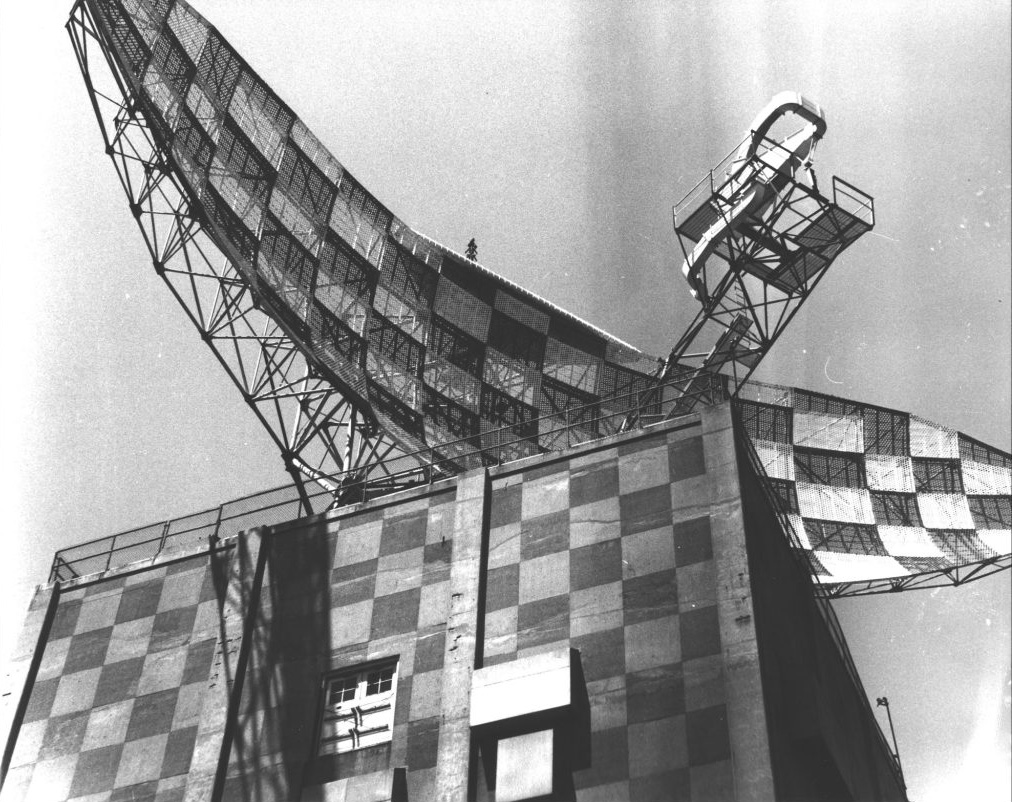
Montauk feels like the kind of landscape that manufactures myth. Wind, dune grass, Atlantic glare, and a horizon that makes you think in long distances. Then you reach Camp Hero State Park and see the radar tower. It is blunt, concrete, and unmistakably Cold War: the AN/FPS-35 radar tower and antenna, a genuine U.S. air-defense artifact whose historic status is formally documented. (GovInfo)
That physical anchor is the first reason the Montauk Project remains such a stubborn story. The second is that it sits at the intersection of two themes that have never fully left modern UAP culture: clandestine experimentation on human cognition, and “thin place” encounters where reality seems to behave as if it has seams.
This explainer is written to be publishable under a strict evidence-forward standard.
So we’ll do three things consistently. We’ll keep the verified history of the site clean and well sourced. We’ll treat Montauk Project claims as interconnected testimony, explicitly labeled as such. And we’ll lean on primary-source-style documentation where it exists, especially when the subject tempts writers into atmospheric overreach.
What’s real before we touch the legend
Camp Hero is not a rumored base. It is a documented former military site with a paper trail, an official remediation record, and a public-facing U.S. Army Corps of Engineers description that lays out the timeline in plain language.
USACE states that “in 1952, the Air Force property was renamed the Montauk Air Force Station,” and that an “advanced Specific Frequency Diversity Search Radar was built in late 1960.” (nae.usace.army.mil) That radar is the AN/FPS-35 installation that dominates the site’s silhouette today.
USACE’s remedial investigation report also documents the transition out of military use: in 1974, while some military uses were still active, portions of the property transferred from the Department of Defense to New York State; the last military personnel departed in 1980; and the remainder was declared surplus and then deeded out in subsequent years. (North Atlantic Division)
There is nothing in those official records that implies portals, time travel, or an anomalous program. The official record describes a former defense installation, later transferred and investigated for environmental and munitions issues like many Formerly Used Defense Sites. (North Atlantic Division)
The radar tower’s historic recognition is also not a vibe or a rumor. It appears in National Register listings, including the Federal Register notice that names “AN/FPS-35 Radar Tower and Antenna” at Montauk. (GovInfo) The National Archives-hosted National Register documentation likewise recognizes the tower and provides formal historic framing. (Amazon Web Services, Inc.)
So the verified foundation is sturdy: a real base, a real major radar build around 1960, a documented drawdown, and a formally recognized historic tower. (nae.usace.army.mil)
That foundation matters because the Montauk Project, as the public understands it, is not a claim that “something odd happened near Montauk.” It is a claim that a real military location was used as a stage for experiments so strange they bend the category of the possible.
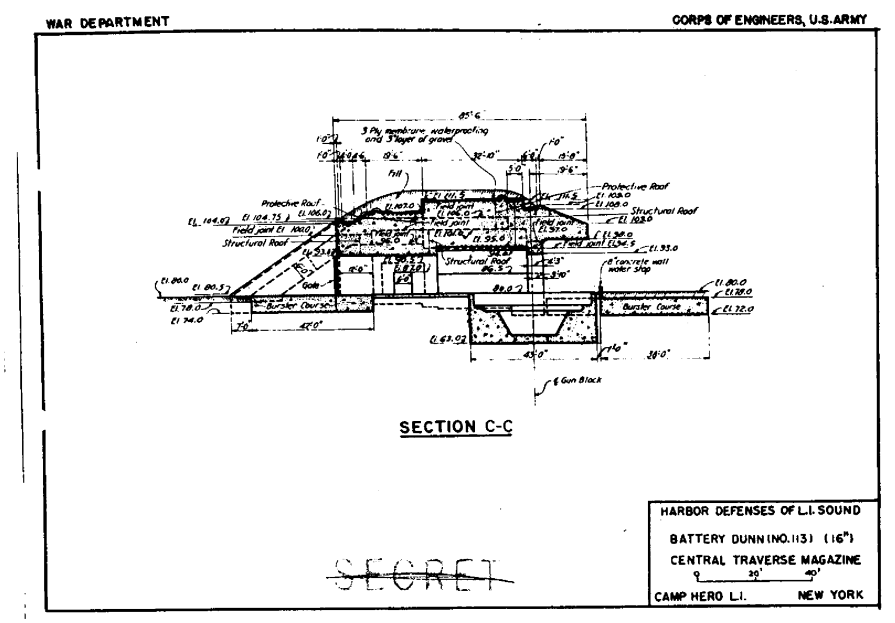
(Internet Archive, Montauk Library Archives)
What people mean when they say “the Montauk Project”
The Montauk Project is best understood as a contested testimonial narrative that crystallized into public form in the early 1990s, largely through a book that became a kind of seed crystal for everything that followed: The Montauk Project: Experiments in Time by Preston B. Nichols and Peter Moon, published by Sky Books in New York in 1992. A clean bibliographic record for this exists in WorldCat, which is a far better citation anchor than a retailer listing. (WorldCat)
In the Nichols–Moon telling and the many retellings that borrow from it, the Montauk Project is framed as an off-the-books program that blended high-power electromagnetics with psychological and parapsychological methods. The alleged goals vary by narrator, but the recurring motifs are remarkably consistent: mind influence or mind control; psychic “amplification” using a technical apparatus often referred to as a chair; alleged use of recruited or abducted young people (the “Montauk Boys” theme); and, in the most dramatic iterations, the creation of a portal or “window” into another time or an adjacent reality.
Those motifs place the Montauk Project squarely inside interdimensional and portal hypotheses. Not because the evidence proves a portal, but because the story’s central claim is permeability: that reality can be engineered into an opening if you combine enough power, enough signal control, and enough human cognition pointed in the “right” direction.
Why the story’s “mind control” framing can’t be waved away as fantasy history
One reason Montauk stories stick is that they borrow plausibility from a real, documented history of ethically catastrophic experimentation on human behavior in the mid-20th century U.S. national security ecosystem.
A key anchor is the 1977 U.S. Senate hearing titled Project MKULTRA, the CIA’s Program of Research in Behavioral Modification. Which is a formal hearing record with testimony and documentation about covert research and oversight failures. (Ext Apps DEC)
Nothing in MKULTRA documentation validates Montauk Project claims. But it changes the psychological baseline: it makes “covert experimentation on cognition” historically real as a category. That matters because Montauk testimony often asks readers to accept the category first, then the extraordinary details second.
In a parallel lane, government-funded research into anomalous cognition also exists as a documented category, even if the conclusions remain disputed.
The CIA has declassified records that support review of earlier remote-viewing and parapsychology-related efforts, which were evaluated and debated internally and externally. (Ext Apps DEC) Again, this does not prove Montauk’s chair, portal, or time-travel claims. It simply demonstrates that the intelligence community did, at points, treat the question of anomalous perception as something worth investigating.
In UAP discourse, those two histories, behavioral modification programs and anomalous cognition research, form the real-world “soil” in which Montauk narratives grow. Without them, Montauk reads like pure science fiction. With them, Montauk reads like an exaggerated branch off a documented trunk.
Witness accounts and first-hand claims, handled carefully
The Montauk Project is not supported by a publicly verified declassified program file that matches its extraordinary claims. What exists in the public domain is largely testimonial: books, interviews, lectures, and recordings where narrators describe alleged participation.
That is not worthless. Testimony can be evidence. But it is a particular kind of evidence, and on Montauk it is highly interconnected: many key claims are not independent accounts converging from separate channels, but versions of a shared narrative framework.
Case study: Preston Nichols as the technical narrator
Preston Nichols is one of the primary public narrators of the Montauk Project story through his co-authored work with Peter Moon and through media appearances that circulated widely in the 1990s. One durable archival example is a 1994 radio appearance preserved via the Internet Archive. While the archive itself is not an “official record” of events at Camp Hero, it is a stable, citable artifact for what Nichols publicly claimed and when he claimed it. (Internet Archive recording: https://archive.org/details/1994-05-27-coast-to-coast-am-with-art-bell-montauk-project-preston-nichols)
In Nichols’ narrative, the “engineering voice” is part of the persuasion. He describes fields, equipment, and systems as if the extraordinary effects were the logical output of technical inputs. Readers should treat that as a rhetorical feature, not a corroboration. The verified fact remains that the site did host powerful radar infrastructure and associated facilities as part of air-defense surveillance, as documented by USACE. (North Atlantic Division)
The key methodological point is this: the site’s documented electromagnetic role makes it easy to imagine exotic experiments, but imagination is not evidence. The proper conclusion is not “therefore Montauk happened,” but “therefore Montauk’s setting is unusually suited to legend-building.”
Case study: The “chair” motif and the consciousness interface claim
The “Montauk Chair” idea is central to the portal framing. In the story, a human mind becomes a coupling mechanism: intention, imagery, or psychic focus is said to interact with field systems and produce external effects.
As evidence, this remains testimonial. The strongest contextual support is not a Montauk document, but the broader reality that the Cold War period produced both coercive behavioral research and institutional interest in anomalous cognition. (Ext Apps DEC) That context can explain why the chair motif feels plausible to many readers, even when there is no independent documentary corroboration that it existed at Montauk.
So the chair stands, in this explainer, as an allegation: a recurring claim within the Nichols–Moon narrative lineage, not an established device in the historical record.
Case study: The “Montauk Boys” theme
Claims involving abducted or recruited youths are among the most emotionally charged in the Montauk canon. They also carry the highest risk of harm if presented incautiously.
In the public domain, this theme appears primarily as testimony within the Montauk Project narrative family rather than as independently verifiable documentation. That does not make it false, but it places it firmly in a contested zone: extraordinary allegations involving victims demand extraordinary corroboration. At present, the Montauk “Montauk Boys” theme does not have the kind of independent documentary support that would allow UAPedia to treat it as verified.
The responsible posture is to record that the claim exists, to identify its testimonial roots, and to state plainly that it remains uncorroborated by publicly accessible official documentation.
The Philadelphia Experiment linkage, tightened
Montauk literature often inherits authority by presenting itself as a continuation of the Philadelphia Experiment narrative. Under strict evidentiary handling, this linkage must be labeled as narrative inheritance, not corroboration.
Jacques Vallée’s published analysis of the Philadelphia story’s structure is frequently cited as a serious critique, treating the narrative as unreliable and shaped by hoax-like dynamics. That critique supports a cautious approach: if the Philadelphia foundation is unstable, its use as an “origin” for Montauk should not be treated as a validation of Montauk. In other words, the linkage explains how the legend spreads; it does not prove that the linked events occurred.
So, in this explainer, the Philadelphia connection functions as genealogy, not evidence.
How Montauk fits Interdimensional and Portal Hypotheses without overstating the case
Interdimensional and portal hypotheses are often invoked when encounters include features that feel like boundary violations: time distortion, impossible transitions, sudden appearances and disappearances, and “threshold” experiences where witnesses report stepping into something that does not behave like ordinary space.
The Montauk Project story is essentially an engineered-threshold narrative. It claims that the boundary was not encountered by accident but manipulated by design, combining a high-energy technical environment with a consciousness interface.
If you are looking for why this story lands so hard in portal discourse, it’s because it’s a laboratory myth rather than a wilderness myth. It does not simply say “a portal exists.” It says “we built it.”
But the evidentiary posture must remain strict: the portal claim itself is unverified. What is verified is the existence of the site, its air-defense radar role, the late-1960 construction of the AN/FPS-35 radar, the 1980 personnel departure, and the historic recognition of the tower. (North Atlantic Division)
Everything beyond that moves from documents into testimony.
Why Montauk remains culturally potent without needing to be “proven”
Montauk persists because it offers a single story that can hold many public anxieties at once.
It holds fear of secret research, but not in the abstract. It attaches it to a real, nameable place. It holds fear of mind manipulation, anchored by the historical fact that the U.S. government did run behavioral modification programs. (Ext Apps DEC) It holds fascination with anomalies of perception and mind, anchored by the historical fact that anomalous cognition was studied within intelligence-adjacent contexts. (Ext Apps DEC) And it holds a bigger, more unsettling implication: that the boundary of reality might be negotiable.
Even if Montauk were entirely a legend, it would still be an instructive legend. It demonstrates how modern anomalous narratives form around three ingredients: a real restricted site, a real history of secrecy, and a human appetite for explanations that feel larger than ordinary politics.
Implications if any core element were true
This section is not a claim. It is a downstream analysis of implications, clearly separated from evidence.
If consciousness can couple to physical systems in a repeatable way, as Montauk testimony claims, then UAP-adjacent phenomena that appear to involve time distortion, perception shifts, or boundary events could involve an interaction loop between observer and event. That reframes the witness from passive recorder to participant.
If engineered boundary events are possible at all, then the national security implications shift from airspace and hardware to cognition, ethics, and information. Oversight would have to include the interior world. Harm would not be limited to physical injury; it could include psychological destabilization, memory distortion, and long-term trauma, which is why any discussion of “Montauk Boys” themes demands strict caution and strict corroboration standards.
The biggest implication is also the most philosophically disruptive: that some UAP phenomena might be less like objects and more like transitions, changes in boundary conditions where what we call “space” behaves differently.
Claims Taxonomy
Verified
- Camp Hero/Montauk Air Force Station existed as a real military installation;
- USACE documents that in 1952 it was renamed Montauk Air Force Station;
- USACE documents that an advanced radar was built in late 1960, the AN/FPS-35;
- USACE documents partial property transfer beginning in 1974 and last military personnel departing in 1980;
- The AN/FPS-35 Radar Tower and Antenna is listed in National Register notices including the Federal Register, and National Archives documentation supports its historic recognition. (nae.usace.army.mil)
Probable
The installation’s Cold War air-defense mission involved classified operational details typical of radar surveillance facilities, even if publicly available documents focus on broad mission summaries and remediation. (Inference grounded in the nature of such sites, not a Montauk Project validation.) (nae.usace.army.mil)
Disputed
The Montauk Project’s central allegations, including psychic amplification, the “chair,” systematic mind control training, and engineered portals, remain uncorroborated by publicly available independent documentary evidence and are primarily supported through interconnected testimony and derivative retellings. (WorldCat)
Legend
Highly dramatized Montauk motifs, including fully operational time tunnels and entity manifestations, function culturally as legend-level claims in the absence of corroborating documentation.
Misidentification
Ordinary features of a former defense site, restricted areas, closures for safety, preservation, or remediation, and the imposing radar infrastructure itself can be misread as evidence of ongoing clandestine activity.
Hoax
Not assigned to the Montauk Project as a whole in this explainer due to insufficient direct proof of deliberate deception by all narrators.
Speculation Labels
Hypothesis
The Montauk Project narrative may preserve a mixed signal. The literal “portal” story could be a mythic wrapper around more ordinary but still secretive activities tied to radar operations, surveillance, electronic warfare testing, or psychological operations, with later storytellers blending those realities with the broader Cold War history of cognition-related research. The verified existence of the base and its radar infrastructure provides a compelling stage for such narrative fusion. (North Atlantic Division)
Witness Interpretation
Some narrators interpret disorienting experiences through the lens of time travel or interdimensional contact. That interpretive overlay can become the story itself, especially in communities where portal concepts are culturally available explanations.
Researcher Opinion
Montauk is best treated as a contested testimony bundle anchored to a real place. The correct research move is not dismissal or embrace, but disciplined separation: document what is verifiable, record what is claimed, label what is uncorroborated, and remain alert to the ways narrative inheritance can masquerade as corroboration.
References
Nichols, P. B., & Moon, P. (1992). The Montauk Project: Experiments in Time. New York, NY: Sky Books. (WorldCat OCLC 1150791289). (WorldCat)
U.S. Army Corps of Engineers. (n.d.). Camp Hero FUDS, Montauk, New York (project overview). (nae.usace.army.mil)
U.S. Army Corps of Engineers. (2019). Remedial Investigation Report: Camp Hero, Montauk, New York (Part 2). (North Atlantic Division)
National Park Service. (2002). National Register of Historic Places documentation: AN/FPS-35 Radar Tower and Antenna (Montauk Air Force Station) (archival PDF hosted via National Archives). (Amazon Web Services, Inc.)
National Park Service. (2002). National Register of Historic Places weekly list, 2002 (includes AN/FPS-35 Radar Tower and Antenna, Suffolk County, NY). (National Park Service)
Office of the Federal Register. (2002, May 16). National Register of Historic Places listings: AN/FPS-35 Radar Tower and Antenna, Montauk (Suffolk County, NY). (GovInfo)
SEO keywords
Montauk Project, Camp Hero, Montauk Air Force Station, AN/FPS-35 radar tower, interdimensional portal hypothesis, portal claims, time slip, time travel allegations, consciousness interface, Montauk Chair, Montauk Boys, Cold War radar site, UAP portals, anomalous cognition, behavioral modification history, MKULTRA context, Project STAR GATE context, contested testimony, National Register of Historic Places Montauk radar