
“Abduction studies” sits at the crossroads of UAP research, clinical psychology, folklore, and law. Since the 1960s, investigators have proposed structured ways to document and compare first-person narratives of involuntary encounters, from the Betty & Barney Hill case (1961) through Pascagoula (1973), Travis Walton (1975), Allagash (1976), and urban cases such as “Linda Cortile/Napolitano” (1989). Methods pioneered by Budd Hopkins (Intruders Foundation), David M. Jacobs (Temple University), and John E. Mack (Harvard) emphasized witness interviews, regressive hypnosis, and pattern-mapping across testimonies. In parallel, cognitive scientists (notably Elizabeth Loftus, Susan A. Clancy, and Richard J. McNally) built an empirical critique around memory malleability, sleep paralysis, and suggestibility, while professional bodies (APA/BPS) warned about recovered-memory techniques and forensic interviewing pitfalls. (PBS)
This article traces the history of the abduction canon, details the tools researchers used (and why those tools are controversial), summarizes anchor cases, and weighs competing interpretations. We close with a claims taxonomy and speculation labels tailored for UAPedia, plus policy/fieldwork implications for future investigations.
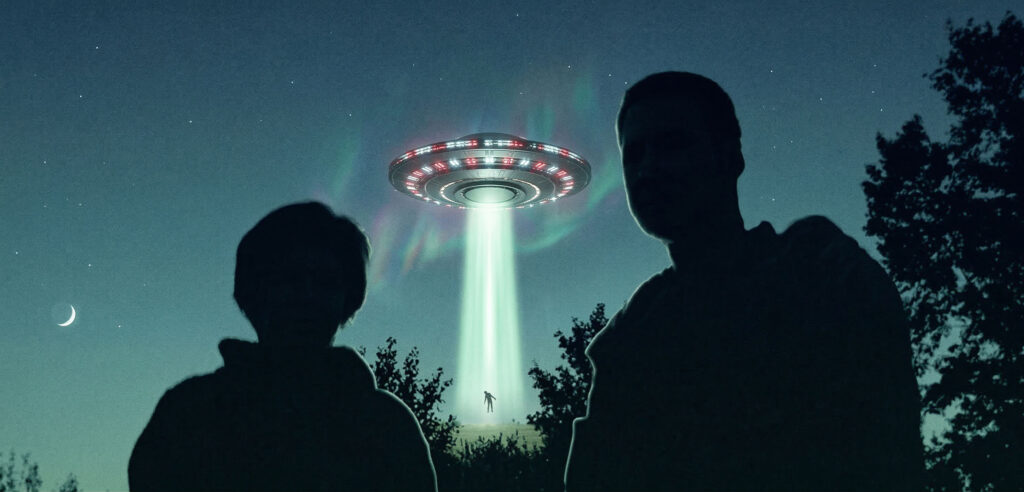
A short history of abduction research (1961 to present)
Foundational 1960s–1980s
- Betty & Barney Hill (1961). The case that defined the genre: a roadside “close encounter,” missing time, and later hypnotic regression with psychiatrist Benjamin Simon. The Hills’ papers are archived at the University of New Hampshire; comprehensive synopses exist via NICAP. The case popularized recovered details under hypnosis and the “star map” narrative. (NICAP)
- Abduction as a research frontier, Artist-turned-researcher Budd Hopkins systematized intake procedures, group support settings, and hypnosis-based casework (e.g., Missing Time, Intruders), founding the Intruders Foundation. Public-facing interviews (e.g., PBS NOVA) show how his approach centered on patterns across testimonies, especially reproductive procedures and implants. (PBS)
The 1990s: institutionalization and backlash
- John E. Mack (Harvard) Pulitzer-winning psychiatrist who framed abduction narratives as profound, sometimes transformative experiences. Harvard Medical School ran a 14-month inquiry into his methods; in August 1995 the dean took no disciplinary action while warning Mack to uphold clinical standards, and reaffirmed his academic freedom. Coverage in The Harvard Crimson, Nature, LA Times, and Harvard’s Gazette memorials document the episode and its outcome. (The Harvard Crimson)
- Roper “Unusual Personal Experiences” survey (1992). Hopkins, Jacobs, and sociologist Ron Westrum appended 11 questions to a national poll, inferring millions of possible abductees from “indicator” experiences (e.g., missing time, unusual marks, bedroom visitations). The methodology drew sharp critique for leading items and base-rate errors in the Journal of UFO Studies. The original booklet, and the skeptical rejoinders, are preserved online. (iphemeris.com)
- Academic psychology steps in – The “memory wars” era generated bedrock findings about false memories and misinformation effects (Loftus), and professional guidance on forensic interviewing and hypnosis from APA/BPS, now central to all abduction-case debates. (UW Faculty)
2000s–present: consolidation, re-appraisals, and media
- Sleep paralysis literature (Blackmore; McNally & Clancy): correlations between abduction claims and REM-related paralysis/hypnopompic hallucinations; abductees often psychologically normal, yet more prone to sleep-related phenomena and absorption. (Dr Susan Blackmore)
- Method disputes intensified around Jacobs’ hypnosis protocols and cases like “Emma Woods” (pseud.). Public documentation alleges ethical lapses and suggestive techniques during remote hypnosis; independent write-ups chronicle the controversy (Temple University was not an official sponsor of such work). (Dr. Msh)
- Streaming-era retrospectives revisited cornerstone cases with mixed conclusions, e.g., Pascagoula recordings and Linda Napolitano in The Manhattan Alien Abduction (2024). (libguides.hindscc.edu)
Research methods used in abduction work
Intake & documentation
- Structured/unstructured interviews – Early investigators kept narrative-first files; some later adopted clinical tools (e.g., SCID-5 for psychiatric screening, SIRS-2 to probe feigning) when collaborating with clinicians. In practice, many legacy casefiles lack standardized diagnostic baselines, complicating comparisons. (APAI)
- Pattern catalogs & “indicator” checklists – Hopkins and collaborators used questionnaires to track recurring motifs (bedside visitors, marks, nosebleeds, implants, fetal-reproductive themes). The Roper indicators exemplify this approach, useful for pattern-mining but statistically hazardous if generalized to population prevalence. (iphemeris.com)
Hypnosis/regression
- Rationale – Proponents argue abductions involve amnesic blocks; regressive hypnosis recovers inaccessible memories for therapeutic processing and case correlation. (PBS)
- The critique – Cognitive scientists and professional guidelines warn hypnosis increases confidence in memories without increasing accuracy, and is highly suggestible to interviewer expectations, particularly dangerous when leading questions or group narratives circulate. APA/BPS materials and decades of false-memory research make this the central methodological fault line. (Simmons University)
Auxiliary testing & psychometrics
- American Personality Inventory (API) / “abduction syndrome” attempts sought psychometric signatures that distinguish self-identified abductees from controls and simulators. Results suggest stable personality differences, but they do not validate etiology (what actually happened). (ResearchGate)
- Sleep-related instruments – Studies linking abduction claims to sleep paralysis and temporal-lobe lability used validated questionnaires; these findings do replicate across small samples but cannot explain every feature (e.g., multi-witness episodes). (Dr Susan Blackmore)
Programmatic efforts
- PEER (Program for Extraordinary Experience Research), founded within Mack’s Center for Psychology & Social Change, promoted non-judgmental documentation and interdisciplinary dialogue. Supportive, but often qualitative rather than controlled. (johnemackinstitute.org)
Case summaries
Betty & Barney Hill (New Hampshire, 1961)
- Data: night-drive sighting; close observation with binoculars; missing time; later hypnotic regression detailing an onboard exam; material traces (dress discoloration, trunk spots) and a long NICAP dossier; primary documents preserved at UNH. (NICAP)
- Why canonical: first major U.S. abduction narrative; introduced medical exam, telepathic communication, “star map” lore; framed later studies’ methodological template (intake + hypnosis + pattern comparison).
- Disputes: hypnosis reliability; memory inflation via media and investigator cues. (UW Faculty)
Pascagoula (Mississippi, 1973)
- Data: Hickson & Parker reported robotic/paralytic entities by the river; sheriff’s “secret” tape captured their unguarded conversation immediately after the report (a key probative artifact). Tape and subsequent coverage are online. (libguides.hindscc.edu)
- Why canonical: early two-witness case with contemporaneous audio, re-elevated when the tape was rediscovered and when a city historical marker was installed.
- Disputes: skeptics highlight inconsistencies, polygraph irregularities, and hypnagogic interpretations; supporters point to spontaneous affect on the tape.
Travis Walton (Arizona, 1975)
- Data: crew reports a luminous object; Walton disappears five days; media storm; later book/film (Fire in the Sky).
- Why canonical: the “missing person” interval and multiple co-workers made it pop-culture famous.
- Disputes: substantial allegations of hoaxing and motives; challenges to polygraph quality; later recantation/retraction drama around a key witness; skeptical reconstructions propose prosaic staging. A balanced overview is in recent summaries.
Allagash (Maine, 1976)
- Data: four campers; sighting over lake; memories elaborated years later under hypnosis; one participant publicly questioned parts of the narrative decades later. (The County)
- Disputes: illustrates the time-lag + hypnosis inflation problem: initial sighting vs. later onboard narrative.
The “Linda Cortile/Napolitano” Manhattan case (1989)
- Data: Hopkins promoted an alleged multi-witness abduction out a 12th-floor window near the Brooklyn Bridge; claims of VIP witnesses; X-ray “implant” claims.
- Disputes: detailed critical review (Stefula, Butler, Hansen) found serious evidentiary gaps, alleged parallel fictional sources, and witness-credibility issues; recent media (2024) leans skeptical. (Academia)
What mainstream psychology says
Memory is reconstructive
- Loftus et al.: Strong empirical base that post-event information and leading questions can alter memory; confidence ≠ accuracy; recovered memories via suggestion are especially risky. Key summaries in Scientific American, Current Directions in Psychological Science, and APA/BPS resources. (UW Faculty)
Sleep paralysis accounts for a non-trivial subset
- Findings: Abduction claimants report higher rates of sleep paralysis and absorption; vivid hypnopompic imagery can be interpreted within a cultural script (aliens/visitors). Peer-reviewed studies document this repeatedly. (PubMed)
Professional guidance on hypnosis & interviewing
- APA Working Group (1998) and BPS (2008): caution on recovered-memory practices; emphasize avoidance of suggestive techniques, the need for corroboration, and careful forensic practice. These are not anti-witness; they are pro-validity standards. (Simmons University)
Where the canon and the critiques collide and converge
- Convergence & consistency
Abduction researchers emphasize narrative overlap across independent witnesses: bright bedroom visitors, paralysis, medical exams, floatation, implant themes, reproductive motifs. Critics counter that cultural diffusion, media, and investigator scripts (especially under hypnosis) can produce template-matching stories. The Roper survey magnified this clash by extrapolating prevalence from ambiguous indicators. (iphemeris.com) - Multi-witness and contemporaneous artifacts
Cases like Pascagoula gain traction from police-station audio recorded before media influence, often seen as a higher-value datapoint than later hypnotic sessions. Yet naturalistic explanations (hypnagogia; stress; social dynamics) still appear in skeptical evaluations. (libguides.hindscc.edu) - Clinical harm vs. support
Proponents say validating experiencers and offering peer support reduces isolation. Critics warn that suggestive hypnosis can entrench false beliefs and increase distress. Documentation around the Emma Woods/Jacobs dispute is frequently cited in ethics discussions. (Dr. Msh) - Academia’s uneasy truce
The Harvard inquiry outcome (no censure; caution letter; academic freedom reaffirmed) captures the boundary-work between open inquiry and methodological rigor. (The Harvard Crimson)
How to do abduction research properly today
A. Separate experience documentation from interpretation.
Use cognitive-interview techniques, timestamped notes, and verbatim recordings. Avoid leading prompts (“What did the gray put in your nose?”). Screen with SCID-5 (diagnoses) and SIRS-2 (malingering) where appropriate, not to discredit, but to characterize context. (APAI)
B. Treat hypnosis as high-risk, low-yield.
If used at all, do so under clinical oversight, with explicit consent, pre-registered question lists, and clear statements that hypnotically retrieved content is not evidence absent independent corroboration. This aligns with APA/BPS guidance. (Simmons University)
C. Prioritize contemporaneous artifacts.
Police recordings (Pascagoula), medical ED notes, phone logs, smartwatch sleep data, dashcams, and surveillance feeds matter more than reconstructed memories. (libguides.hindscc.edu)
D. Incorporate sleep & neurophysiology.
Include sleep diaries, actigraphy, and screening for REM intrusion. This does not negate UAP hypotheses; it disentangles sleep-related confounds first. (PubMed)
E. Distinguish population signals from case plausibility.
Do not infer massive prevalence from indicator checklists; if you must sample, pre-register hypotheses and use blinded scoring. The Roper debate is instructive. (iphemeris.com)
Implications
- Method reform is overdue.
Abduction investigation should default to non-suggestive interviews, sleep-phenomenology screens, and forensic data capture, then add specialized hypotheses. This satisfies APA/BPS caution and strengthens surviving cases. (Simmons University) - Evidence hierarchies matter.
A police-room hot mic from night one (Pascagoula) outweighs a hypnotic regression years later. UAP research must normalize graded evidentiary weights. - Academic freedom with accountability.
The Mack inquiry illustrates a healthy boundary: protect controversial topics, demand method discipline. Future clinical collaborations should include IRB-style protocols even outside academia. (The Harvard Crimson) - Population claims require population methods.
Prevalence cannot be inferred from indicator checklists; use transparent sampling and pre-registered analyses or don’t generalize at all. (iphemeris.com)
Conclusion
The abduction canon is not a monolith. It contains classic cases with unusual artifacts (Pascagoula’s immediate police-room audio), media-amplified narratives shaped by hypnosis, and a wide gray zone where lived experience, cultural scripts, sleep physiology, and potential non-human encounters interact. A data-first program for 2025 should:
- Pre-register methods; record verbatim; use cognitive interviewing;
- Screen for sleep/psych confounds before interpretation;
- Prioritize contemporaneous evidence over reconstructed accounts;
- Collaborate across domains (sleep medicine, trauma psychology, digital forensics, UAP field teams).
Some subset of cases, especially those with early artifacts and independent witnesses, remain unresolved after the best psychological explanations are applied. Those cases deserve serious, ethical, method-disciplined inquiry.
Claims taxonomy
Verified
- Documentary outcomes in the Mack case: Harvard Medical School took no disciplinary action (Aug 1995), cautioned about methods, reaffirmed academic freedom. (The Harvard Crimson)
- Pascagoula has a contemporaneous police audio capturing witnesses unguarded. (libguides.hindscc.edu)
- Professional warnings (APA/BPS) that hypnosis/recovered memories are high-risk for suggestive contamination. (Simmons University)
Probable
- Sleep-paralysis linkage explains a meaningful fraction of bedroom/bedside abduction narratives in lab-studied cohorts. (PubMed)
- Indicator-based prevalence (Roper) overestimates abductees due to ambiguous items and base-rate errors. (Gwern)
Disputed
- Travis Walton: competing accounts (hoax vs. genuine event) persist; evidence record is contested.
- Linda Napolitano: Hopkins’ multi-witness claims face detailed method and evidence critiques. (Academia)
- Allagash: later participant statements undercut parts of the narrative reconstructed via hypnosis. (The County)
Legend
- Claims that hypnosis reliably “restores” factual abduction memories. Professional literature does not support this; confidence inflation is common. (Simmons University)
Misidentification
- A share of “bedroom visitor” cases align with sleep paralysis/hypnopompic imagery within a cultural UAP script. This does not address all cases, but it explains some well. (PubMed)
Speculation labels
- Hypothesis (two-stream model):
The abduction corpus likely contains two overlapping signal types:
(1) Sleep-associated events (paralysis/hypnopompic imagery) that, in a UAP-attentive culture, adopt an abduction narrative frame; and
(2) a smaller subset of multi-witness or artifact-supported episodes (e.g., Pascagoula’s immediate-post report tape) that may reflect encounters not reducible to sleep phenomena or ordinary misperception. The latter remains open for further inquiry and should be prioritized for sensor-corroborated follow-ups. (This is an integrative hypothesis, not a claim of proof.) (libguides.hindscc.edu) - Witness interpretation (meaning-making):
Regardless of etiology, many experiencers report lifelong impacts. Even staunch critics (Clancy) find abductees psychologically normal and often positively transformed, a social-psychological fact deserving compassionate engagement. (WIRED) - Researcher opinion:
We reject the blanket claim that abduction narratives are mostly misidentifications or mass delusion. The right way forward is case triage: apply strict, modern evidence standards (for sleep/psych factors and for potential non-human encounters). Where narratives survive this filter, especially with contemporaneous artifacts, they merit serious, non-stigmatizing study.
References
Primary case & archive links:
UNH Library – Betty & Barney Hill Papers (1961–2006). (Library | University of New Hampshire)
NICAP – The Betty & Barney Hill Case (curated primary material). (NICAP)
Pascagoula – Hinds CC library portal with 1973 police tape access; WLOX news recap. (libguides.hindscc.edu)
Travis Walton – comprehensive, regularly updated overview (pro & con).
Linda Cortile/Napolitano – Stefula/Butler/Hansen critique (Academia.edu). (Academia)
Investigators & programs:
Budd Hopkins – PBS NOVA interview; Intruders Foundation overview. (PBS)
PEER (John E. Mack) – program description; PEER Perspectives doc. (johnemackinstitute.org)
Mack inquiry – Harvard Crimson news and resolution; Nature brief; LA Times report. (The Harvard Crimson)
Methods & critiques:
Roper booklet (1992) & critiques. (iphemeris.com)
APA/BPS memory guidance and law-focused guidelines. (Simmons University)
Loftus on memory malleability. (UW Faculty)
Clancy/McNally (Harvard) on abductees & sleep paralysis. (Harvard Gazette)
Blackmore review articles on sleep paralysis & abductions. (Dr Susan Blackmore)
API / “abduction syndrome” psychometrics. (ResearchGate)
SEO keywords
alien abduction research methods, Budd Hopkins hypnosis critique, John Mack Harvard investigation outcome, David Jacobs abduction protocols, Roper poll unusual personal experiences, false memory and hypnosis APA, sleep paralysis and abduction McNally Clancy, Pascagoula police recording 1973, Betty and Barney Hill primary sources, Linda Cortile critique, Allagash abductions recantation, American Personality Inventory abduction syndrome, cognitive interview UAP experiencers, UAP abduction ethics, memory malleability Loftus UAP