
This article assesses the historical significance of medieval Arabic sources for the study of Unidentified Anomalous Phenomena, correlating religious discourse, rigorous astronomical observation, and narrative chronicles with the flight characteristics often reported in modern UAP incidents. We survey Qur’anic and Hadith materials that frame celestial lights and meteors within a moral cosmos; the observational programs and optical science of scholars such as al‑Ṣūfī, al‑Bīrūnī, and Ibn al‑Haytham; and narrative reports of transient celestial events including the supernova of 1006, meteor outbursts, and aurorae noted by Arabic observers from Yemen to Baghdad and beyond. We then compare the behaviors encoded in these sources to modern profiles of UAP, emphasizing continuities in descriptors of luminosity, silence, sudden appearance and disappearance, and the tendency to occur near environmental boundaries. Counterpoints are presented throughout, including philological cautions about premodern terminology like kawkab, shihāb, and nayzak, genre effects in religious and historical writing, optical explanations for anomalous lights, and the strong likelihood that many medieval cases record natural celestial phenomena rather than technology.
Framing the question: why the medieval Arabic record matters
The Arabic scholarly world from the ninth to the thirteenth centuries combined a theologically saturated cosmology with exacting attention to observation. The result is a dense corpus of sky knowledge in three interlocking domains. First, religion and law, where celestial signs carry moral weight and where meteors, stars, and night travel function as didactic markers in revelation and commentary. Second, an observational astronomy that refined and corrected Ptolemaic data while adding new entries such as “nebulous” objects and systematic star magnitudes. Third, chronicles and travelogues that situated unusual sky events in calendrical, geographic, and political time. Together these archives offer an unusually broad and often precise record of luminous phenomena in the medieval sky of the Islamicate world.
The value for UAP studies is twofold. The corpus documents what premodern observers actually saw under very dark skies, and it supplies a lexicon for how those observers categorized and interpreted the events. Because modern UAP research depends on behavior coding across disparate sources, a careful reading of Arabic religious, scientific, and narrative texts can expand the time‑depth of our comparative dataset, while also warning us against simplistic translations of theological imagery into aerospace claims. (NASA Science)
Religious cosmology and the semantics of sky lights
The Qur’an frames the visible sky as both adornment and protection. Several passages expressly link meteoric or fiery projectiles to the repulsion of devils who eavesdrop near the lowest heaven: “We adorned the lowest heaven with stars like lamps and made them as missiles for stoning devils” (Q 67:5). Similar language occurs in Q 37:6–10 and Q 15:16–18, where luminous missiles are hurled at intruders. The relevant Arabic terms include miṣbāḥ for lamp, shihāb for flaming meteor, and kawākib for stars or star‑like bodies. The philology matters: kawkab can mean star in general usage, but in some classical contexts it can also denote a bright wandering body or planet. Qur’an dictionaries and classical lexica attest to this semantic range. (Quran.com)
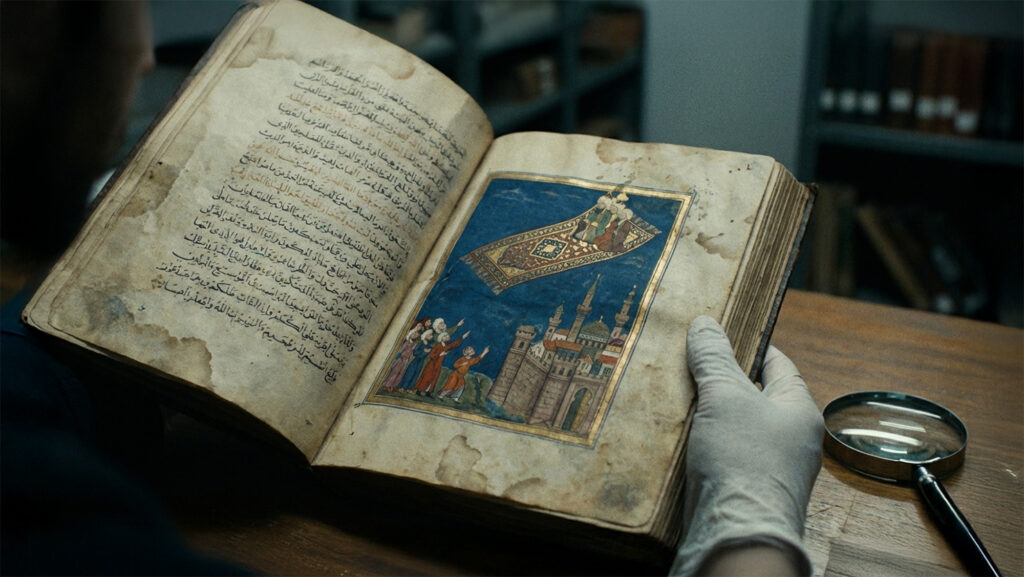
The famous narrative of the Night Journey and Ascent, al‑Isrāʾ wa‑l‑Miʿrāj, places rapid vertical and horizontal transit in a religious frame. The Qur’an announces the nocturnal journey from the Sacred Mosque to the Farthest Mosque (Q 17:1). Hadith give fuller details, describing travel on al‑Burāq and a sequence of ascents through the heavens. Whatever one’s theological commitments, the narrative establishes durable motifs for later Muslim readers: sudden travel, luminous presence, and controlled passage through atmospheric and celestial layers. Any comparison to modern UAP must note that the sources present a miracle, not an engineered craft, yet the phenomenological vocabulary overlaps in interesting ways with descriptions of rapid, silent motion and vertical ascent. (Quran)
Counterpoint. Religious texts do not aim to catalog physical anomalies. They instruct, evoke, and legislate. Treating Qur’anic or Hadith rhetoric about meteors or night ascent as technical reportage would misread genre. Nonetheless, these texts preserve a living lexicon for luminous aerial phenomena that later chroniclers and astronomers also used, which makes them important for vocabulary control in comparative UAP studies. (Quran.com)
Observational astronomy and optics: from fixed stars to mirage
A strength of medieval Arabic science is its mixture of critique and direct observation. In 964, ʿAbd al‑Raḥmān al‑Ṣūfī produced Kitāb Ṣuwar al‑Kawākib al‑Thābita (Book of the Fixed Stars), a comprehensive revision of Ptolemy with illustrations of each constellation from the globe and the sky. Al‑Ṣūfī recorded objects he called “nebulous” and famously noted a “little cloud” in Andromeda, taken today as an early naked eye observation of the Andromeda Galaxy. The work exists in many manuscripts and has been digitized by libraries and museums. (Wikipedia)
Abū Rayḥān al‑Bīrūnī’s al‑Qānūn al‑Masʿūdī and his Chronology of Ancient Nations show the range of Arabic astronomy, from mathematical treatment of lunar theory to rigorous calendrical history including eclipses, comets, and unusual celestial events. These texts anchor the claim that medieval Muslim scholars could distinguish ordinary from extraordinary sky behavior and keep reliable records that modern historians and astronomers can test. (Internet Archive)
No survey of medieval optics can omit Ibn al‑Haytham. His Kitāb al‑Manāẓir (Book of Optics) integrates experiment and mathematics to explain vision, refraction, reflection, and atmospheric phenomena that produce illusions of position and size. In a UAP context, Ibn al‑Haytham’s work provides principled counter‑explanations for some “anomalous” lights, including mirage, apparent motion in point sources, and refraction near the horizon. This is crucial when assessing medieval reports of hovering or pacing lights. (Monoskop)
Counterpoint. Because scholars like al‑Ṣūfī, al‑Bīrūnī, and Ibn al‑Haytham were methodical observers and analysts, a significant portion of medieval Arabic sky reports are expected to be natural phenomena. Their work should function as a baseline and a filter, not as a springboard for speculative claims. (ADS)
Chronicle reports of transient celestial events
Supernova 1006, the clearest case
The new star of 1006 is the gold standard for medieval Arabic transient reports. Ali ibn Riḍwān in Cairo described “a large circular body, two and a half to three times the apparent diameter of Venus,” so bright that it cast shadows. Yemeni chroniclers al‑Yamānī and Ibn al‑Daybaʿ provided detailed timings and color notes. Ibn Sīnā (Avicenna) remarked on a stationary bright star that faded over three months while “throwing out sparks,” a description that fits the evolution of a supernova. These independent Arabic testimonies, alongside Chinese and European records, allow modern astrophysics to triangulate the event precisely. They also demonstrate the acuity of medieval observers and the fidelity of their astronomical language. (OUP Academic)
Counterpoint. SN 1006 is a natural stellar explosion. The reliability of these sources does not imply that other luminous events they recorded were technological. Rather, it shows that when something new and bright appeared, observers noticed and wrote with enough precision for modern identification. That same precision can help sift other reports for UAP‑relevant behaviors. (OUP Academic)
Meteors and meteor showers in the Arabic record
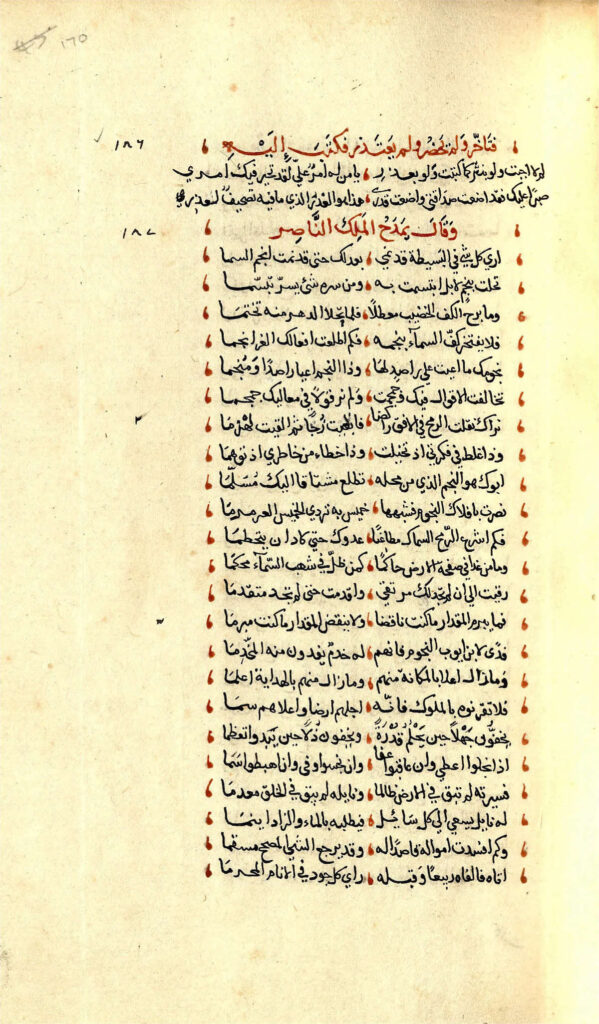
Arabic chronicles are rich with descriptions of “stars falling,” “planets that fell and scattered,” and nights when “the sky poured stars,” as in reports from Baghdad and Damascus. Catalogs compiled from texts like Ibn al‑Jawzī’s al‑Muntaẓam and other annalists list numerous events in which fireballs or meteor showers were visible over wide regions. A survey by Wafiq Rada and other researchers collates meteor showers in mediaeval Arab chronicles; Hassan Basurah adds additional records from the 9th to the 19th centuries in Egypt, Morocco, Syria, and Yemen. Philologically, the terms shihāb and nayzak are common. The latter could denote comet, nova, or a generic extraordinary object in some contexts, which complicates identification. (Astrophysics Data System)
The Arabic tradition also preserves comet observations used in modern orbital reconstruction. A recent Icarus study identifies the comet of 760 CE as Halley’s Comet using historical observations, including Arabic materials. This confirms that Arabic reports can carry quantitative value for today’s ephemeris reconstructions. (ResearchGate)
Aurorae seen by Arabic observers
Although low latitude, parts of the Middle East and Anatolia recorded aurorae during strong solar episodes. Catalogs of historical aurorae include Arabic sources. Ibn al‑Jawzī’s description of an intense red glow over Baghdad has been interpreted as auroral, and analyses suggest a period of elevated activity around the late eleventh to early twelfth centuries. Travel literature adds peripheral cases: Ahmad Ibn Faḍlān witnessed northern lights near the Volga Bulgars in 922, a well known note in the Library of Arabic Literature edition. These records serve as cautionary parallels for luminous night phenomena that move, ripple, and appear suddenly with striking colors. (ANGEO)
Counterpoint. Some modern summaries of “Arab eyes on aurora” rely on secondary retellings. Primary text control is essential. Where translations are unavailable or ambiguous, claims about aurora should be flagged as provisional. (ResearchGate)
Lexicon and category issues: kawkab, shihāb, nayzak
Philology is the hinge of comparative analysis. The Qur’anic and classical Arabic term kawkab can refer to a star, a bright star‑like object, or in compound form kawkab sayyār a wandering star or planet. The term shihāb denotes a meteor or fiery projectile, and in later usage also any flaming dart. The word nayzak is trickier. In medieval sources it may mean comet, nova, or a striking celestial “spear‑like” light. Without contextual qualifiers such as motion, tail, duration, color, and location against the constellations, modern identification is hazardous. Therefore, any UAP‑oriented reading must first restore the semantic range of the Arabic terms, then code behaviors and environments before proposing correlations. (Quranic Arabic Corpus)
Counterpoint. Later popular articles often collapse these terms into one‑to‑one modern categories. That is anachronistic. The payoff of the Arabic record lies precisely in its spectrum of categories and in the observers’ habit of describing what they saw rather than what they thought it meant. (SAGE Journals)
Comparative analysis with modern UAP characteristics
Modern open literature on UAP emphasizes four recurring features across many unresolved cases: luminous appearance without evident propulsion signature, abrupt accelerations or vector changes, silence even at high apparent speed, and sudden appearance or disappearance sometimes near environmental boundaries such as water or terrain edges. Official public documents repeatedly caution that data quality is often poor, but they nevertheless register a class of events whose kinematics and signatures defy ordinary explanations. (Director of National Intelligence)
How does the medieval Arabic corpus compare, given that most of its reports are natural?
- Luminous self presentation. Arabic texts consistently foreground luminosity. Supernova 1006 is “brighter than Venus,” casting shadows. Meteor storms “pour stars.” Auroral descriptions stress red or blood‑like hues. In functional terms, this aligns with a dominant visual cue in modern observations. The overlap is descriptive rather than causal, yet it provides a shared dimension along which to code phenomena. (OUP Academic)
- Abrupt appearance and disappearance. Chronicles often note lights that suddenly appear, change brightness, then vanish, sometimes persisting for hours or months. For meteors this is trivial. For aurorae it is solar weather. For supernovae it is stellar death. The behavioral signature of sudden on and off states, however, is also reported in modern UAP cases. A careful analyst will therefore separate classes by duration and by environmental coupling before drawing any inference about continuity. (Director of National Intelligence)
- Motion and kinematics. Medieval Arabic texts describe fast linear motion, sweeping arcs, and sky‑wide “scatterings.” These map well to meteors and meteor storms. Reports of hovering or pacing are rare in technical chronicles but do appear in religious literature in emblematic form and in travelers’ marvel lists. By contrast, modern UAP case files place unusual kinematics at the center: non‑ballistic accelerations, instant stops, and right angle turns. The convergence between corpora is weakest here, which argues for caution. (Astrophysics Data System)
- Silence and lack of exhaust. Medieval sources seldom remark on sound with meteors or on any mechanical noise in lights, which is unsurprising for astronomical events. Modern UAP reports frequently flag silence as a salient oddity for close approaches. The absence of mechanical noise in medieval sources is therefore not diagnostic. It mainly underscores the difference between celestial and near‑field encounters. (Director of National Intelligence)
- Environmental coupling. Some medieval Arabic reports tie lights to seasonal, calendrical, and geophysical conditions, as with aurorae during solar maxima or cometary returns. Modern UAP compilations note clustering near water and coastlines and at air‑sea boundary zones. Medieval texts are too sparse on such proximities to support a strong comparison, though the broader Islamic calendar’s coupling to lunar phases kept observers attuned to periodicity in the sky. (NASA Science)
Interim judgment. The medieval Arabic corpus strengthens the methodological case for careful description and behavior coding. It increases confidence that when something truly unusual happened, elite observers noticed and recorded it. It does not, by itself, supply clear medieval cases whose kinematics demand a modern UAP label. Instead, it furnishes a richly documented background of natural sky events against which candidate anomalies would stand out if present. (Wikipedia)
Optical and atmospheric counter‑explanations rooted in Arabic science
Because Ibn al‑Haytham modeled refraction and illusions of apparent size and position, and because later Arabic astronomers refined atmospheric and geometric understanding, several classes of unusual lights described in chronicles admit strong naturalistic accounts.
- Mirage and ducting. Near‑horizon lights that appear to hover, split, or vanish can be products of refraction layers, thermal inversions, and ducted light paths. Medieval observers knew mirage as a desert phenomenon even if they lacked today’s physical theory. Ibn al‑Haytham’s pathway models show why apparent position is not always true position. (Monoskop)
- Meteor storms and bolides. The language of “stars pouring” and “planets falling” fits Leonid‑type storms. Catalogs of Arabic meteor reports and modern identifications of specific historic comets like Halley’s confirm that many spectacular medieval displays are meteoritic. (Astrophysics Data System)
- Auroral curtains. Red, shifting night glows that persist for hours and ripple like fire can be aurorae during periods of heightened solar activity, some of which are independently corroborated by radiocarbon anomalies and East Asian sources. Arabic annalists in Iraq and Syria occasionally saw such displays. (arXiv)
These counterpoints do not “explain away” UAP. Rather, they sharpen the sieve through which candidate anomalies must pass. Medieval Arabic science can reduce false positives by supplying both language and mechanism for many luminous sky events. (Monoskop)
Method proposals: how to integrate Arabic sources into UAP research
- Philology first. Build a controlled vocabulary for kawkab, shihāb, nayzak, miṣbāḥ, and allied terms using Qur’anic corpora and classical lexica, then tag each historical report with the exact terms used and their immediate contexts. This elevates later quantitative coding. (Quranic Arabic Corpus)
- Behavioral stratification. Code each event for duration, motion, color, angular size, repeatability, and co‑occurring phenomena like cold, storms, or geomagnetic disturbances. This follows best practices in aurora cataloging already applied to Arabic sources. (ANGEO)
- Cross‑catalog triangulation. Reconcile Arabic entries with Chinese, Japanese, Syriac, and Latin chronicles. The SN 1006 literature shows how such triangulation yields robust identifications. Similar methods can be applied to ambiguous medieval entries. (arXiv)
- Optics aware screening. Apply Ibn al‑Haytham’s optical insights when evaluating near‑horizon or terrain‑adjacent lights. Discount or reclassify events that display typical mirage or refraction signatures. (Monoskop)
- Modern baselines and data standards. Use official UAP baselines to avoid importing popular claims. ODNI’s 2021 assessment, NASA’s 2023 study, and AARO’s public materials specify what counts as insufficient, ambiguous, or anomalous. Map medieval entries to those bins cautiously, and seek patterns rather than sensational cases. (Director of National Intelligence)
A structured comparative reading: three medieval genres and what they offer
Religious discourse. Qur’anic verses on meteors as “missiles” and Hadith on the Night Journey encode powerful metaphors of guardianship, travel, and ascent. For UAP, they supply a shared lexicon for luminous motion and vertical traversal. They are not case reports yet they influence how later writers perceive and narrate sky events. (Quran.com)
Astronomical handbooks and optics. Al‑Ṣūfī’s constellations, al‑Bīrūnī’s astronomical treatises, and Ibn al‑Haytham’s optics provide calibrated descriptions, position data, and phenomenological explanations. They show what well trained observers considered normal and extraordinary. They also document “nebulous” objects and color changes in stars, reminding us that medieval observers could detect subtle features by eye that remain meaningful today. (Wikipedia)
Chronicles and travelogues. From Yemen to Cairo to Baghdad to the Volga, Arabic writers captured supernovae, meteor showers, and red night glows, sometimes with datable precision. The travelogues add a human voice and set luminous encounters in social space. For UAP research, these narratives are a reservoir of behavioral descriptors and environmental contexts. (arXiv)
What a continuity hypothesis would and would not claim
A strong form of the continuity hypothesis would argue that some modern UAP behaviors reflect the same class of intelligent aerial phenomena reported across civilizations for millennia, with medieval Arabic texts offering the Islamicate link in that chain. On the evidence reviewed here, the medieval Arabic record undoubtedly preserves luminous sky phenomena with descriptive fidelity and conceptual richness. It also shows that the majority of spectacular medieval lights are identifiable as supernovae, comets, meteors, and aurorae, with few unambiguous candidates for non‑prosaic kinematics.
The sober conclusion is that medieval Arabic texts set the standard for how to write about the sky. They offer methods, vocabulary, and examples that can improve today’s classification protocols. If there is continuity between past and present anomalies, it will be demonstrated not by forcing premodern texts into modern categories, but by applying medieval care to modern data and vice versa. (NASA Science)
Conclusion
Medieval Arabic texts offer a disciplined archive of sky phenomena that modern UAP studies can use with profit and care. Religious discourse gives us an authoritative lexicon for fiery lights and night transit. Astronomical and optical treatises give us calibration, method, and a model of rigor. Chronicles capture transient events with a level of detail that has already allowed supernovae and cometary returns to be reconstructed. In comparative terms, the overlap with modern UAP lies strongest in descriptive dimensions of luminosity, sudden appearance, and sometimes uncanny persistence, much more than in the kinematics that define today’s unresolved cases. The counterpoints are equally strong. Arabic observers were so good that they often captured natural wonders in language that is now testable, and their optical science warns us away from reading mirage and meteor as mystery.
The most fruitful path is not to retrofit medieval texts into present day categories, but to let their precision, philology, and humility teach us how to read the sky. Doing so will sharpen our filters for what counts as anomalous and will enrich UAP research with a deep historical perspective that is both critical and receptive.
Claims Taxonomy
Verified
- Existence and content of Arabic reports on supernova 1006 from Egypt and Yemen, and Ibn Sīnā’s description of a stationary bright new star fading over months. (OUP Academic)
- Al‑Ṣūfī’s Book of the Fixed Stars and its “little cloud” in Andromeda; the work’s preservation in multiple manuscripts. (Wikipedia)
- Presence of medieval Arabic records of meteor showers and comets, including catalogs and modern identifications such as the 760 comet as Halley’s. (Astrophysics Data System)
- Arabic record of aurorae in the Middle East and Anatolia and Ibn Faḍlān’s observation of northern lights during his mission to the Volga. (ANGEO)
- Availability of modern official baselines for UAP characteristics and data standards in ODNI 2021, NASA 2023, and AARO public materials. (Director of National Intelligence)
Probable
- The medieval Arabic lexicon for celestial transients, especially nayzak, straddles several modern categories, which explains some ambiguities in identification. (ScienceDirect)
- Medieval Arabic optics and astronomy provide robust natural explanations for a large fraction of luminous night phenomena, reducing false positives in any historical UAP dataset. (Monoskop)
Disputed
- Specific annalistic entries sometimes labeled “mysterious” in popular retellings without primary text control. These require fresh philological review to confirm whether they are aurorae, halos, meteors, or something else. (ResearchGate)
Legend
- The Night Journey and Ascension as miraculous travel. The narrative informs cultural vocabulary for rapid transit and light, but is not a technical case report. (Quran)
Misidentification
- Attempts to read Qur’anic “missiles” against devils or generic mentions of kawākib as literal references to engineered craft. These are theological or rhetorical categories for celestial lights, not descriptions of machines. (Quran.com)
Speculation labels
Hypothesis
Some premodern Arabic reports may preserve behavioral features that overlap with the modern UAP profile, particularly in descriptions of sudden appearance, structured luminosity, and persistence beyond ordinary meteors. Demonstration would require triangulated chronicle control, behavior coding, and elimination of optical and geophysical confounds. (Astrophysics Data System)
Witness Interpretation
Religious and moral frameworks in Arabic sources shape how lights are narrated, as guardianship or warning, ascent or descent, omen or marvel. This does not falsify the observation but contextualizes it. (Quran.com)
Researcher Opinion
Integrating medieval Arabic archives into UAP research will raise overall rigor. The best path forward is a philology‑first, behavior‑coded pipeline aligned with NASA’s and AARO’s recommendations for standardized data, while preserving sensitivity to religious and literary genres. (NASA Science)
References
Religious and lexical sources
Qur’an 67:5; 37:6–10; 15:16–18 with translations and lexical mapping. (Quran.com)
Sahih al‑Bukhari reports on the Night Journey and al‑Burāq. (Sunnah)
Astronomy and optics
Al‑Ṣūfī, Book of the Fixed Stars and manuscript portals. (Wikipedia)
Al‑Bīrūnī, al‑Qānūn al‑Masʿūdī and Chronology of Ancient Nations (English trans.). (Internet Archive)
Ibn al‑Haytham, Book of Optics (Sabra translation). (Monoskop)
Chronicles of transients
SN 1006 Arabic reports: Ali ibn Riḍwān, Yemeni sources, and Ibn Sīnā. (OUP Academic)
Arabic meteor and comet materials: catalogs and identifications. (Astrophysics Data System)
Aurorae in Arabic sources and Ibn Faḍlān’s northern lights. (ANGEO)
Modern UAP baselines
ODNI, Preliminary Assessment: UAP (2021). (Director of National Intelligence)
NASA, UAP Independent Study Team Final Report (2023) and UAP portal. (NASA Science)
AARO website, imagery and reporting. (AARO)
SEO keywords
Medieval Arabic astronomy and UAP, al‑Sufi Book of Fixed Stars Andromeda, Ibn al‑Haytham optics mirage refraction, al‑Biruni Qanun al‑Masudi chronology, Arabic chronicles supernova 1006 Ali ibn Ridwan, Yemeni reports al‑Yamani Ibn al‑Dayba, Ibn Sina Avicenna new star sparks, Arabic meteor showers catalog Rada Basurah, aurora in Baghdad Arabic sources, Ibn Fadlan northern lights, Qur’an shihab meteors devils, nayzak philology comet nova, modern UAP ODNI 2021 NASA 2023 AARO imagery.