
There are UAP stories that feel “modern” even when they happen in the least modern places imaginable. A few witnesses. A dark landscape. A light that does not behave like a lantern, a meteor, or the moon. A duration long enough for observers to watch patterns form, break, and reform. Then, afterward, a sense that something about the timeline or the physical setting does not add up.
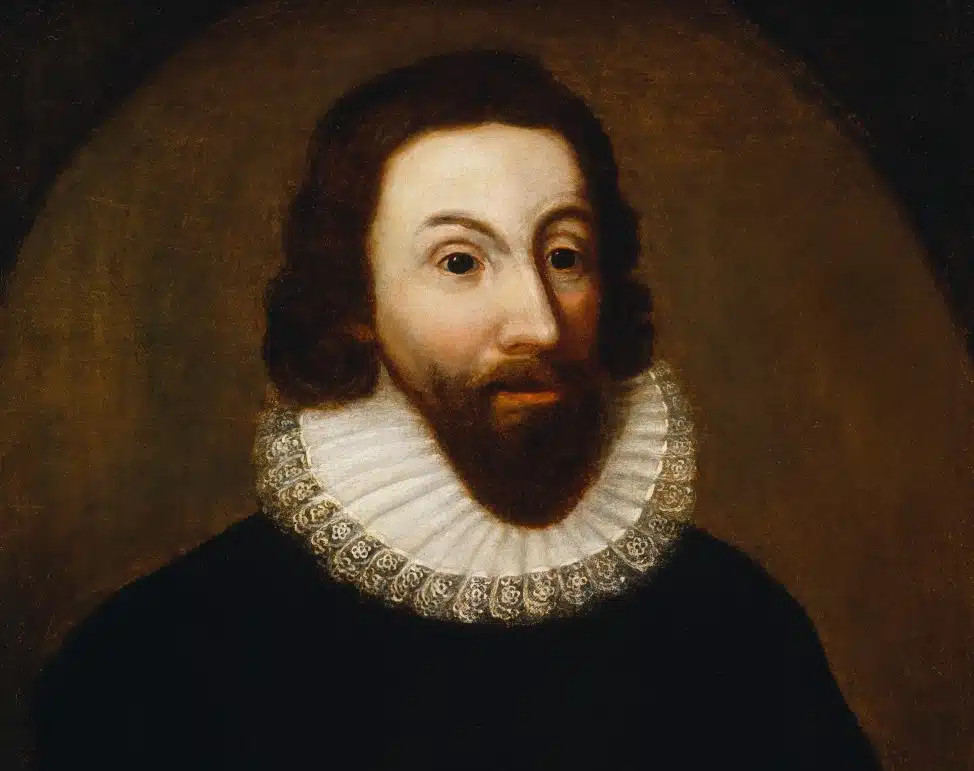
Colonial New England, early March, late 1630s. The Massachusetts Bay Colony is still a precarious project, with Boston and its nearby settlements stitched together by rivers, footpaths, and hard weather. On one of those nights, three men in a small boat on the Muddy River (near today’s Boston/Brookline area) report a “great light” performing repeated movements for hours. The account is preserved not in a campfire retelling but inside the written record of Governor John Winthrop, whose journal became one of the central documentary backbones for the colony’s early history.
In the UAP literature, this case is often nicknamed the “Puritan UAP” or “America’s first recorded UAP sighting,” and it appears in Jacques Vallée and Chris Aubeck’s Wonders in the Sky, which compiles pre-twentieth-century reports and tracks recurring motifs across centuries. (Google Books)
The value of the Muddy River report is not that it answers the UAP question. It does not. Its value is that it gives us a sharply bounded historical object: a specific place, a named witness, a named recorder, and a description vivid enough to compare against both natural explanations and later UAP patterns, while still carrying the uncertainties that come with any early-modern text.
A quick note on the date: why “1638/39” is the cleanest label
If you search for this event, you will find it dated as 1639 in many modern summaries, and as March 1638 in Vallée and Aubeck’s chronology. That mismatch is not unusual for early colonial sources because of calendar conventions and the way later editors normalized year headings.
Rather than forcing a single year as if the archival pipeline were frictionless, it is more accurate to describe the event as occurring in early March of the late 1630s, commonly rendered as March 1638/39 depending on Old Style/New Style conventions and editorial year-heading choices. The Massachusetts Historical Society’s own blog summary uses “1639” when describing the report as one of the earliest recorded sightings. Vallée and Aubeck index it under March 1638 in Wonders in the Sky. (Massachusetts Historical Society)
For UAP research, standardizing the label as “1638/39” keeps both traditions visible and reduces the chance that readers assume there are two separate events when there is one core incident in the Winthrop tradition.
The primary record: what Winthrop says, and what he doesn’t
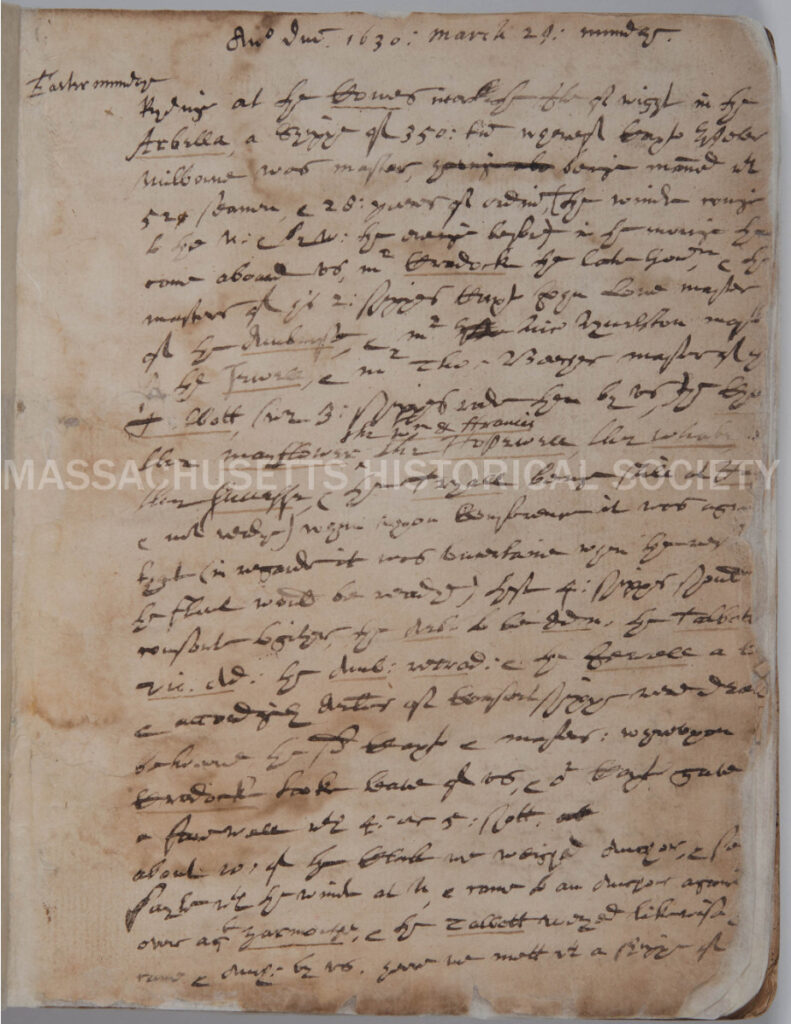
The Muddy River report comes to us through Winthrop’s journal. That immediately creates two boundaries.
First, the report is not a verbatim deposition by the boatmen; it is a governor’s recorded summary of what was told to him, shaped by his vocabulary and by what he considered noteworthy.
Second, that summary is still unusually early and specific for the era, and Winthrop explicitly characterizes the main witness as credible: “a sober, discreet man,” named James Everell, accompanied by two others.
In the Massachusetts Historical Society’s retelling, which quotes Winthrop’s phrasing, the description runs like this: when the light “stood still, it flamed up, and was about three yards square; when it ran, it was contracted into the figure of a swine,” and it moved “as swift as an arrow” toward “Charlton,” going “up and down” for “two or three hours.” (Massachusetts Historical Society)
That is the heart of the case. A conspicuous luminous phenomenon appears over the river. It shifts between a stationary, flaring mode and a moving mode that seems to “contract” into an animal-like outline. The motion is described as very fast, and the behavior repeats over a long duration rather than flashing and ending.
Then the account adds a detail that has kept the story alive for generations: the men believed they had floated downriver about a mile, but after the episode they found themselves back where they started, “carried quite back against the tide.” Winthrop also notes that additional credible persons later saw the same light near the same place. This “other witnesses later” clause is easy to miss, but it matters because it suggests the report was not confined to one isolated moment in one boat. (Massachusetts Historical Society)
What Winthrop does not say is also important. He does not call it missing time. He does not describe entities. He does not describe a craft. He does not claim a divine message. He gives a behavioral description, a duration, and a puzzling aftermath.
That restraint is one reason the case continues to be cited.
The textual chain: why historians insist on footnotes before fireworks
The Muddy River account is widely quoted today, but its manuscript history is complicated enough that a publication-grade article needs to state the limitations plainly.
The Massachusetts Historical Society notes that Winthrop’s manuscript volume covering years that include the late 1630s into the early 1640s was destroyed in a Boston fire in 1825. The same MHS description explains that James Savage, an antiquarian and editor, had borrowed the manuscript and was working from it when the fire destroyed it, leaving later editions dependent on surviving transcripts and editorial work rather than direct access to the lost original for that volume. (Massachusetts Historical Society)
This does not mean the journal is “unreliable.” It means the chain of custody is not perfect, and responsible analysis should avoid overconfident phrasing. The strongest stance is: the report is well-attested within the Winthrop publication tradition and is treated seriously by institutions like MHS, while still being mediated through transcription and editing after the original volume’s loss. (Massachusetts Historical Society)
If you want a feel for how mainstream retellings handle the same limitations, HISTORY’s overview also anchors the episode to Winthrop’s record, quotes the core description, and then brings in Vallée and Aubeck as a later interpretive lens rather than as the source of the event itself. (History)
Case study: three men, a tidal river, and a light that wouldn’t behave
Modern readers often try to picture this case through modern technology. That can mislead. It is better to picture it through colonial logistics.
A small craft on a river at night is vulnerable. You do not have electric light. You do not have a watch that reads seconds. You do not have an easy way to triangulate a moving aerial light against landmarks unless the shoreline is familiar. You do have sensory sharpness born from necessity. You do know, roughly, what the tide is doing and what your rowing has accomplished.
In that setting, a bright light with repeated movement patterns can dominate attention. A two- or three-hour duration, if accurate, implies long sustained observation rather than a “blink and it’s gone” event. (Massachusetts Historical Society)
The shape language is striking: “three yards square” when stationary; “contracted into the figure of a swine” when moving. A reader today might assume this means the object literally became a pig-shaped craft. A more careful reading is that the witnesses (or Winthrop summarizing them) used an animal silhouette as the closest available metaphor for a contracting, moving luminous form. Vallée and Aubeck discuss the possibility that trade, culture, and pattern-recognition shape what witnesses reach for when describing ambiguous forms. That is not an excuse to dismiss the observation; it is an attempt to keep the descriptive layer separate from literal interpretation. (Google Books)
The directional note, “towards Charlton,” also deserves careful handling. Later retellings often translate this as “Charlestown,” which is plausible in context, but the primary tradition uses the spelling “Charlton/Charlton,” and early modern spellings were not standardized. This is a small example of how old texts can look straightforward while still hiding editorial choices. (Massachusetts Historical Society)
And then there is the river problem: the claim that after moving downriver they were back at their starting point “against the tide.” That detail can be read three ways.
One way is literal: the boat was somehow displaced upstream.
Another way is environmental: a tidal basin and shifting currents could move a small craft in counterintuitive ways, especially if rowing stopped and attention stayed fixed on the sky.
A third way is perceptual: the witnesses may have misestimated distance traveled, time elapsed, or both, under the influence of fatigue, darkness, and prolonged fixation on a bright moving stimulus.
None of those options can be proven with the data available. But laying them out in plain language clarifies what the source supports and what it cannot resolve.
A companion Winthrop-era light report: Boston, 1644
One reason the Muddy River case is often paired with another colonial episode is that Winthrop’s journal includes a later “lights” account dated 1644 in common summaries. The Massachusetts Historical Society’s Halloween-season post explicitly calls attention to “two of the earliest recorded UAP sightings,” treating the Muddy River report as one and noting another in the 1640s. (Massachusetts Historical Society)
In the Winthrop tradition, the later report describes two lights near Boston engaging in an almost choreographed sequence: approaching, joining, separating, repeating, and then vanishing over a hill. Whether the phenomenon was astronomical, atmospheric, or something else, the description again focuses on behavior rather than theology. (Massachusetts Historical Society)
This does not “corroborate” Muddy River in a strict evidentiary sense. It does, however, show that the colony’s historical record contains more than one account of unusual aerial lights, and that Winthrop’s chronicling of anomalies was not limited to a single famous paragraph.
Publications that shaped the modern framing
If Winthrop’s journal is the root, several later publications are the trunk and branches that carried the story into today’s UAP culture.
One branch is popular history: HISTORY’s “America’s First UAP Sighting” article introduces the case to a broad audience, quotes the key phrases, and places it in the larger idea that UAP reports predate modern aircraft. (History)
Another branch is institutional public-facing scholarship: the Massachusetts Historical Society’s Beehive blog post gives a concise, archive-minded version and highlights how early the account is in the North American English colonial record. (Massachusetts Historical Society)
The most influential UAP-research branch is Vallée and Aubeck’s Wonders in the Sky. Rather than treating early accounts as quaint anomalies, the book positions them as part of a long historical dataset and applies a consistent cataloging approach. The Muddy River report appears there under an early-March date and is used as an example of how certain motifs, including witness disorientation, appear well before the twentieth century. (Google Books)
It is crucial, though, to keep the layers distinct. Winthrop is the primary recorder of the event. MHS and HISTORY are secondary summaries. Vallée and Aubeck are secondary analysts who add an interpretive frame. When those layers blur, readers can mistakenly believe later interpretations were present in the original seventeenth-century telling.
Controversies worth taking seriously
Historical UAP cases generate two kinds of controversy: what happened in the sky, and what happened in the text.
The textual controversy is straightforward. The manuscript history includes loss and transcription. That elevates the importance of reputable institutional stewardship (such as MHS) and makes it unwise to claim exactness where the record is mediated. (Massachusetts Historical Society)
The interpretive controversy is more culturally charged. Skeptical readers often propose “swamp gas” or marsh lights because the Muddy River flowed through wetlands. But the account’s two-to-three-hour duration with repeated rapid movement is not a perfect match for simple marsh-gas folklore, which tends to produce localized glows, not repeated arrow-fast runs toward a town. That said, the environment is relevant, and a cautious article should acknowledge that wetlands can create unusual light phenomena and that a tidy single-cause explanation is not available from the surviving data.
Another controversy is the boat’s repositioning. This detail is sometimes treated as the “hook” that proves something extraordinary. A more disciplined approach is to treat it as one reported component among several, and to recognize that night navigation in tidal conditions can produce genuine confusion, especially when attention is fixed skyward for an extended period. The repositioning claim is interesting, but it is also the easiest part of the case for conventional explanations to target.
Finally, there is the vocabulary controversy. “Figure of a swine” sounds absurd to modern ears, which tempts people to treat the entire account as comedic. Yet early-modern descriptive language often relies on familiar silhouettes to describe ambiguous forms. It is possible to consider the oddity of the metaphor without using it as a reason to dismiss the observation.
What “official studies” can and cannot do with a 1638/39 narrative
Because this article asks for “official studies,” it’s worth being explicit: there are no official seventeenth-century investigations of this event in the modern sense. There is no sensor record, no instrument readout, no controlled reenactment.
What we do have are modern official frameworks that clarify why historical narrative cases are hard to “resolve” and why they still matter as historical data points.
NASA’s 2023 UAP Independent Study Team describes UAP study as a scientific opportunity that requires rigorous, evidence-based methods and, above all, better data acquisition. That emphasis highlights the core limitation of Muddy River: it is a narrative case with no instrumentation. (NASA Science)
AARO, the U.S. Department of Defense office tasked with addressing UAP, defines UAP broadly to include not just airborne objects but also “transmedium” objects or devices. That definition is not directly relevant to Muddy River’s medium, but it shows how modern institutions now formalize the category in a way that includes unconventional behavior rather than presupposing a single explanation. (AARO)
ODNI’s consolidated annual UAP reporting underscores that modern case resolution depends on standardized reporting and data quality. Reading that alongside Muddy River is instructive: the seventeenth-century account is compelling as a historical narrative, but it cannot be processed the way modern offices process radar-visual incidents. (Director of National Intelligence)
Implications, stated with the right amount of humility
Even with careful source handling, the Muddy River report leaves the reader with a lingering sense that something unusual occurred in the colonial sky. The implications are not “therefore it was non-human intelligence,” because the source cannot carry that weight. The implications are more modest, and in their own way more durable.
One implication is historical continuity. The report is routinely cited because it suggests anomalous light phenomena were being recorded in English colonial America long before modern aviation, which reduces the explanatory reach of “secret aircraft” or other modern technological catch-alls. (History)
Another implication is methodological. Early cases force modern UAP research to ask: what do we do with credible narrative reports when there is no instrument data? Do we discard them, or do we keep them as pattern-bearing records that can inform how we interpret later, better-instrumented cases?
A third implication is cultural. The “swine” metaphor reminds us that witnesses describe what they see through the language and imagery available to them. That does not automatically reduce the event to psychology. It means the descriptive layer is a fusion of observation and expression. Vallée and Aubeck’s project is, in part, an attempt to compare those expressions across cultures without flattening them into a single modern vocabulary. (Google Books)
And finally, there is the small but persistent implication of place. Winthrop’s note that other credible persons later saw the same light “about the same place” hints at recurrence, which is one of the most interesting features of many later UAP “window areas.” The evidence here is thin, but the motif is present. (Massachusetts Historical Society)
Claims taxonomy
On the evidence available, the Muddy River Light (March 1638/39, Massachusetts Bay Colony) is best categorized as Probable.
That classification reflects that the core account is preserved in a major colonial journal tradition, repeated in reputable secondary summaries, and treated as an early recorded anomalous light report by an institution like the Massachusetts Historical Society. At the same time, the case remains constrained by mediated textual transmission, lack of instrumentation, and the inability to decisively exclude environmental and navigational contributors. (Massachusetts Historical Society)
The companion Boston lights report (1644) is also best treated as Probable for similar reasons: it is rooted in the Winthrop tradition as summarized by MHS, describes unusual behavior, but is similarly narrative-bound. (Massachusetts Historical Society)
Speculation labels
Hypothesis
The luminous phenomenon could have been an environmental or atmospheric light event whose motion and shape were misperceived at night, with the boat’s later position explained by tidal dynamics and distance misestimation. This hypothesis is plausible in parts but does not neatly explain the reported long-duration, repeated “up and down” movement as described in the Winthrop tradition. (Massachusetts Historical Society)
Witness Interpretation
The description “contracted into the figure of a swine” is best treated as witness-facing metaphor for a perceived silhouette during motion, not as proof that the phenomenon literally adopted an animal form. (Massachusetts Historical Society)
Researcher Opinion
Vallée and Aubeck’s framing treats the event as part of a long historical pattern and discusses the possibility of witness disorientation that resembles later “missing time” narratives. That interpretive overlay belongs to the modern analysis layer rather than to Winthrop’s original wording. (Google Books)
References
Aubeck, C., & Vallée, J. (2010). Wonders in the Sky: Unexplained Aerial Objects from Antiquity to Modern Times and Their Impact on Human Culture, History, and Beliefs. Jeremy P. Tarcher/Penguin. (Google Books)
Massachusetts Historical Society. (2021, October 26). Scary Stories to Tell in the Stacks (Beehive blog). (Massachusetts Historical Society)
Massachusetts Historical Society. (n.d.). John Winthrop journal, History of New England (manuscript), volume notes and provenance (Collections Online). (Massachusetts Historical Society)
The HISTORY Channel. (2016, November 9). America’s First UAP Sighting (web article). (History)
U.S. Department of Defense, All-domain Anomaly Resolution Office. (n.d.). AARO: Introduction to UAP and definition (website). (AARO)
SEO keywords
Colonial America UAP, Muddy River light 1638 1639, James Everell Winthrop UAP, Puritan UAP sighting, early American UAP account, Wonders in the Sky Vallée Aubeck, Massachusetts Bay Colony UAP, Boston Brookline Muddy River UAP, historical UAP chronology, pre-twentieth-century UAP cases