Orbs are the UAP world’s simplest shape and, strangely, its most complicated conversation.
On paper, an “orb” sounds tame: a glowing sphere, a bright ball of light, a moving “star.” In practice, the word covers at least three different realities. There are photographic orbs that exist only inside a camera’s optics and compression. There are everyday lights, drones, planets, aircraft, and atmospheric effects that can look uncanny at night. And then there’s the smaller, stubborn remainder: witnesses who insist they saw a self-luminous sphere with coherent behavior, sometimes close enough to make them feel it was not just “a light,” and sometimes personal enough to make them feel it was not just “a thing.”
This revision takes a deliberately conservative approach. Instead of arguing that orb reports prove mind-UAP interaction, it treats “interactive-feeling” encounters as a reported motif that shows up in some testimony, and then asks what we can responsibly say about it. The evidence quality varies sharply from case to case, so the tone needs to vary with it. NASA’s 2023 independent report is a good anchor here: the study of UAP is a real scientific opportunity, but the field is bottlenecked by data quality and needs “rigorous, evidence-based” methods and “new and robust data acquisition.”
So, yes, some people say orbs “responded.” Some say they felt watched, scanned, acknowledged, or mentally “touched.” Those are claims worth documenting, not because we should accept them uncritically, but because ignoring them guarantees we will never design the right tests. At the same time, an explainer has to keep a firm boundary between what is documented, what is claimed, and what is later interpreted.
Let’s start by clarifying what we mean, then walk through three case clusters that are often invoked in the orb-and-mind conversation: Hessdalen (instrumented lights), Colares/Operação Prato (archival records plus first-hand medical testimony), and Rendlesham (a famous military case that is often used as a bridge to consciousness claims, but where the official corroboration is notably limited).
What counts as an “orb” in UAP discussion?
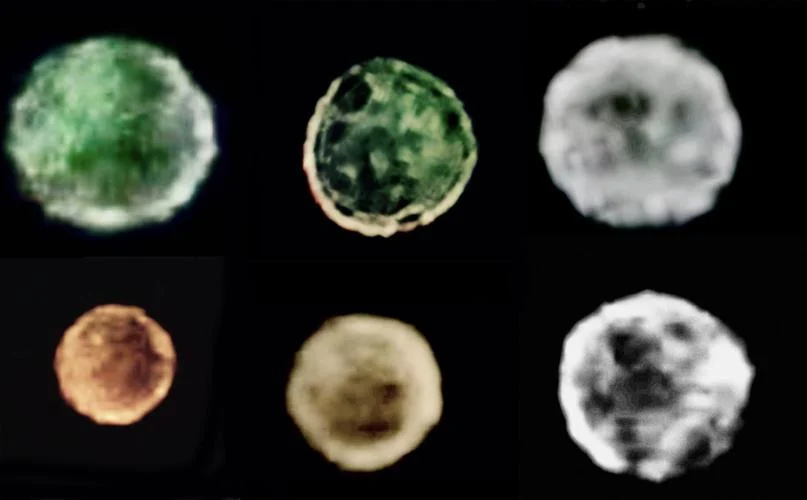
In witness reports, an orb is typically described as a self-luminous sphere or “ball of light” that persists for more than a moment and displays some kind of motion or behavior that feels structured. In everyday life, that description can match lots of things, and that is exactly why orb debates run hot.
A reliable explainer has to say the quiet part out loud: many “orbs” circulating online are not external objects at all. Flash photography can illuminate dust, pollen, mist, and insects, turning them into bright circles that appear to float. Phone sensors can smear points of light into blobs. Video compression can invent edges and shape where the real signal is thin. These are not exotic explanations. They are common ones.
But if you stop there, you miss the other half of the dataset: naked-eye sightings reported by multiple people, sometimes repeated across nights, sometimes documented in logs or investigated by organizations, sometimes captured on more than one instrument, like in the third PURSUE release. Those are not automatically “non-prosaic,” but they deserve a different category than lens artifacts.
A useful way to keep categories clean is to ask, in plain language, three questions whenever an “orb” appears in a story.
Was it visible to the naked eye, or only in the image?
Did it persist long enough to describe behavior, or is it a single ambiguous frame?
Is there any corroboration beyond one person’s memory, such as contemporaneous notes, multiple witnesses, multiple cameras, radar/EM data, archival records, or medical documentation?
This doesn’t solve the mystery, but it prevents a common editorial failure: treating every glowing circle as evidence for the same phenomenon.
Now we can ask the more interesting question: why do some orb reports feel “interactive,” and what kind of evidence exists around those claims?
The “mind in the loop” claim, stated carefully
In the strongest form, mind-UAP interaction claims say something like: the phenomenon is not merely observed by the witness, it reacts to the witness’s attention, emotion, or intention. This can show up in several ways.
Sometimes it’s timing: people step outside to look for UAP, mention it, “invite” it, or enter an altered state (meditation, prayer, focused attention), and then an orb appears in a way that feels responsive.
Sometimes it’s behavior: the orb approaches when addressed, retreats when feared, flashes when pointed at, paces a vehicle, or moves as though it has “noticed” the observer.
Sometimes it’s inner experience: witnesses report a sudden calm, dread, mental impressions, dreamlike cognition, time distortion, or a sense of communication without sound.
An explainer’s job is not to declare those patterns true or false. It’s to explain what they are, why they’re controversial, and what kinds of sources we have.
On sources, we have two kinds that matter most.
First are instrumented studies of recurrent luminous phenomena. These don’t establish mind interaction, but they show that “orb-like lights” can be real targets for measurement rather than pure misidentification.
Second are credible first-hand testimonies, sometimes preserved in archives, sometimes recorded in investigations, sometimes backed by medical or institutional documentation. These can establish that witnesses said certain things at certain times, and in some cases that they experienced physical symptoms, even if causal attribution remains open.
With that in mind, Hessdalen gives us the “instrument baseline,” Colares gives us the “archival plus witness baseline,” and Rendlesham teaches us what happens when we blur documented core facts with later interpretive layers.
Case cluster 1: Hessdalen, where “orb lights” become a research target
If you want to talk about orbs without being swallowed by internet video noise, Hessdalen Valley in Norway is a strong place to stand. The Hessdalen phenomenon refers to recurrent luminous events reported and studied over decades. Importantly, Hessdalen has been treated as a field site rather than a single sensational night, with researchers attempting to capture the lights with instruments.
Massimo Teodorani’s 2004 paper in the Journal of Scientific Exploration describes the “balls of light” reported in Hessdalen and emphasizes why the site matters: recurrence, plus the presence of an “instrumented observation station,” makes it an “ideal research site.” (Project Hessdalen)
What can we say responsibly from that?
We can say: Hessdalen is a well-known example of recurrent luminous phenomena that attracted sustained measurement attempts; it sits in a category where “orb-like lights” are treated as potentially measurable atmospheric or geophysical anomalies, not merely witness folklore. We can also say: Hessdalen does not, by itself, establish mind-UAP interaction. It establishes something more basic but still important: not all orb reports are reducible to camera artifacts.
That matters because it changes the conversation’s starting point. If some “orb-like lights” exist as repeatable external phenomena under certain conditions, then it becomes at least plausible that other orb reports could involve external stimuli plus human interpretation. The mind may still be a major variable, but it is not necessarily the only variable.
NASA’s 2023 report indirectly supports this kind of framing: it argues that NASA’s assets could help determine environmental conditions that coincide with UAP reports, and it stresses structured data and systematic frameworks. In other words, before we argue about what orbs “mean,” we should be asking what conditions correlate with their appearance and what instruments can capture.
Hessdalen is valuable because it suggests the right kind of humility: if we’re still arguing over what these lights are, then claiming certainty about what they want is even harder. But it also warns against reflex dismissal. Some lights deserve measurement rather than memes.
Case cluster 2: Colares and Operação Prato, with sourcing hierarchy made explicit
Colares, Pará, Brazil (1977–1978) is a case cluster that gets cited constantly in orb discussions, especially where witnesses describe beams, bodily effects, and fear spreading through a community. It’s also a case where sloppy sourcing can wreck credibility fast, because the story has been retold in sensational ways for decades.
So here is the sourcing hierarchy, stated plainly.
Level 1: Documented archival existence and scope
Brazil’s Arquivo Nacional publicly states it holds the Fundo Objeto Voador Não Identificado – OVNI (BR DFANBSB ARX), produced by the Brazilian Air Force and containing 743 records, including reports, questionnaires, correspondence, photographs, drawings, videos, audio, and press clippings. The same page cautions that “OVNIs” do not necessarily imply extraterrestrials; the label can include satellites, drones, balloons, and natural phenomena. (Serviços e Informações do Brasil)
That statement is not “proof of extraordinary objects.” It is proof of something more mundane and more useful: there is an official archive, it has a defined scope, and the institution itself warns against jumping from “unidentified” to “ontological conclusion.”
Any responsible Colares discussion should start there.
Level 2: Primary-record claims as quoted through scholarship
Because direct access to every primary scan is not always straightforward in a public browsing context, the next-best step is to use credible scholarship that quotes the primary documents with identifiers. The 2024 ANPUH conference paper on Operação Prato testimonies does exactly that in places, quoting from “Registros de Observações de OVNI” and referencing SNI information documents by number and date.
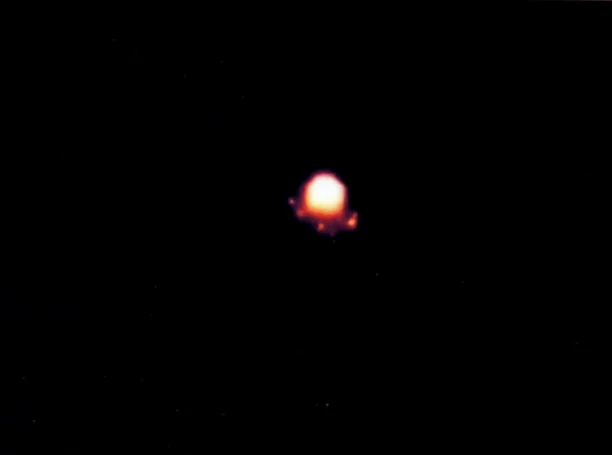
For example, the paper highlights testimony attributed to Dr. Wellaide Cecim de Carvalho describing a luminous body moving at low altitude that “emitted a focus of bluish light” hitting her lumbar region and producing numbness (paresia) and physical effects lasting days, with a citation pointing back to the source record.
This is where an orb-like phenomenon becomes more than a distant light. The reported object is close, low, luminous, and linked by the witness to a directed effect.
Separately, the same paper states that an SNI report describes Wellaide treating four patients and includes claims of tiny puncture-like marks near the neck or breast and symptoms such as generalized paresia, hyperthermia, headache, superficial burns, intense heat, nausea, trembling, dizziness, and weakness.
What does that establish?
It establishes that (a) a medical professional witness reported an encounter and later described treating patients who attributed symptoms to “foci of light,” and (b) an intelligence report, as represented in the cited scholarship, recorded those claims and symptoms.
It does not establish causation. It does not establish a mechanism. It does not establish that the light was a craft, or that the symptoms were produced by a non-human technology. But it does establish that the case’s “orb + bodily effects” motif is not purely an internet invention. It exists in a documentary ecosystem that includes formal records and later scholarly analysis.
Level 3: Community memory and social interpretation
The same ANPUH paper discusses how community memory, media circulation, and later ufology culture shaped Colares narratives over decades. That’s important because it introduces a second layer of “mind” into the story, not as telepathy, but as collective interpretation and trauma processing.
This is where Colares becomes a mirror for the broader UAP problem: even if you had perfect certainty about the luminous objects, you would still have to understand how human fear, rumor, and media frameworks change how people see, remember, and respond.
That is not a debunk. It is part of the total phenomenon.
How Colares relates to mind-UAP interaction, carefully
Colares is not a clean example of “the orb responded to my thoughts.” It is, however, an example where witnesses describe a luminous phenomenon that appears to interact with bodies and communities in ways that are experienced as personal, invasive, and intelligent.
In the mind-UAP interaction conversation, Colares contributes two cautious takeaways.
First, some “orb-like” encounters are described as close and interactive in a physical sense, even if we cannot validate the cause. That is a different category than “a star moved.”
Second, institutional records and community narratives coexist, and they can pull in opposite directions: one side recording extraordinary-sounding symptoms, the other warning against ontological leaps and noting the ambiguity of “unidentified.”
That duality is exactly the kind of uncertainty an explainer should preserve rather than flatten.
Case cluster 3: Rendlesham, with the boundary restored
Rendlesham Forest (December 1980) is a perennial UAP story, and it often gets dragged into consciousness discussions because some later narratives include telepathic impressions, “downloads,” and other mind-centered claims.
Here is the boundary that needs to be explicit.
An extraterrestrial life hypothesis paper
In “Extraterrestrial Life in the Thermosphere,” Joseph et al. (2024) propose that some luminous, orb-like UAP may be better understood as large-scale, self-organizing plasma formations in the thermosphere rather than conventional craft, debris, ice, or optical reflections. The paper focuses heavily on NASA Space Shuttle footage, especially STS-75, STS-80, STS-96, STS-106, and related missions, where the authors identify glowing, pulsating objects that appear to congregate, accelerate, hover, alter trajectory, interact with one another, and respond to electromagnetic sources such as an electrified tethered satellite and powerful thunderstorms. For an article on interactive Orbs, the paper is useful because it frames “interaction” not only as intelligent response, but also as possible electromagnetic responsiveness: attraction, repulsion, clustering, contact, apparent pursuit, and energy exchange among plasma-like bodies.
The authors argue that these objects display characteristics associated with dusty plasmas, including self-illumination, morphing forms, internal voids or nuclei, plasma trails, and behavior resembling simple life-like organization. They go further by suggesting that such plasmas could represent a non-biological form of “pre-life” or an intermediate state between inert matter and living systems, though they explicitly acknowledge that there is no evidence these plasmas contain RNA, DNA, or biological life as normally defined. This paper should be treated as a significant but still highly interpretive plasma hypothesis: it offers a testable physical model for some interactive Orb reports, especially those involving luminous spheres, electromagnetic effects, storm association, and apparent coordinated motion, but it should not be used to reduce all Orb or UAP encounters to plasma phenomena.
What is officially documented in the UK parliamentary record
In Hansard (House of Lords written answer, 16 October 2001), the UK Ministry of Defence position is stated plainly: the only USAF material held by the MoD was Lt Col Halt’s memorandum dated 13 January 1981; MoD had “no evidence of any other official investigation or documentation”; and MoD records from the same period documented “no evidence of unusual radar returns.” (Hansard)
That is a crucial corrective because many retellings imply a thicker official corroboration than the UK record supports.
This does not settle the case. It does not prove the witnesses were mistaken. It does, however, constrain what we can reasonably claim in an explainer voice about “official studies” supporting Rendlesham.
Where the consciousness layer enters, and why it must be labeled
The mind-interaction claims associated with Rendlesham sit mostly in later interpretation: witness recollections evolving over time, documentary narratives, and public debates that expand beyond the memo’s core. An explainer can mention that such claims exist, but it must avoid using Rendlesham as evidence that mind interaction is established.
In this revised framing, Rendlesham plays a different role. It becomes a case study in how a high-profile event can accumulate layers: a documented core (memo, witness reports, public record), plus later contested additions (telepathy-like impressions, binary-code narratives), plus ongoing skeptical counter-arguments. The key point is epistemic hygiene: keep the layers separate and don’t let the most dramatic layer rewrite the evidentiary base.
This matters for orbs too, because “orb-like lights in the woods” are exactly the kind of stimuli that are vulnerable to perceptual uncertainty, and also exactly the kind of stimuli that can become psychologically intense, especially in nighttime, high-stakes contexts.
Why “interactive orbs” feel so convincing to witnesses
Even when we keep strict boundaries, we still have to explain why so many people describe orbs as if they are responsive.
Part of it is optics and perception. At night, depth cues collapse. A point light can appear closer than it is. The autokinetic effect can make a fixed light seem to drift when stared at against a dark background. The atmosphere can cause shimmering and apparent “movement.” These effects can be honest and compelling. They also do not require deception.
Part of it is narrative psychology. A glowing sphere is a near-perfect canvas for agency attribution. It resembles an eye. It resembles attention. When it brightens, dims, appears, or vanishes, the timing can feel like dialogue. Humans are built to detect intention because, evolutionarily, missing an agent can be more costly than imagining one.
And part of it may be that some luminous phenomena are genuinely complex and poorly understood. Hessdalen reminds us that a fraction of “lights” appear in a context of recurrent anomaly and have inspired instrumentation. Teodorani describes correlations being investigated, including magnetic perturbations, radio emission, and radar tracks in some observations, though the full picture remains contested and incomplete. (Project Hessdalen)
So an “interactive feeling” can arise in at least three ways: perceptual illusion, narrative interpretation, or an external stimulus that is genuinely unusual (or some mixture). An explainer should not decide in advance which one is always correct. It should show the reader where the uncertainties are and why the debate persists.
Implications, stated as implications, not conclusions
This is where we slow down and speak carefully.
If a subset of orb encounters truly involve responsiveness to human attention or intention, the implications are enormous. It would mean UAP are not only aerospace anomalies but relational phenomena, where the observer is part of the system being measured. It would force new research protocols that record not only time, place, and sensor data, but also witness state: stress, expectation, sleep, group dynamics, and cognitive context.
NASA’s report points toward the kind of infrastructure you would need even to begin asking these questions: structured reporting, better sensors, data curation, and reducing stigma so that high-quality reports are not suppressed.
At the same time, Colares shows the human impact dimension. When communities interpret luminous phenomena as threatening, the results include fear, rumor cascades, and claims of injury. Even if later analysis finds prosaic explanations for some events, the social and medical experience remains real for the people involved.
Finally, Rendlesham shows the cultural afterlife: how an incident can become a platform onto which later meaning is projected. That projection may contain truth, distortion, or both. The key is to prevent the projection from being mistaken for the archive.
Claims taxonomy
Claim
Hessdalen has been treated as a recurrent luminous-phenomena field site, with instrumentation, and has been described in peer-reviewed literature as an “ideal research site” due to recurrence and an instrumented observation station.
Rating: Verified. (Project Hessdalen)
Claim
Brazil’s Arquivo Nacional holds an Air Force-produced UAP archive (Fundo OVNI) with 743 records including reports, questionnaires, correspondence, photos, drawings, videos, and audio, and cautions that “OVNI” does not necessarily imply extraterrestrials.
Rating: Verified. (Serviços e Informações do Brasil)
Claim
In Operação Prato documentation as represented in scholarly analysis, Dr. Wellaide Cecim de Carvalho is quoted describing a luminous object emitting a bluish light that struck her and produced numbness and lingering physical effects, and an SNI report is described as recording symptom claims from patients.
Rating: Probable, because the claim is grounded in cited documentary references and direct quotation via scholarship, but causal attribution and full primary-document validation remain open in this article’s evidentiary chain.
Claim
The UK MoD’s parliamentary record states it held only Halt’s memo, had no evidence of other official investigation or documentation, and recorded no evidence of unusual radar returns regarding Rendlesham.
Rating: Verified. (Hansard)
Claim
A subset of witnesses report “interactive-feeling” orb encounters involving perceived responsiveness or altered states; evidence quality varies widely and mechanisms remain unestablished.
Rating: Disputed, because the motif is documented in testimony but lacks consistent, high-quality prospective instrumentation that would allow strong causal conclusions.
Speculation labels
Hypothesis
Some orb reports may represent a “display mode” optimized for perception, a minimal luminous geometry that is easy to notice, hard to range, and psychologically salient. Under this hypothesis, “interaction” could be achieved through timing and attention-capture rather than literal mind-reading. Impact speculation label: Medium, because it reframes some reports as perception management without requiring exotic neuroscience.
Witness Interpretation
Many witnesses interpret apparent timing, approach/retreat motion, or pulsing as acknowledgment. In a few cases, such as Colares, witnesses interpret directed light as an intentional act capable of causing bodily effects. Impact speculation label: High, because these interpretations can shape behavior, health decisions, and community cohesion even when the underlying mechanism is unknown.
Researcher Opinion
A cautious research posture treats mind-interaction claims as an open question that cannot be responsibly resolved without higher-quality, instrumented, prospective data, but also recognizes that experiencer testimony may contain pattern signals worth testing rather than mocking. Impact speculation label: Medium, because the choice to test or ignore these claims determines what data gets collected.
References
Joseph, R., Impey, C., Planchon, O., del Gaudio, R., Abu Safa, M., Sumanarathna, A.R., Ansbro, E., Duvall, D., Bianciardi, G., Gibson, C.H. and Schild, R. (2024) Extraterrestrial Life in the Thermosphere: Plasmas, UAP, Pre-Life, Fourth State of Matter. Journal of Modern Physics , 15, 322-374. https://doi.org/10.4236/jmp.2024.153015
NASA. (2023). Unidentified Anomalous Phenomena Independent Study Team: Final report. NASA. https://science.nasa.gov/wp-content/uploads/2023/09/uap-independent-study-team-final-report.pdf
Teodorani, M. (2004). A long-term scientific survey of the Hessdalen phenomenon. Journal of Scientific Exploration, 18(2), 217–251. https://hessdalen.org/reports/scex1802217251.pdf (Project Hessdalen)
UK Parliament. (2001, October 16). Rendlesham Forest Incident (House of Lords Written Answers), Hansard. https://hansard.parliament.uk/lords/2001-10-16/debates/c246478f-c76a-4129-826b-765803ab377a/RendleshamForestIncident (Hansard)
Arquivo Nacional (Brasil). (2018, September 13; updated 2020, October 28). Conheça o fundo sobre OVNIs do Arquivo Nacional. Governo Federal do Brasil. https://www.gov.br/arquivonacional/pt-br/canais_atendimento/imprensa/noticias/conheca-o-fundo-sobre-ovnis-do-arquivo-nacional (Serviços e Informações do Brasil)
Pinto, L. (2024). Os depoimentos da Operação Prato (1977–1978): arquivos, narrativas e experiências ufológicas (Conference paper). ANPUH-SP. https://www.encontro2024.sp.anpuh.org/resources/anais/12/anpuh-speeh2024/1724098878_ARQUIVO_baa0ef72c7b321b4520e0477b1b48dae.pdf
SEO keywords
UAP orbs, orb UAP explainer, mind UAP interaction, interactive UAP lights, consciousness and UAP, witness testimony UAP orbs, Hessdalen lights study, Teodorani Hessdalen survey, Colares Operação Prato records, Wellaide Cecim Carvalho testimony, Arquivo Nacional OVNI archive, Rendlesham Forest Hansard, UAP data quality NASA report, UAP altered states reports, UAP responsiveness claims