
There are certain moments in modern UAP history when the subject stops being a fringe curiosity and becomes, very plainly, a problem the state has to deal with. Not because officials suddenly embraced extraordinary explanations, but because the volume of reports, the quality of some witnesses, and the occasional involvement of military sensors made it impossible to ignore.
For the U.S. Air Force, 1952 was one of those moments. And for Edward J. Ruppelt, it became a tightrope walk: build a process robust enough to evaluate a flood of sightings, defend national security in a jittery Cold War sky, and navigate public pressure without turning the Air Force into a punchline.
Ruppelt is often remembered as the most credible “inside voice” from the early official era, not because he promised answers, but because he insisted on method. In a field where sloppy language can smuggle conclusions into the record, he pushed for neutral terminology, clearer data capture, and a basic investigative honesty: some cases really were unknown, and it mattered that the program could say so.
That is why his Blue Book years, especially 1952–1953, still feel like the Air Force’s UAP moment. Not the moment the mystery was solved, but the moment the institution briefly behaved as if the mystery deserved careful handling.
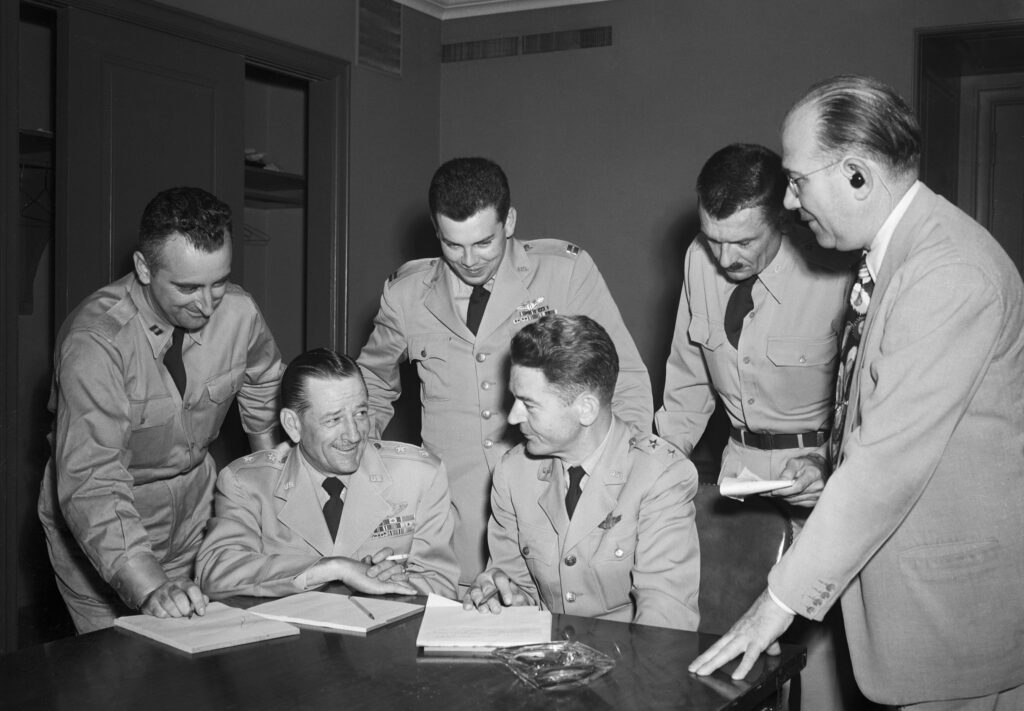
Before Blue Book, there were two earlier experiments in posture
Project Blue Book is the third official title in a sequence that already had a story arc baked into it. The Air Force’s own documentation lays out the lineage: the investigative effort begins in January 1948, shifts into Project Grudge in February 1949, and becomes Project Blue Book on March 25, 1952. That timeline appears in Project Blue Book Status Report No. 8, dated December 31, 1952. The report’s plain language makes an important point: Blue Book is not a fresh start, it is a renamed continuation under new pressure. (Air Technical Intelligence Center, 1952)
In popular telling, Project Sign is often framed as the “serious” beginning and Project Grudge as the “dismissive” interlude. That narrative captures a real change in tone, but it can also conceal something more practical: the Air Force was trying to stabilize a process in a period when aviation, intelligence, and public media were all accelerating. Jets were becoming normal. Radar was becoming infrastructure. And the public had learned, in the late 1940s, to interpret strange lights through the newly mainstream “flying saucer” idea.
Blue Book arrives as the bureaucracy’s attempt to keep up with a phenomenon that was already outpacing the institution’s ability to categorize it.
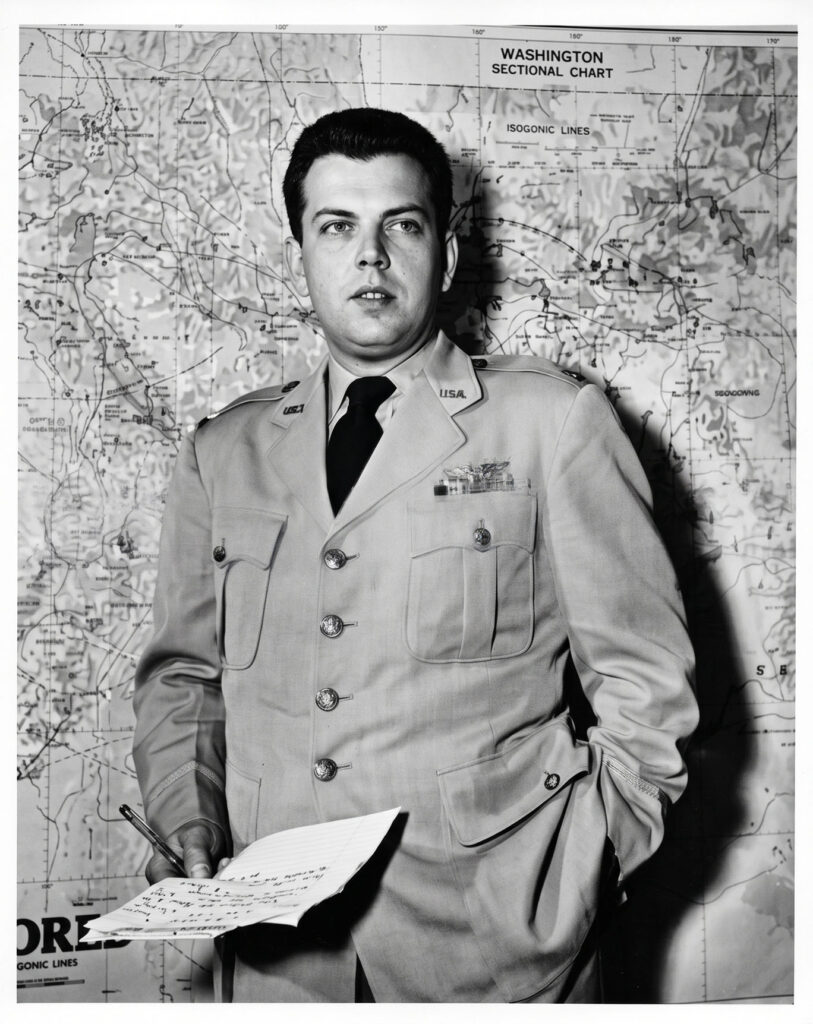
Who Ruppelt was, and why his style mattered
Edward J. Ruppelt was an Air Force officer associated with the Air Technical Intelligence Center (ATIC) at Wright-Patterson Air Force Base, where Blue Book’s work was centered. (Department of Defense, 1966) What makes him unusually influential is not simply that he held the job, but that he later described it in a first-person account that still reads like an investigator’s diary rather than a marketing pamphlet.
His 1956 book, The Report on Unidentified Flying Objects, is one of the most significant first-hand narratives from inside early Air Force UAP handling. It has limitations, like any memoir. It reflects the author’s perspective, memory, and occasional interpretive leanings. But it is also invaluable because it captures the texture of the work: the institutional skepticism, the pressure from publicity, the frustration of poor data, and the persistent irritation that some good cases refused to resolve. (Ruppelt, 1956/Project Gutenberg text)
Ruppelt also helped normalize the term “Unidentified Flying Object,” a deliberate pivot away from “flying saucer.” Air & Space Forces Magazine credits him with introducing the term into common use inside the Air Force as a more accurate, less sensational label. (Tate, 2011) This sounds minor until you remember how strongly language drives public response. In the early 1950s, “saucer” was already theater. “UFO” was an attempt at an administrative category.
UAPedia’s preference for UAP over UFO fits the same instinct: name the unknown without caricaturing it.
The 1952 wave: not a rumor surge, a reporting surge
If you want the single most important quantitative anchor for Ruppelt’s first year, it is this: Project Blue Book Status Report No. 8 states that for the month of July 1952, the total was over 440 reports, and it notes that the influx reached a peak on 29 July 1952 when 43 reports were received. (Air Technical Intelligence Center, 1952; Black Vault PDF mirror)
Those numbers matter because they define the scale of the problem. Blue Book was not casually “looking into” a few scattered sightings. It was being hit with an industrial volume of reports. And that volume was happening at a time when air defense forces could not afford to treat the sky as a psychological playground. In Cold War logic, a flood of false alarms is itself a vulnerability. If an adversary can confuse your sensors and saturate your response channels, it can degrade readiness without firing a shot.
Status Report No. 8 also describes how publicity in major magazines and newspapers correlated with reporting volume. It explicitly discusses the effect of publicity on the number of reports received. (Air Technical Intelligence Center, 1952) That point is often mishandled in UAP debates. Media influence is real, but it does not automatically explain away the underlying stimulus. It can increase reporting of real anomalies, increase reporting of misidentifications, or both. What it mainly tells you is that the reporting system is socially coupled.
That coupling is exactly why Ruppelt’s procedural focus mattered. When a system is socially coupled, you need better filters, not louder conclusions.
Blue Book under Ruppelt: the quiet reform of “how” you investigate
Status Report No. 8 describes Blue Book’s approach to evaluation in a way that still feels relevant. It distinguishes between cases classified as “insufficient data” and those classified as “unknown,” meaning cases that contained enough information for evaluation but still could not be associated with known phenomena or objects. (Air Technical Intelligence Center, 1952)
This distinction is the real heartbeat of an investigative program. If you treat “unknown” as embarrassing, you will push hard cases into “insufficient data” by starving them of follow-up. If you treat “unknown” as legitimate, you will preserve ambiguity where ambiguity is earned. The report’s category definitions show that Blue Book, at least in this period, was willing to retain “unknown” as an output rather than forcing closure.
Ruppelt’s own narrative emphasizes the same theme: the job was not to produce a comforting answer, it was to evaluate with whatever data could be obtained, and then admit what remained unresolved. (Ruppelt, 1956/Project Gutenberg text)
In modern UAP discussion, people often argue as if every “unknown” is proof of extraordinary origin, and every conventional identification is proof that the entire subject is misperception. Blue Book’s categories point to a third reality: some reports are solved, some are weak, and some are strong-but-unresolved. That middle state is where the hardest questions live.
Case study: Washington, D.C., July 1952 and why it still stings
Washington, D.C. in July 1952 became a symbol-case because it linked public visibility, military response, and sensor involvement. It is not simply “a sighting,” it is a governance event. When the capital is involved, the story stops being local.
The Robertson Panel’s 1953 report lists the Washington, D.C. area event (19 July 1952) among the significant cases discussed. (CIA/OSI, 1953; Robertson Panel report) That single detail is important: the case was serious enough to be included in material presented to a scientific advisory panel convened under intelligence oversight.
Ruppelt’s own account conveys the atmosphere: multiple reports, confusion in interpretation, and the difficulty of making strong claims when the data includes both human perception and radar complexities. (Ruppelt, 1956/Project Gutenberg text) Radar-visual cases are inherently thorny. Radar can be affected by propagation conditions and clutter. Human observers can be affected by expectation and misinterpretation. But when these systems appear to align strongly enough to trigger air defense action, you have a situation that demands careful reconstruction, not reflex dismissal.
An evidence-weighted stance here is simple and strict: the publicly available record does not compel a single definitive explanation that ends debate for all reasonable readers, and it also does not compel an extraordinary conclusion. What it does compel is historical respect. Washington 1952 illustrates how quickly UAP reports can become institutional stress tests, especially when they occur in politically saturated airspace.
Case study: Tremonton, Utah, July 1952 and the problem of film as “proof”
Film looks like certainty until you try to use it scientifically. In the 1950s, motion picture films carried cultural authority. It felt more objective than testimony. But in practice, film still requires interpretation: camera settings, angular velocity, distance ambiguity, and context all matter.
The Robertson Panel report notes that motion picture films were shown and discussed, including the Tremonton and Great Falls films. (CIA/OSI, 1953) The panel’s summary suggests skepticism about treating the films as unambiguous, while also describing how comparative testing, such as filming known balloon targets under comparable conditions, could help determine whether certain explanations fit. (CIA/OSI, 1953)
That approach is, at its best, the scientific method applied to UAP: propose an explanation, then seek a controlled comparison. What the record does not provide is a universally satisfying closure that eliminates the case’s controversy permanently. Instead, it documents an official attempt to treat the film as analyzable material rather than as a campfire story.
In the Ruppelt era, that is a recurring theme: the best cases often produce just enough substance to demand study, and just enough ambiguity to resist finality.
Case study: Great Falls and the danger of template-thinking
Great Falls is slightly earlier (1950), but it is relevant because it appears in the Robertson Panel discussions as a comparison point. The panel summary leans toward a conventional explanation involving aircraft and reflections. (CIA/OSI, 1953)
What’s more interesting than the conclusion is the institutional behavior around it. Once a case is “solved enough” to be used as an example, it becomes a template. Templates reduce workload, but they can also become lazy substitutes for case-specific analysis. The Robertson Panel report even criticizes attempts to relate Tremonton and Great Falls directly, implying confusion in directives and comparisons. (CIA/OSI, 1953)
This is one reason Ruppelt’s insistence on better intake matters. Without robust case-specific data, templates become irresistible, and the program begins to classify by habit rather than by evidence.
1953 and the Robertson Panel: investigation meets policy
In January 1953, the Robertson Panel convened to review UAP material. The declassified report describes the panel’s work and includes the now-famous recommendation: the panel urged that national security agencies take steps to strip the objects of the special status and aura of mystery they had acquired. It also emphasized training and public education approaches, often understood as a debunking-oriented strategy to reduce disruptive effects. (CIA/OSI, 1953)
Here is the crucial line between evidence and analysis.
Evidence: the panel explicitly recommended a policy shift toward reducing public fascination and managing the topic’s social impact. (CIA/OSI, 1953)
Analysis: this policy orientation suggests that, regardless of what some cases represented physically, the intelligence community perceived the UAP subject itself as a vulnerability. In Cold War terms, the danger is not only what might be in the sky. The danger is what widespread belief, anxiety, and reporting saturation can do to public trust and defense operations.
This does not prove hidden knowledge. It does demonstrate a governance reflex: stabilize the narrative.
For Ruppelt’s Blue Book, the Robertson Panel era marks a transition in the overall environment. Blue Book could still investigate, but it did so under a growing expectation that the program also serve as a buffer between the public and uncertainty.
The “unidentified” residue: what the official statistics do and do not mean
Blue Book’s long-run numbers are sometimes cited without context, so it helps to use an official summary document that lays them out. A Department of Defense Project Blue Book summary dated February 1, 1966 includes year-by-year totals and “unidentified” counts. It lists 1952 with 1,501 reports and 303 unidentified, and 1953 with 509 reports and 42 unidentified. (Department of Defense, 1966)
These figures tell you something real: 1952 was an extreme year in volume, and even after evaluation a substantial number of cases remained unidentified by Blue Book’s standards. But these figures do not tell you, by themselves, what the underlying phenomenon was. “Unidentified” is not a synonym for “non-human.” It is an administrative outcome, dependent on data quality, follow-up, and available reference information.
The more honest question is narrower: why did a residue of cases remain that the Air Force’s own evaluative categories could not resolve, even when some cases involved trained observers and military interest?
That question is strong enough to justify continued study. It is also precise enough to avoid overselling.
Ruppelt’s publication: why his testimony still matters
Ruppelt’s 1956 book has become a foundational text because it captures the internal feel of early Blue Book in a way official reports rarely do. Official documents tend to summarize. Ruppelt narrates. He describes the friction between public expectation and institutional caution, and he makes clear how often investigators were forced to work with incomplete, messy inputs. (Ruppelt, 1956/Project Gutenberg text)
Used responsibly, his account adds dimension to the cold language of status reports. It helps explain why “unknown” cases were not simply paperwork categories but lived frustrations. It also helps explain why the Air Force would be tempted to reduce the temperature of the whole subject. When you cannot solve something quickly, and the public demands certainty, the easiest option is not better science. The easiest option is less attention.
That is not a statement of malice. It is a statement about institutional gravity.
Implications: what Ruppelt’s Blue Book teaches today
The Ruppelt era offers several durable lessons that still apply to modern UAP programs, whether they admit it or not.
First, any credible system must protect the distinction between “insufficient data” and “unknown.” Once that boundary collapses, the program becomes narrative-driven rather than evidence-driven. Status Report No. 8 demonstrates that Blue Book had this distinction explicitly in its evaluative framework. (Air Technical Intelligence Center, 1952)
Second, mass-reporting events are not automatically “mass delusion,” and they are not automatically “mass contact.” They are stress tests. They reveal what a society will report, what it will ridicule, and what its institutions will prioritize.
Third, policy can reshape investigation. The Robertson Panel recommendations show an intelligence-oriented desire to reduce the topic’s disruptive social effects. (CIA/OSI, 1953) When that becomes an expectation, investigative outputs can subtly shift toward reassuring categories.
Finally, the enduring value of Ruppelt is his insistence on procedural honesty. He did not promise that Blue Book would solve the phenomenon. He insisted that it should at least record it coherently.
That sounds modest. It is. And it is also how serious inquiry begins.
Document links
1952-07-7 Tremonton Utah Files 1377 and 1415 by U.S. Air Force
https://archive.org/details/1952-07-7273984-Tremonton-Utah-1377-/page/n1/mode/2up
Claims taxonomy
Verified
Project Blue Book was renamed from Project Grudge on March 25, 1952, and Status Report No. 8 documents the program’s lineage and evaluation categories, including the distinction between “unknown” and “insufficient data.” (Air Technical Intelligence Center, 1952)
Status Report No. 8 states that July 1952 totaled over 440 reports and reached a peak on 29 July 1952 when 43 reports were received. (Air Technical Intelligence Center, 1952; Black Vault PDF mirror)
The Robertson Panel report recommends that national security agencies take steps to strip UAP (their terminology) of special status and emphasizes training and public education approaches. (CIA/OSI, 1953)
The DoD Blue Book summary pamphlet lists 1952 with 1,501 reports and 303 unidentified, and 1953 with 509 reports and 42 unidentified. (Department of Defense, 1966)
Probable
Ruppelt’s leadership corresponded with a stronger emphasis on standardized intake and a more serious investigative tone than the immediately preceding phase, increasing the usefulness of at least some reports for analysis. (Air Technical Intelligence Center, 1952; Tate, 2011)
Disputed
The Washington, D.C. 1952 events remain contested in interpretation; the record supports the case’s significance and complexity but does not force a single attribution that resolves all debate. (CIA/OSI, 1953; Ruppelt, 1956)
Misidentification
The Robertson Panel discussion leans toward conventional interpretation for the Great Falls film and frames certain film interpretations as explainable under known categories, illustrating that at least some high-profile cases were treated as likely conventional once analyzed. (CIA/OSI, 1953)
Legend
Claims that Blue Book or the Robertson Panel definitively established a single origin for all UAP are not supported by the cited declassified documents, which show unresolved cases alongside policy-oriented containment recommendations. (Air Technical Intelligence Center, 1952; CIA/OSI, 1953)
Speculation labels
Hypothesis
The high volume of July 1952 reporting, combined with a documented “unidentified” residue in 1952 totals, is consistent with the possibility that a structured phenomenon was intermittently present and observable under multiple conditions. This hypothesis is compatible with the record but not proven by it. (Air Technical Intelligence Center, 1952; Department of Defense, 1966)
Witness Interpretation
Ruppelt’s narrative portrays many witnesses, including trained observers, as experiencing events they interpreted as real aerial objects or intrusions rather than mere misperceptions. That interpretation shaped reporting behavior and institutional response even when definitive attribution was unavailable. (Ruppelt, 1956/Project Gutenberg text)
Researcher Opinion
The Robertson Panel’s emphasis on reducing the “aura of mystery” supports the view that U.S. policy shifted toward managing the public and operational impact of UAP reporting, regardless of whether the underlying stimulus was fully understood. (CIA/OSI, 1953)
References
Air Technical Intelligence Center. (1952, December 31). Status Report: Project Blue Book, Report No. 8 (Formerly Project Grudge), Project No. 10073 [Declassified report]. Retrieved from
https://upload.wikimedia.org/wikipedia/commons/5/5c/Project_Blue_Book%2C_BBA-PBSR8-300.pdf
Black Vault. (n.d.). Project Blue Book Report No. 8 (PDF mirror). Retrieved from
https://documents.theblackvault.com/documents/ufos/projectbluebook-report8.pdf
Central Intelligence Agency, Office of Scientific Intelligence (compiled by F. C. Durant). (1953). Report of meetings of scientific advisory panel on unidentified flying objects, January 14–18, 1953 (Robertson Panel Report) [Declassified report]. Retrieved from
https://documents.theblackvault.com/documents/ufos/robertsonpanelreport.pdf
Department of Defense. (1966, February 1). Project Blue Book [Summary pamphlet]. Retrieved from
https://www.esd.whs.mil/Portals/54/Documents/FOID/Reading%20Room/UFOsandUAPs/proj_b1.pdf
National Archives and Records Administration. (n.d.). Project BLUE BOOK – Unidentified Flying Objects. Retrieved from
https://www.archives.gov/research/military/air-force/ufos
Ruppelt, E. J. (1956). The Report on Unidentified Flying Objects. Doubleday. Public text edition retrieved from
https://www.gutenberg.org/cache/epub/17346/pg17346-images.html
Tate, D. (2011). USAF and the UFOs. Air & Space Forces Magazine. Retrieved from
https://www.airandspaceforces.com/article/0611ufo/
SEO keywords
Edward J. Ruppelt, Project Blue Book 1952, Project Blue Book 1953, Project Sign, Project Grudge, Blue Book Status Report No. 8, July 1952 over 440 reports, July 29 1952 peak 43 reports, Washington D.C. UAP flap 1952, Robertson Panel 1953, Tremonton film 1952, Great Falls film 1950, ATIC Wright-Patterson, Air Force UAP investigations, Cold War UAP geopolitics, unknown vs insufficient data, official UAP reports