
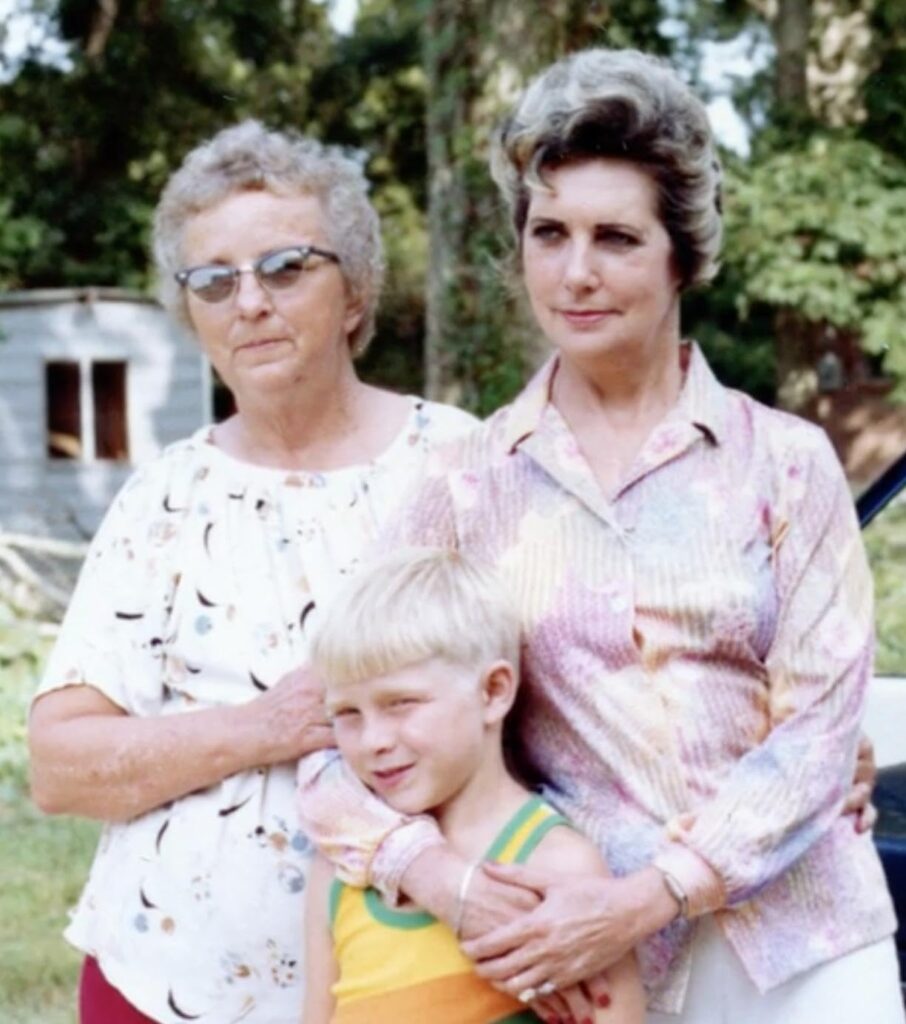
The Piney Woods incident, more widely known as the Cash–Landrum case, belongs to a category of UAP story that refuses to stay polite. The category that gets close. That gets loud in the body, not just the mind. That leave you with a question that’s harder than “What was it?” namely, “What did it do to people?” On the night of December 29, 1980, on a two-lane stretch of Farm-to-Market Road 1485 between New Caney and Huffman northeast of Houston, Betty Cash was driving with Vickie Landrum and Landrum’s grandson Colby when they encountered a brilliant, low-altitude object and, soon after, a large number of helicopters. Months later, the witnesses would give a long, recorded interview at Bergstrom Air Force Base. The transcript remains a primary anchor because it preserves their description in a formal setting, with follow-up questions that reveal both conviction and uncertainty. (Upi)
The reason this case keeps pulling researchers back is not only the reported object and helicopters. It’s the aftermath: symptoms the witnesses reported, medical attention they sought, and the way the story collided with institutions that could not provide a clean explanatory paper trail. Piney Woods sits squarely in the Cold War and mass-sighting era of the late 1970s and 1980s, when military aviation density, secrecy culture, and a public increasingly willing to speak about anomalous events combined into a perfect environment for unresolved aerial encounters.
This article takes an explanation-first approach. It follows the event as the witnesses described it in first-hand sources, traces the investigative and institutional touchpoints that came later, and then slows down at the pressure points: what is supported, what is only reported, what remains disputed, and why those distinctions matter if you want to treat Piney Woods as a serious case study rather than a campfire story.
A dark Texas road and a light that changed the rules
FM 1485 in that region is the kind of road where darkness feels thick, more forest than sky, and the headlight beam becomes your whole world. In the Bergstrom AFB interview, the witnesses describe driving home when they saw a bright light ahead and above the trees. Their first instinct, which is worth noting because it’s ordinary, was to interpret it as an aircraft. That’s how many close encounters begin: the mind reaches for the nearest normal. (Upi)
Then the normal explanation starts losing traction.
They describe the object as extremely bright and low, and they emphasize heat as a central feature of the experience. The transcript includes discussion of stopping, of being outside the vehicle, and of feeling intense warmth as they watched. In other words, this is not just a “we saw something in the sky” report. It’s a proximity narrative. It’s the kind of account where the witnesses are not only watching an event, but reacting to it physically, making choices in real time about whether to stay, move, or flee. (Upi)
A careful reader should hold two thoughts at once here. First, human perception at night is vulnerable to scale errors. A bright source can compress distance and enlarge apparent size. Second, not all nighttime misperception narratives involve a prolonged stop, repeated observations, and detailed claims that remain consistent in their core even after formal questioning. Piney Woods, as told by the witnesses, is not a two-second glance. It’s an extended episode with multiple decision points, which is why it became a landmark of the era.
And then came the helicopters.
In the Bergstrom interview, Cash describes numerous helicopters around the object, specifically tandem-rotor types consistent with Chinook-style silhouettes, and gives a precise count of twenty-three. When asked about markings, she states she saw “United States Air Force” on them. (Upi)
That single line turns the case from strange to consequential. Helicopters imply operators. Operators imply responsibility. Responsibility implies records. Records imply that, with enough persistence, you can prove what happened.
Piney Woods is in large part the story of what happens when you try to drag an anomalous event into the world of records and accountability, and the paperwork doesn’t cooperate.
Why it belongs to the Cold War mass-sighting era
“Cold War UAP era” can sound like a vibe, but it was also a material condition. Airspace around major American cities, industrial corridors, and military infrastructure was busy, especially with rotary-wing operations and training. There were plausible reasons for people in rural and semi-rural places to see aircraft at odd hours, and there were equally plausible reasons for civilians not to know what those aircraft were doing.
That’s why the late 1970s and early 1980s produced cases that are still debated. They often occur at the intersection of three things: lots of aircraft in the sky, lots of secrecy on the ground, and a civilian culture of UAP reporting that was growing louder after the closure of earlier official programs.
Piney Woods also fell in December 1980, the same month as Rendlesham Forest. The two cases are very different, but they share an era in which military adjacency becomes part of the narrative gravity. In Piney Woods, the adjacency isn’t “we were near a base.” It’s “we saw military-marked aircraft around the object.” (Upi)
Mass-sighting eras also create story velocity. Once a narrative enters the public bloodstream, new reports, alleged corroborations, and regional rumors tend to attach themselves. This isn’t always deception; it’s how communities metabolize frightening ambiguity. Piney Woods became a magnet for later retellings and counter-arguments. That matters, because the case’s core needs to be separated from the later “barnacles” that can grow on any famous incident.
The Bergstrom AFB interview: a primary anchor, and a warning label
The Bergstrom AFB interview transcript is sometimes treated as a “smoking gun,” but its real value is more subtle. It is a first-hand record of what the witnesses said months after the event when questioned in a formal setting, capturing their descriptions as well as their limits. (Upi)
One moment in the transcript is especially important for any editor deciding whether a publication is being careful: the attempt to pinpoint the location. Cash struggles to identify the precise spot on a Texas map, and the conversation acknowledges that the map isn’t detailed enough and that her eyesight is not ideal. That may sound minor, but it becomes one of the case’s enduring vulnerabilities. Without a precise location, physical evidence claims become hard to validate. Soil sampling becomes approximate. Roadway “trace” claims become difficult to confirm. The map moment is the case quietly announcing its own methodological weakness.
The interview also reveals institutional posture. By 1981, the U.S. Air Force was no longer operating a dedicated, public UAP investigation program. The exchange reads less like “we are investigating your UAP” and more like “we are trying to understand what, if anything, can be addressed through claims channels or documented involvement.” That difference is the gap Piney Woods falls into: a story with implied accountability meeting a system optimized for documented assets and clear jurisdiction.
Publications and case work: when a local shock becomes a file
Piney Woods didn’t remain a private trauma. It entered the world of civilian UAP research networks, where investigators compiled witness statements, notes, and publication writeups across organizations and magazines. One of the most influential investigators tied to the case is John F. Schuessler, a NASA engineer and later MUFON leader, whose reporting and later book-length treatment helped cement the incident’s “classic” status.
Schuessler’s later writing sits in an important middle zone. It isn’t government documentation, and it isn’t a casual retelling. It’s a sustained investigator synthesis drawing on interviews, correspondence, and the evolving case file. Readers should treat such work as serious secondary analysis, valuable especially when it cites or quotes primary material, while also recognizing that an investigator’s interpretation can shape which details get emphasis.
A useful piece of that publication ecosystem is Schuessler’s broader cataloging of claimed physiological effects in UAP reports, which cites Cash–Landrum as a formative example in the wider “bioeffects” discussion. (dia.mil)
This matters because Piney Woods isn’t only a “what did you see?” case. It’s also one of the cases that helped push the UAP field into a more uncomfortable area: what happens when witnesses say the encounter affected their bodies, and what standards should be used to evaluate those claims?
Official touchpoints: what was checked, and what wasn’t
Piney Woods has official and official-adjacent touchpoints, but they must be described carefully.
One of the most discussed is the Texas Department of Health (TDH) Bureau of Radiation Control’s involvement. Much of what circulates today comes through Curt Collins’ presentation and commentary, which functions as a secondary compilation of TDH “Complaint C-12” materials and related reporting rather than a direct publication of the complete original TDH file itself. That distinction matters, and it should be made explicit because it affects how readers should weigh the material. (Facebook)
Within those compiled excerpts, TDH investigator Russ Meyer is described as surveying the alleged area and reporting no traces of residual radiation in field readings. The same material highlights a crucial limitation: the location could not be identified to a crisp forensic standard, encapsulated in the now-famous phrasing that it was somewhere between a “beer joint and a highway warning sign.” (Facebook)
This isn’t a trivial footnote. It’s the bridge between narrative and measurement. If you can’t lock down where something happened, you can’t reliably test the environment where it happened. Even a competent field survey becomes, by necessity, a best-effort pass over a region rather than a precise investigation of a point.
The other official-adjacent document that often gets pulled into Piney Woods discussions is the DIA FOIA Reading Room paper Anomalous Acute and Subacute Field Effects on Human Biological Tissues (an AAWSAP-era DIRD). This document references Cash–Landrum in the context of broader claims about physiological effects and potential mechanisms. It’s important to frame that correctly: the paper is not a clinical adjudication of Piney Woods, and it does not confirm what happened on FM 1485. It is better understood as a conceptual and literature-based discussion that draws on multiple cases and, in places, makes conditional assumptions about mechanisms, including thermal injury and radiation as possible explanatory categories. (dia.mil)
If Piney Woods teaches anything editorially, it’s that the line between “referenced in an official document” and “officially confirmed” needs to be guarded like a fence. Cross it casually and you don’t strengthen the case, you weaken the credibility of the publication.
The symptom question: what we can responsibly say
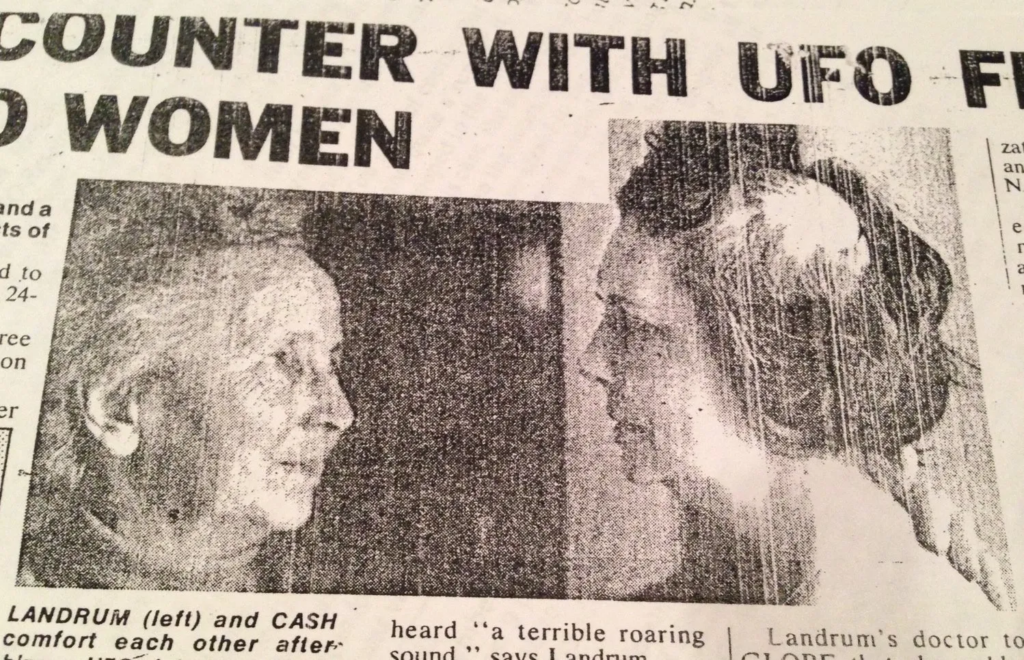
In popular summaries, Piney Woods is sometimes compressed into a single phrase like “radiation sickness caused by a UAP.” That is a dramatic shorthand, but it overshoots what can be responsibly claimed in an article that aims to be careful.
The disciplined framing is narrower and sturdier: the witnesses reported symptoms after the encounter, sought medical attention, and later investigators debated whether the symptom pattern resembles thermal injury, chemical exposure, stress response, or radiation-type effects. The primary Bergstrom transcript supports that the witnesses believed there was a connection and that they experienced significant distress and health concerns in the aftermath. (Upi)
It’s also important not to smuggle in a mechanism through suggestive language. Phrases like “exposure scenario” or “injury-heavy” can unintentionally imply that a specific physical agent is established. A cleaner approach is to keep the distinction visible: these are reported symptoms and later interpretations. The interpretations may be plausible. They may be contested. But they are not proven causation.
The TDH field-survey discussion also needs to be handled with precision. “No residual radiation detected” means the survey did not find remnant contamination at the surveyed location at the time of measurement. That does not prove the witnesses were not harmed by something, and it does not prove they were. It simply constrains one category of claims. It’s a data point, and a limited one, especially if location uncertainty prevented the survey from being tightly targeted. (Facebook)
In other words, Piney Woods is compelling partly because it forces a mature posture: take witnesses seriously without pretending that seriousness equals proof.
Helicopters: the claim, the inference, and the missing corroboration
The helicopter element is the case’s strongest hook and its hardest burden.
In the transcript, Cash’s count of twenty-three helicopters and her assertion of USAF markings are explicit. (Upi) But what the case has never produced in publicly accessible form is independent corroboration in the way aviation incidents are usually nailed down: no radar returns released, no confirmed unit logs tying a formation of that size to that corridor at that time, and no institutional admission that a fleet of helicopters was operating around a strange aerial object.
This absence is not proof that the witnesses fabricated the event. It is proof that, as a matter of public documentation, the helicopter claim remains uncorroborated beyond witness testimony and later secondary reporting. Skeptical analysis has repeatedly underlined this point, not as a cheap gotcha, but because a formation of that scale should, in principle, leave a trace. (skepticalinquirer.org)
If you’re looking for the best single sentence describing Piney Woods’ evidentiary dilemma, it’s this: the narrative points toward human accountability, but the public record does not supply the necessary chain to attach that accountability.
The lawsuit: when an anomalous story meets proof standards
Piney Woods is one of the rare UAP cases that moved into serious civil litigation, largely because the helicopter element implied a responsible party. An archived UPI report from September 3, 1985 captures the case during a key phase, describing written arguments and the government’s motion to dismiss. (Upi)
The outcome is important, and it should be stated plainly. The lawsuit was dismissed in 1986 because the plaintiffs did not establish proof of U.S. government involvement sufficient to hold the government liable, a point also noted in skeptical summaries of the case. (skepticalinquirer.org)
This outcome doesn’t “solve” the encounter. It clarifies something else: the difference between a powerful testimony-driven narrative and the evidentiary requirements of law. Civil litigation asks, “What can you prove, and who is responsible?” If a case hinges on helicopters and those helicopters cannot be tied to a government entity through records or admissions, the legal path closes even if the witnesses are sincere.
That mismatch is one of the most lasting lessons Piney Woods offers the broader UAP field: if you want institutional accountability, you need a chain of documentation, not only a chain of testimony.
Controverters: pressure tests that sharpen the case
A serious treatment should not treat skepticism as heckling. In Piney Woods, skeptical critiques have performed a necessary function: forcing the case to show what it can actually support.
Robert Sheaffer’s analysis in Skeptical Inquirer is one of the most cited pressure tests, emphasizing location uncertainty, contradictions in the evolving narrative, and the difficulty of validating physical claims when key details remain unfixed. (skepticalinquirer.org) Whether you agree with his conclusions or not, his critique identifies genuine structural vulnerabilities that any responsible publication should disclose.
At the same time, those vulnerabilities don’t automatically equal hoax or misidentification. They can also reflect the natural consequences of stress, time, and the imperfect way human beings remember geography in frightening moments. “Between a beer joint and a highway warning sign” sounds like a joke until you realize it’s also exactly how many people remember the location of a life-altering event: not as coordinates, but as a sequence of landmarks.
The mature stance is to let both realities stand: the witnesses’ testimony is detailed and emotionally coherent, and the case’s forensic anchors are weak where they need to be strong. Piney Woods remains contested because it contains enough weight to matter and enough missing structure to resist closure.
Piney Woods as a Cold War case study: what it still teaches
Viewed as a case study rather than a campfire narrative, Piney Woods highlights a trio of recurring problems in UAP research, especially in the 1970s–1980s era.
The first is the location problem. A case can be vivid, sincere, and still hard to geolocate precisely. When location is uncertain, environmental investigation becomes a blunt instrument.
The second is the records problem. Military-adjacent events are often evaluated through documentation, but documentation can be inaccessible, classified, scattered, or simply nonexistent in public form. A record gap is not proof of denial or confirmation. It is an evidentiary void that limits what can be responsibly concluded.
The third is the interpretation problem. Symptom is not diagnosis, diagnosis is not cause, and cause is often where belief, fear, and narrative temptation try to sprint ahead of the available evidence. Piney Woods is often treated as if it jumps directly from reported symptoms to a specific mechanism. The case is more honest than that. The mechanism remains the disputed center. (skepticalinquirer.org)
Claims taxonomy
Verified
The Bergstrom Air Force Base interview (August 17, 1981) documents Cash, Landrum, and Colby describing a December 29, 1980 encounter on FM 1485 between New Caney and Huffman, including Cash’s count of twenty-three helicopters and her assertion that she saw “United States Air Force” markings. (Upi)
Secondary compilations and discussions of TDH Bureau of Radiation Control materials report that a field survey did not detect residual radiation at the surveyed area, while also emphasizing that location uncertainty constrained the investigation. (Facebook)
The DIA FOIA Reading Room paper on anomalous bioeffects references Cash–Landrum as part of a broader discussion and, in places, makes conditional assumptions about mechanisms, but it does not confirm the incident or clinically adjudicate the witnesses’ conditions. (dia.mil)
Probable
The witnesses reported significant symptoms after the encounter and sought medical attention. The existence of reported and medically attended symptoms is more supportable than any single-cause explanation for them. (Upi)
Disputed
The exact encounter location is not established to a forensic standard in publicly accessible documentation, complicating physical-evidence evaluation. (skepticalinquirer.org)
The claim that the helicopters were definitively U.S. military aircraft involved in an escort or containment operation remains unproven in publicly available logs, radar data, or admissions, and is a central point of contention. (skepticalinquirer.org)
Speculation labels
Hypothesis
The witnesses may have encountered an unusual aerial platform emitting intense light and heat-like effects, with helicopters present as escort, monitoring, or response. This remains a hypothesis because publicly accessible records have not independently corroborated the helicopter operation or identified the aerial object.
Witness Interpretation
The witnesses interpreted the helicopters as U.S. Air Force aircraft based on perceived markings and contextual assumptions, and they interpreted their later symptoms as connected to the encounter. Both interpretations are explicit in the primary interview record, but interpretation is not the same as proof. (Upi)
Researcher Opinion
Later authors and investigators diverge. Some emphasize consistency in core narrative elements and treat the case as an archetypal “close encounter with reported physiological effects.” Others focus on location ambiguity, evolving detail across retellings, and the absence of independent corroboration, concluding that the case cannot bear the evidentiary weight often placed on it. (skepticalinquirer.org)
References (APA)
Computer UFO Network. (2002). Transcript of taped interview held at Bergstrom Air Force Base, 17 August 1981 (Cash–Landrum) [PDF]. https://www.cufon.org/cufon/cashlani.pdf (Upi)
Collins, C. L. (2013, November 12). The Cash-Landrum incident: The suppressed case files (secondary compilation and commentary referencing TDH materials). Blue Blurry Lines. https://www.blueblurrylines.com/2013/11/the-cash-landrum-incident-suppressed.html (Facebook)
Defense Intelligence Agency. (2010). Anomalous acute and subacute field effects on human biological tissues [PDF]. FOIA Electronic Reading Room. https://www.dia.mil/FOIA/FOIA-Electronic-Reading-Room/FileId/170026/ (dia.mil)
Sheaffer, R. (2014). Between a beer joint and a highway warning sign: The “classic” Cash–Landrum case unravels. Skeptical Inquirer, 38(2) [PDF]. https://skepticalinquirer.org/wp-content/uploads/sites/29/2014/03/p28.pdf (skepticalinquirer.org)
United Press International. (1985, September 3). Three suing government over UAP radiation (archived article). UPI Archives. https://www.upi.com/Archives/1985/09/03/Three-suing-government-over-UFO-radiation/1920494568000/ (Upi)
SEO keywords
Piney Woods Incident 1980, Cash–Landrum incident, Texas UAP case, FM 1485 UAP sighting, UAP helicopters 1980, Bergstrom Air Force Base interview, Cash Landrum witness testimony, reported burns and illness UAP, UAP physiological effects, Cold War UAP cases, 1980 Texas close encounter, UAP lawsuit dismissed 1986, UAP accountability and records, TDH radiation survey Cash Landrum, DIA bioeffects DIRD Cash Landrum