Introduction
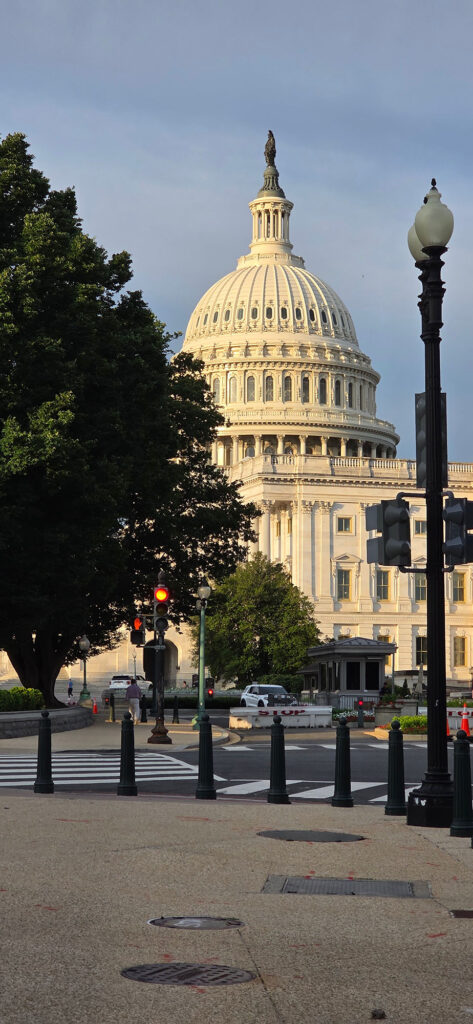
The UAP Disclosure Forum 2026: Humanity at the Edge of Discovery framed UAP disclosure not as a fringe question, but as a serious institutional challenge involving democracy, national security, science, religion, psychology, technology, finance, and public trust. Held in the Kennedy Caucus Room of the Russell Senate Office Building on June 25, 2026, the forum’s agenda brought together policymakers, former intelligence officials, scientists, journalists, economists, technologists, psychologists, and public advocates to ask a larger question: not simply are UAP real?, but how should society responsibly process, study, disclose, and govern what is known? The official program described this as a move “beyond proof and into process,” with panels on oversight, defense, science, culture, psychology, technology, and markets. (Disclosure Foundation) The attached transcript was the main source for the session summaries below.
Across the day, the forum argued that disclosure is no longer just a matter of curiosity. Speakers repeatedly connected UAP transparency to democratic accountability, whistleblower protection, better scientific instrumentation, public resilience, and the risk of strategic surprise. The strongest through-line was that secrecy, stigma, and institutional silos have slowed progress, while the next phase requires disciplined evidence gathering, responsible communication, and a broader coalition across government, academia, industry, media, and civil society. The YouTube livestream was listed as “Disclosure Forum 2026: Humanity at the Edge of Discovery,” broadcast from the Kennedy Caucus Room. (YouTube)
Overall event summary
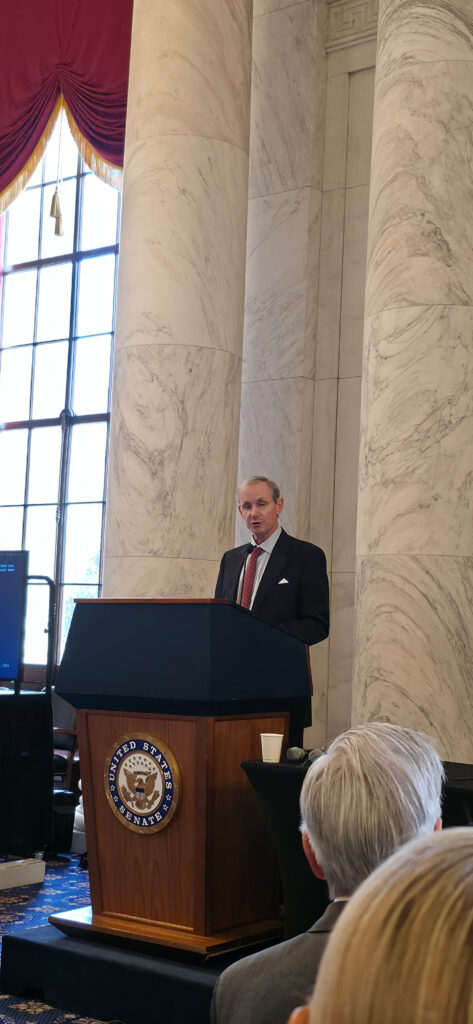
The forum opened with Christopher Mellon’s argument that UAP transparency has reached a decisive point. Mellon said the subject now brings together communities that rarely share a room: intelligence professionals, scientists, economists, journalists, educators, historians, and policymakers. He argued that the public record has grown, but that decisive data remains locked behind classification across major agencies and military systems. His central message was that transparency is a democratic obligation, that the public can handle the truth, and that disclosure could reshape humanity’s sense of itself, especially if any UAP are ultimately shown to have non-human origins.
The rest of the day expanded that premise into practical domains. Members of Congress emphasized oversight tools, whistleblower protections, amnesty, subpoenas, and the UAP Disclosure Act. National security speakers wrestled with drone incursions, military vulnerability, and whether the government knows more than it admits or simply lacks a coherent picture. The science panel pushed the discussion from testimony toward calibrated instrument data. The religion and psychology sessions asked whether people and institutions could absorb a rupture in worldview. Technology, innovation, and finance panels explored how UAP research could generate new sensors, propulsion research, investment themes, and industrial policy questions. The event ended by returning to the human center of the issue: whistleblowers, experiencers, and the need to protect those who come forward.

Key takeaways by panel and presentation
Opening Address: Christopher Mellon
Christopher Mellon’s keynote framed UAP disclosure as a democratic, scientific, and civilizational issue. He argued that meaningful UAP data exists but remains hidden or under-released, especially from satellites, space surveillance, advanced aerospace radar, and submerged or maritime domains. He cited unresolved incursions over military installations, including Langley Air Force Base, as examples of why this is not merely a cultural curiosity but a national security problem.
His larger argument was that secrecy creates more danger than disclosure. Mellon said the public has a right to know, that recovered materials, if they exist, would belong to the people whose taxes funded the programs, and that the stigma around the topic has held back research. He also argued that disclosure could help humanity see itself less through tribal, national, or religious divisions and more as one species facing shared global risks.
Key takeaways: transparency is a democratic duty; the data gap is the central obstacle; secrecy harms trust and scientific progress; disclosure, if handled responsibly, could strengthen global cooperation rather than trigger panic.
Congressional Roundtable on UAP Transparency
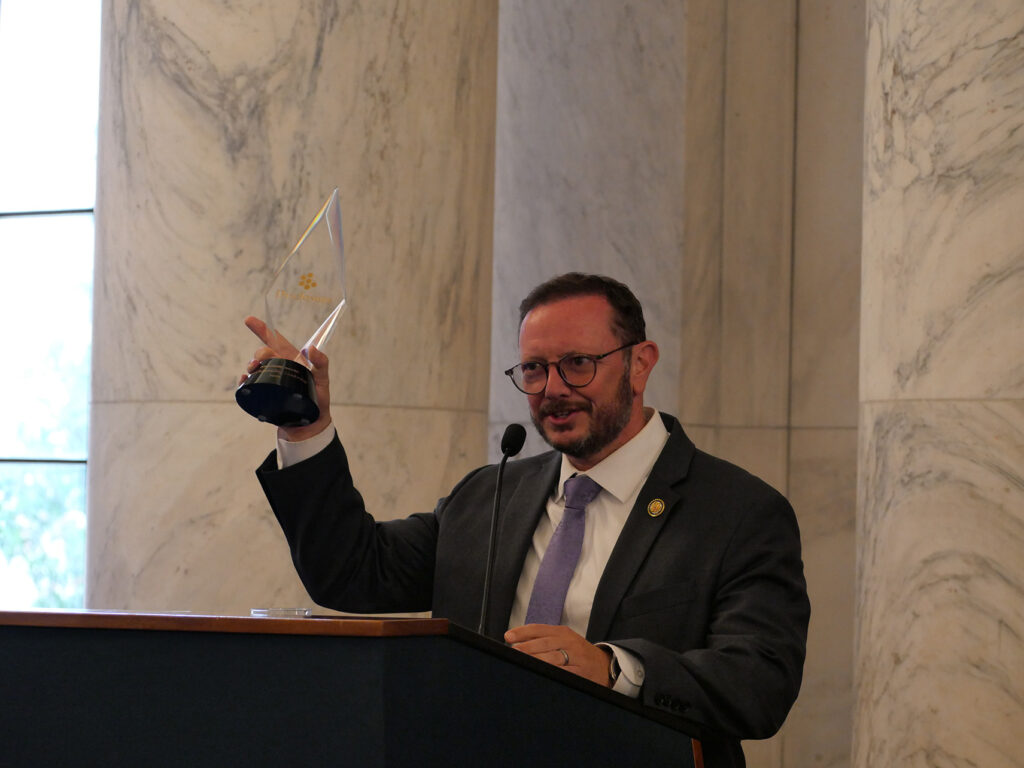
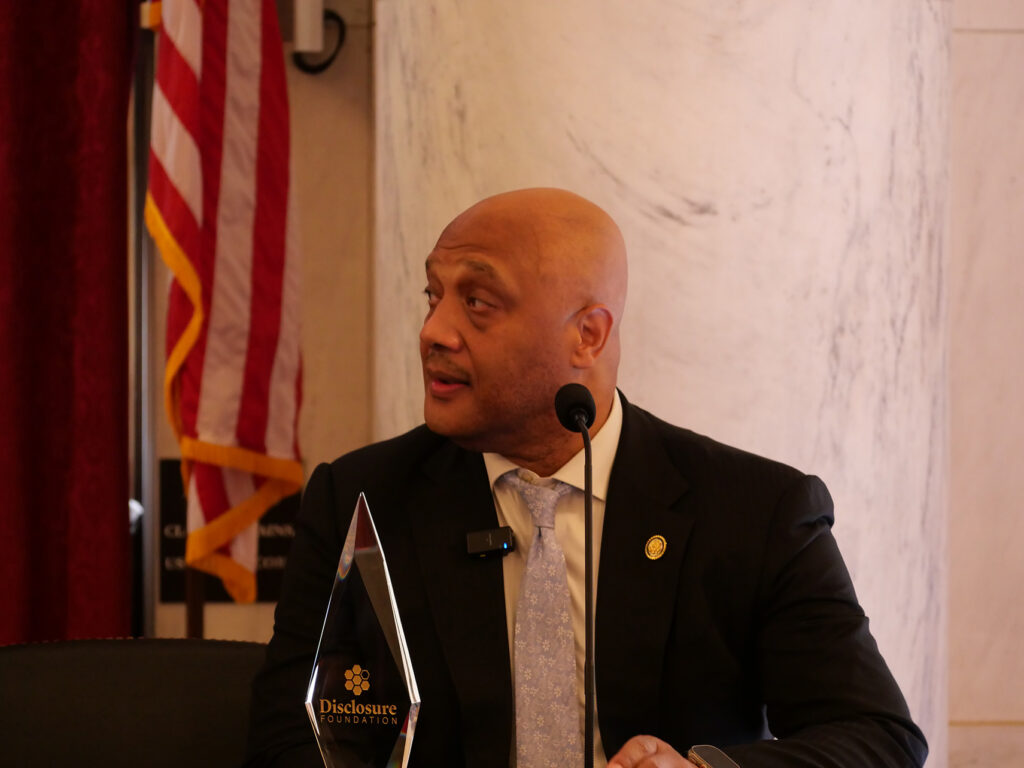
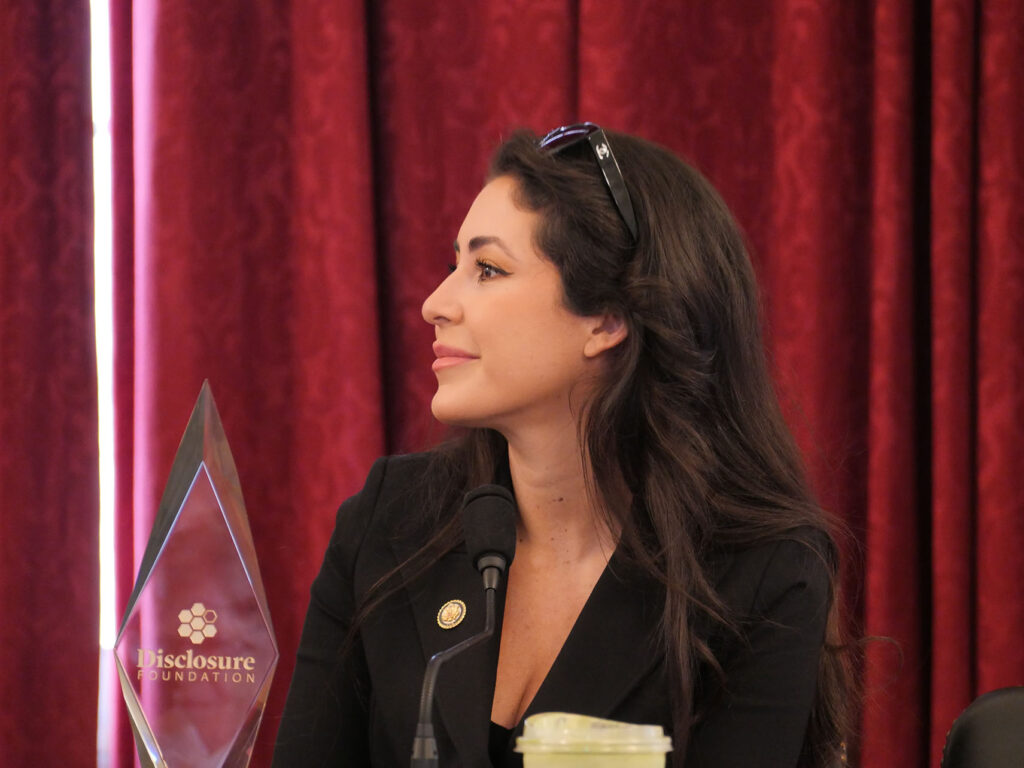
The congressional roundtable emphasized that UAP transparency has become a bipartisan issue. Representatives Anna Paulina Luna (R-Fl), Eric Burlison (R-Mo), André Carson (D-In), and Suhas Subramanyam (D-Va) were recognized, along with Tim Burchett (R-Tn), for pressing hearings, classified access, and public accountability. The panel repeatedly credited whistleblowers such as David Grusch, Lou Elizondo, Ryan Graves, Dylan Borland, Matthew Brown, and others as the real risk-takers.
The members discussed practical tools: immunity or amnesty for people afraid of losing clearances, waiving NDAs related to non-human intelligence claims, deeper inquiry into private contractors and federally funded research centers, and renewed efforts around the UAP Disclosure Act. Burlison specifically described frustration with staff-level roadblocks and argued that the UAP Disclosure Act should receive a floor vote so the public can see who supports it.
Key takeaways: Congress is increasingly engaged; whistleblower protection is the engine of further disclosure; bipartisan cooperation is real but fragile; the next fight is procedural, especially legislation, access, and enforcement.
Disclosure Award: Lou Elizondo
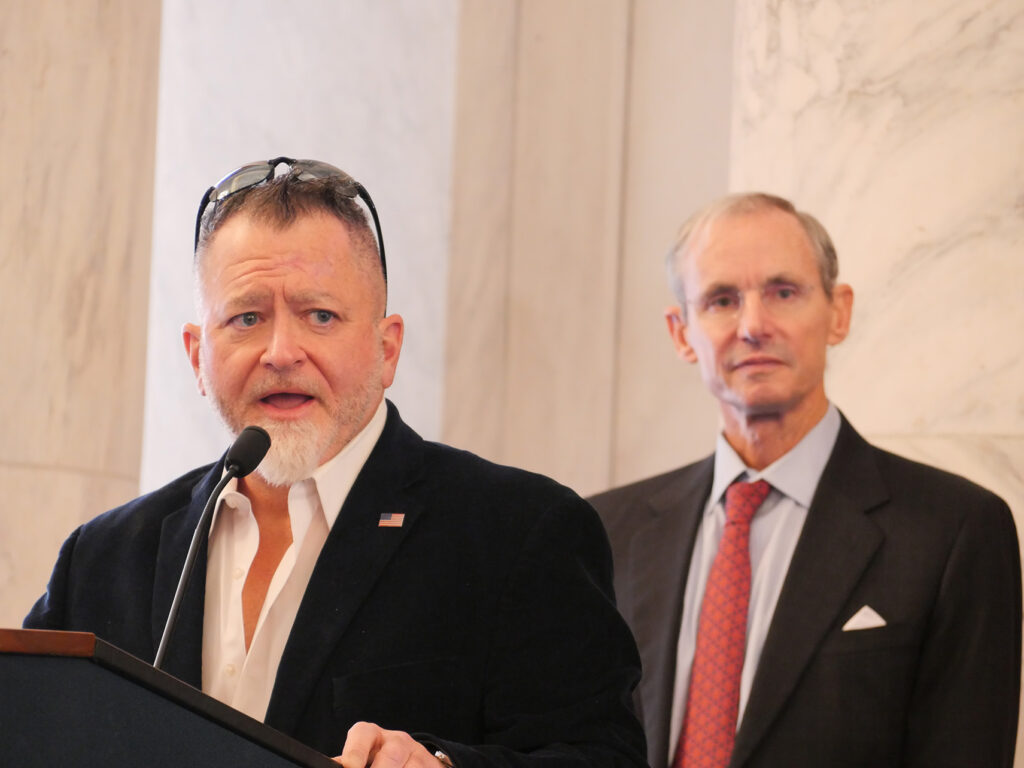
Lou Elizondo’s award segment was less about new evidence and more about the civic meaning of the movement. He thanked the public and argued that the forum itself represented democracy in action. His message was that UAP transparency has advanced because ordinary people kept asking questions, because political leaders began to listen, and because the topic moved from ridicule into public seriousness.
Elizondo’s remarks reinforced a recurring moral theme: truth and democracy depend on each other. He treated the award as belonging not only to him but to the broader public, witnesses, advocates, and officials who have sustained pressure over years of dismissal.
Key takeaways: public pressure matters; stigma has weakened; truth-seeking is a civic act; the disclosure movement is broader than any single figure.
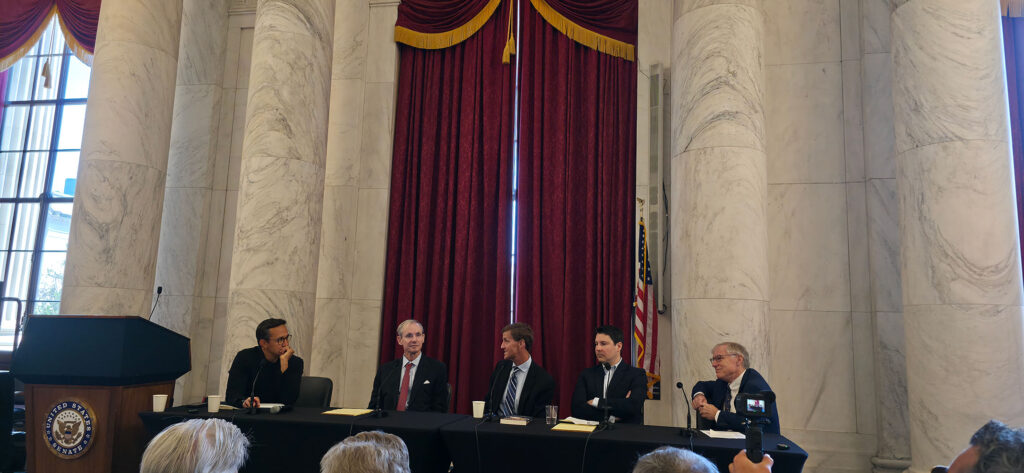
Security & Defense: National Security, UAP, and Emerging Threats
Moderated by Gadi Schwartz, this panel with Christopher Mellon (former Deputy Secretary of Defense), Kirk McConnell (former senior staff member of the Senate Armed Services Committee and the Senate Intelligence Committee), Rear Admiral Tim Gallaudet (former Acting Administrator of NOAA), and Marik von Rennenkampff (former State Department and Defense Department official), examined UAP through the lens of threat, uncertainty, and military readiness. The speakers discussed incidents involving Langley, Navy ships, underwater reports, and historical cases such as the Tic Tac, Gimbal, and GoFast videos. They debated whether the government knows a great deal and is hiding it, or whether it knows less than the public assumes and is concealing confusion.
The panel’s most important point was that “unknown” is not a policy. Participants argued that military and intelligence systems are not built to ignore threats, yet UAP reporting has often been siloed, stigmatized, or overclassified. Gallaudet emphasized underwater cases and information silos. McConnell argued that Congress being left out of decision-making for decades would be indefensible. Mellon discussed special access programs and the government’s ability to keep secrets, while also noting that withholding all UAP information can undermine the public support needed to solve the problem.
Key takeaways: UAP are a defense-readiness issue; overclassification can damage national security; Congress needs sustained access; the right question is not only “what are they?” but “how do we prepare under uncertainty?”
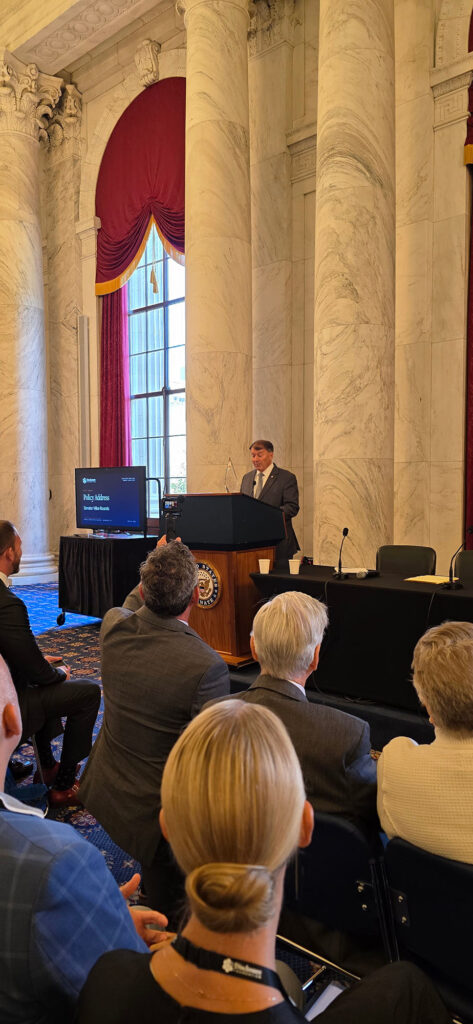
Policy Address: Senator Mike Rounds
Senator Mike Rounds focused on congressional oversight, classification, and the UAP Disclosure Act. He argued that Congress has a responsibility to oversee UAP-related programs with accountability for the executive branch, while also respecting legitimate national security constraints. His remarks emphasized that UAP transparency intersects with fiscal responsibility, intelligence policy, and public trust.
Rounds also described the UAP Disclosure Act as modeled on the JFK assassination records process, with the goal of creating a structured, lawful declassification pathway. He identified interagency and intercommittee silos as a major barrier and called for a science-driven approach. His line that UAP transparency is “a marathon and not a sprint” captured the governing tone of the address.
Key takeaways: disclosure needs legal architecture; the record-review process matters; congressional silos weaken oversight; the goal is balance between public knowledge and national security.
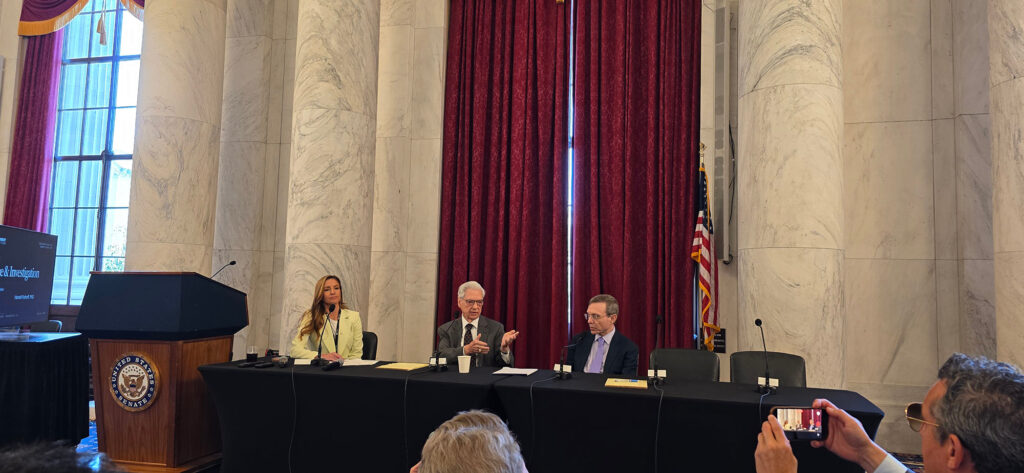
Science & Investigation: From Anecdote to Instrument Data
The science panel, moderated by Kristin Fisher (former FOX News anchor) with Avi Loeb and Harold “Hal” Puthoff, centered on evidence. Loeb’s core message was direct: if UAP are real objects, better data should be able to clarify what they are. He described a new UAP Science Advisory Council and said the council had requested more than 50 items of information from government entities. He emphasized that science is not about believing signals, but distinguishing signals from noise.
Puthoff added a classified-program perspective, arguing that excessive stove-piping has prevented cross-correlation among people and programs that should be working together. He suggested that some reported UAP observables might be investigated through the lens of engineered general relativity, while stressing that the academic and public scientific communities need access to testable hypotheses and data. Loeb pushed back against speculation by insisting that unknown physics cannot simply violate known physics, but may extend it under new conditions.
Key takeaways: the field must move from stories to measurements; open-source data and classified data both matter; skepticism belongs inside the process, not outside it as ridicule; the gold standard is high-resolution, multi-sensor, independently analyzable evidence.
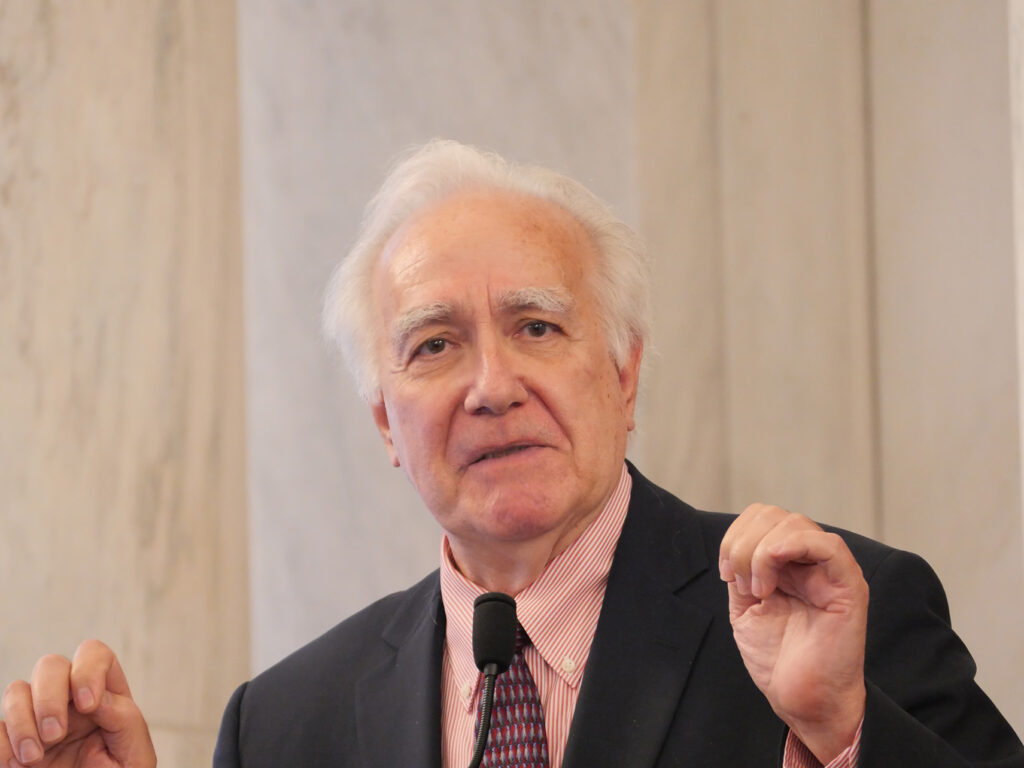
Religious Implications: The Impossible Made Real
Dr. Carlos Eire, PhD (Yale) brought a humanities lens into a forum dominated by policy and science. He argued that religion has always dealt with encounters with non-human intelligences, whether angels, demons, spirits, gods, or other beings. He challenged the assumption that disclosure would automatically destroy religious belief, noting that many traditions already contain cosmologies large enough to accommodate other intelligences.
Eire’s deeper point was that disclosure would not merely be a scientific update; it would be a rupture in worldview. He compared UAP claims to historical miracle testimony, mystical experience, and accounts of the impossible, not to prove that all such claims are true, but to show that human cultures have always struggled to interpret experiences outside dominant frameworks. He emphasized that believability is one of the core human problems in this subject.
Key takeaways: disclosure would affect theology, but not necessarily destroy religion; humanities scholars are essential to interpreting meaning; testimony, stigma, and worldview rupture are long-standing human patterns; culture needs language for the unprecedented.
Society & Psychology: How People Process the Unprecedented
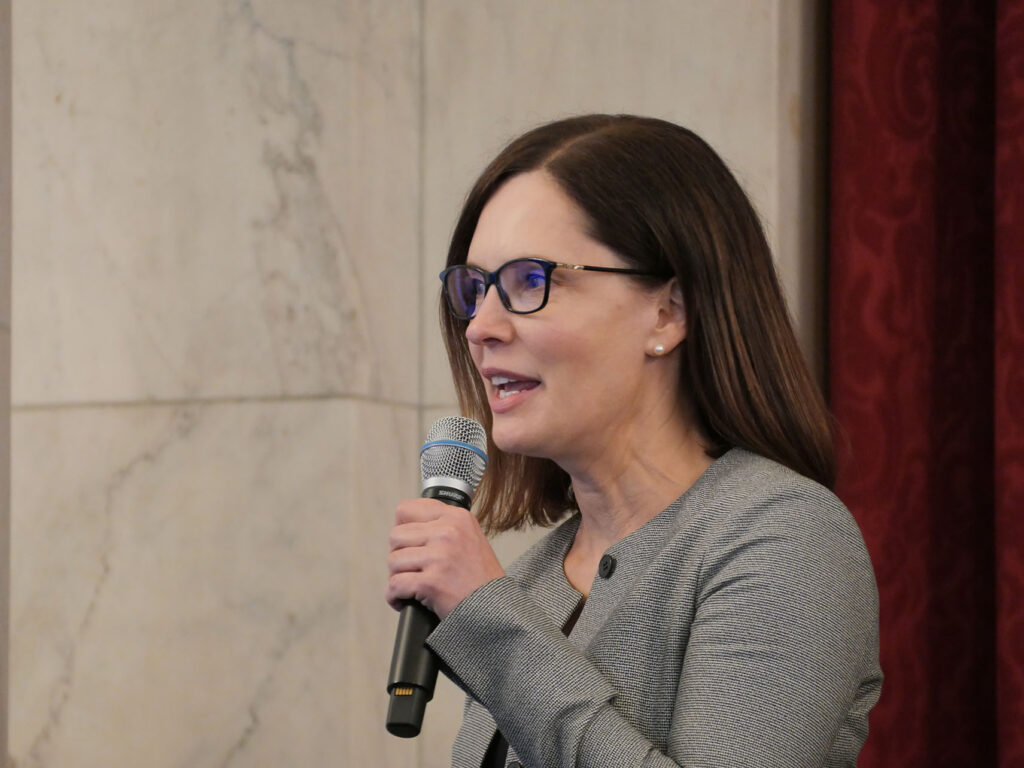
Dr. Jennice Vilhauer, PhD, presented findings from a psychological report on disclosure. Her central conclusion was that the public is unlikely to collapse into mass panic, even if non-human intelligence were confirmed. The larger risk is not panic but system strain: surges in anxiety, confusion, misinformation, distrust, and demand for mental health or public services.
She broke disclosure into stages: limited disclosure, confirmatory disclosure, attribution disclosure, reconciliation disclosure, and full integrated disclosure. The most psychologically significant threshold would be official confirmation of non-human intelligence. Vilhauer argued that communication quality will determine outcomes: people cope better when institutions are honest, clear, and trustworthy, and worse when they feel manipulated or deceived.
Key takeaways: the main public-health risk is overload, not hysteria; communication strategy is preparedness infrastructure; stigma harms reporting, science, and clinical care; governments should prepare mental-health, media, and crisis-communication systems now.
Technology & Innovation: Research, Industry, and What Comes Next
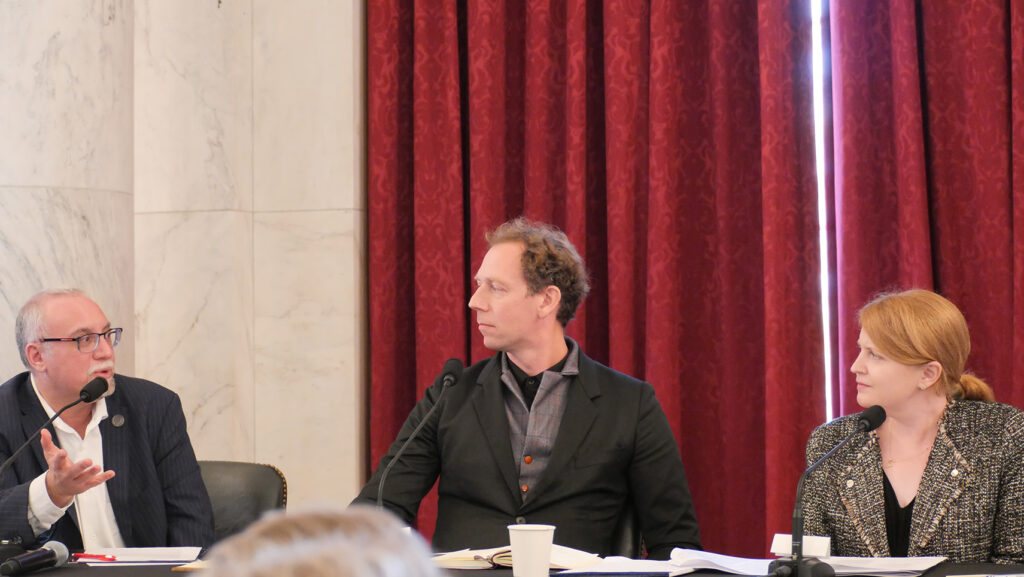
Moderated by Mike Gold with Jonathan Miller and Susan Winterberg, this panel asked what practical systems are needed to study UAP and respond to anomalous events. Miller emphasized “sensemaking,” especially for frontline operators who encounter uncertainty. Winterberg described a multi-disciplinary MIT exercise modeled on drone-style chaos, showing that agencies and operators often do not know who has authority, what data to trust, or how to distinguish genuine anomalies from drones, balloons, deepfakes, or sensor errors.
Gold tied UAP seriousness to drone warfare and national security, arguing that stigma may create a loophole adversaries can exploit. The panel emphasized multi-sensor fusion, propulsion signatures, hyperspectral imaging, citizen science, academic engagement, and dual-use technology pathways. Gold also announced a Disclosure Foundation effort to review NASA archives for UAP-related data using AI, machine learning, citizen scientists, and corporate support.
Key takeaways: better sensors are urgent for both UAP and drone defense; “I don’t know” should trigger disciplined analysis, not dismissal; citizen science and academic science should be connected; open archives may already contain overlooked data.
Financial Impacts: Risks & Opportunities
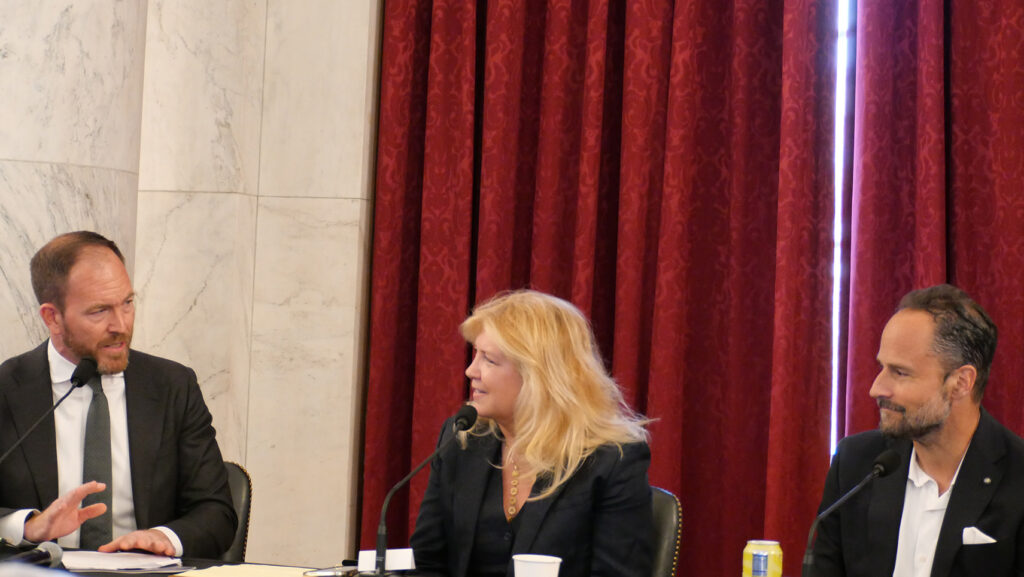
The financial panel, moderated by Jordan Flowers (Director Disclosure Foundation) with Pippa Malmgren and Matthew Tuttle, challenged the claim that disclosure would automatically crash markets. Flowers noted that prior UAP-related releases and statements had not produced obvious market panic, while Malmgren argued that markets care less about ontological shock than about technology, energy, risk, and who understands the future first.
Malmgren framed UAP disclosure as part of a broader acceleration in perception and technology: AI, new energy systems, materials science, and expanded sensing are already forcing markets to rethink reality. Tuttle approached the topic as a thematic investor, especially around energy, propulsion, defense, drones, lasers, robotics, and AI. His view was that disclosure is less a tail-risk crash scenario than a possible transformational investment theme, though analysts cannot model what remains unknown.
Key takeaways: markets may adapt faster than institutions; cheap or novel energy would be economically transformative; investment opportunities may emerge through defense, sensors, AI, propulsion, and materials; financial systems need better ways to model unknown technological risk.
Closing Remarks and Whistleblower Support
The closing returned the forum to its human and legal foundation: whistleblowers. Jordan Flowers described the Disclosure Foundation’s mission as policy research, legal action, whistleblower support, and education. The Foundation announced its first disclosure grant, $10,000 to Vanguard Enterprise, represented by Dylan Borland, Matthew Brown, and Jeffrey Nuccetelli.
The Vanguard remarks emphasized that whistleblowers risk careers, clearances, reputations, family stability, and financial security. The closing also honored experiencers and people who had long been marginalized, with Whitley Strieber briefly reflecting on the journey from ridicule to a room where people were no longer laughing. The final note was hopeful: humanity may be moving toward becoming a “cosmic species.”
Key takeaways: disclosure depends on protecting people, not just releasing files; civil society can support whistleblowers faster than government; experiencers and witnesses are part of the human story; the movement’s credibility will depend on how it treats those who come forward.
Summary of the main learnings
The first major learning is that disclosure is now a process problem, not only an evidence problem. The official agenda itself framed the forum as moving beyond “proving existence” toward planning for what comes next. (Disclosure Foundation) Evidence still matters enormously, but the forum treated disclosure as a governance challenge involving archives, laws, whistleblower channels, scientific protocols, communications strategy, and public preparation.
The second learning is that national security and transparency are not opposites. Many speakers argued that secrecy can protect sensitive capabilities, but overclassification can also blind Congress, weaken public trust, slow scientific progress, and leave military operators without adequate tools. The forum’s more mature position was not “release everything instantly,” but “build lawful, accountable pathways that disclose what can be disclosed while protecting what genuinely must remain classified.”
The third learning is that science needs better data and less stigma. The scientific panels rejected both blind belief and dismissive ridicule. The path forward is calibrated sensors, multi-source verification, high-resolution imagery, materials analysis, AI-assisted pattern recognition, open-source archives, and peer review. The clearest scientific standard expressed throughout the event was simple: let evidence, not ideology, decide.
The fourth learning is that the public can likely handle disclosure, but institutions may not be ready to manage it. The psychology presentation directly challenged the mass-panic narrative. The danger is more likely to be confusion, misinformation, distrust, and pressure on mental-health and public-health systems if communication is poor. That means preparedness should include media standards, public education, clinical guidance, and clear institutional messaging.
The fifth learning is that the implications are interdisciplinary by nature. Religion, economics, law, aerospace, defense, consciousness studies, materials science, psychology, and public policy all appeared in the same conversation because disclosure, if real and substantial, would not stay in one lane. The forum’s strongest contribution was its insistence that no single community owns the problem.
The sixth learning is that whistleblowers are the hinge point. Nearly every practical path to deeper disclosure depends on witnesses, program insiders, contractors, military personnel, or intelligence officials being able to speak safely and lawfully. Without stronger protection against retaliation, the system will continue to reward silence and punish the people most likely to know where records, materials, or programs are located.
Conclusion
The UAP Disclosure Forum 2026 presented disclosure as a test of institutional maturity. The event did not claim to settle every question about UAP origin, intent, or technology. Instead, it argued that the old model of stigma, silence, fragmented oversight, and passive waiting is no longer adequate. Whether UAP ultimately prove to be foreign drones, misidentified natural phenomena, advanced human systems, non-human technology, or a mixed set of explanations, the United States and the wider world need better data, better governance, and better public communication.
The forum’s final message was both ambitious and grounded: disclosure should not be treated as a spectacle, but as a civic, scientific, and human responsibility. If the phenomenon is mundane, serious investigation will improve airspace security and public trust. If it is extraordinary, then humanity will need the strongest version of its institutions: transparent enough to be trusted, disciplined enough to protect real security, humble enough to learn, and humane enough to protect the people who bring the truth forward.
References
Disclosure Foundation. (2026). Disclosure Forum 2026: Humanity at the edge of discovery [Conference agenda]. https://forum.disclosure.org/
Disclosure Foundation. (2026, June 25). Disclosure Forum 2026: Humanity at the edge of discovery | Kennedy Caucus Room [Video]. YouTube. https://www.youtube.com/watch?v=3004GwnxwzM
SEO Keywords
UAP Disclosure Forum 2026, UAP disclosure, UFO disclosure, UAP transparency, unidentified anomalous phenomena, UAP congressional hearing, UAP government transparency, UFO government disclosure, non-human intelligence disclosure, NHI disclosure, Disclosure Foundation, UAP Disclosure Foundation, UAP whistleblowers, UAP national security, UAP science advisory council, UAP evidence, UAP data, UAP investigation, UAP Congress, UAP Senate, UAP Disclosure Act, UAP Disclosure Forum recap, UAP Disclosure Forum summary, Humanity at the Edge of Discovery, UAP disclosure event 2026, UAP policy discussion, UAP public hearing, UAP and national security, UAP and democracy, UAP and government secrecy, UAP and classification, UAP overclassification, UAP and whistleblower protection, UAP legal reform, UAP records review board, UAP and National Archives, UAP and NDAA, UAP declassification, UAP intelligence community