
Assistant professor of astrophysics at Nordita in Stockholm and project lead of VASCO, Beatriz Villarroel has become a central voice in the search for vanishing stars, strange historical transients and potential techno signatures that intersect directly with the UAP problem. Her work presses a simple and profound question. What does it mean when a star like source appears and disappears in a single exposure or seems to vanish from the sky entirely. (Nordita)

Snapshot
- Affiliation Nordic Institute for Theoretical Physics, Stockholm University. (Nordita)
- Degrees PhD in astronomy, Uppsala University, with a thesis on active galactic nuclei. (Diva Portal)
- Known for The VASCO program that compares mid twentieth century sky plates to modern surveys to find appearing and vanishing sources, plus focused studies of unusual short lived transients on Palomar plates from the pre Sputnik era. (arXiv)
- Honors L’Oréal UNESCO For Women in Science prize in Sweden and later International Rising Talents recognition. (Stockholm University)
Timeline and milestones
- 2014 Publishes Nature Physics work on the environments of different active galactic nuclei, establishing early credentials in careful survey work. (Diva Portal)
- 2016 Completes PhD at Uppsala University on active galactic nuclei demographics and environments. (Diva Portal)
- 2019 to 2020 Launches the VASCO program at scale, comparing hundreds of millions of USNO B1.0 sources to modern Pan STARRS and Gaia catalogues to flag objects that seem to have no modern counterpart. The first major paper appears in the Astronomical Journal. (arXiv)
- 2020 Opens VASCO to the public as a formal citizen science effort to triage roughly one hundred fifty thousand candidates for vanishing sources. (arXiv)
- 2021 Reports a striking case. Nine point like transients appear within a small field on an April 1950 Palomar plate, then are absent on earlier and later images and absent in deep modern follow up. This Scientific Reports study frames possible explanations that include fast reflections from high altitude objects and urges systematic tests. (PMC)
- 2022 With collaborators, details methods and first automated searches for disappearing sources using Virtual Observatory tools, alongside the developing citizen science pipeline. (OUP Academic)
- 2024 Presents a well documented triple transient that appears and fades within a single Palomar red exposure and does not recur in blue or later plates, reinforcing that a subset of plate events are real sky phenomena. (OUP Academic)
- 2025 Two companion studies expand the scope. One analyzes more than one hundred thousand POSS I transients and finds statistical associations with reports of UAP and with above ground nuclear test dates, strongest the day after a test. The other, in PASP, searches specifically for aligned sets of transients and for deficits inside Earth’s shadow, consistent with a significant fraction being sunlight glints from flat reflective objects in high orbit before the satellite age. (Nature)
Recent Importance
In recent years, an unlikely convergence has emerged at the edge of astrophysics: the worlds of rigorous astronomy and UAP (Unidentified Aerial/Anomalous Phenomena) research are beginning to overlap. What was once dismissed as pseudoscience is now being revisited through the lens of high-precision data, machine learning, and citizen-science archives.
At the center of this quiet revolution stands Dr. Beatriz Villarroel, a Swedish-Chilean astrophysicist whose work has made the conversation around “anomalies in the sky” scientifically respectable again.
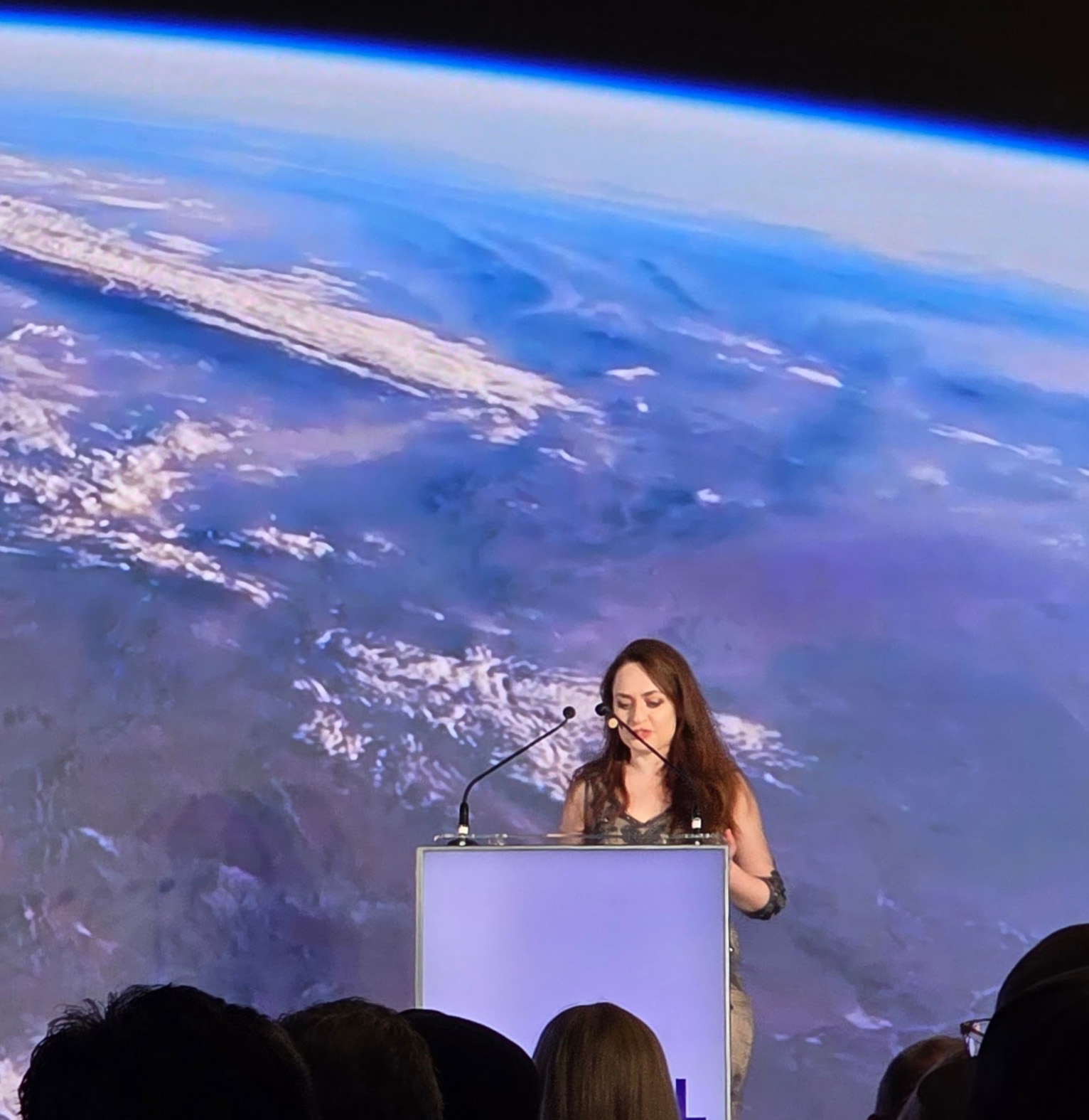
From observatories in the Canary Islands to public image-analysis projects spanning the globe, Villarroel is leading a movement that treats unexplained transients not as tabloid fodder but as legitimate astrophysical data.
Her research, particularly the Vanishing & Appearing Sources during a Century of Observations (VASCO) project, bridges archival astronomy, artificial-intelligence analysis, and public participation. It’s a data-first approach to cosmic anomalies, and it may ultimately reshape how we think about what constitutes evidence in the study of UAPs.
From Fringe to Framework: The New Data Revolution
For most of the twentieth century, discussions about unexplained lights in the sky belonged to two very different worlds. Astronomers focused on measurable, repeatable celestial phenomena: supernovae, variable stars, comets. UAP researchers, meanwhile, relied largely on eyewitness testimony, radar logs, and government reports. There was little common ground.
That divide began to narrow with the rise of large-scale sky surveys. The digitization of photographic plates, machine-learning algorithms, and distributed citizen-science platforms opened a vast new data domain, one capable of revealing anomalies previously hidden across decades of sky monitoring. Villarroel saw in this digital transformation an opportunity: by mining a century’s worth of astronomical plates and comparing them to modern observations, she could search systematically for “vanishing” or “appearing” light sources, objects that seemed to wink in and out of existence.
The Vision Behind VASCO
Villarroel’s flagship project, VASCO (Vanishing & Appearing Sources during a Century of Observations) project site was launched to do exactly that. It pairs historical sky photographs, such as those from the Palomar Observatory Sky Survey (POSS), with ultra-deep modern surveys like Pan-STARRS and the Sloan Digital Sky Survey. By cross-matching coordinates across time, the team can identify objects that once shone brightly but have since disappeared from the sky.
This archival-to-modern comparison is more than an exercise in nostalgia. It creates a temporal baseline of over seventy years, providing unprecedented insight into transient celestial events including those that current, time-domain telescopes might miss.
Villarroel’s team uses a combination of automated pattern recognition and human visual verification, with citizen scientists assisting through platforms similar to Zooniverse. Every confirmed “disappearance” is logged, compared, and subjected to further analysis using professional observatories.
Her 2019 arXiv paper (arXiv:1911.05068) outlined the first systematic search of more than 600 million catalogued stars, comparing mid-twentieth-century positions with modern CCD imaging.
The resulting list of “missing stars” was astonishing, a few thousand candidates that defied simple astrophysical explanations. Some may be photographic errors or misidentifications, but others remain unexplained.
A Landmark Study: Nine Transients, One Night in 1950
The turning point came in 2021, when Villarroel and her collaborators published a peer-reviewed study in Scientific Reports (a Nature portfolio journal) titled “Exploring nine simultaneously occurring transients on April 12th 1950”.
The team had found something extraordinary on a red-sensitive Palomar plate taken that night: nine starlike points of light appearing in a tight cluster, all visible in a single 50-minute exposure, but absent in plates taken before or after.
The images showed no trails, ruling out aircraft or satellites. When the same region was re-imaged decades later using the 10.4-meter Gran Telescopio Canarias (GTC), reaching depths of magnitude 26, no trace of those nine points remained. No galaxies, no stars, no debris, nothing.
The authors considered natural explanations: microlensing, cosmic rays, meteors, or stellar flares. None fit the pattern. A more terrestrial idea, solar reflections from orbiting metallic objects, was plausible, yet problematic.
Geosynchronous orbit didn’t exist in 1950, and the probability of nine simultaneous reflections in a small field of view was vanishingly small.
The result was a bona-fide astrophysical anomaly: nine transients, statistically inconsistent with known phenomena, recorded on a verified photographic plate. The scientific community took notice. Coverage in outlets such as EarthSky underscored the potential significance, and the mystery.
Why This Matters for UAP-Aware Science
For UAP researchers, Villarroel’s work is a revelation. Instead of anecdotal evidence, here were archival datasets, observations captured by professional telescopes, preserved for decades, and now analyzed with modern rigor. Her findings reframed UAPs not as eyewitness stories but as data anomalies embedded in legitimate astronomical archives.
The 1950 transients paper was careful not to invoke extraterrestrial or technological causes, but it did include the possibility of “solar reflections from unknown objects in high-altitude orbits.” That phrasing was enough to intrigue the techno-signature community, scientists searching for evidence of advanced technologies beyond Earth.
Suddenly, the line between astrophysics and UAP inquiry blurred.
Methodology and Scientific Rigor
Villarroel’s research stands out for its transparency and methodological integrity. Each candidate transient is vetted through several layers of verification:
- Multi-epoch comparison – every anomaly must appear in one exposure and be absent in others taken before and after.
- Deep follow-up imaging – using the world’s largest telescopes to confirm non-existence or persistence.
- Statistical analysis – quantifying how often such events should occur if they belonged to known classes of transient phenomena.
- Open publication – making both data and methodology accessible for independent re-analysis.
This open-science model contrasts sharply with the secrecy surrounding government UAP studies. Villarroel’s ethos is simple: anomalies should be confronted with data, not dismissed or sensationalized.
Bridging Disciplines and Demographics
Another hallmark of Villarroel’s approach is her commitment to citizen science.
Through collaborative platforms, volunteers worldwide inspect digitized plates, flag potential transients, and cross-check anomalies. This democratization of astronomy empowers non-specialists while expanding the effective labor force for anomaly detection.
She also represents a new generation of scientists unafraid to straddle boundaries. With dual affiliations, the Nordic Institute for Theoretical Physics (NORDITA) and the Instituto de Astrofísica de Canarias (IAC) Villarroel has the credibility to bring UAP-related inquiry into respected institutions without stigma. Her work helps legitimize “edge questions” those that lie between astrophysics, planetary science, and the search for technosignatures.
The Challenges: Artifacts, Errors, and Caution
Despite the excitement, Villarroel is careful not to overreach. Photographic plates are notoriously imperfect: dust grains, scratches, emulsion flaws, and chemical blemishes can all mimic transient points. Her papers openly discuss these pitfalls and emphasize replication.
“Every anomaly must survive skepticism,” she said in a 2023 seminar at the University of Uppsala. “We must treat the unknown with the same discipline as the known.”
To that end, her team continuously refines detection algorithms and validation pipelines. Each candidate transient is classified by confidence level, and uncertain cases are re-examined independently by multiple reviewers.
The Ripple Effect: Changing How Science Treats Anomalies
The impact of Villarroel’s work extends beyond any single discovery. She is helping to destigmatize the study of anomalies. Once marginalized, the search for vanishing stars and unexplained transients is now an emerging subfield in astrophysics and techno-signature research.
Her publications are frequently cited in discussions about potential near-Earth reflective phenomena, techno-signature detection strategies, and the reuse of archival data for nontraditional purposes.
In essence, she’s building the academic infrastructure for anomaly science, a set of protocols, tools, and standards that allow scientists to explore the weird without losing rigor.
Citizen Science Meets the Cosmic Unknown
VASCO’s online interface invites volunteers to help compare paired images from different epochs, spotting potential vanishing or appearing sources. Thousands of participants, including amateur astronomers and UAP enthusiasts, have contributed to the project.
This model accomplishes more than data analysis: it redefines the relationship between professional astronomy and the public.
It gives ordinary people a direct role in discovering anomalies, fostering transparency and shared curiosity. In doing so, Villarroel bridges two cultures, the data-driven scientific establishment and the public’s fascination with the unexplained.
Looking Ahead: From Archival Mystery to Future Missions
Villarroel’s next frontier is expanding VASCO to new archives, including European and Australian sky surveys, and integrating infrared data to probe beyond optical wavelengths. She advocates for using next-generation observatories, like the Vera C. Rubin Observatory, to systematically revisit known anomaly sites.
She also collaborates with techno-signature researchers to model how artificial orbital objects might appear in archival data. If even a small fraction of “vanishing stars” turn out to be reflections from human or non-human technology, the implications for space archaeology would be profound.
The Larger Meaning
Beyond its scientific impact, Villarroel’s work represents a philosophical shift. It challenges the assumption that every unexplained phenomenon must be either instantly dismissed or immediately sensationalized. Instead, it treats mystery as data, as an invitation to look deeper.
Her approach exemplifies a new era of scientific pluralism: one in which anomalies are neither taboo nor gospel but simply opportunities for discovery.
As governments and universities alike begin to study UAPs more seriously, from NASA’s 2023 UAP Report to the Pentagon’s AARO program, the need for rigorous, transparent, civilian-led research has never been clearer.
References
Nordita. “Beatriz Villarroel” profile page. (Nordita)
Stockholm University profile page for Beatriz Villarroel. (Stockholm University)
Villarroel, B. et al. “The Vanishing and Appearing Sources during a Century of Observations project I” Astronomical Journal 159, 8. (ADS)
Villarroel, B. et al. “Exploring nine simultaneously occurring transients on April 12th 1950” Scientific Reports 11, 12794. (PMC)
Solano, E., Villarroel, B., Rodrigo, C. “Discovering vanishing objects in POSS I red images using the Virtual Observatory” Monthly Notices of the Royal Astronomical Society 515, 1380. (OUP Academic)
Bruehl, S., Villarroel, B. “Transients in the Palomar Observatory Sky Survey may be associated with nuclear testing and reports of unidentified anomalous phenomena” Scientific Reports, 20 Oct 2025. (Nature)
Villarroel, B. et al. “Aligned multiple transient events in the First Palomar Sky Survey” Publications of the Astronomical Society of the Pacific, 2025. (Stockholm University)
Stockholm University News. “Unexpected patterns in historical astronomical observations” 20 Oct 2025. (Stockholm University)
VASCO Project website. Overview and program pages. (Vasco Project)
Villarroel, B. et al. “Launching the VASCO Citizen Science Project” Universe 2022 and arXiv preprint. (MDPI)
Stockholm University News. “Prize to promising astrophysicist” L’Oréal UNESCO For Women in Science, 8 Mar 2021. (Stockholm University)
Uppsala University DiVA. “Active Galactic Nuclei in galaxy surveys” doctoral thesis record. (Diva Portal)
Nature Physics. “The different neighbours around Type 1 and Type 2 active galactic nuclei.” (Diva Portal)
MNRAS. “A bright triple transient that vanished within 50 min” 2024. (OUP Academic)
SEO Keywords
Beatriz Villarroel, VASCO project, vanishing stars, archival astronomy, UAP optical anomalies, nine transients 1950, technosignatures, Palomar Sky Survey anomalies, citizen science astronomy, Scientific Reports Nature study, vanishing appearing sources, UAP science integration