The Rendlesham Forest incident has a peculiar gravity in the UAP world. Not because it is the loudest case, or the most cinematic, but because it is one of the rare incidents where we can point to a compact bundle of primary artifacts: a contemporaneous memorandum, recorded audio, and later-released official files sitting in a national archive.
And then there are the “hieroglyphics.” A row of markings on the hull of a close-range craft, became a kind of symbol inside the symbol: proof for some, embellishment for others, and a semiotic Rorschach test for everyone. The problem is not that “symbols” are too strange for UAP study. The problem is that the symbol-claim arrives with a complicated chain of documentation. If you are doing a data-first investigation, that chain matters as much as the glyphs themselves.
This article treats the Rendlesham hieroglyphics claim as a forensic object. What exactly is asserted? Where does it appear in the record? What do independent sources support, and what do they not? How did books and podcasts amplify (or distort) the symbol story? And if the markings were real, what do they imply for the broader UAP phenomenon?
Separating the incident from the symbol-claim
The Rendlesham “hieroglyphics” are not the whole incident. They are a specific sub-claim nested inside a larger close-encounter narrative.
“Unexplained lights” and an object in the forest (strong documentation)
The single-page memo commonly called the “Halt memorandum,” dated 13 January 1981, describes security patrolmen seeing unusual lights and a “strange glowing object” described as metallic and triangular, roughly 2–3 meters across, and about 2 meters high. It notes colored lights, movement through the trees, later sightings, ground depressions, and radiation readings.
Crucially for our purposes: the memo does not mention symbols, writing, or markings on the object.
Physical traces and instrument readings (documented, interpretation disputed)
The same memo reports three depressions (with specific dimensions) and radiation meter readings in and around the depression area.
“Hieroglyphics on the craft” (late-emerging, documentation contested)
This module depends heavily on later testimony and later-revealed drawings attributed to one principal witness (Sgt. Jim Penniston), plus secondary retellings in books and media.
In other words: the broader incident has an early paper trail. The hieroglyphics claim largely does not.
That does not make it false. It does mean we have to handle it like an evidence problem, not a vibe.
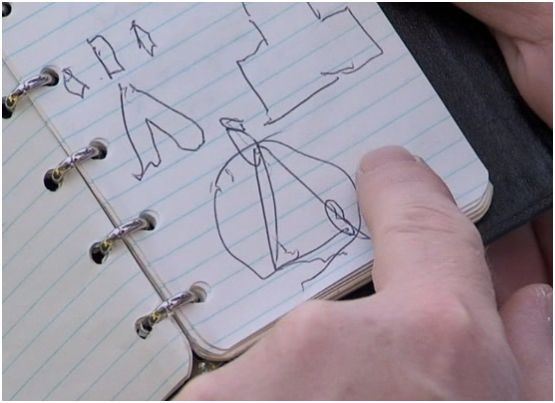
Photo of Sgt. James Penniston’s notebook, where he drew the symbols. (unknown)Drawing of hieroglyphics from notebook. (unknown)
The Halt memorandum as baseline
Because it is dated close to the event and written in an official reporting context, the Halt memo becomes the baseline artifact for what was considered reportable at the time.
The memo describes:
A triangular, metallic-appearing object with lights.
Ground depressions and radiation readings.
Later “star-like” lights and a beam-like effect.
The memo does not describe:
Any physical contact with the object by a patrolman.
Any “writing,” “symbols,” or “hieroglyphics” on a hull.
Any “downloaded” message, cognitive effect, or informational transfer.
This absence matters because “symbols on a craft” is exactly the kind of detail that would typically stand out in a formal narrative, especially one already describing a structured object with distinct lighting and geometry. If symbols were seen and recognized immediately, the memo’s silence becomes an evidentiary tension that any serious investigation must explain.
The archival context: what government custody implies (and what it doesn’t)
The UK National Archives catalogs a MoD file connected to the Rendlesham incident (DEFE 24/1948), and Hansard records a 2001 statement indicating the MoD held only the Halt memo as the relevant USAF material, with “no evidence” of other official investigation or documentation.
UAPedia’s editorial posture toward government sources is simple: treat them as data, not as final truth. Bureaucracies misfile, redact, minimize, and sometimes ignore. At the same time, official absence is not proof of presence. If we want the hieroglyphics claim to carry weight, it must stand on its own evidentiary legs, not on the aura of an archive.
The symbol-claim: what is actually asserted
Penniston’s description: “writing of some kind”
In later testimony reproduced online, Penniston describes “writing of some kind” on the “smooth exterior shell,” with lettering described at about three inches in size and extending for roughly two feet.
That description is already more specific than most UAP “markings” claims, which often stay vague. The claim is not “it looked like scratches.” It is “there was writing,” with scale and extent.
The “hieroglyphics” label
Many retellings use “Egyptian hieroglyphics” as a shorthand for “unfamiliar symbols,” not as a literal claim that the markings correspond to an Egyptian writing system. You can see this framing echoed in media and discussion summaries that describe Penniston’s sketch as resembling “Egyptian hieroglyphs.”
A data-first investigator should treat “hieroglyphics” as a witness-adjacent metaphor unless a source explicitly claims script equivalence.
The drawings: notebook scans and “official sketch” images
Images circulate online showing what are presented as Penniston’s notebook drawings and a separate “official USAF sketch of the symbols.”
Even if we temporarily bracket questions about when the notebook pages were produced or publicly revealed, the drawings themselves become data: repeated geometric motifs, a finite “alphabet” of shapes, and a consistent claim that the symbols were ordered, not random.
What the symbols look like (and why that matters)
If you strip away the “hieroglyphics” label and examine the drawings as shapes, three features stand out:
Geometric primacy: circles, triangles, lines, angled strokes, and a few composite forms.
Low stroke count per glyph: most symbols can be rendered in 2–6 strokes, suggesting either an efficiency-driven “script” or a simplified emblem set.
Non-obvious phonetics: nothing in the shapes screams “alphabet,” “syllabary,” or “logograms.” If it is a system, it could be closer to emblems, technical markings, warning icons, or index symbols rather than language.
A semiotic caution
Humans are excellent at hallucinating linguistic structure. A triangle plus a circle can look like “meaning” even if it is just a manufacturing mark. That is not an argument against the symbols. It is an argument for treating the “what are they” question as separate from the “did they exist” question.
How books turned the hieroglyphics into a central artifact
Books do two things in UAP history: they preserve testimony and they standardize narrative templates.
“Encounter in Rendlesham Forest” and the symbol-centered retelling
A mainstream publishing ecosystem summary (Publishers Weekly) describes Penniston and Burroughs encountering a smooth craft “decorated with strange symbols.”
Whatever one thinks of the case, this matters because it shows how the symbols became a headline feature in the case’s modern canon.
Earlier research traditions: tape analysis and documentary drift
A CUFOS-published compilation includes analysis focused on the audio tape and the larger incident context, while also acknowledging that more exotic claims circulated in the ecology around the case.
This highlights a pattern common to major UAP cases:
Early phase: lights, object, confused timeline, minimal details.
Middle phase: documents, audio, official interest, media attention.
Late phase: high-resolution story elements like symbols, messages, and “what it meant.”
The hieroglyphics belong to the late phase, which means they require stricter scrutiny, not automatic dismissal.
Podcasts as evidence ecosystems: where the symbol story spreads
Podcasts are not primary evidence, but they are important because they show how the public model of the case is constructed.
Interview-forward: witnesses and authors
The Paranormal Podcast (Jim Harold), Episode 334 features discussion with Nick Pope, Jim Penniston, and John Burroughs, presenting their narrative and framing Rendlesham as a major UAP case.
Alien Nation with Jo Wood includes episodes specifically featuring Penniston discussing his account.
Coast to Coast AM (Best Of) continues the long-form witness platform tradition, explicitly including Penniston’s recollection of “symbols.”
These sources are valuable for capturing the mature version of the symbol narrative, but they are also downstream of decades of retelling. Use them like depositions taken long after an event: informative, not definitive.
Investigative and skeptical podcasts (useful as counterweights)
Stuff They Don’t Want You To Know did an episode framing Rendlesham as an infamous case with contradictory claims and research complexity.
Skeptoid #135 presents a prosaic interpretation and argues against extraordinary conclusions.
UAPedia does not outsource truth to skeptical podcasts, but a data-first approach benefits from adversarial testing. If a claim survives critique, it becomes stronger. If it fails, you learn precisely where it fails.
The tourism layer: the case became a place
Forestry England now publishes a Rendlesham “UFO Trail” leaflet, effectively acknowledging that the incident has become part of public heritage.
This matters for the hieroglyphics because once a case becomes a destination, physical symbolism, signage, and “official-looking” graphics start to mix with the narrative. The boundary between “witness drawing” and “tourism icon” can blur in public memory. That makes it even more important to anchor the symbol-claim to dateable artifacts.
Three competing explanations for the hieroglyphics (kept separate from evidence)
What follows is explicitly labeled speculation, as required.
Implications if the hieroglyphics were real
If the symbol-claim is true, the Rendlesham incident quietly shifts categories. It is no longer “lights in the woods.” It becomes a case about:
Material interface: a structured object with designed surface elements.
Semiotics of contact: an intelligence leaving marks that humans immediately frame as language.
Information transfer narratives: because the symbol story is often linked to later “message” claims, it becomes a test case for whether UAP encounters include cognitive or informational components.
For UAP research, this implies a hard requirement: future incidents must prioritize documentation of markings the way forensic teams prioritize fingerprints.
What would a modern protocol look like?
high-resolution photography with scale rulers,
oblique lighting to reveal embossing,
multispectral imaging,
3D scanning,
chain-of-custody logging for every image file.
Rendlesham is a lesson in what happens when an alleged “text” is remembered more than recorded.
Implications if the hieroglyphics were not real (or not on the craft)
Even if the markings were misremembered, embellished, or symbolically reconstructed, that finding is not trivial. It would show that:
Witnesses in high-strangeness contexts can generate stable, repeatable “artifact memories” that behave like physical evidence in later narratives.
The UAP ecosystem is capable of crystallizing a single visual element into a case-defining “proof-object.”
Investigators must treat “visual anchors” (symbols, scars, implants, star maps, etc.) as high-value but high-risk data.
In other words: even a false hieroglyphics claim would still be informative about how UAP narratives evolve.
Claims taxonomy
Because this article isolates a sub-claim inside a larger case, taxonomy is applied at the claim level.
Verified
A contemporaneous official memorandum dated 13 January 1981 exists describing unusual lights, an object described as metallic and triangular with lights, and subsequent ground depressions and radiation readings.
The Rendlesham incident has a documented archival footprint in UK government record collections (DEFE 24/1948), and parliamentary discussion confirms the MoD’s limited holdings and investigative posture.
Probable
Multiple personnel reported unusual lights and unusual perceptions over multiple nights, indicating that something atypical occurred in that locality and timeframe, regardless of ultimate explanation.
Disputed
The claim that a close-range craft bore “writing” or “symbols” on its surface (the “hieroglyphics” claim) is strongly asserted in later testimony and reproduced drawings, but lacks clear mention in the best-known contemporaneous memo.
The claim that the symbols were formally recorded or sketched in an “official” capacity at the time is widely circulated but not cleanly resolved by the public primary record alone.
Legend
Interpretations that map the symbols to ancient scripts, secret coordinates, or prophetic messaging, without a verifiable decoding chain, function as cultural narrative layers rather than established fact.
Misidentification
Some proposed explanations argue that parts of the sighting narrative could be explained by ordinary lights and astronomical objects. These models exist and are widely discussed, but they do not resolve the symbol-claim directly, and they do not eliminate the possibility of an anomalous component.
Hoax
Hoax allegations have been floated in public discourse around Rendlesham; however, the evidentiary status varies by sub-claim, and “hoax” does not robustly account for the documented incident record.
Speculation labels
Hypothesis
The symbols were real markings on a structured craft, functioning as:
a manufacturing index (like serialized parts),
a warning/constraint label (like hazard icons),
or a navigation/interaction interface, possibly activated by proximity or touch.
If so, the geometry and low stroke count suggest either:
an engineered icon set optimized for recognition across observers,
or a human-parseable “bridge layer” designed to look like “writing” without being language.
This is consistent with an intelligence that anticipates human meaning-making and uses it.
Witness Interpretation
Penniston interpreted the markings as “writing,” and later culture interpreted “writing” as “hieroglyphics.” That interpretive ladder can occur even if the markings were:
simple embossed panels,
reflective artifacts of light on a textured surface,
or even symbolic patches analogous to military insignia.
The symbols may have been experienced as profoundly meaningful in the moment because the situation itself was ontologically destabilizing.
Researcher Opinion
The hieroglyphics are the case’s most semiotically powerful element and therefore its highest risk of narrative accretion. A careful investigator should:
privilege contemporaneous records for baseline reality,
treat later symbol testimony as potentially sincere but evidentially fragile,
and look for independent corroboration: other witnesses describing markings, photographs, or early written mention.
In absence of that corroboration, the most responsible classification is “disputed,” not “verified” and not “discarded.”
References
Halt, C. I. (1981, January 13). Unexplained Lights [Memorandum]. Department of the Air Force, 81st Combat Support Group (USAFE). (Preserved in UK National Archives file DEFE 24/1948/1).
Hansard. (2001, October 16). Rendlesham Forest Incident (House of Lords debate). UK Parliament.
Pope, N., Burroughs, J., & Penniston, J. (2014). Encounter in Rendlesham Forest: The Inside Story of the World’s Best-Documented UAP Incident. St. Martin’s Press.
Committee for the Scientific Investigation of Claims of the Paranormal / Center for Inquiry. (1986). The Woodbridge UAP Incident [PDF article].
Coddington, R. H. (n.d.). An analysis of the Rendlesham Forest incident (compilation PDF hosted by CUFOS).
On a frozen Ligurian night in December 1978, a 26-year-old security guard drove a small Fiat up into the Apennine dark. He expected the usual routine: check a villa, leave the time-stamped slip, move on. Instead, his voice burst through the radio in panic, repeating a line that still sits like a splinter in Italy’s UAP history: “Mamma mia, quant’è brutto… No, non sono uomini, non sono uomini…” (RinoDiStefano.com)
That transmission did not begin a single strange encounter. It opened what many Italian researchers treat as a wave: multiple nights, multiple locations around Torriglia and its frazioni (hamlets), multiple witnesses reporting anomalous lights, and a paper trail that includes Carabinieri inquiry steps and later judicial archiving.
It also launched a human story that never really ends, because abduction narratives do not “conclude” when the headlines fade.
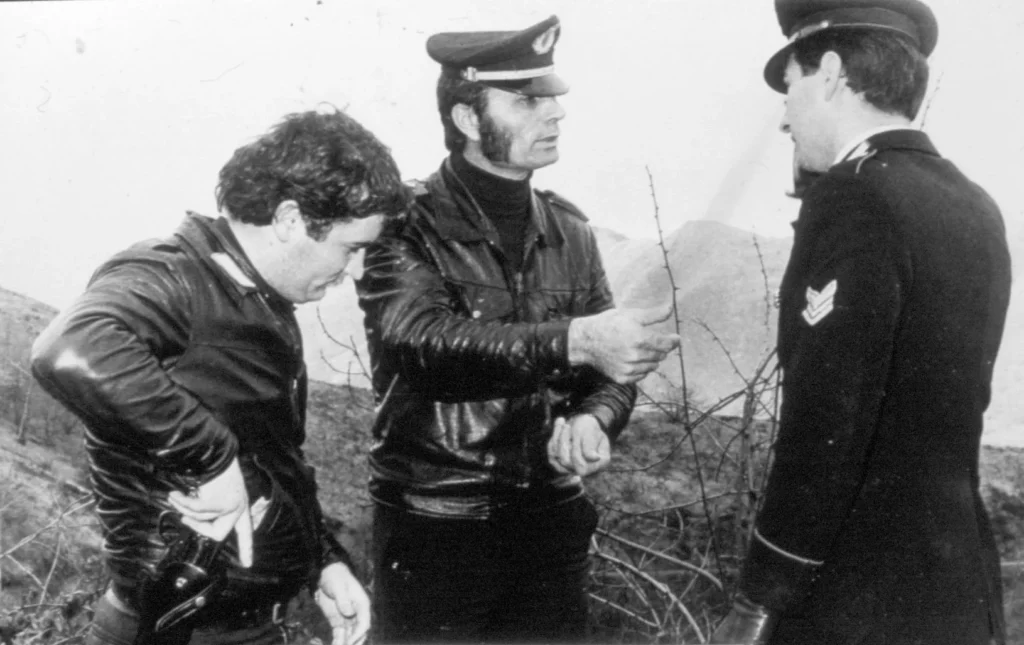
Pier Fortunato Zanfretta (left) talking to investigators on 1979. (Public Domain)
The case, in data
Here are the load-bearing data points that shape the Zanfretta file.
Primary witness: Pier Fortunato Zanfretta, then a private security guard (metronotte) working patrols in the Torriglia area. (RinoDiStefano.com)
Timeframe (commonly cited): Begins the night of 6 December 1978 in Marzano (Torriglia, Genoa). Zanfretta later claimed repeated abductions across 1978–1981. (Corriere della Sera)
Count of alleged abductions: Corriere’s summary describes “about a dozen” across 1978–1981. (Corriere della Sera)
Count of corroborating reports in the area:
52 witness testimonies were reportedly collected by the Carabinieri commander in Torriglia during the inquiry described by journalist Rino Di Stefano (and echoed in multiple later retellings). (RinoDiStefano.com)
Corriere’s overview also references 56 complaints to the Carabinieri by residents who said they saw unusual things in the sky. (Corriere della Sera) These numbers likely refer to different counting rules (unique witnesses vs. filed complaints vs. time window), but they converge on an unusual point: this was not a single-witness claim in a vacuum.
Physical trace claims (documented in reporting): flattened/marked ground at the villa on the first night; later “giant” footprints and a vehicle reportedly hot to the touch after a disappearance episode. (RinoDiStefano.com)
Medical/psychiatric evaluation (as reported): Prof. Giorgio Gianniotti examined Zanfretta multiple times and issued a certificate stating no neurological or psychiatric impairment was found, describing him as in “perfect” condition. (RinoDiStefano.com)
Hypnosis record: A regressive hypnosis session was conducted by Dr. Mauro Moretti in December 1978 (and later material exists as filmed/archived segments in the Zanfretta media ecosystem). (RinoDiStefano.com)
Media escalation: Coverage by Ligurian press, then national attention including TV appearances (most notably “Portobello”). (RinoDiStefano.com)
What makes Zanfretta unusually “data-rich” for an abduction file is not that it has laboratory-grade instrumentation. It is that it has multiple points of contact between lived testimony, law enforcement note-taking, medical evaluation, and contemporaneous journalism. That is a different evidentiary shape than a solitary late-life recollection.
Where it happened: a geography built for ambiguity
Torriglia sits in the Ligurian Apennines inland from Genoa, an environment that can manufacture confusion even before you add anything anomalous: cold, fog, narrow roads, patchy radio reception, and deep darkness broken only by occasional villas and car headlights.
The opening incident is tied to Marzano, a frazione of Torriglia, near a villa referred to as “Casa Nostra” (owned by a Genoese dentist, Ettore Righi, in Di Stefano’s account). (RinoDiStefano.com) A later disappearance episode is tied to the road toward Rossi, where the patrol car and Zanfretta were located after a search in poor weather conditions. (RinoDiStefano.com)
This matters because abduction cases often pivot on “liminal” geography: outskirts, rural edges, transitional roads. The Torriglia file is a liminal landscape by default.
A compressed timeline of key, well-cited moments
Below is a data-first timeline focusing on events that appear consistently in major secondary sources and Di Stefano’s detailed reporting.
Date / Period
Location
What is reported
Evidence type (as available)
Night of 6–7 Dec 1978
Marzano (Torriglia), villa “Casa Nostra”
Zanfretta reports anomalous lights and a non-human entity encounter; a panicked radio exchange is recalled by the operator on duty; he is found later in shock; Carabinieri reportedly document ground impressions and collect many local witness statements about a luminous object.
Regressive hypnosis session conducted by Dr. Mauro Moretti; Zanfretta describes being taken aboard a craft and subjected to procedures.
Hypnosis-derived testimony; later media artifacts. (RinoDiStefano.com)
Night of 27–28 Dec 1978
Road near Rossi (Torriglia area)
Zanfretta radios that he is enveloped in fog and the car is behaving oddly; he disappears; later found distressed; car reported hot; large footprints reported near the vehicle.
Testimony plus reported physical trace observations. (RinoDiStefano.com)
Jan 1979
Genoa / Torriglia
A Carabinieri report is said to be transmitted to judicial authorities (Pretura) as part of the procedural track; telex notifications to national offices are described in Di Stefano’s reporting.
Reported government communications via journalistic sourcing. (RinoDiStefano.com)
28 & 30 Dec 1978 and 31 Jan 1979 (certificate date)
Genoa (hospital/clinic context)
Prof. Giorgio Gianniotti examines Zanfretta and reports no psychiatric/neurological alteration.
In Di Stefano’s detailed reconstruction (originally published in Il Giornale and later archived on his site), the operator on duty, Carlo Toccalino, recalls receiving Zanfretta’s first frantic call “around midnight and a quarter,” with Zanfretta repeating: “Mamma mia, quant’è brutto,” and then insisting: “No, non sono uomini, non sono uomini…” before the communication broke off. (RinoDiStefano.com)
This is not a minor flourish. In abduction investigations, real-time communications (calls, radio, logs) create a different class of anchor than a memory recovered months later. Even if one debates interpretation, the presence of a contemporaneous escalation matters.
Audio in English from a special documentary by the local TV news channel (Antenna Sud | YouTube)
The first night: lights, a being, and a departure
Di Stefano’s account places Zanfretta driving toward the villa, experiencing a sudden vehicle failure (lights and engine), seeing four moving lights in the garden area, and approaching with his service weapon. He later describes a being roughly three meters tall with unusual facial and body features. (RinoDiStefano.com)
Corriere’s later summary captures similar descriptive themes: “Dargos,” very tall, triangular head/eyes, and the notion of interrogation with a helmet-like device that Zanfretta reportedly still fears. (Corriere della Sera)
The second major disappearance: fog, a self-moving car, heat, and prints
The night of 27–28 December is described as operationally different but structurally familiar: distress over radio, disorientation, disappearance, later recovery, and physical anomalies around the vehicle. Di Stefano quotes a Carabinieri responder describing Zanfretta as trembling and crying, with his head and ears unusually hot and his clothes strangely dry given rain and cold. He also reports the roof of the Fiat as hot and the presence of large footprints near the car. (RinoDiStefano.com)
This “heat motif” also appears in Corriere’s summary, which notes the service Fiat being found “torrida” (hot) after alleged abduction episodes. (Corriere della Sera)
The documentation layer: what was officially engaged
UAPedia’s editorial stance treats government and official sources as important but not sufficient on their own. In the Zanfretta case, the most meaningful “official” layer is not a definitive conclusion, but procedural engagement: Carabinieri taking statements, documenting impressions, and transmitting information into a judicial channel.
Di Stefano reports that the Carabinieri inquiry located 52 witnesses who reported a large luminous object in the relevant window, and that a physical impression near the villa was documented in a Carabinieri report using cautious language. (RinoDiStefano.com) Corriere’s overview adds that dozens of residents filed complaints after seeing something unusual, and even references an episode where Carabinieri reportedly fired at a luminous object. (Corriere della Sera)
This is the key investigative takeaway: the file behaved like a wave, not like a solitary hallucination story.
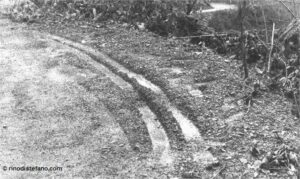
Site of the abduction with foot marks The alleged foot marks were huge
The hypnosis record: evidentiary value and risk
Hypnosis is a recurring tool in abduction research, and a recurring fault line. In the Zanfretta case it became part of the narrative early: Di Stefano describes a hypnosis session with Dr. Mauro Moretti on 23 December 1978, with Zanfretta vocalizing fear and describing procedures aboard a craft. (RinoDiStefano.com)
On Di Stefano’s site there is also a hosted video page explicitly framed as footage of the regression hypnosis (“Non siete esseri umani…”). (RinoDiStefano.com)
From a data-first standpoint, hypnosis-derived material should be handled as structured testimony, not as a truth-machine:
It can reveal consistent motifs and subjective certainty.
It can also be contaminated by suggestion, prior media exposure, and the brain’s tendency to “complete” narratives under altered states.
The Zanfretta case is therefore strongest when hypnosis content is treated as one layer among: real-time radio panic, third-party witness reports, and physical anomalies described by multiple parties.
Books and the “research infrastructure” around the case
A case becomes “global” when it acquires infrastructure: books, translations, media packages, and repeatable citations.
Rino Di Stefano’s central text
Di Stefano’s book, Il caso Zanfretta: La vera storia di un incredibile fatto di cronaca (6th revised edition, 2014), is the most detailed single-author narrative framework for the case in Italian, and he provides publication specs and ISBNs on his site (including a 340-page print edition). (RinoDiStefano.com)
Di Stefano also explicitly states he followed the events as a working crime reporter and sought hypnosis sessions as part of his investigative approach, while emphasizing that the case had a judicial track and multiple witnesses. (RinoDiStefano.com)
Internationalization and translation
Di Stefano notes English availability (The Zanfretta Case) and other translations in his long-form 2017 retrospective on the case’s reach. (RinoDiStefano.com)
This matters because once a narrative is translated and circulated, it begins to influence the global “abduction template.” Later witnesses elsewhere can pick up details unconsciously, and skeptics can argue feedback loops. The Zanfretta file sits at that crossroads: it is old enough to be foundational, and famous enough to become culturally contagious.
Aftereffects: what the story did to the witness
Abduction claims are often assessed like puzzles: did it happen, what was it, what does it mean. The human cost becomes an afterthought. In the Zanfretta story, the cost is not incidental. It is baked into the reporting.
Di Stefano describes Zanfretta as disturbed by the attention, complaining of strangers calling to mock him, while insisting: “I don’t know what it was… but I saw it. I’m not a liar.” (RinoDiStefano.com) Corriere’s later summary adds a durable psychological residue: Zanfretta reportedly still feels terror connected to the “helmet” device he said was used on him during interrogations. (Corriere della Sera)
Di Stefano’s book page also frames occupational jeopardy and later life disruption as part of the arc, emphasizing that Zanfretta risked dismissal and that the experience marked him socially and professionally. (RinoDiStefano.com)
Medical framing without dismissal
One of the most important “aftereffects” datapoints is not a symptom, but a counterclaim: that Zanfretta was medically evaluated and not judged psychiatrically impaired. Di Stefano reproduces the existence and thrust of Prof. Gianniotti’s certificate, describing Zanfretta as found in “perfect” neurological and psychic condition. (RinoDiStefano.com)
This does not prove abduction. It does reduce the convenience of writing the case off as simple madness.
Why this case refuses to die: the wave problem
Many abduction narratives can be “collapsed” by skeptics into a single explanatory bucket: sleep paralysis, fantasy-proneness, hoaxing, misidentification, suggestibility. The Zanfretta case resists collapse because it behaves like a cluster:
A primary witness experiences multiple episodes and escalating phenomena.
Other locals report anomalous lights in the same time window.
Physical anomalies are repeatedly alleged (ground traces, heat, footprints).
Law enforcement is pulled in, not to validate aliens, but to document an event that citizens are reporting in quantity.
Corriere’s mention of dozens of complaints and a Carabinieri shooting incident is especially telling in this respect: whatever the ultimate cause, a portion of the community experienced something persistent enough to generate reporting behavior. (Corriere della Sera)
Implications for UAP research and public policy
Abduction research needs better “rapid capture”
If a case is unfolding across multiple nights, the most valuable data is perishable: weather logs, radio tapes, vehicle inspections, soil sampling, witness separation protocols, and time-synced interviews. The Zanfretta file shows what happens when a wave hits before modern capture standards: you get testimony density, but you do not get instrumentation density.
Police engagement is evidence of seriousness, not of origin
Carabinieri engagement and judicial archiving are meaningful as signals of procedural seriousness and of a community-impacting event. They are not, by themselves, adjudications of non-human agency. The right way to use this layer is as corroboration that something was reported, investigated, and documented.
The “template effect” and cross-case contamination
Once Zanfretta’s “Dargos” and helmet interrogation imagery enters global media, it becomes part of the abduction vocabulary. Future cases may echo it through genuine similarity, cultural absorption, or both. Investigators should track who had exposure to which narratives, and when.
Mental health support should not require agreement on metaphysics
The Zanfretta aftereffects show the ethical need for experiencer support that does not hinge on taking a position about “what it was.” The trauma can be real even when interpretation remains disputed.
Claims taxonomy
Verified (supported by converging reporting and documentation that the events were reported/investigated; not verifying non-human origin)
Zanfretta was on patrol in the Torriglia area and made distress calls via radio that were recalled by the operator on duty, including the “non sono uomini” line in Di Stefano’s report. (RinoDiStefano.com)
Carabinieri inquiry activity is described as including collection of many local witness statements and documentation of a ground impression near the villa. (RinoDiStefano.com)
A medical evaluation by Prof. Giorgio Gianniotti is reported as finding Zanfretta neurologically and psychiatrically normal. (RinoDiStefano.com)
The case gained major media attention and Zanfretta appeared in prominent TV/media contexts (including “Portobello”). (RinoDiStefano.com)
Probable (strong but incomplete; plausible prosaic explanations not fully excluded)
A wave of luminous-object sightings occurred around Torriglia/Marzano, reflected in dozens of complaints and multiple witness statements. (Corriere della Sera)
The “heat and trace” motif (vehicle reportedly hot; large footprints) reflects either a repeatable anomaly or a repeatable narrative element; multiple sources present it, but primary forensic records are not fully public. (RinoDiStefano.com)
Disputed (core abduction claims and specific non-human details)
That Zanfretta was literally taken aboard a craft by “Dargos” multiple times across 1978–1981. (Corriere della Sera)
That hypnosis sessions retrieve accurate factual memories of events rather than reconstructive narratives under suggestion risk. (RinoDiStefano.com)
Claims involving an “artifact” or “sphere” custodianship (reported within the extended narrative ecosystem) remain unverified publicly. (RinoDiStefano.com)
Misidentification
No single, demonstrable misidentification has been established that cleanly explains the cluster behavior, the multi-witness reporting, and the repeated anomaly motifs as summarized in major sources. This category remains a live possibility for specific sub-events (for example, a particular light source or aircraft), but not a comprehensive resolution on current public data. (Corriere della Sera)
Hoax
Not established. The public record summarized here includes substantial social cost to the primary witness and a broader witness environment, which does not eliminate hoaxing but raises its complexity threshold. (RinoDiStefano.com)
Speculation labels
These are clearly separated from the evidence summary above.
Hypothesis
A localized UAP wave occurred in the Torriglia area in late 1978, producing repeated luminous-object sightings by multiple residents, with one primary witness experiencing direct contact and missing-time style episodes that included physical anomalies around his vehicle. This hypothesis is consistent with the “cluster” behavior described in both journalistic and secondary summaries, but it is not instrument-confirmed. (Corriere della Sera)
Witness interpretation
Zanfretta interpreted his experiences as repeated abductions by non-human beings (“Dargos”), including interrogation using a helmet-like apparatus and medical examination aboard a craft. (Corriere della Sera)
Researcher opinion
Rino Di Stefano argues, from the stance of a working reporter, that the case cannot be treated as purely imaginary because of the presence of a judicial track, numerous witnesses, and recurring physical anomalies reported around the episodes. (RinoDiStefano.com)
Image credits
Corriere.it feature image associated with the Zanfretta card. (Corriere della Sera)
Archival photographs on the Rino Di Stefano pages are credited there to photojournalist Luciano Zeggio. (RinoDiStefano.com)
Liguria map image used above sourced from an external Liguria maps site.
External links and sources
(External URLs are provided with utm_source=uapedia.ai as requested.)
On a clear night above Lake Albano, two silver domes sit like punctuation marks on the horizon of Castel Gandolfo. Inside, historic telescopes rotate and open.
Vatican Museum tours emphasize to visitors walking through meteorite samples, century-old optics, and papal photographs that look strangely modern in their message: the Church watches the sky, and it has been watching for a long time.
So why does the Vatican Observatory keep reappearing in today’s UAP conversation?
Because the “Vatican” is not one thing. It is a scientific institute (the Specola Vaticana), a global pastoral network, and an archive system measured in dozens of miles of shelves. And in the UAP era, those three layers get collapsed into a single question that sounds simple but is not.
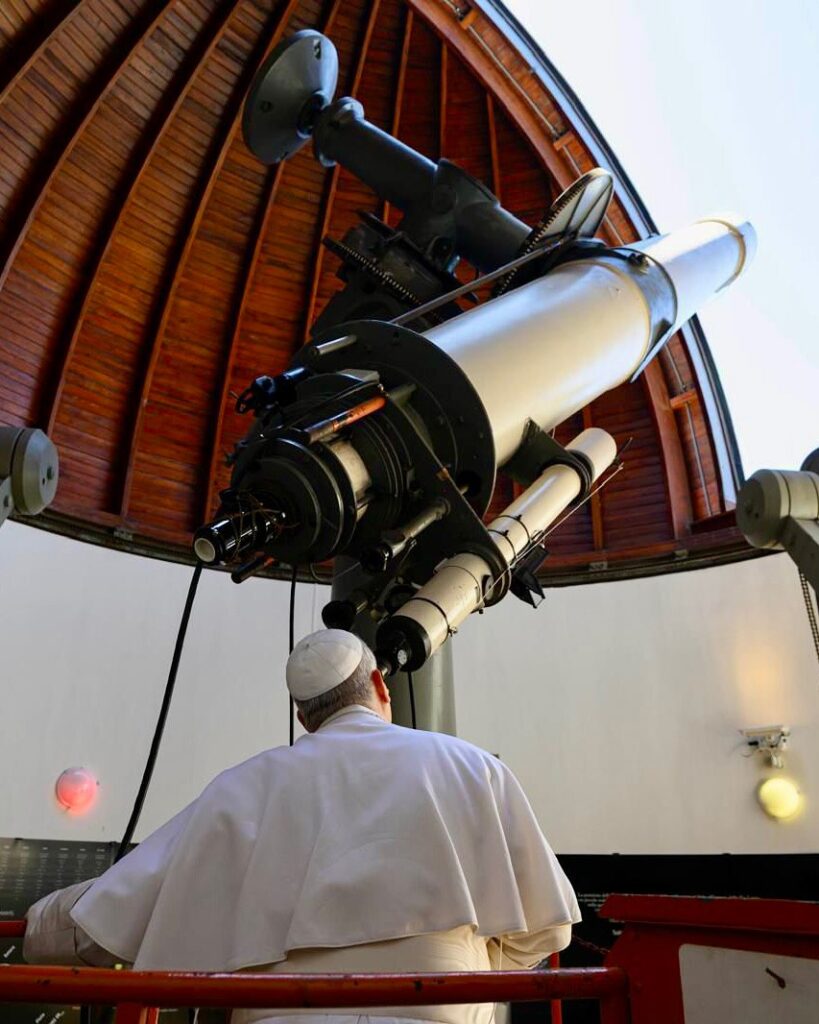
Pope Leo XIV visited the Vatican Observatory in Castel Gandolfo (2025) on the anniversary of the Apollo 11 moon landing, which took place on July 20, 1969. (Vatican Media)
What does the Vatican know?
This article takes a data-first approach and treats “knowledge” as something that can be broken into measurable channels: instruments, records, testimony, institutional missions, and incentives. We will separate verifiable infrastructure from interpretive leaps, and we will label speculation clearly.
What we can verify in public record
Here are the most relevant hard facts, with the minimum narrative necessary.
There is an active Vatican astronomical institute with multiple sites
A Vatican Museums announcement describing the Specola’s public reopening lays out the modern structure clearly:
Origins tied to late 1500s calendar reform work under Pope Gregory XIII, with the Gregorian calendar promulgated in 1582.
The observatory moved from Rome to Castel Gandolfo in the early 1930s due to urban growth and light pollution under Pope Pius XI.
A second research center, the Vatican Observatory Research Group, was founded in Tucson, Arizona in 1981.
In 1993, the Vatican Advanced Technology Telescope (VATT) on Mount Graham (Arizona) was completed in collaboration with Steward Observatory.
This is important because it grounds the Vatican Observatory as a real scientific institution with a real observational footprint. It is not a metaphor.
The VATT is a known telescope with published specs and location
The VATT’s own technical page provides specific numbers and confirms the telescope is optical and infrared, achieved first light in 1993, and is operated by the Vatican Observatory in partnership with the University of Arizona.
The Vatican Observatory’s own telescope overview adds financing context: it describes the VATT as paid for by private donations, and describes the role of the Vatican Observatory Foundation.
The Vatican Observatory participates in meteor monitoring via dedicated cameras
The Vatican Observatory publicly documents its participation in meteor camera monitoring near Tucson, including camera identifiers and site descriptions.
For UAP research, this is one of the few Vatican-linked systems that resembles continuous “all-sky” surveillance, even if its mission is meteor science.
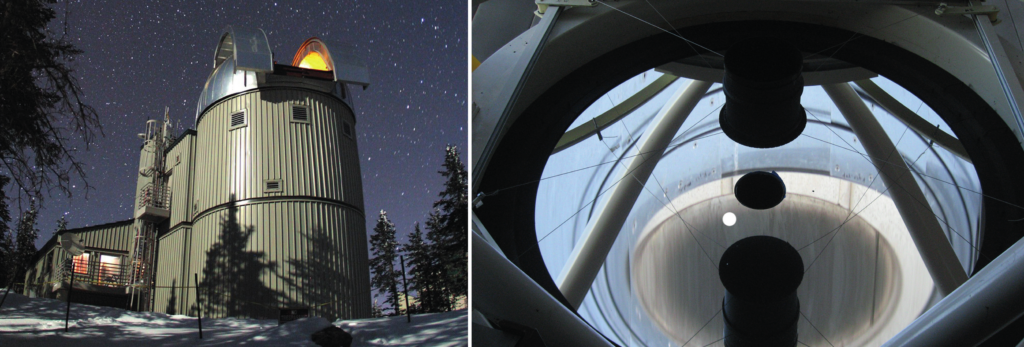
The Vatican Advanced Technology Telescope (VATT) exterior on Mount Graham features a unique, compact dome housing its 1.83-meter Alice P. Lennon Telescope, situated within the Mt. Graham International Observatory (MGIO) complex in Arizona. (Vatican Media)
Vatican institutions have hosted scientific discussion on astrobiology and life
The Pontifical Academy of Sciences’ “Astrobiology” conference final statement frames astrobiology as a multidisciplinary study of life’s origins, evolution, and distribution, explicitly treating the possibility of life beyond Earth as a scientific question.
This does not equal “UAP knowledge,” but it does establish a pattern: the Vatican’s scientific culture is willing to host frontier questions about life in the universe without theological panic.
Multiple credible voices disagree on whether Vatican archives contain UAP-relevant material
A Catholic News Service report hosted by USCCB documents the current friction point:
Marco Grilli, secretary to the prefect of the Vatican Apostolic Archives, says he does not know where claims of Vatican involvement in an “international cover-up” come from and describes such requests as laughable.
Diana Walsh Pasulka says the archives are “full of reports” of paranormal events including “orbs” reported by nuns and other aerial phenomena, and argues some could be reinterpreted as UAP-type events rather than miracles.
Garry Nolan describes the Vatican as possibly “the oldest library system of paranormal or supernatural knowledge still extant,” and links that to hope about humanity surviving existential threats.
The archives’ staff explicitly deny that any holdings pertain to extraterrestrial life and say scholars seeking such material should be dissuaded.
That is not a settled question. It is an evidentiary dispute, and it must be treated that way.
Does the Vatican Observatory likely have UAP data?
Let’s treat this like an analyst would: what instruments exist, what are they optimized to detect, and how do typical UAP characteristics intersect with those detection envelopes.
Observatory assets most relevant to UAP-like transients
Asset
Location
What it’s designed to capture
UAP relevance
Evidence strength
Barberini Domes historic telescopes
Castel Gandolfo
Astronomical observation and public education
Low for near-field UAP, higher for cultural signaling
Strong (public program and descriptions)
VATT (optical/infrared telescope)
Mount Graham, Arizona
Deep-sky and targeted astronomical observation
Low-to-moderate: narrow field of view; could capture streaks but not optimized for local airspace
Strong (published specs, operators, first light)
Meteor cameras
Near Tucson, Arizona
Wide-field meteor tracking
Moderate: continuous sky monitoring can catch fast transients
Strong (public documentation and camera IDs)
Key inference
Traditional astronomical telescopes are not built to catch most reported UAP because many UAP reports involve low-altitude objects, short durations, or erratic motion. A telescope pointed at a faint galaxy is intentionally blind to 99.999 percent of nearby sky. This makes the VATT an unlikely “UAP detector” by design, even though in rare cases it could capture anomalous transients as streaks or artifacts.
Meteor cameras are different. They are built to catch sudden, bright, fast transients across wide sky coverage. If a UAP behaves like a “meteor-like transient” in brightness and speed, meteor cameras are one of the better passive systems to detect it. The Vatican Observatory’s documented meteor camera program therefore matters in a UAP context.
What the Vatican Observatory says about studying UAP
A critical piece of this puzzle is that the Vatican Observatory’s leadership has publicly stated that the institute does not study “UFOs” (UAP in UAPedia language). Jesuit astronomer Guy Consolmagno is quoted saying he does not believe “UFOs are alien spacecraft” due to lack of better evidence, despite the prevalence of cameras.
That testimony is not “case closed.” It does, however, establish a documented institutional posture: the observatory is not currently positioned as an official UAP research node.
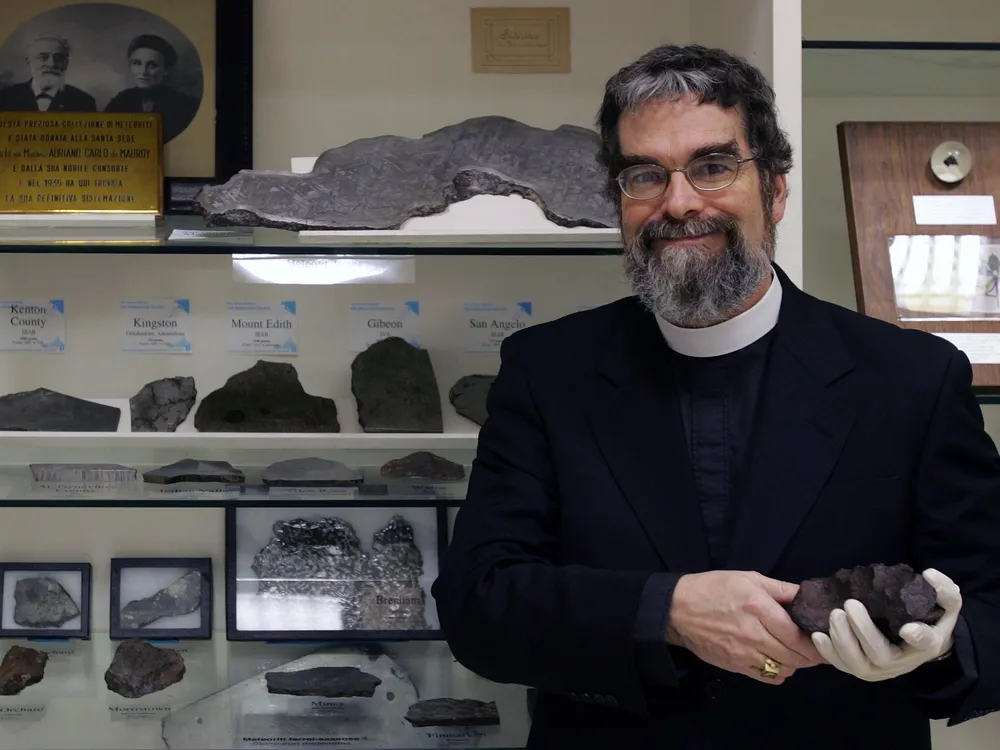
Guy Consolmangno, the Vatican’s Chief Astronomer, is an MIT graduate who studies the stars for the Catholic Church. (Vatican Media)
The Vatican Observatory’s mission creates a paradox
The Vatican Observatory exists partly to demonstrate that the Church supports “good science.” A Vatican City State interview with Consolmagno describes the observatory’s expanding research output and outreach mission and emphasizes its role as a stable patron of scientific work.
That mission creates a paradox for UAP:
If UAP are real and display non-conventional capabilities, they represent one of the most important scientific questions imaginable.
If the observatory fully embraced UAP as an investigation target without strong evidence standards, it could be perceived as compromising scientific credibility.
The result is a predictable equilibrium: openness to life in the universe, caution on UAP claims, and a preference for publicly defensible datasets.
Vatican Archives
The Vatican’s other skywatching system is paper
If the Vatican Observatory represents a physical telescope, the Vatican Apostolic Archives represent a different kind of instrument: a centuries-long collection and filtering mechanism for extraordinary claims.
The archives are described as containing about 50 miles of shelves.
Archive staff acknowledge miracles exist in holdings, but deny holdings on extraterrestrial life.
Researchers (not the archive itself) believe that within miracle reports and historical records there may be patterns relevant to UAP and paranormal phenomena.
Witness account: Marco Grilli (Archives)
Grilli’s statements matter because they represent the gatekeeping function. He says he does not know where claims of Vatican involvement in a cover-up originate, and he likens requests to read such material to requests for impossible personal letters, adding, “One can laugh at it.”
From a data-first standpoint, Grilli’s testimony supports a limited claim:
The Vatican Apostolic Archives receive inquiries about UAP.
The archives’ leadership wants to discourage UAP-focused fishing expeditions.
It does not prove what is or is not in the archive. It establishes policy posture.
Witness account: Diana Walsh Pasulka
Pasulka provides a different kind of testimony, grounded in religious studies and archival imagination. She says the archives contain reports of paranormal events, giving examples such as nuns reporting “orbs” entering cells and “flying houses,” and she argues these may map better to “UFO-type occurrences” than to conventional Catholic miracle categories.
This is not sensor evidence. It is an interpretive framework applied to historical reports.
It is also one of the most actionable research proposals currently on the table: treat miracle dossiers as a long-duration dataset of anomalous claims, and reclassify them with modern UAP taxonomies.
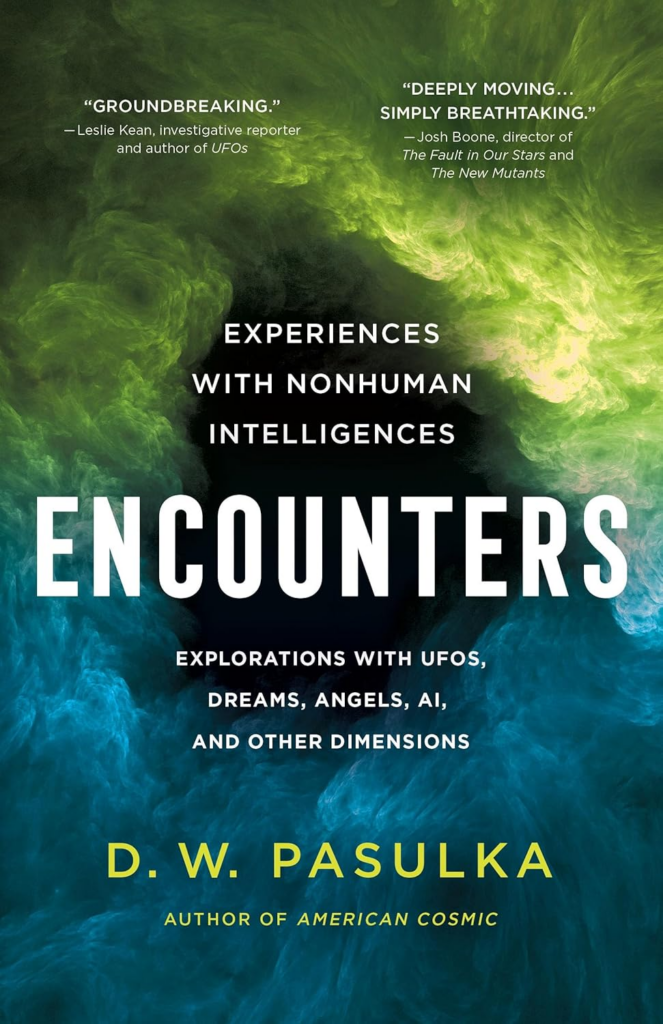
Encounters book cover by Diana W. Pasulka released Nov. 2023
Witness account: Dr. Garry Nolan
Nolan’s comments are explicitly speculative but revealing about why elite scientists care about the Vatican archive as a system. He calls it potentially “the oldest library system of paranormal or supernatural knowledge still extant” and suggests that the presence of “something” could function as hope for civilizational survival.
From an investigative perspective, Nolan is describing a motive: the archive is attractive because it might contain high-quality, pre-modern “testimony workflows,” including sworn statements and institutional verification processes.
What the archive dispute actually tells us
The dispute is not whether the Vatican has “aliens in a file cabinet.” The dispute is whether:
pre-modern witnesses described aerial and luminous anomalies, and
those descriptions were captured with enough contextual detail to be useful today.
The archive staff’s denial is about “extraterrestrial life.” Researchers are often asking about “anomalous phenomena.” Those are not the same query.
The global pastoral network
If UAP touch humans, the Church will hear about it. Whether or not the Vatican Observatory collects UAP data, the Catholic Church is a global, distributed listening network. Priests and religious receive confessions, spiritual direction narratives, and crisis accounts. That system tends to capture experiences that are confusing, terrifying, or transformative.
This is where “after effects” begin to matter more than “craft.” Even the USCCB report frames UAP research interest as intersecting with religious experience: Dr. Jeffrey Kripal notes that religious phenomena appear across encounter narratives, and Father Francis Tiso discusses building bridges between miracle research and the encounter narrative.
A Vatican institution does not need a radar to possess institutional awareness. It may simply receive enough stories over time to recognize pattern clusters.
Theology and cultural readiness
The Vatican has already rehearsed “life beyond Earth” as a non-crisis
A key reason the Vatican repeatedly surfaces in UAP discourse is that the Catholic intellectual tradition has an established mechanism for “new worlds”: it has argued with itself for centuries about cosmology, plurality, and how revelation interacts with discovery.
This is where Vatican Observatory voices become culturally powerful, regardless of whether they have UAP sensor data.
José Gabriel Funes and “brother extraterrestrials”
Reporting on the Vatican Observatory’s posture has highlighted statements by Jesuit astronomers that belief in extraterrestrial life is not inherently incompatible with Catholic faith, and that other beings could be understood as part of creation.
Even when these statements are framed around “aliens” or “life,” their downstream effect is UAP-relevant: they reduce the probability that disclosure of non-human intelligence would create immediate doctrinal collapse.
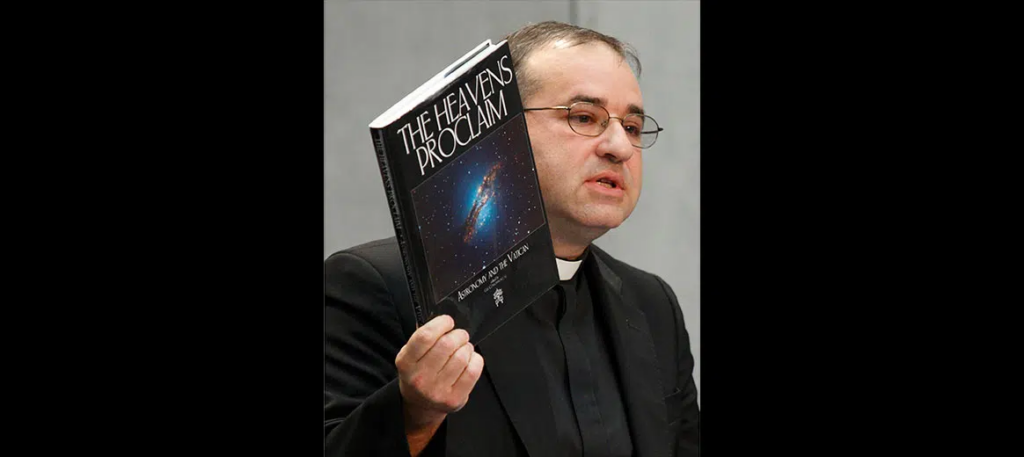
Jesuit Fr. José Funes, ex-director of the Vatican Observatory, holds up ‘The Heavens Proclaim’ book – Oct. 13, 2009 (Paul Haring | CNS)
Astrobiology as a Vatican-hosted frontier
The Pontifical Academy of Sciences’ astrobiology framing is sober and scientific: life’s distribution is an open question, and the field is multidisciplinary.
This matters because it shows the Vatican can host serious scientific inquiry into life beyond Earth without turning it into a theological emergency.
Where Diana Pasulka’s work fits
Pasulka’s thesis in one line
Pasulka’s body of work treats modern UAP belief and experience as a form of emergent religion, shaped by technology, media, institutions, and narrative structure.
Her UNCW faculty profile explicitly situated her as a scholar of religion, technology, and culture, and identifies her as the author of “American Cosmic” and “Encounters,” both focused on the evolving relationship between belief and emerging realities.
Why Pasulka is consequential to Vatican-UAP investigations
Pasulka’s contribution is not a leaked document. It is a method:
treat “miracle” reports and “encounter” reports as comparable cultural artifacts
examine how institutions classify them
ask what changes when a classification system updates
Her statement that “orbs that are bothering nuns in the 1800s” are not being prioritized for digitization is not just a colorful quote. It is a research bottleneck.
If there is Vatican “knowledge” relevant to UAP, Pasulka’s work implies it may be buried in misfiled categories, not locked behind a sci-fi vault door.
Books and primary reading list
A data-first investigation benefits from identifying what is (a) institutional, (b) testimonial, and (c) interpretive.
Institutional and Vatican-adjacent
The Vatican Observatory’s telescope and research footprint (official technical pages and institutional descriptions).
“A Jesuit’s Guide to the Stars” by Guy Consolmagno (for understanding the observatory’s self-presentation and science-faith synthesis).
UAP-and-religion research
“American Cosmic” (Pasulka, 2019) as referenced in CNS reporting and in her institutional profile.
“Encounters” (Pasulka) via publisher listing.
“Extraterrestrial Intelligence and the Catholic Faith” (Paul Thigpen), documented via Catholic Scientists’ coverage and publisher materials.
Religious groups and institutions shaping the Vatican-UAP interface
The Jesuits (Society of Jesus)
The Vatican Observatory is heavily associated with Jesuit scientists and a tradition of scientific engagement. Vatican sources describe an active community of Jesuit astronomers and adjunct scholars contributing across multiple fields.
Pontifical Academy of Sciences
The academy’s involvement in astrobiology discussions positions it as a convening body for frontier science dialogue that could become relevant if UAP research matures into mainstream inquiry.
Vatican Museums and the public-facing Specola narrative
By reopening tours and framing the observatory as one of the oldest active astronomical observatories, Vatican Museums effectively amplify the “Church watches the sky” message to a mass audience.
The Sol Foundation and emerging interfaith dialogue
Sol co-founders and leadership are confident “at least some” UAP are genuine vehicles of non-human origin and that initiating interfaith dialogue is a primary objective, explicitly naming the Vatican as an engagement target.
A Sol Foundation white paper further proposes that Vatican archives may include holdings relevant to UAP studies and that Vatican media could play a role in informing Catholics amid confusion.
This is not a Vatican endorsement. It is an external initiative attempting to interface with Vatican institutions.
After effects
What happens to people and institutions after contact narratives collide with faith?
In UAP studies, “after effects” often get reduced to the experiencer. In the Vatican context, there are at least three after-effect layers.
Individual psychological and spiritual impact
If an experiencer interprets an event as angelic, demonic, extraterrestrial, or “something else,” the interpretive frame can affect:
fear versus curiosity
isolation versus community support
whether the experience is integrated as vocation, trauma, or anomaly
Reporting already shows the range inside Catholic discourse, from demons to psyops to “aliens,” and that debate itself can be destabilizing for believers seeking a stable frame.
Institutional trust dynamics
If “disclosure” occurs in a way that makes religious institutions look either complicit or unprepared, trust can erode. Conversely, if religious institutions provide calm interpretive frameworks, they can reduce panic.
The Vatican’s long-running public posture that faith and cosmic plurality can coexist suggests it may be comparatively resilient to the psychological shock of “life exists elsewhere.”
Cultural ontological shock
Ontological shock is not only fear. It is the sudden collapse of categories that previously organized reality: human exceptionalism, the meaning of salvation history, the uniqueness of incarnation, and the stability of “nature.”
In Catholic terms, ontological shock is amplified or softened depending on whether the new reality is framed as:
part of creation (continuity), or
a rival cosmology (rupture)
The Vatican Observatory’s very existence is a cultural signal for continuity: the Church has already trained millions of people to accept that the universe is vast, ancient, and still meaningful.
Implications for UAP research
If the Vatican Observatory is not a UAP lab, why should investigators care?
Because institutions shape datasets.
Implication 1: The Vatican’s archives may be an underused long-duration dataset
Even if archive leadership denies “extraterrestrial life” material, the archives likely contain large volumes of sworn testimony and investigative dossiers related to extraordinary claims, because that is how canonization and miracle verification historically functioned. CNS reporting notes both the presence of miracle accounts and the Church’s increasing rigor since the Renaissance.
From a UAP research perspective, the value is not “aliens.” The value is:
structured testimony
named witnesses
dates and locations
institutional adjudication notes
cross-references to local authorities and clergy
That is exactly what modern UAP databases often lack.
Implication 2: Meteor cameras create a narrow but real technical overlap
The Vatican Observatory’s meteor camera program is public and technical. For researchers seeking triangulated sky transients, this is the kind of system that could, under the right conditions, capture anomalous events without human interpretation contamination.
A practical next step for serious investigators is methodological, not sensational:
define what kinds of “UAP-like transients” would appear in meteor camera footage
build filters that separate aircraft/satellites/meteors
look for non-conforming motion profiles
Implication 3: The Vatican could become a high-leverage node for interfaith stability
Sol Foundation leadership explicitly frames interfaith dialogue as necessary if UAP represents non-human intelligence.
Even if you disagree with Sol’s confidence level, the sociological point remains: a disclosure scenario that ignores religion is incomplete. The Vatican is the world’s most visible single religious institution with an existing science interface.
Claims taxonomy
This section classifies the major claims discussed in this article using UAPedia’s taxonomy.
Verified
The Specola Vaticana operates as an active scientific institute with public tours at Castel Gandolfo and documented historical relocations and expansions (including Tucson and the VATT).
The VATT exists, has published specifications, achieved first light in 1993, and is operated by the Vatican Observatory in partnership with the University of Arizona.
The Vatican Observatory documents a meteor camera program near Tucson with publicly listed camera identifiers.
Vatican Apostolic Archives staff state they have no documents regarding extraterrestrial life and discourage such research attempts.
Diana Walsh Pasulka and Garry Nolan publicly claim the archives may contain records relevant to anomalous phenomena and describe the archive as significant to that inquiry.
Probable
The Vatican’s miracle-related dossiers and historical records likely contain descriptions of luminous aerial anomalies that could be reclassified under modern UAP categories, even if they were originally filed as religious phenomena. (Probable based on the documented presence of miracle accounts and the scale of the archives, but not proven for UAP specifically.)
Disputed
Claims that the Vatican was involved in an international cover-up related to a recovered craft. Archive staff explicitly reject or mock the provenance of these claims.
The broader claim that the Vatican Apostolic Archives contain direct evidence of extraterrestrial life. Archive staff deny it; researchers argue relevant material may exist under different classifications.
Legend
Popular narratives that flatten “the Vatican” into a single secret-keeping entity with unified control over UAP knowledge. These narratives persist culturally, but the verifiable record shows multiple institutions with different missions, and no confirmed single “UAP vault” has been produced publicly.
Misidentification / Hoax
No specific misidentification or hoax claim is asserted as fact in this article. Individual viral claims should be evaluated case-by-case.
Speculation labels
Hypothesis
The Vatican Observatory itself is unlikely to possess a large, curated cache of UAP sensor data because its primary instruments are optimized for astronomical research rather than local airspace monitoring. However, its meteor camera infrastructure could accidentally capture rare anomalous transients, and its long-running outreach likely generates correspondence that includes UAP reports. (Instrument- and workflow-based inference grounded in the observatory’s published programs.)
Witness interpretation
Pasulka interprets certain archival miracle-like reports (orbs, levitation-adjacent stories, aerial anomalies) as potentially UAP-type occurrences rather than traditional miracles. This interpretation is meaningful as a research lens, but it remains interpretive until specific documents are surfaced, catalogued, and independently evaluated.
Researcher opinion
Nolan’s framing of the Vatican archive as the oldest extant “paranormal knowledge” system is best understood as a claim about institutional continuity and recordkeeping rigor, not proof of any single UAP case. It is a strategic argument for why elite researchers want access.
Pontifical Academy of Sciences. (2009). Astrobiology: Final statement.
United States Conference of Catholic Bishops, Catholic News Service. (2024, June 18). Angels or aliens? Some researchers say Vatican archives hold UFO secrets.
Vatican Museums. (2023, August 3). Visits to the Pope’s astronomical observatory at Castel Gandolfo are underway.
Vatican Observatory. (n.d.). The Vatican Observatory meteor cameras near Tucson, AZ.
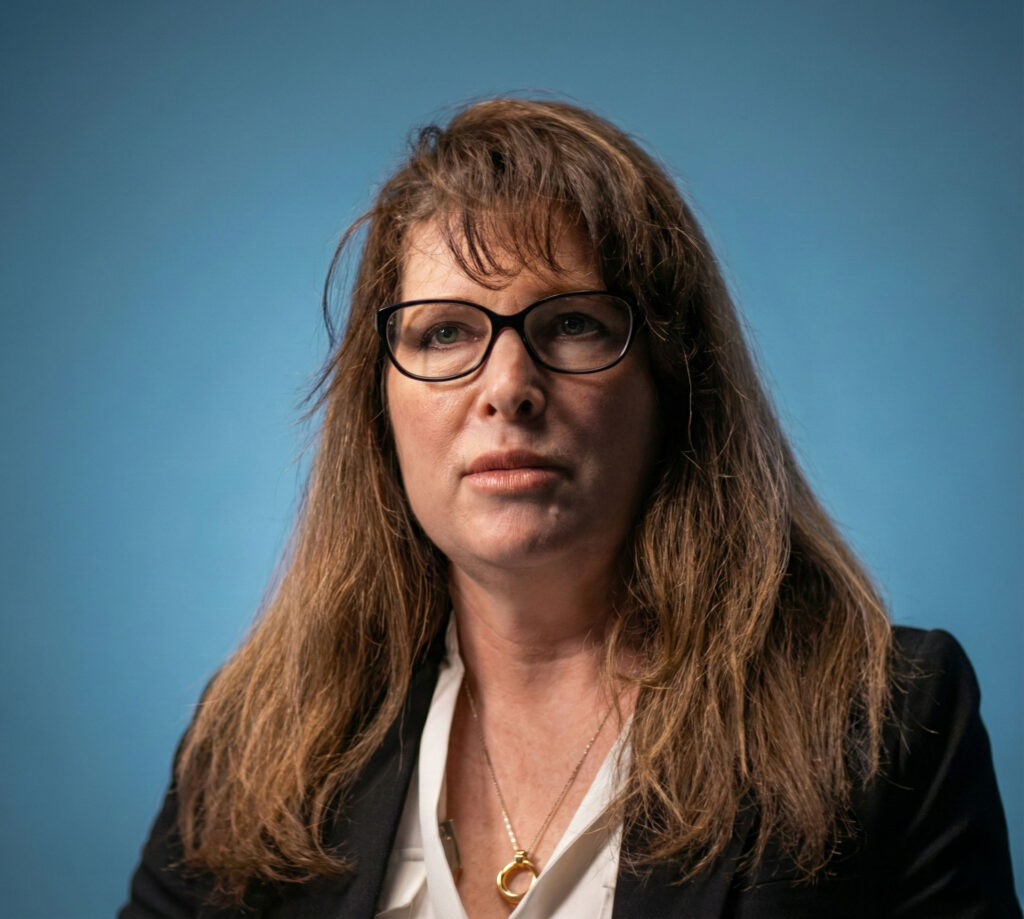
Diana Walsh Pasulka is an American religious studies scholar and writer whose work has become central to how academia and the wider culture think about UAP, non‑human intelligences, and modern belief. She is a Professor of Religious Studies at the University of North Carolina Wilmington (UNCW) and a leading voice on the intersection of religion, technology, media and UAP experiencer narratives.
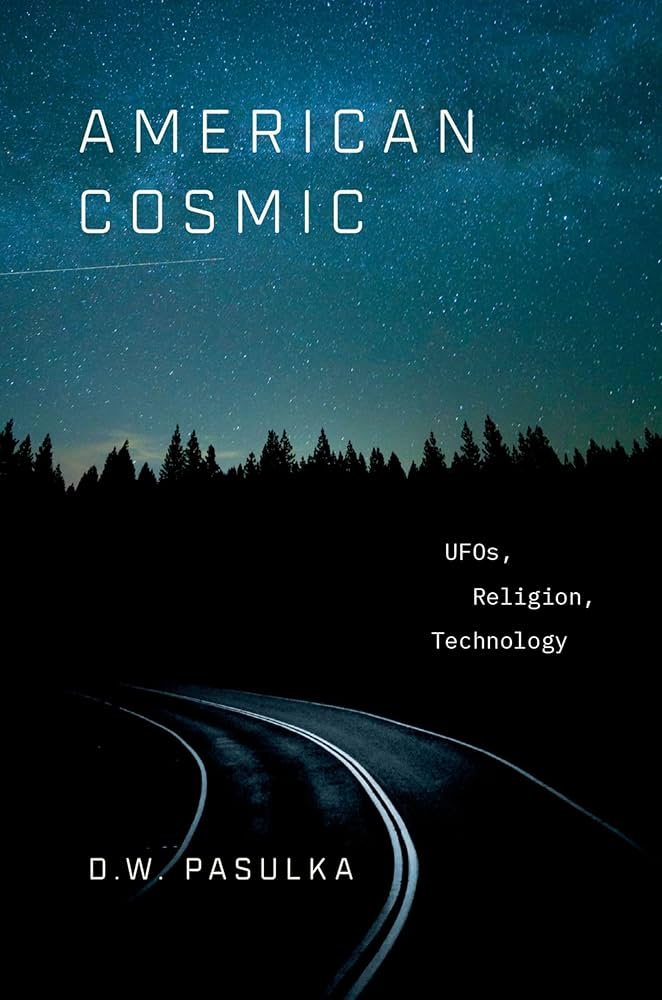
Her books American Cosmic: UFOs, Religion, Technology (2019) and Encounters: Experiences with Nonhuman Intelligences (2023) helped normalize serious study of UAP within universities and public debate. They frame the phenomenon as a living, evolving religious landscape in which scientists, intelligence insiders, technologists and ordinary experiencers form a de‑facto “contact tradition” around non‑human intelligences and anomalous events. (Oxford University Press)
Pasulka’s work is also anchored in Catholic history, purgatory doctrine and death studies, and she remains a practicing Roman Catholic while engaging deeply with UAP and other anomalous experiences. (Wikipedia)
Diana Walsh Pasulka (IMDB | UAPedia)
Early life and education
Public sources reveal little about Pasulka’s birth year or hometown, but she has described growing up in a secular family in California with a Jewish mother and Irish Roman Catholic father. She later embraced Catholicism herself and today identifies as a practicing Roman Catholic. (Wikipedia)
Her formal education tracks a classic path through elite American religious studies programs:
B.A., University of California, Davis
M.A., Graduate Theological Union, Berkeley
Ph.D. in Religion, Syracuse University (degree year 2003) (Wikipedia)
Graduate work at Syracuse focused on Catholic devotional culture, saints, and afterlife beliefs, which became the basis for her first monograph on purgatory. (Syracuse Arts & Sciences)
Early academic career: purgatory, death, and Catholic culture
Pasulka’s first major book, Heaven Can Wait: Purgatory in Catholic Devotional and Popular Culture (Oxford University Press, 2014), examines seven centuries of Catholic reflection on purgatory as a real or symbolic space. The study looks at devotional practices, visions, pilgrimages, material culture and “purgatory apostolates” that continue to treat purgatory as an actual place. (Internet Archive)
This work established several threads that would later reappear in her UAP research:
How invisible realms become mapped onto real landscapes and physical objects
How visionary experiences generate new religious movements
How official Church doctrine and popular, experiential religion interact
By the time Heaven Can Wait was reviewed in journals like The Journal of Religion and Catholic publications, Pasulka was recognized as a specialist in Catholic doctrine, death, and devotional practice. (Chicago Journals)
She also served as principal investigator for a three‑year Teaching American History grant (starting 2009), gaining experience managing publicly funded historical projects and collaborating with educators. (Wikipedia)
Religion, technology, and the road toward UAP
From Catholic afterlife beliefs, Pasulka turned increasingly toward media, digital culture, and what technology does to religious imagination. She co‑edited two influential reference works that bridge emerging technologies with questions about humanity and the supernatural:
Posthumanism: The Future of Homo Sapiens (2018, Macmillan Reference USA), co‑edited with historian Michael Bess, surveying philosophical and ethical issues around bioenhancement and human modification. (Google Books)
Believing in Bits: Digital Media and the Supernatural (2019, Oxford University Press), co‑edited with Simone Natale, arguing that religious belief and digital media are now tightly interwoven and that ideas like telepathy and spirit communication have migrated into how we imagine contemporary technologies. (OUP Academic)
On Academia.edu and in journal articles she explored topics like 19th‑century child hagiographies and the impact of film on religious memory, foregrounding how media shape belief and perception. (Academia.edu)
By the early 2010s, she had begun applying these tools to UAP: examining not only what people claim to see, but how those events are framed by film, television, the internet and big‑data infrastructures. A 2016 Oxford University Press blog Q&A with Jacques Vallée already shows her probing how UAP research might change in an era of large, networked datasets. (OUPblog)
Entering the UAP field
According to reporting by the North State Journal, Pasulka began investigating UAP as an academic topic around 2012, at a time when such work was still seen as a professional risk. (The North State Journal)
Rather than approaching UAP as a question of “true or false,” she treated it as a live religious and cultural system, similar to the Marian apparitions, saint cults, and visionary devotions she had already studied in Catholic contexts. (Oxford University Press)
Fieldwork 2014–2018: Vatican, New Mexico, and the “invisible college”
Between 2014 and 2018 Pasulka undertook a series of research trips that later formed the narrative spine of American Cosmic:
New Mexico, where she traveled with two scientists to what they presented as an “alleged” UAP crash site, treating the location as a modern pilgrimage ground with relic‑like debris. (D.W. Pasulka)
Rome and other Italian sites, including work in the Vatican Apostolic Archive and the Vatican Observatory (Specola Vaticana), studying historical visionary records and Catholic reactions to celestial phenomena. (D.W. Pasulka)
In her own account, she did not go as a “believer” but as a scholar of belief systems, interested in how highly credentialed scientists and technologists organize their lives around anomalous experiences that they interpret as contact with non‑human intelligences. (D.W. Pasulka)
She anonymized many of her interlocutors with pseudonyms like “Tyler” (a government‑linked aerospace scientist) and “James” (a Silicon Valley entrepreneur), reflecting both ethical commitments to protect sources and the broader climate of secrecy around UAP and advanced technology work. These characters appear as representatives of a hidden “invisible college” of researchers, entrepreneurs, and insiders who treat UAP encounters and alleged materials as central to their scientific and spiritual lives. (Oxford University Press)
American Cosmic (2019): UAP as a new religious formation
Published by Oxford University Press in February 2019, American Cosmic: UFOs, Religion, Technology is the book that made Pasulka a familiar name in the global UAP conversation. (Syracuse Arts & Sciences)
Key themes include:
A six‑year ethnographic study of scientists, Silicon Valley entrepreneurs, astronauts, and former military and government officials who regard UAP encounters and non‑human intelligences as real and religiously meaningful. (Commonwealth Club World Affairs)
The idea that UAP belief functions as a new, technologically mediated religion in which media and scientific institutions replace traditional religious authorities as interpreters of the “cosmic.” (Oxford University Press)
Crash sites and alleged debris fields in New Mexico as modern pilgrimage sites, analogous to Catholic shrines housing relics. (Oxford University Press)
The claim that what matters most, analytically, is not simply whether any single case is “proven,” but how a network of experiences, secrecy, technology, and media yields a real religious movement. (Oxford University Press)
Sean Illing’s widely read Vox profile dubbed this “the new American religion of UFOs,” emphasizing that the book is less about adjudicating the reality of UAP and more about what their appeal reveals about culture, technology and belief. (Vox)
Samuel Loncar’s review in the Los Angeles Review of Books framed American Cosmic as a major intervention that treats UAP culture “like religion centered on science and technology,” crediting Pasulka with showing how contact narratives and crash lore function as myth‑making in a scientific age. (Los Angeles Review of Books)
Critically, Pasulka refuses to reduce UAP testimony to misidentification or hoax, but she also declines to treat government documents as ultimate arbiters of reality. Her stance mirrors UAPedia’s own editorial approach: official reports and insider claims are one evidentiary stream among many, to be weighed alongside experiencer testimony, historical analogues, and independent analysis. (UAPedia – Unlocking New Realities)
Encounters (2023): nonhuman intelligences and experiencer lives
Her follow‑up, Encounters: Experiences with Nonhuman Intelligences (St. Martin’s Essentials), was released in late 2023 and widely circulated through 2024. (Amazon)
Where American Cosmic follows an ethnographic journey into elite “invisible colleges,” Encounters shifts the focus more squarely onto experiencers themselves, across several domains:
UAP contact cases and close encounters
Near‑death experiences, apparitions, and Marian visions
High‑strangeness events that blur the lines between religious, paranormal, and technological narratives
Pasulka looks for patterns in how people describe “nonhuman intelligences,” tracking the after‑effects on their ethics, creativity, and sense of reality. Reviewers have highlighted how the book draws explicit parallels between classic religious experiences and modern contact narratives, suggesting that whatever the ultimate ontology of these intelligences, they behave in ways that are deeply entangled with consciousness and culture. (Title of Site | Rice University)
The book also shows a slightly more forward stance on ontology than American Cosmic: she still brackets definitive claims, but she is more open about treating at least some encounters as genuine interactions with nonhuman agencies that may not fit simple extraterrestrial “nuts and bolts” models. (Title of Site | Rice University)
Upcoming work: The Others and beyond
On her official website, Pasulka lists a forthcoming book titled The Others: AI, UFOs and the Secret Forces Guiding Human Destiny, under contract with St. Martin’s Essentials and projected for July 2026. (D.W. Pasulka)
This project extends her exploration of nonhuman intelligence into two overlapping realms:
Artificial intelligence and machine agency
Nonhuman intelligences associated with UAP and related phenomena
Given her previous work on digital media, posthumanism, and UAP, this suggests a synthesis where AI and NHI may be treated as parts of a broader ecology of intelligences in which humans participate rather than sit at the center. (D.W. Pasulka)
Institutional roles and public presence
Pasulka’s institutional footprint now spans several key nodes in the emerging academic study of UAP and anomalous phenomena.
University of North Carolina Wilmington
Professor of Religious Studies at UNCW, where she has specialized in Catholic studies, religion and new media, digital culture and gender. (ReligionLink)
Served as Chair of the Department of Philosophy and Religion from 2015 to 2019. (Wikipedia)
Vatican research
Lead investigator on an ongoing project with the Vatican Apostolic Archive and the Vatican Observatory, translating canonization records for Saint Joseph of Copertino, a levitating 17th‑century mystic often linked in modern discourse to anomalous phenomena. (The Sol Foundation)
The Sol Foundation
Member of the Social Sciences Advisory Board of The Sol Foundation, a research and policy organization focused on UAP and nonhuman intelligences. The Foundation credits American Cosmic with helping bring academic attention to U.S. government interest in UAP and notes her broader media impact. (The Sol Foundation)
Rice University and the Archives of the Impossible
Regular speaker at Rice University’s “Archives of the Impossible” initiative, which stewards major collections on UAP, paranormal research and anomalous phenomena. (Title of Site | Rice University)
Co‑convener of the 2025 conference “The UFO and the Impossible,” where she introduced plenary speakers such as Garry Nolan and Timothy Gallaudet and delivered concluding reflections with Jeffrey Kripal and William Parsons. (Oxford American)
Media and popular culture
Pasulka has actively bridged academic work with mass media:
Appeared on major podcasts including The Joe Rogan Experience, the Lex Fridman Podcast, and many UAP‑focused shows, often explaining how elite scientists quietly navigate their UAP beliefs. (Podcasts – Your Podcast Transcripts)
Consultant for supernatural and religious themes in film and television, including work on The Conjuring franchise and as consulting producer on the Emmy‑nominated Netflix series Encounters and the J. J. Abrams‑produced docuseries UFO. (Wikipedia)
Featured in news outlets and cultural commentary in Vox, Los Angeles Review of Books, North State Journal and others as a key voice helping mainstream the study of UAP. (Vox)
Intellectual contribution to UAP studies
From a UAPedia perspective, Pasulka’s impact can be summarized in several interlocking moves:
Reframing UAP as religion, not just anomaly. She argues that modern UAP belief is structurally similar to older religious traditions. There are sacred sites (crash locations, test ranges), relics (alleged metamaterials and debris), saints and visionaries (contactees, scientists with “downloads”), and a mythic narrative about nonhuman intelligences in contact with humanity. (Oxford University Press)
Centering experiencer phenomenology. In Encounters she foregrounds how people actually describe their interactions with nonhuman intelligences and tracks the long‑term transformation these experiences trigger. This aligns with broader experiencer research traditions while widening the scope beyond classic “abduction” frameworks. (Title of Site | Rice University)
Challenging simple materialist or “it’s all misidentification” explanations. Without insisting on any single theory, she treats the persistence, coherence, and transformative power of UAP and other anomalous experiences as evidence that something real and active is engaging human consciousness and culture. Her methodological move is to bracket metaphysics, not testimony. (Oxford University Press)
Integrating archives, big data, and secrecy. Through collaborations with Vallée, Rice’s Archives of the Impossible, and institutions like the Sol Foundation, she highlights how large datasets, declassified materials, and private collections can be studied alongside classical religious archives, rather than treated as fringe curiosities. (OUPblog)
Bridging elite “invisible colleges” and public discourse. By anonymizing but clearly describing scientists, engineers and insiders who take UAP seriously, she has helped readers understand that belief in nonhuman intelligences is not limited to the margins but is embedded in cutting‑edge research communities, often hidden by classification and stigma. (Oxford University Press)
Taken together, Pasulka has become one of the key interpreters of UAP as a transformative force in religion and culture, comparable in influence (within her domain) to figures like John Mack in abduction research or Jacques Vallée in science and data‑driven UAP studies. (Title of Site | Rice University)
Chronological timeline (selected)
Where exact dates are not publicly documented, entries are approximate or tied to publication years.
Childhood – early adulthood
Grows up in California in a secular household with Jewish and Irish Catholic heritage. (Wikipedia)
1990s – early 2000s
Completes B.A. at University of California, Davis, and M.A. at Graduate Theological Union, Berkeley. (Wikipedia)
Publishes early scholarly work on Catholic hagiography and children’s literature, including “A Communion of Little Saints: Nineteenth‑Century American Child Hagiographies.” (Academia.edu)
2009–2012
Serves as principal investigator for a three‑year Teaching American History grant. (Wikipedia)
2014
Oxford University Press publishes Heaven Can Wait: Purgatory in Catholic Devotional and Popular Culture. (Syracuse Arts & Sciences)
2014–2018
Conducts fieldwork at alleged UAP crash sites in New Mexico and within the Vatican Apostolic Archive and Vatican Observatory, gathering material that will become central to American Cosmic. (D.W. Pasulka)
2016
Publishes an Oxford University Press blog Q&A with Jacques Vallée on UAP and big data, signaling her emerging interest in the phenomenon. (OUPblog)
2018
Co‑edits Posthumanism: The Future of Homo Sapiens with Michael Bess (Macmillan Reference USA). (Google Books)
2019
Publishes American Cosmic: UFOs, Religion, Technology with Oxford University Press. (Syracuse Arts & Sciences)
Co‑edits Believing in Bits: Digital Media and the Supernatural, further cementing her role in the study of religion and digital media. (OUP Academic)
Receives wide media coverage through Vox (“The new American religion of UFOs”) and Los Angeles Review of Books reviews and essays about American Cosmic. (Vox)
2020
Appears on the Lex Fridman Podcast to discuss aliens, technology, religion and belief, significantly expanding her audience in tech and AI communities. (Podcasts – Your Podcast Transcripts)
2022
Listed by Rice University as a key participant in the first “Archives of the Impossible” conference, connecting her work to major archival and scholarly initiatives on UAP and anomalous phenomena. (Rice News)
2023
North State Journal profile describes her as garnering international attention for UAP research. (The North State Journal)
St. Martin’s Essentials releases Encounters: Experiences with Nonhuman Intelligences. (Amazon)
2024
Continues to promote Encounters through talks, podcasts and academic events, including conversations hosted or amplified by Harvard Divinity School and Rice’s Archives of the Impossible. (Spotify)
2025
Serves as co‑convener and key host for “The UFO and the Impossible” conference at Rice University, introducing and contextualizing high‑profile speakers and summarizing the event’s themes. (Oxford American)
Listed as a Social Sciences Advisory Board member of The Sol Foundation. (The Sol Foundation)
Projected 2026
Scheduled publication of The Others: AI, UFOs and the Secret Forces Guiding Human Destiny with St. Martin’s Essentials. (D.W. Pasulka)
Bibliography
Books by Diana Walsh Pasulka
Pasulka, D. W. (2014). Heaven can wait: Purgatory in Catholic devotional and popular culture. Oxford University Press. (Internet Archive)
Pasulka, D. W. (2019). American cosmic: UFOs, religion, technology. Oxford University Press. (Oxford University Press)
Pasulka, D. W. (2023). Encounters: Experiences with nonhuman intelligences. St. Martin’s Essentials. (Amazon)
Pasulka, D. W. (forthcoming 2026). The others: AI, UFOs and the secret forces guiding human destiny. St. Martin’s Essentials. (D.W. Pasulka)
Co‑edited volumes
Bess, M., & Pasulka, D. W. (Eds.). (2018). Posthumanism: The future of Homo sapiens. Macmillan Reference USA. (Google Books)
Natale, S., & Pasulka, D. W. (Eds.). (2019). Believing in bits: Digital media and the supernatural. Oxford University Press. (OUP Academic)
Selected articles and chapters (illustrative)
Pasulka, D. W. (2007). A communion of little saints: Nineteenth‑century American child hagiographies. Journal of Feminist Studies in Religion, 23(2). (Academia.edu)
Pasulka, D. W. (2016, November 21). Beyond Earth: Research, big data, and unidentified aerial phenomena. OUPblog. (OUPblog)
Loncar, S. (2019, July 27). A quest for the Holy Grail: On D. W. Pasulka’s American Cosmic: UFOs, Religion, Technology. Los Angeles Review of Books. (Los Angeles Review of Books)
Illing, S. (2019, June 4). The new American religion of UFOs. Vox. (Vox)
Daughtry, G. (2023, August 16). UNCW professor garners international attention for UFO research. North State Journal. (The North State Journal)
Pasulka, D. W. (n.d.). About. In D. W. Pasulka official site. (D.W. Pasulka)
Sol Foundation. (2025). Diana Pasulka. In People – The Sol Foundation. (The Sol Foundation)
Rice University. (2025). Archives of the Impossible conference program: “The UFO and the Impossible”. (Title of Site | Rice University)
References
Books by Diana Walsh Pasulka
Pasulka, D. W. (2014). Heaven can wait: Purgatory in Catholic devotional and popular culture. Oxford University Press.
Pasulka, D. W. (2019). American cosmic: UAP, religion, technology. Oxford University Press.
Pasulka, D. W. (2023). Encounters: Experiences with nonhuman intelligences. St. Martin’s Essentials.
Pasulka, D. W. (Forthcoming, 2026). The others: AI, UAP, and the forces shaping human destiny. St. Martin’s Essentials.
Edited Volumes
Bess, M., & Pasulka, D. W. (Eds.). (2018). Posthumanism: The future of Homo sapiens. Macmillan Reference USA.
Natale, S., & Pasulka, D. W. (Eds.). (2019). Believing in bits: Digital media and the supernatural. Oxford University Press.
Peer-Reviewed Articles and Scholarly Essays
Pasulka, D. W. (2007). A communion of little saints: Nineteenth-century American child hagiographies. Journal of Feminist Studies in Religion, 23(2), 1–18.
Pasulka, D. W. (2016, November 21). Beyond earth: Research, big data, and unidentified aerial phenomena. Oxford University Press Blog.
Reviews and Academic Commentary
Loncar, S. (2019, July 27). A quest for the holy grail: On Diana Walsh Pasulka’s American Cosmic. Los Angeles Review of Books.
Illing, S. (2019, June 4). The new American religion of UAP. Vox.
Journalism and Institutional Profiles
Daughtry, G. (2023, August 16). UNCW professor garners international attention for UAP research. North State Journal.
University of North Carolina Wilmington. (n.d.). Faculty profile: Diana Walsh Pasulka. Department of Philosophy and Religion.
Research Institutions and Archives
Rice University. (2022–2025). Archives of the Impossible: Conference programs and speaker listings. Humanities Research Center.
Sol Foundation. (2024). Diana Walsh Pasulka. Social Sciences Advisory Board profiles.
Showtime. (2021). UFO [Television documentary series]. Bad Robot Productions.
Reference Works
Wikipedia contributors. (2025). Diana Walsh Pasulka. Wikipedia, The Free Encyclopedia.
SEO keywords
Diana Walsh Pasulka biography, American Cosmic book, Encounters nonhuman intelligences, UAP religion scholar, Catholicism and UFOs, Archives of the Impossible Rice University, Sol Foundation advisory board, Vatican Archives and anomalous phenomena, Garry Nolan American Cosmic, UAP experiencer research, nonhuman intelligences theology, religion technology and UAP, D. W. Pasulka timeline, The Others AI UFOs, UAPedia key figures
From its incorporation in Washington, D.C. in 1956 until its dissolution in 1980, the National Investigations Committee on Aerial Phenomena functioned as the best known civilian clearinghouse for what we now call UAP.
NICAP did two things that were revolutionary for its era. First, it treated sightings as data to be filtered, ranked and compared across categories such as witness class, corroborating sensors and physical effects.
Second, it lobbied relentlessly for transparent government handling of the problem and for open scientific review.
The public-facing effect was a national network that investigated thousands of incidents at a time when official channels emphasized dismissal. The lasting effect is a corpus of cases and analytical patterns that still frame how historians, scientists and policy analysts talk about legacy UAP reports. (NICAP)
The UAP Flap (wave) of 1967 captured more than one thousand sightings, including these two of the seven “flying saucer” photos snapped by Harold Trudell near his home in Rhode Island.
A short timeline and the numbers that matter
1956. Incorporation in the District of Columbia. Early leadership included T. Townsend Brown and board members drawn from high-ranking military, scientific and media circles.
Within months the board removed Brown and appointed Marine Corps Major Donald E. Keyhoe as director.
Retired Rear Admiral Delmer S. Fahrney served as board chair. NICAP’s Washington location and elite letterhead made it the press corps’ default source whenever UAP reports spiked. (NICAP)
1957. Publication of The UFO Evidence, a 388-page synthesis edited by Richard H. Hall, which selected 746 cases from more than 5,000 signed reports and hundreds of additional press accounts. This volume codified patterns that would structure civilian UAP analysis for decades. At that time NICAP membership was about 5,000 across all 50 states and roughly 25 countries. (NICAP)
1965–1967. NICAP’s membership, publications output and staff all surged. By early 1967 the organization had nine full-time employees and approximately 14,000 members.
Subcommittees of technically trained volunteers operated globally, and the office became a must-call newsroom for investigative copy. (NICAP)
1968–1969. NICAP broke with the University of Colorado’s Condon study and publicly charged the project with bias. The break coincided with declining public interest after the Condon Report’s publication in early 1969 and the USAF’s closure of Project Blue Book that December. NICAP downsized and Keyhoe was pushed out at year’s end.
1980. Dissolution of NICAP.
1980–present. NICAP’s case files were transferred to the Center for UFO Studies and remain a core historical archive.
In recent years, the National UFO Historical Records Center in New Mexico began curating CUFOS and NICAP collections for public access. (Center for UFO Studies)
People behind the data
Board of Governors and advisers. NICAP’s governance is a data point in itself. The July 1, 1957 board roster included:
• Roscoe H. Hillenkoetter, former Director of Central Intelligence and U.S. Navy Vice Admiral. • Herbert B. Knowles, U.S. Navy Rear Admiral, retired. • Joseph B. Hartranft Jr., prominent aviation executive and safety advocate. • Dewey J. Fournet Jr., former USAF major involved with early official UAP analysis. • Gen. Pedro A. del Valle, USMC, retired. • Broadcaster Frank Edwards. • Physicist Charles A. Maney and other clergy, scientists and engineers.
These names were not decorative. They helped NICAP push its “data first” posture into mainstream newspapers and congressional offices.
Executive staff and investigators. Donald E. Keyhoe served as director from early 1957 to December 1969. Richard H. Hall joined in 1958 and became assistant director. His editorial and analytical labor produced The UFO Evidence in 1964 and, later, The UFO Evidence Volume II in 2001. Investigator Gordon Lore headed research on physiological and electromagnetic effects in the late 1960s. In 1970 professional administrator John L. Acuff took over as director to steady finances and operations. (NICAP)
Leadership statements. In January 1957, board chairman Rear Admiral Delmer S. Fahrney publicly stated that objects were entering the atmosphere at very high speeds and performing accelerations beyond then-known capabilities. This set NICAP’s tone and placed technical performance at the center of its message. (NICAP)
Hillenkoetter’s intervention. In 1960, former CIA Director and NICAP board member Roscoe Hillenkoetter called for congressional inquiry and criticized secrecy and ridicule around UAP. His statement, carried in the national press and preserved in CIA archives, remains one of the earliest high-level endorsements of serious study. (CIA)
What NICAP published and why it mattered
The UFO Evidence (1964).
Hall’s compendium is central to NICAP’s legacy. It selected 746 reports based on witness competence, multi-witness corroboration, instrumented data such as radar and camera records, and the presence of physical or physiological effects.
The opening abstract made two crucial methodological assertions. First, that screening by observer qualification and corroboration would produce a residual set of cases demanding scientific attention.
Second, that the residual set supports the hypothesis that UAP are under intelligent control and that extraterrestrial origin is plausible. (NICAP)
NICAP policy, as printed in the 1964 volume, formalized a two-track program: field investigations by trained subcommittees and panels of scientific advisers, coupled to an advocacy program urging open congressional review of the evidence and of official investigative methods.
This was not a posture against the government as such. It was an attempt to shift UAP from a secrecy-bound military channel to an open scientific one. (NICAP)
Newsletters and special reports. NICAP ran The UFO Investigator for members and, during its peak, produced special bulletins and topical monographs. Two 1969 publications stand out. UFOs: A New Look summarized the case for renewed scientific work. Strange Effects from UFOs compiled physiological and electromagnetic interference reports from vehicle and aircraft encounters.
Together they sharpened NICAP’s data taxonomy around “special evidence”. (Center for UFO Studies)
Symposium and congressional interface. NICAP lobbied for hearings and circulated The UFO Evidence widely on Capitol Hill in 1964.
Four years later, the House Committee on Science and Astronautics held a public symposium that placed technical testimony from multiple scientists on the record. While NICAP did not run the hearing, its model of case curation and open review was reflected in the format and content. (NICAP)
Cover of the NICAP UFO Evidence report from 1964 released by the CIA archives in 2001.
How NICAP handled data
NICAP’s method was simple but powerful for its time. It privileged trained observers and independent corroboration. It carved cases into families: pilot and aviation encounters, radar-visuals, actions suggesting control, multi-witness ground reports by police and civil defense, and “special evidence” that included electromagnetic effects, physiological impacts and photographic records.
By elevating this residual set, NICAP made a narrow claim. It did not assert that all reports proved a single hypothesis. It insisted that the curated remainder warranted serious inquiry. (NICAP)
A data-first stance also meant publishing what selection looked like. Hall’s abstract laid down the numbers. 746 selected reports after examination of more than 5,000 signed reports, plus hundreds more from publications.
Membership figures were disclosed. Even the price of an associate membership and newsletter periodicity were printed. That level of transparency built credibility across the press and among scientists who were otherwise wary of the subject’s cultural noise. (NICAP)
Conflict with the Condon Committee and the AIAA aftermath
NICAP initially cooperated with the University of Colorado project led by Edward Condon, transferring hundreds of files and conferring with project leaders in 1966 and early 1967. Within a year NICAP charged that the study was structurally biased. In April 1968 it publicly broke relations and issued a press packet outlining alleged deficiencies, including the now-famous “Low memo” controversy and neglect of submitted case material. (NICAP)
After the Condon Report concluded that further UAP study was not justified and the Air Force closed Blue Book in December 1969, NICAP’s membership and finances sharply declined. Yet the technical critique did not vanish.
In 1970, the American Institute of Aeronautics and Astronautics’ UFO Subcommittee reviewed the Condon work and, while agreeing that previous studies had not advanced knowledge very far, stated it did not find a basis for Condon’s prediction that nothing of scientific value would come from further studies. That dissent helped keep the door open for later, better-instrumented research programs. (Wikipedia)
Membership, staff and network by the numbers
• Members. About 5,000 in 1964 across all states and roughly 25 countries. Approximately 14,000 at the 1967 peak. (NICAP) • Staff. Nine full-time employees at peak. Dozens of PhD-level consultants. Subcommittee investigators screened for technical competence. (NICAP) • Case files. By the mid-1970s, NICAP staff described a repository of some 20,000 reports, with a structured push to compute on the corpus as funding allowed. (NICAP)
The NICAP archive and its afterlife
In the early 1980s, NICAP’s case files and publications moved to the Center for UFO Studies, where they remain an essential reference for scholars and investigators.
Today, the National UFO Historical Records Center in New Mexico is working with CUFOS to preserve and provide public access to the material at scale.
This includes private and official documents, audio and video, newsletters and original investigator notes. The continuity of custodianship matters. It means forward-looking research can test old patterns against new instrument data without reinventing the wheel. (Center for UFO Studies)
Critics of NICAP
Skeptical analysts such as Philip J. Klass and Robert Sheaffer were consistent and sometimes withering critics. Klass argued that NICAP’s celebrated cases dissolved under technical scrutiny and that anecdotal evidence, even by trained witnesses, is often unreliable.
Sheaffer, a long-time columnist and author, made similar arguments about methodological rigor and publication bias. Whether one agrees or not, their critiques forced clearer standards for classification, documentation and publication that improved later civilian research, including the work of CUFOS and other groups. (Amazon)
Inside the government, the Condon Report’s negative framing and the National Academy of Sciences’ review dampened official enthusiasm for study for a generation.
Yet the AIAA critique, Hillenkoetter’s call for hearings and the 1968 House symposium together show that NICAP did move the Overton window for technical and policy discussion. (Wikipedia)
Implications
Policy. NICAP pioneered the model of an independent, nonprofit evidence broker that treats citizen reports as data and interfaces with legislative oversight. Its method foreshadows more recent calls for multi-agency transparency and for data standards that let civilian and government information interoperate.
Science and engineering. The emphasis on radar-visual cases, electromagnetic interference and physiological effects created discrete research tracks. These are precisely the categories where modern sensors and forensic methods can either confirm or re-attribute legacy events. Hall’s patterns also lend themselves to modern statistical treatment, especially when cross-referenced with atmospheric, astronomical and aerospace telemetry.
Culture. NICAP consciously fenced off contactee narratives in favor of tightly sourced incident files. That stance, much like a court’s evidentiary threshold, shaped the “middle-class respectability” of the topic that historians such as Jerome Clark have observed. It also created a template later used by MUFON, CUFOS and other organizations.
NICAP Members and roles
Founders and early leadership • T. Townsend Brown. Co-founder and initial director in 1956. Replaced by Keyhoe in January 1957. (NICAP) • Rear Adm. Delmer S. Fahrney, USN, retired. Chair of the Board. Publicly framed the technical performance problem. (NICAP)
Executive staff • Maj. Donald E. Keyhoe, USMC, retired. Director, 1957–1969. Led advocacy for hearings and oversaw the investigative network and publications. (Wikipedia) • Richard H. Hall. Executive secretary and assistant director, architect of The UFO Evidence. (Wikipedia) • Gordon I. R. Lore Jr. Assistant director and author of Strange Effects from UFOs. (Scribd) • Stuart Nixon and John L. Acuff. Administrators during the 1970s restructuring period. (NICAP)
Board of Governors, 1957 snapshot • VADM Roscoe H. Hillenkoetter, USN, retired. • ADM Herbert B. Knowles, USN, retired. • Gen. Pedro A. del Valle, USMC, retired. • Maj. Dewey J. Fournet Jr., USAF, retired. • Joseph B. Hartranft Jr., aviation leader. • Frank Edwards, national broadcaster. • Prof. Charles A. Maney, physicist. • Clergy and scientists from multiple fields.
Key books and NICAP publications
Monographs and reports • Hall, R. H. (Ed.). (1964). The UFO Evidence. Washington, DC: NICAP. The core 746-case compendium and policy statement. (NICAP) • Hall, R. H. (2001). The UFO Evidence: A Thirty-Year Report, Vol. II. Lanham, MD: Scarecrow Press. Update with post-1964 data and categories. (AbeBooks) • Bloecher, T., Hall, R., Davis, I., Keyhoe, D. E., & Lore, G. I. R. Jr. (1969). UFOs: A New Look. NICAP. (Biblio) • Lore, G. I. R. Jr. (1969). Strange Effects from UFOs. NICAP. (Scribd)
Related books by NICAP principals • Keyhoe, D. E. (1950). The Flying Saucers Are Real. New York: Fawcett. • Keyhoe, D. E. (1953). Flying Saucers from Outer Space. New York: Holt. • Keyhoe, D. E. (1955). The Flying Saucer Conspiracy. New York: Holt. • Keyhoe, D. E. (1960). Flying Saucers: Top Secret. New York: Putnam. • Keyhoe, D. E. (1973). Aliens from Space. Garden City, NY: Doubleday. (Google Books)
Independent histories that analyze NICAP’s role • Jacobs, D. M. (1975). The UFO Controversy in America. Bloomington: Indiana University Press. • Denzler, B. (2001). The Lure of the Edge. Berkeley: University of California Press. • Swords, M. D., Powell, R., et al. (2012). UFOs and Government: A Historical Inquiry. San Antonio: Anomalist Books. (Google Books)
Critics and counterpoints • Klass, P. J. (1983). UFOs: The Public Deceived. Amherst, NY: Prometheus. • Sheaffer, R. (1998). UFO Sightings: The Evidence. Amherst, NY: Prometheus. (Amazon)
Claims taxonomy
Verified
NICAP created and published the first large, methodical civilian UAP compendium with explicit selection criteria and a public policy program attached. The case counts, chapter structure, and board policy statements are documented in the 1964 volume and in NICAP’s newsletters. (NICAP)
Probable
NICAP’s central empirical claim is that a residual set of multi-witness, multi-sensor UAP events remains unexplained after ordinary re-attribution and that the set is worth scientific time. The judgment that the residual set is real, coherent and not merely the artifact of selection remains plausible given the documented case structure, although modern re-analysis is warranted. (NICAP)
Disputed
Assertions of deliberate infiltration or manipulation of NICAP by intelligence agencies have long circulated. Evidence in public sources shows board members and advisers with intelligence backgrounds, but scholars disagree over motive and impact. Some argue internal financial and managerial failures were sufficient to explain NICAP’s decline. (Wikipedia)
Legend
NICAP consciously avoided publishing contactee and mythic narratives as evidence. The organization’s own publications draw a firm line between evidentiary reports and popular lore. (NICAP)
Misidentification
As with any large corpus, later work has re-attributed some NICAP-circulated cases to astronomical, meteorological or human causes, which NICAP anticipated by elevating only the curated residue in its flagship report. (NICAP)
Hoax
NICAP warned about fraudulent claims and “crackpotism” and excluded such material from its evidence base. This policy is explicit in the 1964 volume. (NICAP)
Speculation labels
Hypothesis
NICAP’s Board of Governors stated in 1964 that the residual, unexplained UAP subset is best modeled as real, artificial objects under control of living beings, and that extraterrestrial origin is a plausible notion. This is an organizational hypothesis supported by a curated case set and should be tested against instrumented data. (NICAP)
Witness interpretation
The 746 curated cases privilege pilots, scientists, engineers and police, often with radar or other instrument corroboration. These are witness interpretations anchored to technical context and logs, which is why they were selected. They remain subject to re-analysis as better physical models and atmospheric datasets become available. (NICAP)
Researcher opinion
Hillenkoetter’s 1960 insistence on hearings and open files calls out the corrosive effect of secrecy and ridicule on scientific progress. That is a policy opinion by a former DCI speaking as a NICAP board member, and it aligns with UAPedia’s editorial stance that government sources are exhibits to be weighed, not oracles. (CIA)
Where to read and cite NICAP, with links that work
AP News. (2022, Nov. 24). National UFO Historical Records Center coming to Albuquerque. (AP News)
Modern researchers will also benefit from Don Berliner’s 1976 historical overview, which documents NICAP’s membership peak of 14,000, nine full-time staff and a plan for computer-assisted analysis on a corpus of about 20,000 reports. Although published as a magazine piece, it remains an important quantitative snapshot of NICAP in its middle years. (NICAP)
Relevant critics and responses
Klass, P. J. (1983). UFOs: The Public Deceived. Amherst, NY: Prometheus. Klass’s broader critique targets reliance on anecdote and witness error. NICAP’s answer, implicit in its methodology, is to filter for competence, instrument corroboration and multi-witness convergence. (Amazon)
Sheaffer, R. (1998). UFO Sightings: The Evidence. Amherst, NY: Prometheus. Sheaffer’s work presses for stronger standards in reporting and publication, which aligns with NICAP’s “residual set” concept and with UAPedia’s evidentiary rules. (Skeptical Inquirer)
SEO keywords
NICAP, National Investigations Committee on Aerial Phenomena, UAP history, UAP data, Richard H. Hall, Donald Keyhoe, Roscoe Hillenkoetter, Delmer S. Fahrney, The UFO Evidence, congressional hearings, Condon Committee, AIAA UFO Subcommittee, CUFOS, National UFO Historical Records Center, UAP electromagnetic effects, radar-visual cases, UAP Investigator newsletter, UAP policy and science