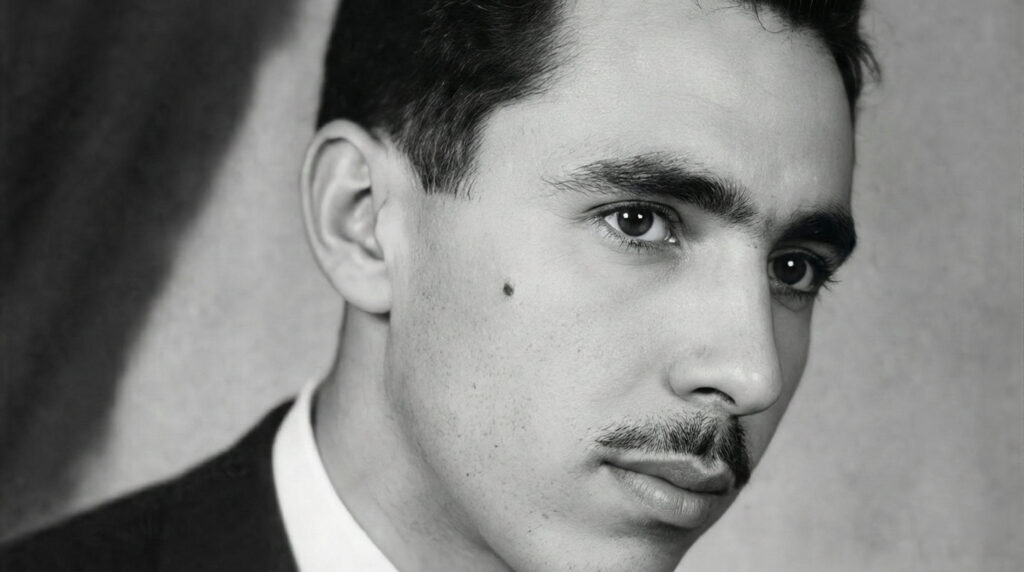
Donald Howard Menzel (1901–1976) stands at a rare pivot point in the history of UAP.
In open scientific life he was a towering astronomer and Harvard leader whose work in solar physics and gaseous nebulae helped define mid-century astrophysics. In parallel he served in wartime intelligence and cryptology, obtained high-level clearances, and, beginning in the early 1950s, became the most prominent scientific voice arguing that UAP reports could be explained as misperceptions of natural and technological phenomena.
In 1987, more than a decade after his death, his name appeared on the purported “Majestic 12” roster, thrusting him posthumously into the center of a debate over authenticity, secrecy, and the early U.S. government response to the UAP problem. The record that emerges is paradoxical. Menzel was both an establishment scientist and a behind-the-scenes national-security figure; a lucid explainer and a combative polemicist; a man who gained full access to Air Force UAP files, yet whose sweeping conclusions galvanized a generation of researchers precisely because they felt vital cases remained unanswered. (National Academies)
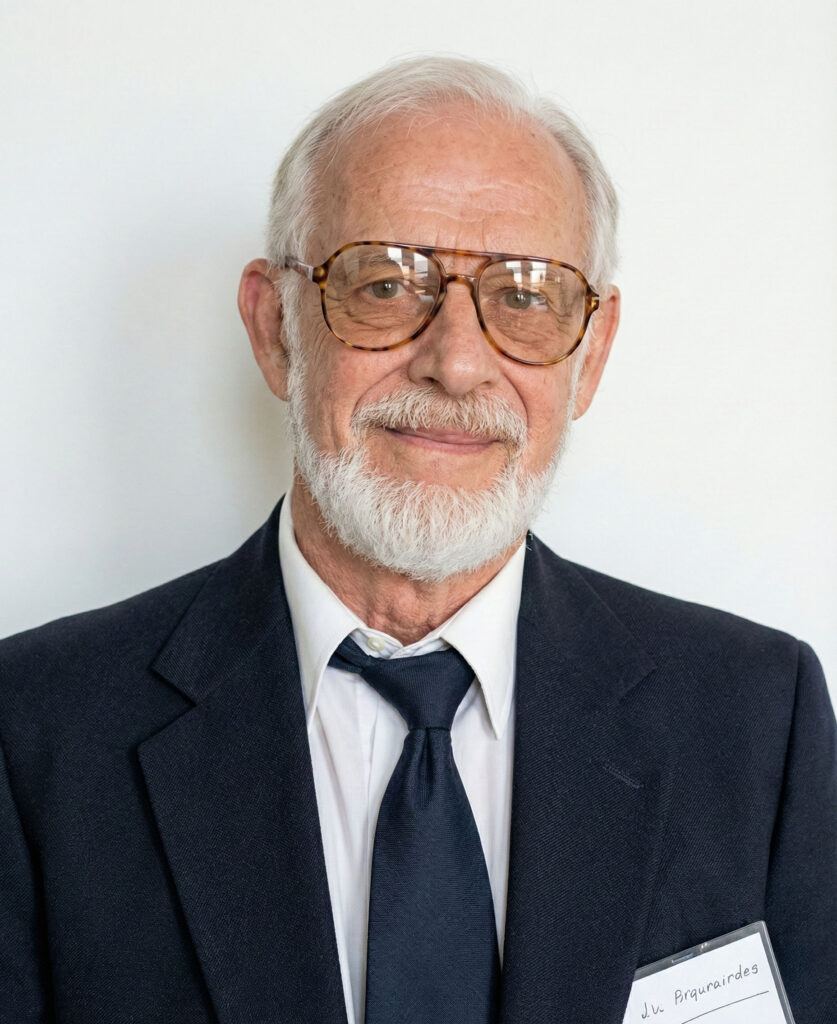
Donald Howard Menzel Portrait circa 1970 (UAPedia)
Early life, education, and the making of a public scientist
Menzel was born in Florence, Colorado, on 11 April 1901, and died in Boston on 14 December 1976. He studied chemistry and mathematics at the University of Denver, completed a second master’s and then a Ph.D. in astrophysics at Princeton under the renowned Henry Norris Russell, and held early posts at Iowa, Ohio State, and Lick Observatory before moving to Harvard in 1932.
He rapidly distinguished himself as one of the United States’ first major theoretical astrophysicists, with foundational work on the solar chromosphere, stellar spectroscopy, Martian atmosphere, and the physics of gaseous nebulae. (National Academies)
At Harvard, Menzel became both a scientist and an institution builder. He chaired the Department of Astronomy, then directed the Harvard College Observatory from 1952 to 1966, a period in which he helped bring the Smithsonian Astrophysical Observatory to Cambridge and encouraged a modern research and teaching program that would evolve into today’s Center for Astrophysics | Harvard & Smithsonian. (Center for Astrophysics)
One controversy from his directorship has shadowed his legacy among historians of astronomy.
In 1953, as a cost-saving measure, he suspended the observatory’s photographic plate-making program. The resulting 1953–1968 gap in sky coverage is still known in the field as the “Menzel Gap.” The Center for Astrophysics acknowledges this hiatus in its official institutional history. (Harvard College Observatory)
Alongside research, Menzel wrote prolifically for specialists and the public. His best-selling A Field Guide to the Stars and Planets introduced generations to backyard astronomy, and his beautifully illustrated general-audience books on the Sun and eclipses cemented a public persona as astronomy’s patient, plain-spoken explainer. (AbeBooks)
War work, intelligence ties, and cryptology
Beneath the public surface of academic life, Menzel stepped into national service during World War II. He enrolled in Navy cryptanalysis studies and, in collaboration with Naval Communications, taught a secret Radcliffe course that recruited mathematically adept young women for American codebreaking. A Harvard Crimson retrospective captures the atmosphere and criteria of this covert wartime classroom. (Encyclopedia.com)
Postwar, his intelligence linkage did not fade. Declassified National Security Agency material shows Menzel on a cleared list for cryptologic work in the early 1950s, with “Crypto” and “Adv Bd” notations consistent with advisory roles that required indoctrination into communications intelligence practices. The primary document is stark and bureaucratic but decisive. (National Security Agency)
These credentials matter for UAP history because they establish that Menzel was not merely a public commentator. He moved within the secure world that handled classified technical questions, and he was exactly the sort of scientist a secret interagency committee would consult if such a committee existed.
This amplification of his national-security profile would later fuel debate over his alleged Majestic 12 membership. (National Security Agency)
Menzel enters the UAP debate
When the postwar UAP wave crested in 1947 and rose again in 1952, the Air Force launched and then formalized an investigative apparatus that evolved into Project Blue Book. USAF’s own summary makes clear the scope: 12,618 cases logged between 1947 and 1969, with 701 remaining “unidentified.” That simple residue is one reason the subject never died. (Air Force)
Menzel became the most visible scientific voice addressing the phenomenon in three widely read books and in Congressional testimony.
His core thesis was consistent from the start: UAP reports were best understood as a mixture of misperceived celestial objects, weather and balloon phenomena, atmospheric optics, radar propagation effects, and human perceptual/psychological factors.
His second book, The World of Flying Saucers (1963, with Lyle Boyd), is now public domain and shows his method in full, chapter by chapter, as he attributed famous cases to balloons, bright planets or stars under unusual atmospheric conditions, fireballs, birds, temperature inversions affecting radar, and so on. (TWFS)
The 1968 House Committee on Science and Astronautics held a landmark Symposium on UAP. Menzel’s prepared statement is revealing two points that bear directly on his authority in the debate.
First, he wrote that “the Air Force has given me full access to their files,” a remarkable admission that explains both his confidence and the fierce pushback he received from civilian researchers who lacked comparable access.
Second, he argued that Project Blue Book should be ended because two decades of investigation had produced nothing of scientific value that pointed to extraterrestrial craft. The document stands as the most distilled official expression of his stance. (NCAS Files)
A few examples illustrate his explanatory framework:
Atmospheric optics and bright stars or planets. In his 1963 book, Menzel devoted an entire section to “A Mirage of Sirius,” using physics of refraction and scintillation to show how the brightest star can appear to maneuver, change color, or grow disk-like to the naked eye in temperature-inversion conditions. He frequently applied similar reasoning to Venus, Jupiter, and Mars when near opposition. (TWFS)
Balloons and misestimated distance or speed. He cataloged dozens of cases where high-altitude Skyhook and radiosonde balloons produced striking visual and even radar tracks that mimicked deliberate motion or formation flight, especially when winds shifted with altitude or payloads gave strong returns. (TWFS)
Radar “angels” and temperature inversions. On the heavily publicized 1952 Washington, D.C. episodes, he emphasized weather-related propagation and ground clutter as the simplest and, to him, sufficient explanation of the radar-visual mix that had alarmed the public. (TWFS)
Menzel’s larger influence came as much from tone as content. He was witty, forceful, and occasionally caustic in dismissing what he saw as error chains. He insisted that good science begins with known physics rather than leaps to unknown craft, and he took square aim at the opinion that trained observers could not make large identification errors.
In the 1968 statement he went further, volunteering that he had helped USAF improve its eyewitness questionnaire because it failed to probe basic perceptual pitfalls. That made him, in his own telling, both critic and advisor to Air Force methodology. (NCAS Files)
The establishment listened.
The CIA-convened Robertson Panel in 1953 had already recommended reducing the burden of low-quality UAP reports on intelligence channels and encouraged an explanatory campaign through credible scientists and media.
That institutional logic rhymed with Menzel’s own. Whether by design or convergence, his voice became the scientist’s face of that approach. (FAS Project on Government Secrecy)
Impact on ufology and the counter-movement he helped create
Because UAP communities trace their modern genealogy to the very years Menzel dominated public debate, his impact is hard to overstate. For readers new to the era, a few structural outcomes stand out.
He set the public’s default frame. In the 1950s and 1960s, when Americans heard a scientist talk about UAP, the scientist was often Menzel. His books appeared with major publishers and were reviewed in mainstream venues; his 1953 work was treated in the general press as the sensible corrective to a sensational topic.
That visibility shaped how journalists wrote, how officials answered questions, and how schoolchildren learned to think about strange lights in the sky. (Project Gutenberg)
He hardened a line that others pushed against. Authors such as Donald Keyhoe and later academic critics of Blue Book seized on that 701-case residue and on specific radar-visual, pilot, and multiple-witness events that Menzel treated as solved or soluble.
A 1969 Library of Congress annotated bibliography captures the period’s polemics, noting USAF statements used to refute Menzel’s balloon-and-atmospheric explanations and the emergence of official voices who quietly disagreed with him.
His steadfastness produced a dialectic: the more emphatic his dismissal, the more determined his critics became to scour case files, subpoena data, and argue for serious study. (Government Attic)
His style foreshadowed the later “nothing to see here” reading of Blue Book.
By 1969 Blue Book closed, citing the Condon Report and National Academy of Sciences review, and the USAF fact sheet made three flat conclusions that rejected national-security threat, exotic technology, and extraterrestrial explanation. Menzel had been rhetorically out in front of those statements for years. (Air Force)
At UAPedia we reject the assertion that most UAP reports are trivial once properly analyzed. A durable remainder has resisted explanation for decades, even as better sensors and analytic methods arrive. That said, to understand why the remainder continues to matter, one must grasp the context Menzel helped build.
He made the case for error, refraction, misperception, and radar quirks so forcefully that any event surviving those filters today commands attention by definition. Menzel inadvertently elevated the significance of the best-documented anomalies. (Air Force)
Claims he made about UAP, in his own words and actions
From 1953 through his 1968 House statement and into his final 1977 book with Ernest Taves, Menzel’s claims were consistent:
Naturalistic sufficiency. Every class of UAP report has a plausible natural or mundane explanation when the data are complete. He cataloged examples where improved information collapsed mysteries and treated the remaining “unknowns” as artefacts of missing data. (Project Gutenberg)
Perception matters as much as physics. He emphasized afterimages, autokinesis, color scintillation, angular-size illusions, and the way inversion layers transform points of light into moving shapes. His House statement contains practical experiments he said anyone could perform to replicate such effects. (NCAS Files)
Radar is not a trump card. He argued that propagation-path quirks and anomalous returns could produce “phantoms on radar.” When paired with excited observers scanning the sky, that mix could simulate simultaneous visual and radar confirmation. (Project Gutenberg)
Institutional recommendation. He explicitly urged Congress to terminate Blue Book because it produced “little of scientific value,” adding that keeping the office alive misled the public into thinking something extraordinary must be hidden there. (NCAS Files)
Authority by access. In the same 1968 statement he stressed that he had “full access” to Air Force files and had advised on questionnaire redesign. This claim of access set him apart and explains both his certainty and the resentment it provoked in researchers who believed crucial cases deserved fuller external scrutiny. (NCAS Files)
We find his catalog of atmospheric optics and radar propagation invaluable as boundary conditions for UAP analysis. We also find his generalization that all UAP would dissolve with better data too strong for the surviving residue, a view that many in the scientific community now share when calling for calibrated sensor data across multiple modalities. (Air Force)
The Majestic 12 controversy: Menzel’s name on a list, and what the records say
In 1984–1987 a cache of documents surfaced that purported to show a top-secret interagency group known as “Majestic 12,” allegedly created in 1947 to manage crashed craft and extraterrestrial materials. Donald Menzel’s name appears among the twelve on the so-called Eisenhower Briefing Document. If genuine, the document would place him squarely inside the most sensitive UAP compartment in U.S. history. (Archive.org)
Two independent facts keep the debate alive. First, his intelligence and cryptology ties are no longer speculative; NSA’s declassified material documents his cryptologic clearances and advisory board role in 1952–1953.
Second, his assertion of “full access” to Air Force UAP files is in the Congressional record. Proponents argue that this pairing of clearance history and privileged access aligns with the kind of profile one would expect for MJ-12. Skeptics reply that many scientists held high clearances during the Cold War and that documentary anomalies are decisive. Both claims are worth understanding; neither, by itself, resolves the MJ-12 question in the affirmative. (National Security Agency)
Controversies beyond MJ-12
Harvard “Menzel Gap.” As noted earlier, his suspension of plate-making operations remains controversial because it disrupted a historic sky record that later researchers would have found useful for long-baseline studies.
The CfA history treats it as an institutional fact; historians have debated its long-term impact. (Harvard College Observatory)
Access without transparency. Menzel’s privileged access to Air Force files in the 1950s and 1960s created a trust gap with civilian organizations and independent scientists who suspected that selection effects and public-relations priorities shaped Blue Book’s outputs.
His own call to close Blue Book in 1968 reinforced the impression of a foregone conclusion. (NCAS Files)
Tone and public influence. Admirers saw a scientist using physics, optics, and instrument knowledge to purge error from a sensitive subject. Critics saw a combative gatekeeper whose rhetorical confidence sometimes outran the data, especially for multi-sensor or close-encounter reports that resisted reduction.
Contemporary bibliographies reveal how often his specific explanations became the target of detailed rebuttals by pilots, radar operators, and civilian analysts. (Government Attic)
Legacy in the UAP era
Menzel’s scholarly legacy in astronomy is secure: eclipse expeditions, a modernized observatory, a generation of students, a classic field guide, and work in solar and nebular astrophysics that still earns respectful citation in the history of science. (National Academies)
His UAP legacy is more complex and, in a way, more profound. He taught institutions how to argue against exotic conclusions with technical specificity. He demonstrated that atmospheric physics and human perception can imitate spacecraft. He pushed investigators to treat radar as a fallible instrument and to tighten eyewitness protocols. He also helped draw clear battle lines.
The cases that remain unexplained after passing through Menzel’s sieve are the cases that matter most to serious inquiry.
Even the sober USAF accounting of 701 “unidentified” events has become a touchstone precisely because voices like Menzel’s insisted that good data would strip that number to near zero. That did not happen. (Air Force)
What, then, of the man whose name later appeared on a shadow list of twelve?
Menzel’s real clearance history, his secret teaching of cryptanalysis, his advisory work, and his admitted full access to Air Force UAP files show that he was a genuine insider to mid-century national-security science. For historians and investigators, that is the essential frame.
One does not need MJ-12 to see that Donald Menzel belongs at the very center of the story of how America’s scientific and defense establishments first attempted to bound, explain, and manage the UAP problem. (National Security Agency)
Chronological capsule
1901–1924. Born in Colorado; undergraduate and master’s studies at Denver; master’s and Ph.D. at Princeton under H. N. Russell. Moves through early academic posts into Lick Observatory and then Harvard. (National Academies)
1930s–early 1940s. Builds reputation in solar physics and gaseous nebulae; helps lead multiple eclipse expeditions. (National Academies)
World War II. Undertakes cryptanalysis training and instruction; collaborates with Naval Communications; enters the intelligence world. (Encyclopedia.com)
1952–1966. Acting director, then director, Harvard College Observatory; orchestrates the Smithsonian Astrophysical Observatory’s move to Cambridge; suspends plate-making program in 1953. (Center for Astrophysics)
1953–1977. Publishes three major books arguing naturalistic explanations for UAP; testifies to Congress in 1968; calls for ending USAF UAP studies. (Project Gutenberg)
1984–1987, posthumous. Name appears on the MJ-12 roster in disputed documents; FBI and NARA highlight anomalies and Air Force assessment that the documents are fake. (FBI)
Bottom line
Menzel is indispensable reading. His catalog of physical and perceptual mechanisms is part of the modern UAP investigator’s toolkit. One should expect cases to be pushed through his gauntlet and survive. Those that do deserve resources.
References
All-domain Anomaly Resolution Office. (2024, March 8). Report on the historical record of U.S. government involvement with UAP, Vol. 1. Department of Defense. https://media.defense.gov/… (U.S. Department of War)
American Air Force. (n.d.). Unidentified flying objects and Air Force Project Blue Book [Fact Sheet 95-03]. https://www.af.mil/… and NSA mirror. (Air Force)
Menzel, D. H., & Boyd, L. G. (1963). The world of flying saucers: A scientific examination of a major myth of the space age. Doubleday. Public domain edition: Project Gutenberg. https://www.gutenberg.org/ebooks/66639 (Project Gutenberg)
Menzel, D. H. (1968). UFO: Fact or fiction? Prepared statement to the U.S. House Committee on Science and Astronautics, Symposium on UFOs (July 29, 1968). National Capital Area Skeptics archive. https://files.ncas.org/ufosymposium/menzel.html (NCAS Files)
Menzel, D. H., & Taves, E. H. (1977). The UFO enigma: The definitive explanation of the UFO phenomenon. Doubleday. (Catalog listing) https://www.amazon.com/dp/0385035969 (Amazon)
Donald H. Menzel biography, Donald Menzel Majestic 12, Menzel cryptology NSA, Harvard College Observatory history, Menzel UAP books, Robertson Panel and UAP, Project Blue Book 701 unknowns, Menzel Gap photographic plates, 1968 House UFO Symposium, Eisenhower Briefing Document analysis, UAP history, UAPedia profile
People describe “supernatural” episodes with disarming clarity. A tunnel of light during a medical crisis. A seemingly telepathic message during a close pass of a bright, silent object in the sky.
An encounter with a deceased spouse that feels more real than memory. Across traditions these events are reported to change lives: fear of death softens, priorities reorganize, altruism grows, and creativity spikes. If we care about consciousness as a measurable feature of human life, then we should care about how these extraordinary episodes shift it.
This explainer maps the most common kinds of “supernatural” experiences, the instruments used to study them, what tends to change afterward, and the live debates about mechanism. Where appropriate we add speculation labels so readers can see where evidence ends and hypotheses begin.
The Consciousness Interface: the hypothesis that focused awareness may serve as a receiver for other signals including non-human intelligence and supernatural events. (UAPedia)
Note: UAPedia approaches this topic like a court that admits credible testimony and weighs it alongside instruments and peer-reviewed research. We do not over-rely on any single stream of authority. That includes government reports, which we treat as one source among many, in line with our editorial policy: How UAPedia treats government sources.
A working definition and a measurement toolkit
By “higher state of consciousness” we mean a shift in at least one of these domains that persists beyond the moment: reduced death anxiety, broadened sense of connection, sustained meaning, prosocial motivation, or enhanced cognitive flexibility.
This is pragmatic rather than metaphysical. It lets us ask which events move the needle and with what reliability.
Core instruments and findings:
Greyson Near-Death Experience Scale. A validated clinical instrument that differentiates near-death experiences (NDEs) from other states. Reliability and validity were established four decades ago, enabling consistent comparisons and aftereffect studies. (PubMed)
MEQ-30 (Mystical Experience Questionnaire). A 30-item, validated measure used in controlled trials to quantify unity, sacredness, and ineffability. It shows strong psychometrics across multiple psilocybin studies. (PMC)
AWE-oriented behavioral measures. Experiments show that induced awe decreases self-focus and increases generosity and helping behaviors. (PubMed)
Absorption traits. The Tellegen Absorption literature indicates that a person’s propensity to become deeply immersed correlates with suggestibility and the intensity of altered states. It is a background factor that can modulate how a supernatural event is perceived. (PMC)
Types of experiences, what changes after, and what the data say
Near-death experiences
What happens. Reported features include panoramic life review, encounters with deceased persons or luminous beings, and a sense of traveling through or becoming light. Clinically, NDEs occur during extreme physiological crisis such as cardiac arrest.
After the event. The most robust pattern is a drop in fear of death paired with increased spirituality and compassion. A 2021 analysis found that positive emotions during an NDE correlated with greater reductions in fear of death afterward. (UVA School of Medicine) Systematic reviews agree on common positive transformations such as altruism and life meaning, while acknowledging distressing variants that can produce confusion and anxiety. (PMC)
How we measure it. The Greyson Scale standardizes intensity and content across cases, making comparisons and long-term follow-ups possible. (PubMed)
Nuances.
Distressing NDEs exist. Nancy Evans Bush and Bruce Greyson document three recurring subtypes: inverse, void, and hellish. These are rarer, require careful integration, and can still be transformative over time. (PMC)
Consciousness during CPR. The multi-center AWARE-II study examined electrocortical activity during resuscitation and documented structured experiences in a subset of survivors, including some reports of awareness without explicit recall. The study does not settle the survival question. It does justify continued inquiry into awareness during apparent clinical death. (PubMed)
Post-NDE expectations. Reduced death anxiety, re-prioritized values, increased compassion, and a drive toward service are repeatedly reported. Many experiencers also report difficulty fitting back into previous social roles, which argues for gentle, informed aftercare. (UVA School of Medicine)
Speculation label Hypothesis: NDEs may transiently relax high-level predictive priors, allowing atypical information integration that leaves durable trait-level changes. This is consistent with predictive processing models, though mechanism during anoxia remains debated.
(Adobe Stock | UAPedia)
Psychedelic-occasioned mystical experiences
What happens. In controlled settings, a single high-dose psilocybin session can produce complete mystical-type experiences by MEQ-30 criteria. (PMC)
After the event. Personality research shows significant and lasting increases in the domain of Openness after psilocybin-occasioned mystical experiences, often persisting beyond one year. Participants and community observers report enduring changes in attitudes and behavior. (PMC)
How we measure it. MEQ-30 total and subscale scores, combined with long-term follow-ups.
Nuances.
Not uniformly blissful. Acute anxiety or “challenging experiences” can occur, which skilled preparation and support can mitigate. (PubMed)
Mechanism debates. The REBUS model predicts relaxed high-level priors and increased bottom-up signaling during psychedelic states, which explains why content feels self-authentic and insight-laden. This does not determine whether some reported entities are non-local or internally generated. Speculation label: Researcher opinion.
Post-experience expectations. Sustained meaning, prosocial orientation, refreshed creative problem solving, and a sense of connectedness are commonly reported in clinical cohorts who were carefully screened and supported. (PubMed)
After-death communications and deathbed phenomena
What happens. Many bereaved individuals report a felt presence, sensory encounters, or dreams of the deceased that feel qualitatively real. End-of-life staff frequently report that dying patients speak with deceased relatives shortly before death.
After the event. These experiences are often comforting and associated with healthier grief trajectories. In a 2023 study of partner after-death communications, 40 percent reported accelerated recovery and similar proportions reported positive meaning-making. (UVA School of Medicine)
How we measure it. Population studies and clinical surveys. A classic epidemiological study found that nearly half of widows and widowers reported at least one sensory encounter with a deceased spouse. Later critical reviews place prevalence in the 30 to 60 percent range. (PMC)
Nuances.
Methodological caution. Many deathbed vision studies rely on secondhand reports from staff rather than patients, which can bias content. Newer prospective designs are improving this. (PMC)
Cultural framing. What is perceived, and how it is interpreted, tracks cultural beliefs. That does not mean it is “just culture”; it means interpretation channels the meaning and the aftereffects.
Post-experience expectations. Reduced loneliness and death anxiety, greater peace about the deceased, sometimes a spontaneous shift toward spiritual practice. (ScienceDirect)
Speculation label Witness interpretation: some ADCs may be more than grief imagery. The evidence is not dispositive either way.
Sleep-linked “threshold” phenomena: sleep paralysis, lucid dreams, and out-of-body experiences
What happens. Sleep paralysis blends waking awareness with dream physiology, often with a sensed presence. Lucidity adds meta-awareness to dream content. Out-of-body experiences (OBEs) can occur spontaneously or be induced by neurological triggers.
After the event. For some, these episodes are terrifying. For others they catalyze spiritual curiosity or creative practice. Education about sleep physiology reduces distress, and skill training can convert paralysis into lucid exploration.
How we measure it.
Lifetime prevalence of sleep paralysis is about 7.6 percent in the general population and higher in student and psychiatric samples. (PMC)
OBEs correlate with altered processing at the temporo-parietal junction. Electrical stimulation has occasionally evoked OBE-like experiences in patients, anchoring phenomenology to known multisensory integration hubs. (The Journal of Neuroscience)
Nuances.
Not all OBEs are pathology. Neuroscience shows a pathway by which self-location can shift. It does not settle the ontology of OBE content.
Transformational potential. Some people report a durable sense that consciousness is not rigidly tied to the body, which changes their values and reduces death anxiety. This is testimony, not a lab finding.
Post-experience expectations. Better sleep hygiene and education tend to reduce fear. Those who cultivate lucid skills sometimes report increases in creativity and problem solving that carry into daytime life.
Speculation label Researcher opinion: threshold states loosen predictive models and can enable insight when guided safely.
Kundalini-type awakenings
What happens. A rapid onset of somatic currents, spontaneous movements, heat, and altered perception following intense spiritual practice or spontaneously. The phenomenon is recognized in yogic literature and has analogues in other traditions.
After the event. Reports vary from profound clarity and compassion to destabilizing anxiety, insomnia, and sensory overload. Distinguishing spiritual emergence from psychiatric crisis requires careful, case-by-case evaluation.
How we measure it. Case series and clinical overviews discuss differentials between psychopathology and spiritually framed kundalini events. Greyson has cataloged characteristic somatic and psychological features. Recent case literature underscores the overlap with psychosis in a small subset. (UVA School of Medicine)
Nuances.
Integration is the work. Breath regulation, grounding, trauma-sensitive therapy, and community support are common building blocks for stabilization.
Clinician humility helps. Recognizing both the growth potential and the risks is essential in treatment planning.
Post-experience expectations. When stabilized, many report a wide-angle awareness, spontaneous compassion, and re-ordered life values. When poorly supported, prolonged dysregulation is possible.
Speculation label Hypothesis: large autonomic shifts plus meaning amplification may drive both symptoms and growth.
Meaning-laden coincidences and “synchronicity”
What happens. A cluster of external events seems uncannily coordinated with inner life. Many experiencers report a surge of these coincidences around major spiritual events or after first contact-like episodes.
After the event. Some report an expanded sense of participation in reality and a tilt toward creativity or service. Others feel destabilized or obsessively pattern-seeking.
How we measure it. Instrument development has accelerated, including a validated Synchronicity Awareness Scale and diary methods. Emerging work links the frequency of perceived meaningful coincidences to creative activity, although effects vary by measure. (PMC)
Nuances.
Bias vs. mystery. Frequency-illusion and apophenia can inflate the sense of the uncanny. On the other hand, many coincidental clusters resist simple probability explanations at the level of personal meaning. (Wikipedia)
Post-experience expectations. A phase of intense meaning making is common. Gentle skepticism and good journaling hygiene can keep growth without sliding into compulsive patterning.
Speculation label Researcher opinion: meaning-tracking systems in the brain temporarily up-weight salience after extraordinary events, which increases both insight and false positives.
UAP encounters as a special case
UAP contact belongs in this map because many close-range reports include non-verbal messaging, altered time sense, and the “Oz Factor” calm-hyperreal bubble. Large-N survey work by the Dr. Edgar Mitchell FREE Foundation reports high rates of telepathic impressions among experiencers. These data are not population prevalence figures. They are still the largest structured sample showing that consciousness-centered content is common in contact narratives. (A Greater Reality)
Children at the 1994 Ariel School event in Zimbabwe told investigators that environmental warnings were “put into their minds.” The telepathic element remains debated, yet the case illustrates why post-event changes in values often follow perceived contact.
Jenny Randles’ widely referenced “Oz Factor” describes a repeatable phenomenology of suspended sound, slowed time, and heightened clarity at the heart of many high-strangeness close encounters. The pattern matters because it often coincides with the very cognitive shifts reported after the event. (Encyclopedia.com)
Speculation label. Hypothesis: some UAP events operate across physical and informational layers, with consciousness acting as part of the channel.
Life after the extraordinary: common trajectories
Across types, three post-experience arcs recur:
Integration to growth. Death fear drops. Values shift from status to service. Awe becomes a trait rather than a state. Randomized studies of awe induction demonstrate measurable increases in prosocial behavior, which aligns with many testimonies. (PubMed)
Destabilization to healing. Distressing NDEs, kundalini crises, and recurrent sleep paralysis can trigger anxiety or depression. Clinicians who know the terrain can help distinguish emergency from emergence and reduce risk. (PMC)
Creative reconfiguration. Experiencers report creativity bursts, often supported by hypnagogic practices or dream journaling. Controlled work on threshold states shows that even brief N1 micro-sleep can triple rule-discovery odds in problem solving. The lab mechanisms differ by episode type, yet the subjective arc is similar.
What actually shifts in consciousness
Death salience re-coded as wonder. Studies repeatedly link NDEs to reduced death anxiety and deeper life meaning. (UVA School of Medicine)
Self-boundaries soften. Psilocybin-occasioned mystical experiences and long-term contemplative practice both show measurable changes in self-processing networks. This is consistent with MEQ-30 scores and fMRI/EEG signatures in other literatures. (PMC)
Trait openness grows. Personality research finds lasting gains in Openness after mystical-type sessions in screened, supported cohorts. (PMC)
Meaning and coincidence tracking up-shift. Validated synchronicity scales and recent diary studies connect meaningful-coincidence reporting to creative activity, even when ideation-test scores do not always move. (PMC)
Practical aftercare: a field-tested playbook
Name the episode accurately. Use the Greyson Scale for NDE, MEQ-30 for mystical-type sessions, and sleep questionnaires for paralysis or false awakenings. Labels can calm fear and guide care. (PubMed)
Normalize the arc. Deathbed visions and ADCs are common in grief and often helpful. Clinicians should not pathologize by default. (PMC)
Build a gentle routine. Breath pacing, regulated sleep, and journaling help metabolize meaning.
Mind the body. Kundalini-type symptoms benefit from grounding, nutrition, and trauma-sensitive somatic work. Case literature supports careful differentials between spiritual emergence and psychosis. (PubMed)
Community matters. End-of-life teams, contemplative sanghas, and experiencer support groups reduce isolation and offer language for integration.
UAP-adjacent practice. If your path involves contact work, keep protocols humane and instrumented. Track state with psychometrics and physiology. Treat “meaning hits” like any data stream: log, compare, and share.
Claims taxonomy
Verified
The Greyson NDE Scale is a reliable and valid instrument for identifying NDEs. (PubMed)
Psilocybin-occasioned mystical experiences meet validated MEQ-30 criteria and show durable shifts in meaning and behavior in screened, supported cohorts. (PMC)
Sleep paralysis occurs in a sizeable minority of people and is more common in students and psychiatric populations. (PMC)
Temporo-parietal mechanisms can reproduce OBE-like phenomenology in clinical stimulation studies. (The Journal of Neuroscience)
After-death communications are commonly reported in bereavement and are often experienced as helpful. (PMC)
Probable
NDEs reduce fear of death and increase prosocial orientations over time for many experiencers. (UVA School of Medicine)
The frequency of meaningful-coincidence reporting rises during creative engagement. Effects depend on the creativity measure used. (PMC)
Kundalini-type awakenings represent a mixed clinical-spiritual category that can resolve with appropriate care. (PubMed)
Disputed
The ontological status of perceived entities in NDEs, ADCs, psychedelics, OBEs, or UAP encounters. Mechanism and metaphysics remain open.
Legend
Instant and permanent enlightenment from a single mantra or artifact. Valuable as mythic teaching, not as data.
Misidentification
Some “visitations” are grief imagery or sleep-linked intrusions that feel fully real. Education reduces harm without erasing meaning. (PMC)
Hoax
Claims of consumer gadgets that guarantee permanent “third-eye activation” without training or safety protocols.
Implications
Clinical practice. Distress and growth travel together. Training clinicians to recognize spiritual emergence and to use validated scales will reduce unnecessary pathologizing and missed opportunities for healing. (PMC)
Consciousness science. Exceptional experiences are not edge curiosities. They are stress tests that reveal model limits. NDEs and OBEs, in particular, challenge simple one-way brain-to-mind accounts and invite richer frameworks without abandoning rigor. (The Journal of Neuroscience)
UAP research. Consciousness variables belong in the toolkit. If a fraction of contact events present informational content coupled to altered state profiles, then careful psychometrics, timing, and integration practices will improve data quality in the field.
Bottom line
Supernatural experiences are not a single thing. They range from the luminous to the frightening, from the clinically anchored to the culturally interpreted. Yet across categories the aftereffects often rhyme. People come away less afraid and more connected. They reorder their lives around what feels real and important. The data show these shifts on validated scales and, in some literature, on brain and behavior measures. Our job is to treat the episodes with the same fairness we give to any strong signal. Measure where we can, accept credible testimony where instruments do not reach, label speculation honestly, and build integration pathways that turn disruption into durable growth.
Editorial stance and UAP connection
UAPedia’s taxonomy embeds these topics inside a larger map that includes altered states, near-death experiences, and the “Oz Factor” as recurring human consciousness anomalies relevant to UAP contact. This article sits within that framework. For cross-discipline coherence we use consciousness science to illuminate reported shifts without demanding that all content reduces to brain-only accounts.
Leonard H. Stringfield (1920–1994) is remembered as the civilian researcher who transformed the idea of UAP crash retrievals into an organized research program, rather than leaving it as a series of scattered rumors.
From his postwar fascination – sparked by a dramatic encounter near Iwo Jima – through the 1950s with CRIFO and its newsletter *ORBIT*, and into the 1970s and 1990s with his self-published *Status Reports*, Stringfield collected testimonies about crashed craft and alleged non-human bodies with steady, methodical persistence that deeply shaped how the field understands secrecy, recovery operations, and storage facilities.
He wasn’t a lab scientist, and he never pretended to be. He saw himself instead as a careful collector, a coordinator, and a storyteller – someone who could weave hundreds of human testimonies into patterns the public could grasp.
His influence radiates through MUFON’s investigations, NICAP’s approach to archiving, CUFOS’s methods of managing data, and nearly every modern discussion surrounding crash retrievals.
Leonard H. Stringfield circa 1980 (UAPedia)
Early years and a formative wartime encounter
Stringfield was born in Cincinnati, Ohio, on December 17, 1920, and died there on December 18, 1994. Basic biographical details, including his Cincinnati roots and death from lung cancer, are recorded in standard reference summaries and obituary notices.
His origin story as a UAP researcher begins in the Pacific Theater.
On August 28, 1945, just days after Japan announced its surrender, Sgt. Leonard Stringfield was traveling as a passenger aboard a Curtiss C-46 en route from Ie Shima to Iwo Jima when the aircraft experienced engine trouble.
At the same time, crew members and passengers saw three brilliant white objects “like burning magnesium.” Stringfield linked this dramatic near-accident to the sudden appearance of the lights.
He later published the account in *Inside Saucer Post… 3-0 Blue*, and the incident is listed in NICAP’s pre-1947 chronology as well as in *The UFO Evidence.* (NICAP)
After the war, Stringfield built a career in public relations and marketing at DuBois Chemicals, a division of Chemed Corporation, from which he retired in 1981.
The corporate record of his professional career is noteworthy because it reinforced his refined public relations style and his ability to earn the confidence of uneasy informants who depended on strict confidentiality. (Amazon)
CRIFO, ORBIT, and an early partnership model
Stringfield’s first organizational initiative was CRIFO – Civilian Research, Interplanetary Flying Objects – established in Cincinnati in 1954.
Through CRIFO, he published the monthly *ORBIT* newsletter, one of the most widely circulated UFO publications of the 1950s, now preserved as a complete collected set. CRIFO’s reporting network maintained cooperative contact with the Air Defense Command.
The FBI’s 1954 internal memorandum files list CRIFO’s address and correspondence, showing that the group had drawn the attention of federal offices at an early stage. (AbeBooks)
In 1957, Stringfield summarized the CRIFO years in his book-length report *Inside Saucer Post… 3-0 Blue: CRIFO Views the Status Quo*, which acted as a bridge from grassroots reporting to a more structured effort in public education. The full text is available in NICAP’s online book series. (NICAP)
That same year, he accepted an invitation from Donald Keyhoe’s NICAP to serve as a public relations advisor. A CIA reading room briefing on NICAP’s public stance identifies Stringfield as the director of CRIFO and highlights NICAP’s reliance on civilian networks to supply material to official investigators.
The connection among CRIFO, NICAP, and the Air Force’s projects helped establish the idea that disciplined civilian researchers could serve as the initial recipients of sensitive reports. (CIA)
The Condon period and a research approach shaped by disappointment
From 1967 to 1969, Stringfield served as an “Early Warning Coordinator” connected with the University of Colorado’s Air Force–funded study, commonly known as the Condon Committee.
The role, as outlined in several biographical sources, reflected the Committee’s request that civilian organizations provide high-quality, real-time reports for analytical review.
The official record notes that even after NICAP encountered difficulties with the Committee, members of its early warning network continued to forward reports. Stringfield drew two lasting lessons from the experience.
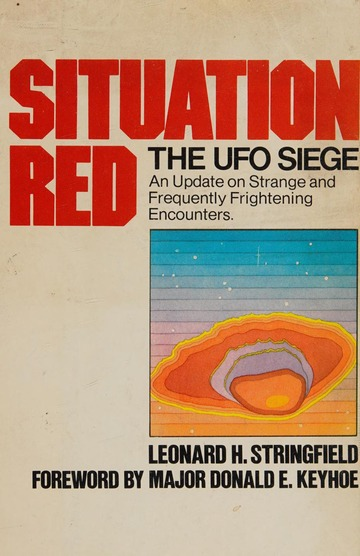
First, government studies can be influenced more by institutional objectives than by the actual data. Second, civilian networks play an indispensable role. During the 1970s, he became a highly in-demand lecturer. His mainstream book *Situation Red: The UFO Siege* (Doubleday/Fawcett, 1977) portrayed the phenomenon as an ongoing, worldwide, and occasionally dangerous presence surrounding both people and facilities.
United Nations transcripts from late 1977 reference the book during debates led by Grenada’s Prime Minister, Sir Eric Gairy, about creating an international organization to study UAPs. Sources suggest that Stringfield acted as an adviser to Gairy during this United Nations effort in 1978.
Whatever his exact role may have been, the UN record shows that Stringfield’s work was referenced during official deliberations—a rare occurrence for a civilian investigator. (United Nations Digital Library)
The 1978 Turning Point: “Retrievals of the Third Kind”
The crash-retrieval research program that defines Stringfield’s legacy began publicly with a single lecture.
On July 29, 1978, at MUFON’s Dayton Symposium, he delivered a lecture titled “Retrievals of the Third Kind: A Case Study of Alleged UFOs and Occupants in Military Custody.” He later expanded this talk into a multi-part publication, which readers came to know as *Status Report I.*
It established the model he would follow for the next sixteen years: concise case summaries, carefully maintained anonymity, and a focus on recurring patterns across testimonies rather than a single, conclusive piece of evidence. The original 1978 text and subsequent reprints remain available. (Il Poliedrico)
Across seven *Status Reports* – issued in 1980, 1982, 1985, 1989, 1991, and 1994 – Stringfield cataloged dozens of alleged crash or recovery incidents. He focused particularly on military and mortuary personnel who reported handling unusual wreckage or non-human remains, as well as on the logistical channels said to have transported such materials to facilities like Wright-Patterson AFB.
The volumes remain in active circulation among researchers and continue to be cited in current briefings. (Amazon)
His 1992 article in *Flying Saucer Review*, titled “The Concept of Proof,” lays out his central philosophy: the subject may resist solid evidence for a long time, but recurring patterns in credible witnesses’ testimonies warrant preserving those accounts and comparing them systematically, even in the absence of publicly verifiable physical material. (Scribd)
Known associates and collaborators
Donald E. Keyhoe and NICAP. Keyhoe’s NICAP provided Stringfield with a national platform and an organized system for handling reports. The CIA’s summary on NICAP highlights how the organization made use of civilian networks such as CRIFO to deliver higher-quality reports to official agencies. (CIA)
MUFON. Stringfield’s talks, field reports, and preliminary drafts frequently appeared in MUFON publications, especially around the 1978 Dayton Symposium, where crash-retrieval research took center stage. MUFON later promoted and preserved portions of his private research archive. (www.slideshare.net)
CUFOS and J. Allen Hynek. Several biographical references note that Stringfield worked with the Center for UFO Studies as a regional investigator. While the most direct evidence of an official appointment is secondary,
Hynek’s CUFOS network overlapped significantly with Stringfield’s sources and lines of investigation. Hynek himself endorsed the meticulous collection of cases, with anonymity maintained when necessary. (Audible.com)
Sir Eric Gairy and the UN initiative. Between 1977 and 1978, Gairy sought to establish a United Nations office devoted to the investigation of unidentified aerial phenomena (UAP), relying on a team of advisers that included civilian researchers. The UN’s own records cite *Situation Red*, and multiple summaries credit Stringfield with providing assistance and counsel to Gairy during this initiative. (United Nations Digital Library)
Editors and archivists. Stringfield maintained productive relationships with *Flying Saucer Review* editor Charles Bowen, as well as with archivists at NICAP and MUFON. The preservation of *ORBIT*, *Inside Saucer Post… 3-0 Blue*, and the *Status Reports* owes much to those connections. (NICAP)
Core claims and case clusters
Stringfield’s *Status Reports* do not rely on a single sensational case. Their strength lies in how they organize comparable witness testimonies. Key points include:
Wright-Patterson AFB as a repository. Numerous sources, often with military or contractor backgrounds, pointed him to Wright-Patterson as a node where hardware and biological remains were stored. The term “Hangar 18,” which became widely known after 1974, does not appear to refer to any specific, verifiable room number. Still, the Wright-Patterson theme remains consistent across independent testimonies gathered by Stringfield and others. The U.S. Air Force denies the claim. (Wikipedia)
Medical and mortuary channels. Perhaps Stringfield’s most original contribution was to recognize that if bodies were ever recovered, quiet ripples would appear in medical logistics. Status Reports II through VI repeatedly cite individuals in pathology, mortuary affairs, and aeromedical evacuation who described unusual handling protocols and small-statured cadavers under high security. (Amazon)
Nellis AFB and other base events. In Report II he summarized a source claiming access to a Top Secret brief about a craft lingering near Nellis over multiple days, with smaller craft separating from a parent object. Such entries are representative of how Stringfield handled “insider” narratives. He logged them with context, controls on identity, and cross-checks where possible. (Scribd)
Fort Dix–McGuire AFB, January 1978. Status Report IV concentrated on this dramatic story of a non-human entity allegedly shot by a military policeman with a body later recovered by a specialized team. The case became one of the most frequently cited in crash-retrieval research, attracted additional witnesses over time, and ultimately led to detailed skeptical re-examinations. (NICAP)
Pre-Roswell and early Cold War cases. Stringfield gave space to reports predating 1947 and to early 1950s events that suggested a retrieval pattern was already in place before the “flying saucer” press era took hold, which expanded the hypothesized timeline for secret programs. (NICAP)
His catalogs also explored allegations involving interagency programs, special security clearances, and codeword-level compartments. Even when specific details couldn’t be independently verified, the recurring patterns across unrelated testimonies were the signal he wanted readers to notice.
Controversies and critical responses
No part of Stringfield’s program was free of debate, and he welcomed thoughtful skepticism while fiercely protecting the confidentiality his sources required.
Anonymity and the “hearsay” critique. Scholars and journalists contended that the *Status Reports* depended too much on unnamed witnesses. Stringfield’s 1992 essay, “The Concept of Proof,” had already anticipated such criticism. He clearly presented the *Status Reports* as interim work meant to safeguard high-risk testimonies before they were lost.
He argued that patterns recurring across dozens of anonymous or limited-identity testimonies could still serve as meaningful data points for future corroboration. (Scribd)
Fort Dix–McGuire re-evaluated. In 2002, the National Institute for Discovery Science (NIDS) analyzed parts of the McGuire case and concluded that the widely circulated “dead ET” account was a hoax. Skeptics cited it as a cautionary example.
It is important to note that NIDS’s conclusion does not erase all of Stringfield’s material on the case; rather, it highlights the uneven evidential terrain he had to navigate. (Center for Inquiry)
The “Hangar 18” problem. Popular culture transformed Wright-Patterson into a kind of mythical warehouse. Responsible historical accounts, including those that examine how the hangar story developed, demonstrate how the idea was gradually amplified by novelists, filmmakers, and lecturers.
UAPedia’s editorial stance applies here. Government denials are data points. They must be weighed alongside whistleblower testimonies and archival fragments, while avoiding naïve acceptance of either.
Relationship to NICAP, CUFOS, and MUFON “orthodoxy.” Stringfield was unconventional. He managed public relations for NICAP, cooperated with Condon’s team despite his reservations, collaborated with CUFOS, and delivered presentations for MUFON.
He kept his crash-retrieval program running somewhat alongside these organizations, since its strict confidentiality requirements and unusual subject matter didn’t align well with standard case-management procedures. That constant tension helped define his distinctive role in the field. (CIA)
Impact on UAP Research
Stringfield’s influence is felt in at least five ways.
He gave crash-retrievals a research grammar. Before Stringfield, talk of downed craft and bodies was episodic. After his Status Reports, researchers had a shared set of terms, case abstracts, and typologies. MUFON’s historical framing of crash retrievals and the continued use of its categories in modern briefings testify to this infrastructure. (MUFON)
He expanded the witness base. By courting medical, mortuary, and logistics personnel, he widened the aperture beyond pilots and radar operators. This mattered because if a program existed, its footprint would pass through doctors, pathologists, crate handlers, and couriers. (Amazon)
He kept the civilian-government pipeline open. Stringfield’s CRIFO model and his NICAP role demonstrated that well-run civilian groups can gather important data. Even the Condon period, which many saw as a strategic cul-de-sac, reinforced his conviction that civilian early-warning networks were indispensable. (CIA)
He built an archive. In 2012, MUFON announced receipt of sixty volumes of Stringfield’s private papers for preservation and digitization, and MUFON’s Project Aquarius now highlights the “Leonard Stringfield Collection.” This is more than homage. It is an ongoing data resource whose existence substantiates his lifelong archivist ethic. (UFO Digest)
He modeled a tone. Stringfield kept a measured voice. He was conversational but precise, and he avoided spectacle. That is why United Nations delegates could quote him without embarrassment and why medical and military voices trusted him with fragile stories. (United Nations Digital Library)
Selected timeline
17 Dec 1920: Born in Cincinnati, Ohio. (Wikipedia)
28 Aug 1945: As an Army Air Forces passenger in a C-46 near Iwo Jima, witnesses three brilliant objects during an engine-out emergency, later chronicled in Inside Saucer Post… 3-0 Blue and NICAP’s chronology. (NICAP)
1954–1957: Directs CRIFO in Cincinnati and publishes ORBIT. FBI memos document CRIFO’s presence. (The Black Vault)
1967–1969: Serves as an “Early Warning Coordinator” related to the Condon Committee’s field intake. (Wikipedia)
1977: Releases Situation Red: The UFO Siege. The UN’s Special Political Committee will quote the book in related proceedings. (United Nations Digital Library)
1978: Delivers “Retrievals of the Third Kind” at MUFON’s Dayton symposium, initiating the Status Report series. (Il Poliedrico)
1980–1994: Publishes Status Reports II through VII, including the Fort Dix–McGuire case study. (Amazon)
1992: Publishes “The Concept of Proof” in Flying Saucer Review. (Scribd)
18 Dec 1994: Dies in Cincinnati after a long illness. (Wikipedia)
2012: MUFON announces receipt of sixty volumes of Stringfield’s papers for preservation and digitization. (UFO Digest)
2023–2025: MUFON integrates the Stringfield collection within Project Aquarius and highlights its private-collections portal. (MUFON)
Assessing Stringfield through UAPedia’s editorial lens
UAPedia’s editorial policy on government sources cautions against treating any single institutional position as final. Stringfield would have agreed. He built his research approach on the understanding that secrecy, professional risk, and compartmentalization produce an evidential landscape dominated by witness testimony and small, fragmented documents. His *Status Reports* should be seen as carefully selected signals drawn from that environment. When government denials surface, they are documented alongside recurring patterns in witness accounts. The analyst’s responsibility is to evaluate all the evidence without automatically prioritizing any one type of source.
In practical terms, this means, for example, examining the Fort Dix–McGuire account together with NIDS’s finding that it was a hoax, and then comparing both against independent witness paths, timelines, base records, and logistical documents that might still come to light. In the case of Wright-Patterson, it means tracking repeated claims of storage and biomedical handling spanning decades, while noting the Air Force’s denial of any “Hangar 18.” Stringfield’s greatest strength was in recognizing recurring patterns; his weakness lay in providing evidence that could stand up to laboratory verification. He knew that, and he openly told his readers so back in 1992. (Center for Inquiry)
Legacy
Stringfield’s legacy lies at the core of contemporary UAP research. He created a living link between uneasy insiders and the public record. He provided MUFON, NICAP, and CUFOS with a common language for discussing crash‑retrieval accounts. He also showed later researchers how to pursue corroboration—not just by searching for a “perfect document,” but by following logistic traces, medical anomalies, and recurring base names across independent testimonies. If long‑standing recovery programs ever come fully into view, historians will recognize that Leonard Stringfield organized the index.
Works by Leonard H. Stringfield (selected)
Inside Saucer Post… 3-0 Blue: CRIFO Views the Status Quo (1957). (NICAP)
Situation Red: The UFO Siege (1977).
“Retrievals of the Third Kind: A Case Study of Alleged UFOs and Occupants in Military Custody” (MUFON Symposium paper, 1978), later expanded as Status Report I. (Il Poliedrico)
The UFO Crash/Retrieval Syndrome: Status Report II (1980). (Audible.com)
UFO Crash/Retrievals: Amassing the Evidence: Status Report III (1982). (Amazon)
The Fatal Encounter at Ft. Dix–McGuire: A Case Study: Status Report IV (1985). (NICAP)
UFO Crash/Retrievals: Is the Cover-Up Lid Lifting?: Status Report V (1989).
UFO Crash/Retrievals: The Inner Sanctum: Status Report VI (1991). (Goodreads)
UFO Crash/Retrievals: Search for Proof in a Hall of Mirrors: Status Report VII (1994). (Amazon)
“The Concept of Proof,” Flying Saucer Review (1992). (Scribd)
Additional sources cited inline: NICAP’s Fort Dix–McGuire case page, MUFON 1978 Symposium proceedings references, and project summaries are linked in the footnotes of the web citations above. (NICAP)
SEO keywords
Leonard Stringfield biography, CRIFO ORBIT, MUFON Dayton 1978, Retrievals of the Third Kind, Wright-Patterson Hangar 18, Fort Dix–McGuire 1978, NICAP, CUFOS, Condon Committee Early Warning Coordinator, UAP crash retrievals, UAP investigator, UAP medical testimony, UAP archives Project Aquarius
If even a fraction of the most resilient UAP performance reports are accurate, the vehicles implied would demand energy densities and power levels far beyond chemical propulsion or today’s batteries. Fusion sits alone as a physically plausible energy source that could pack such power into compact volumes.
In recent years, declassified government documents, Navy patents, and mainstream fusion breakthroughs have collectively pushed this conversation from science fiction into the realm of testable engineering questions.
This article maps the data landscape and shows how fusion could fit into an integrated picture of UAP energy and propulsion, while clearly separating evidence from hypothesis.
Why energy density is the hinge
Contested radar tracks and cockpit videos are often debated, but energy math is indifferent to belief. To understand what kind of power plant a high-performance craft would need, start with two simple ideas:
Specific energy tells how much total energy per kilogram a source can store or release.
Power tells how fast that energy can be delivered.
Best of breed jet fuel is about 43 megajoules per kilogram.
Today’s lithium-ion batteries deliver roughly 0.72 to 0.9 megajoules per kilogram at the pack level, which is why electric airliners are so hard, even with exceptional aerodynamics.
By contrast, nuclear fission and fusion live in the terajoule per kilogram regime. The deuterium tritium fusion reaction releases 17.6 megaelectronvolts per event and is often quoted at about 3.4 × 10^14 joules per kilogram of reactants.
On a mass basis, that is more than four times uranium fission and orders of magnitude above chemical fuels. (DOE)
Quick reference table
Energy source
Specific energy (approx.)
Notes
Lithium ion battery pack
0.72–0.90 MJ/kg
Representative pack level values used in aviation studies. (DOE)
Jet fuel
~43 MJ/kg
Standard figure used by DOE and aviation literature. (DOE)
IAEA and WNA summaries aligned with 17.6 MeV per reaction. (IAEA Publications)
These numbers tell a blunt story. To sustain high acceleration while executing sharp maneuvers, any craft heavier than a small drone would need tens to hundreds of megawatts on tap.
At aircraft scale, only fission or fusion can plausibly supply that without hauling impractical mass.
A simple back of the envelope: let a 5,000 kg craft accelerate at ten g. Force is m·a ≈ 5,000 × 98 ≈ 490,000 newtons. Instantaneous power at 300 m/s is P = F·v ≈ 147 megawatts. Even allowing for pulsed operation and energy buffering, you quickly arrive at grid scale power. Chemical stores cannot feed this without enormous tanks. Fusion could, in principle.
The fusion baseline in real laboratories
Fusion is not hypothetical. In December 2022 the National Ignition Facility reported the first laboratory shot that produced more energy from the target than the energy delivered to it by lasers, 3.15 megajoules output for 2.05 megajoules in.
Ignition has been repeated in subsequent campaigns and remains a rapidly evolving story line. While wall plug efficiency is far from practical, the physics milestone matters, because it tightened the loop between theory and achieved energy densities. (Lawrence Livermore National Laboratory)
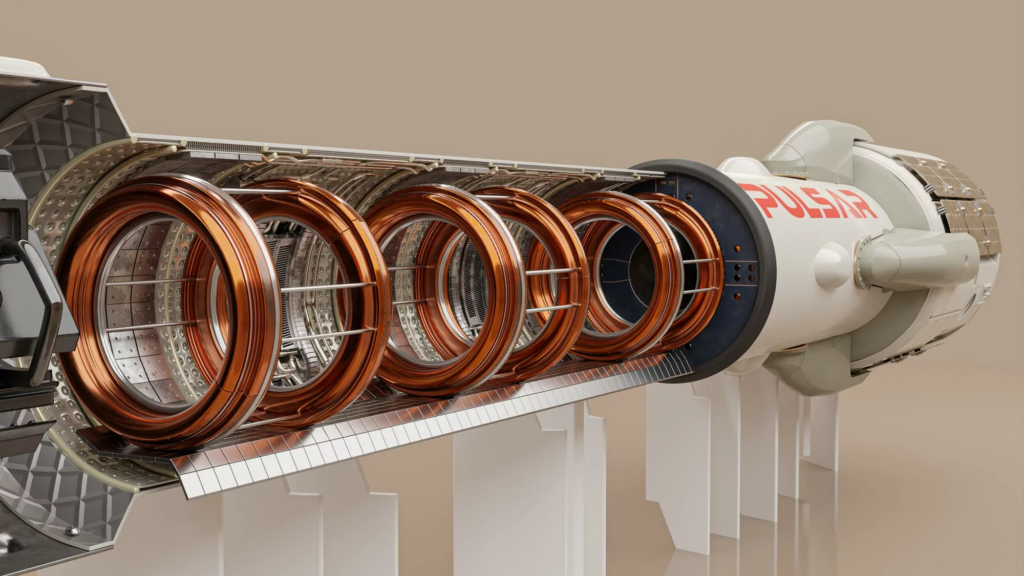
Propulsion energy rocket from UK’s Pulsar is one of the experimental technologies leading the way. (Pulsar)
Magnetic confinement also advanced.
In 2024 the Joint European Torus reported a 69 megajoule five second pulse, an experimental record that stressed real world plasma control in reactor relevant conditions. These achievements are not compact power plants, but they calibrate how close fusion is to routine energetics. (The Guardian)
Aneutronic routes are rising as well.
In 2023 researchers reported diagnostically significant alpha production from proton boron 11 reactions inside a magnetically confined plasma, a first in that class of machine. Proton boron 11 does not throw hard neutrons in its primary reaction and produces three energetic alpha particles totaling about 8.7 megaelectronvolts, which makes direct energy conversion and reduced shielding conceptually attractive if the high temperature burden can be met. (Nature)
What the declassified record shows the government asked for
From 2008 to 2010 the Defense Intelligence Agency funded a slate of Defense Intelligence Reference Documents, now released under FOIA, covering advanced propulsion topics.
Among them are entire monographs on aneutronic fusion propulsion and inertial electrostatic confinement fusion.
These are not internet rumors. They are DIA labeled products, stamped as unclassified but previously controlled, written to give acquisition and threat analysts a rigorous primer on future flight physics.
The aneutronic fusion volume lays out why helium and boron fuel cycles are attractive from a radiation standpoint and how direct conversion might work if you can reach the required temperatures.
The inertial electrostatic confinement report surveys approaches like Polywell, field reversed configurations that favor beam like ion distributions, and possible space propulsion applications if net energy could be achieved. Neither document claims operational vehicles. Both show the problem was being scoped in detail for aerospace analysts.
It is equally important to include the present official view. In 2024 the Pentagon’s All domain Anomaly Resolution Office published its historical volume stating it had found no empirical evidence of extraterrestrial technology in UAP cases to date.
That conclusion coexists with the fact that DIA did invest in serious horizons studies of fusion powered propulsion and vacuum engineering ideas. The two facts are not logically exclusive. One speaks to current evidence assessments, the other to technology scouting. (AARO)
Where Eric W. Davis and Hal Puthoff fit
The declassified DIA catalog includes a report on warp drives and related metric engineering coauthored by Eric W. Davis, a physicist long associated with EarthTech. The FOIA copy is public.
Separately, Davis wrote an Air Force Research Laboratory survey titled Teleportation Physics Study in 2004, which examined speculative transport concepts through the lens of mainstream physics bounds. These works do not claim operational devices. They map the theory landscape and the energy conditions a real device would face. (Defense Intelligence Agency)
Hal Puthoff, who leads the Institute for Advanced Studies at Austin, published peer reviewed and archived papers on engineering the quantum vacuum and polarizable vacuum representations of general relativity, along with a widely cited overview titled Advanced Space Propulsion Based on Vacuum Engineering.
Whether one agrees with the optimism, the technical writing treats the vacuum as a polarizable medium and explores how altering boundary conditions might change effective inertia and energy extraction pathways.
None of this eliminates the need for large energy flows. If anything, it underlines that truly exotic spacetime architectures would require energy densities that look fusion class at minimum. (arXiv)
[Teleportation Physics Study] (AFRL special report). (I.R.C.)
[Advanced Space Propulsion Based on Vacuum Engineering] (arXiv). (arXiv)
[Engineering the Zero Point Field and Polarizable Vacuum] (arXiv). (arXiv)
Compact fusion architectures that look aerospace relevant
Even without UAP in the conversation, multiple programs are targeting compact fusion for propulsion.
Direct Fusion Drive is a Princeton Satellite Systems and Princeton Plasma Physics Laboratory concept that uses a field reversed configuration and deuterium helium 3 fuel.
Published studies discuss thrust to power of about five to ten newtons per megawatt and specific impulse near ten thousand seconds with hundreds of kilowatts of electric power co generated. NASA’s innovation program has supported mission studies to Pluto and Mars using the concept. (bp-pub.pppl.gov)
Magneto inertial fusion for rockets was examined in NASA funded work led by John Slough. The published Phase II report discusses compression of field reversed plasmoids by liners and direct magnetic nozzles. The engineering is formidable, but the reason it persists is the unmatched energy per kilogram at the system level. (NASA)
Inertial electrostatic confinement and Polywell remain controversial but were significant enough to merit an entire DIA survey, in part because their beam-like distributions could better access aneutronic branches such as deuterium helium 3 and proton boron 11.
Aneutronic routes tempt aerospace designers because they offer reduced activation and the possibility of direct conversion of charged particle energy to electricity. The hurdle is reactivity.
Proton boron 11 needs conditions above two hundred keV equivalent temperature in much of phase space, and bremsstrahlung losses penalize electron rich plasmas.
Recent measurements inside a stellarator class machine show alpha production is tractable to diagnose, but net power remains a research frontier.
This is why UAP origin claims tied to aneutronic fusion must be labeled carefully as hypothesis unless or until there is multi sensor hardware evidence. (Nature)
A quick power budget and why fusion fits the envelope
Take a notional craft of ten thousand kilograms conducting a steady level flight lateral acceleration of ten g at 300 m/s. Force is roughly 980,000 newtons and instantaneous power about 294 megawatts.
If the craft instead uses burst maneuvers with duty cycle ten percent, the time averaged power might settle near 30 megawatts, while peak draws still touch hundreds of megawatts. High temperature superconducting buffers and flywheels could shave peaks, but the primary source must still be in the tens of megawatts class.
A D–T fusion core producing 200 megawatts thermal with thirty percent conversion to electric would net 60 megawatts shaft or bus power. That is aircraft scale.
A deuterium helium 3 engine at similar thermal power would reduce shielding mass but imposes more difficult plasma conditions or the need for helium 3 supply.
The numbers do not prove any UAP uses fusion. They show why fusion is the only known energy process that matches the magnitude without unworkable mass. (NASA Technical Reports Server)
The Navy patents and what they do and do not imply
Between 2016 and 2019 inventor Salvatore Cezar Pais, then working with Navy organizations, filed a series of patents that include a plasma compression fusion device and a craft using an inertial mass reduction device.
The fusion patent describes counter rotating conical structures and a cross-duct chamber. The filings generated extensive media coverage and skepticism from many plasma physicists.
There are also articles and a peer reviewed paper outline by the same author. The key point for a data first analysis is that patents by themselves are not evidence of function.
They are claims lodged with an examiner. The most useful information in the public record is that Navy entities were willing to paper the concepts, and some correspondence about operability and foreign interest exists. That is noteworthy, but it is not a working reactor. (Google Patents)
Declassified logs from the mid-1970s document unusual aerial intrusions near nuclear alert facilities like Loring Air Force Base, with National Military Command Center traffic requesting extra atmospheric analysis during those periods.
These records do not establish propulsion type or origin. They do show why defense analysts would be keen to understand compact high energy power sources and why AAWSAP’s documents logically included fusion propulsion. (Defense Security Service)
A coherent fusion powered UAP architecture, if one existed
Evidence based elements
Power needs in the tens to hundreds of megawatts for agile flight at aircraft mass scales are consistent with high g maneuvers often described in pilot accounts, if those accounts reflect hard kinematics.
Nothing in known chemistry or battery technology can deliver those sustained levels at workable mass. Fusion is the closest physics consistent option.
Hypothesis
A compact fusion primary (D–T, deuterium helium 3, or proton boron 11) feeding a combined electric and directed plasma propulsion suite could deliver both thrust and enormous electrical power for active field control and sensors. Charged particle capture and direct conversion would improve efficiency and reduce thermal rejection problems compared with pure thermal cycles. This could be paired with magnetic nozzles for variable specific impulse and with advanced radiators that transform heat into tightly collimated photon streams for stealthy rejection.
Researcher opinion
For transmedium performance, electric propulsors that couple magnetohydrodynamically to ionized boundary layers could help water to air transitions. A fusion core adds the electrical headroom for such systems. Evidence is still lacking that any observed UAP uses such methods, but the underlying physics literature is mature enough to warrant systematic testing.
Witness interpretation
Reports of silent hovering at high mass are sometimes taken to imply reactionless thrust. A fusion electric system with high area ion drives and tailored exhaust could appear acoustically quiet at altitude, even while expelling momentum. Silence alone does not diagnose new physics.
What Davis and Puthoff change in the frame
Eric Davis’ DIA report on warp drives and his AFRL study do not claim functioning drives. They quantify the energy and exotic matter constraints any spacetime manipulation concept would face.
When one runs those constraints honestly, the numbers point back to energy sources on the fusion or beyond class.
Hal Puthoff’s vacuum engineering papers explore a picture where the vacuum behaves like a polarizable medium. Even if one adopts that picture, practical devices will still need prodigious energy flows.
In short, the work of Davis and Puthoff narrows the plausible energy source for any radical craft to something fusion-like at minimum. (Defense Intelligence Agency)
Implications if fusion power is part of UAP technology
Strategic energy Civil fusion would pass from a climate solution to a dual use technology with aerospace leverage. Nation state investment would spike, and export control regimes would be revised to include aneutronic fuel cycle components and direct energy converters.
Sensor design If compact fusion cores are real in advanced craft, multi sensor suites should look for narrowband x-ray and neutron signatures, for alpha induced secondary emissions, and for thermal rejection patterns consistent with high power density. Field campaigns can be designed with that in mind.
Nonproliferation A militarized compact fusion power plant would not be a weapon by itself, but it would enable directed energy systems and extreme kinematics. Verification regimes would need new inspection hooks around aneutronic fuel supply chains and high power superconducting components.
Transmedium safety If fusion level power is available onboard, interactions with the ionosphere, with seawater, and with sensitive radar apertures must be understood to avoid unintended effects. This is relevant even if the vehicles are ours.
Claims Taxonomy for this topic
Verified
The D–T reaction releases 17.6 MeV per event and on a mass basis exceeds fission specific energy. (World Nuclear Association)
DIA commissioned and released Defense Intelligence Reference Documents on aneutronic fusion propulsion and inertial electrostatic confinement fusion.
Probable
Compact fusion offers the only physically plausible path to sustained multi tens of megawatts for aircraft scale agile motion without extreme propellant mass, given current energy density data. (Derived from the energy table and power budget above.)
Disputed
Navy “Pais effect” patents describe practical fusion or inertial mass modification devices. There is no public test data that demonstrates operational performance, and many domain experts remain skeptical. (Google Patents)
Historical nuclear site UAP incursions indicate technology beyond contemporary aerospace. Logs exist, but causation and performance remain debated. (Defense Security Service)
Legend
Religious or folkloric accounts that equate lights in the sky with cosmic visitors. Presented here only as cultural context, not as evidence.
Misidentification
Some high-speed observables are consistent with sensor parallax, atmospheric ducting, or camera artifacts.
Speculation labels gathered
Hypothesis Fusion powered UAP could combine a compact aneutronic core with magnetic nozzles, direct conversion, and boundary layer control for transmedium operation.
Researcher opinion The most credible near term fusion fit for aerospace is a magneto inertial or field reversed configuration with deuterium helium 3, because of reduced shielding mass and potential for direct conversion. Proton boron 11 remains attractive but very challenging in steady state.
Witness interpretation Reports of instantaneous ninety degree turns could reflect short duty cycle impulses combined with sensor timing artifacts. Fusion class power makes impulses possible in principle, but kinematic reconstructions must be multi sensor before any conclusion.
What to watch next
Aneutronic milestones inside magnetic or magneto inertial machines, especially sustained alpha production from proton boron 11 in reactor class plasmas. (Nature)
Direct conversion demonstrators that can turn charged particle flux into clean electric power at high efficiency.
NASA and DOD mission studies that thread fusion propulsion with realistic mass budgets for radiators and shielding. (bp-pub.pppl.gov)
Sensor campaigns that put calibrated x ray, neutron, and radiofrequency diagnostics on synchronized platforms to probe power signatures in true anomalies. (NASA Science)
Bottom line
When stripped of rhetoric and anchored in numbers, fusion is the only mature physical energy process that both fits inside an aerospace volume and can, in principle, deliver the high and rapid power flows implied by the strongest UAP performance narratives.
The declassified government record does not prove fusion powered vehicles exist.
It does prove that the responsible analytic community has enumerated the same physics constraints and has explored fusion propulsion options that look directly relevant to what UAP would need.
That is why a data first approach keeps pointing back to compact fusion as the prime candidate if the most challenging UAP reports stand up to multi-sensor scrutiny in the years ahead.
In the flat fields outside São Francisco de Sales, Minas Gerais, in Brazil, a 23‑year‑old farmer named Antônio Villas-Boas chose the night to work. The heat of the day bent men and machines; the night gave back a measure of breath. That habit placed him in front of a chapter that would ripple through global UAP history. Long before American audiences learned the names “Betty and Barney Hill,” a Brazilian farmhand walked into the light of an object he said was not built for the roads of this Earth.
Antônio Villas-Boas was the first publicly know abduction case of Brazil (UAPedia)
Across several evenings in mid‑October 1957, the routine cracked. A hard red point hung over his fields, teasing distance, sliding away as he approached and returning as soon as he retreated. On another night the same intruder grew brighter and lower, like an ember that refused to die, until it behaved like a thing with intentions. In Jacques Vallée’s catalog of landings and close encounters, the sequence is captured with a tight chronology: a second observation while he and his brother plowed, the light sidestepping every approach, then a third observation when Antônio was alone and the “red star” resolved into a luminous, egg‑shaped craft that came within 15 meters and descended. (Archive.org)
The last of those nights – most sources state 15 or 16 October 1957 – marks the event for which he would be known. A minority of early documents use a December date, almost certainly a protective obfuscation or translation artifact from the first English write‑ups. We will retain the October date standard in Brazilian and international literature, while noting the December variant appears in an early Flying Saucer Review article. (Government Attic)
The approach
Antônio took the agricultural equivalent of a deep breath and kept working. Around midnight, the red star grew into a craft with a domed top and a bright frontal light. He turned the tractor, engine grumbling, when the machine coughed and died. He stepped down and ran. Shapes met him.
Reconstructed scene from the abduction of Antonio Villas-Boas (UAPedia)
They were small men in tight, silvery uniforms that caught his skin like fish scales when he fought. Their helmets were opaque save for a narrow slit at eye level. They wore white shoes that left unusual heel‑less prints in the soft earth. They said nothing he could understand, communicating in short, strident bursts that sounded more like barks than words. Overpowered, he was carried up a ladder into the craft, which stood on three splayed legs, a rotating cupola above, and a strange protruding “plank” on its side. These details – ladder, tripod landing gear, revolving dome, and the heel‑less prints – appear in the earliest published deposition and its accompanying drawings.
Inside, the strangeness became clinical. The captors stripped him without tearing a seam and hurriedly swabbed his body with a sponge soaked in a cool, pungent liquid. A flexible tube drew blood from two points near the prominence of his chin, an action that left small marks that he later said remained visible for years. The treatment was efficient and wordless, organized around rooms whose walls bore functional apertures, tables with three legs, and a sense of pressurized quiet broken only by those clipped, growling syllables.
Then came the smoke. In a small room, a hazy atmosphere made his chest tight and his stomach turn. He wondered if the vapor made it possible for at least one visitor to breathe without a helmet. Dr. Olavo Fontes, a Rio de Janeiro physician who would become the first investigator to interview and examine him, later noted the sequence of sensations as consistent with a sudden environmental change and recorded the witness’s speculation that the “smoke” served respiratory needs for the crew, especially the unhelmeted female he encountered next.
The woman
By his account the door opened and a woman entered, small like the others but different in ways that decades of retellings would magnify. In early translated notes she is described as slight, with sparse blond hair and no visible eyebrows or eyelashes, her features sharp, her ears small, her eyes set slightly oblique. Other later summaries emphasize catlike blue eyes, long platinum hair, and body hair that was vividly red. Memory and translation disagree in the particulars, though both threads converge on a figure presented as deliberately sexual and deliberately silent.
She did not kiss. She bit lightly at his chin. They had intercourse. When it was over, she smiled and made an unmistakable gesture that lives in the literature as one of the most unnerving details of any classic CE‑4: she pointed to her belly, then toward the sky. Antônio’s interpretation was direct. He believed he had been used as breeding stock and that any offspring would be raised “up there.”
He was then allowed to dress and escorted on a perfunctory tour of the craft. He tried, farmer‑practical, to steal a small clock‑like instrument as proof. An attendant caught his hand and replaced the device. Moments later, the ladder telescoped, the door closed like it had never been there at all, and the machine rose without sound. Four hours had passed.
Physical traces and physical malaise
Morning brought quiet evidence. Heel‑less footprints pressed into the plowed soil. Three leg‑prints deep enough to impress the family. Two small lesions on his chin where blood had been taken. These items appear in the first published report and would be emphasized in subsequent analyses as grounds that, at minimum, the witness recalled consistent details over time.
His body was less quiet. Nausea, loss of appetite, a burning sensation in his eyes, headaches, and skin eruptions that formed reddish, tender nodules with a central pore. He felt weak and slept poorly. This cluster prompted medical attention. Dr. Olavo Fontes interviewed and examined the farmer early in 1958, in a session that would later be translated and serialized in Flying Saucer Review. Fontes viewed the symptoms as consistent with a dose of radiation or some energetic field exposure, and he documented them as such for both Brazilian colleagues and the American civilian group APRO.
That clinical reading aligns in broad strokes with what later defense‑medical surveys call “anomalous acute and subacute field effects” in aerospace‑adjacent exposures: erythema, fever, headache, malaise, transient neurological complaints, and skin eruptions. We cite this only to situate the physiology in a modern medical rubric and not to center any government assessment, in line with UAPedia’s editorial guidance to treat official sources cautiously and to weigh them alongside civilian investigations. (Defense Intelligence Agency)
How the story surfaced
Brazil’s early UAP community was unusually organized for the 1950s. Journalist João Martins, writing for the widely read O Cruzeiro, invited witnesses to come forward during a late‑1957 UAP wave. Encouraged, Antônio wrote him a letter that would eventually route to Dr. Fontes and to the Sociedade Brasileira de Estudos Sobre Discos Voadores (SBEDV). From there the case entered a long pipeline. The earliest definite publication was in SBEDV’s April–July 1962 bulletin, then the English‑language world learned the details through Gordon Creighton’s translations in Flying Saucer Review in early 1965, followed by Fontes commentary in 1966–67. This is why a 1957 event reads in English archives as if it debuted eight to ten years later. (sohp.us)
Those early FSR installments matter for their granular detail. Part 1 fixed the machinery, the ladder, the crew’s uniforms, the blood draw at the chin, the heel‑less footwear, the rotating cupola and three landing legs. Later segments preserved Fontes’s clinical perspective, including his notes on the “smoke” or gas and the witness’s emotional reactions.
The witnesses beyond Antônio
While the abduction narrative is single‑witness, the nights leading up to it were not. Vallée’s chronology captures multi‑evening interactions with the red light, including the night Antônio and his brother João tried to close with it and found it always out of reach. Early Brazilian notes also mention that on two separate occasions the family farmhouse and its yard were “floodlit” from above, witnessed by his mother and brother, and that neighbors reported unusual lights. These auxiliary observations cannot prove the boarding, but they contour the week as a period of persistent aerial activity rather than a solitary vision. (Archive.org)
The case against the case
Skeptics have never given this case a free pass. Researcher Peter Rogerson argued in Magonia that the story likely drew from a November 1957 article in O Cruzeiro and from contactee motifs popularized by George Adamski. He also objected to what he saw as an uninformed class assumption by early ufologists who imagined a rural Brazilian could not fabricate such a narrative, noting that Antônio later studied law, became a practicing attorney, and by temperament was upwardly mobile. Rogerson’s critique remains the anchor of the “cultural contamination” hypothesis. (Wikipedia)
Two things complicate the skeptical reading. First, the case predates the Hill abduction by four years, which takes it outside the template that later shaped the “abduction” genre in North America. Second, Antônio’s testimony did not require hypnotic regression. He offered the sequence in normal waking memory, and his descriptions of environment, procedure, and emotion remained stable over time. That does not end the debate, but it raises the evidentiary threshold for a simple “borrowed story” explanation. (Wikipedia)
The case for the case
The internal consistency of the early depositions, the medical pattern Fontes recorded, the multi‑night prelude with additional family witnesses, and the canonical mechanical details—heel‑less footwear, tight‑fitting suits with a belt‑mounted light, the tripod landing gear, the retractable ladder—compose a dossier that has resisted easy prosaic attribution for nearly seven decades. Many details have since echoed in other close‑encounter files that carry very different cultural fingerprints, from France to the United States, which suggests a shared core beyond pop‑myth recycling.
Anthropology meets aerospace: why this story still matters
Read with the long view of folklore and religion, the Antônio Villas Boas narrative stands at the crux of several streams. The sexual element echoes global traditions of human–otherworld contact, from medieval incubus–succubus motifs to the “borrowed” offspring logic in faerie lore. Vallée and others have flagged these parallels not to demote the case to fable but to map the human grammar that non‑human intelligence may exploit to communicate, or to cloak, biological programs. (Archive.org)
Read with a scientific eye, the case contributes early data points on physiological after‑effects and environmental interaction. The cutaneous nodules with central pores, the conjunctival irritation, the fatigue and headaches, and the timecourse of symptom resolution remain recognizable in later clinical compilations of anomalous exposures. This does not prove origin. It does, however, argue that what happened was not purely imaginary, and that field effects of some kind interacted with a human body in a way that produced a describable syndrome. (Defense Intelligence Agency)
Read within Brazilian UAP history, the case sits on a road that runs from Ubatuba to Colares, and to the 1986 “Night of the UFOs,” a path where civilian witnesses and military institutions alike logged craft that out‑accelerated and out‑maneuvered conventional explanations. Antônio’s farm becomes an early dot on a national map of non‑prosaic encounters.
Reconciling the mismatched details
The literature is not clean‑edged. Dates vary between October 15/16 and a December 14/15 window in early English publications. Descriptions of the female entity’s hair and features diverge between early translated depositions and later popular summaries. These are not trivial contradictions. They reflect the realities of translation, editorial anonymization in the 1960s, and the tendency of repeated retellings to compress variation into a single “definitive” portrait. UAPedia’s posture is to privilege the earliest documented sources that are closest to the witness and the investigators, then to annotate later embellishments as such. In this file, that means the SBEDV bulletin and the 1965–67 Flying Saucer Review series translated by Gordon Creighton and authored or annotated by Dr. Olavo Fontes. (Government Attic)
What happened to Antônio
He married. He practiced law. He did not recant. Brazilian researchers confirmed his date of death as 17 January 1991. The case followed him as a permanent footnote, an event reported at 23 that he repeated without embroidery into middle age. That persistence matters to any sober reading of witness credibility.
Evidence summary
Witness testimony: A detailed narrative delivered without hypnosis and consistent across multiple interviews recorded beginning in early 1958.
Physical environment: Reported heel‑less prints and tripod impressions in plowed soil; no surviving chain‑of‑custody measurements were published beyond contemporary descriptions.
Medical observations: Early‑stage, short‑lived syndrome cataloged by a medical doctor that resembles low‑grade radiation‑type exposure; described symptoms included eye irritation, nausea, anorexia, headaches, and tender cutaneous nodules.
Corroborative witnesses to prelude events: Brother and mother reported “floodlighting” of farmhouse and anomalous lights in the same time window.
Publication chain: First Brazilian notice in SBEDV 1962; first English‑language dissemination 1965–67 through Flying Saucer Review, with Dr. Fontes’s medical commentary. (Government Attic)
Claims Taxonomy
Primary claim: Forced boarding of a landed craft and sexual encounter with a non‑human entity. Assessment:Disputed. Strong, consistent testimony with medical notes and multi‑night prelude; absence of independent witnesses to the boarding and lack of preserved physical trace records keep this from “Verified.” Skeptical arguments of cultural contamination and delayed publication timelines remain unresolved. (Wikipedia)
Secondary claim: Physiological after‑effects consistent with energetic exposure. Assessment:Probable. Symptoms recorded contemporaneously by a physician are specific and fit known clusters, though mechanism and source are unknown.
Tertiary claim: Reproductive intent communicated by the female entity’s gestures. Assessment:Probable as witness interpretation of a clear nonverbal signal; content cannot be independently verified. (Wikipedia)
Speculation Labels
Hypothesis: The encounter was part of a biological sampling or hybridization program. Researcher opinion. Early commentators, including FSR, floated this on the basis of the woman’s gesture and the overall procedural tone of the event. The idea remains unproven. (Government Attic)
Witness interpretation: The “smoke” or vapor was a breathing medium for the unhelmeted female. This explanation was offered by the witness and discussed by Fontes; no test was performed.
Researcher opinion: The pre‑abduction “light games” suggest deliberate conditioning or surveillance prior to capture. This is an inference drawn from the repeated, evasive behavior of the red light over several nights. (Archive.org)
Context within the abduction canon
Antônio Villas Boas’s report is widely cited as the first detailed, internationally known abduction claim of the post‑war period. It predates the Hill case and introduced motifs that would recur: small uniformed entities, onboard medical procedures, nonverbal control, and reproductive themes. The case’s global resonance may owe as much to its timing in Brazil—where civil society and serious investigators like Fontes and SBEDV gave it oxygen—as to any sensational element. (Government Attic)
Editorial analysis
What resists dismissal: The case’s early date, the internal narrative coherence, familiars seeing lights in the same period, and the recorded medical syndrome argue against a simple invention. The descriptive engineering—ladder mechanics, airflow from the cupola, retracting door seams—reads like remembered machinery rather than dream logic.
What resists confirmation: No preserved soil casts or photographs have surfaced in public archives. Medical records beyond Fontes’s notes are not available for independent audit. Skeptics plausibly point to cultural sources and delayed publication as contamination vectors.
Our heterodox take: If you strip away the cultural varnish, you still have a small, glove‑tight crew using a compartmentalized craft, exerting effortless control over a healthy adult, sampling blood, bathing skin in a neutralizing fluid, and initiating a reproductive act followed by a nonverbal “custody” claim. That operational profile has echoed through multiple geographies and decades. If this is theater, it is a remarkably persistent one.
Note on sources: UAPedia avoids reflexive deference to government documents and weighs them alongside civilian, medical, and archival materials. Our emphasis here is on the SBEDV bulletin lineage and the 1965–67 FSR series, plus Vallée’s catalog work.
Cross‑links for UAPedia readers
Hynek’s Close Encounters of the Fourth Kind (Abductions)