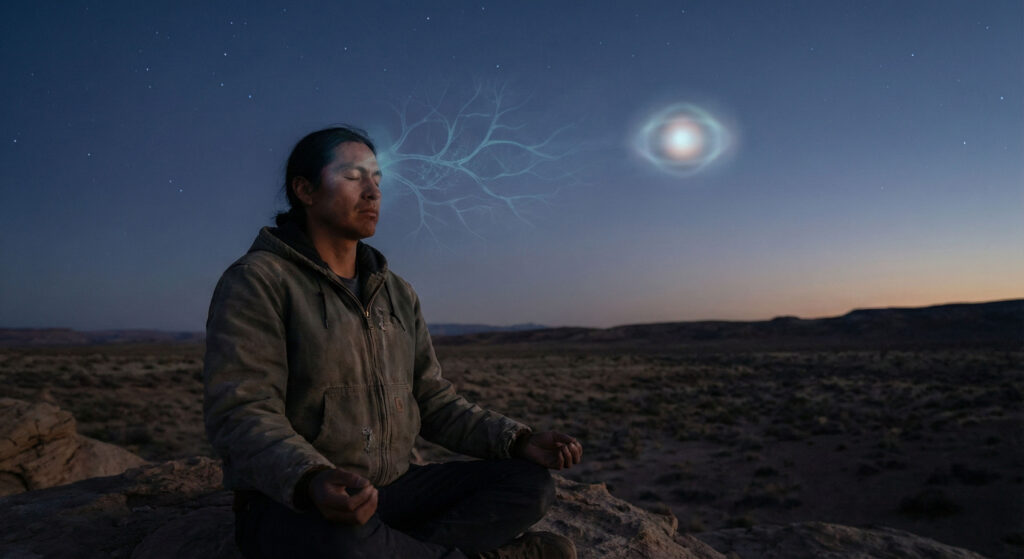
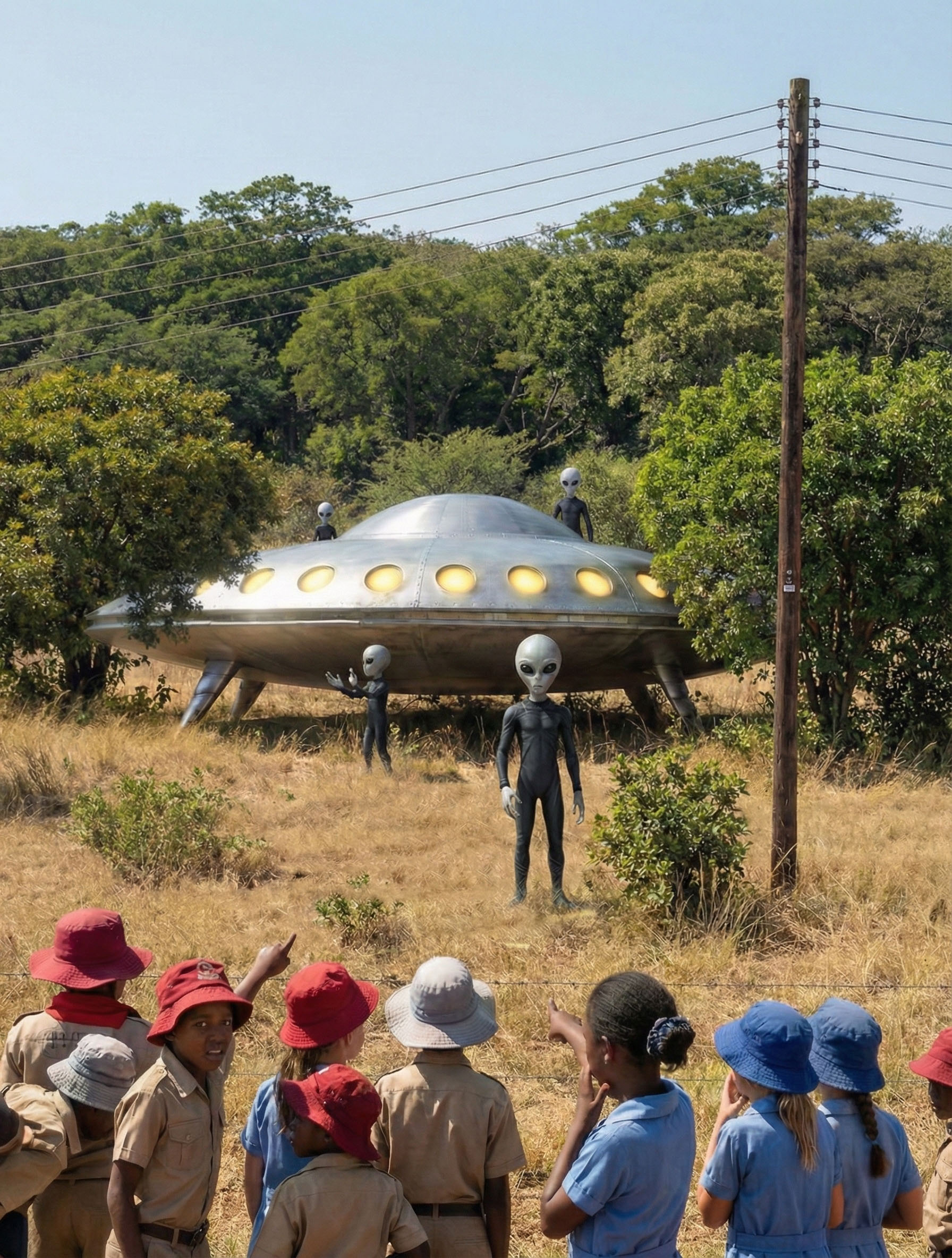
UAP reports that include mind-to-mind communication, “downloads” of information, missing-time, and reality-distortion effects are not rare edge cases. They show up across decades, cultures, and witness types.
This feature assembles the strongest available datasets and peer-reviewed context for one specific question: do UAP interact with human consciousness, and if so, here are the data key points:
Large-N survey data from the Dr. Edgar Mitchell FREE Foundation reports that 78% of contact experiencers in Phase 2 endorsed some form of telepathic communication, and that 74% reported net positive life impact. The same project reports that 77.4% saw a non-man-made craft, 57% reported visually seeing a non-human intelligence, and 62% reported other witnesses to the craft.
Multiple close-encounter case clusters include reports of cognitive effects such as the “Oz Factor”, a calm, time-odd, hyperreal state described by investigator Jenny Randles and echoed by many witnesses. (HowStuffWorks)
Cross-domain science shows that altered states of consciousness can reorganize perception and information flow in the brain. Contemporary models like the Entropic Brain and the REBUS framework help describe how highly structured, sometimes “telepathic-feeling” experiences can occur in non-ordinary states. (Frontiers)
Independent government-sponsored and academic parapsychology reviews disagree on conclusions but agree that some “anomalous cognition” effects are statistically non-zero, with replication claims and counter-analyses both on record. This does not prove UAP telepathy. It does keep the door open to consciousness-mediated information effects. (Bren School of ICS)
Several well-documented mass-witness UAP events include reports of non-verbal messaging. The Ariel School case in Zimbabwe is the most cited schoolyard example where witnesses described environmental warnings received as thoughts. (Wikipedia)
Implication: a purely nuts-and-bolts model of UAP that ignores mind-to-mind interaction and altered states leaves too much of the record unexplained. The more complete picture is a hybrid that allows technological, biological, and informational layers to operate together.
UAP reports that include mind-to-mind communication, “downloads” of information, missing-time, and reality-distortion effects are not rare edge cases. (UAPedia)
The data we have
What experiencer surveys actually say
The FREE Foundation’s multi-year, multi-language survey is the largest structured dataset anywhere on UAP contact experiences. Phase 1 and 2 were quantitative; Phase 3 was qualitative. Key Phase-2 findings relevant to consciousness:
78% reported “some type of telepathic or thought transference, or direct knowing” from non-human intelligence.
Among those who saw a craft, 56% also reported telepathic communication with a non-human intelligence.
74% said contact changed their life in a positive way; 84% did not want their contact to end while it was happening.
77.4% reported seeing an intelligently controlled craft that was not man-made; 62% said there were other witnesses.
These numbers do not prove ontological claims about who or what non-human intelligences are. They do demonstrate that reports of mental interaction are widespread in a large sample studied with basic survey hygiene such as bias checks and duration analysis.
A limitation that must be noted: FREE’s sample is self-selected. That means estimates are informative about patterns within experiencers but not prevalence in the general population. The study authors acknowledge this and encourage replication and independent analysis.
Consciousness science that helps frame the reports
Several modern models describe how unusual information access and hyper-salient experiences can occur when normal predictive constraints loosen.
The Entropic Brain hypothesis proposes that psychedelics and some altered states increase neural entropy and relax high-level priors, enabling atypical perceptions and meanings. This does not imply hallucination equals truth; it explains why highly structured extraordinary content can emerge. (Frontiers)
The REBUS model integrates the entropic brain with the free-energy principle to show how relaxed beliefs under psychedelics can liberate bottom-up signaling. This framework is a useful analog for contact claims that begin during meditation, high arousal, or liminal states. (mindmedicineaustralia.org.au)
Integrated Information Theory (IIT) argues that consciousness is an intrinsic property of systems with high integrated information. IIT is controversial and evolving, but it is a rigorous attempt to quantify consciousness that keeps open, in principle, the idea of non-biological minds. (PLOS)
Entity encounter research in clinical settings supports at least one important observation. In a large survey of inhaled N,N-DMT sessions, a majority of participants described meeting apparently autonomous intelligences, often with non-verbal communication. Although these are pharmacologically induced states, they provide a comparative dataset for structured, intelligent-seeming interactions without normal sensory input. (SAGE Journals)
None of this proves UAP-related telepathy. It clarifies that human minds can enter states in which information feels directly “known”, that complex dialogues can be reported, and that the brain has mechanisms to generate and receive highly structured content outside everyday channels.
Case literature where cognition is part of the event
Ariel School, Zimbabwe, 1994. Sixty-two students reported a close encounter with beings near the playground. Multiple children told investigators that messages about environmental harm were “placed in their heads”. The telepathic layer is most emphasized in psychiatrist John Mack’s interviews and is disputed by some skeptics; the mass-witness core of the event remains one of the most studied school cases. (Wikipedia)
The “Oz Factor”. British investigator Jenny Randles documented many close-range UAP events where witnesses described an enveloping stillness, altered soundscape, time irregularities, and a sense of being removed from ordinary reality. The pattern is now widely referenced as context for high-strangeness encounters. (HowStuffWorks)
Vehicle interference and physiological effects. CUFOS has cataloged hundreds of cases of engines and electrical systems failing during close UAP approaches. These are not per se “consciousness” data, yet they frequently co-occur with altered states reported by witnesses and provide external anchors for the timing of the events. (Center for UFO Studies)
“Hitchhiker” and post-encounter anomalies. Reports of poltergeist-like effects and cognitive disturbances following close encounters or prolonged fieldwork appear in both civilian and government-adjacent narratives. A Defense Intelligence Reference Document surveyed acute and subacute field effects on human tissues during anomalous exposures. It is a catalog, not a verdict, and its existence signals official interest in human effects. (Defense Intelligence Agency)
Leading theories of UAP–consciousness interaction
UAP studies are still pre-paradigmatic. Several frameworks attempt to organize the strangeness without discarding data that do not fit a single hypothesis.
Vallee–Davis six-layer model. Jacques Vallée and Eric Davis propose that anomalous events operate across six layers, from physical to psychic to social information. Cognition is not an epiphenomenon in this model. The phenomenon presents through a semiotic stack that includes meaning, memory, and cultural feedback. (bdigital.ufp.pt)
Speculation label: Hypothesis.
Usefulness: predicts that genuine cases will often mix consistent hard-tech signatures with reality-bending “trickster” elements and direct mental effects.
Control-system hypothesis. Vallée’s earlier work suggested that the phenomenon may act like a feedback system nudging human beliefs and behavior. Telepathic content in schoolyard cases that emphasize environmental messages would, in this view, be an intervention vector. (ia801800.us.archive.org)
Speculation label: Researcher Opinion.
Consciousness-first models. These include panpsychist-friendly readings and some IIT-inspired views that treat consciousness as fundamental, with physical reality as one expression. In this framing, UAP intelligences may be able to couple to minds through unknown information channels that feel telepathic. (PLOS)
Speculation label: Researcher Opinion.
Psi-mediated instrumentality. If small but real anomalous information transfer exists, a technologically superior intelligence might be able to amplify it or use it as a low-energy signaling channel. Star Gate meta-debates map the boundary conditions. (Bren School of ICS)
Speculation label: Hypothesis.
Altered-state gateways. Meditation, liminal attention, and extreme arousal can shift brain priors. The REBUS model predicts easier access to novel interpretations and bottom-up signals in such states. “Contact modalities” built around quieting the default mode network hypothesize increased susceptibility to non-ordinary information. (mindmedicineaustralia.org.au)
Speculation label: Witness Interpretation and Researcher Opinion.
None of these models abolish the need for hard data. They explain why high-strangeness content, including telepathic impressions, so often co-travels with close-range UAP.
Witness interpretations and first-hand accounts
Mass settings such as schoolyards and large outdoor gatherings simplify some biases. In Ruwa, multiple independent drawings and individually recorded interviews show convergences about the beings’ appearance and the content of “mental messages” about environmental harm.
Critics argue suggestion effects and media contamination. The back-and-forth underscores why protocol matters and why school cases remain central to consciousness-interaction hypotheses. (Wikipedia)
Pilots and police are trained observers but not immune to altered-state effects. Near misses, electromagnetic interference, and the crushing “calm” many report at closest approach fit the Oz Factor profile.
The key point is that altered phenomenology in these cases tracks with independent physical events such as instrument failures or radar hits. (HowStuffWorks)
Clinicians and contact researchers such as John Mack documented patterns in clinical settings. Mack’s position, controversial in his day, was that many experiencers showed no psychosis and that their narratives deserved to be treated as truthful reports of something real, even if the ontology was not settled. (The Lancet)
Where the edges are sharpest
Telepathy rates vs. altered states
The FREE survey’s 78% telepathy figure is high. Critics will point to sample bias; supporters will point to internal validity checks and the match to qualitative themes.
Both are correct in part. The rate itself is not a prevalence estimate for the population. It is a powerful reminder that if you sample deeply among people who have had contact experiences, mental messaging is part of the pattern.
Missing-time and the Oz Factor
Randles’ Oz Factor is descriptive, not explanatory, yet it captures a tight phenomenology. Witnesses describe preternatural quiet, tunnel vision, and elastic time.
That cluster overlaps with states where the brain relaxes its ordinary predictive filters and hyperfocuses on salient input. It is reasonable to hypothesize that non-verbal information, if present, would be most easily “received” in precisely these states. (HowStuffWorks)
Schoolyard messages vs. control-system ideas
Ruwa’s environmental messaging is consistent with the control-system lens. If meaning management is part of the phenomenon, then telepathic, value-laden content that targets the young would be an efficient way to seed cultural shifts. The truth status of any one case remains disputed, but the pattern is visible in multiple geographies and decades. (Wikipedia)
Practical implications
Method design. If human state matters, then fieldwork needs heart-rate, EEG-style monitoring, and carefully documented mental protocols alongside cameras, RF analyzers, and spectra. Pre-registration of protocols and synchronized timing stamps will let future investigators correlate physiological and environmental anomalies with reported mental messaging.
Data ethics. Telepathic-content claims can be deeply personal or destabilizing. Researchers should borrow best practices from trauma-informed care and clinical research ethics even when the study is non-medical.
Policy. Aviation safety reporting should allow cognitive effects without stigma. If pilots feel compelled to omit altered-state descriptions, we lose signal that might correlate with instrument anomalies.
Theory. Models that allow co-equal technological and informational layers would better fit the record than uni-cause explanations. Vallée’s layered approach and consciousness-first models offer testable predictions. (bdigital.ufp.pt)
What would progress look like
Converging modalities. Combine multi-sensor instrument packages with structured mental protocols and real-time bio-metrics to test whether reported messaging correlates with measurable environmental change.
Registered replication. Encourage independent teams to reproduce FREE-style questionnaires with improved sampling frames, including control groups and blinding where possible.
Theory-driven predictions. The six-layer and REBUS-informed models should make explicit predictions that can be falsified in field trials. For example, if relaxed priors increase measurable anomalies, then heart-rate variability or EEG entropy should covary with specific environmental markers.
Frequently asked questions
Q: If altered states can produce convincing false perceptions, why trust telepathy reports at all? A: Because some of the strongest accounts co-occur with independent anchors such as multiple witnesses, instrument interference, or trace effects. The correct response is not to dismiss but to design protocols that collect both phenomenology and instrumentation in sync. (Center for UFO Studies)
Q: Does any lab result prove mind-to-mind UAP messaging? A: No. Lab work on anomalous cognition is suggestive and debated. It shows why a hard prohibition against mind-mediated effects is unscientific. Field research must do the rest. (Bren School of ICS)
How to use this article in your research
Treat the FREE survey as a hypothesis-generator for what to measure in the field, not as a population-level prevalence map.
Use the Oz Factor as a cue to mark timestamps for environmental data review, since many witness-described anomalies cluster in that window. (HowStuffWorks)
Where mass-witness cases include reported telepathy, separately code the physical, informational, and social layers as the Vallée–Davis model suggests. (bdigital.ufp.pt)
Bottom line
The pattern that emerges across surveys, casework, and comparative consciousness science is consistent. Non-verbal information transfer and altered phenomenology are not rare adornments to UAP encounters.
They are often central features.
The strongest current model is hybrid. It expects craft-like behavior and sensor effects, and it expects meaning-bearing, mind-centered interaction. Progress now depends on instrumenting both sides of the encounter with equal care: the environment outside the witness, and the brain-mind inside.
Claims Taxonomy
Verified: CUFOS-documented vehicle interference as a historical phenomenon; not an origin verdict. (Center for UFO Studies)
Probable: High rates of reported telepathy in experiencer samples; the Oz Factor cluster in close encounters.
Disputed: Ariel School telepathic content; laboratory-psi implications for UAP. (Wikipedia)
Legend: None identified in this explainer by design.
Misidentification: Not applicable to this article’s focus.
Hoax: Not alleged for the datasets discussed here.
Speculation labels
Hypothesis: Vallée–Davis six-layer model; psi-mediated instrumentality; altered-state gateways as signal enhancers. (bdigital.ufp.pt)
Witness Interpretation: Ruwa environmental messaging; reports of “downloads” in close encounters. (Wikipedia)
Researcher Opinion: Consciousness-first readings of UAP; control-system framing. (PLOS)
Note on editorial balance: We cite government, academic, and civilian sources. Government reviews are treated as informative but not dispositive. Surveys are weighted for pattern discovery, not population prevalence.
SEO keywords
UAP telepathy, non-human consciousness, Oz Factor, Ariel School Zimbabwe, Vallée six-layer model, experiencer survey data, anomalous cognition, REBUS entropic brain, CUFOS vehicle interference, UAP consciousness interaction, contact modalities, UAP psychology, telepathic communication, UAP ethics, UAP research methods.
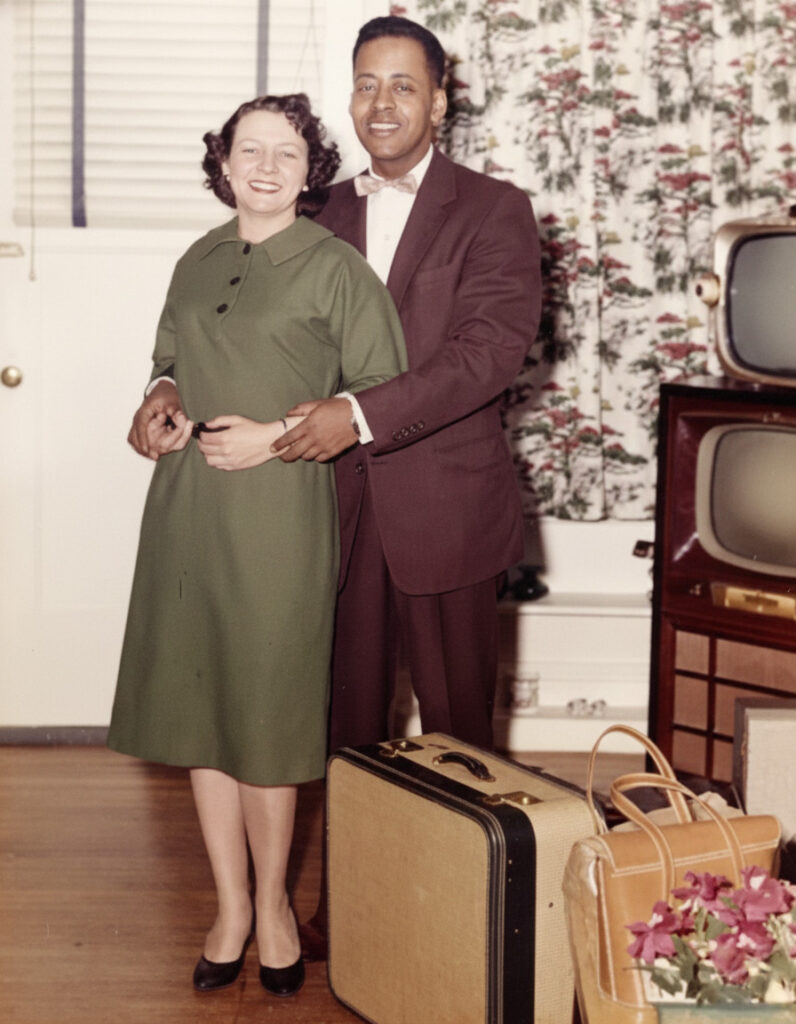
On the night of 19–20 September 1961, New Hampshire residents Betty and Barney Hill reported a close encounter near Indian Head in the White Mountains.
Returning from a brief, late‑season honeymoon drive to Niagara Falls and Montréal, the Hills headed south through New Hampshire’s White Mountains on the night of 19 September 1961. The couple – Betty, a social worker, and Barney, a postal employee and Civil Rights advocate – were determined to make the long trip home without stopping. Around 10:30 p.m., near Lancaster, Betty noticed a bright object below the Moon that seemed to follow them as they drove. Curiosity turned to unease when the “star” changed shape, pacing their car and dipping closer to the treetops. By the time they reached Franconia Notch, the light had grown larger and maneuvered directly over the highway. Pulling into a clearing, Barney stepped out with his binoculars and saw what he later described as a structured craft with porthole‑like windows and several humanoid figures inside. Terrified, he hurried back to the car, and the couple sped away. Soon afterward, they heard a series of rhythmic “beeping” sounds that made the car vibrate and their consciousness waver. Moments that should have filled the next two hours vanished from memory, an absence of time they noticed only upon arriving home in Portsmouth in the early morning hours of 20 September.
Their account became the template for what later researchers would call a CE‑4 abduction: a structured craft, close‑range observation of occupants, missing time, and subsequent recall under clinical hypnosis. The Hills were respected community members with no obvious motive to fabricate, and their testimony generated independent documentation, including a contemporaneous investigation by NICAP and a U.S. Air Force intelligence report preserved in university archives. The result is one of the most documented UAP encounters on record, and a foundational case in abduction research.
Betty and Barney Hill at home before their honeymoon travel in 1961 (Betty and Barney Hill | UAPedia)
Method and sources
This investigation synthesizes:
primary contemporaneous reporting by NICAP investigator Walter N. Webb;
archival holdings at the University of New Hampshire (UNH) including artifacts;
the 1965 Boston Traveler exposé that forced the case into public view;
the 1966 John G. Fuller “Look” magazine series and subsequent book; and
later scientific debate around the “star map.”
Timeline: 19–20 September 1961
Initial sighting and pursuit. Near Groveton, NH, the Hills noticed a bright moving “star‑like” object below the Moon and Jupiter. As they drove south on U.S. Route 3, the object executed abrupt course changes and descended toward them. In Franconia Notch, the craft stopped ahead and low over the highway. Through 7×50 binoculars, Barney observed a row of windows and 8–11 figures moving inside a lighted corridor. Frightened, he ran back to the car, declaring the beings were “somehow not human.”
“Beeping” sounds and missing time. Shortly after fleeing, both heard a series of coded “beeping” or “buzzing” sounds that made the car vibrate. The next thing they clearly remembered was driving much farther south, with about two hours unaccounted for.
Immediate actions. On advice from a family member, Betty phoned Pease Air Force Base. Major Paul W. Henderson later compiled an Air Intelligence Report on 21 September 1961; the file is preserved within the Hills’ UNH collection.
NICAP investigation. On 21 October 1961, Webb conducted a six‑hour interview. His memorandum judged the Hills intelligent and sincere, and concluded the incident “occurred exactly as reported” with ordinary uncertainties of human observation.
Evidence lines
1) Witness testimony
Betty and Barney independently described a structured craft with windows and entities seen at close range. Webb’s report captured their demeanor, details of the approach, the windows, the figures’ movements, and Barney’s fear of being “captured like a bug in a net.” These particulars were recorded before any hypnosis and form the bedrock of the case.
2) Physical and archival artifacts
UNH’s Special Collections preserves the dress Betty wore that night, correspondence, diaries, audio tapes, photographs, and materials relating to the later “star map.” The dress and the star‑map materials are explicitly listed among collection highlights. The existence of artifacts does not by itself prove an abduction, but it anchors the case in trackable objects and primary documentation. (Library | University of New Hampshire)
3) Official records and radar mention
Henderson’s 21 Sep 1961 Air Intelligence Report is documented in the UNH holdings; later correspondence cites an Air Force information report and a Project Blue Book note. A Concord Monitor retrospective quotes language indicating a possible but uncertain radar observation that night; NICAP’s own summary characterizes the radar correlation as weak. These sources converge on “inconclusive.” (University System of New Hampshire)
4) Hypnosis and recall
In 1964 psychiatrist Dr. Benjamin Simon conducted separate hypnosis sessions with each of the Hills to address anxiety and nightmares. The sessions yielded detailed narratives of medical‑style examinations aboard a craft, and the now‑famous sketch of a “star map” later linked to Zeta Reticuli by researcher Marjorie Fish. Simon, however, remained noncommittal and raised the possibility that Betty’s dreams influenced later hypnotic recall. (bpl.org)
5) Public disclosure and cultural impact
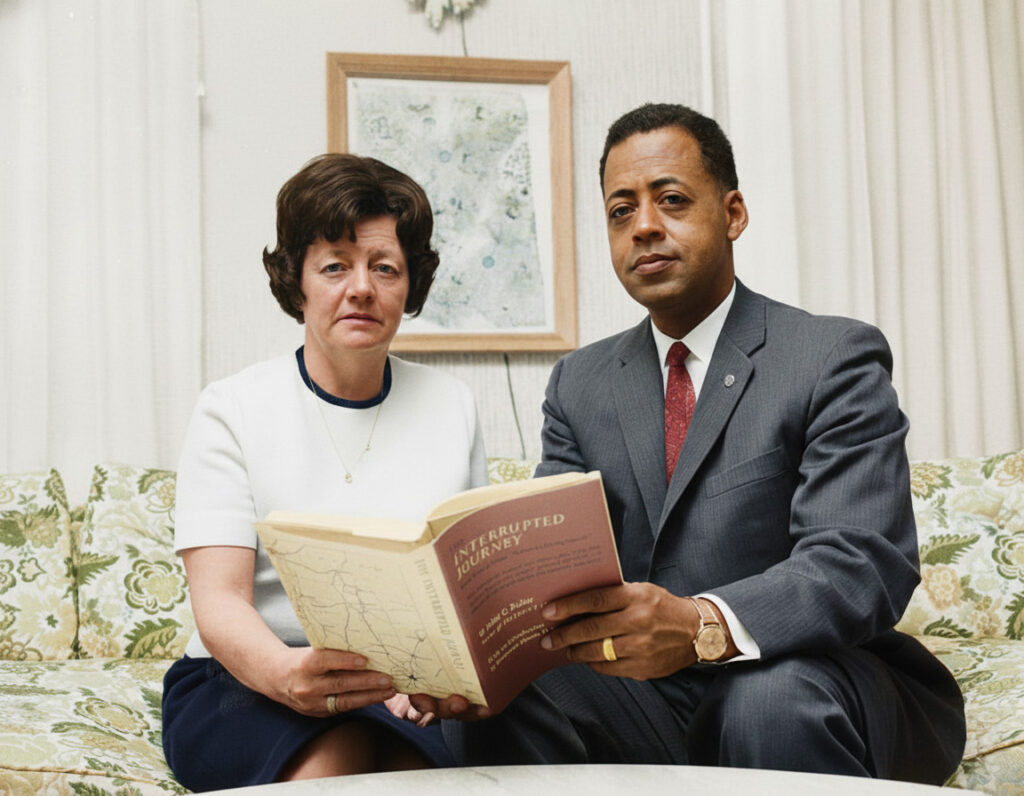
The case became national news after John H. Luttrell’s five‑part front‑page series in the Boston Traveler beginning 25 Oct 1965. Fuller’s two‑part “Look” magazine feature and 1966 book The Interrupted Journey then cemented the narrative and brought the hypnosis content into the mainstream. (bpl.org)
Betty and Barney Hill in 1966 for the release of The Interrupted Journey by John G. Fuller (UNH Archive | UAPedia)
The “star map” debate
The claim. Under hypnosis Betty drew a map of star “trade routes.” In 1974 Astronomy magazine ran a feature, “The Zeta Reticuli Incident,” presenting Marjorie Fish’s 3‑D model that seemed to match Betty’s drawing when viewed from Zeta Reticuli. The magazine invited extended debate. (Astronomy)
The rebuttals. Carl Sagan and Steven Soter argued in Astronomy in 1975 that the resemblance reflected chance pattern matching and selection bias; later, improved stellar distance data from Hipparcos undermined key distances used in the Fish model. The upshot is that the star‑map identification is not robust. (NASA Technical Reports Server)
Assessment. The map remains an intriguing artifact of witness memory, not an astronomical proof‑point.
Alternative explanations examined
Beacon misidentification and fatigue. Writer James D. Macdonald argues that an aircraft‑warning beacon on Cannon Mountain would appear and disappear in a way that matches parts of the drive, and that fatigue and stress plus post‑event hypnosis could explain the rest. This reconstruction is detailed but remains a single‑author hypothesis and does not account well for binocular observations of moving figures behind windows at close range. (JAMES D. MACDONALD)
Conflation under hypnosis. Skeptical appraisals emphasize the malleability of memory under hypnosis and posit that Betty’s vivid dreams, recorded weeks after the event, shaped both spouses’ later narratives. Dr. Simon himself floated a dream‑transfer possibility even as he validated the reality of their anxiety and trauma. (bpl.org)
Radar and physical traces. Radar mention exists but is inconclusive, and no lab result from preserved artifacts has provided definitive attribution to a non‑terrestrial cause. The artifacts do, however, corroborate that the Hills treated the experience as real and took steps to document it. (Center for UFO Studies)
Anthropological, historical, and scientific context
Anthropology and culture. The Hills’ account predates but anticipates later abduction narratives. Elements such as clinical procedures, telepathic communication, and memory suppression recur globally, suggesting either a common experiential substrate or a memetic pattern seeded by early high‑profile cases like this one.
Civil‑rights‑era stressors. As an interracial couple and public servants, the Hills lived with unique social pressures in 1961 New England. This context may have influenced both the experience and its reception, yet it does not negate the specific, detailed observational content recorded in Webb’s early notes.
Science and measurement. Despite abundant testimony and documents, the case lacks a decisive measurement that ties the event to a known sensor track or a lab‑identifiable residue. That gap keeps the strongest claims short of “verified.”
Field summary
Multiple independent lines of documentation exist: the NICAP interview minutes, the UNH archival materials, the Air Force intelligence note, and the public paper trail from 1965–66. None individually proves an abduction, but together they set a uniquely high bar for case documentation.
The “beings behind windows” observation at close range is the most evidentially idiosyncratic element, recorded before hypnosis and thus less vulnerable to memory contamination.
The star‑map identification does not survive stringent astronomical scrutiny and should not be used as proof of origin. (NASA Technical Reports Server)
Claims taxonomy
Close encounter with a structured craft near Indian Head — Probable. Sincere, consistent testimony recorded promptly by a qualified investigator and supported by a coherent timeline. Prosaic explanations remain possible but incomplete.
Observation of non‑human occupants behind windows — Disputed. Strong witness description; competing hypotheses (beacon, aircraft misperception, stress) do not fully account for it, but independent corroboration is lacking.
Abduction and medical examination aboard a craft — Disputed. Emerges chiefly via hypnosis with acknowledged risks of confabulation; therapist suggested dream influence while not dismissing the Hills’ trauma. (bpl.org)
Radar confirmation — Disputed. Documented mention of a potentially relevant radar return exists, but correlation to the Hills’ event is weak. (Center for UFO Studies)
Zeta Reticuli “star map” identification — Misidentification. Subsequent astronomical work and critical analyses undermine the claimed match. (NASA Technical Reports Server)
Speculation labels
Hypothesis: Non‑human intelligence operating a structured craft.
Witness interpretation: Telepathic messaging and “beeping” as intentional control cues.
Researcher opinion: Zeta Reticuli origin theory should be retired pending new, investigation‑grade evidence.
Conclusion
Treating credible testimony as the backbone, the Hill case holds up as a serious close encounter with anomalous characteristics that resist tidy prosaic reduction. The documentation is unusually rich for its era, and much of what the world “knows” about abductions took narrative shape here. The most expansive claims are not proven, and the Zeta Reticuli overlay in particular does not withstand modern scrutiny. Yet the core encounter narrative, recorded before hypnosis by an experienced investigator, remains a strong data point in the historical record of UAP contact.
Betty and Barney Hill; Hill abduction; Indian Head New Hampshire; 1961 UAP case; NICAP; Benjamin Simon hypnosis; Zeta Reticuli star map; Pease Air Force Base; missing time; UAP abduction history.
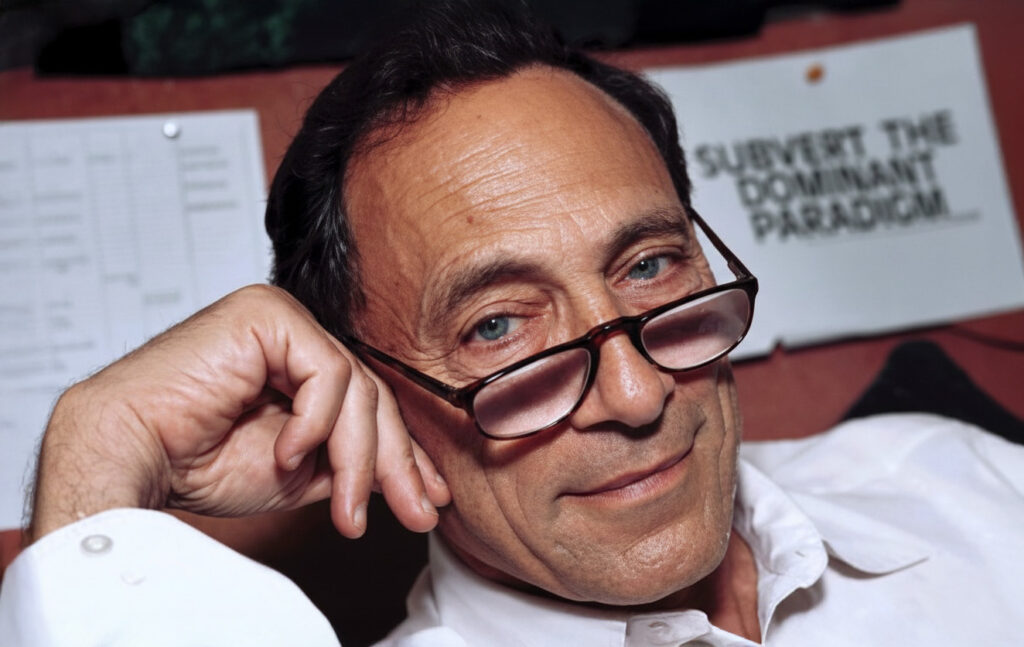
John Edward Mack was a tenured professor of psychiatry at Harvard Medical School whose career bridged mainstream clinical scholarship and frontier research into human encounters with non‑human intelligences. Early work on nightmares, adolescent psychology, and addiction culminated in a Pulitzer Prize for his T. E. Lawrence biography. In the 1990s he founded the Program for Extraordinary Experience Research and treated UAP experiencers as serious witnesses to an ontologically challenging reality. Harvard reviewed his work, then publicly reaffirmed his academic freedom. Mack’s interviews with schoolchildren in Ruwa, Zimbabwe, and his books Abduction and Passport to the Cosmos reshaped the cultural and clinical conversation about contact.
John E. Mack in his office in 2002 (Stuart Conway | UAPedia)
Early life and education
Born in New York City on 4 October 1929; B.A. from Oberlin College in 1951; M.D. from Harvard Medical School in 1955. He trained at Massachusetts General Hospital and the Massachusetts Mental Health Center, and completed psychoanalytic training in Boston.
Joined the Harvard faculty in 1964 and became a professor in 1972. He helped build the psychiatry service at Cambridge Hospital, Harvard’s community teaching affiliate.
From mainstream psychiatry to UAP studies
Mack’s mainstream scholarship included influential work on nightmares and adolescent suicide, and collaboration on the “self‑medication” view of addiction. A widely cited article with Edward Khantzian and Alan Schatzberg appeared in American Journal of Psychiatry in 1974.
His psychobiography A Prince of Our Disorder: The Life of T. E. Lawrence earned the 1977 Pulitzer Prize for Biography.
In the early 1990s, after encounters with experiencers and researchers, Mack began systematic clinical study of reported abductions. He sometimes used hypnosis as a recall aid, which drew methodological criticism, yet he argued that the experiences were deeply real to witnesses and often transformative.
Institutions he built
Center for Psychological Studies in the Nuclear Age established in the early 1980s, later renamed the Center for Psychology and Social Change, then the John E. Mack Institute (JMI). The Center examined the psychological roots of global risk before expanding to “frontiers of human experience.”
Program for Extraordinary Experience Research (PEER) launched in 1993 to study anomalous encounters reported by otherwise healthy individuals. JMI notes the Center developed PEER “with funding from Laurance Rockefeller.”
Landmark moments
1992 MIT Abduction Study Conference. Mack served as co‑chair for the June 13–17 academic conference that produced the 600‑plus page proceedings Alien Discussions.
1994: Abduction: Human Encounters with Aliens was published by Scribner and became a bestseller.
1994–1995 Harvard review. After a fourteen‑month inquiry, Harvard Medical School chose not to sanction Mack; the dean publicly “reaffirmed Dr. Mack’s academic freedom to study what he wishes and to state his opinions without impediment.” Contemporary reporting and the school’s statement document the outcome.
1994 Ariel School, Zimbabwe. Within days of the well‑known schoolyard encounter, Mack interviewed dozens of pupils on camera, work later revisited in the documentary Ariel Phenomenon.
1999: Passport to the Cosmos: Human Transformation and Alien Encounters synthesized his mature view that contact reports suggest an expanded model of reality and of human–non‑human relationship.
Ariel school and abduction cases findings
Mack’s fieldwork at the Ariel School in Ruwa, Zimbabwe, in 1994 became one of his most widely discussed case studies. Dozens of schoolchildren reported witnessing a landed craft and beings of non‑human appearance communicating telepathically about humanity’s stewardship of the Earth. Mack interviewed the children soon after the event, finding their accounts highly consistent and their affect congruent with genuine perception rather than fantasy or contagion. He concluded that the Ruwa testimony illustrated the phenomenon’s cross‑cultural dimension; appearing in a remote African setting with themes parallel to reports from North America; and that it pointed toward an experience interweaving the psychological, ecological, and numinous. The case impressed on him the need for clinicians to suspend premature dismissal and to recognize the ontological challenges such coherent experiential data present.
Across other abduction and contact narratives he investigated, Mack noted recurring patterns: luminous or energetic beings; intense visionary states; episodes of paralysis followed by perceived transport; and transformative aftermaths emphasizing planetary concern and expanded consciousness. He came to view these not solely as psychopathological products but as encounters occurring at the interface of consciousness and a yet poorly understood external reality. His synthesis argued that abduction phenomena embodied both trauma and transcendence, events that might signal an evolutionary or ecological message rather than a clinical disorder. These conclusions placed Mack at the forefront of efforts to interpret UAP experiences as meaningful components of human experience, demanding both scientific rigor and openness to new models of mind and cosmos.
Death
Mack died in London on 27 September 2004 after being struck by a car while attending a T. E. Lawrence conference. Obituaries in medical and national press record the circumstances.
Perspective and legacy
Mack’s heterodox stance treated UAP witnesses as credible informants whose experiences merited careful clinical attention rather than pathologizing dismissal. He argued that the phenomenon challenges a strictly materialist worldview and that experiencers often show trauma‑like signs despite otherwise intact functioning. This reframing seeded today’s patient‑centered approach to UAP contact research, helped legitimize qualitative inquiry into anomalous experiences, and influenced a generation of clinicians and scholars.
Chronological timeline
1929: Born in New York City.
1951: B.A., Oberlin College.
1955: M.D., Harvard Medical School; psychiatric training at Harvard‑affiliated hospitals follows.
1964–1972: Joins Harvard faculty; promoted to professor. Helps build Cambridge Hospital psychiatry.
1970: Publishes Nightmares and Human Conflict.
1976–1977: Publishes A Prince of Our Disorder; awarded the Pulitzer Prize for Biography.
1982–1983: Founds Center for Psychological Studies in the Nuclear Age; expands into Center for Psychology and Social Change.
1992: Co‑chairs MIT Abduction Study Conference; proceedings published as Alien Discussions.
1993: Launches PEER to study experiencer testimony.
1994: Releases Abduction; Harvard opens an inquiry.
Sept 1994: Interviews witnesses of the Ariel School encounter in Zimbabwe.
Aug 1995: Harvard review ends with no censure and a public reaffirmation of academic freedom.
1999: Publishes Passport to the Cosmos.
2004: Dies in London while attending a T. E. Lawrence conference.
2021: Ralph Blumenthal’s biography The Believer reassesses Mack’s life and UAP work.
Accolades and roles
Pulitzer Prize for Biography for A Prince of Our Disorder (1977).
Founder and director, Center for Psychological Studies in the Nuclear Age; later Center for Psychology and Social Change; later JMI.
Founder, Program for Extraordinary Experience Research (PEER).
Founding and leadership work in Cambridge Hospital psychiatry, Harvard system.
Peace and medical activism, including work allied with Physicians for Social Responsibility and International Physicians for the Prevention of Nuclear War.
Selected bibliography
Major books by John E. Mack
Mack, J. E. (1970). Nightmares and human conflict. Boston, MA: Little, Brown.
Mack, J. E. (1976). A Prince of Our Disorder: The life of T. E. Lawrence. New York, NY: Little, Brown.
Mack, J. E. (1994). Abduction: Human encounters with aliens. New York, NY: Scribner.
Mack, J. E. (1999). Passport to the cosmos: Human transformation and alien encounters. New York, NY: Crown.
Mack, J. E., & Hickler, H. (1981). Vivienne: The life and suicide of an adolescent girl. Boston, MA: Little, Brown.
Edited volumes and proceedings
Pritchard, A., Pritchard, D. E., Mack, J. E., Kasey, P., & Yapp, C. (Eds.). (1995). Alien discussions: Proceedings of the Abduction Study Conference held at MIT, Cambridge, MA. Cambridge, MA: North Cambridge Press.
Blumenthal, R. (2021). The Believer: Alien encounters, hard science, and the passion of John Mack. Albuquerque, NM: University of New Mexico Press.
Why Mack matters to UAP studies
Mack reframed “abduction” as a complex human encounter with a non‑human presence that left consistent psychological, somatic, and spiritual signatures. He did not reduce experiencers to pathology; he asked what their stories indicate about consciousness, ecology, and an expanded cosmos. His insistence on clinical care, fieldwork like the Ruwa interviews, and a willingness to challenge disciplinary boundaries helped move UAP research from ridicule to a serious transdisciplinary inquiry.
John E. Mack biography; Harvard psychiatrist UAP; PEER Program; Abduction John Mack; Passport to the Cosmos; Ariel School Zimbabwe; MIT Abduction Conference; Harvard inquiry academic freedom; UAP experiencers; John E. Mack timeline.
On the morning of 16 September 1994, at the Ariel School in Ruwa, Zimbabwe, a group of children on recess reported something extraordinary. Around sixty pupils, aged roughly six to twelve, said they saw a shiny, disc‑like object descend into the scrubland beyond the playground. Some of them said one or more small beings in black clothing emerged, approached the children, and communicated silently with them, with messages many later described as warnings about environmental harm and technology.
There were no adult eyewitnesses. Yet the children’s drawings and interviews, recorded within days by local investigators and by the BBC, are unusually rich and emotionally consistent, enough that historian Jerome Clark later called Ariel “the most remarkable close encounter of the 1990s.”(Internet Archive)
In the decades since, Ariel has become a touchstone case in UAP studies. It sits at the crossroads of child psychology, African cultural context, media influence, and questions about non‑human intelligence. At the same time, it has attracted a sophisticated skeptical literature, including proposals involving a puppet troupe, dust‑devil phenomena, and mass psychogenic effects in school settings.(PMC)
Rendition of the object that landed and it’s occupants, according to the testimonies – 1994 (UAPedia 2025)
Setting and build‑up to the incident
Ruwa in 1994 was a semi‑rural agricultural district about 22 km southeast of Harare, more a crossroads than a fully developed town. Ariel School was an expensive private primary school whose students represented a cross‑section of Zimbabwe’s elite: white farming families, Black African families from several tribes, mixed‑race and Asian families.(Wikipedia)
Two days before the Ariel encounter, southern Africa experienced a spectacular night‑sky event. A bright, slow fireball crossed the sky over several countries, widely covered on radio and television. Later analysis identified it as the re‑entry of a Zenit‑2 booster from the Cosmos 2290 satellite launch, whose breakup produced a silent, multi‑minute display visible to millions.
Zimbabwe’s state broadcaster ZBC invited listeners to call in with reports, fueling a short‑lived “UAP flap” of lights and beings reported across the region. Local UAP researcher Cynthia Hind logged multiple reports in those days, including a young boy and his mother who saw a disc in daylight and a truck driver who reported figures near the roadside.(The Mail & Guardian)
This created a charged informational environment for Ariel. Whether that primed expectations for the children, or whether it reflects a genuine wave of anomalous activity, remains one of the key interpretive questions.
The Ariel School event: timeline
Morning break, Friday 16 September 1994
Around 10:00 a.m., pupils went outside for their mid‑morning break while the teachers gathered in the staff room for a meeting. The only adult outside was the school tuckshop mistress. The playground bordered a rough field of tall grass and scattered bushes with a line of trees and a power line corridor beyond.(The Mail & Guardian)
Children later described seeing:
One or more shiny, metallic or “silver” objects in the sky.
At least one object descending toward the scrubland beyond the playground, near the power lines.
The object either landing among the trees or hovering just above the ground.(Wikipedia)
Estimates of distance vary, but most place the craft just beyond the school boundary. Some children said they saw multiple discs “coming in along the power lines.”(The Mail & Guardian)
Emergence of beings
Many of the older children, and some of the younger ones, reported seeing one or more small figures near the object. Common elements include:
Height around one meter.
Dark, tight‑fitting clothing or “shiny black suit.”
Very large, elongated eyes placed somewhat lower on the face.
A small or slit‑like mouth, minimal nose and ears.
Long black hair in several accounts, sometimes compared to pop‑culture styles like Michael Jackson.(The Mail & Guardian)
Descriptions are not identical. Some children drew pot‑bellied or more human‑looking figures, others more classic large‑headed entities.
The figures’ movement was described as unusual: gliding, bounding, or moving “in slow motion.” Several witnesses said one figure stood on the landed object while another moved toward the children.
Children’s reactions and claimed communication
The encounter appears to have lasted on the order of 10 to 15 minutes.(Wikipedia)
Reactions split roughly into three groups:
Some children ran closer to the boundary fence or bush to see better.
Some remained near the playground equipment and watched from a distance.
Some became frightened and ran back toward the buildings or to the tuckshop.(The Mail & Guardian)
A subset of children later reported a form of communication from the being or beings that did not involve speech. They described a sense of “messages” in their minds or images, often interpreted as:
Warnings that humans were harming the Earth, especially through pollution.
Concerns about humanity becoming “too technological” at the expense of the environment.(Wikipedia)
In one of John Mack’s recorded interviews, a boy says he felt a warning “about something that is going to happen” and that “pollution mustn’t be.” An older girl interpreted the message as “we’re making harm on this world and we mustn’t get too techno.”(Wikipedia)
According to later skeptical analyses, these explicit environmental motifs appear clearly only in the interviews conducted by Mack two months later, not in Hind’s earliest group sessions, although Hind herself did acknowledge an environmental theme in later writing.
End of the sighting
Children reported that the figure or figures returned to the object, which then departed rapidly or “vanished” from view. There are no known reports of sound, exhaust, or obvious conventional propulsion.
When the break ended, excited children ran into the school speaking over one another about “a little man,” “things from the sky,” or, in some accounts, tikoloshes, small goblin‑like beings of Shona and Ndebele folklore.(The Mail & Guardian)
Teachers initially dismissed the accounts as imagination. Many had not seen the field during the event and believed the children were playing a game.
Immediate aftermath and investigations
Parents and local media
That afternoon and evening, the children repeated their stories at home. Parents found the children agitated, sometimes tearful, and consistent within families. The following day, parents confronted school staff, asking what had frightened their children.(The Mail & Guardian)
The story reached ZBC radio, which had already been collecting UAP calls that week, and soon after attracted the BBC’s Zimbabwe correspondent, Tim Leach, and veteran Zimbabwean UAP investigator Cynthia Hind.(Wikipedia)
Tim Leach (BBC)
Leach visited Ariel on 19 September, three days after the event, with a camera crew. He filmed the grounds, spoke with staff, and conducted on‑camera interviews with groups of children. Later he told colleagues that after war reporting he could handle many things “but not this,” an indication of how unsettling he found the children’s coherence and affect.(Wikipedia)
The BBC footage shows children from different grades giving overlapping descriptions and sketching the object and beings in ways that share core features but retain individual variations.
Cynthia Hind
On 20 September, Hind travelled to the school. She had already spoken to some children by telephone. That day she:
Interviewed groups of older children, often in clusters of four to twelve.
Asked them to draw what they had seen.
Took notes that later formed articles and a chapter in her book UFOs Over Africa.(The Mail & Guardian)
Hind emphasised that the children came from diverse cultural backgrounds yet converged strongly on key details: a disc‑shaped craft, small figures in black, very large eyes. She also noted that some African children interpreted the entities as zvikwambo or tokoloshes, whereas some white children initially thought they might be a gardener before realising the figure’s proportions were wrong.(The Mail & Guardian)
Later critics have argued that Hind’s group‑interview format allowed “cross‑contamination” of stories, since children listened to one another and to adult questioning before giving their own accounts.
John Mack
In November 1994, Harvard psychiatrist and Pulitzer Prize winner John E. Mack arrived in southern Africa on a broader research trip about UAP experiencers. The Ariel case was added to his itinerary after Hind’s outreach.(The Mail & Guardian)
Mack visited Ariel on 30 November. He and his team:
Conducted one‑on‑one and small‑group interviews with a subset of the children, some indoors, some seated at the original field edge.
Emphasised open‑ended questioning, asking children to describe what happened and how it made them feel.
Recorded video that would later circulate widely on television and online.(Wikipedia)
Mack concluded that the children’s emotional presentation and consistency indicated that they were relating a genuine experience that had deeply affected them, not an invented story. In Passport to the Cosmos, he connected Ariel’s environmental messages to similar motifs in adult experiencers’ accounts, suggesting that protection of the Earth may be central to whatever intelligence is behind such encounters.(The Mail & Guardian)
Mack’s stance brought professional backlash, including an inquiry at Harvard questioning his methods and conclusions. Although his tenure ultimately remained intact, his career illustrates the social cost of treating UAP testimonies as potentially real in an academic setting.(WHYY)
Later documentation
In the decades that followed, Ariel witnesses appeared in:
News features like the Mail & Guardian’s “Remembering Zimbabwe’s great alien invasion.”(The Mail & Guardian)
The documentary The Phenomenon (2020).
Randall Nickerson’s dedicated documentary Ariel Phenomenon (2022), which re‑interviewed many witnesses decades later.(WHYY)
Several witnesses report ongoing anxiety, vivid memories, and in some cases artwork and life choices shaped by that day. One witness told the Mail & Guardian she lives with a “permanent fear” that the entities may return and claims to sense when “they are back in the atmosphere.”(The Mail & Guardian)
Trailer of the docufilm Ariel Phenomenon, 2022 (YouTube | Amazon Prime)
Testimony: patterns and divergences
Visual description of craft
Across drawings and interviews, recurring elements include:
A disc or dome shape, sometimes with a raised central section.
Windows or portholes in some drawings.
A landing gear or base sketched as a simple ring or set of supports.
Some children drew multiple objects or depicted one object among trees. This variety suggests that the children were not simply copying a single template, yet the overlap in form and location is striking.
Entities and cultural overlays
Children’s drawings and verbal accounts of the beings vary more than the craft, yet certain features cluster:
Large, dark, almond‑like eyes appear in many but not all depictions.
Hair is present in several accounts, occasionally described as long and straight, “like Michael Jackson.”
Skin colour varies from greyish to dark to reddish in different testimonies.
This variability has been used both ways. Proponents argue that variation around a core template is expected in spontaneous perception under stress. Skeptics argue that the range of descriptions, including some that resemble humans in odd clothing, undermines the case for a single, structured non‑human entity.
Cultural frameworks clearly shaped interpretation. Some African children perceived the beings as supernatural goblins from local folklore and reacted with intense fear of being eaten, whereas others more steeped in Western media quickly reached for “aliens” as an explanatory label.(The Mail & Guardian)
Communication and emotional tone
The most distinctive feature of Ariel is the claimed non‑verbal communication. Only a fraction of the children reported clear “messages,” but where present, these cluster around:
Human technology outpacing wisdom.
Environmental destruction and a sense of impending catastrophe.(Wikipedia)
The emotional tone across testimonies mixes fear, awe, and a sense of being chosen to receive a message. Several now‑adult witnesses report that environmental concern remained central to their identity afterwards.
Critically, as Gideon Reid and others note, the explicit telepathy framing and the fully developed ecological discourse appear mainly in Mack’s later interviews, which raises concerns about suggestion, especially given Mack’s prior interest in both themes.
Skeptical proposals
Serious skeptical work on Ariel converges on three broad families of explanation.
Mass psychogenic illness in African schools
The Ariel case is frequently cited in medical and psychological literature on mass psychogenic illness (MPI) or “mass hysteria” in African schools. A review in the Malawi Medical Journal lists Ariel as an example where tens of students reported anomalous experiences and some observers suggested psychological contagion.(PMC)
African school MPI outbreaks often involve:
Sudden fainting, convulsions, or itching spreading rapidly through a mostly female cohort.
Strong rumors of witchcraft or demonic attack.
Resolution once authorities firmly deny supernatural causes and restore order.(PMC)
Compared to this template, Ariel overlaps only partially. There were no convulsions or physical symptoms, and the event did not rapidly snowball into days of attacks. Instead it presents as a one‑off anomalous sighting followed by long‑term narrative persistence. Supporters argue that this mismatch weakens the MPI explanation; skeptics reply that Ariel may represent a cognitive contagion without somatic symptoms.
The puppet‑show hypothesis
In 2024, Gideon Reid published a detailed skeptical paper proposing that the stimulus for the children’s fear and vivid descriptions was a set of puppets or costumed figures associated with touring educational theatre about HIV/AIDS, possibly seen out of context against the bush line.
Reid’s key points include:
Evidence that puppet‑based “theatre for development” campaigns were active in Zimbabwe in that period.
The possibility that one such troupe operated near Ruwa.
Many children describing figures with hair, odd clothing, and exaggerated features consistent with uncanny puppets.
Serious flaws in the original investigation, including group interviewing and lack of systematic canvassing for mundane stimuli.
He concludes that Ariel is “good evidence that a stimulus did exist” but that the best candidate is a prosaic one that investigators failed to identify, with puppets as a leading option rather than a firm solution.
Meteorology and dust‑devil hypothesis
Oliver D. Smith, writing in SUNlite in 2023, suggested that a meteorological phenomenon, likely a dust devil interacting with local vegetation and debris, could account for some of the reported motion and appearance of the “craft,” especially the shimmering and spinning descriptions.(Astronomy UFO)
Dust devils can produce columnar shapes, moving shadows, and airborne material that, from a distance, might appear structured. However, this proposal struggles to account for the small dark figures described near the object and for the specific iconography in many drawings. Supporters might argue that human pattern recognition “filled in” humanoid forms once children were frightened by an unusual natural display.
Prank and retrospective confession
The 2023 Netflix documentary Encounters included a former Ariel pupil, Dallyn, who claimed that he started the incident by pointing at a distant shiny rock and telling classmates it was a craft. He frames the event as a prank that spiraled into mass belief.(Wikipedia)
However, this late confession conflicts with his own earlier on‑camera testimony from 2008, in which he described seeing a light changing colour in the sky, and it does not explain the detailed close‑entity reports from many other children. Researchers close to the case usually treat this as one witness’s attempt to reframe a disturbing childhood memory rather than a decisive debunking.
From a UAPedia perspective, the prank claim is best classified as a Disputed explanation rather than a hoax verdict on the entire case.
UAP‑forward interpretations
While Ariel can be fitted to various skeptical frameworks, it also presents several features that make it unusually resilient as a candidate for genuine non‑human contact.
Multi‑witness, multi‑cultural consistency
Even critics concede that around 60 children, drawn from different grades and cultural backgrounds, consistently report an unusual event in the same small area of the school grounds at the same time.
The differences in how they framed the beings (aliens versus tokoloshes) actually enhance the evidentiary value of the shared core. Diverse cultural overlays sitting on top of the same spatial and visual description suggest a common stimulus interacting with different worldviews.
Lack of obvious mundane triggers
No adult or authority has ever come forward to say that a puppet troupe, agricultural machine, helicopter, or other candidate was operating at that spot and time. A Zenit‑2 re‑entry, while spectacular, occurred at night two days earlier and is incompatible with a silent daytime close‑range encounter.
From a UAPedia editorial standpoint on government and official sources, the absence of any official confirmation or denial is not decisive either way. Government sources are treated as an evidentiary stream, but not as the final word, especially in cases with no formal investigation on record.
Psychological impact and longevity
The Ariel witnesses who have spoken as adults describe lasting effects: persistent anxiety, ecological concern, and a sense that the event was real and meaningful. Some, like artist Emily Trim, produce recurring imagery that they see as “manifestations of the messages” they received, decades after the fact.
Such enduring impact is not proof of an external non‑human encounter. It does, however, weigh against trivial explanations like pranks or momentary misperception.
Claims taxonomy
Applying UAPedia’s claims taxonomy to Ariel:
Claim: On 16 September 1994, a large group of Ariel School pupils reported an anomalous event near the playground.
Status: Verified
Rationale: Converging testimonies, independent video and audio records (BBC, Hind, Mack), and long‑term consistency among multiple witnesses and investigators, including skeptical sources that nevertheless accept a disturbance occurred.
Claim: A structured disc‑like craft landed or hovered just beyond the school grounds.
Status: Probable
Rationale: Repeated, similar drawings and descriptions from children without known prior exposure to classic “saucer” imagery in depth. No physical traces or multi‑sensor data, so this rests entirely on human testimony.(Internet Archive)
Claim: One or more non‑human beings in black clothing were seen near the craft.
Status: Probable
Rationale: Multiple children independently describe small figures with large eyes and odd movement. Variations exist, yet the core pattern is robust. No adult witnesses or physical evidence, which keeps this short of Verified.(The Mail & Guardian)
Claim: The beings communicated telepathically with some children, delivering an environmental warning.
Status: Disputed
Rationale: Strongly present in Mack’s interviews and in later witness narratives, but apparently absent from the earliest group interviews by Hind and Leach, raising questions about retrospective framing and suggestion.
Claim: The event is best explained as mass psychogenic illness in a school setting.
Status: Disputed
Rationale: Cited in medical literature as an example of MPI, yet Ariel lacks many classic MPI features such as physical symptoms and rapid, recurrent outbreaks. Emotional contagion clearly occurred, but whether that fully accounts for the visual content is unresolved.(PMC)
Claim: The event was a simple hoax or prank initiated by one child.
Status: Disputed
Rationale: Relies almost entirely on a single late confession that contradicts the witness’s earlier recorded account and does not fit the complexity of the wider testimony set.
Claim: The event involved a prosaic physical stimulus, likely a puppet performance or dust‑devil, misinterpreted and elaborated by children.
Status: Probable for the existence of some physical stimulus, but Disputed for the specific mechanisms.
Rationale: Reid and Smith make plausible points that investigators overlooked mundane triggers and that testimony shows confusion and variation. Their models remain speculative and do not yet convincingly map all the data.
Claim: Ariel represents a genuine close encounter with non‑human intelligence delivering an ecological message.
Status: Probable
Rationale: Multi‑witness, multi‑cultural convergence, lack of clear mundane stimulus, and long‑term psychological impact support an extraordinary interpretation, while gaps in documentation and plausible alternative models keep it short of Verified.
Speculation labels
To keep evidence and interpretation clearly separated, UAPedia applies explicit speculation labels.
Hypothesis
Ariel may be part of a pattern of school‑based UAP encounters in which non‑human intelligences intentionally engage children rather than adults, possibly because children are less enculturated and more open to non‑ordinary experience. The Westall School case in Australia (1966) shows notable structural similarities, including a daytime schoolyard sighting, entities near a landed craft, and long‑term witness impact.
The ecological messaging at Ariel may fit a broader contact motif where UAP encounters function as catalysts for environmental consciousness, surfacing urgent planetary risks in a symbolic or transpersonal way rather than as simple information transfer. This would align Ariel with many adult contact narratives that emphasise nuclear and ecological danger.
Witness Interpretation
Many Ariel witnesses interpret the beings as extraterrestrial visitors who chose them to warn humanity about environmental collapse and uncontrolled technology. For some, this has become the central meaning of the encounter and shapes life choices such as artistic work, activism, or ongoing interest in UAP phenomena.(The Mail & Guardian)
Other witnesses, especially from African cultural backgrounds, have integrated the event into a framework of spiritual beings, tokoloshes, or ancestral entities rather than spacefaring aliens, seeing the message as a moral warning tied to local cosmology.
Researcher Opinion
John Mack saw Ariel as corroborating his broader thesis that UAP encounters are real experiences of contact with an intelligence concerned about human self‑destruction. He viewed the children as unusually credible due to their age, emotional sincerity, and lack of apparent secondary gain.(The Mail & Guardian)
Skeptical researchers like Reid and Smith view Ariel as a case study in how flawed investigative methods, media sensationalism, and cultural expectations can sculpt a real but initially ambiguous stimulus into a seemingly coherent “alien landing” narrative over time.
From a UAPedia standpoint, both streams of interpretation are documented, but the weight of testimony and the unresolved nature of the physical stimulus keep the case open.
Conclusion
The Ariel School case is best understood as a layered event: an anomalous episode in a specific social and cultural context that generated intense experiences for dozens of children, then entered a media and research ecosystem that amplified certain elements and blurred others.
Even within a cautious framework that rejects easy dismissal of high‑quality UAP testimony, Ariel cannot be labeled fully Verified as a non‑human contact event. The lack of adult witnesses, physical traces, and instrumented data all limit what can be concluded. At the same time, the case resists compression into a neat psychological or meteorological box.
What remains stable across decades is this: a group of children on a Zimbabwean playground believe they encountered something wholly outside their normal world, and many of them have never walked that back. Until the mundane stimulus, if any, can be concretely reconstructed, or until comparable events are captured with modern multi‑sensor data, Ariel will continue to occupy a liminal but pivotal place in UAP research: a strong, unresolved signal inside a noisy human environment.
Ariel School, Ruwa Zimbabwe UAP, 1994 Ariel School sighting, Ariel Phenomenon documentary, John Mack Ariel case, Cynthia Hind Zimbabwe UAP, schoolchildren alien encounter, African UAP history, mass sighting environmental message, Ariel School witnesses, UAP close encounter of the third kind, Zimbabwe UAP case, Ariel School telepathic communication, Ariel School mass hysteria debate
Ancient Greek myth, religion and historiography are filled with narratives of bright aerial apparitions, descending “gods”, fiery chariots in the sky and sudden luminous manifestations over battlefields and sanctuaries.
Modern UAP research does not treat these accounts as simple “proto-science fiction”, but as culturally filtered testimonies of unexplained aerial phenomena (UAP), recorded long before the modern “flying saucer” era. Systematic catalogues of classical texts suggest that some reports are compatible with atmospheric or astronomical events, while others show features that closely resemble modern UAP observables. (JSTOR)
This article surveys Greek mythic and historical material, without assuming that all sky-wonders are UAP, yet also rejecting the a priori claim that they are only weather, comets or fantasy. Instead, it treats Greek witnesses and authors as we would treat modern ones in court: fallible, culturally framed, but not automatically mistaken.
“Stars” that descend or split are present in surviving texts from Ancient Greece, likely from comets and their fragments, were it not their recorded appearance always happening during key events. Here a fictional illustration of UAP over the Parthenon. (UAPedia)
Sources and Methodology
Primary sources
Key Greek and Greco-Roman authors for this topic include:
Homer (Iliad, Odyssey)
Hesiod (Theogony, Works and Days)
Classical historians such as Herodotus, Thucydides and Xenophon
Hellenistic and Roman-era Greek authors such as Plutarch and Pausanias
These writers record epiphanies of gods, omens in the sky, peculiar “stars” and battle-portents.
Modern analytical frameworks
Three modern lines of work are especially relevant:
Classical philology and history of religion, which analyze how Greeks described epiphanies, portents and “signs” in the heavens. (The Library of Congress)
Scientific catalogues of ancient aerial anomalies, such as Stothers’ study of “unidentified flying objects in classical antiquity”. (JSTOR)
UAP-oriented compilations of pre-1947 cases, notably Vallée & Aubeck’s Wonders in the Sky. (Wayback Machine)
UAPedia’s editorial stance treats ancient texts as a mixture of:
Symbolic myth and theolog,
Natural phenomena interpreted religiously, and/or
Possible non-prosaic encounters described in the language of gods and heroes
Each case is therefore evaluated across cultural, physical and phenomenological dimensions rather than forced into a single explanatory box.
The Greek Skyworld: Cosmology and “Persons of the Air”
Greek cosmology envisioned a layered universe: earth, ocean, atmosphere and the bright upper “aither” where the gods dwell. (The Library of Congress)
Key features relevant to UAP studies:
The sky is populated by persons (Zeus, Helios, Eos, the Dioscuri, Nike and many more) who freely traverse between realms.
The boundary between “natural” and “supernatural” is porous; a single event can be both meteorological and theological in Greek thinking.
“Signs” in the sky often have practical implications for war, agriculture and navigation.
This means that when Greek texts describe an unusual light, object or “vehicle” in the sky, they usually frame it as a divine or demonic manifestation, not as an anomalous technology. Modern UAP analysis must translate between these interpretive worlds.
Mythic Vehicles and Luminous Craft Motifs
Chariots of the gods
The most obvious bridge between Greek myth and modern UAP imagery is the recurring motif of gods traveling in bright aerial vehicles:
Helios drives the chariot of the sun across the sky.
Selene rides a moon-chariot.
Various gods appear in flying chariots or on winged horses.
Modern commentators have sometimes taken these as literal descriptions of technology. Ancient religion scholars see them as symbolic representations of cosmic order. A third option, advanced by some UAP researchers, is that repeated encounters with unidentified aerial craft were mythologized as divine “chariots”. (Wayback Machine)
Speculation Label: Researcher Opinion The idea that some chariot imagery encodes distant memories of UAP is possible but unproven.
The Phaethon catastrophe
In the story of Phaethon, the young son of Helios attempts to drive the sun-chariot, loses control and plunges toward the earth, causing fires and celestial disorder before being struck down by Zeus.
Modern interpretations range from pure allegory to possible memory of a devastating bolide, airburst or cometary event whose shock waves and fires were mythologized. (arXiv)
Speculation Label: Hypothesis Some UAP and catastrophist researchers see Phaethon as a narrative echo of an actual high-energy atmospheric event, comparable to the later Tunguska explosion in Siberia.
Epiphanies: gods “appearing in light”
Homeric and later texts describe gods suddenly “standing by” a hero, or appearing in a shining cloud, mist or pillar of light that descends from the sky. Examples include Athena’s sudden luminous manifestations to Odysseus or Diomedes.
Phenomenologically, these involve:
Abrupt appearance and disappearance
Strong luminosity
Apparent vertical descent or ascent
Whether these are entirely visionary experiences, symbolic, or inspired by observations of real luminous phenomena is an open question. From a UAP perspective they contain motifs that overlap with modern close-encounter narratives where entities emerge from or are associated with bright aerial objects. (Wayback Machine)
Historical Greek and Greco-Roman Aerial Phenomena
Unlike the purely mythic material, some Greek authors present sky anomalies as historical prodigies occurring at specific times and places. These reports are closer to what modern researchers would call UAP case files, albeit with limited technical detail.
Plutarch’s “wine-jar” over Phrygia (Life of Lucullus)
In Life of Lucullus, the Greek biographer Plutarch recounts a remarkable event during the Mithridatic Wars. As Roman forces under Lucullus faced the army of Mithridates VI, the sky “burst asunder” and a huge, flame-like body descended between the two armies, shaped like a large jar and shining like molten silver. (Lexundria)
Key features:
Sudden appearance without preceding storm
Highly luminous, metallic appearance
Intermediate, structured shape (compared to a storage jar, pithos)
Immediate psychological impact, with both armies halting the battle
Classical scholars typically interpret this as a meteor or bolide. Stothers’ quantitative review, however, notes that the described shape and behavior do not fit a standard meteor, especially the jar-like structure and jar-sized scale close to the ground, although fragmentation events and atmospheric optics could still be involved. (JSTOR)
1-minute presentation (0:00 – 1:00) of the 74 BC incident during a Battle of the Mithridatic Wars as told by Plutarch (VOP Youtube)
From a UAP perspective, this is one of the clearest classical “single-event” cases, and it is often included in modern UAP catalogues for its structured shape and battlefield context. (Wayback Machine)
“Flying shields” and Greek authors
Reports of “round shields” or “flying shields” in the sky are more clearly attested in Roman sources such as Livy than in surviving Greek texts, although Greek authors transmitted and interpreted some of these traditions. (Wayback Machine)
Many modern accounts connect “flying shields” with Alexander the Great, claiming that shield-like craft assisted him at Tyre or over India. Scholarly reviews show that these stories surface in much later sources or modern ufological literature, and are not clearly supported by contemporary Greek historians such as Arrian or Diodorus. (Academia)
Claims Taxonomy for Alexander “flying shields” material: Legend The narrative is culturally influential in UAP circles, but it lacks robust ancient documentation.
Other Greek prodigies and signs
Greek and Greco-Roman literature contains many references to:
“Armies” or “ships” seen in the sky
Fiery beams and pillars of light
“Stars” that descend or split
Some of these are likely comets, aurorae or halo phenomena. Others remain ambiguous. Stothers’ survey classifies several as strong candidates for unusual atmospheric optics and a small subset as genuinely anomalous by modern standards. (JSTOR)
Greek Religion as a Framework for Possible Contact
Epiphany, omens and oracles
In Greek practice, an odd light in the sky was rarely “just a light”. It could be:
A direct epiphany (visible manifestation) of a deity
A sign interpreted at oracles like Delphi, Dodona or Didyma
A prodigy to be ritually addressed to restore cosmic balance
If non-human intelligences have interacted with humanity across history, the Greek religious framework would naturally encode such encounters as epiphanies of familiar gods or heroes rather than as contact with “aliens”.
Speculation Label: Hypothesis Some researchers propose that at least a fraction of Greek epiphanies reflect encounters with a complex, non-human agency that adapts itself to cultural expectations. (Wayback Machine)
The Dioscuri and “sky-riders”
The Dioscuri, Castor and Pollux, were often associated with bright lights over ships or battlefields, sometimes appearing as twin flames on the mast (a phenomenon commonly identified with St Elmo’s fire). (Astrophysics Data System)
From a UAP standpoint, the Dioscuri tradition is a classic example of “contact folklore” where recurrent luminous events become personified as familiar protectors. It offers a model for how stable sky phenomena may be mythologized while preserving a kernel of recurring experiential reality.
Comparative Analysis with Modern UAP Observables
When we compare Greek accounts with modern UAP case work, several overlapping patterns emerge:
Luminous, structured objects Plutarch’s “wine-jar” object and some battle-portents resemble reports of structured luminous craft rather than diffuse meteors. (Lexundria)
Behavioral context Many manifestations occur at decisive moments: battles, oaths, royal decisions. This echoes the modern clustering of UAP reports around military installations and conflict zones.
Psychological impact and “awe” Ancient witnesses often respond with fear, awe or ritual appeasement, matching modern descriptions of ontological shock in close encounters.
Ambiguity between physical and visionary Some episodes seem physical and public, others are visionary and individual. Modern UAP studies likewise grapple with events that blur the boundary between objective craft-like phenomena and altered states of consciousness.
These parallels do not prove a single underlying cause, but they justify treating Greek material as part of a long, continuous dataset of human encounters with anomalies in the sky. (Wayback Machine)
Skeptical and Naturalistic Explanations
Critical scholarship offers several prosaic explanations:
Meteors, bolides and comets misdescribed in religious language
Atmospheric halo displays, parhelia and other optical phenomena
St Elmo’s fire interpreted as divine fire on masts or spears
Retrospective myth-making that enhances ordinary events
For Plutarch’s Phrygian object, astronomers argue that a fragmenting meteoroid or airburst remains a strong candidate. (JSTOR)
UAPedia’s stance is to rigorously explore these options, eliminate clear misidentifications where possible, but to acknowledge residual cases that resist conventional classification.
Claims Taxonomy
Verified
Existence of Greek literary and historical reports of unusual sky phenomena (Homer, Hesiod, Plutarch and others).
Plutarch’s battlefield “wine-jar” account, as a securely attested text with clear description.
Probable
Some prodigies are best explained as natural phenomena that were religiously interpreted (comets, halo displays, St Elmo’s fire).
Cultural continuity between Greek sky epiphanies and later European “heavenly armies” or “ships in the sky” traditions.
Disputed
Interpretation of Plutarch’s object as a conventional meteor versus a genuinely anomalous phenomenon.
Degree to which Greek chariot imagery encodes memory of real aerial craft.
Legend
Alexander the Great “flying shields” stories as they appear in modern books and websites, which lack robust ancient textual backing. (Academia)
Misidentification
Many “twin lights” associated with the Dioscuri are likely St Elmo’s fire or similar maritime electrical phenomena.
Hoax
No clear evidence of deliberate invention in the surviving Greek texts; later popular retellings, however, sometimes embellish beyond the sources.
Speculation Labels
Hypothesis
Phaethon narrative as a remembrance of a real catastrophic atmospheric event. Greek epiphany traditions as partial encodings of non-human intelligence contact.
Witness Interpretation
Ancient attributions of anomalous lights to specific gods or heroes. Battlefield prodigies interpreted as omens for victory or defeat.
Researcher Opinion
Cross-cultural continuity between Greek sky prodigies and modern UAP patterns. Classification of Plutarch’s Phrygian event as a candidate “classical UAP case” rather than a simple meteor.
References
Homer. (trans. various). The Iliad and The Odyssey.
Hesiod. (trans. various). Theogony and Works and Days.
Plutarch. (n.d.). Life of Lucullus (Lucullus 8). In Parallel Lives. (Modern English translations available). (Lexundria)
Stothers, R. (2007). Unidentified flying objects in classical antiquity. The Classical Journal, 103(1), 79–92. (JSTOR)
Vallée, J., & Aubeck, C. (2010). Wonders in the sky: Unexplained aerial objects from antiquity to modern times. Jeremy P. Tarcher / Penguin. (Wayback Machine)
The Conversation. (2023, September 20). Chariots of the gods, ships in the sky: How unidentified aerial phenomena in ancient cultures challenge our ideas of “aliens”. (UniSQ)
Library of Congress. (n.d.). Ancient Greek astronomy and cosmology. In Finding our place in the cosmos. (The Library of Congress)
Tales of Times Forgotten. (2021, September 1). No, Alexander the Great didn’t see flying saucers. (Tales of Times Forgotten)
(Additional classical and secondary sources may be added in a dedicated bibliography for a longer scholarly version.)
SEO Keywords
Ancient Greece UAP, Greek mythology UAP, Plutarch wine-jar incident, Alexander the Great flying shields, classical antiquity aerial phenomena, Greek gods chariots in the sky, Phaethon cosmic catastrophe, ancient religious epiphanies UAP, wonders in the sky Greece, UAPedia Greek mythology.