
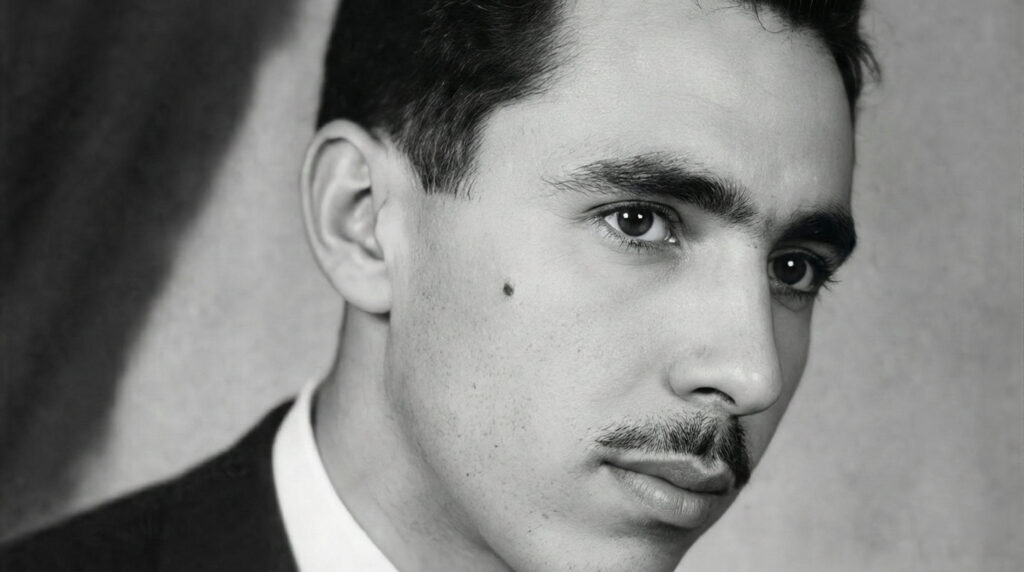
In the flat fields outside São Francisco de Sales, Minas Gerais, in Brazil, a 23‑year‑old farmer named Antônio Villas-Boas chose the night to work. The heat of the day bent men and machines; the night gave back a measure of breath. That habit placed him in front of a chapter that would ripple through global UAP history. Long before American audiences learned the names “Betty and Barney Hill,” a Brazilian farmhand walked into the light of an object he said was not built for the roads of this Earth.
Across several evenings in mid‑October 1957, the routine cracked. A hard red point hung over his fields, teasing distance, sliding away as he approached and returning as soon as he retreated. On another night the same intruder grew brighter and lower, like an ember that refused to die, until it behaved like a thing with intentions. In Jacques Vallée’s catalog of landings and close encounters, the sequence is captured with a tight chronology: a second observation while he and his brother plowed, the light sidestepping every approach, then a third observation when Antônio was alone and the “red star” resolved into a luminous, egg‑shaped craft that came within 15 meters and descended. (Archive.org)
The last of those nights – most sources state 15 or 16 October 1957 – marks the event for which he would be known. A minority of early documents use a December date, almost certainly a protective obfuscation or translation artifact from the first English write‑ups. We will retain the October date standard in Brazilian and international literature, while noting the December variant appears in an early Flying Saucer Review article. (Government Attic)
The approach
Antônio took the agricultural equivalent of a deep breath and kept working. Around midnight, the red star grew into a craft with a domed top and a bright frontal light. He turned the tractor, engine grumbling, when the machine coughed and died. He stepped down and ran. Shapes met him.

They were small men in tight, silvery uniforms that caught his skin like fish scales when he fought. Their helmets were opaque save for a narrow slit at eye level. They wore white shoes that left unusual heel‑less prints in the soft earth. They said nothing he could understand, communicating in short, strident bursts that sounded more like barks than words. Overpowered, he was carried up a ladder into the craft, which stood on three splayed legs, a rotating cupola above, and a strange protruding “plank” on its side. These details – ladder, tripod landing gear, revolving dome, and the heel‑less prints – appear in the earliest published deposition and its accompanying drawings.
Inside, the strangeness became clinical. The captors stripped him without tearing a seam and hurriedly swabbed his body with a sponge soaked in a cool, pungent liquid. A flexible tube drew blood from two points near the prominence of his chin, an action that left small marks that he later said remained visible for years. The treatment was efficient and wordless, organized around rooms whose walls bore functional apertures, tables with three legs, and a sense of pressurized quiet broken only by those clipped, growling syllables.
Then came the smoke. In a small room, a hazy atmosphere made his chest tight and his stomach turn. He wondered if the vapor made it possible for at least one visitor to breathe without a helmet. Dr. Olavo Fontes, a Rio de Janeiro physician who would become the first investigator to interview and examine him, later noted the sequence of sensations as consistent with a sudden environmental change and recorded the witness’s speculation that the “smoke” served respiratory needs for the crew, especially the unhelmeted female he encountered next.
The woman
By his account the door opened and a woman entered, small like the others but different in ways that decades of retellings would magnify. In early translated notes she is described as slight, with sparse blond hair and no visible eyebrows or eyelashes, her features sharp, her ears small, her eyes set slightly oblique. Other later summaries emphasize catlike blue eyes, long platinum hair, and body hair that was vividly red. Memory and translation disagree in the particulars, though both threads converge on a figure presented as deliberately sexual and deliberately silent.
She did not kiss. She bit lightly at his chin. They had intercourse. When it was over, she smiled and made an unmistakable gesture that lives in the literature as one of the most unnerving details of any classic CE‑4: she pointed to her belly, then toward the sky. Antônio’s interpretation was direct. He believed he had been used as breeding stock and that any offspring would be raised “up there.”
He was then allowed to dress and escorted on a perfunctory tour of the craft. He tried, farmer‑practical, to steal a small clock‑like instrument as proof. An attendant caught his hand and replaced the device. Moments later, the ladder telescoped, the door closed like it had never been there at all, and the machine rose without sound. Four hours had passed.
Physical traces and physical malaise
Morning brought quiet evidence. Heel‑less footprints pressed into the plowed soil. Three leg‑prints deep enough to impress the family. Two small lesions on his chin where blood had been taken. These items appear in the first published report and would be emphasized in subsequent analyses as grounds that, at minimum, the witness recalled consistent details over time.
His body was less quiet. Nausea, loss of appetite, a burning sensation in his eyes, headaches, and skin eruptions that formed reddish, tender nodules with a central pore. He felt weak and slept poorly. This cluster prompted medical attention. Dr. Olavo Fontes interviewed and examined the farmer early in 1958, in a session that would later be translated and serialized in Flying Saucer Review. Fontes viewed the symptoms as consistent with a dose of radiation or some energetic field exposure, and he documented them as such for both Brazilian colleagues and the American civilian group APRO.
That clinical reading aligns in broad strokes with what later defense‑medical surveys call “anomalous acute and subacute field effects” in aerospace‑adjacent exposures: erythema, fever, headache, malaise, transient neurological complaints, and skin eruptions. We cite this only to situate the physiology in a modern medical rubric and not to center any government assessment, in line with UAPedia’s editorial guidance to treat official sources cautiously and to weigh them alongside civilian investigations. (Defense Intelligence Agency)
How the story surfaced
Brazil’s early UAP community was unusually organized for the 1950s. Journalist João Martins, writing for the widely read O Cruzeiro, invited witnesses to come forward during a late‑1957 UAP wave. Encouraged, Antônio wrote him a letter that would eventually route to Dr. Fontes and to the Sociedade Brasileira de Estudos Sobre Discos Voadores (SBEDV). From there the case entered a long pipeline. The earliest definite publication was in SBEDV’s April–July 1962 bulletin, then the English‑language world learned the details through Gordon Creighton’s translations in Flying Saucer Review in early 1965, followed by Fontes commentary in 1966–67. This is why a 1957 event reads in English archives as if it debuted eight to ten years later. (sohp.us)
Those early FSR installments matter for their granular detail. Part 1 fixed the machinery, the ladder, the crew’s uniforms, the blood draw at the chin, the heel‑less footwear, the rotating cupola and three landing legs. Later segments preserved Fontes’s clinical perspective, including his notes on the “smoke” or gas and the witness’s emotional reactions.
The witnesses beyond Antônio
While the abduction narrative is single‑witness, the nights leading up to it were not. Vallée’s chronology captures multi‑evening interactions with the red light, including the night Antônio and his brother João tried to close with it and found it always out of reach. Early Brazilian notes also mention that on two separate occasions the family farmhouse and its yard were “floodlit” from above, witnessed by his mother and brother, and that neighbors reported unusual lights. These auxiliary observations cannot prove the boarding, but they contour the week as a period of persistent aerial activity rather than a solitary vision. (Archive.org)
The case against the case
Skeptics have never given this case a free pass. Researcher Peter Rogerson argued in Magonia that the story likely drew from a November 1957 article in O Cruzeiro and from contactee motifs popularized by George Adamski. He also objected to what he saw as an uninformed class assumption by early ufologists who imagined a rural Brazilian could not fabricate such a narrative, noting that Antônio later studied law, became a practicing attorney, and by temperament was upwardly mobile. Rogerson’s critique remains the anchor of the “cultural contamination” hypothesis. (Wikipedia)
Two things complicate the skeptical reading. First, the case predates the Hill abduction by four years, which takes it outside the template that later shaped the “abduction” genre in North America. Second, Antônio’s testimony did not require hypnotic regression. He offered the sequence in normal waking memory, and his descriptions of environment, procedure, and emotion remained stable over time. That does not end the debate, but it raises the evidentiary threshold for a simple “borrowed story” explanation. (Wikipedia)
The case for the case
The internal consistency of the early depositions, the medical pattern Fontes recorded, the multi‑night prelude with additional family witnesses, and the canonical mechanical details—heel‑less footwear, tight‑fitting suits with a belt‑mounted light, the tripod landing gear, the retractable ladder—compose a dossier that has resisted easy prosaic attribution for nearly seven decades. Many details have since echoed in other close‑encounter files that carry very different cultural fingerprints, from France to the United States, which suggests a shared core beyond pop‑myth recycling.
Anthropology meets aerospace: why this story still matters
Read with the long view of folklore and religion, the Antônio Villas Boas narrative stands at the crux of several streams. The sexual element echoes global traditions of human–otherworld contact, from medieval incubus–succubus motifs to the “borrowed” offspring logic in faerie lore. Vallée and others have flagged these parallels not to demote the case to fable but to map the human grammar that non‑human intelligence may exploit to communicate, or to cloak, biological programs. (Archive.org)
Read with a scientific eye, the case contributes early data points on physiological after‑effects and environmental interaction. The cutaneous nodules with central pores, the conjunctival irritation, the fatigue and headaches, and the timecourse of symptom resolution remain recognizable in later clinical compilations of anomalous exposures. This does not prove origin. It does, however, argue that what happened was not purely imaginary, and that field effects of some kind interacted with a human body in a way that produced a describable syndrome. (Defense Intelligence Agency)
Read within Brazilian UAP history, the case sits on a road that runs from Ubatuba to Colares, and to the 1986 “Night of the UFOs,” a path where civilian witnesses and military institutions alike logged craft that out‑accelerated and out‑maneuvered conventional explanations. Antônio’s farm becomes an early dot on a national map of non‑prosaic encounters.
Reconciling the mismatched details
The literature is not clean‑edged. Dates vary between October 15/16 and a December 14/15 window in early English publications. Descriptions of the female entity’s hair and features diverge between early translated depositions and later popular summaries. These are not trivial contradictions. They reflect the realities of translation, editorial anonymization in the 1960s, and the tendency of repeated retellings to compress variation into a single “definitive” portrait. UAPedia’s posture is to privilege the earliest documented sources that are closest to the witness and the investigators, then to annotate later embellishments as such. In this file, that means the SBEDV bulletin and the 1965–67 Flying Saucer Review series translated by Gordon Creighton and authored or annotated by Dr. Olavo Fontes. (Government Attic)
What happened to Antônio
He married. He practiced law. He did not recant. Brazilian researchers confirmed his date of death as 17 January 1991. The case followed him as a permanent footnote, an event reported at 23 that he repeated without embroidery into middle age. That persistence matters to any sober reading of witness credibility.
Evidence summary
Witness testimony: A detailed narrative delivered without hypnosis and consistent across multiple interviews recorded beginning in early 1958.
Physical environment: Reported heel‑less prints and tripod impressions in plowed soil; no surviving chain‑of‑custody measurements were published beyond contemporary descriptions.
Medical observations: Early‑stage, short‑lived syndrome cataloged by a medical doctor that resembles low‑grade radiation‑type exposure; described symptoms included eye irritation, nausea, anorexia, headaches, and tender cutaneous nodules.
Corroborative witnesses to prelude events: Brother and mother reported “floodlighting” of farmhouse and anomalous lights in the same time window.
Publication chain: First Brazilian notice in SBEDV 1962; first English‑language dissemination 1965–67 through Flying Saucer Review, with Dr. Fontes’s medical commentary. (Government Attic)
Claims Taxonomy
Primary claim: Forced boarding of a landed craft and sexual encounter with a non‑human entity.
Assessment: Disputed. Strong, consistent testimony with medical notes and multi‑night prelude; absence of independent witnesses to the boarding and lack of preserved physical trace records keep this from “Verified.” Skeptical arguments of cultural contamination and delayed publication timelines remain unresolved. (Wikipedia)
Secondary claim: Physiological after‑effects consistent with energetic exposure.
Assessment: Probable. Symptoms recorded contemporaneously by a physician are specific and fit known clusters, though mechanism and source are unknown.
Tertiary claim: Reproductive intent communicated by the female entity’s gestures.
Assessment: Probable as witness interpretation of a clear nonverbal signal; content cannot be independently verified. (Wikipedia)
Speculation Labels
Hypothesis: The encounter was part of a biological sampling or hybridization program. Researcher opinion. Early commentators, including FSR, floated this on the basis of the woman’s gesture and the overall procedural tone of the event. The idea remains unproven. (Government Attic)
Witness interpretation: The “smoke” or vapor was a breathing medium for the unhelmeted female. This explanation was offered by the witness and discussed by Fontes; no test was performed.
Researcher opinion: The pre‑abduction “light games” suggest deliberate conditioning or surveillance prior to capture. This is an inference drawn from the repeated, evasive behavior of the red light over several nights. (Archive.org)
Context within the abduction canon
Antônio Villas Boas’s report is widely cited as the first detailed, internationally known abduction claim of the post‑war period. It predates the Hill case and introduced motifs that would recur: small uniformed entities, onboard medical procedures, nonverbal control, and reproductive themes. The case’s global resonance may owe as much to its timing in Brazil—where civil society and serious investigators like Fontes and SBEDV gave it oxygen—as to any sensational element. (Government Attic)
Editorial analysis
What resists dismissal: The case’s early date, the internal narrative coherence, familiars seeing lights in the same period, and the recorded medical syndrome argue against a simple invention. The descriptive engineering—ladder mechanics, airflow from the cupola, retracting door seams—reads like remembered machinery rather than dream logic.
What resists confirmation: No preserved soil casts or photographs have surfaced in public archives. Medical records beyond Fontes’s notes are not available for independent audit. Skeptics plausibly point to cultural sources and delayed publication as contamination vectors.
Our heterodox take: If you strip away the cultural varnish, you still have a small, glove‑tight crew using a compartmentalized craft, exerting effortless control over a healthy adult, sampling blood, bathing skin in a neutralizing fluid, and initiating a reproductive act followed by a nonverbal “custody” claim. That operational profile has echoed through multiple geographies and decades. If this is theater, it is a remarkably persistent one.
References
Primary early sources
Creighton, G. (1965). The most amazing case of all: Part 1—A Brazilian farmer’s story. Flying Saucer Review, 11(1), 13–18. [PDF].
Fontes, O. T. (1967). Sexufos: Even more amazing… Part V. Flying Saucer Review, 13(3), 22–25. [PDF].
U.S. Library of Congress. (1969). UFOs and related subjects: An annotated bibliography (Catoe, L.). Washington, DC. [PDF]\(Government Attic)
Vallée, J. (1993). Passport to Magonia: On UFOs, folklore, and parallel worlds. Chicago: Contemporary. [PDF reprint] (Archive.org)
Gross, L. (1957, Nov.). UFOs: A history, Nov. 13–30, 1957. [PDF] (sohp.us)
Secondary summaries and context
“Antônio Vilas‑Boas.” (n.d.). Wikipedia. (Used for consolidation of dates, biographical afterlife, and citations to Brazilian sources.) (Wikipedia)
Defense Intelligence Agency. (2010). Anomalous acute and subacute field effects on human biological tissues. [FOIA PDF].(Contextual medical rubric; not used as a primary source for the case.) (Defense Intelligence Agency)
Creighton, G. (1965). The most amazing case of all: Part 1—A Brazilian farmer’s story. Flying Saucer Review, 11(1), 13–18.(FSR)
Fontes, O. T. (1967). Sexufos: Even more amazing… Part V. Flying Saucer Review, 13(3), 22–25. (FSR)
Gross, L. (1957). UFOs: A history, November 13–30, 1957.(UFOs)
U.S. Library of Congress (Catoe, L.). (1969). UFOs and related subjects: An annotated bibliography.(LOC)
Vallée, J. (1993). Passport to Magonia: On UFOs, folklore, and parallel worlds.(Internet Archive)
“Antônio Vilas‑Boas.” (n.d.). Wikipedia.
Defense Intelligence Agency. (2010). Anomalous acute and subacute field effects on human biological tissues.(DIA)
Note on sources: UAPedia avoids reflexive deference to government documents and weighs them alongside civilian, medical, and archival materials. Our emphasis here is on the SBEDV bulletin lineage and the 1965–67 FSR series, plus Vallée’s catalog work.
SEO keywords
Antônio Villas Boas, Brazil 1957 abduction, classic CE‑4 case, Olavo Fontes medical report, Flying Saucer Review 1965, SBEDV bulletin, UAP reproductive hypothesis, Minas Gerais UAP, early abduction chronology, Jacques Vallée Magonia.