A familiar figure at a newly respectable threshold
At San Diego’s Marina Village in April 2023, Dr. J.J. Hurtak, Ph.D., stood before a television camera holding a large hardcover book. The setting was a conference devoted to UAP, a subject that had recently acquired congressional hearings, military reporting channels, and a new degree of public legitimacy. The book in his hands was Mind Dynamics in Space and Time, a 686-page collaboration with Dr. Desiree Hurtak, Ph.D. and physicist Elizabeth Rauscher, Ph.D.. Its subject was not the aerodynamics of an unknown craft. It was the possible reach of consciousness itself. (KPBS Public Media)
Dr. Hurtak told KPBS that society needed to prepare for a “new psychology and sociology” capable of accepting life elsewhere in the universe. The remark summarized an argument he and Dr. Desiree had been making long before UAP became a recurring item in national-security briefings. For the Hurtaks, the decisive challenge is not simply detecting an anomalous object. It is developing the intellectual, psychological, and spiritual capacity to live in a reality where human intelligence may not be solitary, supreme, or confined to conventional physical models. (KPBS Public Media)
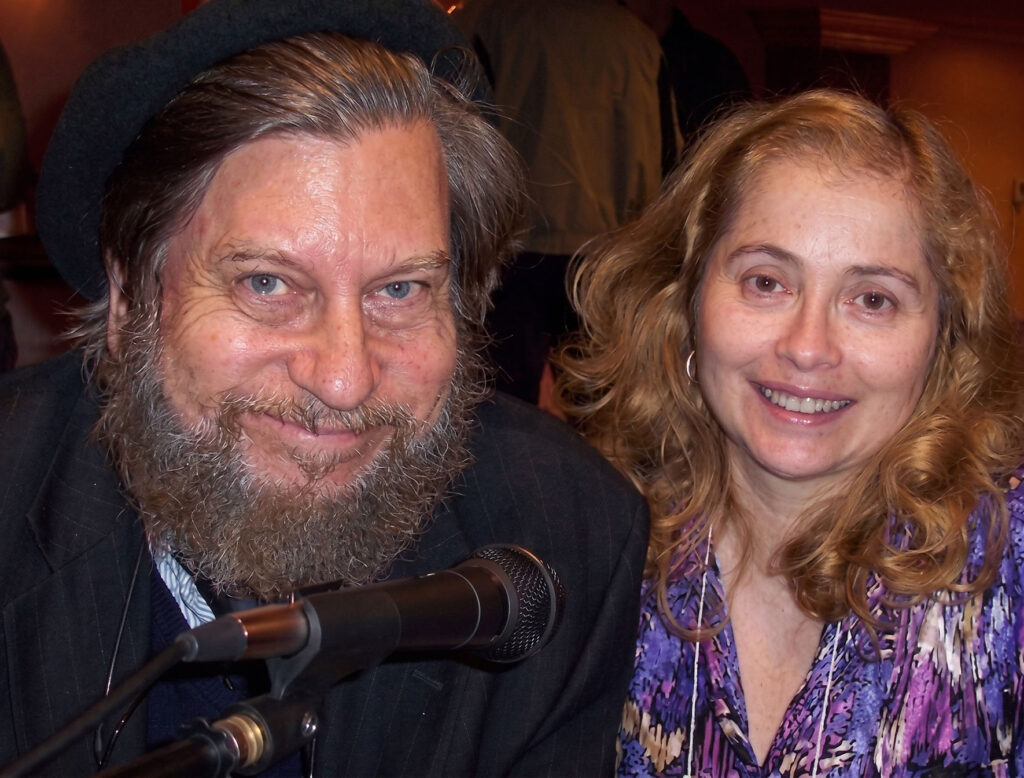
Dr. Desiree was not merely adjacent to that message. Her name appeared on the book Dr. J.J. Hurtak displayed, as it does across the couple’s later publications, films, environmental initiatives, interfaith work, archaeological investigations, and public presentations. Their public image can sometimes leave J.J. in the foreground because The Book of Knowledge: The Keys of Enoch began with his reported experience. Yet the enduring institution that grew around it is better understood as a partnership. Dr. J.J. Hurtak supplied the originating cosmology and an unusually broad scholarly vocabulary. Desiree helped turn that cosmology into a sustained program of publication, international networking, cultural production, environmental advocacy, and public engagement. (Keys of Enoch)
Their story therefore belongs to two histories at once. It is part of the history of modern revelatory spirituality, in which an individual reports receiving knowledge from a transcendent intelligence. It is also part of UAP history, particularly the current that treats anomalous craft, contact experiences, altered consciousness, ancient traditions, remote viewing, and non-human intelligence as aspects of one larger problem.
J.J. Hurtak and the study of secrecy
James Joachim Hurtak’s academic record reveals themes that would later become central to his public work. A WorldCat record identifies his 1977 University of California, Irvine dissertation as The Language of Secrecy as a Mundane Feature of All Talk in the Kabbalistic, Gnostic, and Buddhistic Schools of Exoteric Sociology. The title is striking. Before he became widely known for cosmic diagrams and teachings attributed to Enoch, Hurtak was already studying how traditions construct hidden knowledge, specialized vocabulary, and boundaries between initiates and outsiders. (WorldCat)
His second doctorate moved from esoteric sociology to political and technological history. The University of Minnesota’s doctoral register confirms that James Joachim Hurtak received a Ph.D. in history in June 1993. His dissertation examined technical advisers and technocrats involved in the construction of the Third Reich’s aerospace program. That subject placed science inside institutions of secrecy, power, warfare, and state ambition. (Grad Apps)
Viewed together, the dissertations form an unexpected intellectual diptych. One concerns the language by which religious and mystical communities protect knowledge. The other concerns the experts through whom governments convert technical knowledge into aerospace power. The distance between a Kabbalistic school and an authoritarian aerospace bureaucracy appears enormous. In Hurtak’s later work, however, both become variations on the same underlying problem: who possesses transformative knowledge, how is it encoded, and what happens when access to it is restricted?
The Hurtaks’ official biography also credits J.J. with a Master of Theology from Luther Theological Seminary, including study of Greek, Latin, Coptic, and early Christian literature. That credential has not been independently documented in the sources reviewed for this article to the same degree as his two doctorates, so it is best presented as part of his institutional biography rather than as a separately verified archival finding. The theological training is nevertheless consistent with the dense Christian, Jewish, Gnostic, and comparative-religious vocabulary of his subsequent publications. (Keys of Enoch)
This background complicates easy descriptions of Hurtak. He is not simply a contact claimant who later adopted scientific terminology. Nor is he a conventional historian who happened to develop an interest in UAP. His career has repeatedly crossed borders that academic specialization normally keeps intact: sociology and revelation, theology and aerospace history, remote sensing and sacred geometry, planetary law and higher consciousness.
That breadth is also the source of persistent tension. It gives Hurtak’s work its distinctive scale, but it can permit metaphor, metaphysics, hypothesis, and scientific terminology to occupy the same page without the evidentiary boundaries expected in mainstream research. Understanding his influence requires acknowledging both sides of that method.
The 1973 experience at the center of the architecture
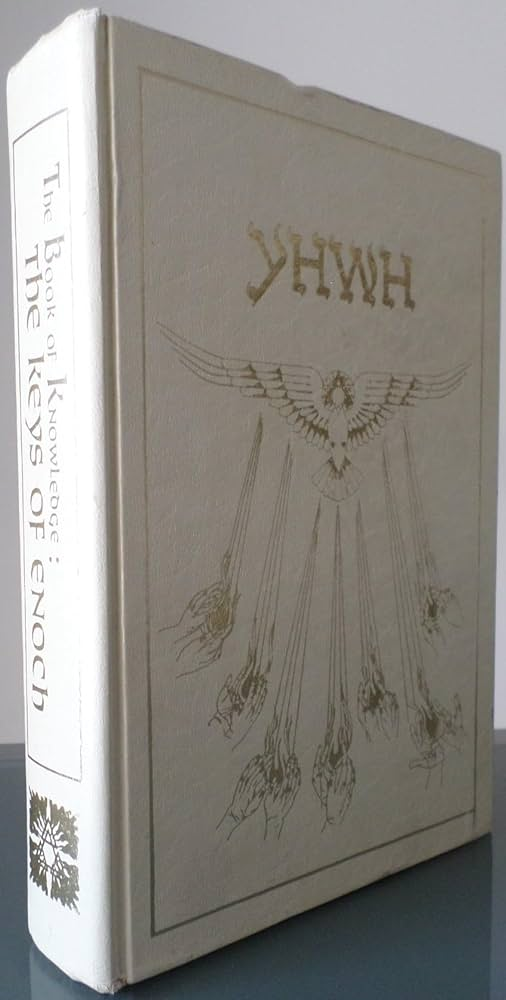
The defining event in Dr. J.J. Hurtak’s public biography occurred during the New Year period of 1973. According to the account published by the Academy for Future Science, he underwent a profound direct experience involving what the organization calls physical biolocation. Dr. Hurtak reported being guided through higher cosmic realms by a luminous being identifying itself as the biblical Enoch. He also described encountering Metatron and receiving knowledge through visual structures or “Light Pictures.” (Keys of Enoch)
No independently available record establishes that this journey occurred literally, that biolocation took place, or that the perceived intelligences had an existence separate from Hurtak’s experience. Those are ontological claims, not ordinary biographical facts. What can be established is that Hurtak consistently identified the episode as the origin of a large and highly structured body of work. The experience’s historical consequence is therefore clear even where its proposed cause remains unverified.
The resulting text became The Book of Knowledge: The Keys of Enoch. Open Library records a 1977 edition published by the Academy for Future Science, extending to 612 pages and cataloged under “Spirit writings.” The Academy dates its original composition to 1973 and says later editions retain the same central text, with changes to introductory and glossary material. (Open Library)
The book is neither a conventional UAP case report nor a simple account of a meeting with another being. It is an elaborate cosmology. Its vocabulary combines sacred names, scriptural figures, geometric and mathematical imagery, speculative physics, consciousness transformation, planetary evolution, and hierarchies of intelligence. The Academy describes it as a multilevel teaching written in a combined spiritual and scientific language, intended to prepare humanity for interaction with greater families of intelligence and for an evolutionary transition toward higher consciousness. (Keys of Enoch)
The organization also cautions that the text’s “meta-language” is not intended as ordinary literal or rational discourse. That explanation is crucial. It suggests that portions of the work function symbolically, meditatively, or initiatically rather than as propositions that can be tested one by one. Yet the same ecosystem frequently points to scientific discoveries as possible confirmations of the book’s earlier statements. The reader is therefore asked to move between at least two modes: symbolic interpretation and empirical anticipation. (Keys of Enoch)
This ambiguity has helped the work endure. A narrowly predictive text can be discredited when its claims fail. A purely devotional text may remain inside one religious community. The Keys of Enoch occupies a more adaptable territory. It can be read as revelation, comparative mysticism, speculative cosmology, a program of consciousness development, a coded account of contact, or an anticipatory model of humanity’s relationship with non-human intelligence.
Its significance to UAP history lies less in any single prediction than in the architecture it offered. Decades before official language began treating UAP as an all-domain question, Hurtak proposed a reality in which anomalous intelligence could operate through physical craft, consciousness, light, sacred symbolism, biological transformation, and dimensions beyond ordinary perception. That framework is broader than the familiar image of visitors flying machines from one planet to another.
Desiree Hurtak and the transformation of a revelation into a program
Dr. Desiree Hurtak, Ph.D., brought a different intellectual formation to the partnership. The couple’s official biography states that she earned a master’s degree in international relations from Syracuse University and a Ph.D. from The New School in public policy. An American Political Science Association newsletter independently lists Desiree E. Hurtak’s dissertation, The European Union and the Environmental Movement in Europe: An Analysis of Insider Status. (Keys of Enoch)
Again, the title offers a revealing clue. Her research concerned the relationship between social movements and institutional access. How does a cause once treated as marginal acquire insider standing? How do advocacy networks enter policy systems? Those questions are relevant to environmental politics, but they also describe the long trajectory of the UAP subject as it moved from stigmatized testimony toward legislative language, formal reporting mechanisms, and public hearings.
Dr. Desiree’s contribution is most visible in the shift from a founding revelation centered on one individual to a collaborative body of work. She coauthored The Overself Awakening, commentaries on Gnostic and early Christian texts, Giza’s Industrial Complex, Mind Dynamics in Space and Time, and Sound: Profound Experiences with Chanting, Toning, Music, and Healing Frequencies. Her name connects the spiritual, scientific, archaeological, cultural, and policy-facing sides of the Hurtak enterprise. (Keys of Enoch)
She has also worked as a producer with Manhattan Neighborhood Network, according to the couple’s biography, and has played a central role in their films and international presentations. Their official history records her participation in the 2002 World Summit for Sustainable Development, a 2007 United Nations climate forum, and a Rio+20 panel in 2012 focused on Indigenous communities, youth, and sustainable development. These individual appearances are primarily documented through the Hurtaks’ own organizational record, but the Academy’s broader United Nations standing is independently verifiable. (Keys of Enoch)
Dr. Desiree’s role can be described as translation in the widest sense. She translates between J.J.’s cosmic system and public audiences, between environmental projects and spiritual ethics, between ancient texts and contemporary concerns, and between the vocabulary of contact and the language of social responsibility. Where Dr. J.J.’s originating text is vertical, reaching toward transcendent worlds, Desiree’s work is often horizontal, building relationships among communities, disciplines, institutions, and media.
Reducing her to coauthor or spouse would therefore miss the structure of the partnership. The Academy’s longevity depends not only on the force of its foundational narrative, but also on organization, diplomacy, editorial continuity, production, and the creation of spaces where that narrative can be studied collectively.
Building the Academy for Future Science
The Academy for Future Science became the institutional vessel for the Hurtaks’ project. Its website describes a nonprofit corporation concerned with new scientific ideas and with providing educational tools for social, cultural, economic, and environmental change. It lists work in the United States, Mexico, Brazil, Venezuela, South Africa, Switzerland, and additional countries. The breadth of the program is unusual, ranging from environmental science and renewable resources to archaeology, consciousness, planetary science, and space law. (Academy for Future Science)
The Academy’s relationship with the United Nations is sometimes described imprecisely in promotional biographies. The official United Nations civil-society database supplies the necessary distinction. The Academy is a nongovernmental organization with special consultative status through the Economic and Social Council, granted in 2003. Its quadrennial reports for successive periods through 2019-2022 are recorded as having been taken note of. Consultative status does not mean that the United Nations endorses the Academy’s cosmology or UAP conclusions. It does establish that the organization has held a recognized channel for civil-society participation. (eSANGO)
That distinction matters because the Hurtaks operate in an environment where association is often mistaken for validation. Speaking at a conference does not validate every claim a speaker makes. Publishing a paper does not establish that all of an author’s broader ideas have passed peer review. United Nations consultative status confirms an organizational relationship, not approval of revelations attributed to non-human intelligence.
Yet the institutional achievement should not be minimized. Many contact-centered movements remain attached to the charisma or lifetime of a single founder. The Hurtaks built a transnational network of study groups, publications, seminars, cultural projects, and affiliated initiatives that could carry their ideas beyond an individual lecture circuit. The Academy gave the cosmology an archive, a curriculum, a publishing apparatus, and a continuing social form.
It also linked cosmic ideas to terrestrial obligations. Clean water, deforestation, renewable energy, Indigenous communities, interfaith dialogue, and sustainable development appear throughout the organization’s account of its activities. Within the Hurtak worldview, preparation for cosmic citizenship is not presented as an escape from Earth. It requires responsible participation in Earth’s future.
From aerospace power to an openness principle
One of Dr. J.J. Hurtak’s more conventionally documented contributions appeared in the Journal of Space Law in 2009. Coauthored with legal scholar M. Jude Egan, “The Openness Principle in Multilateral Agreements for Space Exploration” argued that future exploration, especially human activity directed toward Mars, would require international cooperation, transparent agreements, non-discriminatory access, and mechanisms for sharing resources and technology. (Journal of Space Law)
The article’s biographical note identified Dr. Hurtak as a social scientist, futurist, remote-sensing specialist, and president of the Academy. It connected his remote-sensing interests to agriculture, environmental studies, ozone research, and the search for water on Mars. The paper itself proposed an openness principle consisting of open-source resources and licensing, open access among nations, and transparent multilateral agreements. (Journal of Space Law)
This work reveals a less frequently discussed side of Dr. Hurtak. The public may encounter him through teachings about higher intelligence, but his space-law writing is concerned with contracts, liabilities, environmental governance, intellectual property, international participation, and the prevention of conflict. It treats entry into space as a political and ethical problem.
That concern also mirrors the couple’s approach to UAP. The ultimate issue is not only whether a non-human intelligence exists. It is whether present institutions can respond without secrecy, monopoly, militarization, or cultural panic. Their preferred answer is educational and internationalist. Humanity must become psychologically and institutionally capable of a wider community.
There is an obvious tension here. The Hurtaks’ central spiritual text emerged from an experience available only through J.J.’s testimony, while their space-law work advocates openness and shared access. That tension is not necessarily a contradiction. It may explain the project’s direction. A private experience produced a lifelong effort to create public language, institutions, and cultural preparation around what Hurtak believed he had encountered.
The Hurtaks and the widening of the UAP question
Dr. J.J. Hurtak’s participation in the organized UAP field reaches back decades. His official biography records an appearance at the 1977 international UAP congress in Acapulco alongside J. Allen Hynek. More securely documented is his participation in When Cosmic Cultures Meet, a Washington, D.C. conference held in May 1995. The published proceedings list James Hurtak among 22 speakers, while the Clinton Presidential Library holds invitations and brochures sent to the White House for the event. (Keys of Enoch)
The 1995 conference brought together science, politics, philosophy, contact claims, and media strategy. Its title captured a theme central to the Hurtaks: contact would not be a single spectacular announcement but a meeting of cultures. The difficulty would include competing concepts of reality, authority, consciousness, history, religion, and human identity.
This approach differs from case-centered UAP investigation. The Hurtaks are not principally known for reconstructing flight paths, measuring angular velocities, authenticating radar returns, or maintaining large sighting databases. Their contribution is interpretive and preparatory. They ask what kind of intelligence might be involved, how contact may interact with consciousness, and how civilizations should prepare for recognition of one another.
Their model does not require every UAP to be a spacecraft from another star. It leaves room for physical vehicles, ultraterrestrial or interdimensional agencies, spiritual intelligences, nonlocal consciousness, symbolic communication, and phenomena that may move between these categories. That breadth resembles later attempts to treat UAP as a multilayered interaction involving physical effects, witness consciousness, cultural symbolism, and adaptive behavior. It also introduces a risk: a theory broad enough to include every anomaly may become difficult to falsify. (Keys of Enoch)
For the Hurtaks, consciousness is not a secondary reaction occurring after a witness sees an object. It may be part of the encounter mechanism. Their collaborative work with Elizabeth Rauscher addressed remote viewing, nonlocal information, mind-matter questions, and models of higher-dimensional space. Mind Dynamics in Space and Time was published by their own Academy rather than a mainstream academic press, so its arguments should not be mistaken for settled scientific consensus. Its existence nevertheless documents a sustained effort to connect UAP-adjacent contact questions with the history of consciousness research. (AbeBooks)
This is where their work intersects with a major fault line in contemporary UAP studies. One camp prioritizes better cameras, radar, infrared systems, standardized reports, and multisensor correlation. Another argues that instruments aimed only outward will miss a phenomenon that may also alter perception, memory, physiology, and meaning. The Hurtaks belong decisively to the second current, though they frequently invoke technology and physical science in support of it.
Their lasting influence may therefore be less visible in government case files than in the vocabulary surrounding contact. Ideas now discussed as ontological shock, contact modalities, non-human consciousness, telepathic communication, experiencer transformation, and multidimensional intelligence have long occupied the center of their teaching. Our own treatment of contact emphasizes that a reported modality, such as telepathy, identifies the form of an experience but does not by itself prove whether the source was extraterrestrial, interdimensional, spiritual, psychological, or neurological. That distinction is essential when reading the Hurtaks. (UAPedia)
Ancient chambers and contested discoveries
The Hurtaks have also attempted to connect their cosmology with ancient monuments. Their biographies describe work in Egypt and Mexico involving ground-penetrating radar, acoustic recording, and tests inside pyramidal and temple structures. Their later book Sound presents archaeoacoustics as part of a wider inquiry into resonance, consciousness, sacred architecture, and human experience. (Keys of Enoch)
One claim requires particular care. Hurtak-affiliated biographies have described Drs. J.J. and Desiree as members, or even principal discoverers, in a 1997 exploration associated with the structure commonly called the Osiris Shaft on the Giza Plateau. Independent Egyptological documentation presents a more formal and complicated record. Harvard’s Digital Giza archive catalogs Zahi Hawass’s 2007 article “The Discovery of the Osiris Shaft at Giza,” published through Egypt’s Supreme Council of Antiquities. (Keys of Enoch)
The available sources support saying that the Hurtaks claim participation in the 1997 exploration. They do not establish sole or principal discovery credit to the standard required for an archaeological attribution. This does not erase their presence or their later interpretive work, but it limits the historical claim that can responsibly be made.
The same caution applies to acoustic archaeology. Ancient structures unquestionably possess measurable resonant properties. The more ambitious proposition is that their builders deliberately used those properties to induce altered consciousness, encode information, or communicate with higher realities. Such possibilities can be investigated, but they require published measurements, replicable protocols, comparative controls, and access to raw data.
Here again, the Hurtaks are best understood as proposers of synthesis. A chamber is not merely architecture in their work. It may be an instrument. Sound is not merely vibration. It may be a bridge between biology, consciousness, and cosmic order. A sacred text is not merely literature. It may preserve information about contact in the symbolic language available to an earlier culture.
These interpretations need not be accepted as established history to be recognized as influential questions. They have encouraged audiences to examine ancient religious material not as primitive fantasy, but as a possible record of anomalous experience filtered through cultural language. UAPedia’s comparative approach to biblical visions similarly recognizes that ancient accounts are not modern sensor reports, while still asking whether recurring motifs deserve phenomenological comparison. (UAPedia – Unlocking New Realities)
Music, film, and the sensory language of contact
The Hurtaks’ project has never depended on prose alone. Their official biography records musical collaborations involving Alice Coltrane, Steven Halpern, the South African Mighty Voice Cultural Choir, vocalist Jocelyn B. Smith, and a Berlin symphonic performance. It also lists documentary and visual productions created through the Academy’s network. Some award totals circulated in their biographies are organizational claims for which a complete independent festival record was not located during this review. (Keys of Enoch)
The artistic work is not ornamental. It follows from their conviction that information may be carried through image, vibration, sacred name, rhythm, geometry, and direct experience. A conventional academic article asks readers to evaluate propositions. The Hurtak method often asks participants to enter an environment of sound and symbols intended to alter attention.
Their 2023 book Sound makes this approach explicit. Its publisher presents chanting, toning, music, temple acoustics, healing narratives, and mystical experience as parts of one field. Claims of healing or spiritual transformation within that field require stronger evidence than testimony alone, especially when health effects are involved. The work nevertheless shows how the Hurtaks understand communication: not only as words exchanged between minds, but as resonance operating through bodies, spaces, and states of consciousness. (Sacred Stories)
For UAP research, this emphasis points toward an underdeveloped question. If some encounters involve effects on perception, emotion, memory, or physiology, then documenting the witness may be as important as photographing the sky. The proper response is not to accept every transformation claim. It is to develop better protocols for recording subjective and measurable changes without confusing one for the other. (UAPedia)
What is documented, and what remains an interpretation
A responsible assessment of Dr. J.J. and Desiree Hurtak, Ph.D Ph.D., must hold several realities together.
Their academic credentials are not inventions. J.J.’s University of California dissertation is documented in a global library catalog, and his 1993 history doctorate is confirmed by the University of Minnesota. Desiree’s dissertation appears in an American Political Science Association record, while her institutional biography identifies her graduate training in international relations and public policy. (WorldCat)
The Academy for Future Science is also a real and durable organization. Its United Nations special consultative status is independently recorded. J.J. published a co-authored article in the Journal of Space Law. The 1995 When Cosmic Cultures Meet conference is supported by proceedings and a presidential-library finding aid. Their books, films, recordings, public appearances, and international network constitute a substantial cultural output. (eSANGO)
Those facts do not independently prove Dr. Hurtak’s reported 1973 journey, communication with Enoch or Metatron, physical biolocation, cosmic hierarchies, predicted scientific knowledge, or the objective existence of the higher-dimensional beings described in his work. They also do not establish that acoustic effects at ancient sites had the spiritual purposes the Hurtaks propose. These claims remain testimony, interpretation, hypothesis, or metaphysical teaching according to the kind of statement involved.
Academic degrees demonstrate that a person completed demanding programs of study. They do not confer universal authority beyond those fields. Publication establishes that an argument entered a record. It does not guarantee replication or consensus. Participation in an international institution establishes access and engagement. It does not imply endorsement of every associated worldview.
The Hurtaks’ reliance on their own Academy as a major publisher has two consequences. It has allowed remarkable continuity of terminology, diagrams, editions, and message across decades. It has also reduced the degree of independent editorial challenge that an outside academic publisher or adversarial peer-review process might provide.
Yet literal verification is not the only measure of historical importance. A reported encounter can influence culture even when its cause remains uncertain. A cosmology can shape how thousands of readers interpret later experiences. A vocabulary can prepare a community to notice relationships that more specialized disciplines overlook. The Hurtaks’ work is consequential because it has helped sustain an integrated model of UAP and contact through periods when official discussion generally reduced the subject to misidentification, threat assessment, or isolated sightings.
Their strongest insight may be that confirmed non-human intelligence would not remain an astronomy story. It would affect theology, law, psychology, education, ecology, governance, and human self-understanding. Their weakest tendency is the ease with which suggestive parallels can be treated as confirmation inside a system already designed to connect nearly everything.
The proper scholarly response is neither devotional acceptance nor reflexive dismissal. It is disaggregation. Which claims are biographical? Which are experiential? Which are symbolic? Which make measurable predictions? Which depend on specialized interpretation? Which have independent corroboration? Once those layers are separated, the Hurtaks become easier to understand and more interesting to study.
A legacy of preparation
Dr. J.J. and Desiree Hurtak, Ph.D. Ph.D., have spent decades constructing what might be called a culture of preparation. Their work assumes that humanity’s encounter with a greater intelligence, whether understood as extraterrestrial, interdimensional, spiritual, or more complex than any one category, will demand more than proof. It will demand maturity.
That message has remained remarkably consistent while the public context changed around it. In 1973, Hurtak’s account belonged to the language of revelation. In 1977, it became a 612-page book. By the 1990s, its concerns were appearing at conferences devoted to contact and public disclosure. In the 2000s, the Academy held recognized civil-society status and J.J. was publishing on international space cooperation. In the 2010s and 2020s, the couple expanded their collaborative work on consciousness, remote viewing, sound, and the social implications of cosmic life. (Open Library)
Their legacy is unlikely to be settled by one verdict on The Keys of Enoch. It rests in the ecosystem they built around it: an organization, a library of texts, study communities, environmental and interfaith initiatives, conferences, films, music, and a distinctive philosophy of contact.
Within UAP history, they represent the wing of inquiry that refuses to isolate the object from the observer. They ask whether the phenomenon is simultaneously technological and psychological, physical and symbolic, ancient and future-facing. That approach can become overinclusive, but it also anticipates a growing realization that the UAP problem may not fit neatly inside aviation, astronomy, or defense.
At San Diego in 2023, Dr. J.J. Hurtak’s phrase about a new psychology and sociology sounded less like a prediction than a summary of his life’s work. The book in his hands bore three names. That detail contained the larger story. The Hurtak project may have begun with one man’s reported journey, but it endured because two people turned that experience into a shared architecture for thinking about humanity’s possible relationship with other forms of intelligence.
Selected biographic timeline
1973: J.J. Hurtak reports the direct experience that becomes the foundation of The Book of Knowledge: The Keys of Enoch. The experience is documented through Hurtak-affiliated sources and remains unverified as an objective contact event. (Keys of Enoch)
1977: The first recorded edition of The Book of Knowledge is published by the Academy for Future Science. J.J. also completes his University of California, Irvine dissertation on secrecy in Kabbalistic, Gnostic, and Buddhist schools. (Open Library)
1993: The University of Minnesota awards James Joachim Hurtak a Ph.D. in history for his study of technocrats, science, and the Third Reich aerospace program. (Grad Apps)
1995: J.J. participates in When Cosmic Cultures Meet in Washington, D.C., a conference addressing the political, scientific, cultural, and spiritual implications of possible contact. (Headline Books)
2003: The Academy for Future Science receives special consultative status with the United Nations Economic and Social Council. (eSANGO)
2009: J.J. Hurtak and M. Jude Egan publish their openness-principle proposal for multilateral space exploration in the Journal of Space Law. (Journal of Space Law)
2010: An American Political Science Association newsletter records Desiree Hurtak’s dissertation on the European environmental movement and institutional insider status.
2011: J.J. and Desiree publish The Overself Awakening, extending the foundational cosmology into a jointly authored guide to spiritual development. (AbeBooks)
2016: The Hurtaks and Elizabeth Rauscher publish Mind Dynamics in Space and Time, connecting consciousness, remote viewing, and higher-dimensional models. (AbeBooks)
2023: J.J. appears at a San Diego UAP conference, while the couple publishes Sound, bringing archaeoacoustics, music, resonance, and mystical experience into their continuing synthesis. (KPBS Public Media)
Internal UAPedia crosslink suggestions
- Alan Steinfeld: Broadcasting at the Threshold of “New Realities,” for the Hurtaks’ connection to contemporary contact and consciousness conferences. (UAPedia)
- Encounters Suggestive of Non-Human Intelligence, for the distinction between observed interaction patterns and interpretations of intent. (UAPedia)
- Non-Human Consciousness & UAP Interaction, for reported telepathy and transformative contact experiences. (UAPedia)
- Contact Modalities Across Cultures: One Mystery, Many Languages, for comparing technological, spiritual, and psychological descriptions of contact. (UAPedia)
- Channeling the Unknown: Psychic Contact and NHI, for source-evaluation issues surrounding claimed communication. (UAPedia)
- The Control System Theory of UAP, for a multilayered model involving physical events, witnesses, symbolism, and culture. (UAPedia)
- Biblical Visions and UAP: An Investigative Read, for Enoch, Merkabah traditions, and comparative readings of ancient anomalous experiences. (UAPedia)
- The Alan Steinfeld Archives contains several interviews with Dr. J.J. and Desiree Hurtak, Ph.D. Ph.D. interviews with emphasis on these: On Disclosure and Consciousness and with Mary Rodwell here.
References
Academy for Future Science. (2026). Hurtaks’ bio. (Keys of Enoch)
Academy for Future Science. (n.d.). Overview: The Book of Knowledge. (Keys of Enoch)
American Political Science Association, Legislative Studies Section. (2010, July). Dissertations. Legislative Studies Section Newsletter.
Carroll, J. (2023, April 21). San Diego conference examines UAP, or unexplained aerial phenomena. KPBS Public Media. (KPBS Public Media)
Clinton Presidential Library. (n.d.). Finding aid: “When Cosmic Cultures Meet” conference, 1995. (Clinton Presidential Library)
Egan, M. J., & Hurtak, J. J. (2009). The openness principle in multilateral agreements for space exploration. Journal of Space Law, 35, 37-73. (Journal of Space Law)
Hawass, Z. (2007). The discovery of the Osiris Shaft at Giza. In Z. Hawass and J. Richards (Eds.), The Archaeology and Art of Ancient Egypt (Vol. 1, pp. 379-397). Supreme Council of Antiquities. (Digital Giza)
Hurtak, J. J. (1977). The Book of Knowledge: The Keys of Enoch. Academy for Future Science. (Open Library)
Hurtak, J. J., & Hurtak, D. (2011). The Overself Awakening: A guide for the schoolhouse of the soul. Academy for Future Science. (AbeBooks)
Hurtak, J. J., Hurtak, D., & Rauscher, E. A. (2016). Mind Dynamics in Space and Time: A physicist’s exploration of the nature and properties of consciousness. Academy for Future Science. (AbeBooks)
Hurtak, J. J., & Hurtak, D. (2023). Sound: Profound experiences with chanting, toning, music, and healing frequencies. Sacred Stories Publishing. (Apple)
Targ, R., & Hurtak, J. J. (2006). The End of Suffering: Fearless living in troubled times. Hampton Roads Publishing. (Google Books)
United Nations Department of Economic and Social Affairs. (n.d.). Academy for Future Science: Consultative status. United Nations Civil Society Participation Database. (eSANGO)
University of Minnesota. (n.d.). Register of doctoral degrees: James Joachim Hurtak. (Grad Apps)
UAPedia. (2026). UAPedia editorial standards: Navigating the mystery (Version 1.3). (UAPedia – Unlocking New Realities)
WorldCat. (n.d.). The language of secrecy as a mundane feature of all talk in the Kabbalistic, Gnostic, and Buddhistic schools of exoteric sociology. (WorldCat)
SEO keywords
J.J. Hurtak biography, Desiree Hurtak biography, J.J. and Desiree Hurtak, Academy for Future Science, Keys of Enoch, UAP and consciousness, non-human intelligence, contact experiences, remote viewing and UAP, Mind Dynamics in Space and Time, UAP disclosure history, When Cosmic Cultures Meet, UAP spirituality, interdimensional intelligence, Enoch contact account, UAPedia biography.