
By the UAPedia Research Desk
The phrase “cargo cult” is usually thrown around as a shortcut for imitation without understanding. That popular usage is too thin. In its original Pacific setting, cargo movements were not simply people building bamboo airplanes because they misunderstood machines. They were religious, political, economic, and psychological responses to a world-changing rupture: outsiders arrived by ship and aircraft, bearing overwhelming material abundance, military force, written systems, strange rituals, and a new global hierarchy. For communities in Melanesia, especially during and after the Second World War, “cargo” was not only goods. It was justice, recognition, power, return, and a promise that the world could be reordered.
For UAP studies, the cargo cult lens is valuable because it gives us a model for asymmetrical contact: what happens when one society encounters intelligences, technologies, or agencies so far beyond its own framework that the encounter has to be translated into ritual, myth, prophecy, or sacred narrative.
The central question is not “Were cargo movements about UAP?” Historically, the best documented cargo movements were responses to colonialism, missionary pressure, wartime military logistics, and radically unequal access to goods. The better question is: If human beings have already shown that sudden contact with advanced technology can produce religious innovation, prophetic expectation, ritual imitation, and sky-return mythology, what does that imply for older religious traditions that describe sky beings, aerial vehicles, luminous descents, wheels within wheels, gods arriving from above, or messengers crossing between realms?
That question does not prove NHI contact. It does open a serious comparative framework.
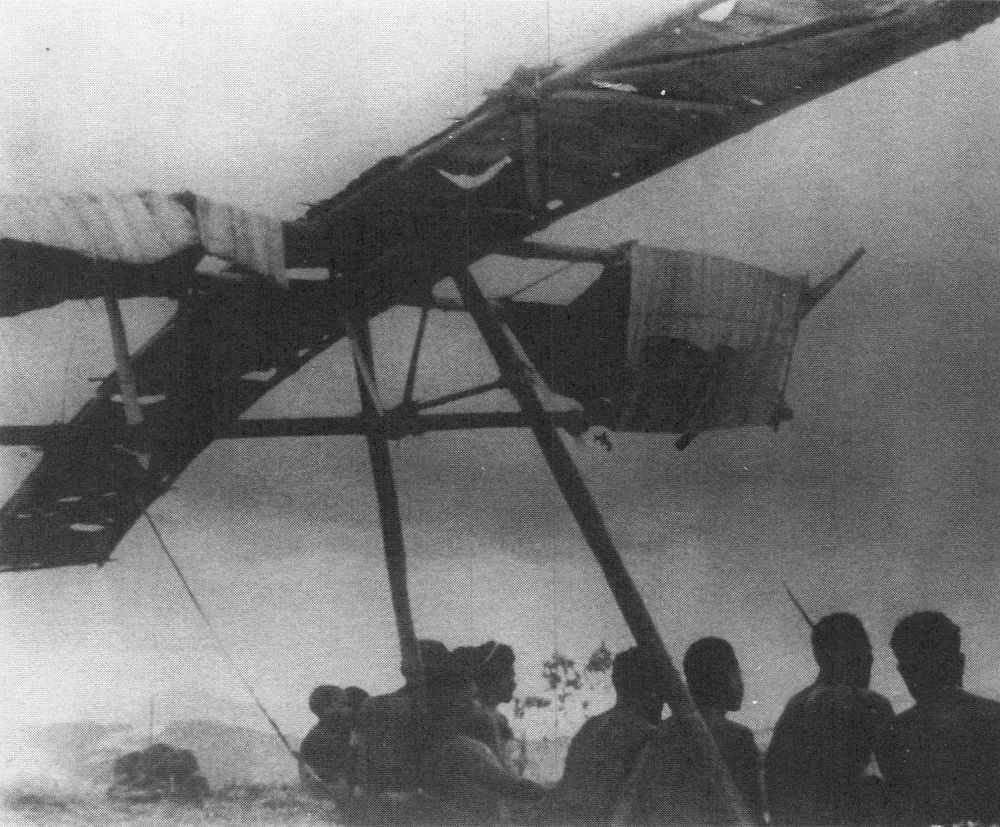
What “cargo cult” actually means
The term “cargo cult” emerged in the 1940s and was applied to a range of Melanesian religious and political movements in which communities expected material goods, often associated with ancestors, spirits, or returning figures, to arrive through ritual, prophecy, or social transformation. Anthropologist Lamont Lindstrom notes that the label appeared in 1945 and came to refer to “social or messianic movements” involving prophets, spirits, ritual action, expectations of goods, salvation, respect, and autonomy. He also emphasizes that the term became increasingly controversial and had largely fallen out of favor among anthropologists by the 1970s because it often said more about outside observers than about the communities themselves. (Open Encyclopedia of Anthropology)
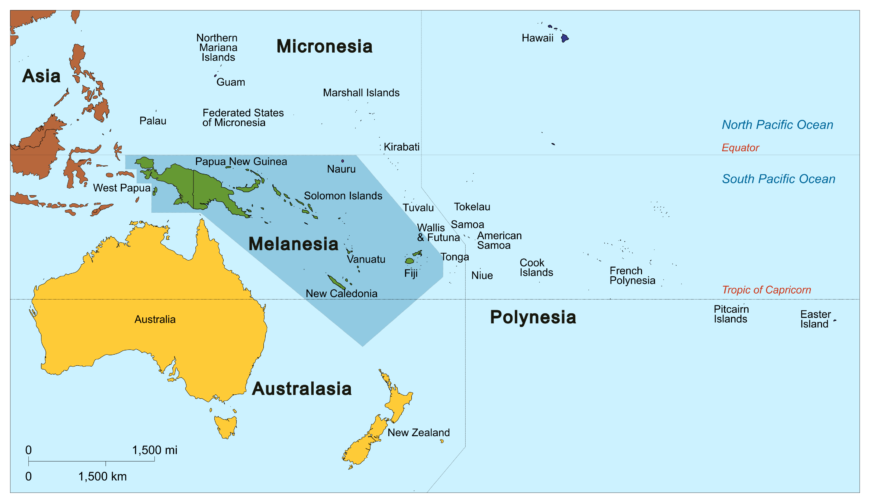
That caution matters. “Cargo cult” can sound insulting when used as a synonym for naïve imitation. In many Pacific contexts, these movements were not irrational copies of Western behavior. They were cultural responses to displacement, inequality, colonial rule, economic extraction, missionary disruption, and the shocking arrival of global military supply chains. People saw outsiders perform ritualized acts: marching, saluting, writing on clipboards, speaking into radios, building runways, raising flags, issuing commands, and then receiving unimaginable quantities of food, medicine, tools, clothing, vehicles, and weapons. A community could reasonably ask: What are the rules of this power? Who controls the cargo? Why do strangers receive abundance while Indigenous communities are expected to labor without equal access?
In this sense, “cargo” was a symbol of imbalance. It represented wealth, but also dignity. It represented goods, but also cosmic justice.
Lindstrom’s overview identifies recurring elements: prophets, moral renewal, marching or drilling, imitation of colonial or military practices, hopes for new forms of money or abundance, and dreams of restored social order. But he stresses that “cargo” should not be reduced to greed for objects. It also carried meanings of nationalism, relative deprivation, social repair, and autonomy. (Open Encyclopedia of Anthropology)
The better phrase, therefore, is “cargo movements.” In this article, “cargo cult” is used because it is the historically recognizable term, but the analysis treats these movements as complex religious and political systems, not as caricatures.
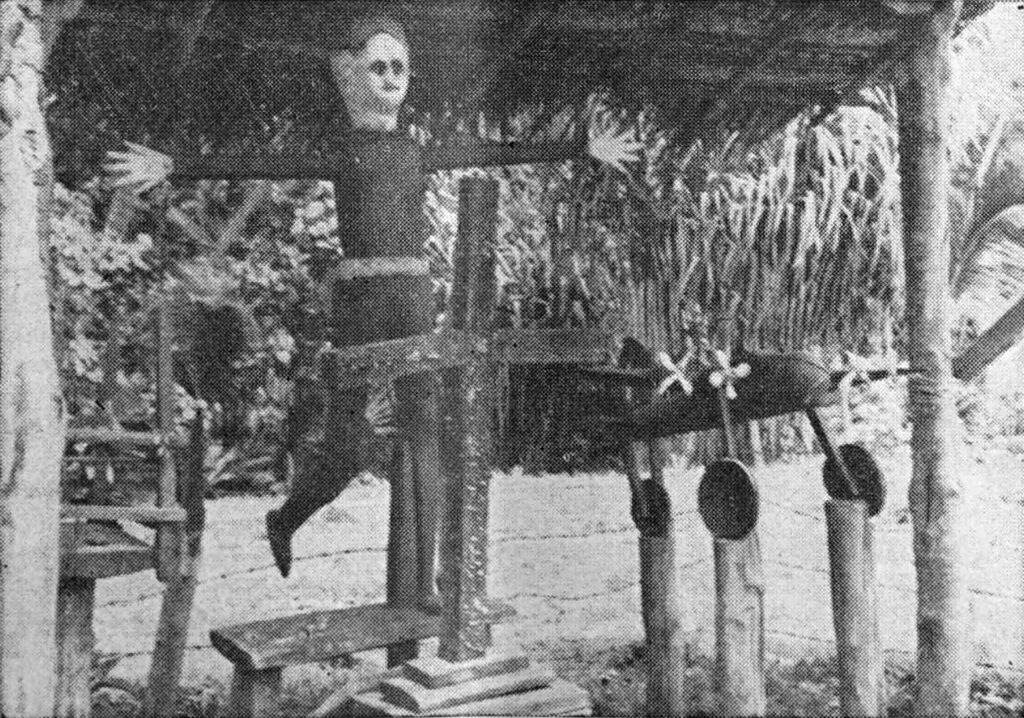
John Frum: the most famous cargo movement
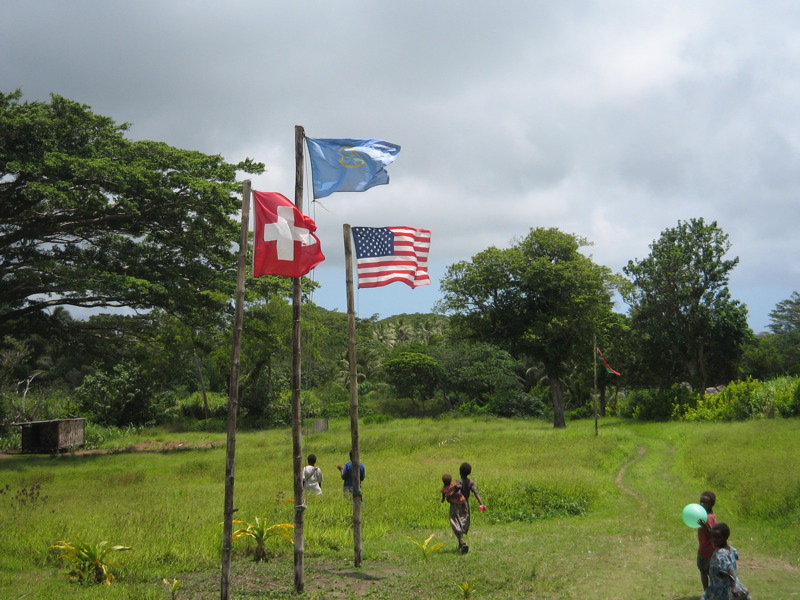
The best-known example is the John Frum movement on Tanna Island in Vanuatu. Smithsonian Magazine described the annual John Frum Day gathering, held on February 15, where participants have raised the American flag, marched with bamboo rifles, and honored a mysterious figure associated by believers with return, abundance, and transformation. The Smithsonian account describes John Frum as a “ghostly American messiah” expected by followers to bring “cargo” and notes that the movement developed in a setting transformed by wartime encounters with American military power, aircraft, ships, and supply systems. (Smithsonian Magazine)
The image is unforgettable: islanders standing near a volcano, carrying ceremonial rifles made of bamboo, raising Old Glory, and invoking a returning figure linked to abundance from beyond the local world. But the image can mislead if treated superficially. John Frum was not merely a copy of an American soldier. He became a religious figure through whom people could interpret colonial disruption, ancestral expectation, social inequality, and the sudden appearance of industrial power.
During the Pacific War, American forces built bases, airfields, warehouses, roads, piers, and communications systems across the region. For local communities, aircraft and ships arrived with a speed, scale, and abundance that could look almost supernatural. Men came from over the sea and out of the sky. They brought lights, canned food, medicine, radios, vehicles, uniforms, metal tools, and disciplined ritual behavior. Then many vanished when the war ended. The cargo stopped. The question remained: Was there a way to call it back?
From a UAP perspective, this is where the comparison begins. The John Frum case shows how advanced aerial arrival can become sacred history when the arrival is socially disruptive, technologically opaque, and morally ambiguous. It also shows that “beings from the sky” do not have to be non-human to be mythologized. Human soldiers arriving by aircraft were enough to seed a religious-political movement.
That does not reduce ancient sky-being accounts to military misunderstandings. It gives us a template for how sky descent, technology, social shock, and sacred narrative can fuse.

Cargo movement patterns and UAP-relevant analogues
| Cargo movement feature | Historical expression in Pacific cargo movements | UAP / NHI analogue | Research caution |
| Sudden arrival of superior technology | Aircraft, radios, ships, military supply chains, medicine, vehicles, canned food | Reports of craft or entities displaying capabilities beyond known local technology | Similarity does not equal identity. Cargo movements involved documented human militaries. |
| Sky or sea descent | Aircraft landing on runways, ships arriving with goods | UAP and USO reports often involve aerial descent, trans-medium movement, or sea-to-sky transitions | Aerial symbolism is common in religion and myth, so interpretation requires context. |
| Ritual imitation | Marching, saluting, mock runways, bamboo rifles, flags | Modern contact rituals, skywatching protocols, CE-5-style practices, meditation-based contact attempts | Ritual can be meaningful without being mechanically effective. |
| Prophetic mediator | John Frum or other prophetic figures promising return or abundance | Contactees, experiencers, channelers, whistleblowers, visionary religious figures | Charismatic authority can reveal, distort, or organize testimony. It must be evaluated carefully. |
| Cargo as justice | Goods symbolize autonomy, respect, social repair, and reversal of colonial hierarchy | “Disclosure” or “free energy” expectations can symbolize public justice, truth, and technological liberation | UAP communities can develop their own cargo expectations around salvation through hidden technology. |
| Absence and return | The powerful visitors leave, but followers expect their return | NHI return narratives, ancient astronaut expectations, messianic sky-return motifs | Return motifs are widespread in religion, politics, and folklore. |
| Translation gap | Local communities interpret global military logistics through available cosmology | Witnesses interpret anomalous craft or beings through religion, science fiction, military language, or spirituality | The witness’s language may encode real perception and cultural interpretation at once. |
| Social reordering | Movements challenge colonial rule, missionary authority, and unequal distribution | UAP disclosure movements challenge secrecy, institutional control, and official denial | Social effects are part of the phenomenon, not merely noise around it. |
Table 1
The deeper UAP question: contact asymmetry
The cargo cult lens matters because UAP and NHI studies are fundamentally about asymmetry. If the phenomenon involves advanced non-human intelligence, then humans are not merely observing objects. We are facing a possible intelligence gap.
A Bronze Age community encountering an aircraft would not write “jet propulsion system.” It might write “chariot of fire,” “throne in the clouds,” “winged being,” “god vehicle,” or “messenger from heaven.” A medieval community encountering a silent luminous sphere might call it a sign, angel, demon, omen, fairy host, celestial army, or divine warning. A modern pilot may say “unidentified aerial phenomenon,” “craft,” “drone,” “orb,” “sensor track,” or “traffic.” The report changes with language. The event may not.
This is not a claim that every religious sky-being narrative is a UAP event. It is an argument that human interpretation is historically bounded. When the unknown appears, people reach for the nearest available symbolic system.
Modern official UAP reporting strengthens this point in a limited but important way. The 2021 U.S. intelligence assessment stated that most UAP reports in its dataset were registered across multiple sensors, including radar, infrared, electro-optical systems, weapon seekers, and visual observation. It also reported that some cases appeared to show unusual flight characteristics, while acknowledging that the dataset remained limited and that multiple explanations were likely. NASA’s 2023 independent study team similarly concluded that UAP present a scientific opportunity, but that high-quality data are scarce, stigma is a barrier, and rigorous, calibrated, multi-sensor collection is needed.
That matters for the cargo question because it prevents a lazy conclusion. We should not say, “Cargo movements show that UAP are just cultural projection.” That overreaches. Some modern cases involve sensor data and trained observers. We also should not say, “Cargo movements prove ancient NHI contact.” That also overreaches. The disciplined conclusion is sharper: cargo movements demonstrate that contact with advanced technology can generate durable religious forms, and UAP research must therefore study physical evidence and cultural translation together.
Feynman’s “Cargo Cult Science” and why UAP research should pay attention
Physicist Richard Feynman popularized “cargo cult science” in a 1974 Caltech commencement address. He used the Pacific image of people allegedly building imitation runways and control towers to describe research that imitates the outward appearance of science without practicing its inner discipline. His point was methodological: the first principle is not to fool yourself, and scientists must report results honestly, whether they support or undermine a preferred conclusion. (Caltech Magazine)
For UAP studies, Feynman’s warning cuts in several directions.
It warns believers not to confuse impressive vocabulary with evidence. A UAP article filled with quantum language, ancient symbols, military acronyms, and cinematic certainty may look rigorous while doing very little real analysis.
It also warns debunkers not to imitate skepticism without doing the work. A quick dismissal can be just as cargo-like as a credulous claim if it borrows the costume of science while ignoring testimony, sensor records, historical context, or unresolved data.
The serious UAP researcher must avoid both traps. The question is not whether a claim feels exciting or embarrassing. The question is what the evidence permits, what it excludes, what remains unknown, and what interpretive layer has been added by witnesses, institutions, media, religion, or memory.
Religion as a contact archive
Religions preserve encounters. They preserve them through story, liturgy, symbol, architecture, calendar, taboo, pilgrimage, iconography, initiation, and sacred geography. Some encounters are internal mystical experiences. Some are collective visions. Some are political memories. Some may encode misunderstood natural events. Some may preserve extraordinary physical events that no longer fit comfortably inside modern categories.
This is why we should treat religion neither as proof of NHI nor as irrelevant folklore. Religion is one of humanity’s oldest data-storage systems for anomalous experience.
Consider Ezekiel’s vision. The Hebrew Bible’s book of Ezekiel describes living creatures, wheels within wheels, radiant movement, and a throne-like presence. Scholars typically interpret this as a visionary throne-chariot scene grounded in ancient Near Eastern religious symbolism, especially the Merkabah tradition. A contemporary UAP reader may see aerial technology; a biblical scholar may see divine kingship and exilic theology. Both readings notice the same striking phenomenology: luminous descent, complex movement, aerial mobility, and overwhelming witness impact. (thetorah.com)
Consider Hindu vimānas. In later popular UAP literature, vimānas are often treated as ancient aircraft. Classical and epic traditions are more complex. Britannica describes the Pushpaka vimāna in the Ramayana as a flying palace or aerial car associated with Vishvakarma, Ravana, and Rama. In religious terms, it belongs to epic myth and divine kingship. In UAP-comparative terms, it shows that South Asian sacred literature contains a robust category of aerial conveyance linked to divine or semi-divine beings. (Encyclopedia Britannica)
Consider Fátima in 1917. The Catholic tradition frames the event as Marian apparition, culminating in the “Miracle of the Sun,” reportedly witnessed by a crowd often estimated around 70,000. Britannica notes the apparition tradition, the October 13 solar phenomenon, and the later Catholic recognition of the apparitions as worthy of belief. (Encyclopedia Britannica) A UAP-adjacent reading does not need to deny the Catholic frame. It asks what happens when a mass visionary event includes sky phenomena, weather or light anomalies, prophetic messages, and long-term pilgrimage formation.
Consider jinn in Islamic cosmology. Jinn are not usually “sky beings” in the simple sense. They are non-human intelligences occupying a parallel moral and spiritual order, capable in many traditions of interaction, deception, travel, and influence. For UAP research, jinn are relevant because they show that religious systems have long entertained categories of non-human agency that are neither gods nor animals nor machines. UAPedia’s related treatment of jinn places them within religious experience and high-strangeness frameworks rather than reducing them to a single modern explanation. (UAPedia)
The pattern is not that all religions secretly describe spacecraft. The pattern is that human cultures repeatedly preserve accounts of non-human agency, aerial movement, luminous phenomena, impossible vehicles, descent from above, and transformative contact.

Religious sky-being motifs and UAP-adjacent interpretation
| Tradition or account | Core motif | UAP-adjacent reading | Religious or conventional reading | Suggested classification |
| John Frum movement, Tanna | Returning figure associated with cargo, military symbols, flags, aircraft-era abundance | Model of how advanced arrival can become sacred expectation | Anti-colonial, religious, economic, and social movement shaped by WWII and colonial disruption | Verified as historical movement; UAP relation is Hypothesis |
| Ezekiel’s chariot vision | Wheels within wheels, radiant living beings, aerial throne | Possible ancient witness language for anomalous aerial technology or non-human contact | Visionary theophany, Merkabah mysticism, exilic religious symbolism | Legend as sacred text; UAP reading is Disputed |
| Pushpaka vimāna | Flying palace or aerial car in epic literature | Mythic memory of aerial conveyance or advanced technology | Divine epic vehicle within Ramayana narrative | Legend; technological reading is Disputed |
| Fátima, 1917 | Apparitions, prophetic message, mass solar phenomenon | Mass anomalous sky event with religious interpretation | Marian apparition accepted within Catholic devotional tradition | Verified as historical devotion and mass report; UAP reading is Disputed |
| Islamic jinn | Non-human intelligences sharing the world with humans | Framework for parallel NHI, trickster agency, or interdimensional interpretations | Theological category in Islamic cosmology | Legend / religious doctrine; UAP application is Researcher Opinion |
| Indigenous sky beings and Star People traditions | Ancestors, teachers, or beings associated with the sky | Possible cultural memory of non-human contact or sky-origin intelligences | Must be interpreted within each specific Indigenous tradition, not flattened into modern UAP language | Legend or Witness Tradition depending on source |
| Baetyls and fallen stones | Sacred stones from the sky, divine objects, meteorites | Material descent from sky becomes religious object | Often meteorite, sacred relic, or temple object | Some Misidentification as meteorites; symbolic role Verified where documented |
Table 2
Cargo cult, religion, and UAP as three contact grammars
| Analytical layer | Cargo movement example | Religious sky-being example | Modern UAP example | What the layer teaches |
| Physical trigger | Military bases, aircraft, ships, goods | Light, vision, meteor, atmospheric event, possible anomalous encounter | Radar/visual/infrared track, close encounter, orb, craft report | Events may begin with perception or material intrusion. |
| Interpretation | Ancestors, John Frum, return of cargo | Angel, deity, chariot, apparition, jinn, sky ancestor | NHI, drone, secret aerospace system, plasma, interdimensional agency | The same stimulus can be named through different symbolic systems. |
| Ritual response | Marching, flags, airstrips, ceremonial rifles | Pilgrimage, prayer, offerings, icons, taboo, sacred calendar | Skywatching, CE-5, disclosure activism, experiencer groups | Contact produces practices, not just stories. |
| Social effect | Resistance, autonomy, redistribution hopes | New sects, pilgrimage economies, moral reform, prophecy | Policy hearings, stigma reduction, new research networks, disclosure movements | Anomalous experience can reorganize society. |
| Risk | Outsiders mock the movement | Scholars over-symbolize or believers over-literalize | Institutions dismiss witnesses or communities overstate weak evidence | The research challenge is balance. |
| UAPedia method | Treat as history, not caricature | Treat as sacred narrative and possible anomaly archive | Treat as evidence stack: testimony, sensors, context, physical effects | Separate data, interpretation, and speculation. |
Table 3
The modern UAP community may have its own “cargo” problem
The cargo cult analogy should not be aimed only at Indigenous communities. Modern technological society is vulnerable to the same pattern.
In UAP culture, “cargo” often appears as promised disclosure, hidden free energy, recovered craft, medical breakthroughs, anti-gravity propulsion, official confirmation, or spiritual ascension. Some of these possibilities may deserve investigation. Some may eventually prove partly true. But psychologically, they can function like cargo: expected abundance from a hidden power that will descend, reveal itself, and reorder civilization.
The expected giver changes. In Pacific cargo movements, the giver might be ancestors, John Frum, Americans, or divine agents. In modern UAP culture, the giver might be NHI, insiders, whistleblowers, secret programs, future humans, interdimensional beings, or governments under pressure. The emotional structure can be similar: deprivation, secrecy, injustice, hope, return, revelation.
This does not make disclosure advocacy false. It makes it human.
A mature UAP movement should ask: Are we gathering evidence, or are we waiting for cargo? Are we building scientific infrastructure, or only symbolic runways? Are we demanding transparency, or projecting salvation onto unknown intelligences? Are we listening to witnesses, or forcing them into our preferred mythology?
These are not comfortable questions. They are necessary ones.
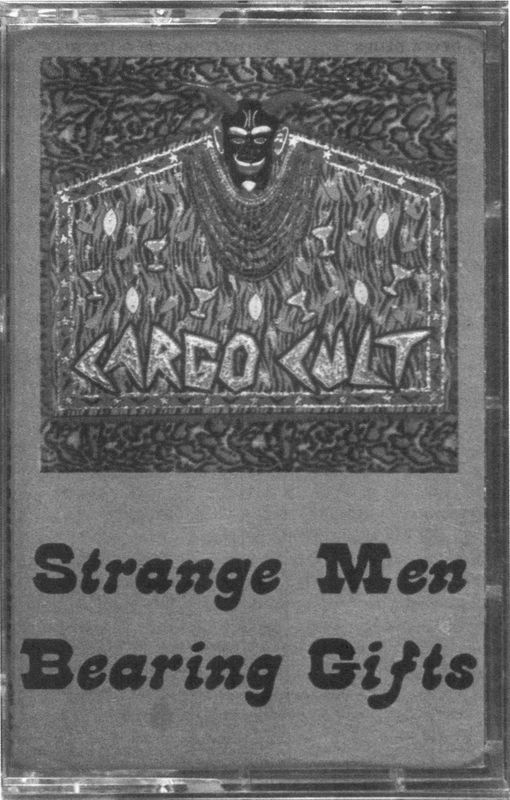
(Cargo Cult and Touch and Go Records | Hawaii University)
I kneel on the ground
I pray to the sky
The Lords have frowned
I don’t know why
Yankee go home
Yankee come back
Yankee go home
Yankee come back
Come back
They gave us guns
And bibles too
But now they’re gone
What do we do? …
I love you America
My beautiful America
You came to me from a big silver bird in the sky
And I?
A lonely native here in the jungle
Who had never had the miracle
of Tictacs, linoleum, cottage cheese
Oh America
I love you
I love you
I love you
What the cargo cult lens gets right
First, it shows that technological asymmetry can become religious experience. When people encounter power they cannot access or reproduce, they may ritualize the visible procedures around that power. This is not stupidity. It is an attempt to decode causality under conditions of extreme inequality.
Second, it shows that contact is never only technological. It is moral. The aircraft does not arrive as a neutral machine. It arrives inside a social world: who eats, who commands, who labors, who receives medicine, who controls writing, who speaks to invisible voices through radios, who can summon ships and planes.
Third, it shows that absence can be as powerful as presence. The visitors leave. The cargo stops. The memory remains. Much religious and UAP expectation is structured around return: the gods will come back, the messiah will return, the visitors will reveal themselves, the hidden records will be opened, the sky people will reappear.
Fourth, it shows that ritual is a technology of hope. Mock runways, flags, songs, processions, skywatching, meditation circles, and pilgrimage routes may not mechanically summon anything, but they organize attention, community, memory, and expectation. They are social instruments.
What the cargo cult lens gets wrong when misused
The phrase becomes harmful when used as a sneer. It can imply that Indigenous people were uniquely irrational, when in fact all human beings imitate visible procedures without understanding hidden systems. People press elevator buttons repeatedly, recite investment jargon, trust opaque algorithms, mimic scientific language, and follow institutional rituals they do not fully understand. Modernity is full of cargo behavior.
It is also misleading when it reduces cargo movements to material greed. Anthropological accounts make clear that these movements involved moral renewal, political autonomy, social dignity, and cosmological reordering, not merely desire for canned goods or manufactured items. (Open Encyclopedia of Anthropology)
Finally, it can be misused in UAP debates to dismiss ancient religious accounts too quickly. Saying “people just mythologized technology” may be true in some cases, but it does not answer what the original trigger was. Was it a meteor? A comet? A military aircraft? A plasma phenomenon? A visionary state? A genuine non-human encounter? A symbolic myth with no physical trigger? Each case must be investigated separately.
A research model: how to use the cargo lens responsibly
A strong UAPedia entry on cargo movements and UAP should not argue from resemblance alone. It should use a layered model:
| Research question | Why it matters | Example |
| What is the original event or trigger? | Separates physical event from later interpretation | WWII military arrival in Tanna; reported luminous sky event at Fátima; Ezekiel’s visionary context |
| What technology or agency was perceived? | Identifies asymmetry | Aircraft, radios, ships, aerial vehicles, luminous beings, wheels, or intelligences |
| What vocabulary did witnesses have? | Explains translation | Ancestors, angels, gods, jinn, craft, drones, NHI |
| What ritual followed? | Shows social processing | Marching, pilgrimage, prayer, airstrip building, skywatching |
| What authority emerged? | Identifies mediation | Prophet, priest, contactee, insider, witness, investigator |
| What changed socially? | Measures impact | Anti-colonial resistance, new religion, disclosure movement, stigma reduction |
| What evidence survives? | Determines classification | Photographs, testimony, official records, texts, sensor data, physical traces |
| What remains speculative? | Prevents overclaiming | NHI origin, technological mechanism, supernatural status, psychological causality |
Table 4
This approach lets us take testimony seriously without flattening everything into one explanation. It also aligns with our broader editorial stance: reported reality, recorded evidence, debate, and interpretation must be kept distinct. (UAPedia)
Conclusion: the runway and the revelation
The cargo cult story is not a joke about bamboo airplanes. It is a warning about contact.
When advanced power descends from the sky, people do not merely observe it. They organize around it. They ritualize it. They moralize it. They ask why the visitors have abundance and they do not. They ask whether the visitors will return. They ask whether the secret is technological, spiritual, political, or ancestral.
That is why cargo movements belong in UAP studies. They show that technology can become theology, that aircraft can become prophecy, that supply chains can become sacred expectation, and that absence can become a religion of return.
For UAPedia, the cargo cult lens should not be used to explain away UAP. It should be used to sharpen the question: when humans encounter the unknown, what part of the story belongs to the event, what part belongs to the witness, what part belongs to culture, and what part may belong to an intelligence still beyond our categories?
The runway may be symbolic. The sky may still answer.
Claims Taxonomy
| Claim | Classification | Rationale |
| Cargo movements emerged in Melanesia and were shaped by colonial, missionary, wartime, economic, and religious pressures. | Verified | Supported by anthropological literature and historical accounts. |
| The term “cargo cult” appeared in the 1940s and later became controversial among anthropologists. | Verified | Lindstrom documents the term’s history and declining scholarly favor. (Open Encyclopedia of Anthropology) |
| The John Frum movement on Tanna remains one of the best-known cargo movements and includes ceremonial use of flags, marching, and return expectation. | Verified | Supported by Smithsonian and archival image records. (Smithsonian Magazine) |
| Cargo movements show how advanced technology can become sacred narrative under conditions of asymmetrical contact. | Probable | Strongly supported as an interpretive conclusion from historical patterns. |
| Ancient religious sky-being accounts may preserve culturally translated memories of anomalous encounters. | Disputed | Plausible in some cases, but not demonstrable as a general rule. |
| Ezekiel’s wheels, Hindu vimānas, Fátima, jinn, and Indigenous sky-being traditions are all literal NHI encounters. | Disputed | These accounts require separate case-by-case evaluation and cannot be collapsed into a single explanation. |
| Vimānas and Ezekiel’s chariot are important mythic or religious aerial-vehicle motifs. | Legend | Best treated first as sacred or mythic traditions. |
Speculation labels
Hypothesis: The cargo cult lens is best understood as a model of asymmetrical contact. If NHI or ultra-advanced intelligences have interacted with human communities in the past, their presence may have been encoded as gods, angels, jinn, sky ancestors, luminous vehicles, or sacred return myths.
Witness Interpretation: Human witnesses describe anomalous events through available language. A Pacific Islander may speak of cargo and ancestors. A biblical prophet may speak of wheels, living creatures, and divine throne. A Catholic crowd may speak of Marian signs. A pilot may speak of UAP, radar tracks, and propulsionless motion.
Researcher Opinion: “Cargo cult” should never be used as a dismissive label. Its real value is diagnostic. It reveals how power, technology, ritual, inequality, and expectation interact after contact with an apparently superior agency.
References
Encyclopaedia Britannica. (2026). Fátima and Our Lady of Fátima. Encyclopaedia Britannica. (Encyclopedia Britannica)
Encyclopaedia Britannica. (2026). Vishvakarma. Encyclopaedia Britannica. (Encyclopedia Britannica)
Feynman, R. P. (1974). Cargo Cult Science. Caltech Engineering and Science. (Caltech Magazine)
Lindstrom, L. (2018). Cargo cults. Open Encyclopedia of Anthropology. (Open Encyclopedia of Anthropology)
Raffaele, P. (2006). In John They Trust. Smithsonian Magazine. (Smithsonian Magazine)
TheTorah.com. (2019). Ezekiel’s Vision of God and the Chariot. (thetorah.com)
Additional crosslinks
| Suggested page | Why it belongs |
| Indigenous Sky-Spirits | Cross-cultural sky-being traditions requiring careful contextual treatment. |
| The Baetyls or “Fallen Stones” Pattern That Keeps Reappearing in Ancient UAP Narratives | Material descent from sky and sacred-object formation. |
| The Control System Theory | Useful for comparing recurring symbolic forms across time. |
| Non-Human Intelligence (NHI) | Core conceptual page for non-human agency. |
| Ontological Shock | Explains the social and psychological impact of anomalous contact. |
| UAPs as Manifestations of Higher Consciousness | Related spiritual interpretation category. |
SEO keywords
Cargo cult UAP, cargo cult NHI, John Frum UAP, cargo cult religion, UAP and religion, NHI beings from the sky, sky gods UAP, Ezekiel wheel UAP, vimānas UAP, Fátima UAP, Islamic jinn UAP, technological myths UAP, cargo cult science UAP, UAPedia cargo cult, asymmetrical contact, non-human intelligence religion, sky beings ancient religion, UAP anthropology, UAP mythology, ontological shock UAP