
High on the Bandiagara Escarpment in Mali, the Dogon have lived for centuries in stone villages pressed against sheer rock. In the mid-twentieth century, French ethnographers sat with Dogon elders and wrote down a cosmology that seemed to contain something impossible: detailed knowledge of an invisible star orbiting Sirius, the brightest star in our sky.
Out of those field notes came a chain of books and investigations that still divides researchers.
- Marcel Griaule’s Conversations with Ogotemmêli (1948; English 1965) presented an old blind hunter, Ogotemmêli, as a master of an intricate cosmic system in which amphibious beings called Nommo descend from the sky, create a pool of water and teach humanity. (Amazon)
- Griaule and his colleague Germaine Dieterlen then published Le Renard pâle (The Pale Fox), a dense symbolic study that included material about Sirius as a binary star, with a tiny, heavy, invisible companion that orbited every fifty years. (Goodreads)
- In 1976, Robert Temple’s The Sirius Mystery took those claims and argued that Dogon knowledge came from an actual contact with beings from the Sirius system, turning a difficult ethnography into a global ancient‑contact touchstone. (Amazon)
Later anthropologists, astrophysicists and independent researchers pushed back, re‑evaluated, and sometimes doubled down. The result is one of the most contested “deep‑time UAP” case files we have.
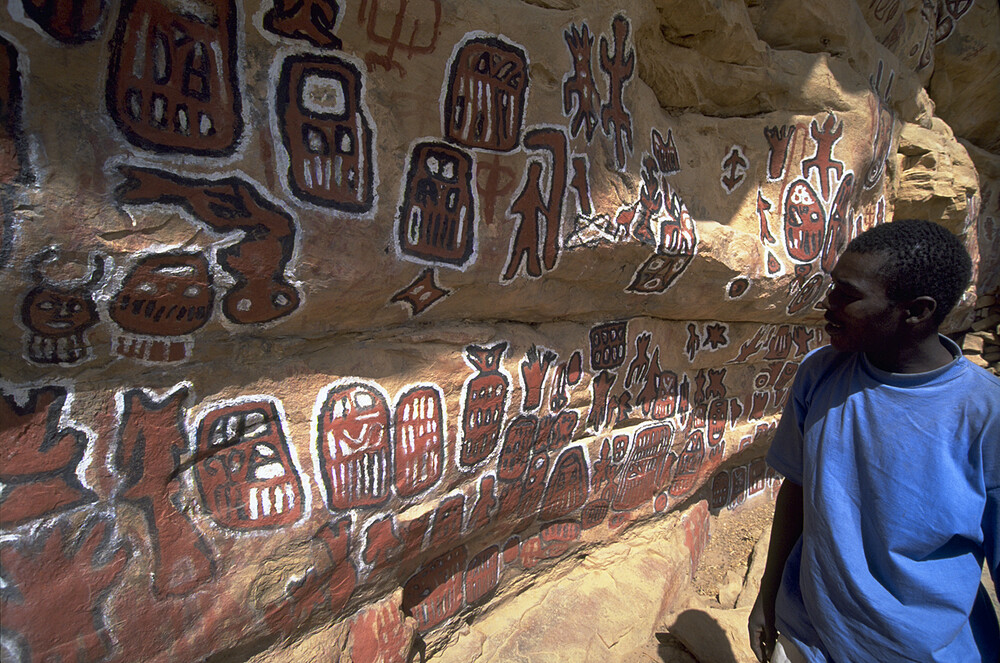

The Dogon on their own terms
Anthropological books and field reports before the Sirius controversy already cast the Dogon as one of West Africa’s most sophisticated religious cultures.
Key works that open that world include:
- Conversations with Ogotemmêli by Marcel Griaule, which records thirty‑three days of teaching by the elder Ogotemmêli in 1946. (Amazon)
- The Pale Fox by Griaule and Dieterlen, a later, far more technical synthesis of Dogon symbols, masks, myths and cycles. (Goodreads)
- Geneviève Calame‑Griaule’s Words and the Dogon World, which explores Dogon language and symbolism as a tightly integrated system. (eHRAF World Cultures)
Taken together with more recent regional studies, these books sketch a people who:
- maintain elaborate masked funerary rites, multi‑year ceremonies and initiation cycles;
- embed cosmological ideas in architecture, farming layouts, clothing, weaving and storytelling;
- work with a very large set of ritual and cosmological “signs” that include astronomical and calendrical concepts. (SAGE Journals)
Later African religion overviews, such as entries in the Encyclopedia of African Religion and specialized articles on Dogon religion, confirm that Dogon cosmology centers on a high creator deity, Amma, and ancestral spirits called Nommo, with strong themes of duality, balance and cosmic order. (SAGE Journals)
This is already a complex, internally coherent spiritual system, even before anyone asks about Sirius.
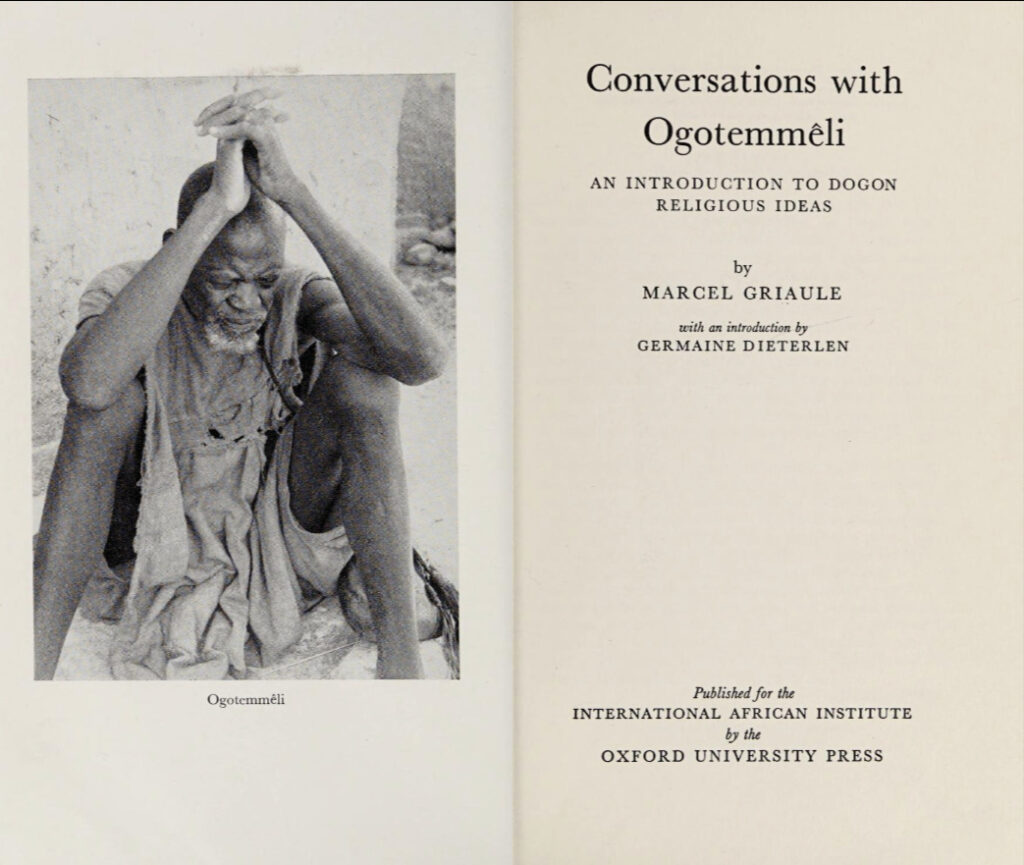
Ogotemmêli as witness
From a UAPedia perspective, Ogotemmêli is not a “source in a myth” but a named witness whose testimony was taken down over repeated sessions.
In Conversations with Ogotemmêli, the elder describes for Griaule:
- a primordial cosmic egg created by Amma;
- the emergence of twin beings, including a trickster fox whose rebellion disrupts the intended order;
- the creation and sacrifice of Nommo, whose dismembered body becomes the substance of cosmos and whose blood generates stars, plants and animals;
- a world structured in layers, directions and cycles that echo through Dogon masks, altars and everyday tools. (Amazon)
By the time Griaule published, Ogotemmêli’s account was already being treated by colleagues as one of the richest cosmological narratives recorded in Africa. Later African religion handbooks still cite it as a foundational source, even when they disagree about how representative it is of Dogon religion as a whole. (SAGE Journals)
For UAP studies, Ogotemmêli matters less as a romantic “sage” and more as a very early, named informant whose descriptions of cosmic beings, descent, and knowledge transfer can be compared with later accounts of contact and transmedium entities.
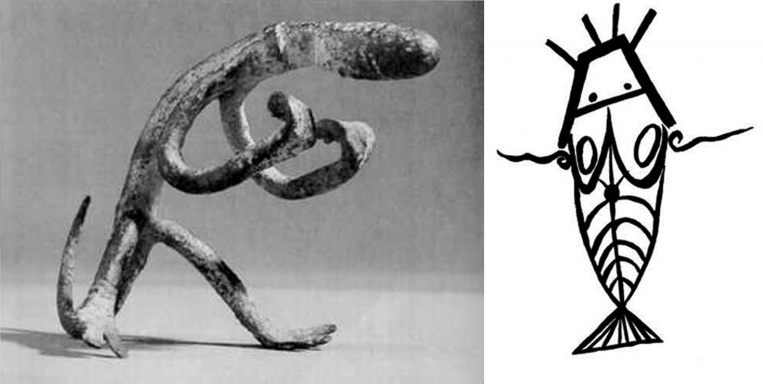
The Nommo: amphibious teachers in a living cosmos
Virtually all serious discussions of Dogon cosmology mention Nommo. They occupy the same central place in Dogon religion that angels do in Christian cosmology or devas in some Hindu traditions.
In the narrative reconstructed by ethnographers and African religion scholars:
- Amma, the creator, brings forth the Nommo as primordial beings associated with water, speech and order.
- They are described as hermaphroditic, often with mixed human and fish attributes, and are tightly linked to rivers, rain and fertility. (SAGE Journals)
- After a cosmic disruption triggered by the fox (Yurugu), Amma sacrifices one Nommo. The dismemberment purifies the universe, and parts of the body become stars, elements of the landscape and ritual objects. (Barnes & Noble)
- Dogon stories speak of Nommo descending, creating a body of water and entering it, and of Nommo bringing essential skills such as weaving, agriculture and speech. (Amazon)
Comparative religion sources outside the UFO world are very clear that Nommo are not a late overlay from science fiction. They are embedded in ritual, sacrifice and the mask system, and they predate the 20th century airwave fascination with “Martians”. (SAGE Journals)
From a UAP lens, however, several features make Nommo relevant:
- They present as amphibious and transmedium entities associated with luminous descent and water.
- They are explicit culture‑bringers and lawgivers, matching a widespread pattern in contact lore.
- Their myth includes a “vehicle” or spinning ark that some modern interpreters have read as a craft analogue. (ObeisanceBaha)
Whether one reads those motifs literally or symbolically is the core tension in the Dogon file.
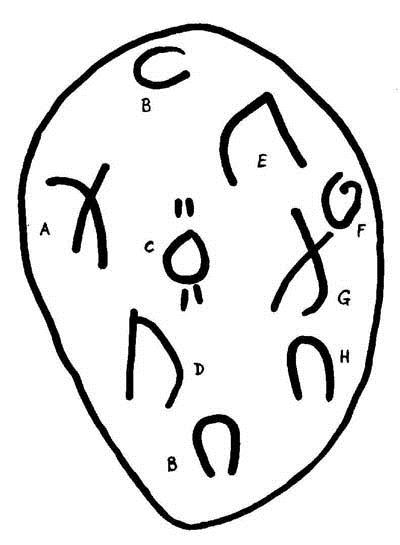
Sirius in the books: from The Pale Fox to The Sirius Mystery
The specific claims about Sirius as a binary system with an invisible companion star are not front and center in Conversations with Ogotemmêli. They come into focus later, in the more technical work spearheaded by Griaule and Dieterlen in Le Renard pâle.
Secondary summaries of that French text, including astrophysics essays and comparative religion articles, attribute the following points to their Dogon priest informants:
- Sirius is not single but part of a system.
- The companion star is very small, extremely heavy, and not visible to the human eye.
- It orbits the bright Sirius over a period of roughly fifty years. (vega.lpl.arizona.edu)
Astronomers had indeed inferred and then visually detected a white dwarf companion, Sirius B, in the 19th century, with modern measurements confirming an orbital period of about 50.1 years and extreme density. (Harvard Chandra Observatoy)
In 1976, Robert Temple’s The Sirius Mystery took those claimed Dogon details and asked the question more bluntly than any anthropologist would: if an inland West African culture knew about Sirius B without telescopes, where did the information come from. Temple’s book argues that:
- Dogon Sirius traditions encode sophisticated astronomical data.
- These traditions likely derive from contact with non‑human intelligences originating in the Sirius system.
- That contact may have influenced not only the Dogon but also ancient Egypt and Sumer, leaving Sirius symbolism scattered through Mediterranean and Near Eastern myth. (Amazon)
Temple later reiterated and updated his hypothesis in interviews and public talks, including appearances on the Earth Ancients podcast where he revisits the Dogon material from a historian‑of‑ideas angle rather than as a field ethnographer. (Player FM)
Temple is not an anthropologist, and his argument is openly heterodox. Yet his book did something very specific for UAP culture: it made a difficult French ethnographic corpus accessible to a mass audience and locked the “Dogon and Sirius B” motif into the global narrative of ancient contact.
Re‑reading Dogon cosmology: Laird Scranton and symbolic science
If Temple was the first to put Dogon‑Sirius into an explicit extraterrestrial frame, Laird Scranton became the best known independent researcher to treat Dogon myth as a technical code.
Scranton has produced a long series of books, beginning with The Science of the Dogon: Decoding the African Mystery Tradition and Sacred Symbols of the Dogon, that:
- line up Dogon diagrams and descriptions from Griaule’s books with physics and cosmology diagrams from writers such as Stephen Hawking and Brian Greene;
- argue that Dogon symbols closely parallel concepts like wave‑particle duality, spin, and pre‑Big‑Bang cosmology;
- extend those parallels into ancient Egyptian and other cosmologies, suggesting a common esoteric science tradition. (Menla)
He has presented these ideas in multiple podcast and radio appearances, including:
- Conspirinormal episode 78, which explores the Dogon, Egyptian links and Scranton’s “point of origin” model; (Spreaker)
- talks on Earth Ancients that frame Dogon myths within a proposed precessional “Great Year” cosmology; (Ananda College)
- interviews specifically about The Science of the Dogon and its “decoding” approach. (Apple Podcasts)
Academic anthropologists generally see Scranton as speculative and methodologically loose, since he works almost entirely from existing texts and does not engage with Dogon communities directly.
For UAP and alternative history audiences, however, his work is influential because it mines the same Dogon corpus for patterns that fit a “hidden advanced knowledge” theme.
Whether one finds his correlations persuasive or not, Scranton is a key investigator in the Dogon‑UAP ecosystem and a frequent reference point in podcasts that try to go beyond simple “aliens taught astronomy” slogans.
The skeptical restudy: Walter van Beek and the Dogon debate
The strongest critique of the Dogon‑Sirius story does not come from debunking blogs but from field anthropology.
In 1991, Walter E. A. van Beek published “Dogon Restudied: A Field Evaluation of the Work of Marcel Griaule” in Current Anthropology. After extensive fieldwork among the Dogon, he reported:
- Dogon informants he worked with did not demonstrate detailed knowledge of Sirius as a binary system.
- The elaborate, unified cosmology presented in The Pale Fox was very difficult to recover in practice.
- He suspected that Griaule’s team, by pressing for system and coherence, may have helped shape an esoteric doctrine that was not widely shared. (Chicago Journals)
The article sparked a sharp response from Geneviève Calame‑Griaule, who published “On the Dogon Restudied” in the same journal, accusing van Beek of poor access to initiates and misunderstanding secret knowledge rules. (eHRAF World Cultures)
More recently, Doquet and Jolly’s 2023 essay “The Dogon and Malian Uses of Griaulian Ethnology” shows how Dogon and Malian elites themselves have selectively adopted, repurposed or rejected elements of the Griaulian Dogon “system”, especially for tourism and national identity. (Politika)
For a data‑first UAP analysis, this debate means:
- The exact content and antiquity of Dogon astronomical knowledge as recorded by Griaule is disputed.
- It is plausible that some specific Sirius B details reflect a dialogue between French researchers and chosen informants rather than a pristine thousand‑year tradition.
- At the same time, there is no consensus that Griaule simply fabricated data. The field is split, which is why Dogon remain a live case in both anthropology and UAP studies.
Dogon, Egypt and Sirius along the Nile
One of the reasons Dogon cosmology resonates so strongly in UAP circles is its perceived connection to Egypt.
Two streams feed this:
- Robert Temple’s argument in The Sirius Mystery that Dogon Sirius symbolism is ultimately part of a wider Sirius cult that includes the Egyptian goddess Sopdet (Sothis) and Isis, whose heliacal rising marked the Nile flood. (Amazon)
- Laird Scranton’s Sacred Symbols of the Dogon, which reads Dogon ritual signs as keys to understanding ancient Egyptian hieroglyphs and suggests that the two systems share a common cosmological template. (Menla)
Audio and video content has amplified this comparative line:
- The “Dogon Myth and the Great Year” lecture explicitly links Dogon myths and Sirius to precessional cycles that also appear in some readings of Egyptian and Vedic cosmology. (Ananda College)
- Podcasts like EP27: The Dogon Tribe of West Africa and “What’s the Cosmic Connection Between Sirius and Ancient Dogon Myth” set Dogon chants beside Egyptian imagery and frame both as fragments of a Sirius‑centered spiritual science. (Poddtoppen)
Mainstream historians are more cautious. Linguistic and archaeological work places Dogon firmly within West African language families and regional migration patterns, not as direct refugees from the Nile. (Politika)
From a UAPedia standpoint, the Dogon–Egypt–Sirius triangle is best treated as an open comparative hypothesis rather than a proven line of descent: there is clearly a shared emphasis on Sirius as a sacred star, but not yet a demonstrable unbroken chain of priestly knowledge.
Podcasts as modern field notebooks
In the absence of new monographs from Dogon villages, podcasts have become a kind of rolling, informal “field notebook” where different investigators test interpretations.
Some examples across the spectrum:
- Grognostics, “Ep 43: The Dogon People and Sirius B Mystery” – A conversational deep dive into the claim that Dogon knew of Sirius B, weighing Temple, Scranton and skeptical astronomers while keeping the focus on specific data points like orbital period and density. (Spotify)
- Beyond The Known, “The Dogon and the Sirius Mystery: Ancient Knowledge or Alien Contact” – A structured treatment that explicitly frames Dogon Sirius lore as a UAP contact case, summarizing key claims and alternatives for a general audience. (Spotify)
- The Anunnaki Connection, “The Dogon, Sirius, and the Nummo” – Connects Dogon Nommo to Mesopotamian Anunnaki traditions, arguing for a broader trans‑cultural amphibious teacher motif. (Apple Podcasts)
- Conspiracy Deconstructed, “The Sirius Mystery: Did Alien Gods Teach the Dogon Tribe Astronomy” – Revisits Temple’s work and modern critiques, for a younger audience arriving via UAP TikTok and short‑form video. (Apple Podcasts)
- Phresh Pharaoh, “The Science of the Dogon and the Sirius Star System” – A spiritually oriented discussion that casts Dogon cosmology as a forerunner of quantum mechanics and African esoteric science. (Spotify for Creators)
- Supernatural Selection, “The Dogon Tribe” and similar shows blend humor with serious questions about “how they knew”, illustrating how firmly the Dogon Sirius story now sits in online culture. (Supernatural Selection)
From a research standpoint, these podcasts are not primary data on Dogon beliefs. They are, however, excellent metadata on how the case is being interpreted, remixed and passed on in a digital environment that forms many people’s first contact with the topic.
UAP‑relevant observables in the Dogon file
Referencing books, peer‑reviewed articles and the stronger podcast lines, what UAP‑relevant elements remain?
- Transmedium behavior
Dogon myths describe Nommo as descending from the sky in a bright, spinning vessel, then constructing or entering a body of water and continuing activity there. This is a clear narrative of objects or beings moving from air to water without loss of control, which strongly echoes modern USO reports. (ObeisanceBaha) - Knowledge transfer
Nommo are depicted as teachers who bring speech, weaving, agriculture and social norms. Experiencer narratives today often describe “downloads” of information, sometimes symbolically encoded, after contact with non‑human intelligences. Dogon myth can be read as a very early version of that pattern, articulated within an agrarian ritual frame. (Amazon) - Astronomical specificity
If one accepts The Pale Fox at face value, the Dogon description of a tiny, dense, invisible star orbiting Sirius in fifty years is very close to astronomical reality. That is the sharpest evidentiary hook behind Temple, Scranton and many podcast hosts. (vega.lpl.arizona.edu) - Encoded diagrams
Dogon ritual diagrams, as reproduced in Griaule’s books and reinterpreted by Scranton, often look like complex schematics, with nested circles, axes and flows. Even if some of the modern physics parallels are over‑enthusiastic, the very existence of such diagrammatic thinking in an oral culture is relevant for studies of how contact experiences might be stored visually rather than textually. (Amazon) - Long‑cycle timing
Dogon Sigi festivals are often described in the literature as pegged to 60‑year cycles that some have connected to Sirius B’s orbit, although van Beek’s restudy argues that in at least some Dogon communities the scheduling today is not astronomically driven. (Chicago Journals)
None of this proves that a non‑human intelligence physically landed in Mali thousands of years ago. It does, however, put Dogon cosmology on the short list of pre‑modern traditions that contain transmedium beings, explicit star knowledge and technical‑looking symbolic systems.
Claims taxonomy
Verified
- The Dogon possess an elaborate indigenous cosmology centered on Amma, Nommo and a structured universe, as documented in Conversations with Ogotemmêli, The Pale Fox and later African religion reference works. (Amazon)
- Dogon myths, as published by Griaule and Dieterlen, attribute culture‑bringing and cosmological roles to amphibious beings called Nommo. (Amazon)
Probable
- At least some Dogon priestly lineages in the mid twentieth century articulated a view of Sirius that included a dense, invisible companion with a roughly fifty year orbit. This appears consistently across The Pale Fox, secondary summaries and later discussions, although its antiquity and spread are debated. (vega.lpl.arizona.edu)
Disputed
- The claim that Dogon knowledge of Sirius B and its orbital characteristics predates contact with European astronomy. Van Beek’s restudy, the lack of early independent documentation, and plausible scenarios for knowledge transfer keep this unresolved. (Chicago Journals)
- The idea that Dogon are direct cultural heirs of ancient Egypt who preserved Egyptian Sirius cult knowledge in purer form than the Nile Valley itself. Linguistic and archaeological work does not strongly support a simple migration story. (Politika)
Legend
- Narratives that specify concrete dates, home planets and technical specifications for Nommo as literal extraterrestrials from the Sirius system who engineered Dogon, Egyptian and Sumerian civilization in a single program. These expansions appear mainly in modern alternative history books and podcasts rather than in primary Dogon sources. (Amazon)
Misidentification
- Overly literal readings of every Dogon symbol, mask and dance as astronomical hardware diagrams or physics equations. Scranton’s work raises stimulating parallels but often steps beyond what the original context guarantees. (Menla)
Hoax
- There is no strong evidence in the anthropological or religious literature that Dogon themselves hoaxed their Sirius lore. Concerns focus on outsider interpretation and possible research bias, especially in the Griaule school, rather than deliberate deception by Dogon informants. (Chicago Journals)
Speculation labels
To separate analysis from narrative, UAPedia flags:
Hypothesis
- Dogon Sirius traditions encode a genuine pre‑modern contact with a non‑human intelligence that presented itself as amphibious, operated transmedium craft and transmitted symbolic knowledge about a star system of origin. This is the position taken in different forms by Robert Temple, many ancient‑contact podcasts and some spiritual interpreters who see Dogon cosmology as a preserved piece of a larger cosmic teaching. (Amazon)
Witness Interpretation
- Dogon elders such as Ogotemmêli received visionary, altered state or anomalous experiences that they interpreted through existing cultural categories, producing a mythic narrative with star and water imagery that may or may not correspond to external physical events. This aligns with cross‑cultural patterns of “sky people” and “water beings” without requiring a literal Sirius origin. (Amazon)
Researcher Opinion
- The most conservative reading is that detailed Sirius B knowledge entered Dogon priestly discourse through contact with European astronomy in the late 19th or early 20th century, and that Griaule’s interpretive framework amplified and systematized fragments into a grand cosmology. This position is advanced in various forms by van Beek, some historians of science, and skeptical commentators who focus on the chronology of Sirius discoveries and the dynamics of ethnographic fieldwork. (Chicago Journals)
UAPedia treats all three as live possibilities rather than settling the question, since the available data support multiple consistent narratives.
References
Books and academic sources
Calame‑Griaule, G. (1986). Words and the Dogon world. Institute for the Study of Human Issues. (eHRAF World Cultures)
Griaule, M. (1965). Conversations with Ogotemmêli: An introduction to Dogon religious ideas. Oxford University Press. (Amazon)
Griaule, M., & Dieterlen, G. (1965). Le Renard pâle [The Pale Fox]. Institut d’ethnologie. English edition 1986, Infantino (trans.). (Goodreads)
van Beek, W. E. A. (1991). Dogon restudied: A field evaluation of the work of Marcel Griaule. Current Anthropology, 32(2), 139–167. (Chicago Journals)
Doquet, A., & Jolly, É. (2023). The Dogon and Malian uses of Griaulian ethnology. Politika. (Politika)
Asante, M. K., & Mazama, A. (Eds.). (2009). Dogon entries in Encyclopedia of African Religion. SAGE. (SAGE Journals)
Temple, R. K. G. (1998). The Sirius mystery: New scientific evidence of alien contact 5,000 years ago (rev. ed.). Inner Traditions. (Amazon)
Scranton, L. (2006). The science of the Dogon: Decoding the African mystery tradition. Inner Traditions. (Menla)
Scranton, L. (2007). Sacred symbols of the Dogon: The key to advanced science in the ancient Egyptian hieroglyphs. Inner Traditions. (Menla)
Articles and summaries
“Dogon religion.” Encyclopedia.com overview. (Barnes & Noble)
“Sirius matters: Alien contact” (2000). Chandra X‑ray Center article discussing Sirius astrophysics and the Dogon controversy. (Harvard Chandra Observatoy)
“Ancient Dogon people cosmology.” ObeisanceBaha essay on Dogon myth, Amma and Nommo. (ObeisanceBaha)
Podcasts and audio
Grognostics. (2019). Ep 43: The Dogon People and Sirius B Mystery. Spotify. (Spotify)
Beyond The Known. (2025). The Dogon and the Sirius Mystery: Ancient Knowledge or Alien Contact. Spotify. (Spotify)
The Anunnaki Connection. (2025). The Dogon, Sirius, and the Nummo: Did the Anunnaki Visit Africa First? Apple Podcasts. (Apple Podcasts)
Conspiracy Deconstructed. (2025). The Sirius Mystery: Did Alien Gods Teach the Dogon Tribe Astronomy? Apple Podcasts. (Apple Podcasts)
Rebirth of the Word. (2025). The Science of the Dogon: Decoding the African Mystery Tradition (interview with Laird Scranton). Apple Podcasts. (Apple Podcasts)
Phresh Pharaoh Ent. (2022). The Science of the Dogon and the Sirius Star System. Spotify. (Spotify)
Conspirinormal Podcast. (2015). Episode 78 – Laird Scranton (Point of Origin and the Science of the Dogon). Spreaker. (Spreaker)
Earth Ancients. Multiple episodes with Laird Scranton and Robert Temple discussing Dogon cosmology and Sirius. Example: “Laird Scranton: Primal Wisdom of the Ancients” and “Robert Temple: The Sirius Mystery, Revisited”. (Player FM)
SEO keywords
Dogon Sirius B mystery; Dogon tribe Nommo UAP; Dogon cosmology Sirius star system; Science of the Dogon Laird Scranton; Robert Temple Sirius Mystery Dogon; Dogon Egypt Sirius connection; amphibious Nommo transmedium beings; Dogon astronomy Mali West Africa; Dogon Sirius podcasts and books; Dogon tribe ancient contact narrative