There’s a moment that shows up again and again in the close UAP testimony of contact with NHI (Non-Human Intelligence). A witness is doing something ordinary, driving home, standing in a schoolyard, working outdoors at night, and then the world changes texture. Sound thins out. The air feels “pressurized.” Time seems to hesitate. People reach for the same metaphors: it’s like stepping onto a film set, or into a bubble, or into a strange stillness that does not belong to the weather.
That “threshold moment” matters because it’s where a sighting becomes contact. Not necessarily contact with a being you can point at, and not necessarily contact that can be proven with lab instruments, but contact as the experiencer describes it: an interaction, implied or explicit, with agency on the other side.
This article is about the phenomenology of contact with Non-Human Intelligence (NHI). Phenomenology means the structure of lived experience: what it felt like, how perception shifted, how time behaved, what kind of communication was reported, what the body did, what the social aftermath looked like, and what kinds of documentation exist when these private experiences enter public records. It is also about NHI intent, but with strict guardrails. “Intent” here does not mean certainty. It means cautious inference from patterns, while keeping alternative explanations in view.
Because contact narratives often blend observation, memory, and meaning, two frameworks appear up front so the reader never has to guess whether they’re reading evidence or interpretation.
Contact is not one thing
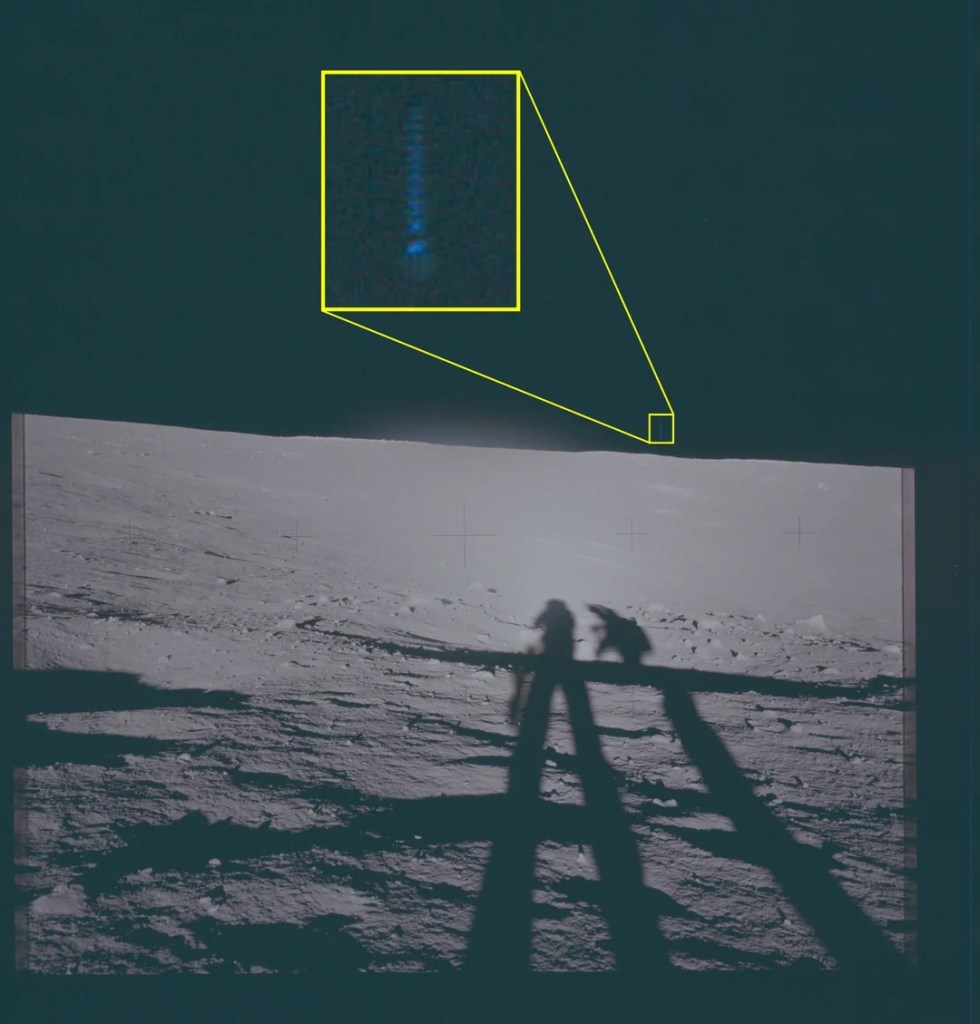
Public discussion often treats contact like a staircase: first you see a light, then you see a craft, then you meet a being. The record is messier. Some contact is interactive without any “entity” present. The object seems to mirror a vehicle’s movement, “wait” at a location, or respond to attention. Some contact is mainly proximity, with effects in the environment or the body. Some are entity-associated, with reported paralysis, examination motifs, or missing time. And some is described as contact without a craft, more like a mind-mediated intrusion or exchange.
A useful way to think about this is not as a ladder but as a family resemblance. These events differ in staging and intensity, but they often share a core implication: the experiencer believes they were engaged by an intelligence that was not human, and that the engagement was not accidental.
That definition is deliberately modest. It does not settle where NHI comes from. It does not settle whether the experience was physical, psychological, or hybrid. It simply names what the witness claims: agency, interaction, and residue.
The threshold shift: when reality changes texture
British researcher Jenny Randles gave one name to the threshold moment: the “Oz Factor,” a shorthand for the feeling that the scene has slipped into a strange version of itself. UAPedia treats the Oz Factor as a phenomenological marker rather than a proof-claim, which is the correct posture for something so consistently reported and so hard to instrument. (uapedia.ai)
There are several grounded ways to read this threshold shift without collapsing into certainty.
One is cognitive and physiological. In high-arousal states, attention narrows, background noise drops out, and derealization can occur. The world can feel unreal, over-sharp, or dreamlike. This model explains why so many contact reports include intense fear, bodily freezing, and the sense that everything has become “too quiet.”
A second is environmental or technological. If some UAP events involve unusual electromagnetic conditions or other physical influences, then perceptual distortion could be downstream of exposure. This is why, when researchers discuss injuries, they often treat them as possible proximity effects rather than as proof of motive.
A third is interface-based. In this reading, the threshold shift is part of the contact mechanism. It is the “handshake” between witness and phenomenon. The witness is shifted, briefly, into a state where interaction is possible, whether that interaction is mediated through perception, cognition, or something we do not yet have good tools to describe.
Hypothesis: Interface-state as a contact prerequisite
If a subset of contact reports involve mind-mediated communication, then the recurring threshold shift might be an induced state that supports that communication. This does not require claiming anything supernatural. It simply treats the state itself as a repeatable feature of testimony that deserves careful documentation and comparison.
Time distortion and missing time: when the clock becomes evidence
Missing time is the hinge between “I saw something” and “something happened to me.”
In the best-investigated cases, missing time is not treated as pure amnesia. It is treated as a discrepancy between expected elapsed time and reconstructed elapsed time, sometimes anchored to route timing, departure and arrival estimates, odometer distance, or receipts and logs. It can still be explained in conventional ways, but the investigative posture is different: a time gap invites reconstruction rather than instant dismissal.
The Betty and Barney Hill case remains foundational here largely because it sits in an institutional archive with extensive preserved materials. The University of New Hampshire’s guide to the Hill papers describes the collection and its relationship to the Hills’ reported experience and subsequent research and public attention. (library.unh.edu)
The fact that a case is archived does not make its extraordinary claims automatically true. But archiving reduces distortion over time and gives future researchers something concrete to inspect rather than relying on folklore.
A second reason the Hill case remains contentious is that hypnosis played a major role in later narrative detail. That is where responsible caution belongs. Hypnosis can increase confidence without increasing accuracy, and it can encourage confabulation. The coherent move is to keep the time discrepancy and contemporaneous distress distinct from later reconstructed narrative scenes.
Witness Interpretation: Missing time as intervention
Many experiencers interpret missing time as a sign of capture, manipulation, or deliberate screening. That interpretation is understandable. It is not the only possibility. Stress states, sleep disruption, and memory fragmentation can also create gaps. The phenomenological fact, the feeling of discontinuity and the later shock of time-loss, is itself part of the map that contact researchers are trying to draw.
Communication: the message problem, and why it matters for intent
If you want to talk about intent, you have to talk about communication, because “what they wanted” is often framed through “what they said.”
A striking number of contact narratives describe communication that does not arrive as normal sound. It arrives as an impression, like a sentence delivered without hearing it, often carrying emotional force. If something happens “in the mind,” skeptics reasonably point to imagination, cultural priming, or social contagion. Proponents point to recurring similarity in the reported delivery mechanism across disparate contexts. Phenomenology can describe the channel. It cannot automatically identify the author.
The Ariel School incident in Ruwa, Zimbabwe (16 September 1994) is a commonly cited example where witnesses reported a craft-like object and beings, and some witnesses described mental impressions. WHYY’s coverage of a documentary about the event emphasizes the number of children involved and the long tail of impact some witnesses report. (whyy.org) A separate traceable source often referenced in Ariel discussions is a 2008 piece hosted by the John E. Mack Institute describing Mack’s later interviews and summarizing reported impressions and reactions. (johnemackinstitute.org)
To stay responsible, it helps to say exactly what the sources support: witnesses reported mental impressions. It is not necessary, and not justified by the evidence, to claim that telepathic communication “occurred” as an established fact.
Researcher Opinion: Mind-mediated impressions as an operational preference
Some researchers argue that if NHI exists and intends to interact while controlling outcomes, mind-mediated impressions would be efficient. They are harder to record, easier to deny, and can be targeted. That is precisely why this feature is controversial, and precisely why it matters for intent analysis. The “message” content may be evidentially weaker than the structure of delivery, which is often more consistent across accounts.
Bodily effects and health claims: document harder, conclude slower
Contact testimony often has a bodily dimension: paralysis, nausea, headaches, burns, eye irritation, weakness, sleep disruption, lingering anxiety, and sometimes longer-term health concerns. These claims carry obvious risks of misattribution and exaggeration, and they are frequently anecdotal rather than clinically documented. They still require serious handling because if even a fraction of them are accurate, they represent a safety issue.
Two documents are routinely referenced in this context, and both must be framed carefully.
First, the Defense Intelligence Agency hosts a technical paper in its FOIA reading room titled Anomalous Acute and Subacute Field Effects on Human Biological Tissues (dated 2010). It discusses reported effects and potential mechanisms in relation to anomalous exposures. It is best treated as evidence that such claims were considered worth technical review within a defense-intelligence ecosystem, not as clinical proof of cause. (dia.mil)
Second, the Sol Foundation published a white paper titled Anomalous Health Threats: Health Security Considerations for UAP (2024). It emphasizes that many reports are anecdotal, argues for better documentation, and frames the issue as a health-security and policy concern regardless of ultimate attribution. (thesolfoundation.org)
The responsible conclusion is narrower than what many readers want: these documents support the claim that institutions and serious research organizations consider reported health effects important enough to discuss. They do not establish NHI causality. They do not establish intent. They do suggest a practical implication: witnesses and personnel need protocols that encourage reporting and medical documentation rather than ridicule.
Hypothesis: Exposure effects without hostile intent
If some UAP events involve strong or unusual fields, proximity effects could occur without deliberate harm, as with many human technologies. This hypothesis keeps mechanism separate from motive.
Four case studies that show different “contact modes”
Contact cases are often argued as if they all stand or fall together. They do not. Each case has a different blend of testimony quality, documentation, cultural shaping, and investigative integrity. The goal here is to show how phenomenology changes across modes.
The Hills: missing time anchored by an archival footprint
The Beth and Barney Hill story sits at the intersection of lived experience and institutional memory. The UNH (University of New Hampshire) collection preserves decades of correspondence and materials related to the Hills’ reported experience and the public and research attention it drew. (library.unh.edu)
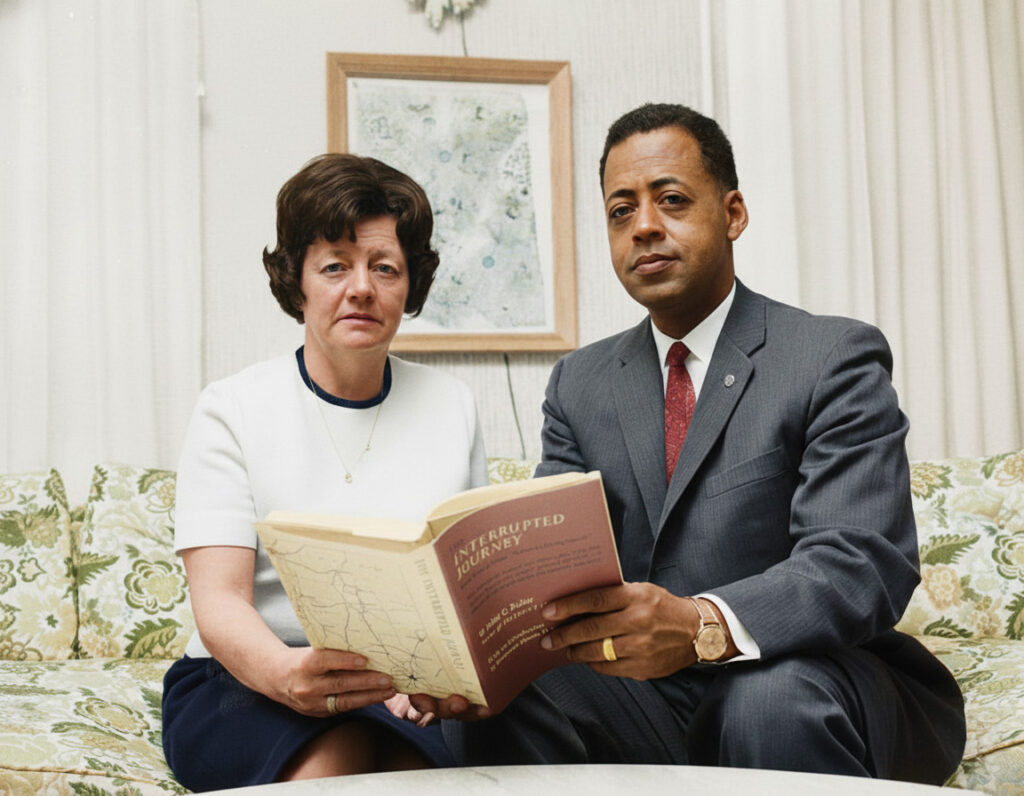
Phenomenologically, the Hill narrative contains several recurring contact features: a threshold shift during a nighttime drive, a time discrepancy, distress, and later attempts to reconstruct memory. Methodologically, it also contains a warning: when hypnosis becomes a central pipeline for narrative detail, readers should separate the existence of a reported time gap and emotional impact from the certainty of reconstructed scenes.
Claims Taxonomy placement: Disputed
The case is historically important and unusually well-preserved, but much narrative specificity is contested and methodologically sensitive.
Pascagoula: immediacy, law enforcement, and distress on record
The Pascagoula incident (11 October 1973) is often described as compelling because the report entered official channels quickly and because authorities attempted to catch deception. The Washington Post’s retrospective emphasizes the witnesses’ distress and law enforcement’s attempt to expose a lie. (washingtonpost.com) Local coverage, including WLOX, notes the long cultural life of the case and later commemoration. (wlox.com)
Pascagoula is not only about entities. It is about paralysis, fear, and the social collision between experiencers and authority structures. That collision becomes part of contact’s long tail. People do not only live through the encounter. They live through the reaction.
Claims Taxonomy placement: Probable
Not because NHI causality is established, but because immediacy of reporting and documented context strengthen the integrity of the witness timeline compared with many other contact claims.
Ariel School: contact as a group event with methodological disputes
Ariel School is communal. Dozens of children reported a craft-like object and beings, and some described mental impressions. WHYY frames the event’s enduring impact as one reason it remains culturally powerful. (whyy.org) The John E. Mack Institute-hosted article provides a traceable summary of Mack’s later involvement and witness reactions. (johnemackinstitute.org)
The controversy is not a footnote. It is central. Group events are vulnerable to conformity effects, leading questions, and selective retention of the most compelling witness segments. That does not mean “nothing happened.” It means the case must be handled as a social phenomenon as well as a potential anomalous one.
Claims Taxonomy placement: Disputed
High witness count and lasting impact, but persistent methodological questions.
Travis Walton: media shaping and the burden of being debated
The Walton case illustrates how contact stories can become cultural property. KJZZ’s 2025 interview piece emphasizes Walton’s long insistence on his account and the fatigue of being perpetually subjected to debunking narratives. (kjzz.org)
Even if one remains agnostic about ultimate causality, the phenomenology of “after-contact life” is visible here: stigma, identity capture by a single event, and the constant pressure of other people’s certainty, either for or against.
Claims Taxonomy placement: Disputed
Enduring testimony and cultural prominence, but long-running disputes about verification and media transformation.
Experiencer research at scale: patterns, with big caveats
Large experiencer studies are one attempt to treat contact as a dataset. Their value is not proof. Their value is pattern recognition: recurring motifs, common aftereffects, and how reported “modes” distribute across a large sample.
A widely cited example is the Dr. Edgar Mitchell Foundation’s FREE study. The 2018 paper in the Journal of Scientific Exploration reports a sample of 3,256 subjects describing contact experiences with NHI associated with UAP, analyzed through survey methods. (journalofscientificexploration.org)
The caveats define how the data can be used. The sample is self-selected. Respondents are often people already motivated to interpret experiences as contact. Surveys capture reports, not necessarily events. Even so, consistent clusters across thousands of respondents can still be useful, especially when they highlight features like perception shifts, time anomalies, and aftereffects that recur across many respondents.
This is also why archiving matters. When primary materials are preserved, future researchers can evaluate interviews and context rather than relying on retellings. Rice University’s “Archives of the Impossible” is a clear example of an academic institution treating anomalous-experience research as archival material worthy of scholarly care. Rice reports that by 2025 the archive included 18 archival contributions, including records connected to John E. Mack. (news.rice.edu)
Claims taxonomy
Verified
Publicly accessible contact cases rarely meet a strict verified threshold, because multi-sensor data and medical documentation are uncommon in close-contact narratives.
Probable
Pascagoula, due to rapid reporting, law enforcement context, and documented investigative efforts that captured distress close to the event. (washingtonpost.com)
Disputed
The Hill case, due to reliance on hypnosis for narrative detail despite a strong archival footprint. (library.unh.edu) Ariel School, due to persistent methodological disputes even with high witness count and long-tail impact. (whyy.org) Travis Walton, due to long-running disputes around verification and media transformation despite enduring testimony and stigma effects. (kjzz.org)
Legend
Contactee-era narratives that primarily function as spiritual or moral storytelling rather than investigable case files.
Speculation Labels
Contact phenomenology tempts people into grand conclusions too quickly. Still, patterns can support cautious models of intent. These are models, not verdicts.
Hypothesis: Interest without overt integration
Many contact accounts imply attention and engagement, but not sustained public contact. If a portion of those accounts represent genuine interaction, that pattern could suggest restraint, risk management, non-interference preferences, or constraints we do not understand.
Hypothesis: The witness as the interface
Threshold shifts, time distortions, and mind-mediated impressions suggest that the contact mechanism, as experienced, often involves modulating perception and cognition. If intent exists, controlling the interface may be more central than the spectacle of the object.
Witness Interpretation: Warnings and moral pressure
Some experiencers interpret communications as warnings about ecological collapse or technological overreach. Ariel is frequently cited in popular memory for this type of reported impression, but message content is typically less evidentially stable than the social and emotional impact of the event itself. (whyy.org)
Researcher Opinion: Contact as a long-running cultural pressure
Some researchers interpret contact not as invasion or diplomacy but as an ongoing pressure that shapes belief, identity, and culture through selected interactions. This remains speculative, but it maps onto a documented reality: contact narratives often cause enduring psychological and social disruption whether or not their cause is agreed upon.
Active links
UNH Library: Betty and Barney Hill Papers, 1961–2006
https://library.unh.edu/find/archives/collections/betty-barney-hill-papers-1961-2006 (library.unh.edu)
Journal of Scientific Exploration: FREE Experiencer Study (article page)
https://journalofscientificexploration.org/index.php/jse/article/view/1282 (journalofscientificexploration.org)
Journal of Scientific Exploration: FREE Experiencer Study (PDF)
https://journalofscientificexploration.org/index.php/jse/article/viewFile/1282/801 (journalofscientificexploration.org)
DIA FOIA: Anomalous Acute and Subacute Field Effects (2010)
https://www.dia.mil/FOIA/FOIA-Electronic-Reading-Room/FileId/170026/ (dia.mil)
Sol Foundation White Paper: Anomalous Health Threats (PDF)
https://thesolfoundation.org/wp-content/uploads/2024/07/Sol_WhitePaper_Vol1N4.pdf (thesolfoundation.org)
Rice News: Archives of the Impossible (2025)
https://news.rice.edu/news/2025/exploring-unexplained-new-chapter-archives-impossible-brings-together-people-different (news.rice.edu)
WHYY: Ariel School documentary segment
https://whyy.org/segments/documentary-explores-the-ufo-sighting-that-changed-the-course-of-62-childrens-lives/ (whyy.org)
John E. Mack Institute-hosted Ariel School PDF
https://www.johnemackinstitute.org/images/2008_0416_TheWitness_Ariel_School.pdf (johnemackinstitute.org)
KJZZ: Travis Walton interview segment (2025)
https://www.kjzz.org/the-show/2025-07-03/his-arizona-ufo-abduction-story-became-legend-after-50-years-hes-sick-of-attempts-to-debunk-it (kjzz.org)
Washington Post: Pascagoula retrospective (2019)
https://www.washingtonpost.com/history/2019/06/26/i-floated-inside-man-returns-site-ufo-abduction-it-gets-historical-marker/ (washingtonpost.com)
WLOX: Pascagoula coverage (2023)
https://www.wlox.com/2023/09/02/calvin-parker-who-claimed-he-was-abducted-by-aliens-pascagoula-1973-has-died/ (wlox.com)
Internal crosslinks
Non-Human Intelligence (NHI)
https://uapedia.ai/wiki/non-human-intelligence-nhi-definition-and-boundaries/
Phenomenology of Contact with NHI
https://uapedia.ai/wiki/phenomenology-of-contact-with-nhi/
Missing time in UAP studies
https://uapedia.ai/wiki/missing-time-in-uap-studies-when-the-clock-becomes-evidence/
Oz Factor and perception shifts
Ariel School Incident, Zimbabwe (1994)
Pascagoula Abduction, USA (1973)
Betty and Barney Hill Abduction (1961)
UAP witness health effects and safety
References
Centre National d’Études Spatiales. (1977–present). Mission & GEIPAN: Missions, methods and results. (cnes-geipan.fr)
Defense Intelligence Agency. (2010). Anomalous acute and subacute field effects on human biological tissues. FOIA Electronic Reading Room. (dia.mil)
Hernandez, R., Davis, R., Scalpone, R., & Schild, R. (2018). A study on reported contact with non-human intelligence associated with unidentified aerial phenomena. Journal of Scientific Exploration. (journalofscientificexploration.org)
National Aeronautics and Space Administration. (2023). UAP independent study team final report. (science.nasa.gov)
Rice University. (2025, April 9). Exploring the unexplained: A new chapter in the Archives of the Impossible brings together people from different fields, experiences. (news.rice.edu)
Sol Foundation. (2024). Anomalous health threats: Health security considerations for UAP. (thesolfoundation.org)
University of New Hampshire Library. (n.d.). Betty and Barney Hill papers, 1961–2006 (MC 197). (library.unh.edu)
WHYY. (2023, October 23). Documentary explores the UAP sighting that changed the course of 62 children’s lives. (whyy.org)
John E. Mack Institute. (2008). The Witness: Ariel School (PDF). (johnemackinstitute.org)
WLOX. (2023, September 2). Calvin Parker, who claimed he was abducted by aliens in Pascagoula in 1973, has died. (wlox.com)
The Washington Post. (2019, June 26). The men claimed they were abducted by aliens. In Mississippi, police believed them. (washingtonpost.com)
SEO keywords
Phenomenology of contact, NHI contact, Non-Human Intelligence intent, UAP experiencers, missing time, Oz Factor, Ariel School incident, Pascagoula incident, Betty and Barney Hill, Travis Walton, anomalous health effects, UAP witness injuries, DIA biological effects paper, Sol Foundation health security, GEIPAN, NASA UAP study, AARO historical record report, FREE experiencer study, experiencer stigma