
There are UAP movies that entertain and some that merely dramatize what “abduction” is supposed to feel like in the popular imagination: the helplessness, the clinical violation, the fluorescent glare, the sense that your body is suddenly a problem someone else is solving.
That template matters because Fire in the Sky is not “just” science fiction. It is tied to one of the most persistent and polarizing contact narratives in modern UAP history: the 1975 disappearance and reappearance of Travis Walton, a young logger from rural Arizona. The film is officially rooted in Walton’s 1978 book The Walton Experience. (AFI Catalog)
The movie’s most iconic images are not simply a retelling, they are a translation, and that translation became so culturally powerful it now competes with the witness record itself.
As Jennifer Stein, who later made a documentary centered on Walton’s case, put it in a radio interview: the Hollywood version “changed it” into something “horror” and “scary,” especially the onboard sequences. (KJZZ)
So what is Fire in the Sky really doing in the UAP ecosystem? What does it preserve, what does it distort, and why does it still feel like a live wire more than three decades later?
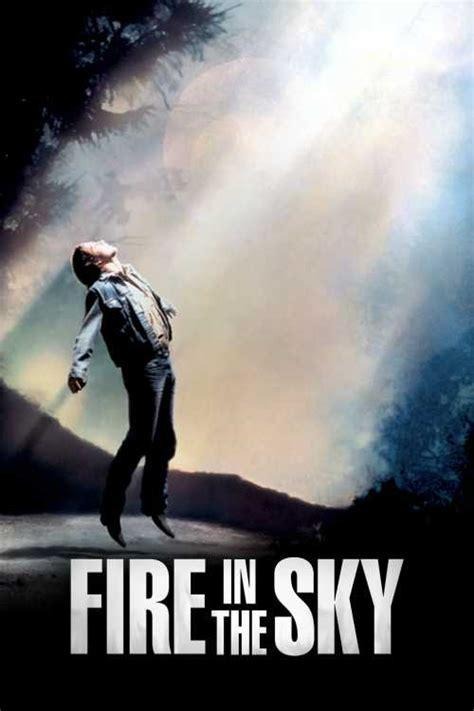
The film that launched a thousand abduction nightmares
The American Film Institute’s catalog entry is blunt about the setup: Fire in the Sky is a Paramount release (PG-13) that opened March 12, 1993, and it is based on Travis Walton’s book The Walton Experience (New York, 1978). (AFI Catalog)
The film’s outer shell is that a group of working-class men have a sighting in the woods, a vanishing, and then the spiral. But what made the movie linger was not the mystery of lights in a forest. It was the trauma grammar of the abduction flashbacks, presented not as wondrous cosmic initiation but as bodily terror.
That choice was not accidental. In behind-the-scenes recollections, producer Todd Black remembers reading the book and meeting the people involved, describing them as strikingly believable in person. (The Companion) Yet the movie’s most famous imagery also reflects a filmmaker’s practical problem: how do you show “something happened” when the witness memory is fragmented and the subject is radioactive?
In the same behind-the-scenes account, director Robert Lieberman describes Walton as unusually intelligent and notes he was “very religious” and “super-nice,” with a life that did not fit the stereotypical profile of someone chasing attention. (The Companion)
So Hollywood faced a paradox that still haunts UAP storytelling: to sell the reality of a claim, you may feel pressured to show a spectacle; but the spectacle can become a substitute for the claim.
The Turkey Springs problem: an encounter with too many witnesses
Many alleged abduction narratives are solitary. Walton’s is not. The enduring power of the story is bound to the fact that multiple members of a logging crew said they saw an anomalous light and fled, then returned to find Walton gone. (KJZZ)
In a 2025 radio segment marking roughly 50 years since the incident, KJZZ summarized the basic timeline in a way that mirrors what has circulated for decades: on November 5, 1975, Walton was with a logging crew in the Apache-Sitgreaves National Forests near Heber-Overgaard, Arizona; later he was missing for days; around midnight on November 12, a phone call came to his sister’s house, and Walton said he had been abducted by non-human beings. (KJZZ)
From a courtroom lens, multiple witnesses do not automatically create truth, but they do create structure: a shared time window, a shared geography, a shared social cost. And the cost is important.
Walton himself emphasized that cost in the same KJZZ conversation. He framed the crew’s long-term consistency as the kind of thing that would be considered extremely strong in another context, arguing that if seven people testified to witnessing a murder, it would be treated as airtight. (KJZZ)
Whether one agrees with that analogy or not, it reveals the emotional center of the case: this is not a story that wants to be “mysterious.” It wants to be treated as evidence.
Where the movie breaks from the witness record, and why that break mattered
One of the most important UAPedia facts about Fire in the Sky is this: the film’s abduction imagery is not a faithful visualization of Walton’s own descriptions.
In Lieberman’s recollection, Walton’s book includes elements that would have played very differently on screen: a dome-like environment and tall, “Aryan-looking” beings with long blond hair. Lieberman even jokes that portraying that literally would have risked audience laughter. (The Companion)
Instead, the film’s creature design and onboard tone pushes toward what later became the mainstream “abduction look”: smaller entities, industrial textures, and medicalized threat. In other words, the movie does not merely adapt a case. It helps standardize a mythology.
This is a critical feedback loop in UAP culture:
- An experiencer tells a story.
- Popular media reshapes it into a coherent, emotionally potent form.
- That media form becomes the “expected” shape of future stories.
- Critics then argue later stories resemble media, implying contamination.
- Experiencers argue the media resembles reality, implying recognition.
Once this loop begins, it becomes harder to separate cultural echo from independent convergence. And Walton’s case sits near the center of that loop because the film’s reach was so wide.
KJZZ’s interview with Jennifer Stein captures the consequence: the Paramount film told the story but altered it into a horror framing, and that alteration did not “legitimize” what the men felt they had endured. (KJZZ)
This is the UAPedia take: Fire in the Sky may be one of the best examples of a movie that increased public awareness of a case while simultaneously overwriting the case’s internal texture.
The religious subtext: Snowflake, belief communities, and the shock of “the other”
UAP narratives do not occur in a vacuum. They occur inside communities of meaning: family, faith, local identity, and moral reputation.
Two separate sources point directly at the religious dimension surrounding Walton’s world.
In the behind-the-scenes recollection, Lieberman describes Walton as “very religious.” (The Companion) And actor Robert Patrick, describing a research trip into Arizona while preparing for the role of Mike Rogers, talks about the setting as “spooky,” explicitly linking that feeling to the fact that “there are Mormons involved.” (The Companion)
That line is revealing, not because it proves anything about the case, but because it shows how quickly UAP stories get interpreted through America’s religious map. In many parts of the U.S., a tightly knit faith community can function like a reputational amplifier: witnesses may be trusted more by insiders because they “have standing,” and distrusted more by outsiders because the community feels insular.
This American Life’s photo essay connected to the Walton location subtly underscores the same overlap by placing “Fire in the Sky” imagery alongside Mormon iconography (including a depiction of Joseph Smith’s first vision). (This American Life)
Why does religion matter in a UAP abduction case?
Because abduction narratives are not only about “what was seen.” They are about what was done, and what it means to be acted upon by an intelligence that does not share human rules. Religious language is one of humanity’s oldest tools for processing that.
In Christian contexts, experiencers may frame beings as angelic, demonic, or deceptive. In other traditions, the encounter might be interpreted as spirit contact, initiation, or liminal travel. Even if Walton’s own interpretation has evolved in a more pragmatic direction over time, the broader culture constantly supplies religious metaphors that try to force the unknown into familiar moral categories.
The “rescue” interpretation: when fear turns into an after-the-fact reframing
In the same KJZZ conversation, Walton offers a striking interpretive shift: he says his perception of the beings’ intentions was extremely negative at the time, but over the years he came to believe the intention was to save his life. He also says he was unconscious or “dead” for much of the missing time. (KJZZ)
This is where Fire in the Sky becomes doubly complicated. The film’s emotional signature is violation and terror. Walton’s later framing (at least in that interview) leans toward something closer to emergency intervention. Those are not the same story. They produce different publics, different skeptics, and different future experiencers.
This tension is not unique to Walton. Many experiencers report that the encounter’s felt meaning changes over years, sometimes because trauma processing changes memory access, and sometimes because social stigma punishes certain interpretations and rewards others.
Our editorial stance here is simple: interpretive evolution does not automatically imply fabrication. It implies that a human mind is trying to digest an experience that did not come with an instruction manual.
Key figures: the humans behind the myth
A UAP film anchored to a claimed real-world incident becomes a magnet for “characters” in the non-fiction sense. These figures matter because they shape what the public thinks “evidence” looks like.
The experiencer at the center of the case, later the author of the source book that AFI cites as the film’s basis. (AFI Catalog) In a 2025 interview, he emphasizes the long-term consistency of the crew and frames the experience as something he did not choose as a life path. (KJZZ)
Mike Rogers and the logging crew
Within the film’s narrative and the public discourse, the crew are pivotal because they anchor the story to group testimony rather than a solitary claim. KJZZ’s summary explicitly describes the crew fleeing and returning to find Walton gone. (KJZZ)
Jennifer Stein
A filmmaker who, according to KJZZ, created a documentary about Walton in 2015 with the aim of countering attempts to dismiss his account, and who directly criticizes the Paramount film for making the onboard experiences into horror. (KJZZ)
Tracy Tormé
The screenwriter of Fire in the Sky, and also someone who has openly described himself as obsessed with the subject of anomalous aerial phenomena. (Earth Prime) Tormé’s larger career matters because it connects Fire in the Sky to the broader 1990s surge of abduction-focused media.
Robert Lieberman
The director, who speaks of Walton as unusually intelligent and religious. (The Companion) Lieberman’s comments also reveal the adaptation problem: how to portray bizarre elements from the book without audience rejection. (The Companion)
APRO and the Lorenzen legacy
Even when you avoid over-reliance on government narratives, you still need institutions that organize testimony, documentation, and follow-up. In mid-century American civilian UAP history, the Aerial Phenomena Research Organization (APRO) played that organizing role.
A 2025 KJZZ segment describes APRO’s founding purpose as a “centralized clearing house” for reports, including personal stories and news accounts, later moving operations to Tucson. (KJZZ) An encyclopedia entry similarly notes APRO’s founding in 1952 by Jim and Coral Lorenzen and its evolution from flying saucer clubs into a more substantial research organization. (Encyclopedia.com)
KJZZ’s Walton segment also mentions that Walton was interviewed by Jim Lorenzen in the aftermath of the incident, underlining APRO’s direct relevance to this case’s media life. (KJZZ)
The polygraph paradox: why lie detectors became part of the UAP ritual
Fire in the Sky sits inside a very American form of epistemology: “If the machine says you’re truthful, the story gets to live.”
That is why polygraphs appear again and again in UAP media, from dramatizations to talk-show moments. But polygraphs are not truth machines; they are stress-response instruments, and stress is not unique to deception. This becomes a pressure point in the Walton narrative because both supporters and critics use polygraph language as a rhetorical gavel.
UAPedia’s framing is not “polygraph proves it” or “polygraph destroys it.” It is this: the polygraph’s cultural function is often more important than its technical value. It becomes a public permission slip for either belief or dismissal.
And the film understands that instinctively. A courtroom tool becomes a cinematic symbol.
UAP tropes the film amplified, remixed, or helped standardize
Even if you never watched Fire in the Sky, you have probably absorbed its DNA through the wider media bloodstream. Here are the major tropes it touches, and why each matters for UAP research literacy.
The beam and the threshold moment
The “light in the woods” functions like a modern fairy-ring: step inside, and normal rules dissolve. KJZZ’s summary of Walton’s account explicitly centers the blinding light in a clearing. (KJZZ)
Group testimony with social blowback
A key reason this case persists is the crew dynamic: solidarity, fractures, suspicion. Walton’s emphasis on “seven people testifying” is part of how the case argues for itself. (KJZZ)
Missing time and memory fragmentation
Walton says he was unconscious for much of the period. (KJZZ) That creates a vacuum Hollywood is tempted to fill with spectacle.
Medicalized contact
Whether literally accurate to Walton’s book or not, the film made “abduction-as-procedure” feel definitive. This reshaped what many viewers imagine when they hear “abduction,” for better or worse.
The “Nordic” versus “Grey” split
Lieberman’s recollection of Walton’s book describing tall blond entities and a dome-like environment highlights how varied experiencer descriptions can be. (The Companion) The film’s different choice nudged popular culture toward a narrower expected visual.
Cover-up narratives and anti-witness stigma
The town suspicion, the pressure on witnesses, the institutional skepticism, and the media frenzy are as central to the story as the UAP itself. KJZZ recounts that the story became national news and drew extensive interviews, while questions about veracity never went away. (KJZZ)
What “source material” really means for this movie
- Walton’s authored account as a book that the AFI catalog explicitly identifies as the film’s literary basis. (AFI Catalog)
- The film’s production recollections from people directly involved (director, producer, actor, and ILM creature supervisor). (The Companion)
- Contemporary and retrospective interviews with Walton and with a documentary filmmaker who focused on the case as a real-world claim. (KJZZ)
- The larger civilian research context (APRO’s historical role in collecting accounts and structuring investigations). (KJZZ)
This stack is imperfect, but it is honest about what exists: a mix of testimony, documentation practices, and interpretation layered with media power.
Fire in the Sky through the UAPedia Cinema Rating (UCR)
Phenomenon fidelity: 2.5 / 5
As a film, Fire in the Sky popularized a version of abduction that is visually unforgettable, but its encounter staging is stylized for horror. It contains familiar motifs: immobilization, clinical examination, nonhuman presence, and a human body treated as an object. It earns partial credit for engaging recognizable encounter claims, but it is not particularly faithful to the full range of reported UAP behaviors or to the variety of reported interaction patterns.
Mythic and religious depth: 2 / 5
The film’s spirituality is mostly implicit: the human is taken, returned, and marked. That is mythic structure, but the script does not dwell on cosmology, revelation, or existential integration. It is a trauma narrative more than a metaphysical inquiry.
Conspiracy realism: 3 / 5
Fire in the Sky does something many films avoid: it depicts how a community turns on itself under ambiguity. Law enforcement suspicion, media pressure, and social stigma function as a kind of informal secrecy regime, even without a grand state apparatus on-screen. The cover-up energy is social before it is governmental, and that rings true.
Experiencer empathy: 4 / 5
Even when the film intensifies the horror, it takes suffering seriously. It shows both the returned witness and the surrounding community being psychologically shredded by uncertainty, accusation, and fear. The empathy is not perfect, but it is present.
Cultural impact: 5 / 5
Few scenes in UAP cinema have had more lasting influence than Fire in the Sky’s abduction imagery. It effectively “installed” a specific medical-horror template into public imagination, shaping how later audiences picture abduction claims, whether they accept or reject them.
Total Fire in the Sky UCR score: 16.5 / 25
For the UAPedia Cinema Rating system, Fire in the Sky is a high-impact cultural amplifier: essential for understanding modern abduction imagery and stigma dynamics, less reliable as a guide to the range of reported encounter phenomenology.
Claims Taxonomy
Because Fire in the Sky is based on a testimony-rooted case, UAPedia separates (a) what is well-supported, (b) what is asserted, and (c) what is disputed.
Verified
- Fire in the Sky (1993) is a Paramount feature film released March 12, 1993, and AFI lists it as based on Travis Walton’s book The Walton Experience (1978). (AFI Catalog)
- In a 2025 interview, Travis Walton publicly reaffirmed his account and described the long-term burden of having to defend it. (KJZZ)
- The film significantly altered the onboard experiences compared to the case narrative, according to Jennifer Stein and also reflected in the director’s discussion of differences from Walton’s book. (KJZZ)
Probable
- The Walton incident’s public persistence is strongly tied to multiple named witnesses from the logging crew and the social consequences they faced in their community. (KJZZ)
- The case’s “religion and community” context influenced how outsiders perceived the story, as suggested by production accounts referencing Walton’s religiosity and the Mormon setting. (The Companion)
Disputed
- The core claim that Walton was taken aboard a craft by non-human beings remains contested, with competing interpretations continuing into the present. (KJZZ)
- Polygraph testing as “resolution” is disputed due to the broader unreliability of polygraphs as truth instruments and the way they function rhetorically in UAP cases. (Michael Shermer)
Legend
- The film’s specific abduction imagery has become a cultural legend that many audiences treat as representative of abduction “reality,” even though it diverges from the witness-source descriptions. (The Companion)
Misidentification
- No single prosaic explanation is universally accepted as definitively accounting for the entire event as described by all parties; claims of simple misidentification remain debated in public discourse. (KJZZ)
Hoax
- Some critics argue deception and self-deception are sufficient explanations and reject the abduction claim. (Michael Shermer)
Speculation Labels
These are clearly separated from evidence.
Hypothesis
The film’s most lasting effect may be that it standardized a visual abduction vocabulary (industrial-medical terror) that later fed back into how experiencers describe contact and how critics assess “media influence.” (This is an inference from the documented divergence between book descriptions and film depiction and from the film’s enduring cultural footprint.) (The Companion)
Witness Interpretation
Walton’s later view that the beings’ intent was rescue rather than harm is an interpretation that reframes the event’s meaning without necessarily changing the claimed facts of disappearance and contact. (KJZZ)
Researcher Opinion
A responsible way to use Fire in the Sky in UAP education is as a case study in the difference between (1) testimony, (2) dramatization, and (3) cultural feedback loops, rather than as a literal reenactment.
References
American Film Institute. (1993). Fire in the Sky (1993) [AFI Catalog entry]. Retrieved from https://catalog.afi.com/Catalog/moviedetails/59525?utm_source=uapedia.ai
Dingman, S. (2025, July 3). His Arizona UFO abduction story became legend. After 50 years, he’s sick of attempts to debunk it. KJZZ. Retrieved from https://www.kjzz.org/the-show/2025-07-03/his-arizona-ufo-abduction-story-became-legend-after-50-years-hes-sick-of-attempts-to-debunk-it?utm_source=uapedia.ai
Dingman, S. (2025, July 3). This Arizona couple compiled much of what we know about UFO encounters. Now their work is on display. KJZZ. Retrieved from https://www.kjzz.org/the-show/2025-07-03/this-arizona-couple-complied-much-of-what-we-know-about-ufo-encounters-now-their-work-is-on-display?utm_source=uapedia.ai
Falk, B. (2022, July 29). How We Made 1993 UFO Thriller Fire in the Sky. The Companion. Retrieved from https://www.thecompanion.app/fire-in-the-sky-x-files/?utm_source=uapedia.ai
Shermer, M. (n.d.). Travis Walton’s Alien Abduction Lie Detection Test. Retrieved from https://michaelshermer.com/articles/travis-waltons-alien-abduction-lie-detection-test/?utm_source=uapedia.ai
Walton, T. (1996). Fire in the sky: The Walton experience. New York, NY: Marlowe & Co. (Distributed by Publishers Group West). Retrieved from https://archive.org/details/fireinskywaltone0000walt?utm_source=uapedia.ai
SEO keywords
Fire in the Sky, Travis Walton, UAP abduction, alien abduction movie, Snowflake Arizona UAP, Heber Overgaard UAP, Turkey Springs incident, Walton Experience, Robert Lieberman, Tracy Tormé, Mike Rogers, APRO, Jim Lorenzen, Coral Lorenzen, Jennifer Stein Travis documentary, UAP movies rating system, abduction tropes, missing time, non-human intelligence, UAP stigma, polygraph UAP case