
Gary McKinnon is not a conventional UAP figure. He did not arrive through military aviation, astronomy, or government paperwork. He arrived through a modem, an obsession, and a decade-long legal saga that turned one man’s search for “the truth” into a case study in cybercrime, mental health, extradition politics, and the cultural gravity of the UAP question.
To some, McKinnon is the cautionary tale: a systems administrator who crossed a bright legal line and paid for it in years of stress, surveillance, and uncertainty.
To others, he is the archetype of the modern “anomaly-seeker,” the civilian who believes the most important evidence is hidden behind institutional locks, and who decides, disastrously, to pick them.
His story sits at a junction where the UAP subject collides with secrecy culture, information access, and the public’s hunger for something more than official reassurance.
McKinnon’s alleged intrusions into U.S. military and NASA systems in 2001-2002 were described by U.S. authorities as the “biggest military computer hack of all time.” (cbsnews.com)
But the UAP angle is what turned the case from a cybersecurity headline into a decades-long myth engine. McKinnon said his motivation was to find evidence of suppressed technologies and a cover-up of UAP activity, and he publicly claimed he saw materials that suggested exactly that. (WIRED)
Whether those claims represent misinterpretation, partial glimpses of mundane systems, or a brush with something genuinely anomalous remains unresolved in public documentation. That unresolved quality is precisely why the McKinnon story continues to circulate in UAP media, often detached from its sober legal realities.
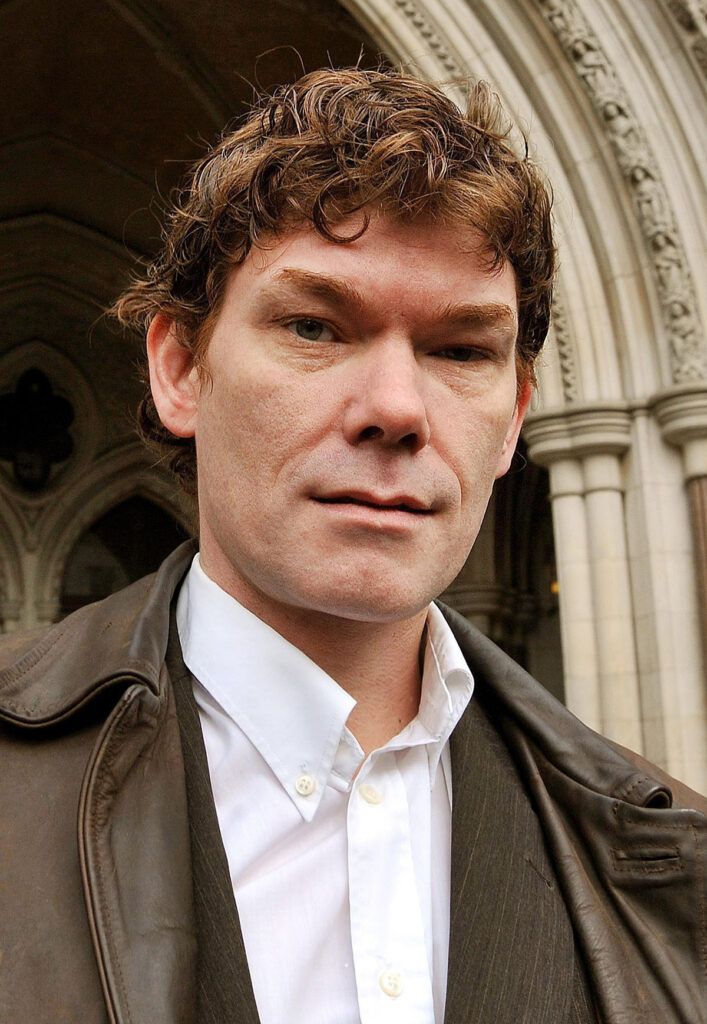
John Stillwell | AP)The making of “Solo,” and the pre-UAP obsession
McKinnon, a Scottish-born systems administrator, became publicly associated with the handle “Solo,” a detail that matters less for biography than for myth-making. Handles become characters; characters become symbols. He was not a celebrity hacker in the classic sense of fame-by-feat. He became famous because the story attached itself to the two biggest magnets in modern folklore: the U.S. national security apparatus, and the idea that somewhere inside it is a file drawer labeled “UAP: the real story.”
IEEE Spectrum’s long-form profile describes him as driven by a conviction that the government was hiding anti-gravity and advanced energy technologies and that he wanted to surface that information “for the benefit of humanity.” (IEEE Spectrum)
That motivation does not excuse illegal access, but it does explain why the case persists in UAP culture. McKinnon’s narrative is built around moral urgency: not money, not espionage, but “truth.”
This is one reason the story spreads well in UAP communities. The protagonist is not trying to profit from the anomaly, at least in his own telling. He is trying to liberate it.
Work history and “ordinary life” context
McKinnon’s biography is easy to flatten into “hacker.” That is misleading. He has been described as a systems administrator and IT worker rather than a career criminal, and the public record often frames his life as unremarkable until the case exploded. (Internet Archive)
A later IEEE Spectrum update notes reporting that he ran a search-engine optimization business and made music in his spare time, which aligns with how many high-skilled IT workers move through the modern economy.
This “ordinary work life” matters in a UAP biography because it underlines a recurring theme in modern anomalous research: the civilian investigator who believes institutions will not share what they know, and who uses technical skill to push against that boundary.
The Gary McKinnon hacked US secrets story
Gary McKinnon’s story centers on his 13-month “moral crusade” between 2001 and 2002 to find evidence of a UAP cover-up and suppressed “free energy” technology. Using the pseudonym “Solo,” he gained unauthorized access to 97US military and NASA computers from his north London flat.
According to McKinnon’s accounts, his findings included:
- “Non-Terrestrial Officers”: McKinnon claims he discovered an Excel spreadsheet titled “Non-Terrestrial Officers” that listed names and ranks of individuals he could not find in any public military records.
- Secret Fleet-to-Fleet Transfers: He reported seeing a separate tab for “material transfers between ships” and roughly 10 ship names (prefixed with “USSS”) that did not correspond to any known US Navy vessels, leading him to believe the US possesses a secret space-based program.
- Airbrushed UAP Images: At NASA’s Johnson Space Center, McKinnon claims he accessed a folder containing high-resolution satellite images that had been airbrushed to remove UAPs. He described seeing one image of a cigar-shaped craft with geodesic domes floating above the Northern Hemisphere, though he was unable to save it before being disconnected.
- Lack of Security: McKinnon famously stated that he found these systems by scanning for blank passwords and left taunting messages like “Your security is crap” on many desktops.
The US government disputed his “harmless” narrative, accusing him of causing$700,000 to $800,000 in damage and deleting critical files that paralyzed munitions deliveries for the US Navy’s Atlantic Fleet shortly after 9/11. After a decade-long legal battle, his extradition was blocked in 2012 by then Home Secretary Theresa May on human rights grounds.
What is documented, and what is claimed
What is documented (Evidence)
High-quality reporting states McKinnon was accused of accessing dozens of U.S. military and NASA systems in 2001–2002, causing disruption and damage valued in the hundreds of thousands of dollars, and triggering an extended extradition effort. (cbsnews.com)
Wired’s 2012 coverage describes Theresa May’s (then UK Home Secretary) decision to block extradition on human-rights grounds and notes that McKinnon admitted accessing U.S. government computers, while claiming his purpose was to find proof of a UAP cover-up.
Theresa May’s official statement, published by the UK government, is unusually explicit about the core rationale: she concluded extradition would create a high suicide risk and would be incompatible with McKinnon’s human rights. (GOV.UK)
McKinnon’s UAP notoriety is anchored to two recurring assertions:
- He claimed he saw a spreadsheet referencing “non-terrestrial officers.”
- He claimed he viewed images he believed depicted “something not man-made,” including an image he later described as “cigar shaped,” and said he was interrupted before capturing it. (IEEE Spectrum)
These claims are widely repeated, and they are exactly what many UAP audiences want to hear. They are also the least stable portion of the story, because the public record does not contain the alleged files, images, or forensic captures that would allow independent verification.
Direct quotes that define the case
McKinnon’s case contains “quotes that matter” in two categories: the subject’s UAP claims, and the state’s legal-humanitarian framing.
State and legal framing (Evidence)
From Theresa May’s 2012 (at the time UK Home Secretary) official statement: “After careful consideration of all of the relevant material, I have concluded that Mr. McKinnon’s extradition would give rise to such a high risk of him ending his life that a decision to extradite would be incompatible with Mr. McKinnon’s human rights.” (GOV.UK)
This is one of the most consequential lines in the entire McKinnon story because it converted a cybercrime case into a precedent-setting political act.
Wired and IEEE Spectrum report the central idea that McKinnon said he was looking for UAP evidence and claimed he found imagery or references he interpreted as extraordinary. (WIRED)
We treat these as verified documentation that he made the claims, not verified evidence that the claims are accurate.
Public appearances and long-form media presence
McKinnon’s public presence is unusual because it spans mainstream journalism, cyberculture retrospectives, and UAP podcasts.
Cybersecurity and mainstream press
- Wired covered key moments of the extradition decision and the broader case narrative. (WIRED)
- IEEE Spectrum published a major feature and later updates contextualizing the case and its aftermath. (IEEE Spectrum)
- UK outlets reported the CPS review and the decision not to prosecute him in the UK after extradition was blocked. (The Independent)
UAP podcasts and disclosure-adjacent media
- Apple Podcasts lists an episode titled “Ep.2 Gary McKinnon” under “UFO Chronicles,” reflecting continued demand for his story in UAP audio ecosystems. (Apple Podcasts)
- “Malicious Life” produced an episode framed around “The U.S. vs. Gary McKinnon,” a cybercrime narrative that explicitly references his UAP motivation. (Cybereason)
- An Amazon Music listing for “Lehto Files – Investigating UAPs” describes an interview focused on his alleged discoveries, including “non-terrestrial officers” and a “secret space fleet,” illustrating how his claims are packaged in modern UAP media. (Amazon Music)
- American Alchemy (Jesse Michels) – The Lone Hacker That Found NASA’s Secret UFO Fleet [Gary McKinnon Interview]. (Youtube)
Implication: McKinnon’s public appearances tend to polarize along format lines. Mainstream profiles focus on law, mental health, and extradition. UAP media focuses on what he says he saw. The gap between those narratives is where myth grows.
Known associates and the McKinnon support ecosystem
No UAP figure exists alone. McKinnon’s story is inseparable from a network of advocates, journalists, legal actors, and public figures.
Janis Sharp, mother and campaign engine (Verified)
McKinnon’s mother, Janis Sharp, became the most visible advocate in the case and authored a memoir, “Saving Gary McKinnon: A Mother’s Story,” which is described by his publisher as the story of her long fight against extradition and the eventual UK decision not to prosecute him domestically. (bitebackpublishing.com)
UK government and prosecution figures (Verified)
Theresa May’s role is central and documented in the official statement. (GOV.UK)
Reporting also places the Crown Prosecution Service and Director of Public Prosecutions Keir Starmer in the post-decision phase, as the UK weighed whether to prosecute domestically and ultimately did not. (The Independent)
Journalists and long-form interpreters (Probable to Verified)
The case has been profiled by major journalists across time, including in long-form features that shaped public perception. Jon Ronson’s Guardian feature is a landmark narrative artifact in the case’s popular retelling. (theguardian.com)
UAP podcasts that frame interviews around his alleged findings create a rolling cast of interviewers and analysts who re-contextualize his story for new audiences. (Amazon Music)
Publications and documentary footprint
McKinnon’s most consequential publication footprint is not a technical paper trail. It is a narrative one.
- The major book tied to his case is Janis Sharp’s memoir, which functions as both personal testimony and political document about extradition and mental health. (bitebackpublishing.com)
- McKinnon’s story has been repeatedly adapted into documentary-style episodes and retellings across platforms, including mainstream television and online video ecosystems. (HISTORY)
Implication: In UAP culture, documents do not have to be primary evidence to become powerful. Memoirs, interviews, and adaptations can become “secondary engines” that keep claims alive long after the original alleged data is inaccessible.
Controversies and fault lines
The legal controversy: crime versus motivation (Verified)
The core controversy is simple: McKinnon’s stated motivation does not legalize the act. Mainstream reporting consistently frames his behavior as unauthorized access that caused disruption and incurred significant cost. (cbsnews.com)
The UAP controversy: extraordinary claims without recoverable artifacts.
McKinnon’s “non-terrestrial officers” and image claims remain the heart of the UAP argument, and also its weakness. Without the underlying files or images in the public domain, the claims are not independently testable.
Our position is not to dismiss them reflexively. It is to label them correctly.
Claim: He saw a “non-terrestrial officers” spreadsheet.
- Taxonomy: Unverified personal claim.
- Speculation label: Witness interpretation.
Claim: He saw an image that appeared “not man-made,” but did not capture it before disconnection.
- Taxonomy: Unverified personal claim.
- Speculation label: Witness interpretation. (IEEE Spectrum)
3) The political controversy: extradition inequality and precedent is verified.
May’s decision became a flashpoint for debates about UK–US extradition arrangements, proportionality, and mental health risk. That debate surfaced in contemporary commentary and in later comparisons to other cases. (GOV.UK)
Impact on the UAP conversation
McKinnon’s lasting impact is less about whether his claims are true and more about what his story did to public imagination and discourse.
He introduced a new UAP archetype: the civilian intrusion narrative
Before McKinnon, many canonical UAP stories centered on sightings, military encounters, and leaked documents. McKinnon’s story fused UAP hunger with the digital age’s most charged theme: access.
He helped anchor “UAP secrecy” to specific institutions
By tying his search to NASA and the Pentagon, McKinnon’s narrative pointed the public’s attention at the heart of state power. (IEEE Spectrum) This amplified a cultural assumption that “the most important UAP material is institutional, not folkloric.”
Some modern retellings connect his “non-terrestrial officers” claim to broader narratives about covert fleets.
We flag this as a high-myth-propagation zone because it is often several inferential steps removed from the original claim and rarely grounded in independently verifiable documentation. (HISTORY)
What the McKinnon story implies
McKinnon sits on the boundary between anomalous research and the ethics of “how you try to know.”
- Truth-seeking can become self-harm when pursued through high-risk methods.
The UK government’s decision explicitly centered suicide risk and mental illness. (GOV.UK) - UAP culture has a vulnerability to “missing evidence narratives.”
When the alleged proof is always just out of reach, it becomes difficult to falsify and easy to mythologize. - Institutions can be opaque without being omniscient.
Even if McKinnon accessed real systems, it does not follow that those systems contained definitive answers about UAP origin or intent.
References
Home Office. (2012, October 16). Theresa May statement on Gary McKinnon extradition. GOV.UK. (GOV.UK)
Kushner, D. (2011/2024). Gary McKinnon: The Autistic Hacker. IEEE Spectrum. (IEEE Spectrum)
Zetter, K. (2012, October 16). Pentagon hacker McKinnon wins 10-year extradition battle. WIRED.
WIRED. (2006, June 21). “UFO hacker” tells what he found. (WIRED)
Kennedy, M. (2012, December 14). Gary McKinnon will face no charges in UK. The Guardian. (theguardian.com)
ITV News. (2012, October 16). Home Secretary blocks Gary McKinnon’s extradition to US.
ITV News. (2012, December 14). No charges against US hacker. (ITVX)
Sharp, J. (Publisher page, n.d.). Saving Gary McKinnon. Biteback Publishing. (bitebackpublishing.com)
Malicious Life Podcast. (n.d.). The U.S. vs. Gary McKinnon (episode page). Cybereason. (Cybereason)
UFO Chronicles Podcast. (2019, March 12). Ep.2 Gary McKinnon (episode listing). Apple Podcasts. (Apple Podcasts)
Lehto Files – Investigating UAPs. (2024, June 30). Gary McKinnon exposes NASA’s hidden UFO files (episode listing). Amazon Music. (Amazon Music)
Wikimedia Commons. (n.d.). File: Gary McKinnon.jpg (license information). (Wikimedia Commons)
SEO keywords
Gary McKinnon, Gary McKinnon UAP, NASA hack UAP claims, non-terrestrial officers claim, Pentagon hack UAP, Gary McKinnon extradition Theresa May, Gary McKinnon Asperger’s extradition, UAP secrecy narratives, UAP disclosure culture, UAP podcasts Gary McKinnon, Janis Sharp Saving Gary McKinnon, cybercrime and UAP, NASA images UAP claim, UK US extradition case McKinnon