Hull has always been a city that lives by what it can see. In 1801, Kingston upon Hull was already a busy maritime town on the Humber estuary, with night work on quays, ships arriving on awkward tides, and watchmen whose job was to notice what changed. When you’re used to judging distance and weather by lanterns on water, you also get used to the sky as a practical tool: a ceiling that tells you what’s coming.
That’s why the Hull 1801 “blue light” report remains such a stubborn historical entry. Not because it is “proven” to be non-human, and not because it is the “first ever” anything, but because the surviving descriptive elements read like a structured sequence rather than a single flash, and because the report belongs to an era when the obvious modern explanations simply did not exist.
Before we go any further, it’s important to be transparent about the one limitation that shapes everything else: the most widely circulated wording for this case is currently easiest to verify via modern quotations of early nineteenth-century newspaper reprints, not via a freely viewable image-backed facsimile of the original 1801 newspaper column itself. The British Newspaper Archive confirms the Hull Packet existed and covered the right period, but its title record page does not, by itself, display the specific Hull 1801 item. (International Business Times UK)
So what can we responsibly do with this? Quite a lot, actually, as long as we keep the boundaries clear. We can describe what the reprinted text is said to have reported (and we can cite where those quotations are preserved). We can explain the historical setting that makes certain interpretations more or less plausible. We can test conventional candidates against the descriptive features without pretending we can close the case. And we can show why this particular report fits the broader “pre-20th-century accounts” framing associated with Vallée-style historical cataloging, while keeping that framing firmly in the “interpretive” lane rather than treating it as proof.
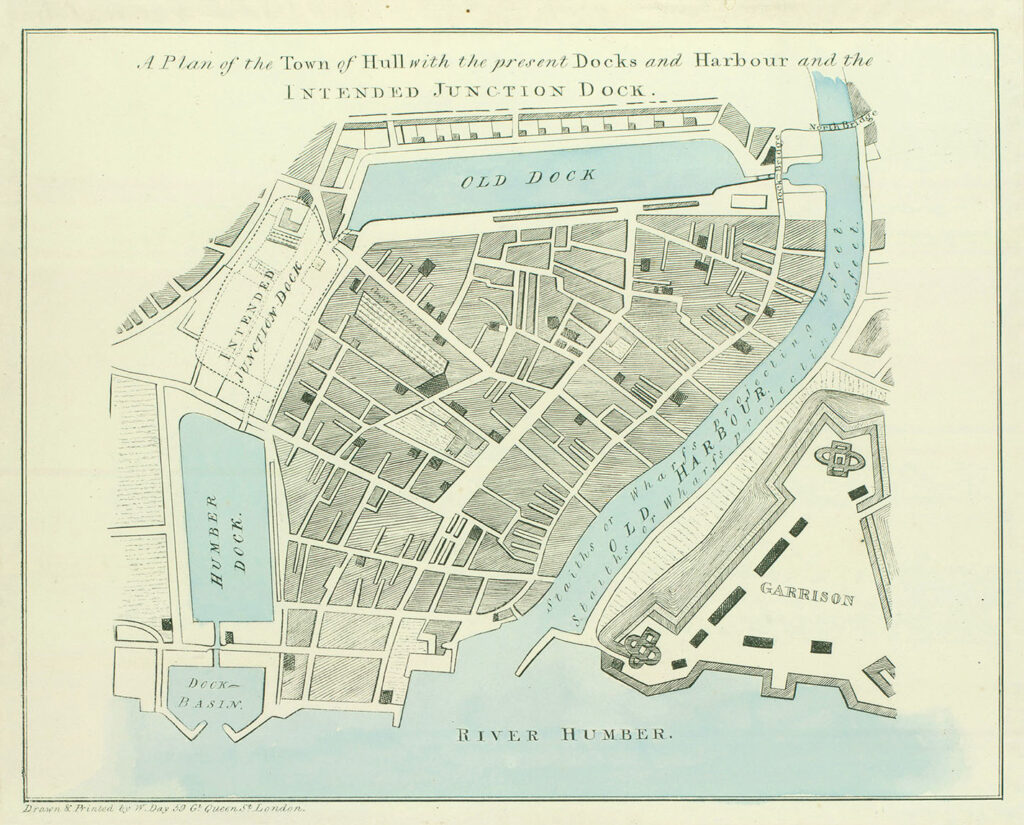
The report as preserved in accessible quotations
Modern secondary reporting quotes two regional papers as carrying the 1801 account: the Northampton Mercury dated Saturday 11 July 1801 and the Chester Chronicle dated Friday 17 July 1801. The most frequently cited modern article reproducing these quotations is an IBTimes UK piece from 2015. (International Business Times UK)
According to that quoted text, witnesses described a luminous appearance “like the face of the moon,” featuring a dark “bar” across it. The account then describes a sequence in which it “seemed” to separate into “seven small distinct moons or globes of fire,” disappear briefly, then reappear in changing forms including “five circular balls,” and finally “several small stars” that gradually faded away. (International Business Times UK)
The Chester Chronicle quotation includes the most grounded sensory detail in the entire description: “During the time of it being visible, a faint blue light fell upon the surrounding objects, like that of distant torches.” (International Business Times UK)
Those phrases matter because they set the limits of what the source base can support. The illumination is described as faint and likened to distant torchlight, not as daytime brightness. The transformation into multiple lights is presented with an important qualifier, “seemed,” which signals that the reporter recognized perception could mislead. And the “bar” detail is specific enough to be meaningful, but not specific enough to tell us whether the “bar” was physical structure or an optical effect.
In other words, the report is vivid, but it is not reckless. The language is surprisingly careful for a story that clearly impressed whoever wrote it.
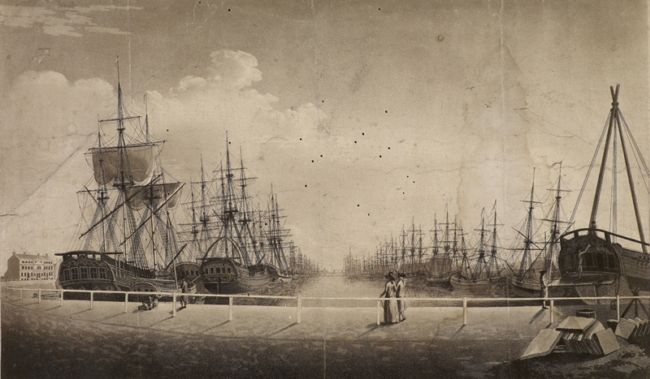
Hull in 1801: why a port sky looks different
A port town is not just a place with ships; it’s a place where visibility is an economic resource. In 1801, Hull’s working day and night were shaped by tides, weather windows, and the constant choreography of vessels and cargo. People on the riverfront would have been familiar with light at odd angles: lamps and lanterns moving across water, reflections stretching and wobbling, low clouds brightening above the town, and occasional distant glows from other settlements or ships.
That environment can be cut two ways. It can produce misreadings, because haze and low clouds can distort brightness and multiply apparent lights. But it also produces observational skills, because those same workers spend a lot of time learning what “normal” looks like in their specific microclimate.
That matters when a report includes environmental illumination. The description compares the blue illumination to distant torches, which is exactly the kind of comparison someone accustomed to practical lighting would use. It does not sound like a writer reaching for mythology. It sounds like someone trying to pin down a real brightness level in familiar terms. (International Business Times UK)
How newspapers spread “phenomena” in the Regency era
One reason historical UAP cases can feel oddly modern is that early nineteenth-century newspapers already functioned like a network. Provincial editors clipped items from other papers. Strange weather and sky reports were popular filler because they were safe, interesting, and socially shareable. A curious event reported in one place could be republished elsewhere within days or weeks, often with the core descriptive paragraph largely intact.
That circulation habit is important for the Hull case because it shapes how we interpret “multiple sources.” The existence of the Northampton Mercury and Chester Chronicle versions (as quoted) suggests the story circulated beyond Hull, but it does not automatically mean the papers interviewed independent witness groups. It could mean one local report traveled. It could also mean similar phenomena were noticed across a wider region and the reprints reflect separate observations. Without direct access to the original issue pages, we have to treat both possibilities as open.
This is the single biggest reason the case remains “unresolved” rather than “solved”: we are working with a description that is credible and coherent, but one step removed from direct inspection.
The immediate explanatory contenders, and how well they fit
Any attempt to interpret a pre-aviation UAP report should start with what nature can do.
Fireballs and bolides: the best conventional match
A very bright meteor, often called a fireball or bolide, can be spectacular enough to light up landscapes. NASA’s CNEOS describes fireballs and bolides as exceptionally bright meteors that can be seen over a wide area. (blog.seniorennet.be)
A fireball can also fragment. Fragmentation can look like multiple bright “points” moving together or separating. In some conditions, a persistent glowing train can remain visible for seconds or minutes, changing shape as it drifts in high-altitude winds. Now add the Humber’s low cloud and haze. A bright source behind uneven cloud can appear to blink, morph, or separate into multiple “globes,” especially if bright portions of a train appear through gaps while darker bands of cloud cut across the glow.
This is why the fireball hypothesis deserves genuine weight here. It can plausibly account for several key elements at once: the intense brightness implied by environmental illumination, the apparent separation into multiple lights, and the changing “forms” across a short time window. (International Business Times UK)
The “bar across the face” is an awkward detail. A meteor is not a disk with a stripe in any straightforward physical sense. But a bright, roughly circular glow seen through cloud layers can present as a “face,” and a narrow darker cloud band can present as a “bar.” That kind of perceptual geometry is common in night sky viewing, especially near the horizon over water.
So, if you want a single conventional explanation that can absorb the most features, a bright bolide with fragmentation plus cloud-layer optics is the strongest candidate.
And yet, “strongest candidate” is not the same as “closed case.”
Ball lightning: rare, but historically persistent
Ball lightning is frequently invoked in older “luminous sphere” cases because it is one of the few known atmospheric phenomena that witnesses describe as a moving, persistent glowing sphere. The UK Met Office notes it is incredibly rare and still not fully explained. (blog.seniorennet.be) The Royal Meteorological Society also discusses the phenomenon’s rarity while acknowledging a long history of reported observations. (blog.seniorennet.be)
Ball lightning can fit the “orb” idea and could be consistent with unusual color casts. But the Hull description, as preserved in quotations, includes a “moon-face” appearance with a dark bar, and then multiple “globes” in a patterned sequence. Ball lightning does not naturally produce seven distinct luminous spheres that appear, disappear, and reconfigure in a way that reads like a staged transformation.
Ball lightning remains a possible partial explanation if the weather conditions were electrically active and if the luminous appearance was interpreted through haze. But as a full explanation for the sequence described, it fits less cleanly than the bolide hypothesis.
Atmospheric optics and the Humber’s theatre of haze
Optical effects can explain some of the most “structured” parts of the description without requiring any structured object. A bright source behind a layered cloud can look like a luminous disk with a stripe. Reflection of moisture or low clouds can paint the environment with a faint color. Over water, the horizon can act like a screen, turning a single bright event into something that feels spatially larger than it is.
This is not a debunk; it’s an honest reminder that the sky is an instrument, and it sometimes plays tricks.
The key question then becomes: what was the bright source? Optics can sculpt the perception, but it does not generate the initial brightness.
Human-made sources in 1801: a short list with problems
If this were a modern case, you would immediately consider aircraft, drones, satellites, flares, and LED lantern releases. In 1801, that toolkit was absent. Balloons existed, but balloons do not typically split into multiple luminous “moons” and then reform into a “face.” Fireworks can fragment, but the description’s emphasis on a luminous “face” and environmental illumination, combined with the implied visibility over the Humber, makes casual pyrotechnics a stretch without specific local context (festival, military event, public display).
A human-made explanation is not impossible, but the burden would be on the researcher to show an event that plausibly matches the description, rather than assuming it by default.
A case study in how one report becomes “a case”
The Hull 1801 item is as interesting for what happens after the sighting as for what happened in the sky.
First, there is the immediate act of description. The writer uses familiar analogies: moon face, torchlight, globes of fire. That is the language of measurement for a time without standardized popular science terminology.
Next, there is the newspaper ecosystem. A local “phenomenon” is printed. It is clipped. It travels. It becomes a paragraph in other towns’ papers because it’s compelling, and because it costs almost nothing to reprint.
Then, much later, it is rediscovered through archival searching. A modern researcher finds the clipping and, understandably, frames it using modern language: “UAP,” “orb,” “sighting.”
Finally, modern media arrives, and this is where the trouble begins. A superlative appears: “world’s oldest documented.” That phrase travels faster than the careful details, because headlines are built to move.
Here is what careful historical writing can do: keep the descriptive core, keep the source chain visible, and refuse to let the modern headline become the historical conclusion.
On that last point, it is worth stating plainly: there is no consensus on what constitutes the “first recorded” UAP report in history. Older anomalous-sky accounts exist in ancient and early modern sources, and even defining what “counts” varies across historians and researchers. (Northamptonshire Record Society) Hull 1801 is best treated as an early newspaper-era example with a vivid description, not as a definitive “first.”
Publications and the “Wonders in the Sky” approach
Hull 1801 is often grouped with pre-20th-century accounts popularized in catalogs like Wonders in the Sky because it exhibits two features that show up repeatedly in that broader historical record: structured appearance language and behavior language.
“Structured appearance” is the “moon face” and “bar” element. “Behavior language” is the sequence: forming into multiple globes, disappearing, returning in altered configurations, fading into smaller lights. (International Business Times UK)
The important nuance is this: pattern recognition across history is an interpretive tool, not an evidentiary upgrade. Similarities can suggest a recurring class of phenomena, but they do not, by themselves, establish a singular cause. If the Hull case belongs in that broader discussion, it is because it is a useful data point for how witnesses describe unusual aerial light behavior in an era with fewer human-made confounders, not because it “proves” continuity.
Controversies that matter, and controversies that don’t
There is a loud controversy that doesn’t matter much: whether Hull 1801 is “the earliest documented UAP.” That’s modern media framing, and it distracts more than it helps. (Northamptonshire Record Society)
The controversies that do matter are quieter and more practical.
One is the primary-source gap. The British Newspaper Archive confirms the Hull Packet title and coverage, but a title record does not let the reader verify the exact wording of the 1801 report. (IFLScience) The same is true for the Northampton Mercury and Chester Chronicle issue pages unless a reader has direct archival access. The Hull case will always sit slightly “soft” until a publicly viewable facsimile or transcription can be cited directly.
Another is descriptive precision. When writing about illumination, the safest phrasing is the phrasing we can actually point to: “a faint blue light… like that of distant torches.” (International Business Times UK) Anything stronger risks drifting from evidence into cinema.
A third controversy is interpretation drift. If you already believe most UAP reports are misidentifications, Hull 1801 becomes “a meteor with a good story.” If you already believe UAP includes genuinely anomalous agents, Hull 1801 becomes “a structured object with transformations.” The honest position is that neither camp gets to declare victory from the available record alone.
Implications: why this still belongs in the archive
If the Hull 1801 report were only a curiosity, it would have stayed in the newspaper margins. It persists because it hits several “archival value” markers at once.
It is pre-aviation. That removes a huge class of modern confounders.
It is described in terms that imply a sequence, not just a flash.
It includes an environmental lighting comparison, suggesting the phenomenon had perceptible effects beyond the object itself.
And it is attached to a real, traceable publication ecosystem, even if the precise issue pages are not freely viewable from the title record alone. (IFLScience)
For UAPedia readers, the practical implication is methodological: historical cases demand two disciplines at once. You need the scientist’s instinct to test hypotheses like bolides and optics, and you need the historian’s instinct to keep the document chain clean, resist narrative inflation, and label what cannot yet be verified.
Claims Taxonomy
Verified
Accessible modern secondary reporting reproduces quotations attributed to early nineteenth-century newspaper reprints describing a luminous aerial event linked to Hull and the Humber, including a “black bar” detail, apparent segmentation into multiple lights, and a “faint blue light” falling on surrounding objects. (International Business Times UK)
Probable
Witnesses observed a genuine bright aerial phenomenon, with perceived illumination effects described conservatively as faint and comparable to distant torchlight. (International Business Times UK)
Disputed
Whether the “moon-like face” and dark bar indicate a structured object, or an optical impression created by cloud layering acting on a bright transient source such as a bolide. (International Business Times UK)
Legend
The modern claim that this is definitively the “world’s earliest documented” UAP report; historical discussion notes there is no consensus on what constitutes the first recorded case and that older anomalous-sky accounts exist. (Northamptonshire Record Society)
Misidentification
A bolide/fireball is a plausible conventional attribution, but the current publicly accessible citation chain does not allow a confident, closed reclassification. (blog.seniorennet.be)
Speculation Labels
Hypothesis
A bright bolide/fireball, possibly fragmented, was observed through layered cloud and estuary haze, producing a disk-like luminous appearance with a darker “bar” effect and an apparent separation into multiple bright components. (blog.seniorennet.be)
Witness Interpretation
The “moon face” description and “distant torches” comparison reflect a practical attempt to communicate shape and faint environmental illumination using familiar visual references, not a claim of literal scale. (International Business Times UK)
Researcher Opinion
This case remains best cataloged as unresolved until a directly verifiable primary-source anchor is published or cited, ideally an image-backed facsimile or transcript of the Northampton Mercury (11 July 1801) and/or Chester Chronicle (17 July 1801) item, rather than quotation chains alone. (IFLScience)
References
British Newspaper Archive. (n.d.). Hull Packet (title record and holdings context). https://www.britishnewspaperarchive.co.uk/titles/hull-packet (IFLScience)
Jarvis, B. (2025, January 16). Did people report seeing UAPs before the 20th century? Live Science. https://www.livescience.com/space/extraterrestrial-life/did-people-report-seeing-ufos-before-the-20th-century (Northamptonshire Record Society)
Keating, F. (2015, November 29). Regency aliens: Hull lays claim to the world’s oldest UAP sighting (secondary article quoting 1801 reprints). IBTimes UK. https://www.ibtimes.co.uk/regency-aliens-hull-says-blue-orb-seen-200-years-ago-worlds-oldest-ufo-1531035 (International Business Times UK)
Met Office. (2025, May 12). What is lightning and how does the Met Office monitor it? https://www.metoffice.gov.uk/blog/2025/how-the-met-office-monitors-lightning (blog.seniorennet.be)
NASA Jet Propulsion Laboratory, Center for Near-Earth Object Studies. (n.d.). Fireballs and bolides. https://cneos.jpl.nasa.gov/fireballs/intro.html (blog.seniorennet.be)
Royal Meteorological Society. (2013, August 1). Ball lightning. https://www.rmets.org/metmatters/ball-lightning (blog.seniorennet.be)
SEO keywords
Hull 1801 UAP, Humber blue light 1801, Northampton Mercury 11 July 1801 Hull phenomenon, Chester Chronicle 17 July 1801 faint blue light, Hull Packet 1801 newspaper archive, pre-20th-century UAP accounts, Wonders in the Sky historical UAP, Jacques Vallée historical cases, bolide fragmentation historical report, ball lightning historical sightings, Regency era anomalous sky Hull