
Ask almost anyone about RAF Bentwaters (UK) and the conversation jumps back to Christmas week 1980 in Rendlesham Forest. Yet the final decade of the century is just as revealing.
From 1990 to 2000, the base transitioned from front line American outpost to quiet Suffolk airfield while the United Kingdom rebuilt its air surveillance network around East Anglia and quietly professionalized how government collected and analyzed UAP data.
The paper trail is unusually rich.
Parliamentary questions, Ministry of Defence (UK) sighting logs, police correspondence and a secret Defence Intelligence study now known as Project Condign show how sensors and institutions reacted to persistent reports in the Bentwaters orbit.
What follows is not another retelling of 1980. This is a data first history of the 1990s, with emphasis on sensors, official records and what they tell us about the persistence and character of UAP activity linked to Bentwaters and its radar rich region.
A base in transition and a region under radar
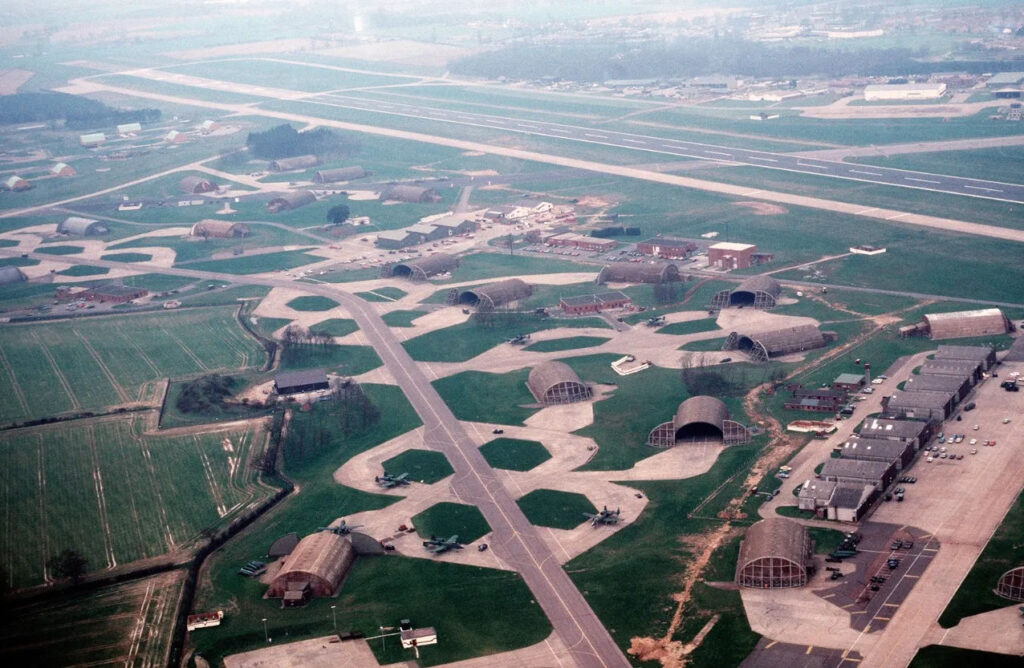
The United States Air Force drawdown in Europe recast East Anglia. Bentwaters’ last A-10s left on 23 March 1993 and the 81st Fighter Wing was inactivated on 1 July of that year.
Control of the station passed back to the Ministry of Defense while most tactical missions moved elsewhere. The airfield’s physical plant remained, and so did a dense belt of surveillance sensors across Norfolk and Suffolk. (81st Fighter Wing Association)
To the north, RAF Neatishead continued as the hub for the UK Air Surveillance and Control System in the region, with remote radar sites feeding the combined air picture.
In the late nineteen nineties the coastal station at Trimingham hosted a Type 93 air defence radar, which became operational there in April 1997 and contributed coverage over the North Sea.
In the post Cold War era, Neatishead and its outstations provided radar, ground to air radio and data links that stitched East Anglia into the national and NATO network.
This sensor architecture matters because it framed what could be captured during new UAP reports in Suffolk and neighboring counties. Even as Bentwaters itself went quiet, the skies above the region were among the most watched in Britain.
Government files in the 1990s: what the paper trail shows
Three strands of official documentation define the period.
- Ministry of Defense sighting datasets. The MoD’s 1999 UAP report log shows more than a hundred entries for that year, including multiple reports in Suffolk towns that ring Bentwaters and Woodbridge.
On 6 February a boomerang shaped craft was reported at Hadleigh. On 11 September a bright object was reported at Stowmarket as “bouncing.”
On 9 December an entry labels a large object at “Melton/Woodbridge” but misfiles the county as Somerset, even though Melton and Woodbridge sit next to Rendlesham Forest in Suffolk. In all cases the reports were logged centrally by the department’s UAP desk.
- Suffolk Constabulary correspondence. A key letter dated 28 July 1999 from Inspector Mike Topliss summarized local police impressions of the Rendlesham area phenomena.
He noted that powerful beams from the Bentwaters landing beacon and the Orfordness lighthouse could create striking nocturnal effects and recorded that one attending officer remained unconvinced an extraordinary event had occurred.
The letter was quoted in Georgina Bruni’s book and later discussed by analysts reviewing the Halt tape timeline. Whatever one concludes, this is a rare mid-decade police document about the locale and it shows active official interest in the site twenty years on. (Avalon Library)
- Parliamentary questions. In the closing months of 2000 and January 2001, Lord Hill-Norton pressed ministers for details of any underground facilities at Bentwaters, police involvement and the extent of any United States investigation.
Ministers replied that the MoD’s knowledge of an American investigation was limited to the 13 January 1981 memorandum from Lt Col Charles Halt to the RAF liaison officer, and they reiterated the department’s long standing line that no defence threat had been established.
These exchanges are an important marker of late nineties policy and the government’s public stance just as Project Condign reached completion. (Hansard)
Witness accounts around Bentwaters in the nineties
A data first approach treats witness testimony as source material to be weighed alongside sensor records and institutional files.
In the specific Bentwaters area between 1990 and 2000, the MoD’s 1999 dataset is the clearest primary evidence of continued reporting.
- Hadleigh, Suffolk, 6 February 1999. The description logged reads “boomerang shaped craft” with specific light configuration, consistent with a structured object report rather than a light in the sky report. There is no attached radar confirmation in the public database, but it sits only a short flight time from Bentwaters.
- Stowmarket, Suffolk, 11 September 1999. A star bright object “bouncing” was logged. Again the MoD file does not show sensor corroboration, but the report adds to the seasonal clustering seen across East Anglia that year.
- Melton and Woodbridge, 9 December 1999. The entry notes a very large object “with a tail” and appears to mislabel the county. The proximity to the forest and the base’s East Gate is striking.
These entries do not prove extraordinary origins. They do document the persistence of UAP reports in the exact geography of the 1980 events as the decade closed, and they show that the government continued to collect and categorise those reports in a routine way.
Two additional strands of testimony shaped the discourse in the period:
- Veterans and base personnel speaking in the early to mid nineties. Books and media drew new interviews from 1980 witnesses.
Nick Pope’s 1996 Open Skies, Closed Minds discussed the radiation readings recorded by Lt Col Halt’s team and, more broadly, set out how the MoD’s desk handled UAP cases during 1991–1994. As an official narrative by the department’s former desk officer, it framed how many readers in the late nineties understood Bentwaters.
- Local police perspective. The 1999 Topliss letter noted above is precisely dated and anchors one side of the debate in an official contemporary voice from Suffolk.
It shows that even twenty years after the forest nights, local officers were still fielding queries and explaining how lights and beacons might appear under certain conditions. (Avalon Library)
Did the sensors see anything in the nineties near Bentwaters
The most persistent claim carried over from the 1980 narrative is that radar units in the region recorded a target consistent with the sighting. In the 1990s this claim circulated in interviews and books.
When examined, skeptical analysts have pointed out that no official radar data has surfaced that unambiguously shows a Bentwaters track from the period under discussion.
The best known review concluded that evidence for such tracks has not been substantiated in any released file. This does not rule out radar corroboration in principle. It simply reflects what is presently in the public record. (Ian Ridpath)
At the same time, the wider East Anglia sensor belt recorded unknowns in the decade, which is essential context for assessing plausibility. Two examples:
- The Boston Stump radar visual case, October 1996. During a cluster of East Anglia sightings, a controller at Neatishead saw an unidentified return on the National Air Traffic Services Claxby radar with the track noticed at Neatishead.
This is a different county, but the radar chain and command network overlap the Bentwaters region. It demonstrates that air defense sensors in the area did at times present anomalous tracks. (Dr. David Clarke)
- The Cosford and Shawbury series, March 1993. This was a national case rather than a Suffolk one, but it strongly influenced the MoD’s (ministery of Defense – UK) thinking. The department asked the RAF to replay radar tapes and briefed the Assistant Chief of the Air Staff that there was evidence an unknown had evaded defenses. Much of the activity centered on the West Midlands, yet the case shows that official lines of communication, sensor tasking and senior interest were active in the early nineties. (UK National Archives)
Separately, declassified material shows that in the late nineties the coastal Type 93 radar at Trimingham entered service, providing even fuller East Coast coverage within Neatishead’s control. Though not tied to a specific Bentwaters case in the public domain, it is part of the sensor backdrop for any late decade reports in Suffolk. (Wikipedia)
Books that shaped the decade’s Bentwaters debate
Three titles anchored public and political awareness around Bentwaters in the 1990s.
- Nick Pope, Open Skies, Closed Minds (1996). A memoir by the former MoD desk officer that included commentary on the 1980 Rendlesham material and the department’s methods. The book was vetted by the Ministry prior to publication and placed Bentwaters in a wider MoD narrative of unexplained cases.
- Larry Warren and Peter Robbins, Left at East Gate (1997). A first-person account by a claimed participant that amplified specific claims and generated decades of discussion among researchers. Subsequent public disputes have made parts of the narrative controversial, but as a period artefact the book powerfully shaped late nineties perceptions of Bentwaters. (Internet Archive)
- Georgina Bruni, You Can’t Tell the People (2000). A deeply researched history that brought new documents to light, including the 1999 Topliss letter, and directly triggered parliamentary questions in January 2001. It helped bridge testimony and government process and set the stage for broader releases of MoD files. (Avalon Library)
The publication of Bruni’s book is visible in official records: Lords answers in January 2001 explicitly reference it and restate the government’s views. This is one of the clearest examples in the UAP topic where a book generated immediate parliamentary scrutiny. (Hansard)
Project Condign: the secret nineties study that framed the new century
Behind the scenes the MoD’s Defense Intelligence Staff ran a multiyear study of UAP from December 1996 to March 2000, codenamed Project Condign.
It drew on roughly 10,000 reports and concluded that UAP exists as real phenomena in the sense that observers perceive external events, while proposing that a portion might be explained by forms of atmospheric plasma. It also recommended that potential “novel military applications” be explored and documented possible effects on people and equipment. The report remained secret until released under freedom of information in 2006. (Wikipedia)
Condign is important to Bentwaters for two reasons.
First, it indexed years of MoD data including reports from the Suffolk region and shaped how the department would henceforth respond to public sightings.
Second, it made explicit the idea that some UAP could degrade sensors or present intermittently on radar, a point of obvious relevance to any discussion of whether the Bentwaters area saw sensor corroboration in the nineties.
However, the study did not single out Bentwaters for special treatment and it did not resolve the long running question of radar tracks associated with the forest.
What the nineties tell us about Bentwaters and sensors
Putting the pieces together yields a data based picture.
- Persistent reporting near the base. The official 1999 MoD log places multiple reports in towns that ring Bentwaters. Even allowing for misfiles, geographic clustering is real.
- A strong sensor umbrella. East Anglia was covered by Neatishead controlled radar sites. By 1997 a modern Type 93 was operating at Trimingham and feeding into the wider air picture. This does not prove any particular track. It shows that the infrastructure to capture one existed.
- Documented radar observations in the wider region. Neatishead and the National Air Traffic Services Claxby radar did generate at least one notable track in 1996 during an East Anglia wave. Nationally, the 1993 Cosford series led to replaying tapes and briefings to senior air staff. (Dr. David Clarke)
- Official caution that sensors can be fooled or limited. Condign, produced in 1996–2000, entertained models where some UAPs might fail to appear on radar or produce transient effects. That stance explains both how an event could be real and why radar might be inconclusive.
- A continuing local police role. The 1999 Suffolk letter shows police were still triaging the Rendlesham story and local nocturnal lights, and records their judgement on likely prosaic light sources in some circumstances. (Avalon Library)
In short, the decade did not produce a released, multi sensor Bentwaters radar case comparable to earlier Cold War events in East Anglia.
It did produce official sighting data in the area, a heavier regional radar net, and a secret intelligence study that supports the proposition that some UAPs are sensor elusive yet operationally significant.
Government involvement: the administrative arc
The administrative story is as important as the sightings.
- Routine case handling. Through the nineties the MoD’s desk received and coded reports. The 1999 year list illustrates the standard template and the breadth of sources, including civilians and police officers in several entries.
- Policy framing. Public facing MoD materials repeated the line that no defense threat had been identified, even as Defense Intelligence pursued the classified Condign study. The juxtaposition is visible in later file guides and correspondence on how the file releases would be managed. (Preterhuman)
- Parliamentary oversight. Lord Hill-Norton’s questions in October 1998 and January 2001 show how the subject reached the floor of the Lords, often prompted by new books or press. The answers are a snapshot of how the department explained itself at the time. (UK Parliament)
- File releases. After pressure from researchers and journalists, a tranche of MoD files including material referencing Bruni’s book and Lords questions began to be prepared for release, culminating in phased National Archives releases in the following decade. The internal document trails record both content and the process of declassification. (The Black Vault Documents)
Implications for research and policy
A data first view of the 1990s around Bentwaters leads to clear implications.
- Invest in multi sensor capture. The lesson from Cosford and the regional 1996 radar visual case is that one well documented track can change official attitudes. The tools now exist to pair high resolution optical recording with distributed passive radar and ADS-B sweeps along the Suffolk coast, which would complement state sensors and offer public data for contested areas like Rendlesham. Hypothesis.
- Release raw historical sensor data where feasible. Even partial extracts from Neatishead and Trimingham logs for 1993–2000 would allow independent timelines to be built that could be cross matched to the 1999 MoD sighting dataset. Researcher opinion.
- Continue to index local police material. Suffolk Constabulary’s 1999 letter is more valuable than most realise. It dates impressions and narrows candidate light sources. Engaging with archival police material and preserving beat logs from the era would assist future correlation studies. Researcher opinion.
- Do not overfit a single explanation. Condign’s plasma model is a useful mechanism in some cases, but it neither rules out more exotic hypotheses nor explains every radar visual. The nineties data teaches humility. Researcher opinion. (Wikipedia)
The bottom line
The nineteen nineties at Bentwaters were not empty years.
They map the shift from an American fighter wing to a quiet Suffolk airfield inside a highly capable British radar network. They capture how the MoD handled reports and how Parliament asked questions.
They document continued UAP reports in the exact villages and towns around the base.
They show that nearby radars did record unknowns during the decade in the wider region. They also remind us that the best evidence for a Bentwaters specific radar track from this period remains withheld or was never recorded in a way that survived to release.
For UAP researchers the path forward is clear. Work from the records out. Treat the 1999 MoD list as a dataset to be cross matched against air defense logs and local police files.
Read the House of Lords answers from 2001 alongside the internal Condign findings from 2000. And recognize that East Anglia’s well instrumented skies make the Bentwaters area one of the best places in Britain to build a twenty first century, sensor rich field study that finally resolves what has long been reported there.
Claims Taxonomy
Verified
- MoD 1999 sighting entries for Hadleigh, Stowmarket and Melton/Woodbridge are genuine departmental records. They evidence continued reporting in the Bentwaters locality.
- Parliamentary questions and answers in January 2001 and October 1998 referencing Bentwaters and Rendlesham are genuine Hansard records. (Hansard)
- The operational status of East Anglia radars in the late nineteen nineties, including Type 93 service at Trimingham from 1997 and Neatishead’s role, is documented. (Wikipedia)
- Project Condign ran from 1996 to 2000 and proposed that some UAP may be consistent with plasma like phenomena with potential military implications. (Wikipedia)
Probable
- The 1996 East Anglia radar visual cluster that included a Claxby return noted at Neatishead indicates that unknowns were intermittently captured on regional sensors in the decade. (Dr. David Clarke)
Disputed
- Claims that nineties era radar data specifically confirms a Bentwaters track remain unsubstantiated in released files. Analysts reviewing available material find no documentary corroboration to date. (Ian Ridpath)
- Portions of first person narratives published in the 1990s have been challenged by other participants and researchers. Readers should treat them as testimony and weigh them case by case against official records. (Internet Archive)
Legend
- Local folk accounts that any light in the forest is automatically the same phenomenon reported in 1980 are anecdotal culture rather than data.
Misidentification
- Some nocturnal lights in the Rendlesham area are likely attributable to the Bentwaters landing beacon and the Orfordness lighthouse under particular weather conditions, as set out by Suffolk police in 1999. (Avalon Library)
Speculation labels
- Hypothesis. Some twentieth century UAP in East Anglia could be transient plasma presenting variably on radar and causing intermittent physiological and equipment effects, consistent with themes noted in Project Condign. (Wikipedia)
- Witness interpretation. MoD 1999 entries reflect what observers sincerely reported at the time. Without sensor data they are best treated as location and time markers rather than definitive descriptions of craft.
- Researcher opinion. A coherent research agenda for Suffolk would combine freedom of information requests for historical radar extracts with targeted multi sensor civilian deployments to create open datasets that can be cross matched to official logs.
References
81st Fighter Wing Association, “Post Cold War” timeline for RAF Bentwaters closure and inactivation, 1993. (81st Fighter Wing Association)
Wikipedia, “RAF Bentwaters” post Cold War summary.
RAF Air Defence Radar Museum, “Neatishead Today” mission and ASACS role. (RAF Air Defence Radar Museum)
Wikipedia, “RRH Trimingham” including Type 93 operational from April 1997. (Wikipedia)
UK Ministry of Defence, “UFO Report 1999” sightings list including Suffolk entries.
Georgina Bruni, You Can’t Tell the People (2000), including the 28 July 1999 Suffolk Constabulary letter by Inspector Mike Topliss. (Avalon Library)
Ian Ridpath, “The Halt tape analysed,” discussion referencing Topliss letter and timing issues. (Ian Ridpath)
UK Parliament, Hansard, “Rendlesham Forest/RAF Bentwaters Incident,” Written Answers, 30 January 2001. (Hansard)
UK Parliament, Hansard, Written Answers, “Rendlesham Forest incident,” 30 January 2001. (UK Parliament)
UK Parliament, Hansard, “Unidentified Flying Objects,” 19 October 1998. (Hansard)
Ian Ridpath, “Rendlesham—was it seen on radar,” review concluding no substantiated radar evidence has been released. (Ian Ridpath)
Dr David Clarke, “Boston Stump incident,” radar visual case with Neatishead noticing an unidentified return on Claxby radar. (Dr. David Clarke)
The National Archives Highlights Guide, entry on the 31 March 1993 Cosford series and MoD actions. (UK National Archives)
Nick Pope, Open Skies, Closed Minds (1996), overview of MoD UAP desk and Rendlesham discussion.
Ian Ridpath, “Rendlesham radiation readings,” context cited by Pope and later analysis. (Ian Ridpath)
Project Condign, Unidentified Aerial Phenomena in the UK Air Defence Region (Defence Intelligence Staff, 1996–2000), executive and summary materials. (Wikipedia)
Wikipedia, “Rendlesham Forest incident,” for contextual details and links to Suffolk police file and MoD positions.
SEO keywords
RAF Bentwaters, Rendlesham Forest, East Anglia radar, Neatishead radar, Trimingham Type 93, Ministry of Defence UAP files, Suffolk police letter 1999, Project Condign 2000, Cosford 1993 radar, Boston Stump 1996, UAP sightings Suffolk, Bentwaters Park, UKADGE, ASACS, Charles Halt, Nick Pope, Georgina Bruni, Left at East Gate.