
If you wanted to build the simplest possible “ancient UAP” object, you would not start with a flying disk or a chariot of fire. You would start with a stone.
Not just any stone, either, but a stone with a biography: it arrives from above, it radiates authority, it attracts pilgrims, it reorganizes economies, and it causes political actors to behave as if a non-human presence has entered the local power grid.
In the ancient Mediterranean and Near East, that stone has a name family: baetyl / baitylos / betyl. In modern scholarship, “baetyl” often functions as a broad label for sacred stones, sometimes explicitly described as “fallen from heaven” and sometimes treated as a “house of the god.”
UAPedia’s angle here is not to retrofit every sacred rock into a spacecraft. Instead, we take a data-first approach: isolate the recurring features of baetyl narratives, track them across cultures and centuries, and ask what that persistence implies about the phenomenon that generated the stories, the rituals, and the after-effects.
The baetyl pattern, defined as data
Across sources, baetyl narratives cluster around a repeatable package of claims:
- Anomalous provenance: “sent from heaven” or “fallen from the sky.”
- Aniconic embodiment: the divine is present without a human-shaped statue often as a cone, block, or rounded stone.
- Handled like a device: carried in procession, housed in a restricted sanctuary, “activated” via oiling/anointing, draped/covered, placed on a chariot, or installed in a niche.
- Interpretation of “features”: observers point to markings, projections, sheen, or color as meaningful signs (sun-symbols, divine signatures).
- After-effects: pilgrimage economies, legitimacy for rulers, social conflict, iconoclasm, and long-lived cult continuity.
That combination is why baetyls matter for UAP studies. They are not just “belief objects.” They are historical interfaces: touchpoints where communities insist that something non-ordinary arrived from “above” and stayed.
A compact dataset of well-attested baetyl cases
Below is a small, conservative dataset limited to cases anchored in widely cited ancient testimony, archaeology, or sustained religious practice.
| Case | Location / culture | “From heaven” language | Object form | Sources / anchors | Noted after-effects |
|---|---|---|---|---|---|
| Elagabal’s sacred stone | Emesa (Homs), Syria → Rome | Explicit | Black conical stone | Herodian/Cassius Dio tradition summarized in modern references | Imported cult restructures Roman religious politics; spectacle processions; backlash and reversal |
| Cybele’s “black stone” | Pessinus (Phrygia) → Rome | Explicit (“fallen from the sky”) | Large black stone | Livy reference via Pessinus overview | State-sponsored import; new priesthood; major festival cycle; political legitimation |
| Aphrodite Paphia’s stone | Paphos, Cyprus | Implicit/explicit in classical discussion (“reason obscure” but stone idol emphasized) | Rounded/conical | Classical tradition summarized in baetyl overview | Centuries of pilgrimage; cult continuity through changing empires |
| Nabataean betyls | Petra / wider Nabataea | Mixed; often “divine presence” via aniconic betyls | Rectangular slabs / niche-cut forms | Scholarly article on Petra betyls | Durable temple architecture; standardized niches; religious continuity under Rome |
| Kaaba Black Stone | Mecca, Arabia | Sanctity emphasized; “heavenly” traditions exist, meteorite claim disputed | Fragmented dark stone set in corner | Scientific argument it’s likely agate, not meteorite | One of the world’s largest ongoing pilgrimage rites; enduring tactile ritual |
This dataset is deliberately mixed: some are likely meteorites, some explicitly treated as such, some are not meteorites at all, and one is a living ritual case with competing material interpretations.
That mix is the point. The baetyl pattern does not require the object to be extraterrestrial rock. It requires the narrative role: “arrived from above, therefore it authorizes reality down here.”
Case study 1: Elagabal’s stone, described like a “sent” object
The most UAP-flavored baetyl account in Greco-Roman literature attaches to the Syrian sun cult of Elagabal (Elagabalus), centered at Emesa. When the teenage priest-emperor Elagabalus reached Rome, he imported the cult object itself: a black conical stone, treated as the god.
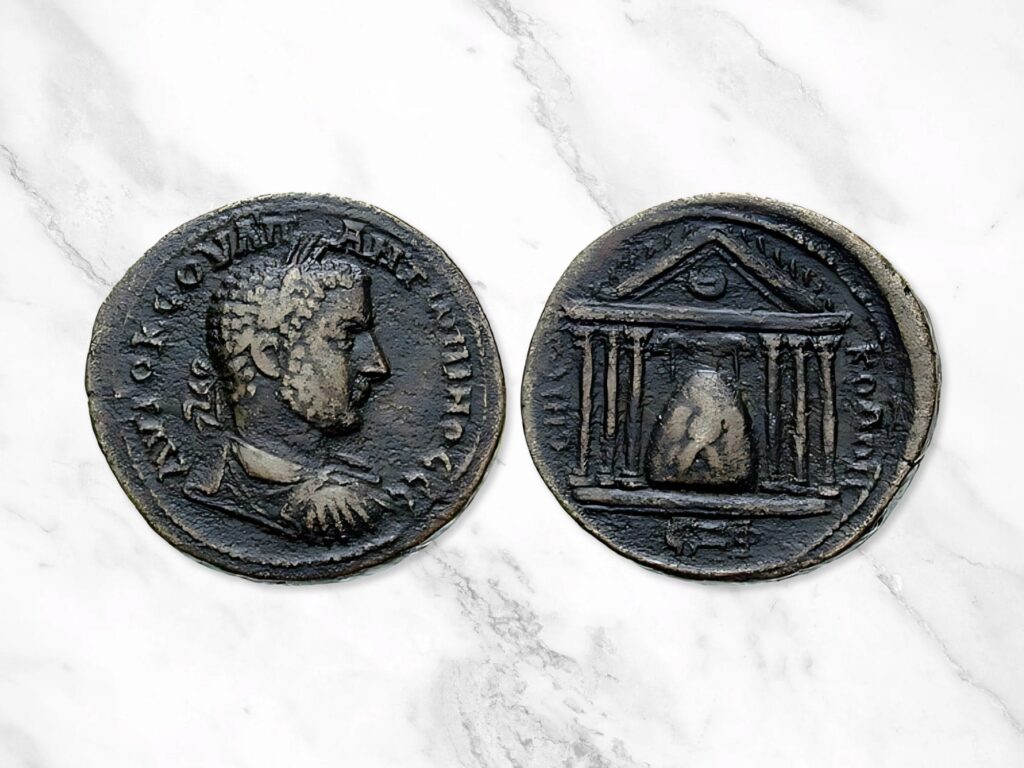
A key detail, repeated in later summaries of Herodian: the stone was “worshipped as though it were sent from heaven,” and viewers pointed to small projections and markings as evidence of a sun-sign.
Witness account profile (who is “the witness” here?)
Ancient history rarely gives us a named farmer saying “I saw it land.” Instead, we get elite observers documenting public rituals. In UAP terms, these are credentialed secondary witnesses reporting a widely visible state event: the emperor’s processions, the stone’s display, the insistence on heavenly provenance.
After-effects
Elagabal’s baetyl did not just sit on a shelf. It attempted a hostile takeover of Roman religious hierarchy: a foreign stone elevated above Jupiter by the state’s top political actor.
That’s one of the cleanest examples of a baetyl acting like a power object. The stone’s “arrival from heaven” becomes a lever for authority, and the spectacle becomes a public “upload” of the cult into Roman life.
UAP-relevant note: In modern close-encounter cases, witnesses often report that the most important effect is not the object’s shape but its ability to reorganize attention, belief, and behavior. Baetyl narratives show the same structure, except on a civilizational timescale.
Case study 2: Cybele’s black stone, imported like strategic technology
In 204 BCE, Rome brought the cult of Cybele (Magna Mater) from Greece to the city, removing her most important image: a large black stone said to have fallen from the sky.
The “fallen from heaven” tag matters because it converts an object into a mandate. A statue can be copied. A stone that “arrived” cannot. It is singular, legitimizing, and politically useful.
Religious group behaviors: the “operating system” around the stone
Cybele’s Roman cult developed distinctive priestly forms and festivals. Even when later authors disagreed on details, the state investment is unmistakable: ceremonies, buildings, calendrical integration, and a managed public narrative that this object changed Rome’s relationship to fate.
After-effects
A baetyl can be a foreign-body insertion into a society: new rituals, new specialists, new social friction. That is exactly what state-sponsored importation produces.
UAP-relevant note: Contemporary UAP politics often circles around the question “what would governments do if an anomalous object were real?” Ancient Rome gives us an answer pattern: they would institutionalize it.
Case study 3: Aphrodite Paphia’s stone, a pilgrimage engine
At Paphos, Aphrodite’s cult centered on a stone simulacrum, described in classical discussions as rounded or conical, with even Roman-era writers acknowledging the form while admitting the rationale was “obscure.”
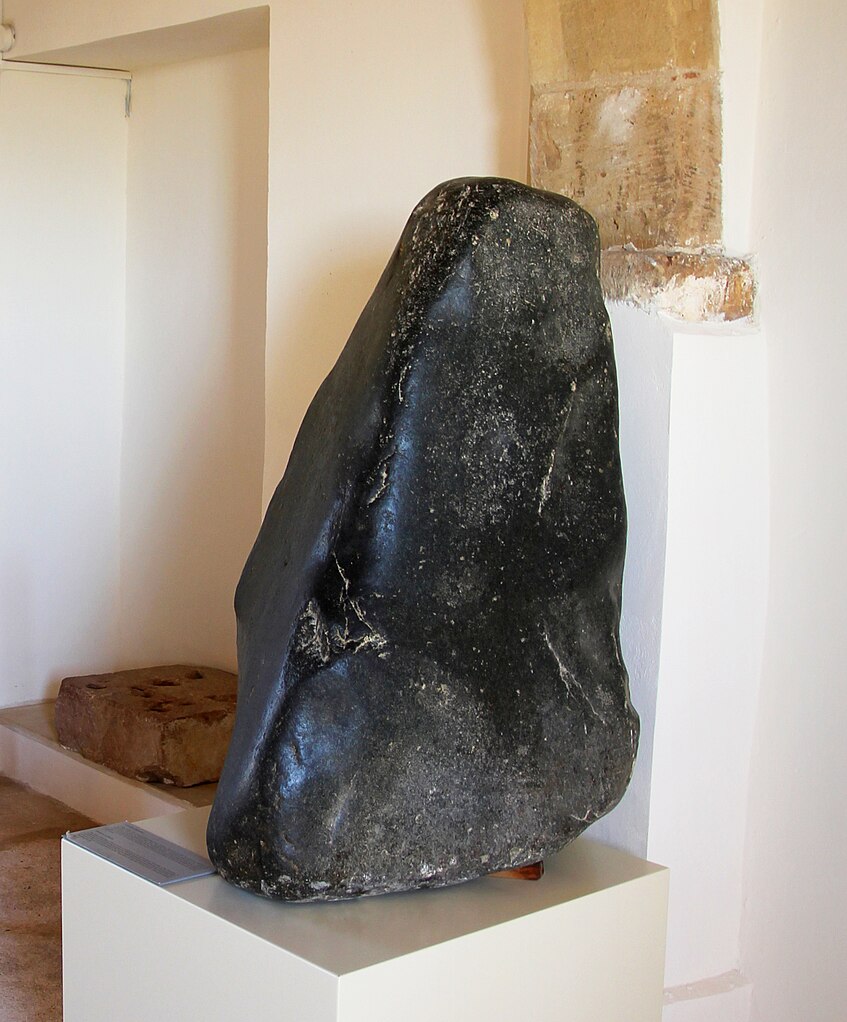
What matters for our dataset is not whether the stone was a meteorite (claims exist, but are not uniformly demonstrable). What matters is the stability of the pattern:
- aniconic object
- housed at a major sanctuary
- attracts pilgrimage over centuries
- persists through political regime change
After-effects
Pilgrimage is an economic and social force multiplier. A baetyl can function like a gravity well for human movement, gifts, vows, stories, and identity. In UAP terms: the object becomes a node where reality feels “thin,” and so people keep returning.
Case study 4: Nabataean baetyls, carved into the landscape
The Nabataeans took the baetyl idea and built it into architecture. In Petra and beyond, we find betyl niches and aniconic stone representations tied to deities such as Dushara. (Chicago Journals)
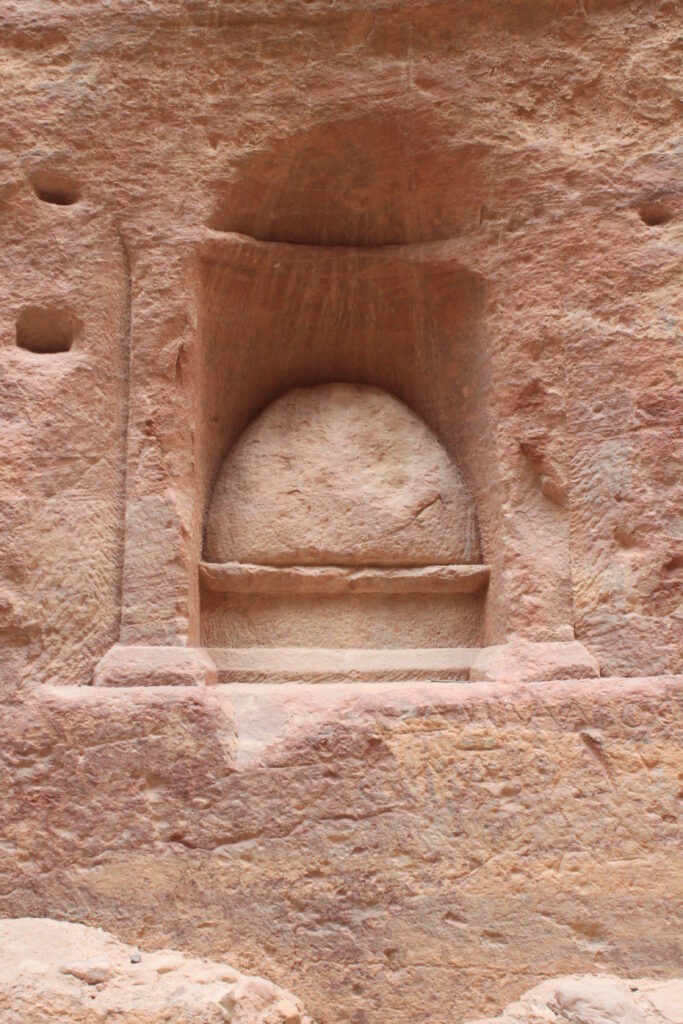
Here the “fallen from heaven” phrasing can be less explicit, but the interface logic is the same: the god is present as a stone-form, not a portrait. That absence of anthropomorphic imagery is often misunderstood as “primitive.” Data-first reading suggests something else: an intentional refusal to claim the divine has a human face.
After-effects
Nabataean betyls generate a measurable archaeological signature: repeated forms, repeated placement, repeated ritual affordances. This is exactly the kind of “pattern persistence” investigators look for in modern UAP flaps: repeated environmental staging that outlives any single witness.
Case study 5: The Kaaba Black Stone, where the pattern is alive but the geology is contested
The Black Stone (Arabic: الحجر الأسود, romanized: al-Ḥajar al-Aswad) is a rock set into the eastern corner of the Kaaba, the ancient building in the center of the Masjid al-Haram in Mecca, Saudi Arabia, is a living-world ritual focus, but its composition has been debated for a long time. A scientific argument in meteoritics literature contends it is probably agate, not meteorite. (Astrophysics Data System)
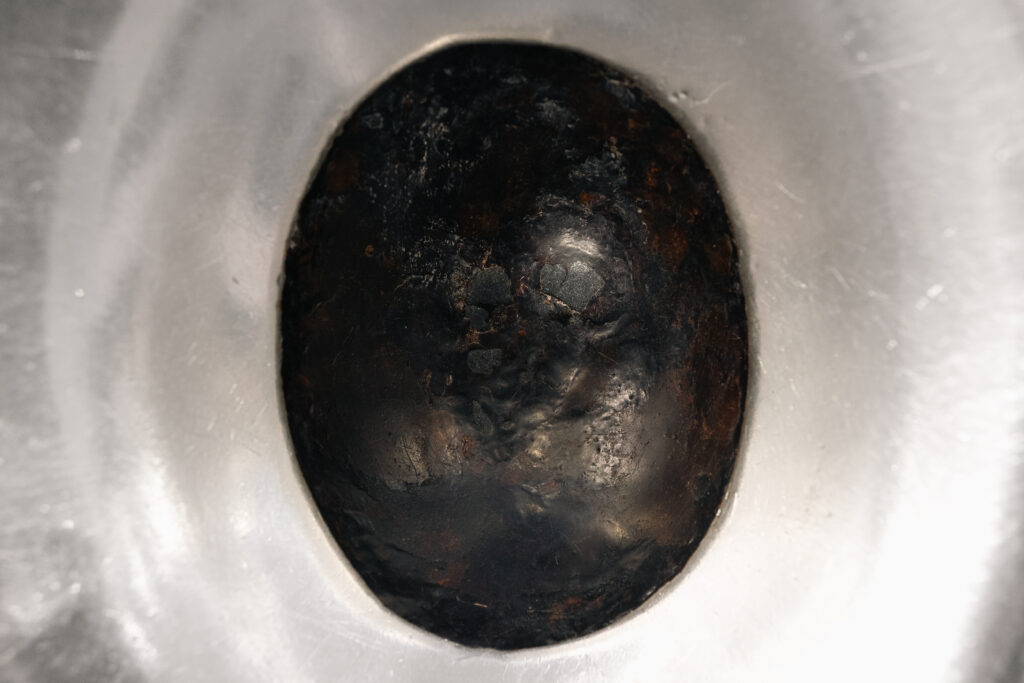
For UAPedia, this is a feature, not a problem. The baetyl pattern is not “meteorites are UAP.” The pattern is:
- a stone becomes a contact point between heaven and earth
- a community builds a high-stability ritual around it
- the object anchors identity and movement at massive scale
Even if the Kaaba stone is terrestrial agate, its role in the baetyl pattern is structurally perfect.
“Images” in a data-first ancient article: what to look at
Images should be treated like evidence categories: not proof of origin, but proof of representation (how cultures depicted the object).
Suggested image anchors (matching the carousel above):
- Paphos stone photograph (modern museum photo often circulated) as a candidate aniconic cult object (representation evidence; provenance debated).
- Coin depictions of the Emesa stone in a temple or on a chariot, showing how Romans visualized the baetyl’s “public interface.”
- Petra betyl niche showing standardized architectural embedding of aniconic divinity. (Chicago Journals)
- Shrine/betyl archaeology (Humayma example image) demonstrating the betyl as built form, not just legend.
Implications for UAP studies
Baetyls as “trans-medium residue,” culturally speaking
Modern UAP cases often feature “trace effects” or residuals that are small compared to the event: a scorch mark, a fragment, a landing imprint. Ancient baetyls can be read as culture-retained residues: the thing that remains when the sky event has passed and only the anchor object is left behind.
A warning to modern investigators: don’t confuse “object” with “phenomenon”
If a baetyl is a meteorite, that does not make the cult “explained.” The human response is still anomalously intense and organized around “arrival from above.” If a baetyl is not a meteorite, that also does not dissolve the pattern. It suggests the “heavenly object” category can attach to stones through routes other than literal skyfall, including legendary compression, political theater, or genuine anomalous events later stabilized into ritual.
The “control system” reading, without mysticism
From a systems perspective, baetyls function as high-persistence nodes that steer attention, movement, and authority. In modern terms, they are like persistent beacons that keep a population oriented around “the sky is not empty, and it touched us here.”
Claims taxonomy
Overall classification for “ancient baetyl pattern narratives”: Probable.
Rationale: strong evidence that multiple cultures venerated aniconic stones explicitly described as sky-sent, with archaeological and textual anchors (Elagabalus, Pessinus, Petra). The leap from “sky-sent sacred object” to a specific non-human technological origin remains incomplete.
Case-level notes:
- Emesa/Elagabal stone: Probable (textual convergence; material specifics uncertain). (Wikipedia)
- Pessinus/Cybele stone: Probable (ancient textual anchor via Livy reference; exact material unknown). (Wikipedia)
- Petra/Nabataean betyls: Verified as aniconic cult practice (archaeology + scholarship), but “fallen from heaven” origin is Disputed depending on the specific betyl. (Chicago Journals)
- Kaaba Black Stone as meteorite: Disputed (meteoritics literature argues agate). (Astrophysics Data System)
Speculation labels
Hypothesis
Baetyl narratives preserve a degraded memory of rare luminous skyfall events (meteors, bolides, meteorite recoveries) that were later ritualized because they were emotionally overwhelming and socially useful.
Witness Interpretation
Ancient observers interpreted unusual stones, markings, and processions as proof of divine presence, and described them with “sent from heaven” language because that was the most precise vocabulary available to them. (Wikipedia)
Researcher Opinion
The most productive UAP-relevant move is not to argue “baetyls were spacecraft,” but to treat baetyls as a cross-cultural indicator that humans repeatedly encoded certain “sky-contact” experiences into durable objects, then built institutions around those objects. The durability of that behavior suggests the initiating experiences were compelling enough to outcompete normal forgetting.
References
Dietz, R. S. (1974). Kaaba Stone: Not a meteorite, probably an agate. Meteoritics, 9, 173. https://adsabs.harvard.edu/full/1974Metic…9..173D?utm_source=https://uapedia.ai
Wenning, R. (2001). The Betyls of Petra. Bulletin of the American Schools of Oriental Research, (324). https://www.journals.uchicago.edu/doi/10.2307/1357633?utm_source=https://uapedia.ai
“Baetyl.” (n.d.). Wikipedia. https://en.wikipedia.org/wiki/Baetyl?utm_source=https://uapedia.ai
“Pessinus.” (n.d.). Wikipedia. https://en.wikipedia.org/wiki/Pessinus?utm_source=https://uapedia.ai
“Elagabalus (deity).” (n.d.). Wikipedia. https://en.wikipedia.org/wiki/Elagabalus_(deity)?utm_source=https://uapedia.ai
“Elagabalus.” (n.d.). Wikipedia. https://en.wikipedia.org/wiki/Elagabalus?utm_source=https://uapedia.ai
“Sanctuary of Aphrodite Paphia.” (n.d.). Wikipedia. https://en.wikipedia.org/wiki/Sanctuary_of_Aphrodite_Paphia?utm_source=https://uapedia.ai
SEO keywords
baetyl, betyl, baitylos, sacred stone, fallen from heaven, meteorite worship, aniconic cult, Elagabalus black stone, Emesa baetyl, Cybele black stone Pessinus, Aphrodite Paphia stone, Nabataean betyls Petra, Kaaba Black Stone agate meteorite debate, ancient UAP narratives, historical UAP patterns, skyfall relics, cult objects from the sky