
In a field where anecdotes travel faster than evidence, public opinion polls are often dismissed as “soft.” But when it comes to Unidentified Anomalous Phenomena (UAP), polling is not fluff. It is a sensor.
Gallup’s UAP-related questions, asked intermittently across decades, function like a cultural seismograph. They do not prove what UAP are. They do reveal something equally consequential: what a population thinks it has seen, what it thinks authorities are withholding, and how willing it is to assign extraordinary meaning to ambiguous data.
This matters because stigma suppresses reporting, suppressed reporting degrades data quality, and degraded data keeps UAP stuck in the realm of rumor instead of analysis. Even the U.S. intelligence community has acknowledged that “sociocultural stigmas” are obstacles to collecting UAP data. (Director of National Intelligence)
So let’s treat Gallup’s time series as a dataset worth interrogating.

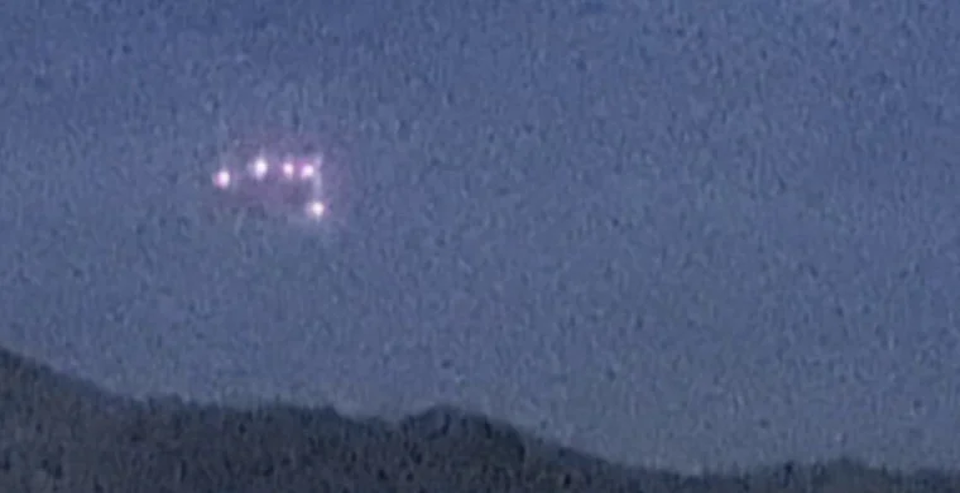
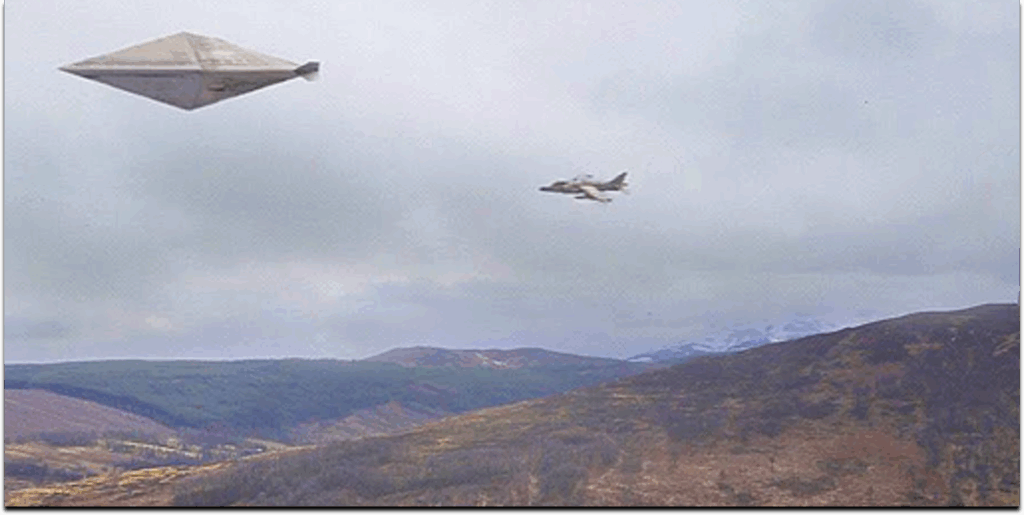
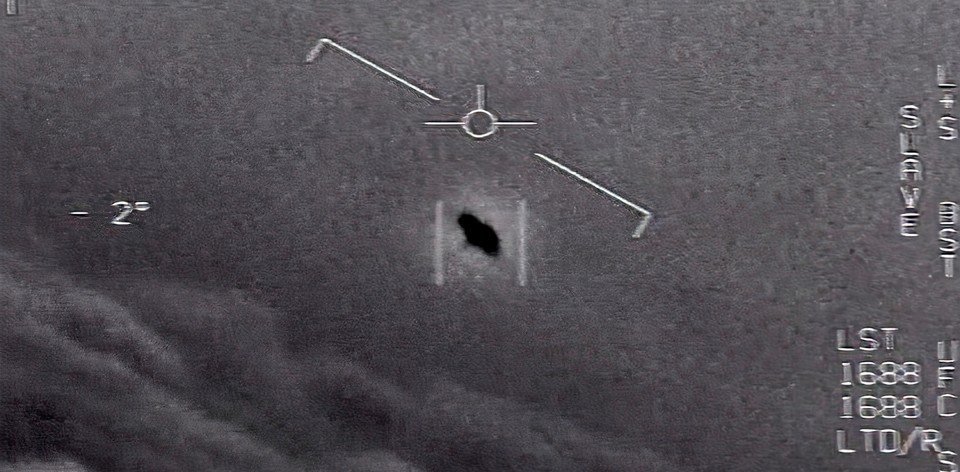
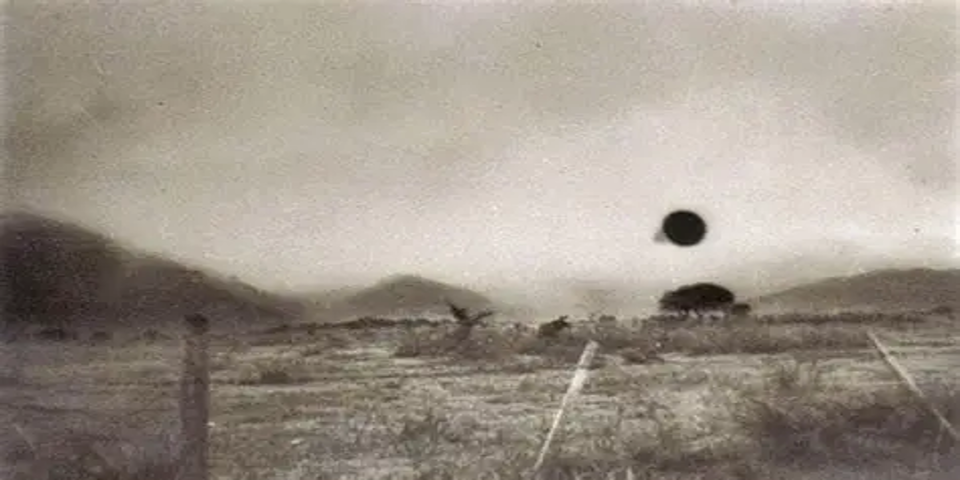
The dataset at a glance
Gallup’s “trend spine” from the 1970s through the 2010s includes three especially useful measures:
- Awareness: “Have you heard or read about unidentified flying objects?”
- Self-report: “Have you ever seen anything you thought was one?”
- Reality judgment: “Are they something real, or just people’s imaginations?”
Then, in 2019, Gallup added a more diagnostic question that reduces ambiguity:
- Attribution: “Do you think some sightings have been alien spacecraft… or that all sightings can be explained by human activity or natural phenomena?”
Below are the headline numbers (U.S. adults). The wording in Gallup’s instrument used the older term “unidentified flying objects,” but throughout this UAPedia article we use UAP for consistency.
Gallup trendline: awareness, sightings, “real vs. imagined”
Awareness (heard/read about UAP):
- 1973: 94%
- 1978: 93%
- 1987: 88%
- 1990: 90%
- 1996: 87%
- 2019: 86% (Gallup.com)
Self-reported sightings (personally seen):
- 1973: 11%
- 1978: 9%
- 1987: 9%
- 1990: 14%
- 1996: 12%
- 2019: 16% (Gallup.com)
Reality judgment (“something real”):
- 1973: 54% (real)
- 1978: 57%
- 1987: 49%
- 1990: 47%
- 1996: 47%
- 2019: 56% (Gallup.com)
A first, counterintuitive takeaway: belief that UAP are “something real” sits near half the population for nearly five decades. It does not collapse with modern education, nor does it explode with the internet. It is remarkably stable.
A second takeaway: the “no opinion” portion shrinks dramatically by 2019 on the “real vs. imagined” question (from ~15–23% in earlier years to 5% in 2019). (Gallup.com)
In other words, Americans increasingly feel they must take a position, even if they remain divided on what that position should be.
The sharper question: “alien spacecraft” vs “all explainable”
Gallup’s “attribution” measure is where the 2020s story begins:
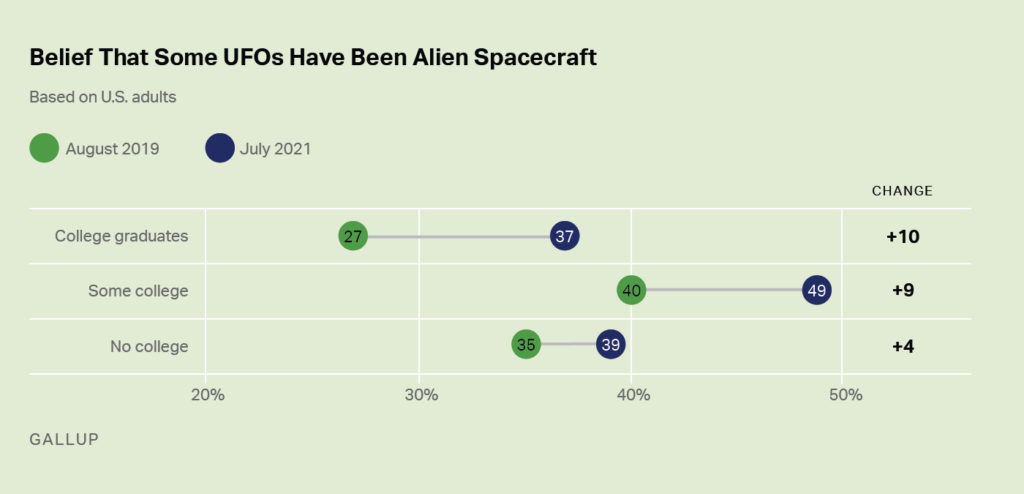
- Aug 2019: 33% said some sightings have been alien spacecraft; 60% said all can be explained by human activity or natural phenomena; 7% had no opinion. (Gallup.com)
- Jul 2021: 41% said some sightings have been alien spacecraft; 50% said all explainable; 9% no opinion. (Gallup.com)
That is an 8-point jump in two years on the most consequential attribution question Gallup asks. (Gallup.com)
Gallup also explicitly notes why this question is methodologically valuable: the earlier “something real” wording can include drones, classified aircraft, or unusual atmospheric effects. The “alien spacecraft” item is designed to isolate extraordinary attribution rather than mere belief in anomalous stimuli. (Gallup.com)
What the data suggests about “public reception”
If you want a single sentence that captures the last half-century of Gallup UAP polling, it might be this:
UAP are culturally mainstream, epistemically contested, and increasingly framed as a legitimate national-security and data problem.
Let’s unpack that with the numbers.
Mainstream since the 1970s
By 1973, 94% of Americans reported they had heard or read about UAP. (Gallup.com)
That is not fringe awareness. That is saturation.
This helps explain a recurring mistake in how people interpret modern UAP “waves.” When a new cluster of reporting appears, it is tempting to treat it as a sudden emergence of interest. But Gallup’s awareness trend suggests the opposite: the interest is persistent, the framing changes.
Personal sightings: a stable minority, a huge absolute number
Self-reported sightings fluctuate in a relatively narrow band (roughly 9–16% in Gallup’s trend points). (Gallup.com)
Even at the low end, that is millions of Americans.
A key nuance: self-report is sensitive to stigma. The ODNI’s 2021 preliminary assessment explicitly flags sociocultural stigma as a data-collection barrier and notes reputational risk can keep observers silent. (Director of National Intelligence)
If you take that seriously, self-reported sightings should be treated as a lower bound, not a ceiling.
Belief in “something real” is not the same as “it’s alien”
Here is the clearest pattern in the Gallup record:
- Many Americans think observers are seeing something real (56% in 2019). (Gallup.com)
- A smaller (but still massive) minority think some sightings involve alien spacecraft (33% in 2019; 41% in 2021). (Gallup.com)
This gap matters because it maps onto social dynamics:
- It is “safer” to say “something real is happening” than to say “it’s alien.”
- That gap is exactly where stigma lives: witnesses may be believed as observers while judged for their interpretation.
The “government knows more” number is the real thunderclap
If the alien-spacecraft split is the attention-grabber, the secrecy perception is the structural story.
Gallup asked whether the U.S. government knows more about UAP than it is telling the public:
- 1996: 71% yes
- 2019: 68% yes (Gallup.com)
That is not a partisan blip. It is a generational constant.
Gallup’s own analysis in 2019 makes a crucial point: far more people think the government is withholding UAP information than believe it is withholding information specifically about alien landings. (Gallup.com)
That implies the “secrecy” belief may be driven as much by institutional trust and classification logic as by extraterrestrial assumptions.
Why this is investigative-relevant
Public opinion becomes operational in at least three ways:
- Reporting behavior: If people assume authorities dismiss or conceal, they may not report.
- Policy pressure: High secrecy suspicion raises incentives for hearings, offices, and reporting channels.
- Narrative capture: When official communication is thin, the vacuum fills with folklore, memetics, and “open secrets.”
Gallup’s 2019 article even anchors its polling moment to a viral attempt to force disclosure through spectacle, reflecting how the topic oscillates between civic pressure and internet theater. (Gallup.com)
The important part is not the stunt. The important part is what the stunt reveals: a public that assumes hidden files exist.
Government involvement: a feedback loop between policy and belief
Gallup’s 2021 write-up directly links the rise in “alien spacecraft” attribution to a period when UAP received mainstream coverage, while government activity also became more visible. (Gallup.com)
Here are the government milestones that matter for interpreting the 2019–2021 polling shift:
Standardized reporting arrives, late
ODNI’s 2021 preliminary assessment states that no standardized reporting mechanism existed until the Navy established one in March 2019, and that Air Force adoption came later. (Director of National Intelligence)
This is not a trivial bureaucratic note. It is an admission that for decades, UAP “data” was structurally prevented from becoming data.
A formal task force is created
In August 2020, the U.S. Navy publicly announced that the Deputy Secretary of Defense approved the establishment of the Unidentified Aerial Phenomena Task Force (UAPTF), led by the Department of the Navy under the Office of the Under Secretary of Defense for Intelligence and Security. (Navy)
Its mission: detect, analyze, and catalog UAP that could pose a national-security threat. (Navy)
ODNI frames UAP as a safety-of-flight and security issue
ODNI’s report states UAP pose flight-safety issues and potentially national-security challenges, and it emphasizes that limited data and inconsistent reporting keep many incidents unresolved. (Director of National Intelligence)
It also provides an analytical structure: when incidents are resolved, they may fall into five categories (airborne clutter, natural atmospheric phenomena, U.S. government or industry programs, foreign adversary systems, and an “other” bin). (Director of National Intelligence)
Crucially, ODNI notes that aside from one instance identified with high confidence as airborne clutter (a deflating balloon), the dataset lacked sufficient information to attribute most incidents. (Director of National Intelligence)
How this likely shaped public opinion
When the public sees official acknowledgment of reporting channels, task forces, and intelligence assessments, the “social cost” of taking UAP seriously drops.
Not everyone becomes a believer in alien spacecraft. But more people become willing to consider it a legitimate possibility. Gallup measures exactly that widening aperture between 2019 and 2021. (Gallup.com)
Publications: the core Gallup UAP corpus
If you want to cite Gallup cleanly (and avoid the common game of telephone where secondary outlets misquote the numbers), the anchor documents are:
- Gallup News Service toplines (June 2019): the multi-decade trend tables for awareness, sightings, and “real vs imagined,” plus methodology. (Gallup.com)
- Gallup News Service toplines (August 2019): the “alien spacecraft vs all explained” attribution item. (Gallup.com)
- Gallup (2019) analysis article: emphasizes the secrecy-perception gap and provides demographic breakouts. (Gallup.com)
- Gallup (2021) analysis article: updates the attribution trend and discusses methodological choices. (Gallup.com)
- Gallup Vault (2016): a historical vignette linking public polling, politics, and early use of “unidentified aerial phenomena” in public discourse. (Gallup.com)
Together, these form a compact but unusually powerful public record: not a “UAP story,” but a dataset with a narrative spine.
Political figures in the polling narrative
Gallup’s 2016 Vault entry ties public polling history to UAP terminology entering political language, referencing prominent political actors and disclosure talk as part of cultural context. (Gallup.com)
Whether you view that as posturing, public education, or pressure-building, the takeaway is measurable: UAP language moved upward into mainstream governance discourse, and Gallup treated that as noteworthy context for public opinion. (Gallup.com)
Institutional actors
- ODNI / UAPTF / Department of Defense: not “associates” in the friendly sense, but institutions that shape what the public thinks is plausible by how they communicate, classify, and resource the problem. (Director of National Intelligence)
Controversies and pitfalls in reading UAP polling
This is where most commentary fails. Not because people are stupid, but because the topic punishes lazy reading.
Question wording can silently change the phenomenon being measured
“Are UAP something real?” is not the same question as “Are any UAP alien spacecraft?”
Gallup explicitly acknowledges this and explains why the newer item is cleaner as a trend measure for extraordinary attribution. (Gallup.com)
If you blend the two, you create a false narrative: that belief in “alien craft” has stayed near 50% for decades. Gallup’s own data does not support that. The “real vs imagined” measure is higher, and it measures something broader.
Poll results are not a reality adjudication
Even if 41% believe some UAP are alien spacecraft, that is not evidence that 41% are correct. It is evidence that:
- the interpretation is socially “sayable,” and
- a large minority are willing to cross the extraordinary-attribution threshold.
That willingness itself has downstream consequences for reporting, funding, and politics.
The “government knows more” result is commonly over-interpreted
A 68% belief that the government knows more does not specify:
- what kind of “more” (threat intelligence, sensor data, classified platforms, foreign adversary concerns, etc.), or
- whether withholding is justified.
It may reflect lived experience with classification, not necessarily alien assumptions. Gallup hints at this by showing the secrecy number is about double the alien-spacecraft number. (Gallup.com)
Stigma distorts both public opinion and “ground truth”
ODNI’s own assessment says sociocultural stigma complicates data collection, and that reputational risk may keep observers silent. (Director of National Intelligence)
If stigma affects military pilots and analysts, it almost certainly affects civilians. That means polls may undercount “I saw something” responses, and may also push respondents toward safer interpretations when asked to explain.
Implications: what these trendlines mean for UAP research and policy
The U.S. public is primed for a data-first approach
Americans are not waiting to be convinced that the topic exists. Awareness has been above 85% for as long as Gallup has tracked it in this period. (Gallup.com)
The public argument is no longer “Is this a thing?” It is “What is it, and who is accountable for figuring it out?”
UAP is shifting from belief-space to infrastructure-space
ODNI’s language reads like an early blueprint for a real analytical pipeline: standardized reporting, consolidated data, AI/ML-based trend detection, and resource investment. (Director of National Intelligence)
That is not the vocabulary of a debunk-and-move-on posture. It is the vocabulary of an enduring anomaly.
Polling is now part of the UAP battlefield
The question “Do you believe some UAP are alien spacecraft?” is not just about metaphysics. It is about:
- trust in institutions,
- willingness to fund analysis,
- willingness to treat witnesses as data sources rather than liabilities.
As belief rises, stigma can fall. As stigma falls, reporting can rise. As reporting rises, institutional investment becomes harder to avoid.
That is how cultural trendlines become operational.
Speculation labels
These are interpretive frames, not established facts. They are separated from the evidence above.
Hypothesis
The 2019–2021 rise in “alien spacecraft” attribution reflects a “legitimacy cascade,” triggered when mainstream news coverage and visible government actions lowered the reputational cost of taking the extraordinary hypothesis seriously. (The timing aligns with Gallup’s own contextual notes and the ODNI report’s public release window.) (Gallup.com)
Witness Interpretation
Civilian self-reports of sightings may cluster around emotionally salient interpretations (for example: “it was not just a plane”), even when specific identification is unavailable. Poll respondents answering “I saw one” are reporting a lived perception, not filing an aviation incident report.
Researcher Opinion
The stable “government knows more” result is best understood as an institutional-trust metric as much as a UAP metric. It likely aggregates multiple beliefs: that the government has better sensor data, that classification is habitual, that some cases implicate foreign adversary surveillance, and that UAP cases are politically managed. (Gallup.com)
Claims taxonomy
Verified
- Gallup trendlines for awareness, self-reported sightings, and “real vs imagined” from 1973–2019, including the specific percentages cited above. (Gallup.com)
- Gallup attribution results showing 33% (2019) rising to 41% (2021) for “some sightings involve alien spacecraft,” with corresponding changes in the “all explainable” response. (Gallup.com)
- Gallup results that ~70% of Americans think the U.S. government knows more about UAP than it is telling (71% in 1996; 68% in 2019). (Gallup.com)
- ODNI statements that reporting has been largely inconclusive, that stigma and sensor limitations impede collection, and that standardized reporting did not exist until the Navy established one in March 2019. (Director of National Intelligence)
- Department of Defense approval and mission statement for the UAP Task Force (UAPTF) in August 2020. (Navy)
Probable
- The observed increase in extraordinary attribution (2019–2021) was influenced by increased mainstream coverage and government visibility on UAP. (Gallup.com)
Disputed
- Whether “government knows more” implies hidden evidence of non-human technology, versus routine classification and foreign-adversary concerns. The poll measures perception, not proof. (Gallup.com)
Legend
- Persistent public narratives that specific facilities definitively house recovered non-human craft. Gallup references such narratives as cultural context, but polling does not validate them as fact. (Gallup.com)
Misidentification / Hoax
- Not applicable as a primary classification for this article’s core dataset, because Gallup polling measures beliefs and self-reports rather than adjudicating individual cases.
References
Office of the Director of National Intelligence. (2021, June 25). Preliminary Assessment: Unidentified Aerial Phenomena (UAP) (Unclassified report).
Saad, L. (2016, April 12). Gallup Vault: Eyewitnesses to flying saucers. Gallup.
Saad, L. (2019, September 6). Americans skeptical of UAP, but say government knows more. Gallup.
Saad, L. (2021, August 20). Larger minority in U.S. says some UAP are alien spacecraft. Gallup.
Jones, J., & Saad, L. (2019). Gallup News Service: June wave 2 – final topline (June 19–30, 2019) [Topline data tables]. Gallup.
Gallup News Service. (2019). August 1–14, 2019 – final topline [Topline data tables]. Gallup.
U.S. Navy. (2020, August 14). Establishment of Unidentified Aerial Phenomena Task Force. (Document)
SEO keywords
UAP public opinion, Gallup UAP poll, UAP trends 1970s 2020s, Americans believe in UAP, UAP stigma polling, government knows more UAP, alien spacecraft belief trend, ODNI UAP preliminary assessment, UAP Task Force 2020, UAP reporting stigma, UAP disclosure public perception