
What happened on the Pascagoula River on the night of 11 October 1973 has become one of the most documented close‑encounter abduction narratives in the modern UAP record. Two shipyard workers, Charles Hickson and Calvin Parker, told Jackson County authorities that non‑human entities immobilized them beside the river, took them aboard a craft, examined them, and returned them to the riverbank. Within hours their first statements and a covert police recording were on tape. Within days, major investigators had arrived, and the story was on national wires. In recent years new civilian witnesses and a public historical marker have added fresh context to a case that refuses to fade. (The Washington Post)

(Photographic Rendering UAPedia 2025)
Hickson and Parker reported a close‑range UAP encounter and examination after dusk on 11 October 1973 near an abandoned boat launch by the Pascagoula River. They reached the sheriff’s office around 11 p.m., where deputies secretly recorded their private conversation. The tape captured sustained distress and detail consistent with their public account. (The Washington Post)
The men were soon evaluated at Keesler Air Force Base for radiation exposure and released with no abnormal findings reported in contemporary coverage. (KBZK News)
Astronomer J. Allen Hynek and engineer James Harder interviewed the witnesses separately and used hypnosis. Hynek publicly described the case as credible and deeply puzzling based on the men’s apparent sincerity. (Country Roads Magazine)
In 2019 multiple additional witnesses, including Maria and Jerry Blair, described seeing unusual lights or an object over the river that same night. The city installed a historical marker that year at the alleged site. (Clarion Ledger)
Parker died in 2023. The case remains a touchstone in UAP history and public memory. (https://www.wlox.com)
Timeline of events
11 Oct 1973, after sunset
Hickson and Parker fish on the bank of the Pascagoula River. They report a brilliant light and an egg‑shaped craft near their position and describe three entities with pincer‑like appendages, who abduct them and performed what is described by the abductees as a medical examination. (The Washington Post)
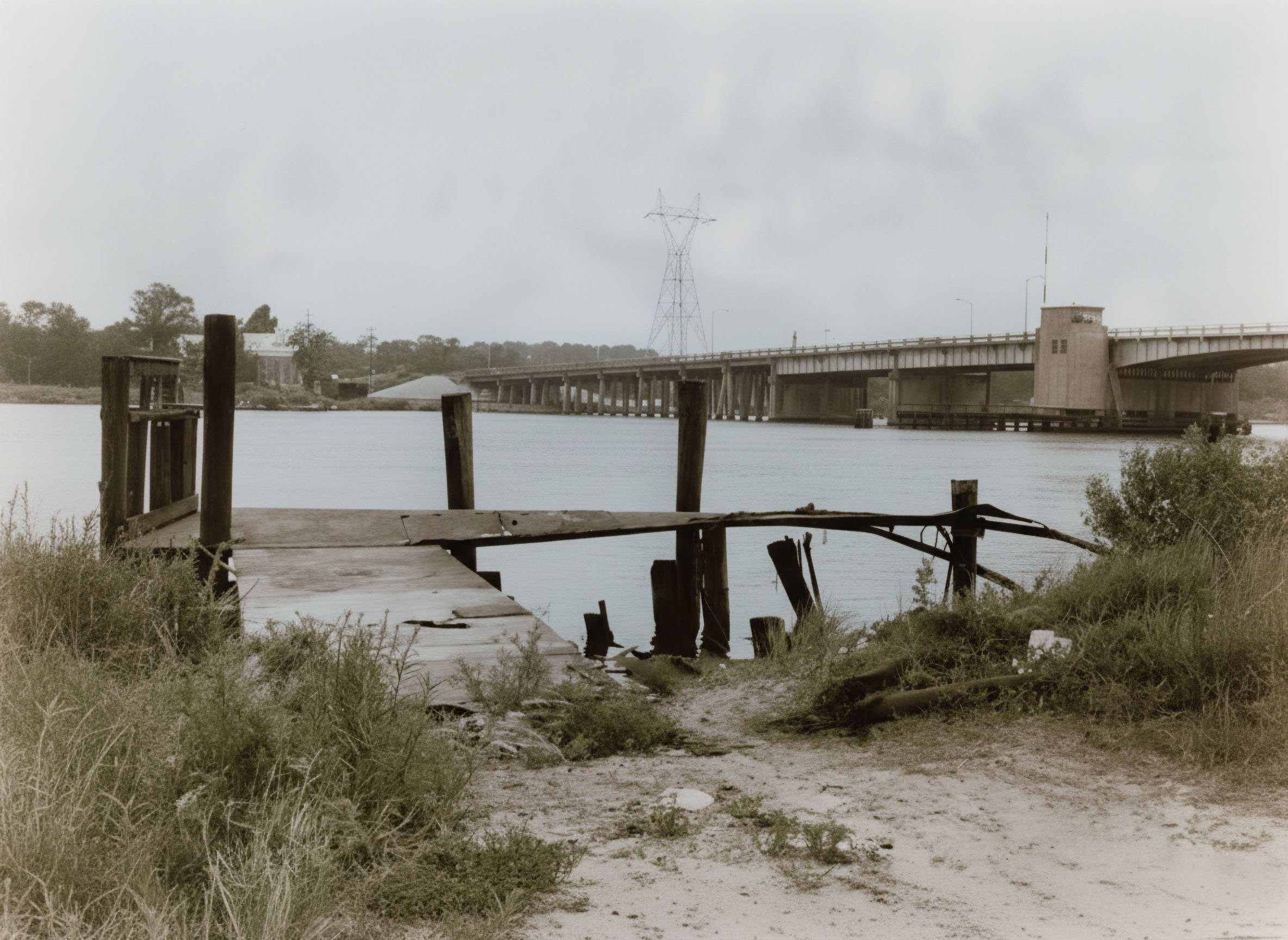
(Photographic rendering of the scene by UAPedia)
11 Oct 1973, approximately 11:00 p.m.
The men arrive at the Jackson County Sheriff’s Department and give initial statements. Investigators leave a recorder running when the pair are alone; the “secret tape” captures them continuing to discuss the event in agitated tones. (NICAP)
12 Oct 1973
Local press carries the story and it moves on national wires. The men are examined at Keesler Air Force Base; contemporary reporting notes no radiation exposure. (The Washington Post)
Within ~36 hours
Dr. J. Allen Hynek and Dr. James Harder arrive, interview the witnesses independently, and perform hypnosis sessions. Hynek characterizes the case as credible to reporters. (Country Roads Magazine)
1979
A University of Southern Mississippi oral‑history interview documents Hickson’s longer‑term account and the aftermath. (University of Southern Mississippi)
2018
Parker publishes a detailed memoir after decades of relative silence. Subsequent media attention draws out new witnesses. (The Washington Post)
June 2019
A city‑approved historical marker is unveiled at Lighthouse Park honoring the incident’s significance to Pascagoula’s history. (https://www.wlox.com)
Aug–Sept 2023
Calvin Parker dies following illness; regional outlets recount the case on its 50th anniversary. (https://www.wlox.com)
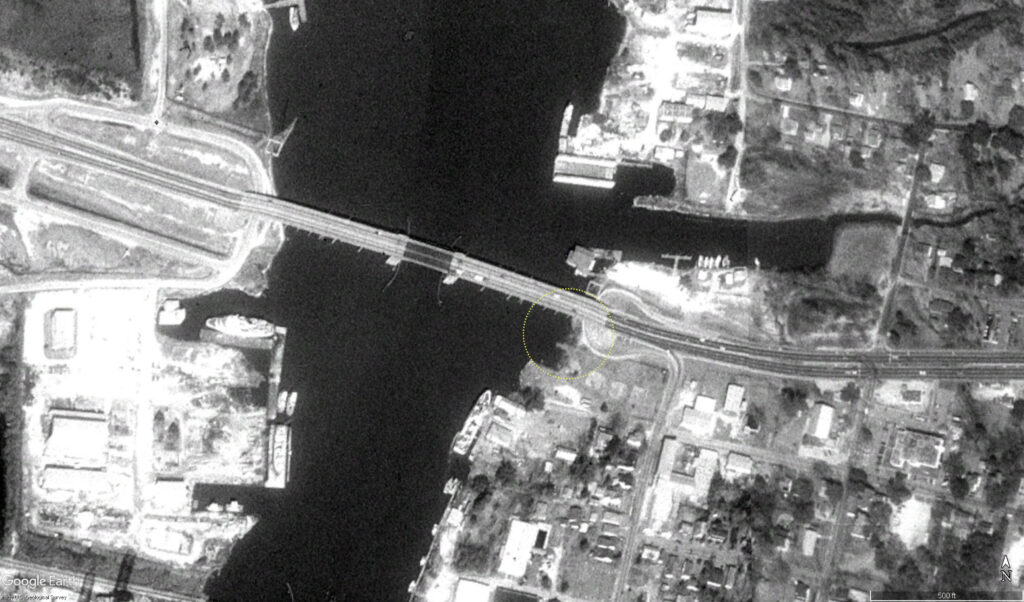
(Satellite image 1992 – Google Earth)
What the core record shows
The immediate record: statements and the covert tape
The most probative contemporaneous evidence is procedural. After the late‑evening intake at the sheriff’s office, investigators left a recorder running to test the men’s credibility. The resulting “secret tape” captured their unguarded conversation, including Parker’s near‑prayerful distress and both men’s consistent references to details not then public. That recording is widely accessible today through library and archival aggregators. The NICAP archive also preserves a detailed transcript. (NICAP)
Medical and official touchpoints
Contemporary coverage indicates the men were taken to Keesler AFB for radiation checks and released with no abnormal readings reported. This functioned as a rapid health and safety triage rather than a formal government UAP investigation and aligns with typical 1970s practice when unusual exposure could not be excluded. (KBZK News)
Early field investigation
Hynek and Harder reached Pascagoula quickly. Hynek, the former Air Force scientific consultant on UAP, told reporters the case was credible and deeply puzzling, basing that judgment on the men’s demeanor and consistency rather than on physical traces. Harder conducted hypnosis sessions. Both emphasized that something real had affected the witnesses, though neither could establish the mechanism. (Country Roads Magazine)
Polygraph claims and disputes
Some mainstream reporting has stated that the men later passed polygraph tests. Skeptical analyses counter that Hickson declined an exam by a more seasoned examiner and that earlier testing was methodologically weak. The polygraph strand therefore remains contested and is not decisive evidence in either direction. (The Washington Post)
Corroboration from additional witnesses
Beginning in 2018–2019, several people who said they were on or near the river that night gave independent accounts to Mississippi outlets. Maria and Jerry Blair reported seeing a low‑flying object with blue lights moving along the river corridor, testimony that is consistent with the original geographic locus of the claim. These are after‑the‑fact recollections but they widened the circle of observation beyond Hickson and Parker. (Clarion Ledger)
Anthropological and historical context
Autumn 1973 produced a dense cluster of UAP occupant reports in the United States that investigators later dubbed the “Year of the Humanoids.” The Pascagoula narrative sits inside that wave. Features like mechanical or “robotic” entities, pincer‑like extremities, and short medical‑style examinations occur across multiple cases from that season. Pattern analysis does not prove causation, yet it matters that Pascagoula’s most distinctive details are not unique for its time. (Center for UFO Studies)
Site memory and documentation
Pascagoula has institutionalized the event. A city‑approved marker now stands near Lighthouse Park at the river’s edge. National outlets highlighted the marker’s language that calls the case one of the “best documented” of its type. The city’s commemoration does not adjudicate truth claims but does codify the incident’s historical place in local identity. (https://www.wlox.com)
Supporting media
- Listen: the 1973 interrogation‑room tape hosted by a Mississippi library resource. (Hinds Community College LibGuides)
- Read: the NICAP transcript and background dossier on the sheriff’s recordings and first‑night interviews. (NICAP)
- See: the Lighthouse Park historical marker at the river. (https://www.wlox.com)
- Background interview: long‑form interview with Calvin Parker recounting details added in later years. (Country Roads Magazine)
Assessment of major claims
| Claim | Evidence basis | Assessment |
| Anomalous craft observed along the Pascagoula River corridor that night | Original testimonies plus later independent witness reports of a blue‑lit object over the river | Probable. Multiple accounts align on time, place, and luminous behavior, though no sensor data is available. (The Washington Post) |
| Abduction and on‑board medical‑style examination of two witnesses | Detailed interviews the night of the event and the covert recording capturing distress and consistency | Probable. The behavior record strongly suggests a real trauma, though alternative psychological mechanisms have been proposed and cannot be fully excluded. (NICAP) |
| Polygraph results demonstrate truthfulness | Conflicting media claims and skeptical critiques of examiner selection and procedures | Disputed. Reporting is inconsistent about who was tested, by whom, and under what standards. (The Washington Post) |
| Radiation or medical anomalies detected at Keesler AFB | Contemporary coverage noting negative checks | Verified. Reports indicate tests were performed and were negative. (KBZK News) |
| Entities exhibited “robotic” features and pincer‑like hands | Detailed witness descriptions repeated over time | Verified as testimony. The description is consistent within the record and matches broader 1973 patterns, though the nature of the entities remains unknown. (NICAP) |
| Case recognized as historically significant by the city | Installation of a permanent public marker at the site | Verified. The marker was city‑approved and publicly unveiled in 2019. (https://www.wlox.com) |
Alternative explanations
Skeptical literature has posited hypnagogic phenomena, confabulation, or hoax. The hypnagogia model struggles with two awake participants outdoors reporting a shared, structured sequence, and the covert tape militates against a simple staged hoax. The absence of instrumented data keeps a definitive conclusion out of reach. A balanced reading is that something external to the witnesses likely occurred, but its nature is unresolved. (Skeptical Inquirer)
Claims taxonomy
Verified
Covert Jackson County sheriff’s recording exists and aligns with public accounts. (NICAP)
2019 historical marker installed by the city at Lighthouse Park. (https://www.wlox.com)
Keesler AFB screening reported with no radiation findings. (KBZK News)
Probable
Anomalous object seen along the river corridor by multiple people. (Clarion Ledger)
A brief on‑board examination of at least one witness. (NICAP)
Disputed
Polygraph results as dispositive evidence of truthfulness. (Skeptical Inquirer)
Legend
None.
Misidentified
No prosaic source has been demonstrated to account for all core features.
Speculation Labels
Hypothesis: The entities functioned as biomechanical drones performing a limited clinical survey. This is consistent with mechanical gait, slit‑like “mouth,” and pincer extremities repeatedly described in this case and others from late 1973. Researcher opinion. (NICAP)
Witness interpretation: Parker reported receiving a fast‑acting injection that shifted him from panic to calm, colloquially called a “go to hell shot.” This is his language, not a clinical identification. Witness interpretation. (Country Roads Magazine)
Hypothesis: The case forms part of a regional display pattern in the 1973 Southeast U.S. occupant wave. If so, Pascagoula’s purpose may have been demonstration rather than contact. Researcher opinion. (Center for UFO Studies)
Case verdict
Overall classification: Probable. The Pascagoula case combines immediately recorded testimony, a unique covert audio record, and later supporting witness reports, plus rapid attention from qualified investigators. There are contested strands, especially around polygraph claims. There is no multi‑sensor corroboration or physical trace verified by laboratories. On balance, converging human evidence indicates a high likelihood that a genuine anomalous event affected the witnesses. (NICAP)
References
Brockell, G. (2019, June 26). The men claimed they were abducted by aliens. In Mississippi, police believed them. The Washington Post. (The Washington Post)
Country Roads Magazine. (2021, September 21). The Pascagoula Abduction [Interview with Calvin Parker]. (Country Roads Magazine)
Hinds Community College Library. (n.d.). Listen to 1973 Recording of Hickson and Parker. (Hinds Community College LibGuides)
Hynek, J. A., & Harder, J. A. Field interviews referenced in: Country Roads Magazine (2021). (Country Roads Magazine)
NICAP. (n.d.). The Hickson Tapes – The Pascagoula Incident [Transcript and narrative]. (NICAP)
Nickell, J. (2012). Famous alien abduction in Pascagoula: Reinvestigating a cold case. Skeptical Inquirer, 36(3). (Skeptical Inquirer)
USM Libraries. (2022). Hickson Oral History (1979) [Mississippi Oral History Program]. University of Southern Mississippi. (University of Southern Mississippi)
WLOX. (2019, June 22). Historical marker unveiled honoring possible alien abduction in Pascagoula. (https://www.wlox.com)
WLOX. (2023, Sept. 2). Calvin Parker, who claimed he was abducted by aliens in Pascagoula in 1973, has died. (https://www.wlox.com)
Webb, D. (1976). 1973: Year of the Humanoids [CUFOS report]. Center for UFO Studies. (Center for UFO Studies)
Gray News via KBZK. (2019, Jan. 15). Man still says he was taken by aliens 45 years later [mentions Keesler AFB radiation checks]. (KBZK News)
Broom, B. (2019, Mar. 14). UFO in Pascagoula: More witnesses come forward. Clarion‑Ledger. (Clarion Ledger)
Broom, B. (2021, Jul. 6). Witnesses do not believe government report on UAP. Clarion‑Ledger. (Clarion Ledger)
Sun Herald. (2023, Oct. 11). It is the 50th anniversary of the Pascagoula alien abduction. Sun Herald. (Sun Herald)
SEO keywords
Pascagoula UAP case, 1973 Pascagoula abduction, Hickson Parker secret tape, J. Allen Hynek Pascagoula, Mississippi historical marker UAP, Keesler AFB radiation test, Maria Blair witness, Year of the Humanoids 1973