
By UAPedia Research Desk
Ask a witness what they saw and the first answer is almost never a theory. It is a shape.
A light. A sphere. A triangle. A cigar. A disc. A white cylinder with rounded ends. A dark chevron that seemed too large and too silent to be an aircraft. A flickering object that looked like an orb on infrared, then vanished into the limits of the sensor.
This is the oldest language of UAP reporting. Before propulsion, before origin, before intent, before intelligence, there is morphology. The outline is where the mystery first becomes speakable.
But shape is also treacherous. It is the part of the report most humans notice first, and one of the easiest parts to distort. Angle, glare, sensor bloom, range, compression, darkness, atmospheric scatter, expectation, cultural memory, and fear all work on the witness before the witness ever reaches for language. Richard Haines, in his NARCAP work on UAP shape-names, made the distinction that still matters: “form” is the objective three-dimensional configuration of a physical object, while “shape” is the visually perceived configuration available to the observer. That gap is not academic. It is where many UAP cases either become measurable or become mythology. (NARCAP)
The modern UAP problem is not that witnesses use shape words. They have to. The problem is that the field has often treated shape words as conclusions. “Disc” became a culture. “Triangle” became a craft type. “Tic Tac” became a symbol. “Orb” became a battleground between balloons, plasma hypotheses, autonomous probes, and something stranger.
That older vocabulary still matters, but it is no longer enough. The newest civilian research programs are forcing a deeper question: what if UAP morphology is not simply the outline of an object, but a changing state produced by structure, luminosity, sensor band, field effects, motion, and interaction with the observer?
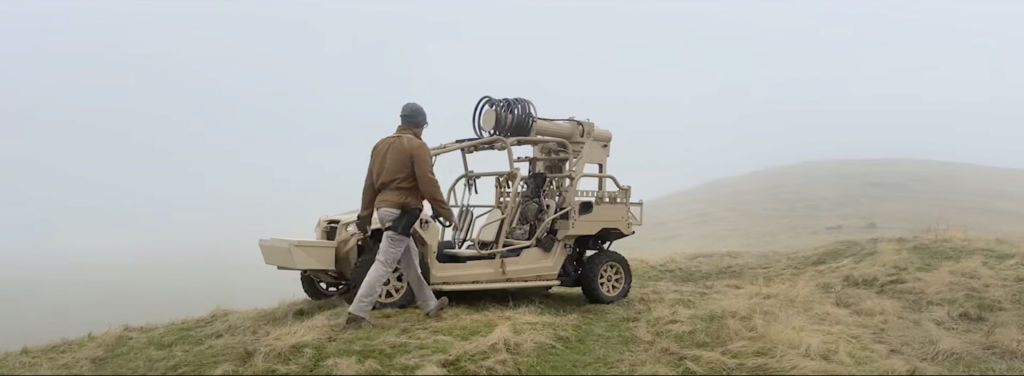
That is the real modern turn.
A witness may say “orb.” A thermal sensor may see a cold or warm point. A radar unit may see nothing, or an intermittent return. A second camera may catch a polyhedral glint for three frames. A laser rangefinder may fail to lock. A field team may report that the object reacts to probing. Suddenly “shape” is no longer a silhouette. It becomes a behavioral signature.
This is why the most important new morphology work is not coming from one official office. It is coming from a contested but increasingly serious ecosystem of civilian and private research groups: Skywatcher, the Tedesco brothers’ Nightcrawler project on Long Island, the Scientific Coalition for UAP Studies, the Galileo Project, NARCAP, NUFORC, and independent sensor analysts.
The key shift: morphology is now multi-spectral
The older UAP question was simple: “What did it look like?”
The better question is now: “In which sensor band did it look that way, under what behavior, and did the morphology change when observed?”
Skywatcher’s published UAP Classification Guide is important because it treats morphology as part of a living, multi-sensor classification system. Its research page states that the Skywatcher team has identified nine observed UAP classes and that the categories are based on behavior, shape, and sensor signature across multiple collections. It also explicitly frames the taxonomy as preliminary, exploratory, and subject to revision as new data is gathered. (Skywatcher)
That last point matters. Skywatcher is not merely naming shapes. It is trying to build a repeatable discovery framework in which form, kinematics, electro-optical visibility, infrared behavior, radar response, and interaction patterns are evaluated together. Its public methodology describes a six-level framework intended to move from anecdotal sightings toward structured observation, conventional-explanation filtering, independent verification, and scientific validation.
The presence of Dr. Garry Nolan in this ecosystem is also significant. Skywatcher publicly lists Nolan among its team, and the Skywatcher Discovery Framework PDF lists him among its authors. Nolan’s involvement does not automatically validate every class or every performance claim, but it does mean the taxonomy should be treated as a serious private research initiative rather than as loose skywatcher folklore. (Skywatcher)
The Skywatcher nine-class taxonomy
Skywatcher’s taxonomy is currently the most detailed published private morphology system. It goes beyond “sphere,” “disc,” and “triangle” and proposes nine living classes: Tetra, Tic Tac, Blob, Beam, Manta Ray, Bright Star, Jellyfish, Hornet, and Egg. The most useful way to read it is not as a final catalog of object species, but as a provisional field guide to recurring morphology-signature packages. (Skywatcher)
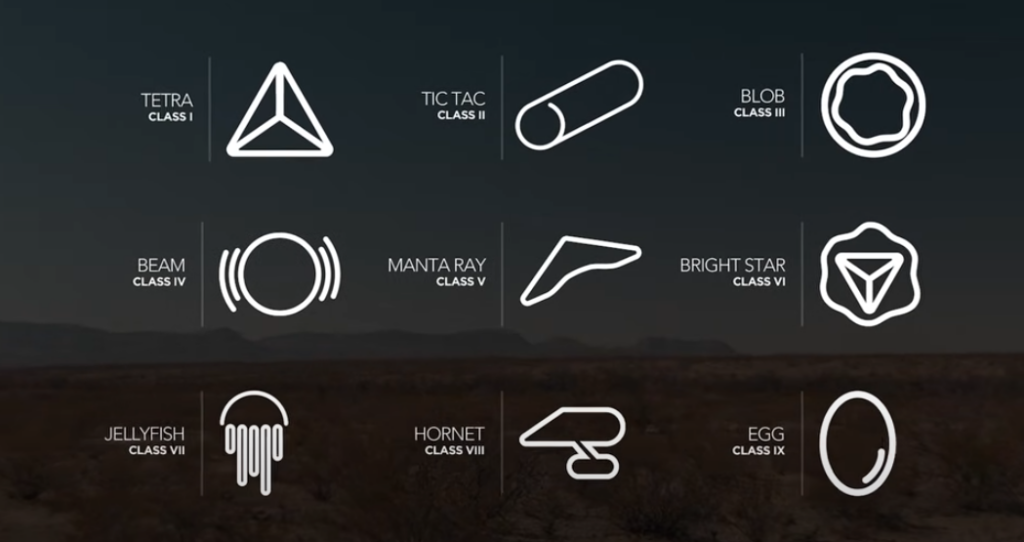
| Skywatcher class | Reported morphology | Reported behavior and signature | UAPedia evidentiary posture |
| Class I: Tetra | Tetrahedron-shaped object, often dark with intermittent white vapor-like bursts | Multi-axis tumbling while maintaining a stable flight path, sometimes in coordinated groups | Important structured-shape claim. Public data packages are still pending, so classify as published private taxonomy, not verified ontology. (Skywatcher) |
| Class II: Tic Tac | Smooth white cylinder or capsule | Hovering, rapid descent, color shift from white to purple or pink, strong IR, no obvious propulsion indicators | High-interest class because it overlaps older military Tic Tac reports, but public Skywatcher sensor releases are still incomplete. (Skywatcher) |
| Class III: Blob | Red, cloud-like orb or amorphous luminous body | Pulsing internal light, erratic point-to-point movement, flare expansion | Potential bridge between “orb” and morphing classes. Needs calibrated frame-by-frame analysis. (Skywatcher) |
| Class IV: Beam | Infrared-only orb, not visible electro-optically | Stable hovering, lateral vibration, sometimes paired; Skywatcher itself notes possible celestial misattribution due to sensor limits | Crucial low-observable category, but also one of the easiest to overread without calibration. (Skywatcher) |
| Class V: Manta Ray | Small manta-shaped black craft | Multi-axis rotation, hover, rapid altitude change, wind-opposed and wind-assisted trajectories | Morphologically novel and important, especially if radar and IR correlations are released. (Skywatcher) |
| Class VI: Bright Star | Reflective tetrahedron, star-like flashes | High-frequency oscillation, possible radar artifacts, reported sensor disruption | Strongly connected to the polyhedral family. Directed-energy claims require independent corroboration. (Skywatcher) |
| Class VII: Jellyfish | Bulbous head with trailing tendril-like appendages | Serpentine motion, appendages reportedly not reacting to wind, electronic disruption claims | A major exotic-form class. It should be separated from rocket-plume “space jellyfish” misidentifications. (Skywatcher) |
| Class VIII: Hornet | Dual-body form with tail or tendril structure | Asynchronous rotation, brief optical visibility, strong radar and heat signatures in some reports | Potentially overlaps with appendage-bearing and dual-body reports, but connection between components remains unconfirmed. (Skywatcher) |
| Class IX: Egg | Off-white egg-shaped object | No visible propulsion, trails, or control surfaces; based on limited visual data | Provisional class. Interesting because it overlaps older egg and oval cases, but Skywatcher acknowledges limited data. (Skywatcher) |
The article should make one thing very clear: Skywatcher’s taxonomy is not just a shape list. It is a hypothesis engine. It asks whether repeated combinations of morphology, sensor visibility, maneuvering, and interaction response form stable categories.
That is a major advance over the older saucer-era habit of naming objects by outline alone.
The Nolan factor: scientific method, but not automatic closure
Dr. Garry Nolan’s role and his participation strengthens the seriousness of Skywatcher’s framework, especially because he is a Stanford professor and has an established publication and patent record outside UAP studies. (UAP Summit)
At the UAP Disclosure Fund Summit, the Skywatcher Discovery Framework session presented Nolan discussing operational design, categories of observed anomalies, methodological approaches, uncertainty boundaries, validation, and peer engagement. That is exactly the tone UAPedia should adopt: the framework is promising because it is moving toward method, not because every claim is already proven. (UAP Summit)
The public Skywatcher Discovery Framework is also honest about what still needs to happen. Its independent-verification level calls for external validation, sharing raw data and sensor logs, allowing independent analysis, reproducing results under controlled conditions, and checking calibration, code, and bias. It also states that absence of peer review warrants skepticism and that better data leads to better conclusions.
That is not a weakness. That is how the field matures.
The Tedesco brothers: Long Island as an instrumented morphology laboratory
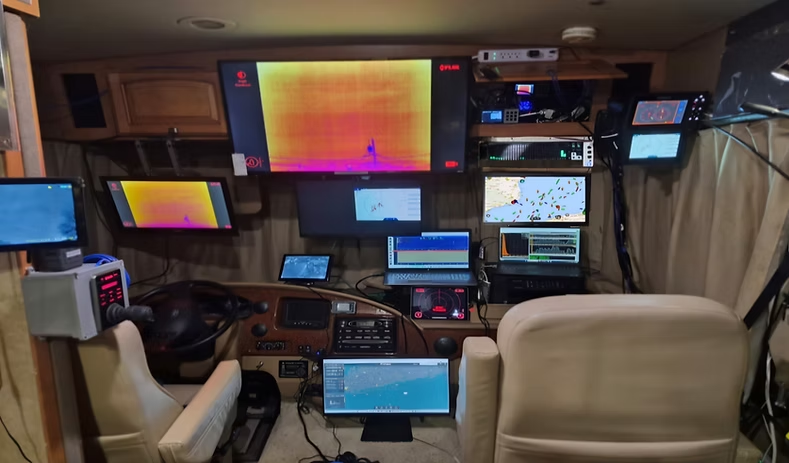
The Tedesco brothers’ Long Island work may be the most important independent corroboration stream for a modern morphology article because it is not merely a witness catalog. It is field instrumentation.
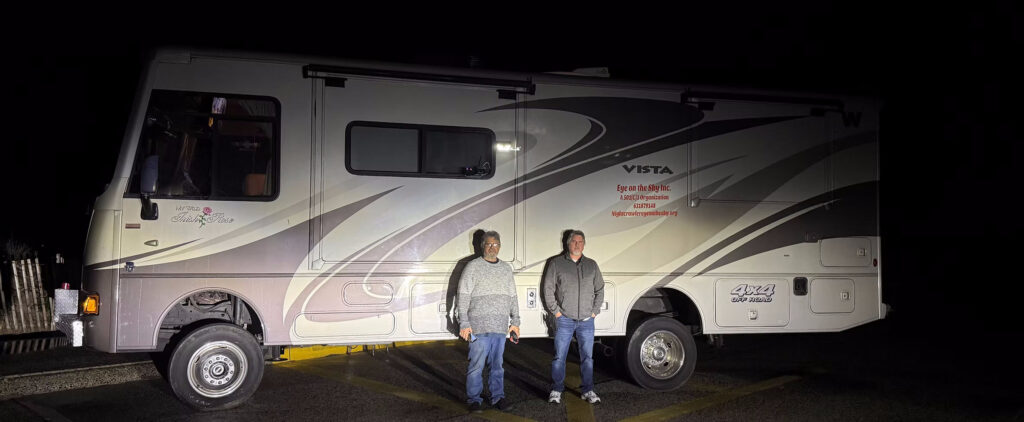
John Joseph Tedesco and Gerald Tedesco’s paper, “Eye on the Sky: A UAP Research and Field Study off New York’s Long Island Coast,” describes a ten-month field study at Robert Moses State Park using the Nightcrawler mobile platform. Their setup included X-band radar in two geometries, multispectral electro-optical devices, infrared, radio-frequency, magnetic, ultrasonic, ultraviolet, visible, near-infrared, short-wave infrared, long-wave infrared, and radiation sensing equipment. (SCIRP)
This is exactly the kind of work morphology needs. The object is no longer just “round” or “bright.” It becomes round in one band, polyhedral in another moment, intermittent on radar, variable in luminosity, and measured against aircraft, marine traffic, satellites, weather, birds, insects, and other confounders. The Tedesco paper specifically describes its use of tools such as Stellarium, marine traffic, FlightRadar24, AirNav, NOTAMs, NOAA resources, and local aviation context to reduce false attribution. (SCIRP)
Most important for this article, the Tedescos report recurrent morphologies. Since July 2022, they observed light phenomena that most often presented as spheroid in a luminous state. When luminosity decreased, some appeared polyhedral. Fewer sightings presented as ovaloid and cylindroid. They also reported unusual flight characteristics, extreme velocities, long stationary periods, albedo fluctuations, glinting, rotation, spectral variation, swarm-like behavior, and infrared capture of spheroids. (SCIRP)
That does not “confirm” every Skywatcher class. It does something more precise and more valuable: it independently supports several morphology families that overlap with Skywatcher’s published taxonomy.
| Morphology family | Skywatcher overlap | Tedesco Long Island overlap | Strength of overlap |
| Luminous spheroid / orb | Blob, Beam, possibly Bright Star depending on signature | Most common reported form, especially in luminous state and IR/SWIR | Strong |
| Polyhedral / tetrahedral glinting | Tetra, Bright Star | Objects appearing polyhedral when luminosity decreased, reflective glints suggesting complex surface geometries | Strong but not one-to-one |
| Cylindroid / capsule | Tic Tac, possibly Egg depending on geometry | Fewer sightings described as cylindroid and ovaloid | Moderate |
| Grouped or swarm-like behavior | Tetra groups, Blob behavior, other Skywatcher classes | Swarm-like behavior, binary sets, linear and triangular configurations | Moderate to strong |
| IR-dominant or low-visible objects | Beam, Blob, Jellyfish, Hornet depending on form | Objects primarily in infrared, especially deep SWIR, with occasional visible presentation | Strong |
| Appendage-bearing Jellyfish or Hornet forms | Jellyfish, Hornet | Not clearly established in the cited Tedesco paper | Not yet confirmed publicly |
The correction to the article should therefore say this plainly: the Tedesco data does not validate Skywatcher’s entire nine-class taxonomy, but it materially strengthens the case that small, luminous, IR-dominant, spheroid-to-polyhedral UAP morphologies are recurring field observations under instrumented conditions.
That is a much stronger claim than “people saw orbs.”
What the Long Island work adds that AARO does not
The value of the Tedesco work is not just the shape list. It is the posture.
Their paper explicitly frames the Nightcrawler platform as an effort to differentiate prosaic objects from unknowns through forensic engineering and instrumented observation. It describes object-size and distance estimation using camera geometry, radar or LIDAR distance, and angle measurement. It also discusses confounders such as airports, aircraft lighting, glide paths, birds, bats, insects, marine traffic, weather, acoustic effects, and radar anomalies. (SCIRP)
In its discussion section, the paper reports that the findings were not reducible to straightforward explanations, while still weighing maritime drones, military assets, foreign technologies, and low-altitude transient luminous event hypotheses. It reports objects primarily visible in infrared, especially deep short-wave infrared, with no significant heat signatures, occasional visible color, fluid spectral variability, intermittent radar reflections, estimated sizes of roughly 1.5 to 3 meters, and possible complex surface geometries. (SCIRP)
SCU: statistical support that shape is not trivial
The Scientific Coalition for UAP Studies provides a different kind of support. SCU’s 2025 cluster analysis examined 216 selected reports from a larger 301-case database and used variables including shape, estimated size, hovering, electromagnetic effects, and sound. The study identified seven clusters with a silhouette value of 0.6 and found that shape was the strongest clustering driver. It also reported that 97% of objects associated with electromagnetic effects were observed at estimated distances of 2,000 feet or less. (The SCU)
That finding is important because it shows that morphology is not just witness poetry. When treated statistically alongside size, sound, hovering, and electromagnetic effects, shape can help identify recurring case families.
SCU and Skywatcher are doing different things, but they are converging on the same lesson: morphology becomes meaningful when it is tied to behavior and effects.
Galileo-style observatories: the infrastructure the field needs
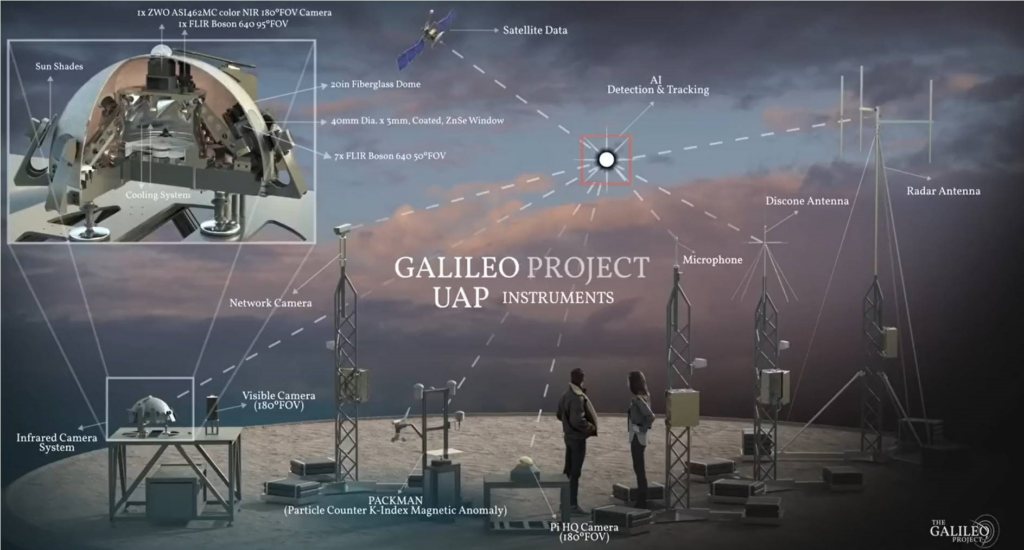
The Galileo Project’s multimodal observatory model offers the broader scientific architecture for the same shift. Its instrumentation concept includes wide-field cameras, narrow-field morphology and spectral instruments, radar, radio-frequency analyzers, microphones, environmental sensors, and multispectral detection so that artifacts can be recognized and true detections can be corroborated. John Joseph Tedesco and Gerald Tedesco are listed among the authors of the Galileo Project observatory paper, which helps link the Long Island field work to the wider movement toward instrumented UAP science. (arXiv)
A 2025 paper titled “The New Science of Unidentified Aerospace-Undersea Phenomena” also includes Garry Nolan and the Tedescos among its authors and frames UAP as a subject that can be scientifically investigated through private and government studies, field stations, and witness reports. (arXiv)
That is the spine the article should use: Skywatcher taxonomy, Tedesco instrumented field work, SCU statistical patterning, and Galileo-style multimodal capture.
Government data should be a comparison layer, not the foundation.
Below are polished magazine-ready Sections 8–10, written to slot into the joined UAPedia morphology article and to build directly from the original UAP Shape Classification dossier and comparative morphology research plan.
A new model
A proposed 2026 five-variable morphology stack
The next serious UAP shape taxonomy should not begin and end with silhouettes. It should begin with morphology, then immediately ask what sensor band revealed it, how it moved, whether it interacted with the environment or observer, and whether the same signature recurs.
That is the core of UAPedia’s proposed five-variable morphology stack:
| Variable | What it records | Why it matters |
| Morphology | The observed or measured form: sphere, tetrahedron, cylinder, manta, blob, jellyfish, hornet, egg, polygon, disc, triangle, light, or ambiguous contact. | Preserves the witness or sensor description without pretending the description proves origin. |
| Spectral band | Where the object appears: visible light, electro-optical, infrared, SWIR, LWIR, radar, RF, acoustic, ultraviolet, magnetic, or radiation channels. | Distinguishes ordinary visual shape from sensor-specific presentation. A visible orb and an IR-only orb are not the same evidentiary object. |
| Kinematics | The motion profile: hover, tumble, oscillate, descend, accelerate, stop, drift, swarm, rotate, serpentine, or transit across media. | Shape becomes meaningful only when paired with motion. A sphere drifting with wind is one problem; a sphere holding station against wind is another. |
| Interaction | Effects or responses: sensor disruption, electromagnetic anomalies, aircraft interaction, apparent response to probing, environmental disturbance, physiological claims, or no interaction. | Keeps high-strangeness claims visible while preventing them from being silently upgraded into verified facts. |
| Recurrence | Whether the same morphology-signature package repeats across time, sites, observers, or instrument platforms. | Separates one-off description from pattern intelligence. Recurrence is where taxonomy begins to mature. |
This stack does not replace Skywatcher’s living taxonomy. It gives us a translation layer for evaluating it. Skywatcher’s public classification guide describes nine observed UAP classes and says those classes are based on recurring patterns in behavior, shape, and sensor signature across multiple collection efforts. It also explicitly calls the system a living taxonomy, with exploratory hypotheses that should not be treated as conclusive scientific fact. That is exactly the right posture for a field that is still building its first real morphology language. (Skywatcher)
The stack also explains why the Tedesco brothers’ Long Island work matters. Their Nightcrawler study did not simply collect witness impressions. It used active radar, multispectral electro-optical instrumentation, infrared extension, acoustic and electromagnetic surveys, and a coastal field site selected for controlled observational conditions. The field team reported recurrent luminous spheroids, apparent polyhedral presentation when luminosity decreased, fewer ovaloid and cylindroid forms, albedo fluctuation, glinting, rotation, spectral variability, and swarm-like behavior not correlated to ADS-B air traffic. (SCIRP)
Under the five-variable stack, a Tedesco-type observation would not be filed merely as “orb.” It would be filed more precisely: morphology, luminous spheroid with possible polyhedral transition; spectral band, primarily infrared and SWIR with occasional visible presentation; kinematics, stationary periods plus transitory movement; interaction, electromagnetic and ultrasonic correlations reported; recurrence, repeated coastal observations over months. That is a much richer record than a shape word alone. (SCIRP)
The same logic applies to Skywatcher. A reported Class II Tic Tac should not be treated merely as a cylinder. In Skywatcher’s own description, it is a cylindrical UAP that hovers, elongates during flight, is easily observable on IR, reportedly shifts color, descends rapidly, arrests motion, and is associated with claimed area effects on electronics and aircraft. Whether those claims ultimately survive replication is a separate question. The point is that the morphology label is only the front door. The real case file is the full stack. (Skywatcher)
This also aligns with statistical work from the Scientific Coalition for UAP Studies. SCU’s 2025 cluster analysis examined 216 selected reports using five reported features: shape, estimated size, hovering, electromagnetic effects, and sound. It identified seven clusters with a silhouette value of 0.6 and found that object shape was the strongest driver of clustering, while other features still contributed meaningfully. In other words, morphology is not trivial, but it becomes more powerful when studied alongside behavior and effects. (The SCU)
The Galileo Project points toward the same destination from the instrumentation side. Its multimodal observatory model includes wide-field cameras, narrow-field morphology and spectrum instruments, radar-derived range and kinematics, RF analyzers, microphones, environmental sensors, and other measurements designed to distinguish artifacts from corroborated detections. UAPedia’s morphology stack should follow that model: shape is one observable inside a coordinated measurement architecture, not a standalone conclusion. (arXiv)
The practical upgrade is simple but powerful: stop asking only “What shape was it?” Ask instead:
What form appeared, in what band, moving how, interacting with what, and recurring under what conditions?
This matters because a single UAP may not present one stable shape across the entire encounter. The same event may be recorded as a luminous spheroid, then a glinting polyhedron, then an infrared-only point, then an intermittent radar target. Under the old taxonomy, that looks like confusion. Under the new taxonomy, it may be a state transition.
What remains unproven
The stronger the claim, the stricter the filter must be. That is not skepticism as dismissal. It is how the truly anomalous subset survives.
Skywatcher’s Discovery Framework is useful here because it builds restraint into the process. The framework lists Garry Nolan Ph.D. among its authors and describes a six-level method that moves from preliminary observation to structured data collection, analysis and hypothesis testing, independent verification, public review, and full integration. It requires metadata checks, elimination of known objects, multiple data sources where available, independent expert review, calibration, bias control, and third-party verification before a claim advances.
That standard should be applied hard, including to the most exciting claims.
Directed energy claims remain unproven. Skywatcher’s Bright Star class describes reflective tetrahedron-shaped UAP that oscillate horizontally and notes reported sensor disruption apparently caused by directed energy. That is important enough to document, but not yet strong enough to classify as verified. A verified directed-energy claim would require synchronized raw sensor logs, independent control sensors, baseline electromagnetic measurements, pre- and post-event equipment diagnostics, environmental controls, and replication by outside teams using equipment not configured by the original operators. (Skywatcher)
Aircraft-freezing or area-effect claims remain unproven. Skywatcher’s Tic Tac class includes a claim of area effects on electronics and aircraft, along with hovering, elongation, IR visibility, rapid descent, and abrupt arrest of motion. A claim that an aircraft or its systems were affected cannot rest on visual observation alone. It requires flight recorder data, pilot testimony, instrument logs, maintenance records, radar and ADS-B context, cockpit audio if available, and independent review of whether the event could be explained by ordinary avionics faults, human factors, or sensor dropout. (Skywatcher)
Electronic effects are promising but still need replication. The Tedesco Long Island study reports electromagnetic field power flux density measurements at 1.79 GHz and 4.066 GHz during presentations of the coastal light phenomena, as well as correlations between electromagnetic measurements and unusual ultrasonic signals. Those are exactly the kinds of field observations UAP research needs, but the evidentiary status should remain “reported correlation” until independent teams reproduce the result with calibrated devices, blind control periods, baseline RF mapping, and complete time-synced logs. (SCIRP)
Mach estimates remain provisional unless range is nailed down. Skywatcher’s Tic Tac class includes an assessment of Mach 1.5+ descent from high altitude. That is a serious performance claim, but speed cannot be treated as verified unless range, altitude, frame timing, observer motion, lens geometry, and line-of-sight angle are independently constrained. The Tedescos’ paper makes the right methodological move by discussing object size and distance through camera geometry, radar or LIDAR distance, field of view, focal length, and line-of-sight measurements. Without that kind of geometry, a fast-looking object may be genuinely fast, or it may be a parallax trap. (Skywatcher)
Machine-calling and consciousness-based interaction claims remain experimental. Skywatcher describes electromechanical signaling as a technology-driven technique using specific equipment configurations, and it currently places that work at Level 3 pending controlled datasets, independent third-party analysis, and external observation of experiments. Its neuromeditative interaction hypothesis is assessed at Level 2, with Skywatcher explicitly stating that it must still distinguish correlations from chance, bias, coincidental triggers, and subconscious cues before advancing. That is the correct evidentiary boundary. UAPedia should report these claims, but should not treat them as verified until independent replication is achieved across multiple locations, teams, and conditions.
The modern bottom line
The most important UAP shapes today may not be fixed craft silhouettes. They may be recurring presentation states.
That phrase, “presentation state,” matters. It means the observed form may depend on luminosity, angle, sensor band, reflectivity, motion, field condition, or interaction with instrumentation. A luminous spheroid may become polyhedral when brightness drops. An object invisible to the eye may appear as an IR-only orb. A tetrahedral form may tumble while maintaining a stable path. A jellyfish-like object may be reported not because it is biological, but because its observed head-and-appendage presentation resembles something organic to the human eye. Skywatcher’s taxonomy contains several such state-rich categories, including Tetra, Beam, Blob, Manta Ray, Bright Star, Jellyfish, Hornet, and Egg, and the system itself warns that these classes are preliminary. (Skywatcher)
The Long Island data strengthens this modern reading. The Tedescos report that their recurring phenomena were most often spheroid in a luminous state, seemed polyhedral when luminosity decreased, and were sometimes ovaloid or cylindroid. They also report that many objects resided primarily in the infrared spectrum, especially SWIR, with no significant heat signatures, occasional visible presentation, fluid spectral variability, intermittent radar reflections, and estimated sizes around 1.5 to 3.0 meters. That is not a classic “shape sighting.” It is a morphology-spectral recurrence pattern. (SCIRP)
This is where the old language breaks down. “Disc,” “triangle,” “orb,” and “Tic Tac” are still useful, but they are no longer enough. A modern classification system must be able to say: this object was spherical in visible light, intermittent in radar, stronger in SWIR, non-thermal in LWIR, stationary for several minutes, then glinting as a possible polyhedron during a luminosity drop. That sentence may be messier than “orb,” but it is far more scientific.
The deeper implication is that UAP morphology may be dynamic. Some forms may be stable objects. Some may be sensor artifacts. Some may be ordinary objects seen under poor conditions. But the most interesting residual cases increasingly suggest forms that alter visibility, reflectivity, spectral presence, and apparent geometry. If that pattern holds under independent replication, the future of UAP taxonomy will not be a museum wall of silhouettes. It will be a living matrix of forms, bands, motions, interactions, and recurrences.
That should be the final takeaway of the article:
Shape is not the answer. Shape is the first coordinate.
The real object of study is the repeatable morphology-signature package. When the same form appears in the same band, moves in the same unusual way, produces the same interaction profile, and recurs across independent observations, a category begins to emerge. Not a mythic archetype. Not a premature claim of origin. A testable class.
That is the modern bottom line. The saucer era asked what people saw. The sensor era asks what remains after the observer, the instrument, and the environment have all been interrogated.
Claims taxonomy
Verified
Skywatcher has publicly published a nine-class UAP living taxonomy that includes Tetra, Tic Tac, Blob, Beam, Manta Ray, Bright Star, Jellyfish, Hornet, and Egg, and it frames the taxonomy as preliminary, exploratory, and subject to revision. (Skywatcher)
Skywatcher publicly lists Dr. Garry Nolan among its team, and the Skywatcher Discovery Framework PDF lists Nolan among its authors. (Skywatcher)
Skywatcher’s Discovery Framework describes a staged methodology intended to move UAP investigation from anecdotal observation toward structured collection, conventional-explanation filtering, independent verification, and scientific validation.
John Joseph Tedesco and Gerald Tedesco conducted a ten-month instrumented field study at Robert Moses State Park off Long Island using radar, multispectral electro-optical devices, infrared, RF, magnetic, ultrasonic, ultraviolet, visible, NIR, SWIR, LWIR, and radiation sensing tools. (SCIRP)
The Tedesco paper reports recurrent spheroid luminous forms, some polyhedral appearances when luminosity decreased, and fewer ovaloid and cylindroid sightings. (SCIRP)
SCU’s 2025 cluster analysis found that shape was the strongest driver in clustering 216 selected UAP reports alongside size, hovering, sound, and electromagnetic effects. (The SCU)
Probable
Skywatcher and the Tedesco Long Island work point toward a recurring small-object morphology family involving luminous spheroids, IR-dominant signatures, polyhedral glints, intermittent radar behavior, and unusual motion. This is not proof of origin, but it is strong enough to deserve central placement in a modern morphology article.
The older shape-only taxonomy should be replaced by a multi-variable system combining morphology, spectral band, kinematics, interaction response, and recurrence.
Disputed
Skywatcher’s more dramatic class-specific claims, including directed-energy effects, aircraft immobilization, electronic disruption, and some high-performance estimates, remain insufficiently verified in public releases. They should be reported as claims within the Skywatcher framework, not as settled facts.
The Tedesco work supports overlap with some Skywatcher morphology families, especially spheroid, polyhedral, cylindroid, and IR-dominant forms. It does not publicly confirm the entire nine-class Skywatcher taxonomy.
Legend
The saucer remains the dominant cultural archetype of UAP shape, but it is not the dominant framework in the newest civilian sensor-based morphology work.
Misidentification
Note: Some Skywatcher and Tedesco categories remain vulnerable to misidentification or sensor effects unless supported by calibration, multi-angle capture, raw data, and independent review. Skywatcher itself notes possible celestial misattribution in some Beam-class observations due to sensor limitations. (Skywatcher)
Speculation labels
Hypothesis
Some UAP morphology may be state-dependent rather than structure-dependent. A single object or system may present as a luminous spheroid, polyhedral glint, infrared-only point, or radar-intermittent target depending on illumination, field state, sensor band, or interaction with the observer.
Witness Interpretation
Witnesses and field teams may describe “manta,” “jellyfish,” “hornet,” or “blob” forms because the observed presentation resembles biological or familiar terrestrial shapes. These are useful descriptive anchors, but they should not be treated as literal biological or mechanical conclusions.
Researcher Opinion
Skywatcher’s taxonomy is one of the most important modern private morphology systems, while clearly separating published observation, sensor-backed claim, field-team interpretation, and unverified performance inference. The Tedesco brother’s work is paramount to validate this, discover new behaviors and patterns.
References
Barber, J., DiNoto, J., Cook, E., Fowler, J., Jozak, J., Klokus, A., Lord, B., Nolan, G., & Pines, M. (2025). Skywatcher Discovery Framework. Skywatcher.
Bruehl, S., Little, S., & Powell, R. M. (2025). Cluster analysis of features associated with unidentified anomalous phenomena described in 216 select reports from 1947–2016. Scientific Coalition for UAP Studies. (The SCU)
Knuth, K. H., Nolan, G. P., Szydagis, M., Tedesco, G., Tedesco, J. J., et al. (2025). The new science of unidentified aerospace-undersea phenomena. arXiv. (arXiv)
Skywatcher. (n.d.). UAP Classification Guide. Skywatcher Research. (Skywatcher)
Skywatcher. (n.d.). Tetra. Skywatcher Research. (Skywatcher)
Skywatcher. (n.d.). Tic Tac. Skywatcher Research. (Skywatcher)
Skywatcher. (n.d.). Blob. Skywatcher Research. (Skywatcher)
Skywatcher. (n.d.). Beam. Skywatcher Research. (Skywatcher)
Skywatcher. (n.d.). Manta Ray. Skywatcher Research. (Skywatcher)
Skywatcher. (n.d.). Bright Star. Skywatcher Research. (Skywatcher)
Skywatcher. (n.d.). Jellyfish. Skywatcher Research. (Skywatcher)
Skywatcher. (n.d.). Hornet. Skywatcher Research. (Skywatcher)
Skywatcher. (n.d.). Egg. Skywatcher Research. (Skywatcher)
Tedesco, J. J., & Tedesco, G. T. (2024). Eye on the sky: A UAP research and field study off New York’s Long Island coast. Scientific Research Publishing. (SCIRP)
All-domain Anomaly Resolution Office. (2026). UAP reporting trends: January 1, 1996 to January 15, 2026. AARO. (AARO)
Haines, R. F. (2010). Foundations for a taxonomy of UAP shape-names. National Aviation Reporting Center on Anomalous Phenomena. (NARCAP)
Knuth, K. H., Powell, R. M., & Reali, P. A. (2019). Estimating flight characteristics of anomalous unidentified aerial vehicles. Entropy, 21(10), 939. (Scholars Archive)
Watters, W. A., Loeb, A., Laukien, F., Cloete, R., Delacroix, A., Dobroshinsky, S., Horvath, B., Kelderman, E., Little, S., Masson, E., et al. (2023). The scientific investigation of unidentified aerial phenomena using multimodal ground-based observatories. Journal of Astronomical Instrumentation, 12(1), 2340006. (arXiv)
Additional Internal crosslinks
Suggested internal crosslinks:
- The Six Observables
- Sensor 101: Radar, FLIR, EO, SIGINT
- The Skeptics Toolbox: Photogrammetry & Image Analysis
SEO keywords
UAP morphology, UAP shape taxonomy, Skywatcher taxonomy, Skywatcher UAP Classification Guide, Garry Nolan UAP, Tedesco brothers Long Island UAP, Nightcrawler UAP, Long Island UAP research, UAP spheroids, UAP polyhedral shapes, tetra UAP, Tic Tac UAP, jellyfish UAP, manta ray UAP, hornet UAP, blob UAP, beam UAP, bright star UAP, egg-shaped UAP, infrared UAP, SWIR UAP, multispectral UAP detection, UAP sensor fusion, SCU cluster analysis, Galileo Project UAP, civilian UAP science, UAPedia shape classification.