
On a clear night above Lake Albano, two silver domes sit like punctuation marks on the horizon of Castel Gandolfo. Inside, historic telescopes rotate and open.
Vatican Museum tours emphasize to visitors walking through meteorite samples, century-old optics, and papal photographs that look strangely modern in their message: the Church watches the sky, and it has been watching for a long time.
So why does the Vatican Observatory keep reappearing in today’s UAP conversation?
Because the “Vatican” is not one thing. It is a scientific institute (the Specola Vaticana), a global pastoral network, and an archive system measured in dozens of miles of shelves. And in the UAP era, those three layers get collapsed into a single question that sounds simple but is not.
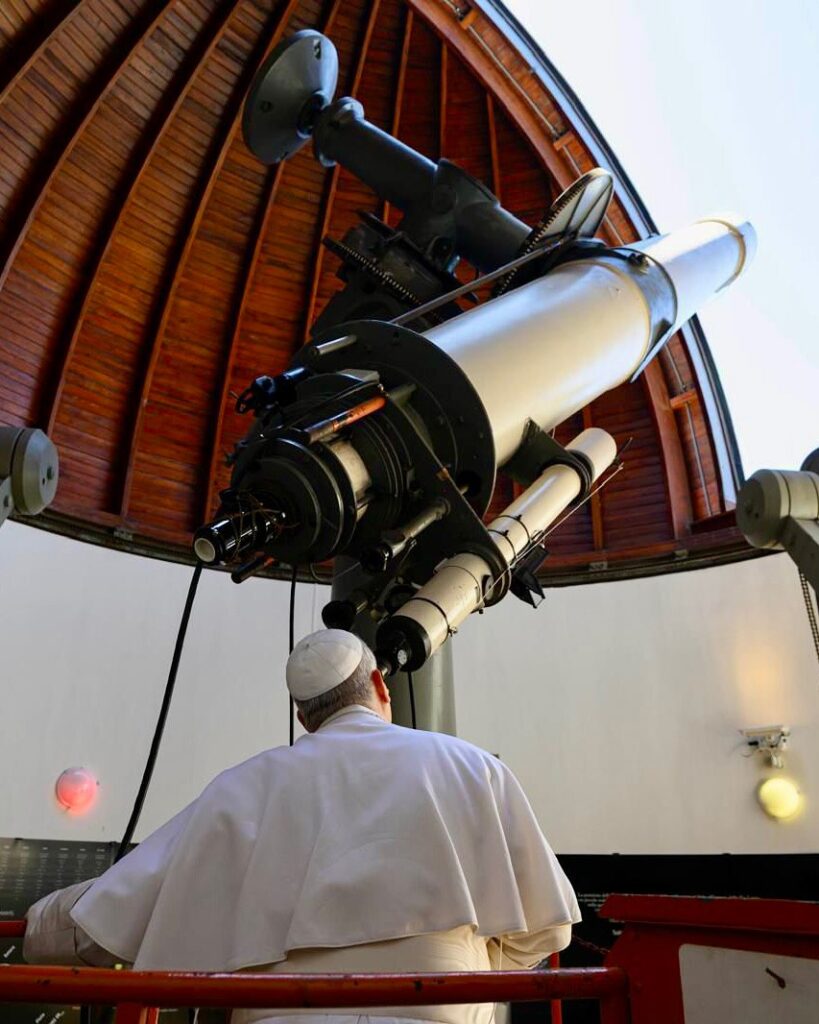
What does the Vatican know?
This article takes a data-first approach and treats “knowledge” as something that can be broken into measurable channels: instruments, records, testimony, institutional missions, and incentives. We will separate verifiable infrastructure from interpretive leaps, and we will label speculation clearly.
What we can verify in public record
Here are the most relevant hard facts, with the minimum narrative necessary.
There is an active Vatican astronomical institute with multiple sites
A Vatican Museums announcement describing the Specola’s public reopening lays out the modern structure clearly:
- Origins tied to late 1500s calendar reform work under Pope Gregory XIII, with the Gregorian calendar promulgated in 1582.
- The observatory moved from Rome to Castel Gandolfo in the early 1930s due to urban growth and light pollution under Pope Pius XI.
- A second research center, the Vatican Observatory Research Group, was founded in Tucson, Arizona in 1981.
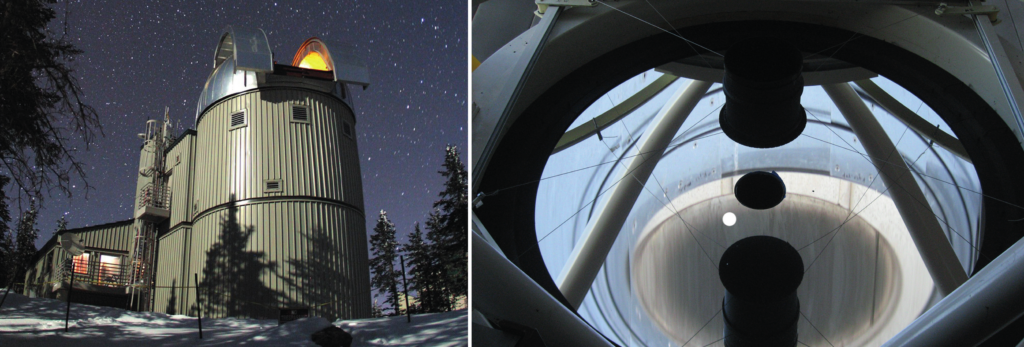
- In 1993, the Vatican Advanced Technology Telescope (VATT) on Mount Graham (Arizona) was completed in collaboration with Steward Observatory.
This is important because it grounds the Vatican Observatory as a real scientific institution with a real observational footprint. It is not a metaphor.
The VATT is a known telescope with published specs and location
The VATT’s own technical page provides specific numbers and confirms the telescope is optical and infrared, achieved first light in 1993, and is operated by the Vatican Observatory in partnership with the University of Arizona.
The Vatican Observatory’s own telescope overview adds financing context: it describes the VATT as paid for by private donations, and describes the role of the Vatican Observatory Foundation.
The Vatican Observatory participates in meteor monitoring via dedicated cameras
The Vatican Observatory publicly documents its participation in meteor camera monitoring near Tucson, including camera identifiers and site descriptions.
For UAP research, this is one of the few Vatican-linked systems that resembles continuous “all-sky” surveillance, even if its mission is meteor science.
Vatican institutions have hosted scientific discussion on astrobiology and life
The Pontifical Academy of Sciences’ “Astrobiology” conference final statement frames astrobiology as a multidisciplinary study of life’s origins, evolution, and distribution, explicitly treating the possibility of life beyond Earth as a scientific question.
This does not equal “UAP knowledge,” but it does establish a pattern: the Vatican’s scientific culture is willing to host frontier questions about life in the universe without theological panic.
Multiple credible voices disagree on whether Vatican archives contain UAP-relevant material
A Catholic News Service report hosted by USCCB documents the current friction point:
- Marco Grilli, secretary to the prefect of the Vatican Apostolic Archives, says he does not know where claims of Vatican involvement in an “international cover-up” come from and describes such requests as laughable.
- Diana Walsh Pasulka says the archives are “full of reports” of paranormal events including “orbs” reported by nuns and other aerial phenomena, and argues some could be reinterpreted as UAP-type events rather than miracles.
- Garry Nolan describes the Vatican as possibly “the oldest library system of paranormal or supernatural knowledge still extant,” and links that to hope about humanity surviving existential threats.
- The archives’ staff explicitly deny that any holdings pertain to extraterrestrial life and say scholars seeking such material should be dissuaded.
That is not a settled question. It is an evidentiary dispute, and it must be treated that way.
Does the Vatican Observatory likely have UAP data?
Let’s treat this like an analyst would: what instruments exist, what are they optimized to detect, and how do typical UAP characteristics intersect with those detection envelopes.
Observatory assets most relevant to UAP-like transients
| Asset | Location | What it’s designed to capture | UAP relevance | Evidence strength |
|---|---|---|---|---|
| Barberini Domes historic telescopes | Castel Gandolfo | Astronomical observation and public education | Low for near-field UAP, higher for cultural signaling | Strong (public program and descriptions) |
| VATT (optical/infrared telescope) | Mount Graham, Arizona | Deep-sky and targeted astronomical observation | Low-to-moderate: narrow field of view; could capture streaks but not optimized for local airspace | Strong (published specs, operators, first light) |
| Meteor cameras | Near Tucson, Arizona | Wide-field meteor tracking | Moderate: continuous sky monitoring can catch fast transients | Strong (public documentation and camera IDs) |
Key inference
Traditional astronomical telescopes are not built to catch most reported UAP because many UAP reports involve low-altitude objects, short durations, or erratic motion. A telescope pointed at a faint galaxy is intentionally blind to 99.999 percent of nearby sky. This makes the VATT an unlikely “UAP detector” by design, even though in rare cases it could capture anomalous transients as streaks or artifacts.
Meteor cameras are different. They are built to catch sudden, bright, fast transients across wide sky coverage. If a UAP behaves like a “meteor-like transient” in brightness and speed, meteor cameras are one of the better passive systems to detect it. The Vatican Observatory’s documented meteor camera program therefore matters in a UAP context.
What the Vatican Observatory says about studying UAP
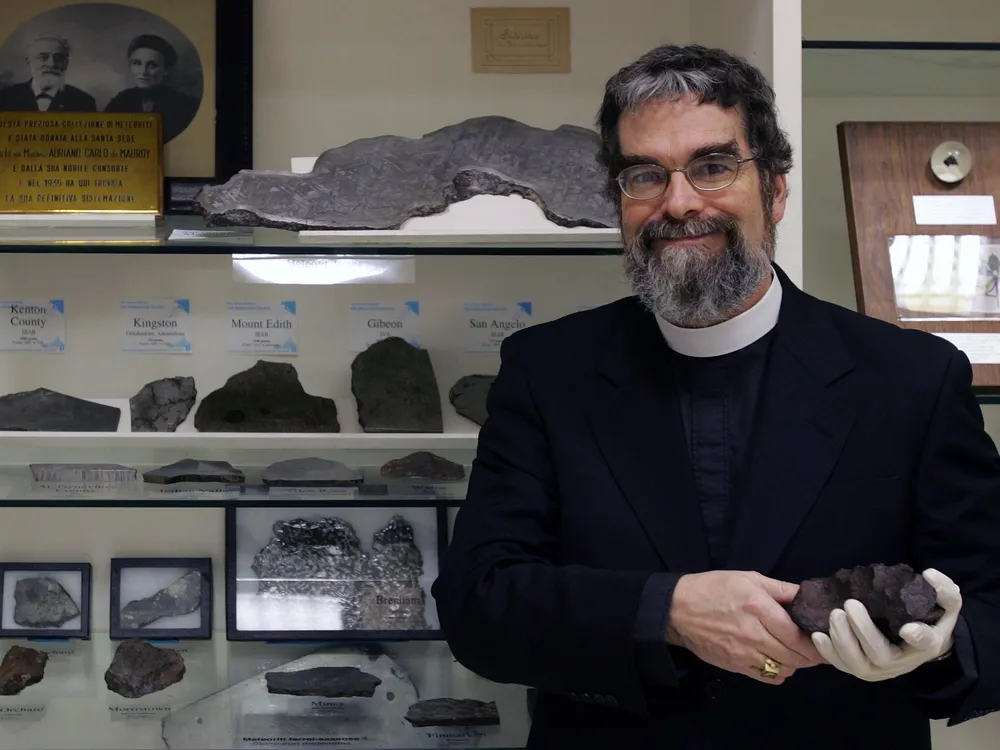
A critical piece of this puzzle is that the Vatican Observatory’s leadership has publicly stated that the institute does not study “UFOs” (UAP in UAPedia language). Jesuit astronomer Guy Consolmagno is quoted saying he does not believe “UFOs are alien spacecraft” due to lack of better evidence, despite the prevalence of cameras.
That testimony is not “case closed.” It does, however, establish a documented institutional posture: the observatory is not currently positioned as an official UAP research node.
The Vatican Observatory’s mission creates a paradox
The Vatican Observatory exists partly to demonstrate that the Church supports “good science.” A Vatican City State interview with Consolmagno describes the observatory’s expanding research output and outreach mission and emphasizes its role as a stable patron of scientific work.
That mission creates a paradox for UAP:
- If UAP are real and display non-conventional capabilities, they represent one of the most important scientific questions imaginable.
- If the observatory fully embraced UAP as an investigation target without strong evidence standards, it could be perceived as compromising scientific credibility.
The result is a predictable equilibrium: openness to life in the universe, caution on UAP claims, and a preference for publicly defensible datasets.
Vatican Archives
The Vatican’s other skywatching system is paper
If the Vatican Observatory represents a physical telescope, the Vatican Apostolic Archives represent a different kind of instrument: a centuries-long collection and filtering mechanism for extraordinary claims.
- The archives are described as containing about 50 miles of shelves.
- Archive staff acknowledge miracles exist in holdings, but deny holdings on extraterrestrial life.
- Researchers (not the archive itself) believe that within miracle reports and historical records there may be patterns relevant to UAP and paranormal phenomena.
Witness account: Marco Grilli (Archives)
Grilli’s statements matter because they represent the gatekeeping function. He says he does not know where claims of Vatican involvement in a cover-up originate, and he likens requests to read such material to requests for impossible personal letters, adding, “One can laugh at it.”
From a data-first standpoint, Grilli’s testimony supports a limited claim:
- The Vatican Apostolic Archives receive inquiries about UAP.
- The archives’ leadership wants to discourage UAP-focused fishing expeditions.
It does not prove what is or is not in the archive. It establishes policy posture.
Witness account: Diana Walsh Pasulka
Pasulka provides a different kind of testimony, grounded in religious studies and archival imagination. She says the archives contain reports of paranormal events, giving examples such as nuns reporting “orbs” entering cells and “flying houses,” and she argues these may map better to “UFO-type occurrences” than to conventional Catholic miracle categories.
This is not sensor evidence. It is an interpretive framework applied to historical reports.
It is also one of the most actionable research proposals currently on the table: treat miracle dossiers as a long-duration dataset of anomalous claims, and reclassify them with modern UAP taxonomies.
Witness account: Dr. Garry Nolan
Nolan’s comments are explicitly speculative but revealing about why elite scientists care about the Vatican archive as a system. He calls it potentially “the oldest library system of paranormal or supernatural knowledge still extant” and suggests that the presence of “something” could function as hope for civilizational survival.
From an investigative perspective, Nolan is describing a motive: the archive is attractive because it might contain high-quality, pre-modern “testimony workflows,” including sworn statements and institutional verification processes.
What the archive dispute actually tells us
The dispute is not whether the Vatican has “aliens in a file cabinet.” The dispute is whether:
- pre-modern witnesses described aerial and luminous anomalies, and
- those descriptions were captured with enough contextual detail to be useful today.
The archive staff’s denial is about “extraterrestrial life.” Researchers are often asking about “anomalous phenomena.” Those are not the same query.
The global pastoral network
If UAP touch humans, the Church will hear about it. Whether or not the Vatican Observatory collects UAP data, the Catholic Church is a global, distributed listening network. Priests and religious receive confessions, spiritual direction narratives, and crisis accounts. That system tends to capture experiences that are confusing, terrifying, or transformative.
This is where “after effects” begin to matter more than “craft.” Even the USCCB report frames UAP research interest as intersecting with religious experience: Dr. Jeffrey Kripal notes that religious phenomena appear across encounter narratives, and Father Francis Tiso discusses building bridges between miracle research and the encounter narrative.
A Vatican institution does not need a radar to possess institutional awareness. It may simply receive enough stories over time to recognize pattern clusters.
Theology and cultural readiness
The Vatican has already rehearsed “life beyond Earth” as a non-crisis
A key reason the Vatican repeatedly surfaces in UAP discourse is that the Catholic intellectual tradition has an established mechanism for “new worlds”: it has argued with itself for centuries about cosmology, plurality, and how revelation interacts with discovery.
This is where Vatican Observatory voices become culturally powerful, regardless of whether they have UAP sensor data.
José Gabriel Funes and “brother extraterrestrials”
Reporting on the Vatican Observatory’s posture has highlighted statements by Jesuit astronomers that belief in extraterrestrial life is not inherently incompatible with Catholic faith, and that other beings could be understood as part of creation.
Even when these statements are framed around “aliens” or “life,” their downstream effect is UAP-relevant: they reduce the probability that disclosure of non-human intelligence would create immediate doctrinal collapse.
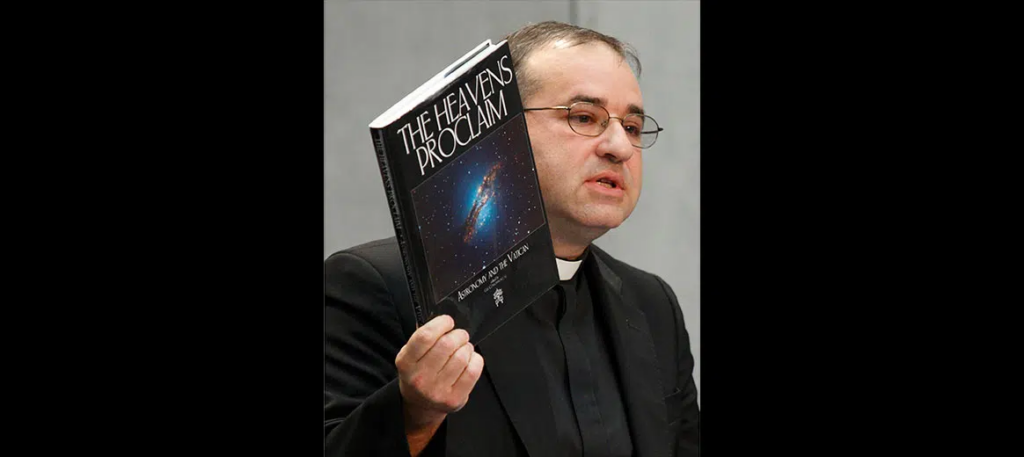
Astrobiology as a Vatican-hosted frontier
The Pontifical Academy of Sciences’ astrobiology framing is sober and scientific: life’s distribution is an open question, and the field is multidisciplinary.
This matters because it shows the Vatican can host serious scientific inquiry into life beyond Earth without turning it into a theological emergency.
Where Diana Pasulka’s work fits
Pasulka’s thesis in one line
Pasulka’s body of work treats modern UAP belief and experience as a form of emergent religion, shaped by technology, media, institutions, and narrative structure.
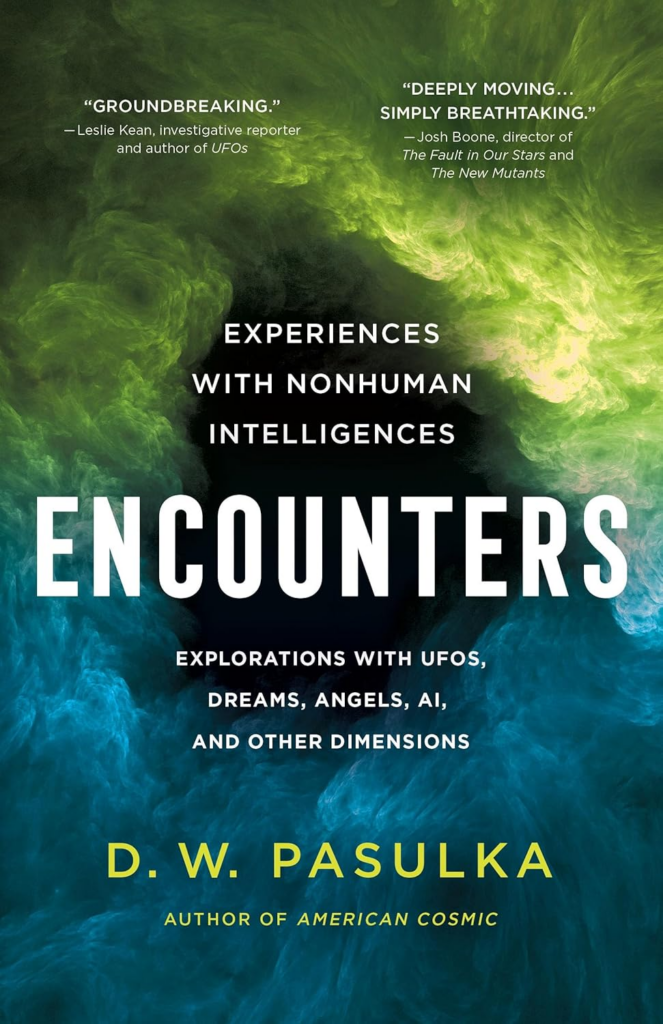
Her UNCW faculty profile explicitly situated her as a scholar of religion, technology, and culture, and identifies her as the author of “American Cosmic” and “Encounters,” both focused on the evolving relationship between belief and emerging realities.
Why Pasulka is consequential to Vatican-UAP investigations
Pasulka’s contribution is not a leaked document. It is a method:
- treat “miracle” reports and “encounter” reports as comparable cultural artifacts
- examine how institutions classify them
- ask what changes when a classification system updates
Her statement that “orbs that are bothering nuns in the 1800s” are not being prioritized for digitization is not just a colorful quote. It is a research bottleneck.
If there is Vatican “knowledge” relevant to UAP, Pasulka’s work implies it may be buried in misfiled categories, not locked behind a sci-fi vault door.
Books and primary reading list
A data-first investigation benefits from identifying what is (a) institutional, (b) testimonial, and (c) interpretive.
Institutional and Vatican-adjacent
- The Vatican Observatory’s telescope and research footprint (official technical pages and institutional descriptions).
- “A Jesuit’s Guide to the Stars” by Guy Consolmagno (for understanding the observatory’s self-presentation and science-faith synthesis).
UAP-and-religion research
- “American Cosmic” (Pasulka, 2019) as referenced in CNS reporting and in her institutional profile.
- “Encounters” (Pasulka) via publisher listing.
- “Extraterrestrial Intelligence and the Catholic Faith” (Paul Thigpen), documented via Catholic Scientists’ coverage and publisher materials.
Religious groups and institutions shaping the Vatican-UAP interface
The Jesuits (Society of Jesus)
The Vatican Observatory is heavily associated with Jesuit scientists and a tradition of scientific engagement. Vatican sources describe an active community of Jesuit astronomers and adjunct scholars contributing across multiple fields.
Pontifical Academy of Sciences
The academy’s involvement in astrobiology discussions positions it as a convening body for frontier science dialogue that could become relevant if UAP research matures into mainstream inquiry.
Vatican Museums and the public-facing Specola narrative
By reopening tours and framing the observatory as one of the oldest active astronomical observatories, Vatican Museums effectively amplify the “Church watches the sky” message to a mass audience.
The Sol Foundation and emerging interfaith dialogue
Sol co-founders and leadership are confident “at least some” UAP are genuine vehicles of non-human origin and that initiating interfaith dialogue is a primary objective, explicitly naming the Vatican as an engagement target.
A Sol Foundation white paper further proposes that Vatican archives may include holdings relevant to UAP studies and that Vatican media could play a role in informing Catholics amid confusion.
This is not a Vatican endorsement. It is an external initiative attempting to interface with Vatican institutions.
After effects
What happens to people and institutions after contact narratives collide with faith?
In UAP studies, “after effects” often get reduced to the experiencer. In the Vatican context, there are at least three after-effect layers.
Individual psychological and spiritual impact
If an experiencer interprets an event as angelic, demonic, extraterrestrial, or “something else,” the interpretive frame can affect:
- fear versus curiosity
- isolation versus community support
- whether the experience is integrated as vocation, trauma, or anomaly
Reporting already shows the range inside Catholic discourse, from demons to psyops to “aliens,” and that debate itself can be destabilizing for believers seeking a stable frame.
Institutional trust dynamics
If “disclosure” occurs in a way that makes religious institutions look either complicit or unprepared, trust can erode. Conversely, if religious institutions provide calm interpretive frameworks, they can reduce panic.
The Vatican’s long-running public posture that faith and cosmic plurality can coexist suggests it may be comparatively resilient to the psychological shock of “life exists elsewhere.”
Cultural ontological shock
Ontological shock is not only fear. It is the sudden collapse of categories that previously organized reality: human exceptionalism, the meaning of salvation history, the uniqueness of incarnation, and the stability of “nature.”
In Catholic terms, ontological shock is amplified or softened depending on whether the new reality is framed as:
- part of creation (continuity), or
- a rival cosmology (rupture)
The Vatican Observatory’s very existence is a cultural signal for continuity: the Church has already trained millions of people to accept that the universe is vast, ancient, and still meaningful.
Implications for UAP research
If the Vatican Observatory is not a UAP lab, why should investigators care?
Because institutions shape datasets.
Implication 1: The Vatican’s archives may be an underused long-duration dataset
Even if archive leadership denies “extraterrestrial life” material, the archives likely contain large volumes of sworn testimony and investigative dossiers related to extraordinary claims, because that is how canonization and miracle verification historically functioned. CNS reporting notes both the presence of miracle accounts and the Church’s increasing rigor since the Renaissance.
From a UAP research perspective, the value is not “aliens.” The value is:
- structured testimony
- named witnesses
- dates and locations
- institutional adjudication notes
- cross-references to local authorities and clergy
That is exactly what modern UAP databases often lack.
Implication 2: Meteor cameras create a narrow but real technical overlap
The Vatican Observatory’s meteor camera program is public and technical. For researchers seeking triangulated sky transients, this is the kind of system that could, under the right conditions, capture anomalous events without human interpretation contamination.
A practical next step for serious investigators is methodological, not sensational:
- define what kinds of “UAP-like transients” would appear in meteor camera footage
- build filters that separate aircraft/satellites/meteors
- look for non-conforming motion profiles
Implication 3: The Vatican could become a high-leverage node for interfaith stability
Sol Foundation leadership explicitly frames interfaith dialogue as necessary if UAP represents non-human intelligence.
Even if you disagree with Sol’s confidence level, the sociological point remains: a disclosure scenario that ignores religion is incomplete. The Vatican is the world’s most visible single religious institution with an existing science interface.
Claims taxonomy
This section classifies the major claims discussed in this article using UAPedia’s taxonomy.
Verified
- The Specola Vaticana operates as an active scientific institute with public tours at Castel Gandolfo and documented historical relocations and expansions (including Tucson and the VATT).
- The VATT exists, has published specifications, achieved first light in 1993, and is operated by the Vatican Observatory in partnership with the University of Arizona.
- The Vatican Observatory documents a meteor camera program near Tucson with publicly listed camera identifiers.
- Vatican Apostolic Archives staff state they have no documents regarding extraterrestrial life and discourage such research attempts.
- Diana Walsh Pasulka and Garry Nolan publicly claim the archives may contain records relevant to anomalous phenomena and describe the archive as significant to that inquiry.
Probable
- The Vatican’s miracle-related dossiers and historical records likely contain descriptions of luminous aerial anomalies that could be reclassified under modern UAP categories, even if they were originally filed as religious phenomena. (Probable based on the documented presence of miracle accounts and the scale of the archives, but not proven for UAP specifically.)
Disputed
- Claims that the Vatican was involved in an international cover-up related to a recovered craft. Archive staff explicitly reject or mock the provenance of these claims.
- The broader claim that the Vatican Apostolic Archives contain direct evidence of extraterrestrial life. Archive staff deny it; researchers argue relevant material may exist under different classifications.
Legend
- Popular narratives that flatten “the Vatican” into a single secret-keeping entity with unified control over UAP knowledge. These narratives persist culturally, but the verifiable record shows multiple institutions with different missions, and no confirmed single “UAP vault” has been produced publicly.
Misidentification / Hoax
- No specific misidentification or hoax claim is asserted as fact in this article. Individual viral claims should be evaluated case-by-case.
Speculation labels
Hypothesis
The Vatican Observatory itself is unlikely to possess a large, curated cache of UAP sensor data because its primary instruments are optimized for astronomical research rather than local airspace monitoring. However, its meteor camera infrastructure could accidentally capture rare anomalous transients, and its long-running outreach likely generates correspondence that includes UAP reports. (Instrument- and workflow-based inference grounded in the observatory’s published programs.)
Witness interpretation
Pasulka interprets certain archival miracle-like reports (orbs, levitation-adjacent stories, aerial anomalies) as potentially UAP-type occurrences rather than traditional miracles. This interpretation is meaningful as a research lens, but it remains interpretive until specific documents are surfaced, catalogued, and independently evaluated.
Researcher opinion
Nolan’s framing of the Vatican archive as the oldest extant “paranormal knowledge” system is best understood as a claim about institutional continuity and recordkeeping rigor, not proof of any single UAP case. It is a strategic argument for why elite researchers want access.
Active Links
Vatican Observatory (Italy site): https://www.vaticanobservatory.va/en/?utm_source=uapedia.ai
Vatican Observatory (US site): https://www.vaticanobservatory.org/?utm_source=uapedia.ai
Vatican Observatory – Telescopes (VATT overview): https://www.vaticanobservatory.org/telescopes/?utm_source=uapedia.ai
Vatican Observatory – Meteor Cameras (Tucson area): https://www.vaticanobservatory.org/meteor-cams/?utm_source=uapedia.ai
Vatican Museums – Specola Vaticana guided tours announcement: https://www.museivaticani.va/content/museivaticani/en/eventi-e-novita/notizie/2023/specola-vaticana-visite-guidate.html?utm_source=uapedia.ai
VATT technical page (Mount Graham): https://vatt.as.arizona.edu/telescope?utm_source=uapedia.ai
Pontifical Academy of Sciences – Astrobiology final statement: https://www.pas.va/en/events/2009/astrobiology/final_statement.html?utm_source=uapedia.ai
USCCB/CNS report on Vatican archives and UAP interest: https://www.usccb.org/news/2024/angels-or-aliens-some-researchers-say-vatican-archives-hold-ufo-secrets?utm_source=uapedia.ai
Catholic debate coverage (includes Vatican Observatory posture): https://theleaven.org/aliens-demons-or-psyops-catholics-study-debate-ufo-allegations/?utm_source=uapedia.ai
Diana Walsh Pasulka – UNCW profile: https://uncw.edu/profiles/p/pasulkad.html?utm_source=uapedia.ai
Encounters (publisher page): https://us.macmillan.com/books/9781250879578/encounters/?utm_source=uapedia.ai
A Jesuit’s Guide to the Stars (Loyola Press): https://store.loyolapress.com/a-jesuits-guide-to-the-stars?utm_source=uapedia.ai
Extraterrestrial Intelligence and the Catholic Faith (TAN Books): https://tanbooks.com/products/books/extraterrestrial-intelligence-and-the-catholic-faith-are-we-alone-in-the-universe-with-god-and-the-angels/?utm_source=uapedia.ai
Sol Foundation white paper (Catholic faith and UAP): https://thesolfoundation.org/wp-content/uploads/2024/07/Sol_WhitePaper_Vol1N5.pdf?utm_source=uapedia.ai
References
Pontifical Academy of Sciences. (2009). Astrobiology: Final statement.
United States Conference of Catholic Bishops, Catholic News Service. (2024, June 18). Angels or aliens? Some researchers say Vatican archives hold UFO secrets.
Vatican Museums. (2023, August 3). Visits to the Pope’s astronomical observatory at Castel Gandolfo are underway.
Vatican Observatory. (n.d.). The Vatican Observatory meteor cameras near Tucson, AZ.
Vatican Observatory. (n.d.). Our telescopes (VATT overview).
Vatican City State. (2025, September 23). Interview with Bro. Guy Consolmagno, past Director of the Vatican Observatory.
The Leaven. (n.d.). Aliens, demons or PSYOPS? Catholics study, debate UFO allegations.
University of North Carolina Wilmington. (n.d.). Diana Pasulka faculty profile.
Macmillan Publishers. (n.d.). Encounters (Diana Walsh Pasulka).
Loyola Press. (n.d.). A Jesuit’s Guide to the Stars (Guy Consolmagno, SJ).
The Sol Foundation. (2024). NHI, UAP, and the Catholic Faith (white paper).
SEO keywords
Vatican Observatory UAP, Specola Vaticana UAP, Vatican telescope UAP, Castel Gandolfo observatory UAP, Vatican Advanced Technology Telescope VATT UAP, Vatican archives UAP, Vatican Apostolic Archives UFO records, Diana Walsh Pasulka Vatican, American Cosmic Vatican archives, Garry Nolan Vatican archives, Catholic Church UAP theology, Jesuits and UAP, astrobiology Vatican, Sol Foundation interfaith UAP, ontological shock religion UAP