
On the Tibetan Plateau, the sky does not feel like a distant ceiling. It feels like a nearby force. Altitude sharpens light and weather, storms arrive with a theatrical suddenness, and the horizon reads less like a boundary than a threshold. In that setting, it is not surprising that Tibetan material culture contains objects explicitly tied to “the above,” whether through lightning language, meteoritic metal, or revelations said to arrive from non-ordinary realms.
Tibetan artefacts are valuable because they preserve claims in durable form. They also preserve the social mechanics that often surround anomalous phenomena: how a community decides an object is extraordinary, how that status is defended across generations, and how “the sky” becomes portable through ritual tools, talismans, manuscripts, and iconography. None of this automatically implies non-human technology. But it does give us a long-running archive of how human societies handle the possibility that meaningful forces arrive from outside the everyday world.
This article follows four interlocking artefact streams that repeatedly intersect with UAP-style questions. The first is the “sky iron” vocabulary and the mixed category of thogchags, small metal objects often worn as amulets. The second is Tibetan treasure culture (terma), where objects and texts are framed as time-released discoveries. The third is the Dunhuang manuscript cache, a sealed archive that preserves Tibetan religious and cosmological writing in a form modern scholarship can evaluate. The fourth is a modern media case, the so-called “Buddha from Space” or “Iron Man” statue, which became an instructive example of how an artefact can be materially unusual while its provenance story remains disputed.
Throughout, the approach is deliberately evidence-weighted. Where sources support a claim, it is stated plainly. Where sources are thinner, uncertainty remains visible rather than being papered over with confident language.
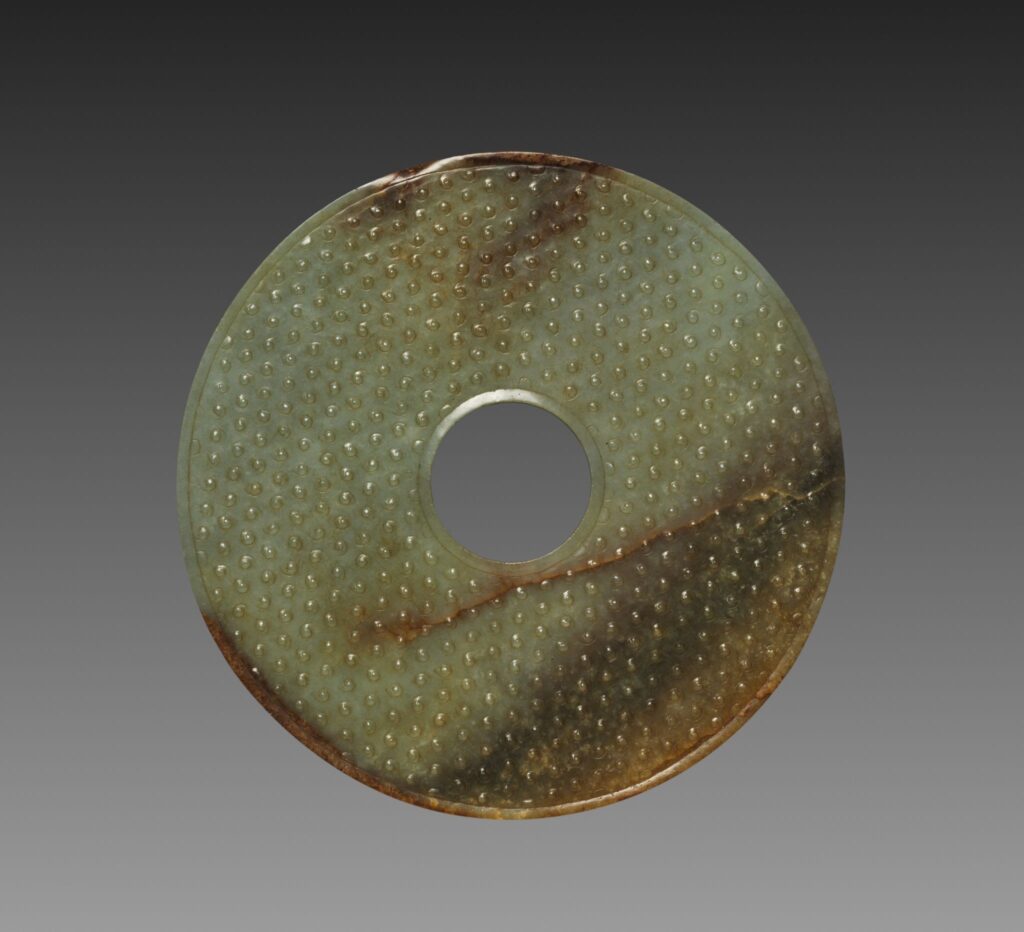
Tibetan artefacts as instruments, not decorations
A good way to enter Tibetan artefacts without flattening them is to treat them as instruments. A dorje (vajra scepter) is not merely symbolic; it is held, moved, paired with a bell, and used as a practical anchor for a ritual technology that assumes reality includes layers and presences beyond ordinary perception. A phurba (ritual dagger) is not a souvenir blade but a tool meant to stabilize space, subdue harmful influences, and enact a transformation that practitioners understand as real and consequential.
This “instrument” mindset matters for UAP study because it mirrors a pattern found in modern close-encounter and materials narratives. In many contemporary accounts, an object is not just debris. It becomes a relationship: a protective item, a focus of attention, a trigger for experiences, or a thing that seems to “carry” significance beyond its mass. Tibetan traditions show that this way of relating to objects can be stable over centuries and can produce a recognizable material culture, even when the underlying explanation remains contested.
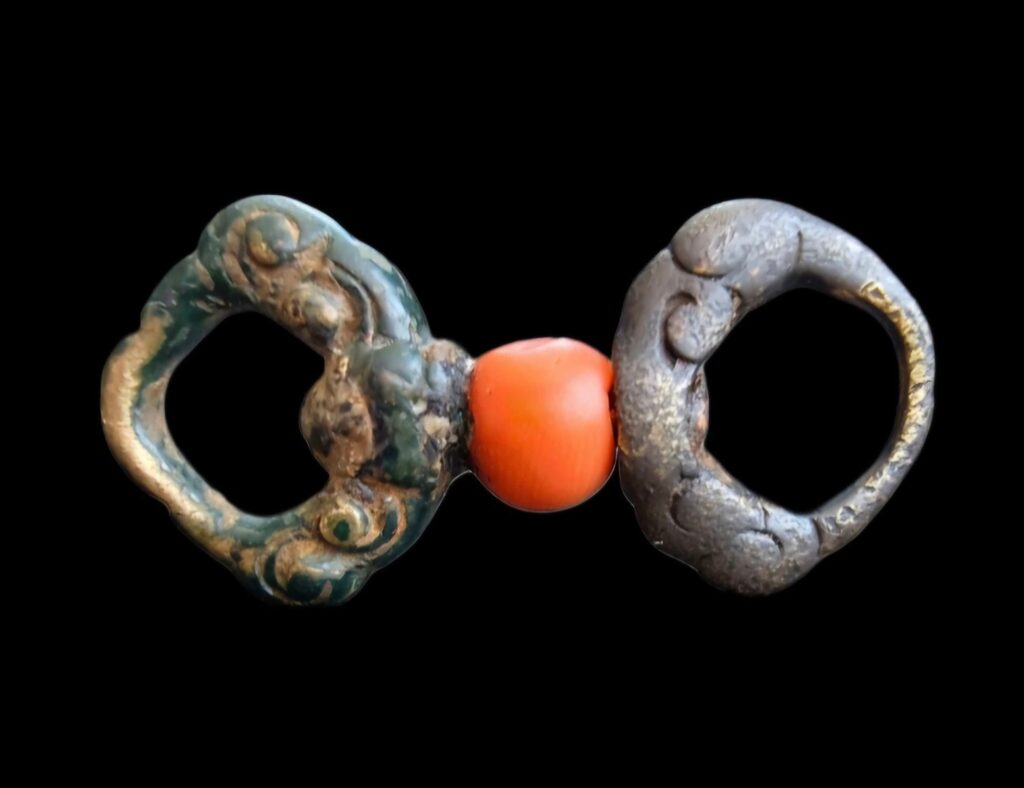
Case study: thog lcags and thogchags, three claims kept separate
Discussions of Tibetan “sky iron” are often derailed by a single mistake: collapsing three different claims into one sweeping statement. The cleaner approach is to keep them distinct and let each stand on its own evidence.
Claim 1: what thog lcags means in Tibetan lexical sources
The Tibetan term thog lcags is commonly glossed as meteoric iron or “sky iron,” associated with metal that falls from the sky and linked in some descriptions to thunder or lightning. The Rangjung Yeshe / Tsadra Dharma Dictionary entry frames thog lcags as meteoric iron and notes a useful scientific discriminator: nickel-bearing non-oxidized metallic iron is found in meteorites and not as native terrestrial metallic iron.
That entry supports a precise point: Tibetan lexicography recognizes a category of “sky iron” explicitly tied to meteoritic origin. It does not prove that every object sold or worn under “thokcha/thogchag” labels is meteoritic. It does not prove that a specific amulet in someone’s pocket fell from the sky. It establishes the concept and the language.
Claim 2: belief and ritual use attached to some small metal objects
Tibetan traditions include widespread protective and auspicious uses of small objects, including metal pieces worn as amulets. John Vincent Bellezza’s work is helpful because it treats thogchags as culturally significant and often tied to protection and religious meaning, while emphasizing that the category is broad, complex, and easily distorted by the collector market.
Here, the most defensible claim is modest: some communities and practitioners interpret particular amulets through the thog lcags concept and treat them as protective or charged with special virtue. That is a claim about belief and practice. It does not require that all such objects be meteoritic, and it does not rise or fall on the metallurgical content of any single piece.
Claim 3: the surviving thogchag object class is diverse and hard to date
The third claim is the one that tends to be overstated online. Thogchags are not a uniform class of “sky-fallen artefacts.” They are typologically messy, often difficult to date, and many may have begun as utilitarian fittings, ornaments, buckles, or miniature implements that later acquired talismanic status. Bellezza repeatedly signals that provenance and controlled archaeological contexts are often missing, and that this limits how confidently any single piece can be assigned to a specific era or original function.
So the correct synthesis looks like this: thog lcags is a well-attested Tibetan term for meteoritic “sky iron.” Thogchags are a heterogeneous class of small objects, many used as amulets, some culturally interpreted through the sky-iron concept, and many not demonstrably meteoritic in material composition. The sky association is culturally real even when the material origin is uncertain or mixed.
That distinction keeps the story honest without draining its power.
First-hand accounts: how outsiders were told these objects worked
First-hand travel literature is never a substitute for controlled excavation or forensic materials publication, but it can preserve testimony about how objects were used and understood in lived contexts. Alexandra David-Néel’s Magic and Mystery in Tibet is relevant here because it records how Tibetan informants spoke about ritual practices, protective objects, and unseen agencies, and it does so as a named observer writing in a specific historical moment.
The responsible way to use David-Néel is not to treat her as a final authority on Tibetan metaphysics, and not to cherry-pick the most dramatic passages as if they were proof. The safer use is ethnographic: her text supports that Tibetan practitioners and communities framed certain objects and rites as functional, protective, and causally meaningful within their worldview.
In a courtroom metaphor, David-Néel is best treated as a witness to what people said and did, not as an instrument that verifies the ultimate mechanism. That stance aligns with UAPedia’s broader principle: distinguish evidence from interpretation while still taking credible human experience seriously.
Case study: terma culture and “time-release” artefacts
If sky-iron traditions revolve around origin, terma culture revolves around timing.
In Tibetan Buddhist treasure traditions, certain objects and texts are said to have been concealed so they can be revealed later, when conditions demand them. The Rubin Museum’s Project Himalayan Art essay on “Dorje Discovered by Dorje Lingpa” provides a balanced presentation of this idea. It describes a dorje believed to have been concealed by Padmasambhava and later discovered by Dorje Lingpa, while also noting a historically plausible dimension: treasure practices may have begun as a practical method of hiding religious objects for safekeeping during instability.
That dual framing is particularly useful in UAP contexts because it avoids a false binary. A reader does not need to choose between “it’s all literal” and “it’s all invented.” The same artefact tradition can function religiously and historically at once. Within the religious worldview, revelation is meaningful, patterned, and validated through lineage. Within historical analysis, concealment and later retrieval can be a pragmatic behavior that becomes sacralized through narrative, ritual, and community endorsement.
Terma culture is not evidence of a UAP program. It is evidence of a long-standing human method for integrating extraordinary claims into material life while managing authority, timing, and legitimacy. Modern “materials” stories often show similar dynamics: objects appear at particular moments, through particular intermediaries, carrying particular claims. Terma traditions provide a comparative framework for analyzing that pattern without reflexive cynicism or naïve certainty.
Case study: Dunhuang and the artefact that froze a world-view into paper
Not all Tibetan artefacts are metal. Some are manuscripts, paintings, and ritual documents that preserve cosmology in a form modern scholarship can evaluate.
The Dunhuang “Library Cave” (Cave 17 at Mogao) is one of the most important manuscript caches ever found. The Oxford Research Encyclopedia overview emphasizes that the manuscripts reflect the multicultural nature of the region and include texts written in Chinese, Tibetan, Sanskrit, and other languages of Central Asia. The International Dunhuang Project (British Library) also stresses the scale of what was stored in Cave 17 and notes that the majority of finds were handwritten documents.
This matters for UAPedia because Dunhuang pushes us away from a lazy habit: treating “mythic” as synonymous with “untraceable.” Tibetan cosmological material exists in multiple genres. Some texts are ritual instructions, some are doctrinal expositions, some are narrative or hagiographic. When those genres are preserved as artefacts, they can be compared, dated, translated, and contextualized. That does not convert them into sensor data, but it does give us a disciplined way to study how Tibetan traditions described non-ordinary realms, luminous phenomena, aerial motifs, and encounters with beings framed as more-than-human.
A sober reading of Dunhuang avoids turning it into a simplistic “ancient UAP archive.” Its real gift is methodological: it allows complexity to remain complex, while still treating sky-oriented language as historically real and culturally consequential.
Case study: the “Buddha from Space” and how provenance collapses under headlines
In 2012, a story about a small statue carved from meteoritic iron spread widely through mainstream media. National Geographic’s reporting captured the public framing: a swastika-bearing Buddhist figure, said to have been recovered by a German expedition and carved from a meteorite, sometimes presented as an ancient Tibetan sculpture.
From a UAP standpoint, this is a useful training case because it contains two separable issues that are often confused.
First, the composition claim. An object can genuinely be carved from meteoritic iron. That is a testable proposition about material type.
Second, the provenance and cultural attribution claim. Achim Bayer’s critique, “The Lama Wearing Trousers,” argues that stylistic details identify the statue as a European-made imitation of Tibetan art and highlights the unclear provenance of the piece in a German private collection context.
That dispute should be stated plainly: the object may be carved from meteoritic material, yet still be modern, misattributed, or narratively inflated. The correct posture here is containment. Treat the artefact as interesting. Treat the provenance story as disputed unless documentation supports it. Refuse to let a compelling headline substitute for chain-of-custody. This is not merely an art-history footnote. It is directly relevant to modern UAP “materials” discourse, where composition, context, and custody are frequently muddled.
A grounded historical testimony: Nicholas Roerich, August 5, 1927
Nicholas Roerich’s Altai-Himalaya includes a diary passage describing an aerial object observed in the Kukunor district. Roerich dates the observation to August 5, 1927 and describes “something big and shiny reflecting the sun, like a huge oval,moving at great speed and changing direction, after which it disappeared into the blue.
This is usable as historical testimony: named source, published text, specific date, multiple observers, and a straightforward description. It is not, on its own, decisive evidence of non-human technology. But it qualifies as a coherent historical report that a modern UAP database would reasonably log.
It also illustrates a subtle point that Tibetan artefacts help us see. A region saturated with cosmological and mythic language can still produce observations described in plain, observational terms. The existence of symbolic frameworks does not automatically mean every report is symbolic, and it also does not mean a report should be interpreted without regard for those frameworks. Roerich’s account can be respected as testimony without being pressed into a pre-selected conclusion.
Shambhala in artefact form: “elsewhere maps” and the material culture of hidden realms
Shambhala often attracts two kinds of distortion. One is casual dismissal as fantasy. The other is over-literalization, treating it as a hidden technological enclave encoded in myth. Both approaches miss what Tibetan material culture actually shows.
Shambhala functions as a mythic geography linked to Kalachakra traditions, and it generates artefacts: murals of Shambhala kings, ritual diagrams, mandalas, and iconographic systems that encode a cosmology. This article does not need to settle Shambhala’s ontological status to be useful, but it does need to respect that the artefacts are real and the tradition is coherent within its own epistemology.
In UAP terms, Shambhala artefacts are comparable to other cross-cultural “maps of elsewhere.” Humans repeatedly build visual and material interfaces for realms they consider real but not ordinarily accessible. A mandala is not a spacecraft blueprint, but it is an artefact that claims navigation is possible, and that there are methods for approaching a domain beyond ordinary geography. Tibetan traditions make that claim in an explicit, ritualized way.
That is not proof of UAP craft. It is evidence of a durable human response to the sense that reality has more layers than the everyday.
Controversies and cautions that should remain visible
Tibetan artefacts are a fertile area for overconfidence, and most of the risk is predictable.
Provenance remains the central problem. Market circulation, private collections, and tourist demand all create incentives for fabrication, embellishment, and misattribution. That is why Bellezza’s work, while not the same as controlled excavation publication, is still valuable: he frequently signals limitations and warns against treating the object class as uniform or straightforward.
Genre confusion is another hazard. Dunhuang materials include many types of texts and images; treating them all as the same kind of claim leads to sloppy conclusions. The Oxford overview and the International Dunhuang Project support treating Dunhuang as an academic archive rather than an anecdote warehouse.
Finally, there is an ethical constraint. Many Tibetan objects are living religious implements. Treating them as props for a predetermined narrative, whether skeptical or credulous, weakens UAP research and disrespects the communities that produced and continue to use these artefacts.
Implications for UAP research: what Tibetan artefacts add, and what they do not
Tibetan artefacts add a long-duration record of how sky-associated claims become material culture.
They show that “from above” can be a culturally meaningful category anchored in language (thog lcags), ritual belief, and object use, even when the surviving object class (thogchags) is materially mixed and historically complex. They show that extraordinary objects can be integrated into social life through established validation protocols, as in terma culture, where objects are framed as revealed at the right time and in the right hands. They show how an artefact can become globally famous while its provenance remains disputed, which is a cautionary mirror for modern UAP “materials” narratives.
What Tibetan artefacts do not do, on the evidence discussed here, is provide a clean demonstration that a non-human technological source manufactured Tibetan objects. If such a claim is ever to be supported, it would require exceptionally strong chain-of-custody, reproducible materials analysis, and careful interdisciplinary review. Tibetan traditions do not need that claim to be compelling. Their value to UAPedia is that they preserve how people have lived with the possibility of meaningful sky-origin forces for a very long time.
Claims taxonomy
Verified
Terma (treasure) culture is a documented Tibetan religious practice, and Rubin Museum scholarship supports both the religious framing of rediscovered treasures and the historically plausible idea that concealment may have begun as safekeeping during instability.
Probable
Roerich’s August 5, 1927 account is a coherent historical testimony with a specific date, multiple observers, and descriptive detail of a shiny oval object changing direction. Prosaic explanations are not eliminated, but the text supports using it as a logged historical report.
Disputed
The “Buddha from Space” / “Iron Man” statue’s Tibetan origin and expedition-linked provenance narrative are disputed. Mainstream reporting reflected early framing, while specialist critique argues it is a European-made imitation with unclear provenance.
Legend
Shambhala functions primarily as a mythic and eschatological geography expressed through ritual, iconography, and literature. Artefacts related to Shambhala are real and culturally significant, while claims about Shambhala as an ordinary physical location remain within a religious register not directly testable by the same methods used for modern incident investigation.
Misidentification
Equating “meteoritic” with “non-human technology” is a category error. Meteorites are extraterrestrial material in the geological sense; that alone does not imply manufacture or intent.
Hoax
Artefact markets create incentives for fabrication and narrative inflation, especially where provenance is missing and demand is high. This risk should be treated as a baseline methodological concern for market-circulating objects.
Speculation labels
Hypothesis
Some Tibetan “sky iron” traditions could preserve memories of dramatic aerial events that produced recoverable meteoritic material, later sacralized into amulets and ritual tools. This remains unproven and should not be treated as established without object-specific documentation, consistent encounter narratives, and rigorous analysis that goes beyond the mere fact that meteorites exist.
Witness Interpretation
Practitioners and communities often interpret protective objects through frameworks involving blessings, deities, spirits, and auspicious causality. First-hand travel literature supports that these interpretations were part of lived practice, but such sources are best treated as testimony about belief and usage rather than definitive verification of mechanism.
Researcher Opinion
When artefacts attract sensational narratives, the safest analytical posture is to separate composition from provenance and require each to meet its own evidentiary standard. The “Iron Man” statue discourse demonstrates how quickly provenance can become a story that outruns documentation.
Additional crosslinks
A strong comparative read for Tibetan “sky-sent object” traditions is UAPedia’s pattern analysis of “fallen stones” narratives across cultures: Baetyls
References
Bayer, A. (2012). The Lama Wearing Trousers: Notes on an Iron Statue in a German Private Collection. Zentrum für Buddhismuskunde. https://info-buddhism.com/Bayer_2012-Trousers.pdf
Bellezza, J. V. (1999). Thogchags: The Ancient Amulets of Tibet. Asianart.com. https://www.asianart.com/articles/thogchags/index.html
David-Néel, A. (1930). Magic and Mystery in Tibet. (Archived scan). https://ia601408.us.archive.org/14/items/in.ernet.dli.2015.107735/2015.107735.Magic-And-Mystery-In-Tibet_text.pdf
Doumy, M. (2021). Dunhuang Texts. In Oxford Research Encyclopedia of Religion. Oxford University Press. https://academic.oup.com/edited-volume/62249/chapter-abstract/551441546
International Dunhuang Project. (n.d.). What was stored in Cave 17? British Library. https://idp.bl.uk/discover/learning/dunhuang/dunhuang-articles/cave-17-the-library-cave/what-was-stored-in-cave-17/
National Geographic. (2012, September 28). Swastika-Bearing Buddhist Statue Was Chiseled From a Meteorite. https://www.nationalgeographic.com/science/article/120927-nazi-buddhist-meteorite-science-iron-man-meteoritics-statue
Rangjung Yeshe / Tsadra Dharma Dictionary. (n.d.). thog lcags. https://rywiki.tsadra.org/index.php/thog_lcags
Roerich, N. (1929). Altai-Himalaya: A Travel Diary. (Roerich Museum text). https://www.roerich.org/roerich-writings-altai-himalaya.php
Rubin Museum of Himalayan Art. (n.d.). Dorje Discovered by Dorje Lingpa. Project Himalayan Art. https://rubinmuseum.org/projecthimalayanart/essays/dorje-discovered-by-dorje-lingpa/
SEO keywords
Tibetan artefacts UAP, thog lcags sky iron, thogchags Tibetan amulets, Tibetan meteoritic iron traditions, Tibet sky iron talismans, Dorje Lingpa terma dorje, Tibetan terma hidden treasures, Dunhuang Cave 17 Tibetan manuscripts, Nicholas Roerich August 5 1927 huge oval, Iron Man statue meteoritic iron provenance dispute, Tibetan Shambhala iconography, ancient UAP narratives Himalayas, Tibetan mythological sky accounts