

Most UAP stories are framed as mysteries of speed, distance, or propulsion. The stranger question is time. Again and again, in classic witness literature, people describe missing hours, stretched seconds, broken chronology, or the uncanny sense that an encounter lasted both no time at all and far too long. A careful reading does not let that become proof of exotic physics. But it also does not let us pretend the pattern is irrelevant.
Temporal distortion is a recurring motif in classic UAP witness literature, and it sits at the uncomfortable border where witness testimony, psychology, and instrumentation stop lining up neatly. (Library | University of New Hampshire)
The Foundational Case: Betty and Barney Hill (1961)
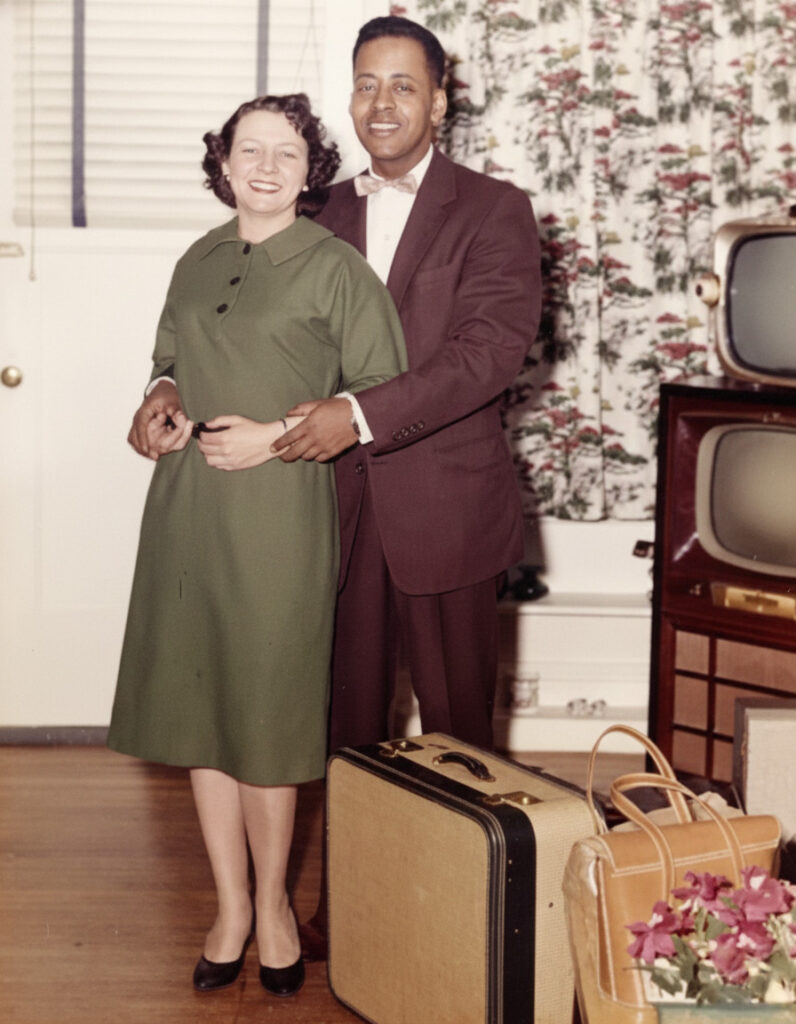
The Betty and Barney Hill case remains the classic UAP time rupture. The University of New Hampshire archive says the Hills returned home in September 1961 unable to explain two missing hours.
It also records reported physical changes from that night, including Betty’s torn and stained dress, Barney’s scraped shoe, and a broken binocular strap, all without memory of how those things happened. Whatever one concludes about the cause, the case established a template that would echo through later literature: visible anomaly, missing interval, bodily or material residue, fragmented recall, and later reconstruction. It is still one of the most important case studies because the time anomaly is not an afterthought. It is the structure of the event. (Library | University of New Hampshire)
Early Documentation Integrity: Pascagoula (1973)
If Hill supplied the modern template, Pascagoula showed why timing in documentation matters almost as much as timing in the event itself. The University of Southern Mississippi notes that after Charles Hickson and Calvin Parker reported their 1973 encounter, police officers left them alone in the room without telling them the tape recorder was still running.
That recording preserves their state of mind within hours of the incident, before decades of retelling could harden the story into something smoother, cleaner, or more culturally familiar. For temporal-distortion research, that kind of near-contemporaneous capture is gold. It lets investigators hear chronology before memory has had time to collaborate with narrative. (lib.usm.edu)

Archive Chronology as Evidence: Rendlesham Forest (1980)
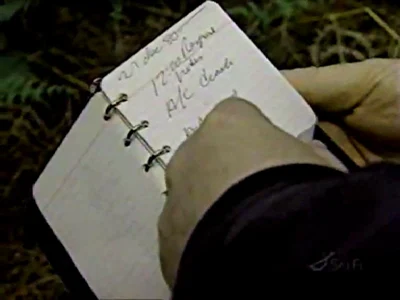
Rendlesham Forest is a different kind of time case because it teaches a harder lesson about source ranking. The UK National Archives summary describes the December 1980 events as sightings of mysterious lights outside RAF Woodbridge, with claims of traces and radiation, and notes that the Ministry of Defence could not explain the incident but judged it of no defense significance because no unidentified objects were detected on radar at the time. That is the early file. It is about lights, traces, the Halt memo, and official positioning.
The later, more elaborate layer is weaker and should be treated that way. Penniston’s telepathic binary-code account and the later future-human framing surfaced much later and are absent from the early documentary core.
A skeptical secondary analysis notes that Penniston did not disclose the binary-code story for more than twenty years. That does not automatically settle the matter, but it does fix the evidentiary ladder. Contemporaneous memo first. Early file second. Decades-later recollections and regression-adjacent elaborations last. Rendlesham is therefore not a clean proof of temporal distortion. It is a textbook case in how chronology inside the archive can become part of the evidence itself.
The Three-Clock Framework
This is where the subject turns investigative rather than merely eerie. There are at least three clocks in the UAP record. There is the instrument clock, which wants synchronized timestamps, sensor metadata, and location data. There is the witness clock, which can compress, dilate, fragment, or vanish under stress or anomaly. Then there is the archive clock, which records when claims entered the story and under what conditions. Most public arguments collapse those three into one. Serious casework cannot.
Formation of the Concept: Key Researchers and Literature
The publication history around missing time matters for the same reason. Budd Hopkins’ Missing Time helped turn a disturbing witness phrase into a recognizable research category in 1981. John E. Mack’s Abduction moved the subject into psychiatry and public academic controversy, arguing that the accounts he studied had to be taken seriously at the level of lived human experience. Jacques Vallée’s Passport to Magonia pushed in another direction, linking modern encounter reports to folklore and older visionary traditions, suggesting continuity in pattern even where interpretation remains contested. Whatever one thinks of any of these authors, they shaped the vocabulary through which temporal distortion became legible to later investigators. (Google Books)
Skeptical and Psychological Challenges
That is also where the strongest controversies enter. Clancy and colleagues found that people reporting recovered or repressed alien-abduction memories were more prone than controls to false recall and false recognition, with hypnotic suggestibility, depressive symptoms, and schizotypic features predicting those effects.
McNally and Clancy later summarized research linking some alien-abduction claims to sleep paralysis with hypnopompic hallucinations interpreted through culturally available narratives. These findings matter. They are not side notes. They directly challenge the evidentiary status of some recovered-memory cases and explain why hypnosis remains one of the most disputed tools in this field. (PubMed)
Limits of Psychological Explanations
It seems the skeptical account has limits too. Laboratory work on time perception shows that negative, highly arousing stimuli can lengthen perceived duration, yet the effect is not a simple one-variable story.
The 2019 study by Ogden and colleagues argues for a model that combines bottom-up arousal with top-down threat detection. In plain English, fear can distort time, but the distortion depends on context, appraisal, and attention. That helps explain why some people feel seconds stretch during frightening events. It does not, by itself, explain every structured missing-time narrative, every corroborated chronology gap, or every case with physical traces and contemporaneous records. A good method cuts both ways. It blocks overclaiming by believers and overclaiming by debunkers. (PMC)
The associated links around temporal distortion are therefore broader than “time travel.” In the case literature and modern research, time anomalies cluster with missing time, dissociation, sleep-related states, post-encounter shock, stigma, and sometimes reported electromagnetic effects. NARCAP found 81 pilot cases with alleged electromagnetic effects.
The recent Cambridge study on UAP witnesses found a clear psychological impact, often described as transformative, with direct witnesses reporting life-changing effects and a persistent, non-pathological deep engagement with the subject. Those associated links matter because they move temporal distortion out of science-fiction territory and into a cross-disciplinary zone involving aviation safety, clinical psychology, memory studies, and witness care. (narcap.org)
Operational Implications
That has practical implications. If a pilot, driver, security officer, or military observer experiences a time anomaly during a close UAP event, even subjectively, it affects reaction window, recall quality, and near-miss reconstruction. .
The cleanest conclusion is also the least theatrical. No public sensor dataset reviewed here demonstrates objective UAP-induced time distortion. Public government products emphasize data gaps, metadata weakness, mundane resolutions, and unresolved cases needing better evidence, not validated time anomalies. Yet the witness archive, especially in classic cases, repeatedly returns to broken chronology, missing intervals, and altered duration. That does not prove chrononauts, future humans, or spacetime engineering in the field. It does prove that the public evidentiary system is still badly mismatched to one of the oldest human claims in the UAP record. The real investigative question is not whether every lost hour is literal. It is whether our present systems are good enough to tell the difference. Publicly, they are not there yet.
Speculation labels
Evidence
Classic cases such as Betty and Barney Hill and Pascagoula include reported missing time, fractured chronology, or immediate witness disorientation documented in archival or institutional sources. Public official UAP reporting also shows strong data and metadata limitations that constrain any rigorous test of time-anomaly claims. (Library | University of New Hampshire)
Witness Interpretation
Many experiencers interpret missing time as evidence of intervention, contact, examination, or onboard encounter. That interpretation is part of the case record and deserves preservation, but it remains interpretation unless independently corroborated by stronger evidence streams. (Library | University of New Hampshire)
Researcher Opinion
Some researchers read temporal distortion as evidence that UAP events may involve more than simple visual misidentification, perhaps a coupling between anomalous external stimuli and altered human perception. Others view the same pattern as the product of sleep phenomena, memory distortion, trauma, or narrative scripting. The present public record does not settle that dispute. (PubMed)
Hypothesis
A narrow, testable hypothesis is that some UAP encounters may trigger subjectively real temporal distortion without requiring literal time travel. A stronger and far more speculative hypothesis is that a subset of cases involve spacetime manipulation..
Claims taxonomy
Probable
Public UAP reporting undercaptures temporal features because the reviewed public products prioritize object classification, morphology, and outcome categories, while civilian reporting remains unstandardized and even basic time-of-sighting fields are sometimes absent. This is an evidence-based inference, not a formally published AARO conclusion. (AARO)
Disputed
The literal historical accuracy of hypnotically recovered abduction memories, the later binary-code and future-human layer of Rendlesham, and stronger claims that missing time demonstrates chrononaut visitation remain disputed. (PubMed)
Legend
Folkloric and historical “time-slip” parallels may offer pattern analogies, but they are not direct proof of modern UAP mechanisms. Vallée’s work is important here as comparative framing, not laboratory confirmation. (Internet Archive)
Misidentification
Many closed contemporary UAP cases resolve to balloons, birds, unmanned systems, satellites, or aircraft. Some reports of altered time may also be explained by stress, sleep paralysis, dissociation, or memory error. (AARO)
Hoax
The wider UAP archive includes fabrications and later embellishments, which is exactly why contemporaneous records, early interviews, metadata, and chain-of-evidence discipline matter so much in temporal-distortion cases. (lib.usm.edu)
References
All-domain Anomaly Resolution Office. (2024). Report on the historical record of U.S. government involvement with unidentified anomalous phenomena, Volume I. U.S. Department of Defense. Link
All-domain Anomaly Resolution Office. (2024). UAP reporting trends: January 1, 1996 – October 10, 2024. Link
Clancy, S. A., McNally, R. J., Schacter, D. L., Lenzenweger, M. F., & Pitman, R. K. (2002). Memory distortion in people reporting abduction by aliens. Journal of Abnormal Psychology, 111(3), 455–461. PubMed
Defense Intelligence Agency. (2010). Traversable wormholes, stargates, and negative energy. Defense Intelligence Reference Document. Link
Defense Intelligence Agency. (2010). Warp drive, dark energy, and the manipulation of extra dimensions. Defense Intelligence Reference Document. Link
Hopkins, B. (1981). Missing Time: A documented study of UAP abductions. R. Marek Publishers. Google Books
Mack, J. E. (2007 ed.). Abduction: Human encounters with aliens. Scribner. Publisher page
McNally, R. J., & Clancy, S. A. (2005). Sleep paralysis, sexual abuse, and space alien abduction. Transcultural Psychiatry, 42(1), 113–122. PubMed
National Aeronautics and Space Administration. (2023). UAP independent study team final report. Link
National Archives and Records Administration. (2024). Project BLUE BOOK – Unidentified Flying Objects. Link
Ogden, R. S., Henderson, J., McGlone, F., & Richter, M. (2019). Time distortion under threat: Sympathetic arousal predicts time distortion only in the context of negative, highly arousing stimuli. PLOS ONE. PMC
De la Torre, G. G. (2024). Psychological aspects in unidentified anomalous phenomena (UAP) witnesses. International Journal of Astrobiology. Cambridge Core
University of New Hampshire Library. (n.d.). Guide to the Betty and Barney Hill Papers, 1961–2006. Link
Vallée, J. (1993/1969). Passport to Magonia: On UAP, folklore, and parallel worlds. Contemporary Books. Archive
Weinstein, D. F. (2012). A preliminary study of 600 cases of unidentified aerial phenomena reported by pilots and aircrew from 1994 to 2011. NARCAP International Air Safety Report IR-4. PDF
SEO keywords
temporal distortion and UAP, missing time UAP, UAP time anomaly, Betty and Barney Hill missing time, Pascagoula chronology disruption, Rendlesham later claims controversy, AAWSAP DIRDs wormholes, NASA UAP metadata gaps, AARO reporting trends, UAP witness time distortion, UAP consciousness anomalies, pilot UAP timing data, subjective time dilation UAP, UAP investigative reporting, time-slip UAP