
There’s a moment in the Clayton and Donna Lee story that sticks in the mind because it doesn’t feel like storycraft at all. It’s not a shimmering craft above a highway or a perfect description of a “gray.” It’s a flash of human reflex.
Under hypnosis, Donna’s voice snaps into a hard, protective edge: “Quit touching me.”
It’s the kind of line that lands like a slammed door. Whatever you think about abduction claims, moments like that are the reason this genre refuses to stay politely filed away in “fringe culture.” The core isn’t spectacle. It’s violation, fear, and the lingering sense that something crossed the boundary of self.
The Clayton and Donna Lee case appears in classic abduction catalogs, including UAPedia’s own taxonomy list. But the strongest accessible documentation for this case is not a contemporaneous 1985 police report, medical file, or published investigation. It is a specific, checkable window of mainstream media coverage in 2005–2006: a CNN transcript dated December 16, 2005 and a Fox News transcript that identifies itself as a partial transcript from The O’Reilly Factor dated January 13, 2006, published January 16, 2006. (CNN) (FOX News)
That doesn’t make the Lees’ claimed experiences “only media.” It does mean the public record we can point readers to with confidence is rooted in those broadcasts, plus the academic work those broadcasts brought into the frame. This is why the Lee case is best approached as an “on-the-record” abduction narrative: testimony presented openly, shaped by hypnosis, and set alongside competing interpretations from psychology and abduction research.

How the story entered the mainstream
CNN’s transcript documents the Lees as a married couple who describe themselves as otherwise ordinary, and who claim their lives were repeatedly interrupted by abduction experiences. (CNN) CNN’s segment is also unusually direct about one of the biggest fault lines in abduction cases: method.
The program shows hypnosis footage. That single decision tells you a lot about the nature of the case as it became known publicly. Hypnosis isn’t simply mentioned as background. It’s presented as the mechanism through which memory fragments are turned into narrative, and through which bodily and emotional reactions become visible to an audience. (CNN)
Within that segment, Clayton describes an origin point in childhood, referencing a Houston park as a place where something began. He presents the experiences as recurring, not one-time. Donna describes intensely physical-feeling intrusions during recall, and connects a pregnancy-related experience to what she interprets as non-human intervention. (CNN)
Clayton points to a scar he believes is linked to what was done to him. (CNN) That detail matters because scars occupy a strange place in the contact literature: they feel evidential to the witness, but without a contemporaneous medical record establishing timing and cause, they remain ambiguous to outsiders. A scar can be a talisman of certainty and still be an evidentiary dead end.
CNN also includes Harvard researcher Susan Clancy, whose work is often used as a psychological counterframe: abductees can be sincere, not delusional, not knowingly deceptive, and still be interpreting certain experiences through a cultural abduction template. (CNN)
A few weeks later, Fox News published a transcript page titled “Personal Story: Abducted by Aliens.” The page itself states: “This is a partial transcript from ‘The O’Reilly Factor,’ January 13, 2006 …” and it shows a published date of January 16, 2006. (FOX News) In that interview format, the Lees again present their claims as real and recurring, while the host presses on stigma, disbelief, and the assumption that most viewers will dismiss them.
This gives us the clearest anchor points available in the accessible record: December 16, 2005 (CNN) and January 13/16, 2006 (Fox/O’Reilly).(CNN) (FOX News)
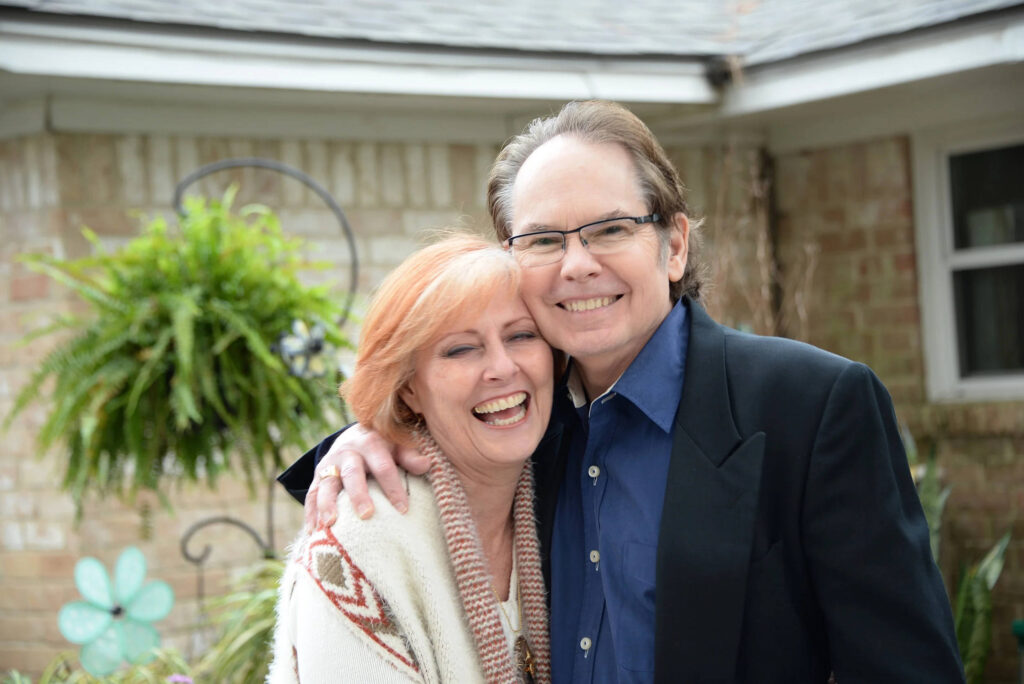
What the “1985” label can and cannot do
Because the Lees appear in UAPedia’s taxonomy list as “Clayton & Donna Lee Incident (USA, 1985),” it’s understandable that readers expect a single, well-specified event in that year. But the sources used here do not locate a contemporaneous 1985 incident record. No police report, hospital record, or investigator publication from 1985 appears in the accessible materials cited in this article.
That matters for responsible presentation. “1985” may be a cataloging tag, a shorthand for when key experiences were reportedly occurring, or an internal timeline used in some case listings. But based on the sources cited here, it should not be treated as a verified incident date in the public record.
The safest and most honest way to frame it is straightforward: the Lees’ own testimony, as recorded in 2005–2006 media, indicates experiences beginning in childhood and continuing into adulthood, while the public documentation that can be independently checked is concentrated in 2005–2006. (CNN) (FOX News)
That distinction is not just housekeeping. It’s the difference between preserving the integrity of testimony and accidentally turning a filing label into a hard claim.
Why the Lee case is notable in classic abduction discussion
Compared with the landmark cases that anchor the abduction canon, like the Hills, Walton, or Pascagoula, the Lee case is not as universally cited in every mainstream recounting of abduction history. What it does offer, though, is a vivid example of a “broadcast-era abduction narrative,” where the case is experienced as private terror but becomes public primarily through modern media.
It’s also notable because it is a couple’s case presented as a couple’s case, rather than one partner acting as the main narrator and the other as an off-camera corroborator. In both CNN’s segment and the Fox/O’Reilly transcript, Clayton and Donna are not framed as separate witnesses whose accounts were later merged. They appear together. (CNN) (FOX News)
That matters for how the narrative works.
When an abduction claim is carried by one person alone, the story can be psychologically isolating, but it can also remain internally consistent simply because there is only one narrator. In a couple’s case, the relationship becomes part of the evidence environment. Shared belief can stabilize memory and interpretation. Shared doubt can fracture the partnership. Sometimes the couple becomes a closed loop of reinforcement. Sometimes it becomes a testing ground where each person’s reactions challenge the other’s certainty.
The Lee case, as presented publicly, suggests that the shared framework became part of their marriage’s architecture. Whether that architecture is built around an external intrusion or an internally generated model of experience is the contested question. But the “couple dynamic” is itself a meaningful feature of the case.
Hypnosis as a doorway and a hazard
Hypnosis appears in the abduction world so often that it can feel like a default setting: missing time, fragmented sensations, then regression work to “retrieve” the story. It’s used because it offers something witnesses crave: continuity. It turns a set of terrifying fragments into a coherent arc. It gives a person language for what otherwise feels unspeakable.
But hypnosis is also the most controversial tool in the abduction toolkit, and the Lee case is a perfect illustration of why. The most intense, memorable moments of their public record are filtered through hypnosis footage. (CNN)
Contemporary research on hypnosis and memory emphasizes caution. Hypnotic regression and guided imagery can increase confidence and detail, but they can also increase vulnerability to suggestion and false memory formation, especially when the subject expects certain themes or when questioning is leading. (Frontiers)
That caution doesn’t mean hypnosis is always worthless. It means hypnosis cannot be treated as a truth machine. It is a meaning machine. It can surface emotionally true material, and it can produce narratively compelling material, and those two can overlap or diverge.
This is why Susan Clancy’s inclusion in the CNN segment is so important. Clancy’s work, including her book Abducted, argues that many people who report alien abduction are sincere and psychologically normal, and that belief can form through ordinary cognitive mechanisms interacting with anomalous experiences and cultural narratives. (Abducted – Harvard Books)
Her research with colleagues found that people reporting abduction memories were more prone than controls to certain laboratory measures of memory distortion, including false recall and recognition. (NIH) That doesn’t mean “abduction memories are fake.” It means memory is reconstructive and susceptible, and that confidence can be manufactured by the mind’s storytelling systems, especially under conditions like hypnosis where vividness and certainty tend to rise.
Another layer of this research world is physiological. A study by McNally and colleagues measured psychophysiological responses during script-driven imagery in people reporting abduction experiences and found strong emotional and physiological activation. (NIH) That matters because it aligns with what you see in the Lee footage: intensity that looks involuntary. Again, physiological arousal does not prove the external cause. But it does support the seriousness of the experience as lived.
Sleep phenomena also hover around abduction narratives in the academic literature. McNally and Clancy examined links between sleep paralysis and abduction belief. (NIH) Sleep paralysis can involve a sensed presence, fear, immobilization, and vivid imagery that feels external. For some researchers, it offers a partial explanation for certain abduction-like episodes. For many experiencers, it feels like an incomplete answer that fails to account for patterns, recurrence, or physical marks. The Lee case doesn’t settle that debate, but it sits right on top of it.
The scar, the body, and the longing for proof
Clayton Lee’s scar is a small detail with oversized importance. In the CNN segment, he points to it as something he connects to the experience. (CNN)
In abduction narratives, scars, scoop marks, bruises, and “unexplained” bodily changes are often presented as the bridge between an inner experience and the physical world. Witnesses are rarely satisfied with being told, “That was a dream,” when their body feels like it remembers. A scar becomes an anchor: a way to say, “This happened outside my imagination.”
The difficulty is that scars are common, and their causes are often mundane, and memory about their origin is not always reliable. Unless there is contemporaneous documentation, photographic progression, medical examination notes, or a chain of custody for associated materials, a scar remains evidence of a scar, not evidence of abduction. That gap can be frustrating for experiencers and too convenient for critics. It’s also simply the reality of evidence.
This is one reason abduction research has historically struggled to be treated as “casework” in the same way as sensor-rich UAP incidents. It deals in a different evidentiary currency: testimony, patterns, bodily narratives, and sometimes the psychological or physiological signatures of trauma-like response.
Reproductive themes and why they raise the stakes
The pregnancy-related element of Donna Lee’s story, as presented in the CNN segment, sits within one of the most emotionally volatile motifs in abduction narratives: reproductive interference. (CNN)
This theme has a history. In the late 20th century, especially as abduction investigation grew more organized and popularized, certain motifs hardened into a familiar structure: examination scenes, medical procedures, reproductive themes, hybrid narratives, and the sense of a long-running project. Some researchers interpret this as evidence of a systematic phenomenon. Some interpret it as a culturally reinforced story-shape that people adopt when trying to explain ambiguous experiences. Many experiencers feel the themes are too consistent, too intimate, and too psychologically disruptive to be dismissed as mere pop culture.
David M. Jacobs’ “A Brief History of Abduction Research” is useful here not as a final authority but as a map of how abduction research evolved, including its methods, debates, and the cultural environment that shaped both. (JSE) Jacobs is a contested voice in the broader conversation, but his historical overview captures an uncomfortable point the Lee case illustrates: the public abduction narrative cannot be separated from the techniques used to elicit it and the media channels used to broadcast it. (JSE)
In the Lee case, based on the cited sources, we can say Donna connected her experience to non-human intervention. We cannot verify the mechanism or causality of that experience from the public record used here. Keeping that separation clear is essential.
Media as an accelerant and a filter
For classic UAP sightings, evidence often comes in the form of logs, radar, photographs, physical traces, or multiple independent witnesses. Abduction cases often carry a different type of evidence load. The “data” is a person’s narrative, often reconstructed, and often surrounded by fear and stigma.
Television changes the entire environment.
CNN’s segment turns hypnosis into a public spectacle, even when it is presented sympathetically. (CNN) The camera makes the experience legible, but it also compresses it into a shape that fits broadcast storytelling: setup, tension, expert commentary, and closure. The Fox/O’Reilly interview does something else: it places the Lees in a social arena of judgment, forcing them to defend their sanity, their sincerity, and their marriage in real time. (FOX News)
This dynamic produces a paradox.
Public exposure can reduce stigma. Clayton explicitly frames going public as a way to reach others who feel isolated and frightened by similar experiences. (FOX News)
At the same time, public exposure can sharpen cultural scripts. Once an abduction template is widely known, it can shape how ambiguous experiences are interpreted. Hypnosis can intensify that shaping by increasing vividness and certainty. (Frontiers)
This is why the Lee case is such a clean example for readers: it demonstrates how testimony, method, and media braid together into something that feels both deeply personal and culturally contagious.
What is actually supported by the accessible record
Based on the sources cited in this article, the following points are well supported:
Clayton and Donna Lee publicly described recurring abduction experiences in mainstream media, including CNN (December 16, 2005) and Fox News/The O’Reilly Factor (segment dated January 13, 2006; transcript published January 16, 2006). (CNN) (FOX News)
CNN’s segment included hypnosis context, Clayton’s mention of a scar he associated with his experiences, Donna’s pregnancy-related interpretation, and Susan Clancy’s psychological framing. (CNN)
Fox’s transcript documents Clayton’s claim that experiences began in childhood and continued into adulthood, and it frames the couple’s decision to speak publicly in the face of stigma. (FOX News)
What remains unverified in the accessible sources used here includes: a specific 1985 incident record, contemporaneous medical documentation that corroborates the claimed causality of scars or pregnancy outcomes, and independent instrumentation or third-party documentation confirming the alleged abductions as external events.
That doesn’t reduce the Lees’ story to “nothing.” It places it within the most common evidentiary category for abduction cases: sincere testimony with limited external corroboration.
Implications, whichever frame you choose
If you accept the Lees’ interpretation as literal, the implications are profound. It suggests an intelligence capable of intruding into private life while evading conventional detection, leaving witnesses with only bodily memory, scars, and fragments that must be reconstructed. It raises ethical questions about consent that exceed the usual “are we alone?” conversation.
If you accept the cognitive-science interpretation as primary, the implications are still profound, just in a different direction. It suggests that human perception, memory, sleep physiology, and cultural scripts can generate experiences that feel like invasion and persist as life-defining certainty, especially when reinforced by hypnosis and narrative consolidation. (Frontiers)
And if you sit in the middle, as many serious UAP researchers and many experiencers do, the Lee case becomes a challenge rather than a conclusion. It asks whether the phenomenon, if real, interacts with human consciousness in a way that produces ambiguous evidence by design, or whether the ambiguity is simply the human mind doing what it does under stress and mystery.
In every frame, one practical point remains: experiencers need support. The social stigma is documented in the Fox interview itself, where ridicule is an expected price for speaking publicly. (FOX News) Regardless of the ultimate explanation, the distress and life disruption can be real, and responsible coverage has to keep that in view.
Speculation Labels
Hypothesis
The Lee case may reflect a recurring contact phenomenon that leaves witnesses with partial recall, strong somatic reactions, and a narrative that is difficult to translate into ordinary memory. In this hypothesis, repeated motifs across abduction cases are not merely cultural recycling but partial reflections of a structured interaction that human cognition struggles to encode, producing “exam-room” imagery, intrusive touch sensations, and time discontinuities as the mind tries to render an experience that doesn’t fit normal categories.
Witness Interpretation
Clayton and Donna Lee interpret their experiences, including scars and a pregnancy-related episode, as evidence of non-human intervention and repeated abduction. (CNN)
Researcher Opinion
Clancy’s work argues that abductees are often sincere and psychologically normal, while proposing that memory reconstruction, suggestion, and sleep-related phenomena can contribute to vivid, confident abduction narratives. (Abducted – Harvard Books) Research on hypnosis and memory supports caution with regression as a primary evidentiary method. (Frontiers)
Claims Taxonomy
Verified
Clayton and Donna Lee appeared in mainstream media coverage and described repeated abduction experiences, including hypnosis footage in the CNN segment; CNN’s transcript is dated December 16, 2005 and Fox’s transcript identifies a segment dated January 13, 2006 and published January 16, 2006. (CNN) (FOX News)
Probable
The Lees present as sincere and emotionally activated when discussing their experiences, and their choice to speak publicly is framed as an attempt to reduce isolation for others reporting similar events. (FOX News)
Disputed
The literal claim that non-human entities physically abducted the Lees and conducted invasive procedures is not independently corroborated in the accessible public record used here and is complicated by known issues with hypnosis and reconstructive memory. (Frontiers)
References
Clancy, S. A. (2005). Abducted: How people come to believe they were kidnapped by aliens. Harvard University Press. https://www.hup.harvard.edu/books/9780674024014
Clancy, S. A., McNally, R. J., Schacter, D. L., Lenzenweger, M. F., & Pitman, R. K. (2002). Memory distortion in people reporting abduction by aliens. Journal of Abnormal Psychology, 111(3), 455–461. https://pubmed.ncbi.nlm.nih.gov/12150421/
McNally, R. J., Lasko, N. B., Clancy, S. A., Macklin, M. L., Pitman, R. K., & Orr, S. P. (2004). Psychophysiological responding during script-driven imagery in people reporting abduction by space aliens. Psychological Science, 15(7), 493–497. https://pubmed.ncbi.nlm.nih.gov/15200635/
McNally, R. J., & Clancy, S. A. (2005). Sleep paralysis, sexual abuse, and space alien abduction. Transcultural Psychiatry, 42(1), 113–122. https://pubmed.ncbi.nlm.nih.gov/15881271/
Jacobs, D. M. (2009). A brief history of abduction research. Journal of Scientific Exploration, 23(1), 69–77. https://journalofscientificexploration.org/index.php/jse/article/view/106/44
CNN. (2005, December 16). Live From… transcript segment on Clayton & Donna Lee. https://transcripts.cnn.com/show/lol/date/2005-12-16/segment/02
Fox News. (2006, January 16). Personal Story: Abducted by Aliens (partial transcript from The O’Reilly Factor, January 13, 2006; edited for clarity). https://www.foxnews.com/transcript/personal-story-abducted-by-aliens
Leo, D. G., Bruno, D., & Proietti, R. (2025). Remembering what did not happen: The role of hypnosis in memory recall and false memories formation. Frontiers in Psychology. https://www.frontiersin.org/journals/psychology/articles/10.3389/fpsyg.2025.1433762/full
SEO keywords
Clayton and Donna Lee, Clayton Donna Lee abduction claims, abduction story public record, CNN Live From transcript December 16 2005, abducted couple CNN hypnosis, O’Reilly Factor January 13 2006 abducted by aliens, Fox News Personal Story Abducted by Aliens January 16 2006, hypnosis regression abduction controversy, abduction scar claim, pregnancy-related abduction interpretation, experiencer testimony, Susan Clancy Abducted, memory distortion alien abduction study, sleep paralysis alien abduction research, classic abduction cases, Contact and Abduction Experiences, UAP experiencers, Classic Abduction Cases