
New York City is the kind of place where you learn to keep walking. You step around the strange, the loud, the theatrical, the quietly desperate. You absorb sirens as ambience. You accept that any story can be true in the sense that someone truly lived it, and still be untrue in the sense that it never happened the way it was remembered.
That tension is exactly why the Linda Cortile case refuses to go away.
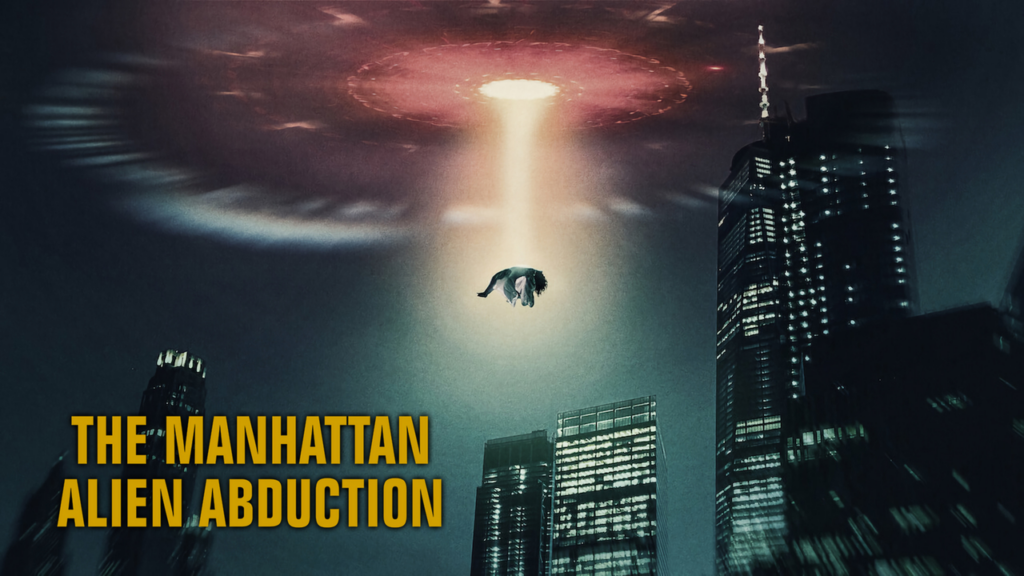
The story, first popularized by abduction researcher Budd Hopkins and later revived in the streaming era, is set not in a rural nowhere but in Lower Manhattan, within the visual vocabulary of the Brooklyn Bridge, amid streetlights and apartment windows and traffic that should have produced witnesses. Linda Napolitano (Hopkins’s pseudonym for her was “Linda Cortile”) claimed that in the early hours of November 30, 1989, she was taken from her 12th-floor Manhattan apartment, drawn out through a window, and lifted toward a hovering craft in a bright beam. Hopkins publicly described the case as unusually important because, as he told PBS’s NOVA site, it involved an abduction “from a 12th floor apartment in Manhattan,” with the experiencer “floated out the window,” and with the added claim that the event was meant to be seen. (pbs.org)
If you only knew that much, you might file it under “classic abduction narrative” and move on. But this case has a feature that changes the stakes: the public-witness layer. Hopkins claimed numerous observers, including alleged onlookers from the Brooklyn Bridge, and “over 20” witnesses became a repeating number in later retellings. (pbs.org)
And then there’s the most combustible detail of all: the claim that two security men, “Richard” and “Dan,” said they witnessed the abduction while escorting the then UN Secretary-General Javier Pérez de Cuéllar, effectively placing a world figure inside the narrative.
That is exactly where fact and testimony collide hardest, and it is where any responsible account has to slow down, get specific about what is documented, and openly acknowledge what is contradicted. The most recent fact-check flags these as “minor cleanup” items, chiefly about standardizing titles, tightening phrasing, and sharpening the “claimed vs. verified” line.
Evidentiary status, in plain language
Here is the cleanest way to hold the Cortile case without flattening it.
Some parts are documented history. Hopkins publicly discussed the case; he later published Witnessed: The True Story of the Brooklyn Bridge UFO Abductions with Pocket Books in 1996. (WorldCat) Bibliographic listings and library records are unglamorous, but they are useful here because they are among the few parts of this story that do not depend on memory, secrecy, or anonymity. (Internet Archive)
The case returned to mainstream attention with Netflix’s The Manhattan Alien Abduction (2024), which brought the story to a far larger audience and reintroduced the same fault line: was this an anomalous event, a misunderstood experience, or something shaped by time and narrative pressure? Netflix’s official title page confirms the series framing, and Netflix Tudum’s explainer repeats the long-running claim that the occurrence was “reportedly witnessed by over 20 people.” (Netflix title page; Netflix Tudum)
Other parts are reported testimony. Napolitano’s account of beings in her bedroom, levitation, a craft, and onboard procedures is a first-person narrative that Hopkins treated as sincere and central. And some parts remain sharply disputed because verification is missing, contradictory statements exist, or key witnesses were not independently confirmed. The VIP-witness layer belongs squarely in that disputed category, especially because later reporting states that Pérez de Cuéllar denied any affiliation with the alleged episode and called the allegations “completely false,” a denial People reports via PBS. (people.com)
Those distinctions are not “debunking.” They are the minimum scaffolding for telling this story honestly.
Linda Napolitano and the pseudonym that became a name
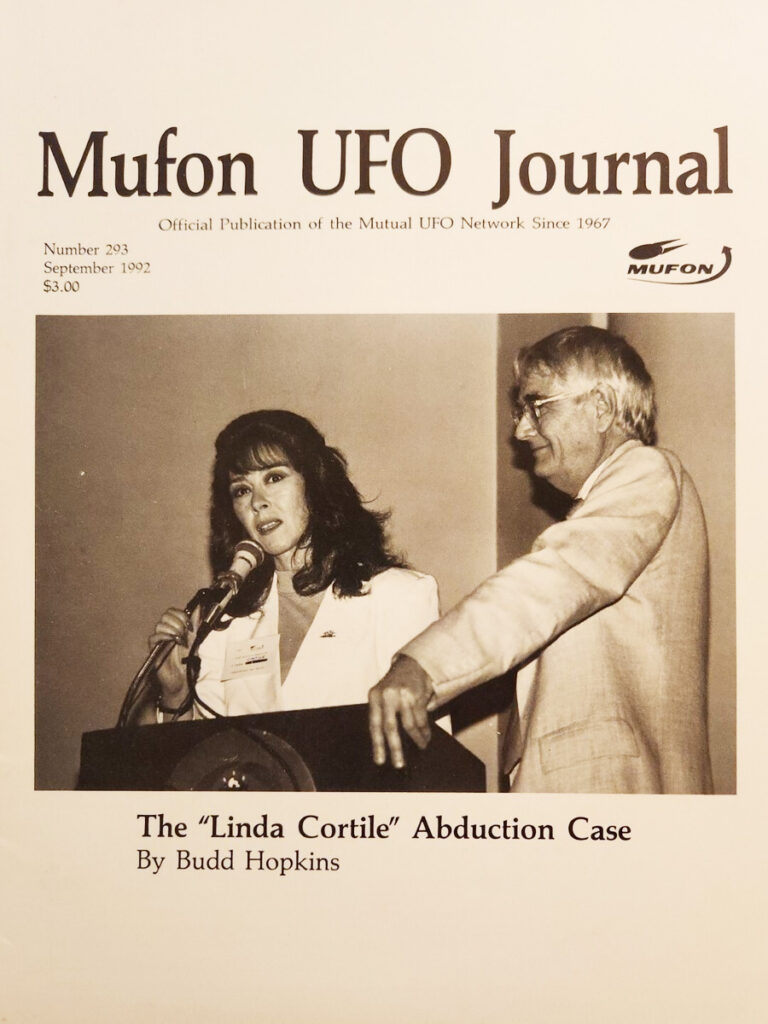
“Linda Cortile” is the name many readers encountered first, because Hopkins used it to protect his subject’s identity. In recent years, “Linda Napolitano” has become widely used in media coverage of the case, especially around the Netflix series and subsequent reporting. (people.com)
By her own account, she was not trying to become a public figure. The case begins, as many abduction narratives do, with a body problem that feels oddly out of place in ordinary life. According to Time’s overview of the story as revisited in the Netflix series, Napolitano had written to Hopkins about an earlier encounter and described discovering a strange bump near her nose that an X-ray appeared to show as a small foreign object. Hopkins interpreted that as an “implant,” even calling it a “radiological smoking gun” in later retellings, but the object reportedly could not be recovered because it had disappeared when a specialist later tried to remove it. (time.com)
This detail matters because it shows the emotional mechanics of these cases. Experiencers often want one thing that is not negotiable: a trace. Something that says, “This wasn’t only inside my head.” Researchers want that too, because it’s the difference between an account that can be studied and an account that can only be believed or dismissed. In the Cortile case, that anchor never quite sets. An X-ray can be interpreted in multiple ways, and when no object is retrieved, the claim remains suggestive rather than conclusive. (time.com)
So the case rests heavily on testimony and on witnesses.
The night near the bridge
The core event is dated to November 30, 1989. In Hopkins’s public framing, Napolitano was taken from her Manhattan apartment in the early morning hours. PBS’s NOVA archive records Hopkins describing a woman abducted “from a 12th floor apartment in Manhattan” who “floated out the window.” (pbs.org)
Napolitano’s own telling, as summarized in People, is direct and cinematic: three non-human beings appeared, she was made to levitate, and she was taken into a craft hovering above her building before being returned. (people.com)
Nothing about that structure is unfamiliar to readers of classic abduction literature. What changes the emotional temperature is the claim that it wasn’t private. Hopkins said he identified “20+” witnesses, and the number “23” appears frequently in media summaries. The careful way to carry that number is as a Hopkins-era claim and a later-media repetition, not as an independently established count. (Netflix Tudum; people.com)
If true, this would put the case in a rarer category: an abduction claim that is not only remembered but observed.
The Brooklyn Bridge witnesses, and what “witnessed” really means here
Hopkins argued that multiple observers saw something extraordinary in the sky that night, including from the Brooklyn Bridge and nearby roadways. The PBS excerpt captures his emphasis that the event was meant to be seen, and it also reflects his claim that multiple witnesses offered corroboration, including people who tried to rationalize what they saw in order to keep their world intact. (pbs.org)
However, later reporting underscores the central weakness: those alleged witnesses were not independently verified in public-facing documentation, and Hopkins often used pseudonyms. People state this plainly: none of the alleged witnesses were verified, including the two security officers tied to the VIP narrative. (people.com)
This is where readers sometimes talk past each other. To an experiencer, anonymity can be an act of survival. To an investigator, anonymity can be an evidentiary dead-end. A private witness can be real in the human sense and still be unusable in the public-proof sense.
The Cortile case sits right on that fault line.
“Richard” and “Dan,” and the VIP claim that became the case’s pressure point
In the Hopkins-centered narrative, two men using the names “Richard” and “Dan” described witnessing Napolitano’s levitation while escorting a high-profile figure near the East River. Over time, that figure became identified in the story as Javier Pérez de Cuéllar.
This is the section where the case either gains weight or loses it, depending on what you prioritize.
If a UN Secretary-General truly had been present, even incidentally, it would suggest an extraordinary intersection between global institutions and anomalous events. It would also raise obvious questions: why no official record, why no public acknowledgment, and why no named testimony?
And that is exactly why the denial matters.
According to People, Pérez de Cuéllar later refuted any affiliation with the alleged episode and called the allegations “completely false,” a denial attributed to a statement to PBS. (people.com)
That denial does not erase the claim from the case file, but it materially weakens the VIP-witness layer as evidence. At minimum, it means the VIP element cannot be treated as corroboration in any ordinary sense. In a strict evidentiary approach, the VIP claim becomes a disputed narrative feature: influential, memorable, and still unverified, with a direct contradiction on record.
If you want to understand why the Cortile case is so polarizing, that’s the reason. You can accept Napolitano’s experience as sincere and still conclude that the VIP witness story is unreliable. Or you can believe the VIP story and then face the question of why a senior international figure would deny it.
Either way, it’s not a minor detail. It’s load-bearing.
Hypnosis: the tool that reveals, and the tool that complicates
The abduction field has a long relationship with hypnosis, and the Cortile case sits inside that tradition. Hopkins used hypnotic regression in his work with experiencers, and modern summaries of the case (including People and Time) note hypnosis as part of how details were developed and presented. (people.com; time.com)
The problem is not that hypnosis makes people lie. The problem is that hypnosis can change memory in ways that feel like recovery while also increasing the risk of confabulation, suggestion, and narrative sharpening. A reader does not need to choose between “hypnosis is nonsense” and “hypnosis is truth serum.” The responsible middle is to treat hypnosis-derived detail as testimony that must be separated from independently verifiable facts.
Netflix’s own framing leans into this tension, presenting the case as a question of whether it happened or whether it was a hoax, with hypnosis and witness claims as central points of dispute. (Netflix Tudum)
So, when you read “she floated out of the window,” you should hold two parallel threads: Hopkins says this was witnessed (a potentially external claim), while many of the vivid interior details were shaped through hypnotic recall (a methodologically vulnerable source of specificity). (pbs.org)
The “implant” episode, clarified
Earlier tellings of this case sometimes made the nasal object sound like a hard medical smoking gun. It isn’t, at least not in the public record.
The modern reporting is more precise: an X-ray was interpreted as showing a small object, but when removal was attempted, it was no longer there. Time reports that the object had “reportedly disappeared” when a specialist later tried to remove it, and People likewise treats the episode as unresolved rather than decisive. (time.com; people.com)
If you are building an evidence-weighted view, this becomes a reported medical anomaly rather than physical proof. It can still be meaningful inside the experiencer’s narrative and could still be an authentic anomaly, but it cannot do the heavy lifting that the word “implant” suggests.
The case becomes a media object, then becomes a legal one
Hopkins’s book Witnessed: The True Story of the Brooklyn Bridge UFO Abductions is a major reason this case became part of the classic canon. Bibliographic sources attribute the 1996 Pocket Books publication. (WorldCat)
Then, decades later, the story re-entered mass culture through Netflix. The official Tudum page describes the “Brooklyn Bridge Abduction” as a widely publicized incident and repeats the “over 20 witnesses” phrasing while presenting the central question of whether it happened or was a hoax. (Netflix Tudum)
Mainstream coverage added sharper framing and specific contradictions. People highlight the unverified nature of the alleged witnesses, the VIP denial, and the existence of conflicting interpretations, including skepticism from filmmaker Carol Rainey. (people.com) Time similarly outlines the skepticism, reiterates that the “witnessed” dimension is the center of Hopkins’s case, and stresses the unresolved “implant” episode. (time.com)
This modern phase matters because it changes the incentives around the story. Once a case becomes a streaming narrative, it becomes a product. Once it becomes litigation, it becomes a battleground over portrayal, reputation, and control of documents. That doesn’t decide what happened in 1989. It does change the information environment around what happened.
How to read the Cortile case without losing your balance
The Cortile case invites two common mistakes.
The first mistake is to treat it as solved because some parts sound implausible. A testimony-first approach does not require naive belief, but it does require intellectual humility. Humans can experience real, life-altering events that are not easily categorized, and they can do so without meeting any clinical threshold for delusion.
The second mistake is to treat it as proven because the story is compelling. A compelling story is not the same thing as a verified event. In this case, key corroboration remains structurally weak in the public record: witnesses are often anonymous, the VIP layer is contradicted by denial, and the medical “implant” trail never produced a recoverable object. (people.com; time.com)
What remains, then, is a classic abduction case that also functions as a case study in evidence.
If you believe Napolitano’s account is essentially accurate, the unresolved question becomes: why do so many corroborating elements remain just out of reach, always described but rarely pinned down?
If you suspect the account was shaped by social dynamics, memory practices, or media incentives, the unresolved question becomes: why does the narrative persist so powerfully across decades, and why does it resonate with motifs reported by other experiencers far from Manhattan?
In either reading, the Cortile case still matters because it forces the field to talk about standards: how witness testimony is collected, how anonymity is handled, how hypnosis is used, and how contradictions are integrated rather than ignored.
Implications for UAP research and for experiencers
For researchers, the Cortile story is a reminder that extraordinary claims do not only need more witnesses. They need better witness handling. If witnesses exist, their statements should be preserved contemporaneously when possible, with clear provenance, clear separation between firsthand observation and retellings, and a chain of documentation that can survive beyond a single investigator’s authority.
For experiencers, it is a reminder that public belief and personal reality are not always aligned. You can be telling the truth as you experienced it and still be unable to prove it. And you can be unable to prove it without deserving ridicule.
For the broader public, this case sits inside a larger cultural shift. It is not 1992 anymore. UAP talk is now entangled with official hearings, new institutional language, and mainstream platforms. But the fundamental human problem remains: how do we evaluate a story when it arrives mostly as testimony, with traces that are suggestive but not decisive?
Claims Taxonomy
Verified
Hopkins publicly described the case as involving an alleged abduction from a 12th-floor Manhattan apartment and presented it as highly important within his body of work. (pbs.org) Witnessed: The True Story of the Brooklyn Bridge UFO Abductions is documented as a 1996 Pocket Books publication in bibliographic listings. (WorldCat)
Probable
Napolitano sincerely reported an abduction experience dated to November 30, 1989 and pursued support and interpretation through Hopkins and his experiencer network, as described in mainstream summaries. (people.com)
Disputed
Hopkins claimed 20+ (often summarized as 23) witnesses to an external event; public-facing documentation has not independently verified those witnesses or their independence. (people.com; Netflix Tudum)
The VIP-witness strand involving Javier Pérez de Cuéllar is materially weakened by reporting that he denied involvement and called the allegations false. (people.com)
Misidentification
Not established. Psychological models may explain some abduction-style experiences, but they do not directly account for the external-witness layer as claimed; at the same time, the witness layer is not publicly verified, which keeps conventional explanations in play.
Hoax
Not established. Skeptical claims exist in modern media framing, but public sources do not conclusively prove intentional fabrication by Napolitano.
Speculation Labels
Hypothesis
If the external witness layer is substantially accurate, the simplest extraordinary hypothesis is that a physical UAP interaction occurred near the building, producing a visible lift event that multiple people interpreted as a person and figures ascending toward a luminous object. This would imply control over motion and possibly perception, consistent with other reported “field effect” themes in contact narratives, though not established here as fact. (pbs.org)
Witness Interpretation
Napolitano’s interpretation is that she encountered non-human beings, was levitated against her will, and underwent invasive onboard procedures. That interpretation is intrinsic to her testimony and is not independently verifiable from public documentation alone. (people.com)
Researcher Opinion
The case demonstrates why hypnosis-derived details should be treated as vulnerable to narrative shaping and why the strongest claims must be tethered to independently checkable elements. Here, modern reporting emphasizes that alleged witnesses were not independently verified and that the VIP claim is directly contradicted by denial, substantially weakening that strand as public-facing evidence. (people.com)
References
Blackwood, E. (2024, November 5). The Manhattan Alien Abduction: Where is Linda Napolitano now after alleged extraterrestrial encounter — and why is she suing Netflix over the docuseries? People. https://people.com/the-manhattan-alien-abduction-where-is-linda-napolitano-now-8739603
Netflix. (2024). The Manhattan Alien Abduction (official title page). https://www.netflix.com/title/81670964
Netflix Tudum. (2024, November 5). The Manhattan Alien Abduction: True story and plot explained. https://www.netflix.com/tudum/articles/the-manhattan-alien-abduction-release-date-news
PBS NOVA Online. (n.d.). Kidnapped by UAPs? Budd Hopkins’ cases (The Linda case). https://www.pbs.org/wgbh/nova/aliens/cases.html
Time. (2024). The controversial story behind Netflix’s new docuseries The Manhattan Alien Abduction. https://time.com/7160509/the-manhattan-alien-abduction-netflix-true-story/
WorldCat. (n.d.). Witnessed: The true story of the Brooklyn Bridge UFO abductions (Pocket Books, 1996). https://search.worldcat.org/title/Witnessed-%3A-the-true-story-of-the-Brooklyn-Bridge-UFO-abductions/oclc/34973491
Hopkins, B. (1996). Witnessed: The true story of the Brooklyn Bridge UFO abductions. Pocket Books.
SEO keywords
Linda Cortile case, Linda Napolitano, Brooklyn Bridge abduction, Manhattan abduction 1989, Budd Hopkins Witnessed, Witnessed Brooklyn Bridge UFO abductions, 12th floor Manhattan abduction, UAP abduction witnesses, Richard and Dan witnesses, Javier Pérez de Cuéllar denial, UAP implant X-ray claim, hypnosis regression abduction, The Manhattan Alien Abduction Netflix, classic abduction cases, Contact and Abduction Experiences