Ancient Egypt is often introduced as a civilization of tombs. The real introduction should be the sky.
Egypt sat under some of the clearest, most theatrically legible heavens on Earth. The Nile Valley’s flat horizons made every rising and setting feel deliberate. Seasonal stars returned like clockwork. The sun behaved like a god that kept appointments. And when something did not behave, when an unexpected light appeared, when a fireball broke the night, when stones fell from above, Egypt had a cultural habit that mattered: it tried to fit the anomaly into an ordered cosmos rather than shrugging it off.
That does not mean the Egyptian record is a straightforward archive of UAP reports. It means it is one of humanity’s richest laboratories for how “sky-phenomena” become meaning, ritual, and material culture.
The tricky part is that Egypt’s surviving sources sit on a spectrum. At one end, we have objects and texts that modern science can test and historians can locate. At the other end, we have famous “ancient sighting” claims that circulate loudly while the original evidence remains unavailable. Between those poles sits a crowded middle: symbols, temple images, and mythic language that are real Egyptian sources, but that can be misread when treated like modern technical diagrams.
This article keeps those categories separate on purpose. When something is well-supported, it will be treated as such. When something is disputed, it will be treated as disputed. And when the discussion shifts from evidence into comparative interpretation, it will be labeled in the moment, not buried at the end. That separation is not a stylistic choice. It is the difference between history and wish-fulfillment.
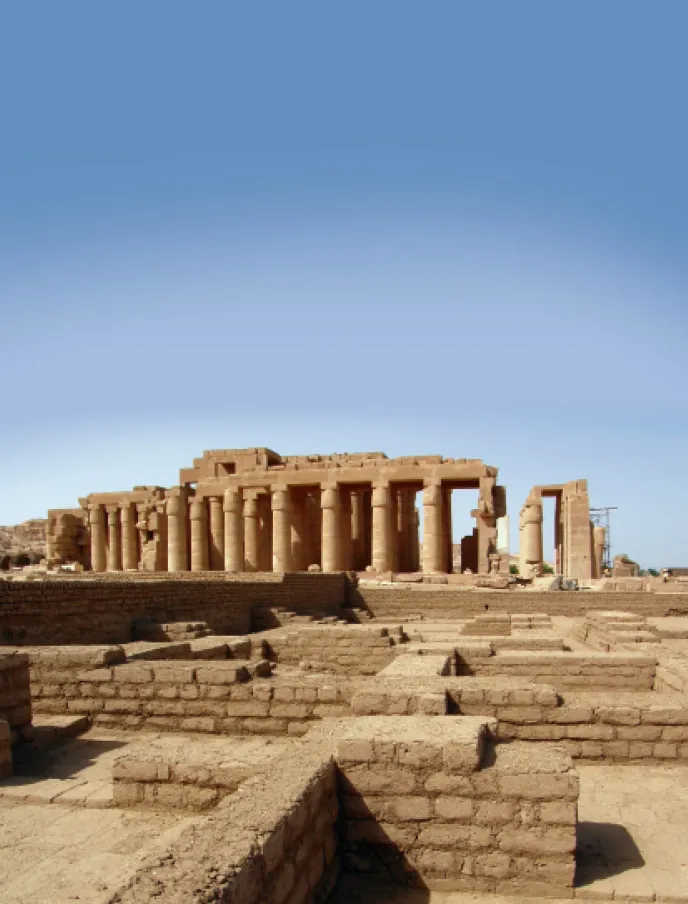
What counts as “firsthand” in Ancient Egypt?
Modern UAP cases usually start with a witness interview. Ancient Egypt offers a different kind of testimony: institutional voice.
In Egypt, literate specialists wrote for institutions, often temple-linked, sometimes royal. When a text presents itself as scribal reporting, it matters whether the institution it names was real, and whether the language aligns with known Egyptian documentary habits.
A key anchor here is the “House of Life” (pr-ʿnḫ), a temple-associated scholarly environment. Alan H. Gardiner’s classic study in the Journal of Egyptian Archaeology treats the “Mansion/House of Life” as a real feature of elite scribal and learned activity, not a modern invention used for atmosphere. (gizamedia.rc.fas.harvard.edu)
That matters because several Egypt-themed “UAP documents” lean on the phrase “scribes of the House of Life” as if it is a credibility stamp. Sometimes it may be. Sometimes it is a borrowed costume.
So here is the working rule: for Egyptian “sky claims,” the first question is not “does it sound like a UAP?” The first question is “can we locate and verify the source chain?”
Case study 1: “Iron from the sky” and the rare luxury of physical proof
If you want the most rigorous Egyptian bridge between “the sky” and “material evidence,” you do not start with a disputed papyrus. You start with iron.
Egypt had iron objects long before large-scale smelting became common. A significant portion of early iron use was meteoritic, and Egyptians developed language that explicitly framed it as sky-origin material. This is not UAP in itself. It is more basic and, in a way, more valuable: it proves that Egyptians recognized and valued literal arrivals from above.
The best-known object here is the iron dagger blade associated with Tutankhamun. Daniela Comelli and colleagues published a peer-reviewed compositional study in Meteoritics & Planetary Science concluding that the blade’s composition strongly supports meteoritic origin and emphasizing Egyptian valuation of meteoritic iron for prestige objects. (Wiley Online Library)
This is a rare moment where the ancient record and modern methods lock together. You have an Egyptian elite object, a plausible sky-based origin, and scientific analysis that supports that origin.
Evidence note: this supports a narrow claim, not a cosmic one. It supports “meteoritic iron was used and esteemed,” not “UAP craft provided materials.” The value for UAPedia is methodological: when the source chain is strong, Egypt can deliver hard anchors rather than vibes.
Interpretive extension (clearly labeled): a culture that ritualizes and treasures “sky-material” is also a culture predisposed to treat unusual sky-phenomena as significant rather than trivial. That does not prove non-human activity, but it does help explain why Egyptian religious language is saturated with movement, vehicles, crossings, and luminous transformations.
Case study 2: The House of Life, scribes, and the temptation to mistake institutional voice for verification
The House of Life deserves its own moment because it is often used incorrectly in UAP-adjacent retellings.
Gardiner’s discussion shows that the institution was real and linked to learned scribes. (gizamedia.rc.fas.harvard.edu) That reality gives Egypt a plausible pathway for record-keeping, even about unusual events. But it does not guarantee any specific “House of Life” story is authentic.
Evidence note: the correct use of this anchor is modest. It supports “Egypt had elite scribal institutions capable of preserving knowledge.” It does not support “therefore, this particular dramatic account must be genuine.”
That distinction becomes decisive in the next case.
Case study 3: The Tulli Papyrus and the “circle of fire” problem
Few ancient-Egypt claims are repeated as often as the so-called Tulli Papyrus, usually summarized as “Egypt recorded flying discs.”
The story’s modern entry point is a 1953 publication in the Fortean Society magazine Doubt, presenting a translation attributed to Boris de Rachewiltz and describing a “circle of fire” in the sky, later joined by many more, observed by scribes and connected to royal attention. A reproduction of the relevant issue is widely circulated online. (avalonlibrary.net)
The text is vivid, and that vividness is exactly why it is dangerous to treat it as settled history.
Evidence note: the central weakness is not a minor quibble about wording. It is chain of custody. The underlying papyrus is reported as lost or unavailable for independent study, leaving later readers unable to verify the original handwriting, context, or even whether the fragment existed as described.
Nicola Reggiani’s published discussion frames the Tulli Papyrus as an “alleged fragment” of a hieratic papyrus, now lost, whose content has been interpreted in incompatible ways over time, including as a late Book of the Dead fragment, as “proof” of an ancient UAP sighting tied to Thutmose III’s annals, and as a forgery. (Academia)
That is the responsible place to land: disputed.
Interpretive extension (clearly labeled): even when a source is disputed, its cultural behavior can still be studied. The Tulli narrative persists because it imitates the voice of institutional reporting: observation, escalation, royal response, and archival instruction. That “shape” resonates with how modern UAP stories often feel. But resonance is not authentication.
Practical implication: in UAPedia terms, the Tulli Papyrus should be treated as a high-impact modern-era document tradition with unresolved provenance, not as a verified ancient case file.
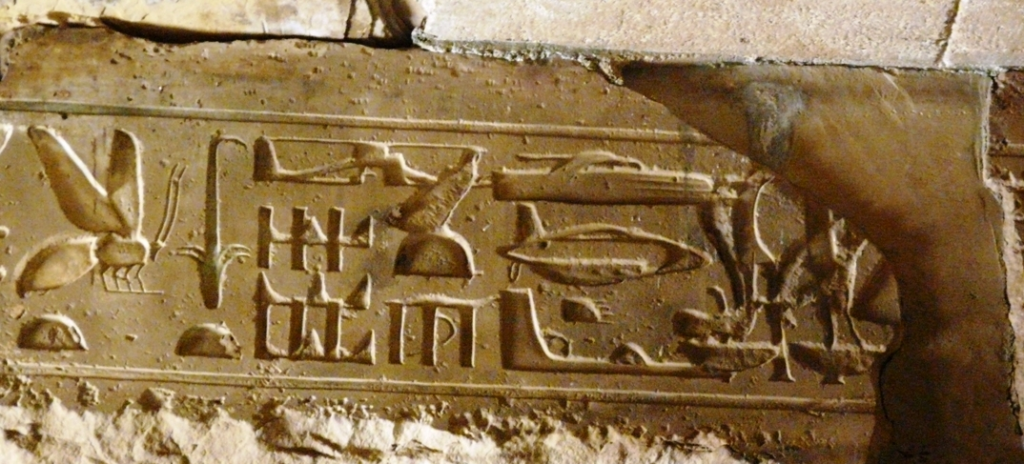
Case study 4: Abydos “helicopter” hieroglyphs and how Egypt produces pareidolia on an industrial scale
Walk into any online debate about “ancient advanced technology” and you will be shown a carved block at Abydos that seems to depict a helicopter and other modern machines.
The relief is real. The “helicopter” reading is the error.
The best explanation is a palimpsest: an older inscription was filled and recarved later, and the overlap of signs creates composite shapes that look like modern objects when viewed out of context. A detailed Egyptological-style discussion explicitly treats the Abydos “helicopter” as a palimpsest created by the overlapping names and titles of Seti I and Ramesses II, and explains why the resulting shapes are accidental. (Academia)
This interpretation is not exotic. Palimpsests are a known phenomenon in monumental inscriptions, and the practice of reinscribing earlier surfaces is attested across Egyptian sites, including major royal architecture.
Evidence note: this supports “misidentification via overlap,” not “there were aircraft.” It is a textbook example of why Egypt is visually hazardous for UAP research. Humans are built to see objects in noise, and Egyptian relief carving can generate the perfect kind of noise.
Interpretive extension (clearly labeled): the persistence of the Abydos “helicopter” claim also reveals something sociological that matters to UAP studies: people often prefer a technological secret to a symbolic or epigraphic explanation. Technology is our modern sacred language, so we retrofit it into ancient material even when a simpler historical mechanism exists.
Case study 5: The Saqqara Bird, tested
The “Bird of Saqqara” is another classic object used to argue that Egypt understood aerodynamics and built gliders.
Unlike many internet claims, this one has benefited from explicit technical testing. A 2023 aerodynamic investigation concluded that the alleged link between the artifact and ancient aerodynamic knowledge “could not be confirmed.” (Madain Project)
Evidence note: the artifact remains interesting as craftsmanship and symbolism, but it does not carry the weight that popular retellings place on it.
Interpretive extension (clearly labeled): the Saqqara Bird illustrates a recurring trap in anomalous-history debates. When an object looks streamlined, modern minds leap straight to “flight.” But ancient cultures made streamlined things for many reasons: ritual handling, visual elegance, or simple imitation of animals.
Case study 6: Dendera’s “light,” and what scholarly context changes
The Dendera “light bulb” meme usually goes like this: a crypt relief shows a bulb, a cable, and a power source, therefore Egypt had electric lighting.
That reading collapses the relief’s ritual-theological setting into a modern engineering diagram.
A more grounded approach starts with what the Dendera temple complex is: a late-period and Ptolemaic-era theological machine, dense with creation imagery and ritual text. A substantial scholarly treatment, Barbara A. Richter’s dissertation on the theology of Hathor at Dendera, describes Harsomtus at Dendera as a primeval creator who “first comes into being as a serpent emerging from a lotus” rising out of the Nun. (eScholarship)
That single sentence matters because it aligns with what the relief actually shows: a serpent form associated with emergence, framed within a structured symbolic scene rather than a workshop.
Evidence note: this supports the mainstream Egyptological direction, namely that the imagery is theological and symbolic, not a schematic for electric devices.
Interpretive extension (clearly labeled): symbolic does not mean “made up.” Symbolic systems are often how societies encode what they consider real but difficult to describe directly: origins, transformations, thresholds, and luminous force. In UAP studies, witness language often becomes symbolic when it runs out of everyday categories. Dendera is best approached as a window into how Egypt imagines luminous emergence, not as a literal blueprint for lighting.
The deeper Egyptian pattern: the sky as traffic, not wallpaper
If you step back from individual “internet-famous” items, a more interesting Egyptian pattern comes into view.
Egypt does not treat the sky as scenery. It treats the sky as a domain with routes, vehicles, gates, and layered zones. Solar barques travel. Stars are destinations and transformed beings. The king’s afterlife is described as movement through structured realms. The living and the dead are connected by passages that are repeated, mapped, guarded, and ritually rehearsed.
Evidence note: none of that is a direct UAP report. It is a worldview.
Interpretive extension (clearly labeled): worldviews act like filters. If unusual aerial phenomena occur in any era, cultures with “active sky” cosmologies will preserve them differently than cultures that treat the sky as inert. Egypt’s obsession with alignment, calendrics, and celestial order could amplify the recording of anomalies, but also could mythologize them rapidly.
This is why Egypt is meaningful to UAP research as comparative material, even when it is not “evidence” in the strict forensic sense. It shows how anomalies can migrate into kingship, ritual, architecture, and identity, and how a civilization can build long-term memory structures around the heavens.
Modern publications and controversies that shaped “Egypt equals sky visitors”
Modern UAP culture did not meet Egypt on neutral ground. It met Egypt through particular narrative pipelines.
One of the most influential figures in that pipeline is Erich von Däniken, whose early work helped popularize the idea that ancient monuments reflect intervention by non-human visitors. UAPedia’s profile notes that his first published “ancient astronaut” style argument emerged during time in Egypt and functioned as a prototype for later mass-market works. (Academia)
Evidence note: this is not cited as “proof.” It is cited as media history. It helps explain why Egypt is disproportionately invoked in modern UAP debates compared to many other ancient cultures.
Interpretive extension (clearly labeled): Egypt’s monuments create a psychological effect that is relevant to UAP discourse. They feel like artifacts from a mind larger than our own, even when the human explanations are strong. That emotional impact primes audiences to accept exotic explanations faster than they would elsewhere.
Implications for UAP research
This is where the article must be disciplined, because it is easy to slide from “Egypt is a useful comparative source” into “Egypt proves UAP contact.”
Evidence-based implications:
Egypt provides strong examples of sky-linked material culture, especially meteoritic iron used in elite objects, supported by modern compositional studies. (Wiley Online Library)
Egypt provides a historically grounded institutional context for elite scribal activity and knowledge preservation, making the idea of systematic recording plausible in general, even if particular texts are disputed. (gizamedia.rc.fas.harvard.edu)
Egypt also provides repeated demonstrations of how easy it is to misread layered inscriptions and symbolic iconography as modern technology if context is ignored. (Academia)
Comparative hypothesis (clearly labeled, not presented as fact):
If recurrent anomalous luminous phenomena occur across long spans of history, then a civilization like Egypt, with an “active sky” cosmology and strong scribal preservation, would be a prime candidate to transform those experiences into durable religious and political forms. This does not establish the cause of any phenomenon. It proposes a model for cultural processing of anomaly.
In other words, Egypt is not a single smoking gun. It is a case study in how humanity metabolizes sky-strangeness, sometimes into metal, sometimes into theology, sometimes into memes, and sometimes into disputed texts that behave like modern case reports even when the provenance collapses.
Claims taxonomy
Tutankhamun meteoritic iron dagger: Verified. This supports “meteoritic origin of the blade,” not broader UAP claims. (Wiley Online Library)
House of Life as a real scribal institution: Verified. (gizamedia.rc.fas.harvard.edu)
Tulli Papyrus “circles of fire” as an authentic Thutmose III record: Disputed. The underlying papyrus is reported lost/unavailable and scholarship treats its interpretations as conflicting, including forgery hypotheses. (Academia)
Abydos “helicopter” as intentional depiction of modern craft: Misidentification. The palimpsest explanation accounts for the composite forms. (Academia)
Dendera “light bulb” as evidence of electric lighting technology: Misidentification. Scholarly context supports the serpent-from-lotus creator motif central to the iconography. (eScholarship)
Saqqara Bird as proof of advanced aeronautics: Disputed leaning Misidentification. Aerodynamic analysis does not confirm the stronger popular claims. (Madain Project)
Speculation labels
Witness Interpretation
The published 1953 Doubt translation attributed to de Rachewiltz portrays the “circle of fire” as a physically present aerial phenomenon that provoked procedural reporting and royal attention, with descriptive details that read like an attempt to narrate observation rather than mythic recitation. This interpretation is embedded in the publication’s language, not independently verified by access to an original papyrus. (avalonlibrary.net)
Researcher Opinion
Reggiani’s analysis is best read as an Egyptological provenance investigation into how the Tulli Papyrus story evolved, and as a warning about treating a widely cited but inaccessible source as historical bedrock. The “case” becomes the document tradition itself. (Academia)
Hypothesis
Egypt’s strongest relevance to UAP studies may lie in its long-term “sky infrastructure,” meaning institutional literacy, ritualized celestial movement, and proven valuation of sky-origin materials. The hypothesis is that such infrastructure increases the cultural persistence of anomalous sky narratives, regardless of whether those anomalies were astronomical, atmospheric, experiential, or non-human. This is a comparative model, not a conclusion.
References
Comelli, D., D’Orazio, M., Folco, L., El-Halwagy, M., Frizzi, T., Alberti, R., Capogrosso, V., Nevin, A., Porcelli, F., & Hassan, H. (2016). The meteoritic origin of Tutankhamun’s iron dagger blade. Meteoritics & Planetary Science. (Wiley Online Library)
Gardiner, A. H. (1938). The Mansion of Life and the Master of the King’s Largess. Journal of Egyptian Archaeology, 24(1), 83–91. (gizamedia.rc.fas.harvard.edu)
Reggiani, N. (2017). Il Papiro Tulli: un affaire egittologico tra storia e leggenda. Analecta Papyrologica, 29, 217–233. (Academia)
Richter, B. A. (2012). The Theology of Hathor of Dendera: Aural and Visual Scribal Techniques in the Hathor Temple of Dendera (Doctoral dissertation, University of California). (eScholarship)
Roberson, J. A. (2016). Anatomy of a Palimpsest: The Not-so-Strange Case of the “Abydos Helicopter.” KMT: A Modern Journal of Ancient Egypt. (Academia)
Thayer, T. (Ed.). (1953). “Forteana ca 1500 BC” (attributed translation/commentary by Boris de Rachewiltz), in Doubt: The Fortean Society Magazine (No. 41). (Widely circulated reproduction). (avalonlibrary.net)
Zierow, M., & Lesemann, L. (2023). Aerodynamic investigation on the artefact “Bird of Saqqara.” Acta Mechanica et Automatica. (Madain Project)
UAPedia. (n.d.). Erich von Däniken: Architect of the Ancient Astronaut. Retrieved April 14, 2026. (Academia)
UAPedia. (n.d.). The Baetyls or “Fallen Stones” that keep reappearing in ancient UAP narratives. Retrieved April 14, 2026. (Madain Project)
SEO keywords
Ancient Egypt UAP, Egyptian sky phenomena, House of Life scribes, Tulli Papyrus circle of fire, Thutmose III sky report, meteoritic iron Egypt, Tutankhamun meteorite dagger, iron from the sky, Dendera Harsomtus serpent lotus, Abydos helicopter palimpsest, Saqqara Bird aerodynamic study, ancient and mythological UAP accounts, comparative UAP history Egypt