
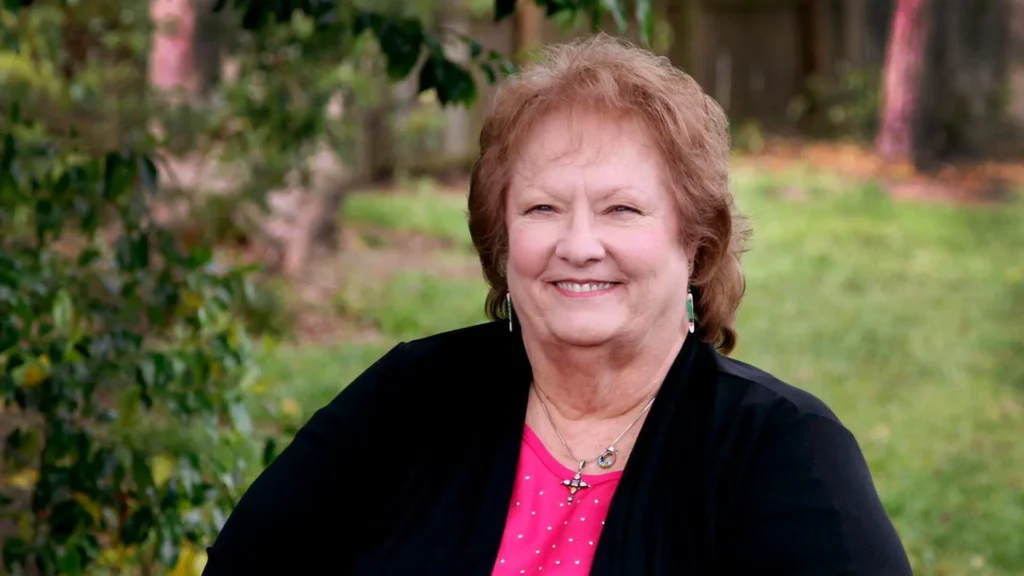
Denise Stoner occupies an unusual position in the study of UAP contact experiences. She has been presented as a witness to missing-time incidents, a contact experiencer, a MUFON investigator, a support-group facilitator, a survey researcher and a coauthor of books examining alleged nonhuman encounters.
An investigator normally approaches a case from the outside. Stoner stands on both sides of the interview table. She has listened to other people describe interrupted journeys, unusual beings and disturbing memories while maintaining that she and her husband, Ed, experienced two unexplained journey discontinuities of their own.
The first reportedly occurred during a family drive through Colorado in 1982. The second was reported during a cave-diving trip in Florida in 1991.
Her history raises questions that reach beyond one couple’s testimony. How should researchers evaluate events reconstructed years later? What happens when hypnosis adds detailed scenes to a simpler conscious recollection? Can an experiencer become a more compassionate investigator without allowing personal expectations to shape the inquiry?
The available record does not provide simple answers.
The central case narrative is reconstructed mainly from retrospective accounts published by Stoner and researcher Kathleen Marden. No independently curated public archive containing the original vehicle records, hypnosis recordings, affidavits, route documentation and dive logs was identified in the public sources reviewed for this article.
That limitation does not make the testimony irrelevant. It determines how the testimony should be classified.
The most responsible approach is to separate the evidence into layers. There is what Denise said she remembered consciously. There is what Ed reportedly remembered. There are statements attributed to relatives. There is imagery said to have emerged during hypnosis. Finally, there are interpretations proposed by Stoner, Marden and later commentators.
Those layers belong in the same case file. They do not carry equal evidentiary weight.
The Colorado journey
Denise Stoner’s best-known reported incident began during a family journey from Arvada, Colorado, toward a camping destination near Buena Vista in the summer of 1982.
Denise and Ed were travelling with their teenage daughter and the family dog. Their route followed U.S. Highway 285 through the mountain corridor west of Denver and into the South Park basin.
The fullest published reconstruction appears in Kathleen Marden and Denise Stoner’s 2013 book, The Alien Abduction Files. According to that account, the family briefly stopped near Kenosha Pass before continuing south.[1]
Denise reportedly noticed bright yellow-white lights as the family travelled through the South Park area. The lights appeared to approach the vehicle. She then experienced the car moving sideways, although the published narrative describes a break in normal awareness around this point.
The next clear recollection attributed to Denise and Ed was of travelling on a more distant section of the route after darkness had fallen.[1]
According to their retrospective account, the journey appeared inconsistent with the time and mileage they remembered observing. The odometer reading and their recollection of the distance travelled did not appear to match previous journeys along the route.
The often-repeated claim of a substantial mileage discrepancy therefore comes from Denise and Ed’s remembered comparison with earlier trips. It does not come from a preserved photograph of the instrument, an independent mechanical examination or a contemporaneous route analysis.
The family reportedly reached its destination much later than expected. Denise’s mother was later said to have recalled concern about their delayed arrival, while Ed reportedly supplied a written description of his memories.[1]
These additional accounts broaden the narrative beyond Denise alone. Their evidentiary value remains limited by provenance. Public readers generally encounter them through the reconstruction published by Marden and Stoner rather than through an independently maintained archive containing the original signed documents, recordings and custody history.
A statement reproduced or summarized in a coauthored book documents what the authors say a witness reported. It does not independently establish what caused the event.
What was remembered before hypnosis?
One of the most important features of the Stoner case is that the basic journey anomaly was reportedly remembered without hypnosis.
The consciously remembered core involved unusual lights, an apparent disturbance in the vehicle’s movement, a break in continuous awareness, recognition that the family had reached another part of the route and concern over the time and mileage they remembered observing.
Later hypnosis introduced a more elaborate narrative.
The resulting material reportedly included nonhuman figures, entry into an unfamiliar environment, medical or reproductive procedures and descriptions of unusual technology.[1]
These details belong to another evidentiary category.
A light consciously observed from a moving vehicle is not equivalent to an entity visualized during hypnosis almost three decades later. Both may be meaningful to the witness, but they arise under different conditions and should not be presented as if they possess identical reliability.
Stoner had explored parts of the experience before working with Marden, reportedly through sessions involving Dr. Bob Romack. According to the later published narrative, the original recordings and detailed documentation from those sessions were no longer available.[1]
That absence prevents independent examination of the questions asked, the order in which imagery appeared and the extent to which ideas may have been discussed before or during the sessions.
Marden began additional hypnosis work with Stoner in 2011.[1] By that point, Stoner had spent years reading, discussing and investigating contact reports. She was familiar with established motifs involving missing time, medical examinations, unusual interiors and nonhuman entities.
Prior knowledge does not prove that a memory is false. It creates a source-monitoring problem.
Human memory is reconstructive. Details can arise from perception, later conversation, inference, dreams, books, films or expectations without the witness consciously recognizing where each element originated.
Marden has publicly acknowledged that hypnosis can produce inaccurate or constructed material. Her interpretation nevertheless gives substantial weight to imagery recovered during the Stoner sessions.
The decisive question is not whether Stoner appeared sincere.
Sincerity and historical accuracy are separate issues. Hypnosis can increase emotional intensity and confidence without reliably distinguishing episodic memory from imagination, inference or confabulation.
The Florida journey
Denise and Ed reported another missing-time episode during a cave-diving trip in northern Florida in 1991.[1]
The couple were familiar with the general area around Little River Spring and Branford. According to their later account, they noticed shiny pointed or triangular forms near a field and barn.
Their next clear awareness reportedly occurred while they were travelling toward Lake City from an unexpected direction. They believed that a period of time had passed and that they had reached a location some distance from where they had previously been.[1]
Denise reportedly interpreted the experience as a recurrence of the Colorado event.
A dive log was later described as containing a brief “Lost Time” notation.[1]
The log is potentially important because it may suggest that the incident was noted relatively near the time of the journey. However, no independently authenticated forensic examination of the original log was identified in the public sources reviewed for this article.
The Colorado and Florida accounts share a recognizable structure. Both involve a familiar journey, an unusual visual stimulus, an interruption in continuous awareness, unexpected arrival at another location and two adults who reportedly experienced confusion.
That repetition deserves investigation.
It does not identify the cause.
Possible conventional explanations include a wrong turn, fatigue, absorbed attention, inaccurate time estimation, clock error, odometer malfunction or later memory convergence between spouses. None has been demonstrated as a complete explanation.
A nonhuman abduction has not been demonstrated either.
As in the Colorado case, later hypnosis reportedly produced scenes involving transport and nonhuman beings. Those scenes should remain separate from the consciously remembered journey anomaly.
Stoner’s MUFON roles
Stoner’s public role eventually expanded beyond her own reported experiences.
On May 22, 2012, Florida public broadcaster WLRN described her as the chief investigator for MUFON Florida.[2] The title is tied to a dated source and should not be assumed to describe every stage of her career. WLRN’s report is available through its archived article, “Weird Florida: Interview with Denise Stoner, Chief Investigator.” (WLRN)
MUFON’s Experiencer Resource Team page, accessed on July 18, 2026, listed Stoner as “Executive Committee – Emeritus.” The same institutional page described her earlier involvement with abduction-response and experiencer-research activities.[3] (MUFON Experiencer Resource Team)
MUFON’s biography also describes Stoner as a retired civil servant and says that she conducted background-investigation work involving candidates for the U.S. Navy’s nuclear-power programme. It further describes her as trained in hypnosis, a cave diver and a SCUBA instructor.[3]
The wording “trained in hypnosis” is important. The available institutional material does not identify a clinical licence, certifying body, course syllabus or standardized professional qualification. It therefore should not be read as evidence that Stoner held a medical, psychiatric or psychological credential.
Stoner’s career formed part of MUFON’s organized treatment of experiencer testimony. She participated in structures intended to give people reporting disturbing encounters a place to speak with investigators or support personnel.[3]
This approach offers a genuine advantage.
People reporting missing time, intrusive imagery or perceived nonhuman contact frequently fear ridicule. A listener who does not reject the account immediately may obtain a fuller description of what the witness believes occurred.
The same approach creates methodological risk.
An investigator who already interprets her own missing-time experiences as abduction may recognize that pattern quickly in another person’s report. An ambiguous dream, bodily sensation or memory gap can acquire a specific explanatory label before sleep-related, neurological, psychological or environmental possibilities have been examined.
Compassion is necessary, but compassion is not confirmation.
An experiencer can be treated respectfully without an investigator certifying the experiencer’s preferred explanation.
Publications and the public case
Stoner’s best-known publication is The Alien Abduction Files: The Most Startling Cases of Human-Alien Contact Ever Reported, coauthored with Kathleen Marden and published in 2013 by Career Press/New Page Books. Its print ISBN is 978-1-60163-271-5.[1]
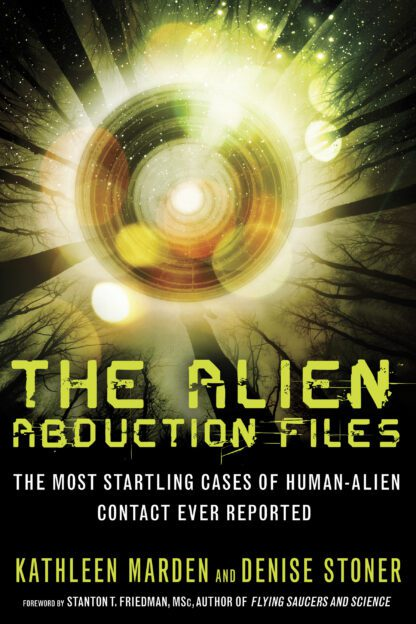
The book presents the main public reconstruction of the Colorado and Florida accounts. It also examines other contact cases and advances the authors’ position that at least some reported abductions represent physical interactions with nonhuman beings.
In 2014, Marden and Stoner published Making Contact: Alien Abduction Case Studies through Rosen Publishing. The book, ISBN 978-1-4777-8159-3, was produced for a broad readership and introduced reported contact cases, missing-time narratives and disputes surrounding alleged abduction.[4]
Stoner was also associated with research and case material discussed in Kathleen Marden’s 2019 book, Extraterrestrial Contact: What to Do When You’ve Been Abducted.[5]
Public bibliographic records establish the book’s publication and subject. The exact authorship and page ranges of individual Stoner contributions should be established from the physical edition before formal chapter-level credit is assigned.
These publications built Stoner’s public identity. They also created a recurring sourcing issue.
Her testimony became the subject of a book she helped author. The book then became the principal source used by later writers to document her testimony.
This does not make the record unusable. Memoirs, case books and witness-authored studies can preserve valuable history. They must be identified as participant-generated sources rather than independent archives.
The Marden–Stoner Commonalities Study
Stoner and Marden attempted to move beyond individual narratives through a questionnaire project called the Commonalities Study.
The researchers’ own study page, titled “Commonalities Study on UFO Abduction Experiencers,” says the project involved 50 volunteers who identified as experiencers and 25 people who served as a comparison group.[6] The methodology is described under the page heading “The Marden-Stoner Study on Commonalities Among UFO Abduction Experiencers.” (Commonalities Study)
The sample was self-selected and non-random. Recruitment occurred through networks and media already connected with contact research. The findings therefore cannot be used to estimate prevalence in the general population.
Marden and Stoner reported that most members of the experiencer group retained some conscious recall. They also reported overlapping forms of recall involving dreams, hypnosis, flashbacks and other experiences.[6]
These are researcher-reported findings from the participants who completed the questionnaires. The underlying anonymized responses and complete coding materials have not been released publicly in a form that permits independent reanalysis.
Marden later published additional results under the page title “UFO Abduction Commonalities Study.” That page compares findings from the earlier Marden–Stoner project with responses collected through a larger MUFON experiencer questionnaire.[7] (MUFON survey results)
The larger survey reportedly received 516 completed initial questionnaires. On the page’s discussion of dreams and recurring experiences, Marden reports that 509 respondents answered the relevant question.[7]
These figures document what the researchers reported about a self-selected sample. They are not population estimates and have not been independently replicated from a publicly released raw dataset.
Such surveys can still be useful. They may reveal recurring vocabulary, generate testable questions and help investigators improve interview forms.
They cannot determine the external cause of the reported experiences.
Similarity between accounts is difficult to interpret. Repeating motifs may indicate a common external phenomenon. They may also reflect shared cultural exposure, sleep processes, interviewer expectations, trauma or ordinary features of memory.
Both processes could operate simultaneously.
What psychological research contributes
Psychological research provides reasons for caution without offering a complete explanation for every contact report.
In 2002, Susan Clancy and colleagues compared participants who reported recovered abduction memories, participants who believed they had been abducted but lacked memories, and controls.
In a laboratory word-list task, the recovered-memory group displayed more false recall and false recognition than controls. The groups did not differ in correct recall or correct recognition. Hypnotic suggestibility, depressive symptoms and schizotypal features predicted some false-memory responses.[8] (PubMed)
This finding is relevant to narratives elaborated through hypnosis. It does not determine what happened during the Stoners’ road journeys.
A word-list experiment cannot recreate a particular night in Colorado.
A 2004 study led by Richard McNally measured physiological responses while participants listened to scripts based on their reported abduction experiences. Heart rate, skin conductance and facial-muscle activity indicated substantial emotional engagement.[9] (PubMed)
The findings show that a disputed memory can produce a genuine stress response.
Distress is evidence about the witness’s psychological and physiological state. It is not proof that the remembered event occurred precisely as interpreted.
A 2008 British study compared 19 experiencers with matched controls. The experiencer group scored higher on measures including dissociation, absorption, anomalous belief, fantasy proneness, hallucination tendency and self-reported sleep paralysis.[10]
The same study found no significant group difference in susceptibility to false memories. (PubMed)
The sample was small, so it should not be treated as a universal experiencer profile. It does show that the relationship between contact testimony and memory cannot be reduced to one simple measure of suggestibility.
A 2022 study compared 19 participants reporting abduction memories with 32 controls. The experiencer group showed higher average trauma and dissociation scores but lower measured suggestibility. Suggestibility was the group difference reported as statistically significant.[11] (PubMed)
Lower suggestibility on one instrument does not demonstrate that the participants’ memories were externally accurate. It means the experiencer group was not more suggestible according to the particular measure used.
None of these studies examined Denise Stoner. They provide relevant cautions and comparison models, not a diagnosis.
Sleep paralysis and incomplete explanations
Sleep paralysis is frequently discussed in relation to contact experiences.
During an episode, a person may awaken unable to move. The experience can include a sensed presence, pressure on the chest, voices, floating sensations, intense fear and vivid figures.
These features overlap with many bedroom encounter narratives.
That overlap matters, but sleep paralysis should not be used as a universal explanation. It does not neatly account for two awake adults reporting confusion during a moving-vehicle journey.
Different experiences in the same person’s life may have different causes. A witness could experience sleep paralysis on one occasion, a navigational mistake on another and an unresolved aerial observation at another time.
Forcing every report into one explanatory system can produce as much distortion as accepting every event as nonhuman contact.
Controverters and the central objections
The strongest objections to Stoner’s interpretation concern delayed publication, missing original records, hypnosis and prior exposure to contact literature.
Critical commentator Robert Sheaffer argued that The Alien Abduction Files gave excessive evidentiary weight to regression and retrospective narrative.[14]
His criticism reflects a broader concern within memory research. Detailed scenes recovered decades after an event may feel coherent while incorporating suggestion, expectation or previously encountered imagery.
The concern is especially relevant because Stoner knew the established vocabulary of abduction reports before the 2011 sessions. She was familiar with accounts of Greys, medical procedures, telepathy, reproductive programmes and biological-looking interiors.
The lack of preserved public evidence is another significant weakness.
No odometer photograph, independent vehicle inspection, contemporaneous police report, fuel receipt, medical record, telephone-location record or external sensor trace was identified in the public sources reviewed for this article.
The delay in publication also matters. The principal reconstruction appeared decades after the Colorado journey.
Delay is not evidence of deception. Witnesses may remain silent because of stigma, fear or professional consequences. Time nevertheless increases opportunities for memories to be discussed, merged and reinterpreted.
The counterpoint is that the published narrative does not describe an entirely solitary bedroom experience. It attributes the central journey confusion to both Denise and Ed and describes family awareness of the delayed arrival. A dive-log notation is also claimed in connection with the Florida journey.
These elements justify retaining the incidents as unresolved testimony.
They do not independently establish physical abduction.
Impact on experiencer research
People reporting contact experiences often have two distinct needs. They want to understand what happened, and they want relief from the fear or isolation produced by the experience.
Those needs can become entangled when the same person provides emotional support and determines the event’s external cause.
Stoner’s career formed part of MUFON’s organized treatment of experiencer testimony. Her work illustrates both the value and the danger of experiencer-centred investigation.
A compassionate interviewer may reduce stigma and obtain richer testimony. Premature validation may also harden an interpretation before medical, neurological, sleep-related, psychological and environmental explanations have been considered.
Future investigations should preserve every evidentiary layer.
Witnesses should be interviewed separately before comparing stories. Original recordings should be retained with metadata. Investigators should document the exact wording and sequence of questions. Routes, weather, astronomical conditions, vehicle records, fuel use and phone-location information should be gathered promptly and with consent.
Hypnosis should not be treated as a truth-detection technology. At most, it can generate therapeutic material or investigative leads. A hypnosis-derived detail should require independent corroboration before it enters the factual core of a case.
The broader lesson is humane but demanding.
A witness should not be ridiculed because a case lacks proof.
A claim should not be accepted because a witness appears sincere.
Implications
The Stoner cases show why experiencer research requires openness and restraint.
Witness testimony can preserve events that no instrument recorded. It can also change over time. Hypnosis can produce information, but not necessarily historical information. Shared testimony can increase investigative interest without proving a shared external cause.
Stoner’s career formed part of MUFON’s organized treatment of experiencer testimony. Her own history also demonstrates how easily support, belief and evidence can become entangled.
The enduring question is not whether the experiences affected her. They shaped her writing, research and public role.
The unresolved question is what happened on those roads.
Claims taxonomy
Verified
Denise Stoner and Kathleen Marden published The Alien Abduction Files in 2013 and Making Contact in 2014.
WLRN described Stoner as MUFON Florida’s chief investigator on May 22, 2012.
MUFON’s Experiencer Resource Team page, accessed on July 18, 2026, listed Stoner as “Executive Committee – Emeritus.”
Probable
The published record consistently attributes reports of unusual journey discontinuities to Denise and Ed Stoner.
The core Colorado narrative involving lights, route confusion and concern over elapsed time was reportedly discussed before Marden’s 2011 hypnosis sessions.
This classification concerns the existence and chronology of the published testimony. It does not establish the accuracy of every remembered detail or identify the cause.
Disputed
The claim that nonhuman entities physically removed the Stoners from their vehicle is disputed.
The alleged mileage discrepancy remains disputed because the original instrument and contemporaneous records have not been made publicly available.
The detailed entity encounters, medical procedures, biological environments and technological explanations are disputed because they depend heavily on delayed recollection and hypnosis without independent physical corroboration.
Legend
Descriptions of Greys, biological interiors, reproductive programmes and multigenerational contact belong to the modern cultural tradition of abduction narratives.
This classification does not mean that a witness is dishonest or that an event has been proved fictional. It identifies motifs that circulate through testimony, literature, media and community retelling, acquiring a recognizable narrative form.
Speculation labels
Hypothesis
One hypothesis is that an external nonhuman intelligence interrupted the Stoners’ journeys, affected their awareness and returned them farther along the route. The repeated structure of the two reports is compatible with that possibility, but the available public evidence does not demonstrate it.
A second hypothesis is that the incidents involved an external anomaly affecting attention, perception or memory without conventional physical removal. This interpretation overlaps with reports discussed through the Oz Factor and Missing Time frameworks.
A third hypothesis is that ordinary journey disruptions were later reconstructed through discussion, expectation and hypnosis. Navigation errors, fatigue, clock discrepancies, odometer malfunction and memory convergence remain possible components.
A mixed model is also possible. An unusual light or aerial event may have occurred, while later memory processes supplied details that were not part of the original observation.
Witness Interpretation
Denise Stoner interpreted the Colorado and Florida incidents as physical nonhuman abductions embedded within a longer history of contact.
Ed Stoner’s published testimony supports the claim that he experienced confusion during the journeys. His hypnosis-derived imagery does not independently verify every part of Denise’s interpretation.
Researcher Opinion
Kathleen Marden has argued that the Colorado case deserves attention because two adults reportedly shared the journey anomaly and relatives were said to have noticed the delayed arrival.
Memory researchers and critical commentators argue that hypnosis, long delay, missing original records and prior exposure to abduction imagery substantially weaken the later detailed scenes.
The available evidence supports continued documentation more strongly than it supports categorical confirmation or dismissal.
References
[1] Marden, K., & Stoner, D. (2013). The alien abduction files: The most startling cases of human-alien contact ever reported. Career Press/New Page Books. ISBN 978-1-60163-271-5. The Colorado and Florida details are attributed to the book’s Stoner case narrative. Exact pagination varies between print and electronic formats, so fine-grained clock, mileage and route figures have not been reproduced here without edition-specific page references.
[2] WLRN Public Media. (2012, May 22). Weird Florida: Interview with Denise Stoner, chief investigator. https://www.wlrn.org/television/2012-05-22/weird-florida-interview-with-denise-stoner-chief-investigator. Accessed July 18, 2026.
[3] Mutual UFO Network. (n.d.). Experiencer Resource Team. https://mufon.com/experiencer-resource-team-ert/. Accessed July 18, 2026.
[4] Marden, K., & Stoner, D. (2014). Making contact: Alien abduction case studies. Rosen Publishing. ISBN 978-1-4777-8159-3.
[5] Marden, K. (2019). Extraterrestrial contact: What to do when you’ve been abducted. Red Wheel/Weiser. ISBN 978-1-59003-301-2.
[6] Marden, K., & Stoner, D. (2013). Commonalities Study on UFO Abduction Experiencers. Section: “The Marden-Stoner Study on Commonalities Among UFO Abduction Experiencers.” https://www.kathleen-marden.com/ufo-abductee-study.php. Accessed July 18, 2026.
[7] Marden, K. (n.d.). UFO Abduction Commonalities Study. Sections discussing the Marden–Stoner study, the MUFON experiencer questionnaire and recurring dreams. https://www.kathleen-marden.com/ufo-abduction-commonalities-study.php. Accessed July 18, 2026.
[8] Clancy, S. A., McNally, R. J., Schacter, D. L., Lenzenweger, M. F., & Pitman, R. K. (2002). Memory distortion in people reporting abduction by aliens. Journal of Abnormal Psychology, 111(3), 455–461. https://doi.org/10.1037/0021-843X.111.3.455
[9] McNally, R. J., Lasko, N. B., Clancy, S. A., Macklin, M. L., Pitman, R. K., & Orr, S. P. (2004). Psychophysiological responding during script-driven imagery in people reporting abduction by space aliens. Psychological Science, 15(7), 493–497. https://doi.org/10.1111/j.0956-7976.2004.00707.x
[10] French, C. C., Santomauro, J., Hamilton, V., Fox, R., & Thalbourne, M. A. (2008). Psychological aspects of the alien contact experience. Cortex, 44(10), 1387–1395. https://doi.org/10.1016/j.cortex.2007.11.011
[11] Latorre, J. I., & Vellisca, M. Y. (2022). Post-traumatic stress disorder, suggestibility, and dissociation related to alleged alien abductions. Explore, 18(5), 519–522. https://doi.org/10.1016/j.explore.2021.10.003
[12] National Aeronautics and Space Administration. (2023, September 14). UAP Independent Study Team report. https://science.nasa.gov/wp-content/uploads/2023/09/uap-independent-study-team-final-report.pdf.
[13] All-domain Anomaly Resolution Office. (2024). Report on the historical record of U.S. government involvement with unidentified anomalous phenomena, Volume I. U.S. Department of Defense. https://www.aaro.mil/Portals/136/PDFs/AARO_Historical_Record_Report_Vol_1_2024.pdf.
[14] Sheaffer, R. (2014). Delving into the abduction files. Skeptical Inquirer, 38(1). https://skepticalinquirer.org/wp-content/uploads/sites/29/2014/01/p58.pdf.
SEO keywords
Denise Stoner, Denise Stoner MUFON, MUFON experiencer research, MUFON abduction investigation, Colorado missing time, 1982 Colorado UAP case, Ed Stoner, Florida missing time, Kathleen Marden, The Alien Abduction Files, experiencer testimony, UAP hypnosis, regression hypnosis, false memory and UAP, contact and abduction experiences, nonhuman contact claims, MUFON Experiencer Resource Team, UAP witness reliability, missing time phenomenon, UAP case studies, Denise Stoner biography, abduction research methodology, UAP experiencer support