Kevin D. Randle occupies an unusual position in the history of UAP investigation. He helped build the modern Roswell narrative, interviewed many of the people who shaped it, defended the case against official explanations, and later removed several prominent witnesses when their stories failed closer examination.
That combination makes him more than a Roswell advocate. It makes him a case study in how anomalous history is constructed.
Randle’s career shows what happens when investigators work without a complete archive, authenticated physical material, or a single uncontested witness account. It also shows how researchers can become entangled in the cases they study. They collect testimony, identify patterns, publish interpretations, discover contradictions, and sometimes have to dismantle parts of their own work.
Roswell is often presented as a contest between two fixed positions. One side sees the remains of a classified military balloon system. The other sees the recovery of an engineered vehicle of non-human origin. Randle’s mature work occupies a more complicated space. He argues that the Project MOGUL explanation does not fully resolve the event, while also acknowledging that some of the most dramatic testimony once associated with Roswell cannot be trusted.
His importance therefore lies not only in what he believes happened in New Mexico in 1947. It lies in how he has handled evidence, error, memory, official records, witness credibility, and investigative self-correction across nearly four decades.
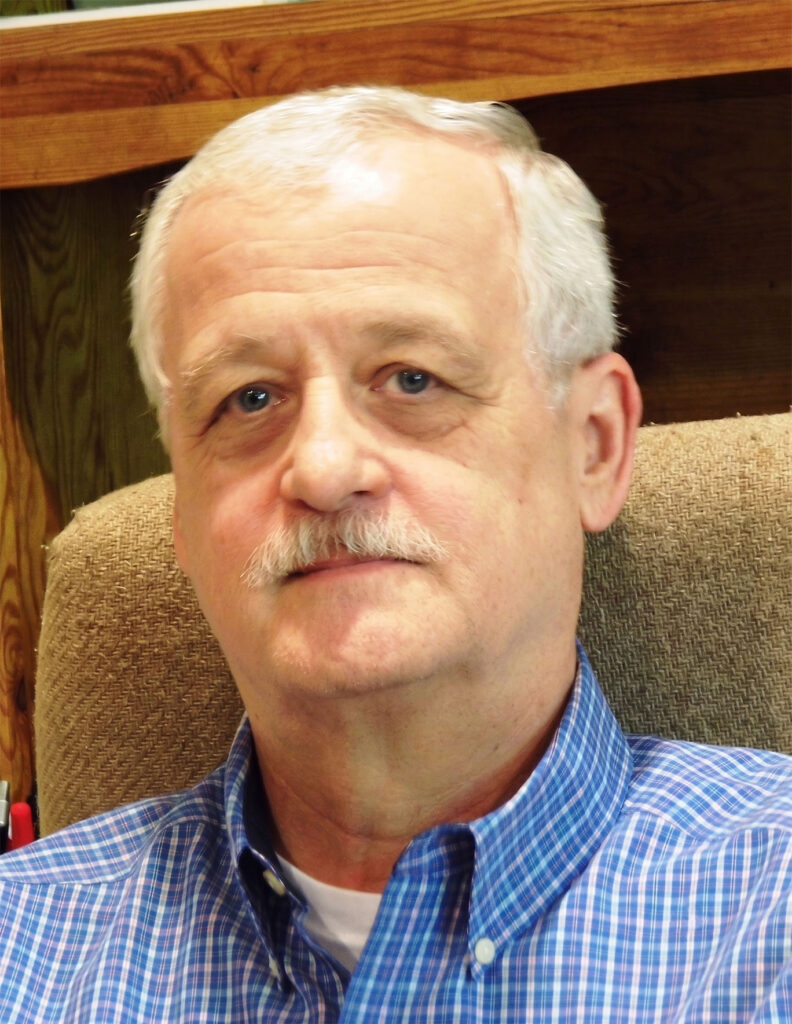
A military career behind the researcher
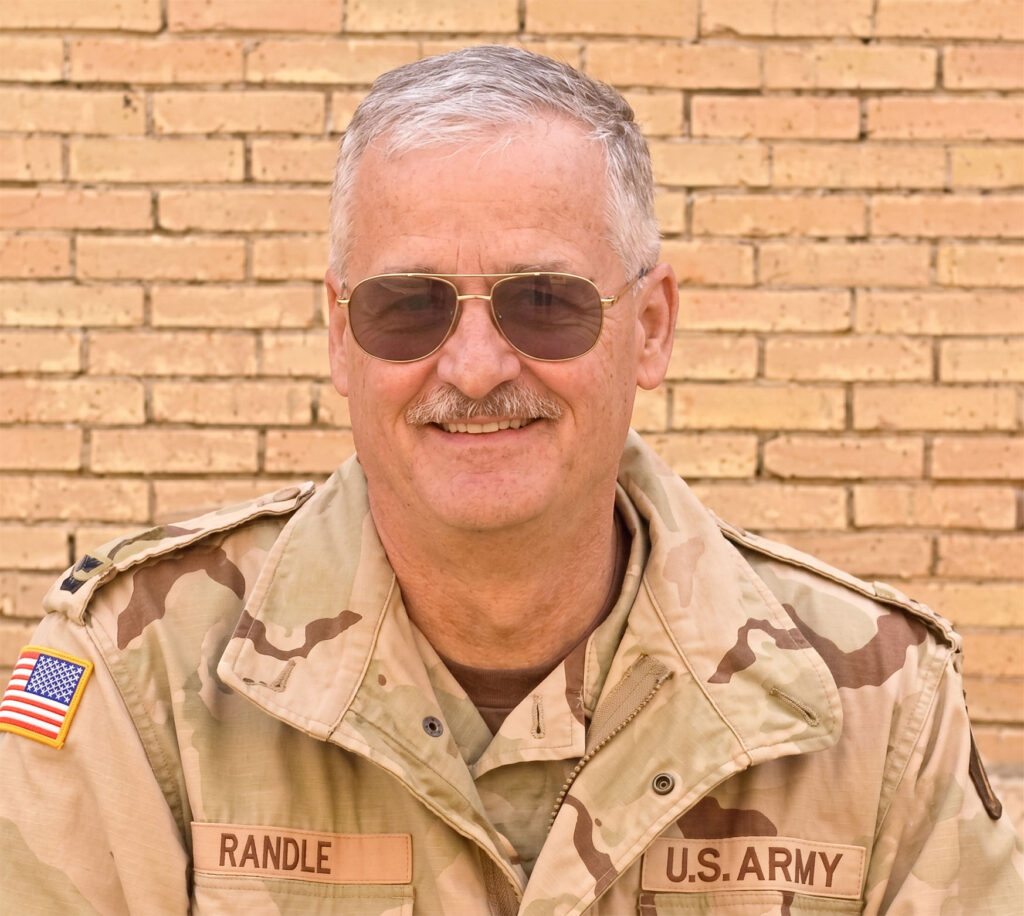
Publisher and autobiographical biographies describe Randle as a retired lieutenant colonel who served as an Army helicopter pilot during the Vietnam War and later as an intelligence officer in Iraq. Speaking Volumes identifies him as a Vietnam veteran and retired lieutenant colonel, while author biographies and his own interviews describe battalion-level intelligence service during his Iraq deployment (Speaking Volumes, n.d.; Sheaffer, 2011).
Those claims are widely repeated, but they should be understood according to their source. They come primarily from Randle’s own accounts and publisher biographies rather than from a publicly available independent audit of his complete service record.
His military and intelligence background appears to have influenced his investigative approach.
Randle frequently focuses on the practical details inside military stories. He asks who had the authority to issue an order, how recovered material would have been transported, which unit had responsibility for a site, what records should have been created, and whether a witness’s claimed rank or assignment matches the role described.
That approach does not automatically validate his conclusions. Military experience is not proof that a witness correctly identified unusual debris, nor does it establish that an investigator can reconstruct every classified procedure. It does, however, help explain why Randle repeatedly returns to command structure, chain of custody, personnel records, logistics, and documentary provenance.
His writing career developed alongside his military service. Randle has published science fiction, military novels, action-adventure fiction, UAP investigations, Roswell histories, and works on abduction research.
In a 2011 interview, Randle estimated that he had authored over 100 books when fiction, nonfiction, and certain foreign or special editions were included. He described the total as including approximately 22 UAP books, 25 to 30 science-fiction titles, 40 to 50 action-adventure books, and additional editions published in other formats or markets (Sheaffer, 2011).
That prolific output has sometimes made it difficult to separate Randle the investigator from Randle the storyteller. A writer seeks structure. Historical evidence often resists it. Much of his career has unfolded in the tension between those two impulses.
Before Roswell became his defining case
Randle’s involvement with anomalous phenomena did not begin with Roswell.
Biographical accounts identify him as a field investigator for the Aerial Phenomena Research Organization during the 1970s. His early work included investigations of reported animal mutilations and close-encounter claims (Encyclopedia.com, n.d.).
He also wrote about the Pat Roach incident, which was published under the pseudonym “Patty Price.” The 1973 account involved beings allegedly entering a witness’s home and approaching the sleeping environment. Randle later discussed it as an early published example of the domestic-entry pattern that became familiar in subsequent abduction literature (Sheaffer, 2011).
Similar bedroom-entry motifs appeared in many later abduction reports. They often included paralysis, missing time, luminous figures, bodily examination, telepathic communication, or altered states of awareness.
Randle did not ultimately become an unquestioning defender of the abduction interpretation. His later work moved in the opposite direction.
In The Abduction Enigma, written with Russ Estes and psychologist William P. Cone, Randle challenged research methods that relied heavily on hypnosis, suggestive interviewing, investigator expectation, and the assumption that unusual memories must describe literal physical abduction (Randle et al., 1999; Kirkus Reviews, 1999).
This placed him in conflict with parts of the experiencer-research community. He argued that some reported bedroom encounters could be related to sleep paralysis, hypnagogic imagery, cultural reinforcement, suggestibility, or memory construction. At the same time, he did not dismiss all experiencer testimony as equivalent. Cases involving contemporaneous reporting, several independent witnesses, physical traces, external locations, or documentary corroboration received greater weight in his assessment (Sheaffer, 2011).
This distinction became central to his later approach. Randle did not argue that every extraordinary experience had a conventional explanation. He argued that researchers could not identify the cause of an experience merely by accepting the witness’s interpretation of it.
That principle would become equally important in Roswell.
The Roswell announcement that cannot be erased
The documented Roswell story begins on July 8, 1947.
On that date, Roswell Army Air Field issued a statement saying that its intelligence office had obtained a “flying disc.” The Roswell Daily Record reported the announcement under a headline describing the object as a “flying saucer” (Roswell Daily Record, 1947; General Accounting Office, 1995).
The contemporary report stated that rancher William “Mac” Brazel had found unusual material, that Chaves County Sheriff George Wilcox notified Roswell Army Air Field, and that Major Jesse Marcel and other military personnel became involved in recovering it (Roswell Daily Record, 1947).
The wording matters.
The military did not merely respond to a civilian newspaper rumor. Its own public information office issued the announcement. The release identified the intelligence office of the 509th Bomb Group as having obtained the object and stated that the material was sent to higher headquarters.
Within hours, Brigadier General Roger Ramey’s command in Fort Worth presented a different explanation. The recovered material was described as the remains of a weather balloon and radar target (General Accounting Office, 1995).
That reversal created the enduring Roswell problem.
A premature press release does not establish that a non-human vehicle was recovered. Military organizations make errors, especially during periods of intense public interest. Yet the sequence remains historically significant because the first explanation came from the military itself and was replaced almost immediately by a second.
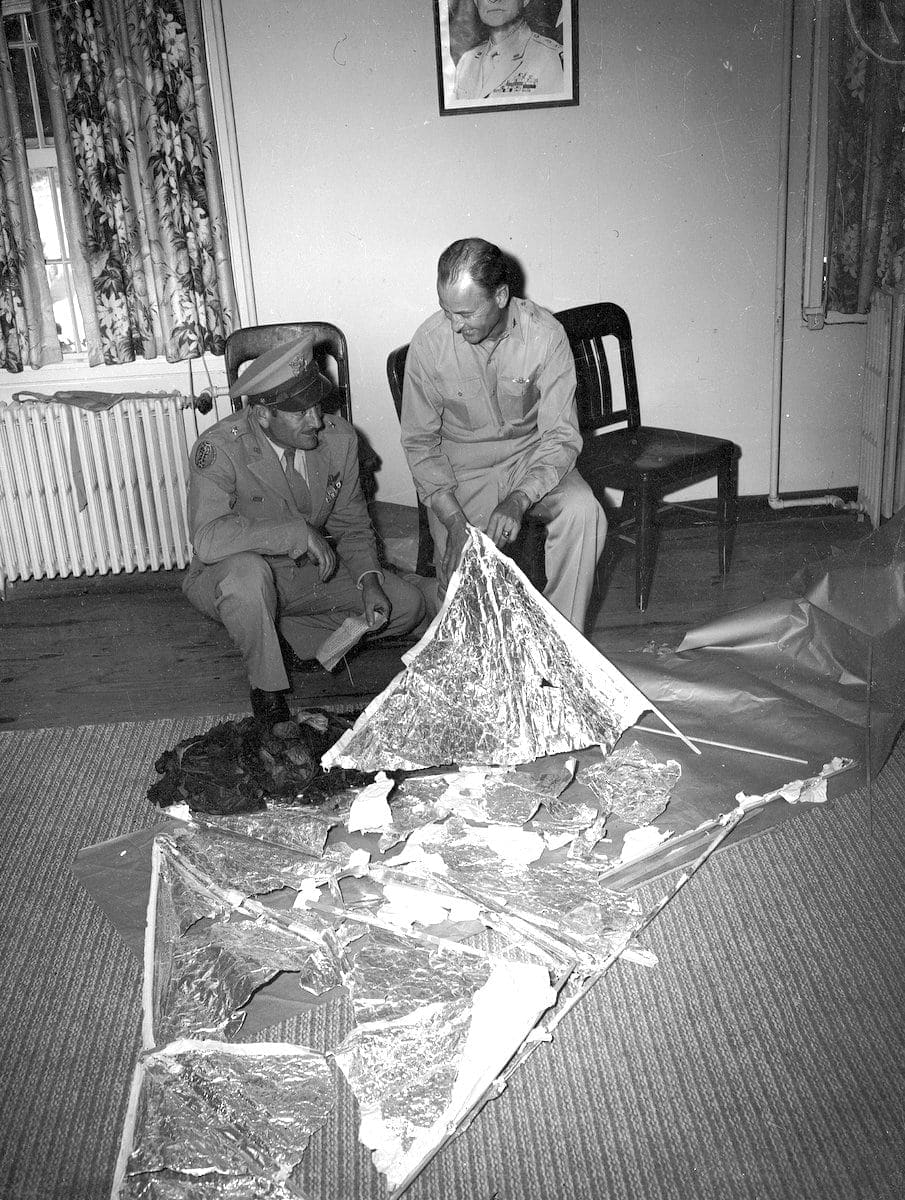
The surviving photographs taken in Ramey’s office show material that weather officer Irving Newton identified at the time as balloon and Rawin radar-reflector components. Later Air Force investigators reached the same general conclusion. No visibly exotic material can be established from the photographs (United States Air Force, 1994).
The disputed question is whether those photographs show the same material recovered from the ranch.
Randle’s interpretation is that conventional material was substituted for the debris brought to Fort Worth. Critics argue that the photographs show exactly what was recovered and that later claims of substitution emerged from memory, expectation, or attempts to preserve an extraordinary interpretation (Randle, 2022; Pflock, 2001).
The photographs therefore settle one question but not the other. They establish that ordinary balloon-related material was displayed in Ramey’s office. They do not independently establish whether that display represented the entire recovery.
How Randle entered the modern Roswell investigation
Roswell attracted little sustained national attention for roughly three decades after 1947.
The case re-entered public consciousness when Stanton T. Friedman and other researchers located and interviewed Jesse Marcel in the late 1970s. Marcel’s statements transformed the incident from a brief military press embarrassment into a possible recovery of material that a former intelligence officer considered extraordinary.
Randle and Donald Schmitt entered the investigation later. Their research developed through interviews, archival searches, site visits, correspondence, military records, and the examination of earlier witness statements.
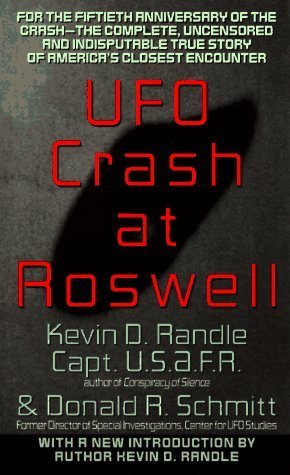
Their 1991 book, UFO Crash at Roswell, helped establish the modern crash-retrieval narrative. Their 1994 follow-up, The Truth About the UFO Crash at Roswell, expanded the case to include additional recovery locations, military transport, alleged bodies, hospital-related stories, and claims of extensive official control (Randle & Schmitt, 1991, 1994).
Those books had enormous influence.
They did not produce an authenticated fragment of unusual debris or a surviving official document explicitly describing a non-human craft. Their impact came from assembling a network of witnesses into a coherent historical account.
Randle became one of the principal civilian interviewers associated with Roswell. This is an analytical description, not an official title. His books, articles, recorded interviews, later corrections, and public debates show that he played a major role in preserving and shaping the case’s oral history.
The same role exposed him to the greatest risk in Roswell research.
Oral testimony can recover information that official files omit. It can also be changed by time, repetition, expectation, media exposure, social reinforcement, illness, family discussion, and the influence of the interviewer.
Roswell’s witness record contains all of those hazards.
Case study: Jesse Marcel
Jesse Marcel remains the most important witness in Randle’s Roswell research because his involvement is independently documented.
Marcel served as the intelligence officer of the 509th Bomb Group and was named in contemporary reporting connected to the recovery. Unlike many later Roswell witnesses, he did not have to establish that he had access to the event. His official position and participation were already part of the historical record (Roswell Daily Record, 1947; General Accounting Office, 1995).
In interviews recorded more than 30 years later, Marcel described material he regarded as unlike ordinary aircraft debris or a familiar balloon system. He recalled lightweight fragments, foil-like material with unusual properties, parchment-like pieces, beam-shaped components, and markings he compared to hieroglyphic symbols. These recollections were later incorporated into the modern Roswell literature by researchers including Friedman, Moore, Randle, and Schmitt (Randle & Schmitt, 1991; Pflock, 2001).
Marcel eventually interpreted the material as something not manufactured on Earth.
That interpretation deserves attention because Marcel had direct access to the recovery and relevant military experience. It is still an interpretation.
The detailed public account emerged decades after the incident, and no authenticated sample accompanied it. The passage of time creates unavoidable uncertainty. Memory can retain central impressions while losing dimensions, sequence, quantity, wording, and technical detail.
Marcel’s son, Jesse Marcel Jr., later recalled being shown pieces of the material at the family home when he was ten years old. He described a small beam bearing purple or violet symbols. His account offers family corroboration for the claim that Marcel brought material home before continuing to Fort Worth (Randle & Schmitt, 1991; Randle, 2022).
It is not fully independent corroboration.
The father and son were part of the same household, discussed the event over subsequent years, and became publicly associated with the Roswell story. Their accounts may reinforce one another while still deriving from the same original episode and family memory.
Randle places substantial weight on the Marcel testimony because it comes from witnesses with direct claimed access. Critics point to the delayed interviews, lack of preserved material, inconsistencies between recollections, and the conventional appearance of the Fort Worth debris (Pflock, 2001).
A careful assessment should not force the testimony into a false choice between complete acceptance and complete dismissal.
The Marcel accounts are evidence that the witnesses remembered unusual material and understood it as extraordinary. They are not laboratory identification of the material’s origin.
Cavitt, Newton, and the opposing testimony
The Marcel account is not the only direct military testimony.
Captain Sheridan Cavitt later described the debris as balloon-related and recalled a smaller, less dramatic recovery scene. Irving Newton, the Fort Worth weather officer asked to examine the displayed material, identified it as a weather balloon and Rawin radar target. Both accounts were incorporated into the Air Force’s later Roswell review (United States Air Force, 1994).
The Fort Worth photographs support Newton’s description of what was visible in the room.
Randle’s argument is that Newton was shown replacement material rather than the original debris. Marcel later said that the objects in the photographs were not the unusual fragments he had collected. Statements attributed to General Thomas DuBose have also been interpreted by some researchers as supporting the use of a cover story or substituted display material (Randle, 2022).
DuBose’s testimony is not simple.
Different interviews and interpretations have produced disagreements over whether he was describing a general public-relations explanation, a direct order to substitute debris, or only the handling of material already identified as conventional. The evidentiary value of his testimony depends heavily on precise wording, interview context, and which account is being cited.
This is why Roswell remains difficult.
The witnesses were describing overlapping events, but they were not producing identical accounts. Their memories were recorded at different times, by different investigators, under different expectations.
Randle resolves the conflict in favor of substitution. Air Force investigators and skeptical researchers generally resolve it in favor of the balloon explanation. The public record does not provide an uninterrupted physical chain of custody that conclusively settles the dispute.
The Air Force reports and Project MOGUL
The United States Air Force released two major Roswell studies during the 1990s.
The 1994 report concluded that the ranch debris most plausibly came from balloon equipment associated with Project MOGUL, a classified effort intended to detect evidence of Soviet nuclear testing. MOGUL balloon trains used ordinary components, including balloons, radar reflectors, cordage, tape, instrument packages, and lightweight structural material (United States Air Force, 1994).
This explanation improved upon the vague “weather balloon” statement issued in 1947. It provided a genuine classified purpose that could account for military sensitivity while also identifying physical material resembling some elements of the debris descriptions.
The 1997 report addressed the body stories. It proposed that later Roswell narratives incorporated memories of anthropomorphic dummy operations, a 1956 KC-97 aircraft accident, and a 1959 balloon mishap (United States Air Force, 1997).
The Air Force did not claim that test dummies were dropped near Roswell in July 1947. Its argument was that witnesses, researchers, and storytellers compressed memories of later events into a short period surrounding the 1947 recovery.
That type of chronological compression is psychologically possible. It cannot be treated as a universal explanation without testing each witness account individually.
A person who vaguely remembers small bodies near a military installation decades earlier may have combined separate events. A witness who identifies a particular officer, date, vehicle, building, or recovery location presents a more specific claim. That claim may still be mistaken, but it requires specific analysis.
Randle rejects the Air Force conclusion that a particular MOGUL launch explains the debris.
In his 2022 paper, “A Grounded Theory Update on the Roswell UFO Incident,” he argues that the proposed MOGUL Flight No. 4 was cancelled, drawing on project leader Albert Crary’s field notes. He also questions later reconstructions of the balloon’s path and suggests that some details attributed to Flight No. 4 may have been drawn from the documented Flight No. 17 (Randle, 2022).
Randle’s reasoning is conditional. If Flight No. 4 did not take place, it could not have deposited debris on the Foster ranch.
Critics respond that experimental balloon activity was not always documented with perfect consistency and that components associated with MOGUL remain the best material match. They also note that weakening the attribution to one specific launch does not identify an extraordinary alternative (Pflock, 2001).
That is the key evidentiary divide.
The MOGUL explanation requires a historically plausible connection between known balloon operations and the debris field. A non-human interpretation requires reliable evidence that the material possessed properties beyond known manufacture.
Neither side benefits from pretending that a weakness in the opposing case automatically proves its own.
The incomplete official archive
A separate inquiry was conducted by the United States General Accounting Office, now the Government Accountability Office, at the request of Representative Steven Schiff.
The GAO confirmed the July 8 announcement, the subsequent balloon explanation, and the limited surviving documentary record. It also found that Roswell Army Air Field administrative records covering March 1945 through December 1949 had been destroyed. Outgoing-message records covering October 1946 through December 1949 had also been destroyed (General Accounting Office, 1995).
The surviving disposition form did not identify who destroyed the records, when the destruction occurred, or under what authority it was done.
This is a verified archival problem.
It is not proof of a hidden non-human recovery. Military records are sometimes destroyed through routine retention schedules, administrative error, consolidation, or poorly documented archival practices.
At the same time, the absence is not irrelevant. Those records covered the precise period investigators need in order to reconstruct the base’s activities, communications, and administrative response.
The GAO found only two surviving 1947 government records directly connected to the Roswell event: a unit history and an FBI teletype (General Accounting Office, 1995).
The responsible conclusion is narrow. The official archive is incomplete, and the reason for the destruction of those particular records cannot be reconstructed from the surviving disposition documentation.
The gap leaves room for speculation, but it cannot carry the weight of proof.
The Ramey Memo
One of the most technically revealing parts of Randle’s work concerns the document visible in General Ramey’s hand in the Fort Worth photographs.
For years, researchers attempted to enlarge and decipher the blurred text. Proposed readings included words associated with “victims,” “remains,” recovery operations, and balloon equipment.
The stakes were obvious. If the memo contained a clear reference to bodies or an unusual craft, it could provide contemporaneous support for later witness testimony.
Randle did not accept the most dramatic reading merely because it favored an extraordinary interpretation.
Working with psychologist James Houran, he investigated the effect of contextual priming on attempts to read the image. Participants were divided into groups and given different suggestions about the memo’s possible content. Their proposed readings tended to follow the contextual cues they had received, although there was some agreement concerning individual words across groups (Houran & Randle, 2002).
Some individual words may be legible, but the surviving image does not support a reliable full transcription or confident contextual reading. Proposed interpretations remain vulnerable to expectation and contextual priming (Houran & Randle, 2002; Randle, 2022).
That conclusion is methodologically significant.
The memo may contain relevant language, but the available photograph does not permit a dependable reconstruction of the document as a whole. AI-based enhancement may increase apparent visual clarity, but it cannot restore information that was not captured in the original negative and may introduce interpretive artifacts.
The Ramey Memo is therefore best classified as unresolved visual evidence.
It should not be cited as proof of bodies, a non-human craft, or a Project MOGUL recovery.
The witnesses Randle removed
The most revealing part of Randle’s legacy may be the evidence he rejected.
As Roswell grew in public importance, additional witnesses appeared with stories of guarded sites, bodies, secret flights, hospital procedures, unusual containers, recovery teams, and classified briefings.
Some of those accounts seemed to solve gaps in the developing narrative. They also created opportunities for embellishment, confusion, status seeking, and deliberate invention.
Frank Kaufmann became one of the most damaging examples.
Kaufmann claimed direct military knowledge and participation in recovery operations. His account included operational details that initially impressed investigators. Later documentary work undermined his credentials and exposed serious problems in the records and claims he had presented.
Randle eventually concluded that Kaufmann had fabricated central elements of his story. He publicly examined how Kaufmann entered the investigation and acknowledged that researchers, including himself, had been misled (Randle, 2007).
Glenn Dennis presented a different problem.
Dennis described mortuary-related inquiries and told a story involving a nurse who supposedly encountered unusual bodies at the base hospital. His account was largely second-hand, changed over time, and depended heavily on a nurse whose identity and fate could not be independently established.
Randle eventually concluded that Dennis’s narrative was too unreliable to remain part of his Roswell case. The principal evidentiary findings were that the account changed, direct access was limited, supporting details remained unverified, and the nurse story could not be reliably confirmed (Randle, 2020; Sheaffer, 2011).
Walter Haut presents another difficult case.
Haut issued the original Roswell press release. His early accounts generally described that act as the limit of his involvement. A much later affidavit, prepared for release after his death, described far greater direct exposure to alleged craft and body evidence.
Randle compared the late affidavit with Haut’s earlier statements and concluded that the contradictions prevented the later account from carrying the weight some researchers assigned to it (Randle, 2016).
This does not prove why the story changed.
Age, memory, influence, private belief, family involvement, interviewer expectation, or deliberate embellishment are all possible. The safest conclusion is that the late affidavit conflicts substantially with the earlier record and cannot be treated as independent confirmation without qualification.
Randle’s handling of these witnesses matters because it exposes a central weakness in historical UAP investigation. A dramatic witness can enter the literature quickly and remain there long after the original investigator has withdrawn support.
Books continue circulating. Documentaries repeat older claims. Online summaries copy one another. A correction rarely travels as far as the original revelation.
Randle cannot undo the cultural effect of testimony he once published. He can, and did, create a public record explaining why some of it should no longer be used.
Abduction research and the problem of the investigator
Randle’s critique of abduction research is one of the clearest links between his Roswell work and the experiencer field.
In The Abduction Enigma, Randle, Russ Estes, and William P. Cone challenged the assumption that recurring narrative patterns automatically demonstrated a common external cause.
They examined sleep paralysis, suggestibility, cultural expectation, hypnosis, interviewer influence, and selective reporting. Their concern was not simply that experiencers were dishonest. It was that sincere people could construct vivid and emotionally powerful memories under conditions that blurred dreaming, waking perception, suggestion, and interpretation (Randle et al., 1999).
Randle was especially critical of researchers who expected to find certain motifs.
An investigator who anticipates medical procedures, missing pregnancies, reproductive sampling, hybrid beings, telepathic messages, or a specific entity type may unintentionally reward details that fit the model. The witness then learns which elements are significant and may organize later memories around them.
This is not necessarily deliberate coaching. It can occur through tone, repetition, question order, emotional reinforcement, or the researcher’s reputation.
Randle’s work therefore treats the investigator as part of the evidence-producing system.
This lesson applies beyond abduction narratives.
Roswell witnesses also encountered researchers who arrived with theories, published books, prior interviews, and established expectations. A witness may have been entirely sincere while still absorbing language and structure from the surrounding culture.
Randle has nevertheless continued to distinguish between cases.
He has expressed greater interest in reports involving external settings, several witnesses, early documentation, physical traces, or independently identified observers. Betty and Barney Hill, Travis Walton, and Pascagoula have received more consideration from him than recurring bedroom-centered accounts reconstructed primarily through hypnosis (Sheaffer, 2011).
Randle reported attending the 2026 Roswell Festival and participating in panels on Roswell and alien-abduction cases. His appearance as a scheduled guest speaker was also listed by the International UFO Museum and Research Center. In his first-person account, he highlighted the Pascagoula case because of what he described as documentation naming additional witnesses soon after the event (International UFO Museum and Research Center, 2026; Randle, 2026).
That assessment remains Randle’s interpretation. The underlying documents, dates, witness independence, and provenance require direct examination. His reason for assigning the case greater weight is nevertheless methodologically clear. Near-contemporaneous corroboration is more valuable than a dramatic account first recorded decades later.
Publications and the evolution of his conclusions
Randle’s publication history records changes in both emphasis and confidence.
The October Scenario first appeared in a Middle Coast edition in 1988, followed by a Berkley edition in 1989. UFO Crash at Roswell, co-authored with Donald Schmitt, followed in 1991. The Truth About the UFO Crash at Roswell appeared in 1994 (Open Library, n.d.; Randle & Schmitt, 1991, 1994).
During the late 1990s, Randle published works including Project Blue Book Exposed, Project Moon Dust, Scientific Ufology, and The Abduction Enigma. Publication years vary across editions and markets, particularly for The Abduction Enigma, which is commonly catalogued under 1999 and 2000 editions.
Scientific Ufology argued for stronger investigative standards, including prompt reports, multiple witnesses, photographic evidence, documentation, and the elimination of conventional explanations. Contemporary review coverage presented it as an argument for more disciplined investigative methodology (Publishers Weekly, 1999).
The Roswell Encyclopedia appeared in 2000, followed by Case MJ-12 in 2002. The latter took a critical approach to the disputed Majestic-12 documents, placing Randle against researchers who treated them as authentic evidence of a secret Roswell management group.
Later works include Roswell in the 21st Century and Understanding Roswell. His 2022 Journal of Scientific Exploration article presented a formal version of his objections to the MOGUL Flight No. 4 attribution and confident readings of the Ramey Memo (Randle, 2022).
The publication sequence reveals a gradual shift.
Early works helped expand the extraordinary Roswell narrative. Later works increasingly examined which portions of that narrative could survive documentary checking.
Randle did not abandon the possibility that Roswell was involved in something beyond Project MOGUL. He narrowed the case by rejecting weak testimony, disputed documents, and unreliable visual readings.
That process made his remaining argument less dramatic but more defensible.
Critics and controverters
Randle’s principal controverters have included Philip J. Klass, Karl Pflock, Kal Korff, Robert Sheaffer, Air Force investigators, and other researchers who favor conventional or sociological explanations for Roswell.
Their strongest objections focus on several recurring issues.
Most detailed witness accounts were recorded decades after 1947. Some witnesses changed their stories. Investigators occasionally published claims before completing documentary verification. The Fort Worth photographs show material identified as balloon and radar-reflector components. Project MOGUL provides a real classified program whose hardware resembles at least part of the debris descriptions (United States Air Force, 1994; Pflock, 2001).
Randle answers that credible testimony should not be dismissed merely because physical evidence is missing. He gives particular weight to witnesses with documented access, relevant roles, and no obvious reason to invent a story.
The disagreement is not simply between belief and skepticism.
It concerns how much evidentiary value remains after the weaknesses of testimony are considered.
A trained officer may make a more informed observation than an unprepared civilian, but expertise can also create overconfidence. A witness may be sincere yet mistaken. Several accounts may converge because the witnesses observed the same event, or because they were exposed to the same developing narrative.
Randle’s critics are correct that Roswell research was damaged by failed witnesses.
Randle is correct that the failure of some witnesses does not automatically invalidate every person with direct access to the event.
The resulting case must be evaluated witness by witness, document by document, and claim by claim.
Impact on UAP research
Randle’s books materially influenced how Roswell is discussed in popular and research culture.
They helped establish the familiar narrative structure of a rural debris field, military recovery, rapid public reversal, transport to higher authority, possible biological evidence, and long-silent witnesses.
It would be too strong to say that his books alone created the template for all modern crash-retrieval claims. Roswell literature developed through the work of Stanton Friedman, William Moore, Charles Berlitz, Donald Schmitt, Randle, and many others. Randle was one of the central contributors to that broader process.
His deeper impact may be methodological.
The Kaufmann, Dennis, and Haut controversies illustrate why investigators must preserve original recordings, document interview dates, distinguish direct knowledge from hearsay, verify military credentials, identify changes in testimony, and publish reasons for withdrawing support.
The Ramey Memo dispute demonstrates how contextual expectation can shape visual interpretation.
His abduction research shows how interviewing methods can influence memory.
His treatment of official reports shows why government documents should be examined as evidence rather than accepted as institutional verdicts. Government sources can contain primary records, technical information, and valuable historical context. They can also reflect incomplete archives, internal assumptions, public-relations goals, and the limitations of the agency conducting the review.
Randle’s career therefore offers a caution to every part of the UAP field.
Advocates can become attached to witnesses who support their preferred explanation. Skeptics can treat uncertainty as if it were proof of a conventional cause. Government investigators can overgeneralize from an institutional model. Civilian researchers can mistake accumulated testimony for independent corroboration.
The best investigation does not ask which side a fact supports. It asks whether the fact can survive examination.
Implications
The Roswell dispute has implications far beyond a single 1947 event.
First, it demonstrates the importance of archive preservation. The GAO found that critical Roswell Army Air Field records had been destroyed without surviving documentation identifying who authorized the destruction (General Accounting Office, 1995). Whatever the reason, the loss prevents later researchers from reconstructing the institutional response with confidence.
Modern UAP programs should preserve reports, sensor metadata, message traffic, interview audio, analytic disagreements, chain-of-custody records, and changes in attribution from the beginning.
Second, Roswell demonstrates why testimony must be graded rather than accepted or rejected as a single category.
A near-contemporaneous account differs from a memory first recorded after 30 years. A named witness with documented access differs from an anonymous second-hand source. Several independent observers differ from members of the same family or social network.
Third, Randle’s career shows that correction should be treated as part of research rather than as failure.
Removing a witness weakens a preferred narrative, but it strengthens the evidentiary record. A case that becomes smaller under scrutiny is more useful than a case protected from contradiction.
Finally, experiencer research must separate the reality of the experience from certainty about its cause.
A witness may have undergone something emotionally powerful, physically disturbing, or psychologically transformative. Respect for that testimony does not require an immediate conclusion about non-human intelligence, neurological events, environmental effects, sleep phenomena, or covert technology.
The cause must remain open until the evidence can support identification.
Claims taxonomy
Verified
Kevin D. Randle is a long-term Roswell researcher, author, military veteran, and critic of suggestive abduction-research methods.
On July 8, 1947, Roswell Army Air Field announced that its intelligence office had obtained a “flying disc.” The Roswell Daily Record reported the announcement under a headline describing the object as a “flying saucer.”
The military explanation was changed to a balloon and radar target the next day after the publication of the news.
The Air Force later proposed Project MOGUL as the source of the debris and chronological conflation as an explanation for later body accounts.
The Government Accountability Office (GAO) found that relevant Roswell Army Air Field administrative and outgoing-message records had been destroyed and that the surviving disposition documentation did not identify who destroyed them, when, or under whose authority.
Randle later rejected Frank Kaufmann’s account, removed Glenn Dennis from his evidentiary case, and challenged the reliability of Walter Haut’s late affidavit.
Probable
Randle’s books and interviews substantially influenced modern public and research interpretations of Roswell.
His military experience probably contributed to his focus on chain of command, operational plausibility, logistics, witness credentials, and documentary provenance.
Jesse Marcel appears to have sincerely believed that the material was extraordinary, and he was not the only one to have reported it. Sincerity does not identify origin.
Randle’s public corrections improved the transparency of the available research record, although claims he previously published continue to circulate.
Disputed
The origin of the ranch debris remains disputed.
Claims of a non-human vehicle, recovered bodies, multiple crash sites, debris substitution, and a definitive Ramey Memo reading are not established by publicly authenticated evidence.
The status and trajectory of MOGUL Flight No. 4 remain disputed within Roswell research.
The evidentiary meaning of statements attributed to Thomas DuBose, Walter Haut, Jesse Marcel, and Jesse Marcel Jr. remains contested.
Legend
The broader Roswell tradition includes accounts of living beings, several recovery sites, secret hospital procedures, specialized retrieval teams, reverse-engineering programs, and extensive hidden command structures.
These narratives form part of Roswell’s cultural history. They should be treated as legend unless supported by traceable documents, authenticated physical material, or independently corroborated first-hand testimony.
Glenn Dennis’s account is more accurately classified as materially unreliable and unsupported within Randle’s later assessment.
Misidentification
The material visible in the Fort Worth photographs was identified by Irving Newton and later Air Force investigators as balloon and Rawin radar-reflector material. No exotic properties can be established from the images.
Some later body accounts may reflect misidentification or chronological conflation involving dummy drops, balloon operations, and aircraft accidents. That explanation remains a general model and must be tested against each individual claim.
Hoax
Roswell as a whole is not classified as a hoax.
Randle concluded that Frank Kaufmann fabricated central elements of his account. Claims demonstrably based on invented credentials, falsified records, or purposeful deception belong in the Hoax category.
Speculation labels
Hypothesis
Randle’s principal Roswell hypothesis is that the ranch debris was not adequately explained by the specific Project MOGUL flight proposed by Air Force investigators and may have originated in an engineered vehicle of unknown or non-human origin.
A related hypothesis proposes that the conventional material photographed in General Ramey’s office was substituted for the original ranch debris.
The Air Force counter-hypothesis is that Project MOGUL equipment explains the physical material and that later body narratives resulted from chronological conflation involving dummy operations and unrelated accidents.
None of these explanations is supported by an authenticated surviving debris sample with an uninterrupted chain of custody.
Witness Interpretation
Jesse Marcel interpreted the debris as unlike known terrestrial manufacture. Jesse Marcel Jr. interpreted the remembered markings as unusual symbols. Walter Haut’s late affidavit presented his knowledge as more extensive than his earlier statements indicated.
These claims establish what the witnesses later reported. They do not independently establish the origin of the material or the reality of recovered beings.
Researcher Opinion
Randle argues that the proposed MOGUL Flight No. 4 was cancelled, that the Ramey Memo cannot support a reliable full transcription, that Frank Kaufmann’s account was substantially fabricated, that Glenn Dennis’s narrative was too unreliable to retain, and that Walter Haut’s late affidavit conflicts too strongly with earlier statements to function as decisive evidence.
Air Force investigators and skeptical researchers assign greater explanatory weight to balloon materials, memory distortion, chronological compression, cultural reinforcement, and failed provenance.
The assessment offered here is that Randle’s strongest contribution is his documented process of evidentiary revision rather than proof of a final Roswell explanation.
Conclusion
Kevin D. Randle did not settle Roswell. He helped transform it from a brief 1947 newspaper episode into one of the most complex witness-based investigations in UAP history. He gathered testimony, defended extraordinary interpretations, challenged official reports, rejected disputed documents, and eventually removed witnesses whose stories could not withstand verification.
That record is neither a simple triumph nor a simple failure. It is a demonstration of how difficult historical UAP investigation becomes when physical evidence is missing, archives are incomplete, witnesses speak decades later, and researchers themselves influence the developing narrative.
Randle’s most enduring contribution may not be a final explanation for what fell near Roswell. It may be the visible record of an investigator learning which evidence could survive and which could not.
The lesson is uncomfortable but necessary. A serious UAP case should be allowed to shrink.
Weak testimony should be removed. Ambiguous images should remain ambiguous. Official explanations should be tested rather than accepted by authority. Extraordinary hypotheses should remain hypotheses until authenticated evidence can support them.
Roswell continues to resist closure because its strongest evidence is incomplete and its most dramatic evidence is often contested. Randle’s career helps explain why.
References
Encyclopedia.com. (n.d.). Randle, Kevin D. 1949–. https://www.encyclopedia.com/arts/educational-magazines/randle-kevin-d-1949
General Accounting Office. (1995). Government records: Results of a search for records concerning the 1947 crash near Roswell, New Mexico (GAO/NSIAD-95-187). https://www.gao.gov/assets/nsiad-95-187.pdf
Houran, J., & Randle, K. D. (2002). “A message in a bottle”: Confounds in deciphering the Ramey Memo from the Roswell UFO case. Journal of Scientific Exploration, 16(1), 45–66. https://www.researchgate.net/profile/James-Houran/publication/228706129_A_Message_in_a_Bottle_Confounds_in_Deciphering_the_Ramey_Memo_from_the_Roswell_UFO_Case/
International UFO Museum and Research Center. (2026). 2026 Roswell UFO Festival guest speakers and events. International UFO Museum and Research Center.
Kirkus Reviews. (1999, June 1). The Abduction Enigma. https://www.kirkusreviews.com/book-reviews/kevin-d-randle/the-abduction-enigma/
Open Library. (n.d.). October Scenario. https://openlibrary.org/books/OL7503121M/October_Scenario
Pflock, K. T. (2001). Roswell: Inconvenient facts and the will to believe. Prometheus Books.
Publishers Weekly. (1999, August 30). Scientific Ufology: How the application of scientific methodology can analyze, illuminate, and prove the reality of UFOs. https://www.publishersweekly.com/9780380798520
Randle, K. D. (2007, September). How did Frank Kaufmann slip through? A Different Perspective. https://kevinrandle.blogspot.com/2007/09/how-did-frank-kaufmann-slip-through.html
Randle, K. D. (2016, March). Walter Haut: Lost in the Roswell minutiae. A Different Perspective. https://kevinrandle.blogspot.com/2016/03/walter-haut-lost-in-roswell-minutae.html
Randle, K. D. (2020, April). Glenn Dennis lies? A Different Perspective. https://kevinrandle.blogspot.com/2020/04/glenn-dennis-lies.html
Randle, K. D. (2022). A grounded theory update on the Roswell UFO incident. Journal of Scientific Exploration, 36(2), 264–288. https://doi.org/10.31275/20222635
Randle, K. D. (2026, July 13). Roswell Festival 2026. A Different Perspective. https://kevinrandle.blogspot.com/2026/07/roswell-festival-2026.html
Randle, K. D., Estes, R., & Cone, W. P. (1999). The Abduction Enigma: An investigation of the alien abduction phenomenon. Forge.
Randle, K. D., & Schmitt, D. R. (1991). UFO Crash at Roswell. Avon Books.
Randle, K. D., & Schmitt, D. R. (1994). The Truth About the UFO Crash at Roswell. M. Evans and Company.
Roswell Daily Record. (1947, July 8). RAAF captures flying saucer on ranch in Roswell region. https://en.wikisource.org/wiki/Roswell_Daily_Record/1947/RAAF_Captures_Flying_Saucer_on_Ranch_in_Roswell_Region
Sheaffer, R. (2011). UFOdom’s most prolific author? A conversation with Kevin Randle. Skeptical Inquirer, 35(1), 9–12. https://skepticalinquirer.org/wp-content/uploads/sites/29/2011/01/p09.pdf
Speaking Volumes. (n.d.). Kevin D. Randle. https://speakingvolumes.us/author/kevin-d-randle/
United States Air Force. (1994). The Roswell Report: Fact versus fiction in the New Mexico desert. Department of the Air Force. https://www.dafhistory.af.mil/Portals/16/documents/AFD-101201-038.pdf
United States Air Force. (1997). The Roswell Report: Case closed. Department of the Air Force. https://www.af.mil/The-Roswell-Report/
SEO keywords
Kevin D. Randle, Kevin Randle biography, Kevin Randle Roswell researcher, Roswell UAP investigation, Roswell incident, flying disc Roswell, Jesse Marcel testimony, Jesse Marcel Jr., Project MOGUL, MOGUL Flight No. 4, Ramey Memo, Houran Randle Ramey Memo study, Walter Haut affidavit, Glenn Dennis Roswell, Frank Kaufmann Roswell, Donald Schmitt, Stanton Friedman, Roswell Army Air Field, 509th Bomb Group, Roswell debris, Roswell body claims, Air Force Roswell Report, GAO Roswell records, UAP witness reliability, experiencer research, abduction research, The Abduction Enigma, hypnosis and false memory, Pascagoula encounter, Pat Roach incident, Scientific Ufology, Roswell in the 21st Century, Understanding Roswell, MJ-12 documents, UAP investigative methodology, testimony and corroboration, UAP evidence taxonomy, Contact and Abduction Experiences, Experiencer Research and Investigators, UAPedia.