Before searchable databases, online archives and instant translation, a Chilean Army communiqué or Belgian radar report could effectively disappear at a national border. Someone had to locate the document, understand its institutional language, compare it with witness testimony and communicate its significance to readers in another part of the world.
Antonio Huneeus made that work his specialty.
His first English-language UAP article earned him approximately fifteen dollars. The fee was modest, but the subject would help define his career. It concerned Corporal Armando Valdés, a Chilean Army patrol leader at the centre of an alleged disappearance, time anomaly and close encounter in northern Chile.
Years later, Valdés offered a prosaic explanation for part of the incident. At least one former member of the patrol continued to defend the original account. Published contemporary and retrospective sources indicate that the Chilean Army acknowledged that press reports broadly resembled what the soldiers had described, while avoiding endorsement of an extraordinary cause.
That combination of witness testimony, official caution, dramatic claims, recantation and unresolved disagreement became familiar territory for Huneeus. He was not primarily a laboratory scientist, psychologist or regression practitioner. He was a journalist, editor, translator, archivist and international coordinator who treated testimony as material that should be recorded, compared and preserved.
His real subject was not only what appeared in the sky. It was the process through which an anomalous experience becomes evidence, controversy and history.
A journalist between languages and cultures
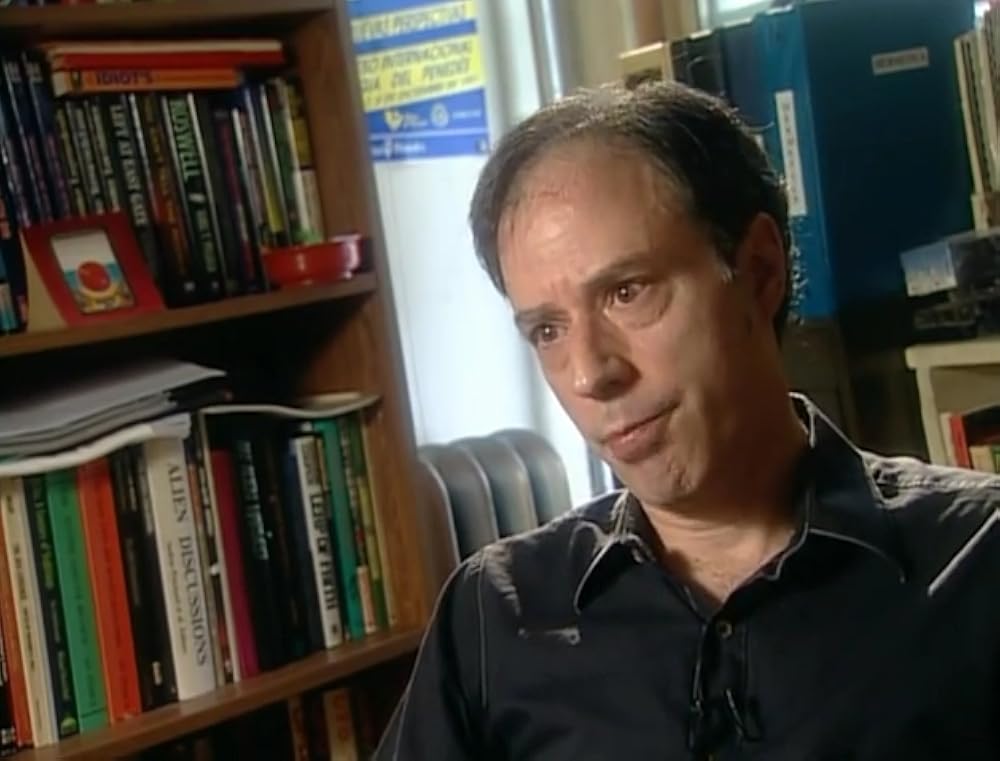
According to Huneeus’s published biography and his 2013 testimony, José Antonio Huneeus was born in New York in 1950 into a Chilean family. He was raised largely in Chile and spent part of his youth in Ecuador. His father worked at the United Nations, giving Huneeus early exposure to international institutions, diplomacy and the political language through which governments discuss unusual or sensitive subjects.
Those same biographical sources state that he studied French at the Sorbonne and pursued journalism at the University of Chile. Before UAP reporting became his best-known field, he worked as a science and environmental journalist in Chile. He moved to the United States in 1975 and later developed a career spanning newspapers, magazines, conferences, civilian research organisations and documentary media.
In his testimony at the privately organised 2013 Citizen Hearing on Disclosure, Huneeus described his Chilean background, his family’s United Nations connection and his participation in international UAP reporting. His professional biography records publication in North America, Latin America, Europe and Japan. (Huneeus, 2013)
Calling him a “MUFON journalist” is accurate only in a limited sense. Huneeus wrote for the MUFON UFO Journal and held several responsibilities within the Mutual UFO Network. The August 1992 issue directly identified him as MUFON’s International Coordinator. He was also associated with roles involving South American research and the interpretation of international cases. (MUFON UFO Journal, 1992)
His broader work included science journalism, editorial positions, lectures, conference papers, books and a substantial archive of articles for Open Minds.
This multilingual background was more than a biographical detail. Spanish, English and French gave Huneeus access to witness interviews, institutional records and investigative traditions that were often unavailable to English-speaking researchers.
During much of his career, international UAP records were deeply fragmented. Reports from Belgium might remain in French or Dutch. Chilean and Brazilian military documents circulated mainly within South America. Soviet material reached Western readers through inconsistent translations, ideological filtering and sensational retellings.
Even when a document could be located, researchers still had to determine who produced it, whether the available copy was complete and whether key terms had changed meaning in translation.
Huneeus became one of the people who moved information across those boundaries.
An international rather than exclusively American phenomenon
Huneeus repeatedly argued that UAP research had been distorted by excessive concentration on the United States. Major American cases were important, but they represented only part of a global record.
Chile, Brazil, Belgium, France, Spain, Russia and Japan had their own witnesses, civilian organisations and official inquiries. Some countries released material more openly than the United States. Others conducted only intermittent investigations tied to aviation safety, air defence or public pressure.
At MUFON’s 1996 symposium, Huneeus offered a position that was more cautious than some readers might expect. He did not believe the evidence demonstrated a perfectly coordinated worldwide system of official concealment.
Instead, he described a patchwork of national responses. Some governments collected reports for limited periods. Others filed unusual incidents inside existing military or aviation systems. Few established permanent, well-funded scientific programs.
Poor translation, neglected archives, bureaucratic inertia and limited budgets could therefore explain part of the international silence. Huneeus remained convinced that a significant anomalous residue existed, but he did not require a single global command structure to account for every missing document or institutional failure. (Huneeus, 1996)
This position reveals an important aspect of his method. He was open to extraordinary interpretations, but he did not automatically enlarge every mystery. He could argue that unexplained cases deserved attention while rejecting claims that exceeded the surviving evidence.
Why Huneeus belongs in experiencer research
Huneeus should not be placed in exactly the same category as John E. Mack, Budd Hopkins or researchers whose work centred on therapy, hypnosis or extended psychological interviews.
His contribution was journalistic and archival.
He treated experiencer testimony as a form of historical evidence. That did not mean accepting every description literally. It meant preserving what a person reported, documenting when it was reported and comparing it with independent records.
In historical and many legal evidentiary settings, witness testimony may constitute evidence even when disputed. Its weight depends on reliability, consistency, opportunity to observe, possible motives and corroboration. Rules governing admissibility, competence and hearsay differ between jurisdictions, so a courtroom analogy cannot by itself determine whether a UAP account is accurate.
Huneeus repeatedly worked within this broader evidentiary space.
He sought early statements. He preserved transcripts. He interviewed witnesses and compared their recollections with military memoranda, police recordings, radar reports and later corrections.
Contact and abduction research is vulnerable to two opposite errors. The first is unquestioning literalism, in which every remembered detail is treated as a direct description of external reality. The second is premature dismissal, in which an experience is treated as meaningless because it cannot be reproduced under laboratory conditions.
Huneeus’s strongest work existed between those positions.
A witness could be sincere and mistaken. A government document could be genuine without proving the extraordinary interpretation recorded within it. A recantation could carry serious evidentiary weight without necessarily explaining every co-witness. An official investigation could establish that an event was reported without determining what caused it.
His investigations illustrate how those distinctions work in practice.
Armando Valdés and the problem of recantation
During the night of April 25 to 26, 1977, Corporal Armando Valdés and seven Chilean soldiers were stationed near Pampa Lluscuma in northern Chile.
According to the widely published account, the soldiers saw unusual lights near their position. Valdés approached the phenomenon and was then absent from the group’s immediate awareness for several minutes. When he returned, he reportedly appeared confused. His wristwatch allegedly displayed a date several days ahead, and some witnesses said he seemed to have developed several days of beard growth.
Teacher Pedro Araneda recorded an early account from members of the patrol. Published accounts also describe a Chilean Army communiqué stating that press reports generally corresponded with what the soldiers had described.
That reported statement requires careful interpretation. It supports the historical conclusion that the patrol made an unusual report. It does not establish that Valdés experienced time displacement, accelerated hair growth or contact with non-human intelligence.
Huneeus entered English-language UAP journalism through this case. His article appeared in New York’s Daily Planet in July 1977. Decades later, he revisited the event with Chilean researchers, including Diego Zúñiga, Juan Guillermo Prado and Andrés Abusleme.
His later account is best read as a history of the published controversy rather than a fully independent reconstruction. The original Army communiqué, Araneda recording, complete statements from all patrol members and the original source of Valdés’s later recantation are not all publicly accessible together in a single evidentiary file. (Huneeus, 2020a)
In 2002, Valdés said that he had stepped away from the group to urinate and had then staged a prank. He also said that he had not shaved beforehand and that his watch was already malfunctioning.
That statement is substantial counterevidence and cannot responsibly be treated as a minor footnote.
The recantation did not fully settle the matter, however. Former conscript Humberto Rojas continued to support major elements of the original account, including the unusual condition in which Valdés returned. The surviving public record does not clearly establish that all eight soldiers participated in a planned deception.
The case therefore contains a striking evidentiary conflict. The central witness later withdrew the extraordinary interpretation, while at least one co-witness maintained that something anomalous had occurred.
Huneeus and Abusleme considered whether Valdés’s religious beliefs, discomfort or prolonged exposure to publicity might have contributed to the reversal. This is researcher opinion rather than established fact. A recantation cannot be dismissed merely because an investigator prefers the earlier story.
At the same time, the later account must be tested against the full witness group. A statement by one participant does not automatically explain what several people said they observed before and after his temporary absence.
The most defensible conclusion is limited. Published contemporary and retrospective sources document that the patrol made an unusual report and that an early recording was produced. The claimed time effects, watch anomaly and accelerated beard growth remain disputed.
The available evidence does not justify presenting the case as verified time displacement. It also does not conclusively establish that the entire patrol account was a coordinated deception.
Huneeus’s treatment remains useful because it preserves the contradiction rather than erasing it.
Pascagoula and the evidence of distress
The Pascagoula encounter began on October 11, 1973, when shipyard workers Charles “Charlie” Hickson and Calvin Parker reported a terrifying experience while fishing beside the Pascagoula River in Mississippi.
Hickson was 42 years old. Parker was 19.
They described a luminous, oblong object and unusual beings that seemed to move toward them without walking normally. Both men said they were paralysed or otherwise unable to resist. Hickson described being taken aboard and examined by an eye-like mechanical device.
Parker appeared severely distressed and initially struggled to describe what had happened.
The strongest evidence supporting their emotional state comes from the first night. Jackson County Sheriff Fred Diamond and Captain Glen Ryder interviewed the two men. A recorder continued running when officers left them alone.
Their private conversation captured fear, confusion and concern that nobody would believe them. Since the men apparently thought they were no longer being actively observed, the recording provides important evidence against the idea that their distress was performed only for the authorities.
The tape cannot prove the external cause of the experience. It does not identify the object or establish that the beings existed exactly as described. It does, however, support the conclusion that Hickson and Parker believed something frightening and extraordinary had occurred.
Huneeus added another layer to the case record. Hickson provided him with a signed copy of a seventeen-page transcript that Hickson and Huneeus presented as the interrogation conducted at Keesler Air Force Base on the day after the encounter.
Huneeus published the material in the MUFON UFO Journal, beginning with issue 195 in 1984. (Huneeus, 2011)
The provenance requires qualification. A copy received directly from Hickson establishes a chain of custody between Hickson and Huneeus. It does not, by itself, authenticate the document through surviving Air Force records. Until its governmental origin can be independently verified, it should be described as a transcript presented by Hickson and Huneeus as the Keesler Air Force Base interrogation.
Huneeus later said that he knew Hickson from 1987 to 1992, visited Mississippi and preserved the text of a lecture in which Hickson discussed both the original encounter and later claims of continuing contact.
This personal access gave Huneeus material that might otherwise have been lost. It also created the need to distinguish friendship and confidence in a witness from independent verification.
Hickson later described further encounters and messages concerning humanity’s future. Some predictions attributed to these later experiences did not occur. Huneeus nevertheless considered Hickson sincere.
Sincerity is meaningful evidence about a witness’s state of belief. It is not proof that every interpretation or prediction is objectively accurate.
Hypnosis also became part of the Pascagoula investigation through engineer James Harder, who examined the witnesses alongside astronomer J. Allen Hynek. Material elicited under hypnosis cannot independently confirm an abduction account. Hypnosis can increase confidence without guaranteeing accuracy and may combine memory, expectation, suggestion and imaginative reconstruction.
The strongest Pascagoula evidence therefore remains the early testimony, contemporaneous behaviour, hidden recording and first institutional interviews. Later hypnotic and prophetic material should be treated as a separate evidentiary layer.
Huneeus’s main achievement in the case was archival. He preserved testimony and documents while leaving later researchers to determine how much they establish.
See also UAPedia’s Parker–Hickson: Contacts After Pascagoula.
John Burroughs and the altered reality of Rendlesham
Huneeus’s December 1990 interview with former United States Air Force security policeman John Burroughs provides another example of his value to experiencer research.
Burroughs was a central witness to the December 1980 events near RAF Woodbridge and Rendlesham Forest in England.
The case already possessed an unusual documentary foundation. Lieutenant Colonel Charles Halt produced an official memorandum. Halt also made a contemporaneous audio recording during part of the investigation. Several military witnesses supplied statements.
Burroughs’s description complicated the familiar image of a clearly defined metallic craft sitting in the forest.
He described coloured lights that seemed to form an image resembling a craft. He also reported a profound alteration in his experience of movement, time and environment.
Huneeus published “The Testimony of John Burroughs” in the September 1993 issue of Fate. Material from the interview was later incorporated into the international briefing project with which Huneeus was associated.
Burroughs’s account does not prove that an external intelligence manipulated time or consciousness. It establishes that a principal witness described more than lights, physical traces or a conventional object.
Whatever happened was experienced as an alteration in the ordinary relationship between observer, environment and time.
That distinction matters. Later retellings often compress a case into the form most compatible with the author’s preferred explanation.
A physical-craft interpretation emphasises ground impressions, radiation measurements and military documents. A perceptual explanation emphasises stars, the Orfordness lighthouse, expectation and memory. Burroughs’s testimony occupies the uncomfortable overlap.
Rendlesham remains disputed. Conventional explanations address portions of the reported observations, but disagreement continues over witness proximity, chronology, physical effects and later medical claims.
Huneeus did not settle those disputes. His contribution was to preserve Burroughs’s description so it could be compared with the official record rather than replaced by simplified retellings.
The broader history is examined in UAPedia’s Rendlesham Forest: Britain’s Best-Known UAP Case.
Belgium and the danger of the perfect photograph
Between late 1989 and 1991, Belgium experienced a major wave of reports involving large, frequently triangular arrangements of lights.
The civilian organisation SOBEPS collected more than two thousand reports and conducted hundreds of detailed inquiries. These figures represent the organisation’s own case archive rather than an independently audited national total.
The Belgian Air Force cooperated unusually openly with civilian investigators.
The best-known official episode occurred during the night of March 30 to 31, 1990. Police observations and radar reports contributed to the decision to launch two F-16 fighters.
The official report recorded several interception attempts and brief airborne radar locks. The pilots did not obtain visual identification of the reported target. Some radar indications appeared to suggest extreme changes in speed and altitude, although their interpretation became contested.
Subsequent technical interpretations attributed several returns to propagation effects, interference or radar artefacts. The treatment of individual traces remains disputed, and summaries of the incident have sometimes combined the original Air Force assessment with later commentary as though they were a single conclusion.
The safest formulation is that the radar episode contained ambiguous returns, some of which received conventional technical interpretations, while disagreement continued over whether every trace had been adequately explained.
The surviving Belgian Air Force report confirms that the visual and radar observations prompted an operational response involving two fighters and that cooperation took place with SOBEPS. It does not establish that the fighters tracked a single extraordinary craft. (Belgian Air Force, 1990)
Huneeus’s account of the Belgian wave is particularly valuable because it did not freeze the case at the moment of maximum excitement. He incorporated later corrections and competing interpretations.
The most visible correction concerned the Petit-Rechain photograph. For years, the image was treated as an iconic picture of a dark triangular craft. Its maker later admitted that it had been fabricated.
The admission classifies the photograph as a hoax. It does not logically explain the entire Belgian wave, which included reports made before the image appeared. Yet the larger witness corpus cannot restore authenticity to a fabricated photograph.
A deceptive image must remain deceptive even when attached to a wider unresolved event.
The Belgian wave is best understood as a layered case. It includes a substantial civilian witness archive, unusual cooperation between investigators and defence authorities, an ambiguous radar episode, probable false alarms and at least one admitted photographic deception.
Huneeus preserved all those layers.
Readers can compare his Belgian wave investigation with UAPedia’s Belgium’s Triangle UAP Wave: Radar Nights, 1989–1991.
Building The Best Available Evidence
Huneeus’s most ambitious publication project was the international briefing document later issued commercially as UFO Briefing Document: The Best Available Evidence.
The project was connected with philanthropist Laurance Rockefeller’s interest in UAP disclosure and was associated with a coalition involving the Center for UFO Studies, the Fund for UFO Research and MUFON.
Don Berliner prepared the principal draft. Marie Galbraith played an important organisational and editorial role. Huneeus expanded the international coverage and contributed material involving Russia, Spain, Canada, Brazil, Belgium and France.
The privately circulated 1995 briefing and the 2000 Dell commercial edition were related but distinct publications. Their title-page and copyright-page credits should be treated separately rather than assumed to be identical.
Contemporary project accounts describe Berliner as the principal writer of the briefing, with Galbraith and Huneeus making substantial editorial and research contributions. The 2000 commercial edition is principally catalogued under Berliner and contains 243 pages. (Internet Archive, 2000)
Accounts associated with the project state that approximately one thousand copies of the earlier briefing were produced for selective distribution to political, scientific and media figures. They also describe communications with White House science adviser John Gibbons.
Those details are plausible and widely repeated, but the strongest verification would come from production invoices, correspondence from the Rockefeller initiative and archived White House records. They should not be treated as independently settled merely because they appear in retrospective accounts.
The briefing was not a peer-reviewed scientific study. It was an advocacy document assembled to persuade influential readers that the strongest UAP cases deserved serious attention.
That purpose created both value and risk.
The document gave English-language readers access to international cases, government files and witness testimony at a time when much of the material was difficult to obtain. Huneeus’s language skills and international contacts improved the breadth of the presentation.
At the same time, the phrase “best available evidence” could encourage readers to assume that all included cases were equally secure. They were not. Documentation, provenance and the quality of competing explanations varied from case to case.
Huneeus later suggested that the briefing may have influenced the structure or international outlook of France’s 1999 COMETA report. Unless supported by correspondence or direct statements from the report’s authors, that proposed influence remains researcher opinion rather than established publication history.
The document’s broader importance is easier to defend. It presented UAP as an international evidentiary problem rather than a uniquely American cultural controversy.
The United Nations and the politics of institutional language
Huneeus attended a meeting of the United Nations Special Political Committee on November 27, 1978, as a member of the press.
The meeting developed from an initiative led by Grenada’s prime minister, Sir Eric Gairy, who advocated international study of unidentified aerial phenomena.
The resulting United Nations record is often overstated.
General Assembly Decision 33/426, dated December 18, 1978, carries the official title “Establishment of an agency or a department of the United Nations for undertaking, co-ordinating and disseminating the results of research into unidentified flying objects and related phenomena.” (United Nations General Assembly, 1978a)
The related Special Political Committee report is also held by the United Nations Digital Library in several languages. (United Nations General Assembly, 1978b)
The title records the subject under consideration. It does not mean that a permanent UN UAP agency was established.
No such agency emerged. The initiative lost momentum after Gairy was removed from power in 1979, and no enduring UN research department followed.
This distinction is essential. Institutional language can create an appearance of action that exceeds the practical result. A proposal, agenda item or decision title is not the same as a funded operational body.
Huneeus revisited this history during the 2013 Citizen Hearing on Disclosure. The event featured testimony before former members of the United States Congress, but it was privately organised and was not an official congressional hearing.
The National Press Club described it as a mock Citizen Hearing intended to encourage Congress to conduct formal proceedings. Huneeus’s presentation is therefore valuable as firsthand testimony concerning his own career and attendance at the 1978 UN session. It is not a congressional finding or government determination. (National Press Club, 2013)
Huneeus often worked close to institutional boundaries. His record is most useful when those boundaries are kept visible.
A United Nations record does not mean an agency was created. A military interview does not prove the witness’s interpretation. A privately organised hearing does not become an act of Congress because former legislators participate.
Publications that preserved an international memory
Huneeus’s publication history extended far beyond a single briefing document.
He wrote newspaper columns, contributed to Fate and the MUFON UFO Journal, appeared at international conferences and produced case studies involving Chile, Mexico, Belgium, France, Russia, Japan, the United Nations and major contact experiences.
His 1991 book was titled A Study Guide to UFOs, Psychic & Paranormal Phenomena in the U.S.S.R., using the period term “UFO.”
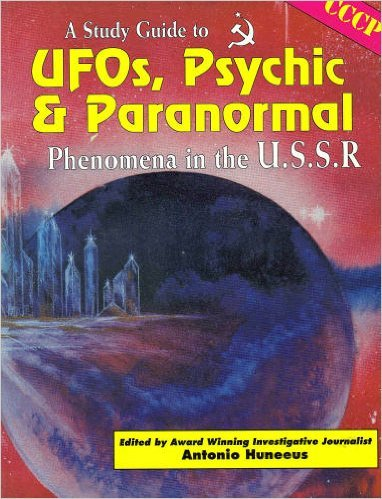
The historical title should be reproduced exactly in bibliographies even when current editorial practice prefers UAP. Titles are records of publication and should not be silently modernised.
The book attempted to organise Soviet and Russian anomalous material for Western readers during the collapse of the Soviet system. This was a period in which previously inaccessible scientists, archives and witnesses were becoming easier to approach, while translation quality and source verification remained uneven.
His Fate work included the John Burroughs testimony and other Rendlesham material. The MUFON UFO Journal published his international surveys, conference papers and case transcripts.
Open Minds later became a digital home for retrospective articles on Valdés, Pascagoula, Belgium, the United Nations and the Rockefeller briefing.
These publication venues were not equivalent to peer-reviewed journals. A magazine article may preserve important testimony without satisfying academic research standards. A conference paper can contain useful documentation while reflecting advocacy. A popular book may make archival material accessible but select cases toward a preferred conclusion.
Publication type alone does not decide whether the underlying evidence is strong or weak.
A civilian magazine can reproduce an authentic military document. An official report can contain a mistaken interpretation. A memoir can preserve an honest first-person experience while also reflecting decades of memory development.
Huneeus’s archive is valuable because it contains all these forms. Each must be evaluated according to its provenance rather than the reputation of the category in which it appears.
The Atacama remains and the value of accepting correction
The small mummified human remains discovered in Chile’s Atacama region became the focus of extraordinary claims because of their size, elongated skull and unusual skeletal appearance.
Some promoters suggested that the remains might provide evidence of a non-human being.
In 2013, Huneeus published the assessment of Spanish forensic physician Francisco Etxeberria, who interpreted the remains as those of a human fetus and found no basis for a non-human biological explanation.
Later researchers disagreed over developmental age, skeletal condition and the nature of the proposed abnormalities. The exact developmental history should therefore not be presented as settled.
A 2018 whole-genome study established that the remains were those of a human female, likely of Chilean ancestry. The researchers proposed that genetic variants contributed to unusual skeletal characteristics. (Bhattacharya et al., 2018)
A subsequent group of bioarchaeologists accepted the human identification but challenged parts of the dysplasia interpretation. They also criticised the handling and study of the remains, emphasising that they represented a deceased child and required ethical, archaeological and cultural consideration. (Halcrow et al., 2018)
The later academic disagreement did not restore the non-human interpretation. It concerned development, pathology, research ethics and the limits of genomic inference.
For Huneeus’s legacy, the episode is important because he did not require every unusual-looking body to remain extraordinary. He gave prominence to a human explanation before genomic research settled the question of species origin.
That willingness to accept a prosaic conclusion strengthens rather than weakens anomalous research. A field that cannot identify its mistakes cannot establish the significance of what remains unresolved.
Controversies and counter-readings
Huneeus was not a detached stenographer. His work generally reflected the view that some UAP cases represented genuinely non-prosaic phenomena and that scientific, government and media institutions had failed to engage adequately with the strongest evidence.
That position gave him persistence, access and a willingness to investigate neglected material. It also created potential weaknesses.
The Rockefeller briefing was designed to persuade rather than neutrally sample the complete UAP record. Selection can magnify apparently strong cases while omitting the large number of reports that are weak, misidentified or insufficiently documented.
His closeness to witnesses also produced both opportunities and risks. Hickson’s trust helped Huneeus preserve material that might otherwise have disappeared. Yet confidence in a witness’s sincerity can make it harder to apply adversarial questioning to later messages, predictions and evolving memories.
Translation presents another challenge. A multilingual investigator can recover material inaccessible to others, but translation is not mechanically neutral. Military terminology, local idiom and culturally specific meanings can change when rendered into English.
The strongest multilingual archive preserves the original text, a literal translation and an interpretive translation together.
Huneeus’s work nevertheless contains important corrective elements. He documented Valdés’s recantation. He reported disputed technical interpretations of the Belgian radar episode. He incorporated the Petit-Rechain confession. He gave space to the human identification of the Atacama remains. He rejected evidence-poor claims of perfectly coordinated worldwide concealment.
These corrections prevent his record from being reduced to simple advocacy.
A fair assessment is that Huneeus was a committed international UAP journalist whose best work sometimes exceeded the evidentiary limitations of the publications in which it appeared.
Some of his conclusions were stronger than the surviving documentation. His preservation of testimony and records, however, frequently allows later researchers to disagree with him intelligently.
Lasting impact
Huneeus’s direct effect on government policy is difficult to measure.
The United Nations did not establish a permanent UAP agency. The Rockefeller briefing did not produce an immediate executive investigation. The Citizen Hearing was not an official congressional proceeding.
His archival and cultural influence is clearer.
Huneeus helped internationalise a field that American media frequently treated as almost entirely domestic. He demonstrated that Chile, Brazil, Belgium, France, Russia and other countries possessed their own witnesses, archives and official responses.
He brought Latin American cases into English-language circulation without presenting the region merely as a source of exotic folklore.
He also preserved the experiential dimensions of important cases.
Burroughs described altered time and movement. Hickson expressed terror and later developed a continuing-contact interpretation. Valdés became caught between an extraordinary early narrative and a later recantation. The Pascagoula recording preserved emotional distress in real time.
These human effects cannot identify the ultimate cause of an encounter, but they remain part of the evidence.
Huneeus’s career also demonstrates why corrections should be preserved rather than silently substituted.
A living case file should contain its own history. The original claim, first interview, official response, later recantation, co-witness disagreement, technical reanalysis and investigator’s changing conclusion should remain connected.
UAP research does not advance by protecting perfect stories. It advances by constructing records strong enough to survive imperfection.
Implications for modern experiencer investigation
A modern investigation building on Huneeus’s strengths would begin with the earliest available statement in the witness’s own language.
Original audio, transcripts and translations would remain connected. Investigators would record who asked each question, what information the witness had already encountered and whether hypnosis, group discussion or media exposure preceded later recollections.
Official documents would be treated as institutional evidence rather than automatic verdicts.
A fighter scramble establishes that a report or unresolved uncertainty prompted an operational response. A police tape documents behaviour and timing. A medical report records symptoms. None of these items necessarily identifies the cause of an event.
Recantations should receive the same documentary care as original claims. Investigators should ask whether a new explanation accounts for every witness and physical detail, whether social pressures are documented and whether the revised account contains testable information.
A recantation is evidence, not an automatic eraser.
Witnesses should also be protected from being reduced to heroes, frauds or psychiatric symbols.
Contact experiences may involve fear, altered time, physical symptoms, symbolic communication, embarrassment and long-term identity change. Even when an external cause cannot be established, these consequences belong to the historical and human record.
Huneeus understood that the archive is not separate from the phenomenon. What researchers preserve, translate, omit and correct determines what future generations will believe happened.
Claims taxonomy
Verified
Huneeus’s service as MUFON’s International Coordinator is directly documented in the August 1992 MUFON UFO Journal.
His participation in the Rockefeller briefing project, attendance at the 1978 United Nations proceedings and testimony at the privately organised 2013 Citizen Hearing are documented in published records and his own testimony.
Hickson and Parker made a same-night report to law enforcement, and their private conversation was recorded.
Huneeus interviewed John Burroughs and published his testimony.
The Belgian Air Force launched two F-16s during the night of March 30 to 31, 1990 and produced a written report.
Probable
According to his published biography and testimony, Huneeus was born in New York in 1950 into a Chilean family, studied in Chile and France and worked as a science and international journalist before becoming widely known for UAP reporting. These routine biographical claims are credible but remain partly self-sourced.
Huneeus’s multilingual work materially expanded English-language access to Latin American, European and Soviet-era UAP material.
His preservation of transcripts, interviews and original-language sources probably prevented some information from becoming inaccessible, although the scale of that contribution cannot be quantified.
Published contemporary and retrospective sources document that the Valdés patrol made an unusual report and that the Chilean Army acknowledged broad correspondence between press descriptions and the soldiers’ reported statements. Direct public access to the original communiqué and complete recording remains limited.
The Pascagoula hidden recording strongly supports the conclusion that Hickson and Parker were distressed and believed they had undergone a frightening experience. It does not establish the external cause.
Disputed
The claimed disappearance, watch anomaly and biological time effects in the Valdés case remain disputed.
The physical nature and origin of the Pascagoula encounter remain disputed.
The physical nature and provenance of the transcript presented as the Keesler Air Force Base interrogation remain incompletely authenticated.
The cause of the Rendlesham phenomena and the meaning of Burroughs’s reported altered perception remain disputed.
The interpretation of individual radar traces during the Belgian wave remains disputed.
Huneeus’s proposed explanations for Valdés’s recantation and his suggested influence of the Rockefeller briefing on COMETA remain researcher opinions rather than independently established facts.
Legend
Later messages and predictions attributed to Hickson belong partly to the cultural and legendary development of the Pascagoula narrative.
Religiously framed interpretations of the Valdés incident and simplified retellings of major contact cases also belong to this layer.
Cultural significance does not prove literal external origin, but legendary development should not be allowed to replace the earlier documentary record.
Misidentification
Some reports associated with the Belgian wave were attributed to conventional sources or false alarms.
Several radar indications during the March 1990 interception received interpretations involving interference, propagation effects or radar artefacts, although not every technical interpretation is universally accepted.
The Atacama remains were incorrectly promoted as potentially non-human. Genetic analysis established that they were human. Later disagreement concerned development, pathology and ethics rather than species identity.
Hoax
The Petit-Rechain triangular photograph was admitted by its maker to have been fabricated. This classification applies to the photograph rather than automatically to the entire Belgian wave.
Valdés’s later explanation described his temporary disappearance as a staged prank. Because parts of the co-witness testimony and contemporaneous record remain in conflict with that account, the overall case is better classified as Disputed than conclusively Hoax.
Speculation labels
Hypothesis
Huneeus’s most important contribution may be understood as an early form of multilingual evidence fusion. He connected testimony, journalism, official records and technical interpretation across national boundaries before digital search tools made that work comparatively easy.
A modern international UAP database containing original-language documents, traceable translations and versioned case histories would extend this approach.
A second hypothesis is that his case archive illustrates a recurring hybrid structure in close encounters. A possible external anomaly may coexist with altered perception, symbolic processing and later psychological interpretation.
The Burroughs, Pascagoula and Valdés records do not prove this model. They show why purely technological and purely psychological explanations may each leave parts of the testimony unaddressed.
Witness Interpretation
Valdés initially interpreted his experience as contact with an unknown presence and later described his temporary absence as a prank.
Hickson interpreted the Pascagoula event as physical capture by non-human beings and later believed that contact continued.
Burroughs interpreted the Rendlesham lights as forming something craft-like while also describing altered movement and time.
These statements document what the witnesses believed or perceived. They do not independently verify non-human beings, advanced technology or manipulation of time.
Researcher Opinion
Huneeus regarded Hickson as sincere, considered part of the Belgian wave genuinely anomalous and entertained the possibility that personal or religious pressures influenced Valdés’s recantation.
He also suggested that the Rockefeller briefing may have contributed to the development of later international reports.
These are interpretations arising from his research, relationships and historical perspective. They must remain separate from the underlying testimony and documentary record.
References
Belgian Air Force. (1990). Report concerning the observation of unidentified aerial phenomena during the night of March 30 to March 31, 1990. Retrieved July 17, 2026, from archived English translation.
Berliner, D. (1995). UFO briefing document: The best available evidence. UFO Research Coalition. Research and editorial contributions by Marie Galbraith and Antonio Huneeus.
Berliner, D. (2000). UFO briefing document: The best available evidence. Dell Publishing. Retrieved July 17, 2026, from the Internet Archive catalogue.
Bhattacharya, S., Li, J., Sockell, A., Kan, M. J., Bava, F. A., Chen, S. C., Ávila-Arcos, M. C., Ji, X., Smith, E., Asadi, N. B., Lachman, R. S., Lam, H. Y. K., Bustamante, C. D., Butte, A. J., & Nolan, G. P. (2018). Whole-genome sequencing of Atacama skeleton shows novel mutations linked with dysplasia. Genome Research, 28(4), 423–431. https://doi.org/10.1101/gr.223693.117
Halcrow, S. E., Killgrove, K., Robbins Schug, G., Knapp, M., Huffer, D., Arriaza, B., Jungers, W., & Gunter, J. (2018). On engagement with anthropology: A critical evaluation of skeletal and developmental abnormalities in the Atacama preterm baby and issues of forensic and bioarchaeological research ethics. International Journal of Paleopathology, 22, 97–100. https://doi.org/10.1016/j.ijpp.2018.06.007
Huneeus, A. (1991). A study guide to UFOs, psychic & paranormal phenomena in the U.S.S.R. Abelard Productions and Inner Light Publications.
Huneeus, A. (1993, September). The testimony of John Burroughs. Fate.
Huneeus, A. (1996, August). The international situation. MUFON UFO Journal, 340. Retrieved July 17, 2026, from the IAPSOP archive.
Huneeus, A. (2011, September 16). Remembering Charlie Hickson: A rare Pascagoula abduction transcript. Open Minds. Retrieved July 17, 2026, from Open Minds.
Huneeus, A. (2013). UN and Rockefeller UAP initiatives: Citizen Hearing transcripts. Open Minds. Retrieved July 17, 2026, from Open Minds.
Huneeus, A. (2020a, July 27). The strange time-warp case of Corporal Armando Valdés. Open Minds. Retrieved July 17, 2026, from Open Minds.
Huneeus, A. (2020b, August 26). Belgium’s flying triangle wave. Open Minds. Retrieved July 17, 2026, from Open Minds.
MUFON. (1992, August). J. Antonio Huneeus identified as MUFON International Coordinator. MUFON UFO Journal, 292. Retrieved July 17, 2026, from the IAPSOP archive.
National Press Club. (2013, May 6). Press Club Rewind: Citizen Hearing on Disclosure. Retrieved July 17, 2026, from the National Press Club.
United Nations General Assembly. (1978a, December 18). Decision 33/426: Establishment of an agency or a department of the United Nations for undertaking, co-ordinating and disseminating the results of research into unidentified flying objects and related phenomena. Retrieved July 17, 2026, from the United Nations Digital Library.
United Nations General Assembly. (1978b). Report of the Special Political Committee, 33rd session. Retrieved July 17, 2026, from the United Nations Digital Library.
SEO keywords
Antonio Huneeus, Antonio Huneeus biography, Antonio Huneeus MUFON, MUFON International Coordinator, international UAP journalist, Chilean-American UAP researcher, UAP experiencer investigators, Contact and Abduction Experiences, Experiencer Research and Investigators, Armando Valdés incident, Chilean Army UAP case, Pascagoula encounter, Charlie Hickson transcript, Calvin Parker testimony, Keesler Air Force Base transcript, John Burroughs interview, Rendlesham Forest testimony, Belgian UAP wave, Belgium triangle sightings, Belgian F-16 radar incident, Petit-Rechain photograph hoax, Rockefeller UAP briefing document, Laurance Rockefeller UAP research, United Nations UAP initiative, UN Decision 33/426, Citizen Hearing 2013, international UAP research, Latin American UAP history, multilingual UAP archives, UAP witness testimony, contact experience documentation, UAP journalism, UAP case corrections, Atacama human remains, experiencer testimony, witness interpretation, researcher opinion, UAP claims taxonomy