
The investigator who crossed the boundary
Every field has figures who work comfortably inside its established borders: Joe Lewels was not one of them.
He entered UAP research with credentials that might have encouraged caution: formal training in journalism, a doctorate in mass communication, experience as a university professor, military service, and a professional understanding of how institutions create public narratives. Yet when Lewels began investigating reports of contact and abduction, he did not keep the subject confined to questions about aircraft, planets, balloons, or secret technology.
He wanted to know what the experiences meant.
That distinction shaped his career. Lewels was interested in the reported event, but he was equally interested in what happened afterward. Why did some witnesses emerge frightened and destabilized, while others described spiritual growth? Why did accounts of modern non-human encounters contain themes resembling religious visions, initiatory ordeals, near-death experiences, and ancient stories of beings descending from the sky? Could an experience be physical and psychological at the same time? Could it be technologically advanced yet interpreted as sacred?
Those questions placed Lewels near the center of one of the most persistent controversies in experiencer research. One school treated contact reports primarily as evidence of an organized physical intervention. Another saw a phenomenon entangled with consciousness, symbolism, culture, and transformation. Lewels became one of the clearest advocates for the second approach.
His resulting body of work is ambitious, provocative, and difficult to classify. At its strongest, it insists that witnesses deserve serious attention and that no single discipline can explain the full range of reported experiences. At its most speculative, it moves from testimony and comparative symbolism toward an extensive cosmology involving ancient non-human beings, religious history, reincarnation, and control over human consciousness.
Understanding Lewels requires holding both sides of that legacy at once.
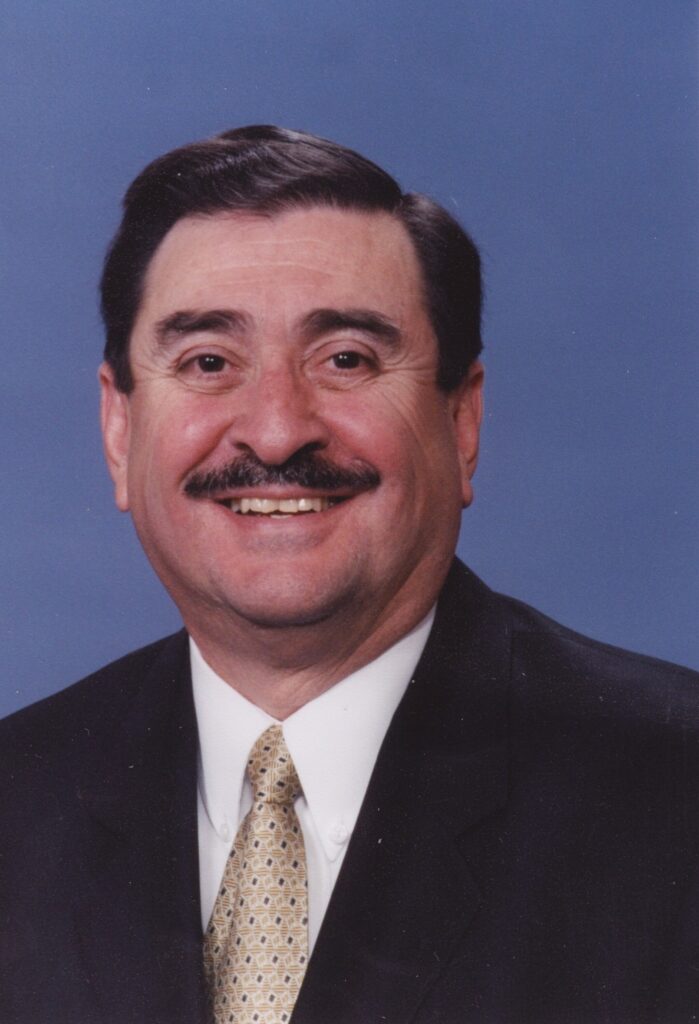
From El Paso to journalism
A self-submitted biographical profile by Lewels, hosted on the El Paso Museum of History’s DIGIE platform, places Francisco Jose “Joe” Lewels Cisneros’s birth in El Paso, Texas, on April 10, 1944. It states that he graduated from Texas Western College in 1966, served as a United States Army captain and reconnaissance pilot in South Vietnam from 1967 to 1968, received a doctorate in journalism from the University of Missouri, and later chaired the journalism department at the University of Texas at El Paso.
Long before he became known for writing about UAP contact, Lewels was studying institutional power.
His 1974 research, The Uses of the Media by the Chicano Movement: A Study in Minority Access, examined the obstacles Mexican American activists encountered when attempting to reach the public through newspapers, television, radio, and publishing. The work addressed questions of access, stereotyping, editorial control, and the authority of media institutions to decide which voices would be heard.
Editorially, this early concern with institutional gatekeeping can be read as foreshadowing themes in his later UAP work. The subjects changed, but the underlying questions remained strikingly similar. Who is allowed to testify? What assumptions shape the way a story is edited? How does an institution classify testimony that challenges its accepted model of reality? What happens to witnesses whose experiences cannot be translated into the language of conventional reporting?
Lewels understood that public knowledge is not created only by facts. It is also created by selection. Editors, academics, investigators, therapists, officials, and broadcasters decide which facts appear credible, which details are considered irrelevant, and which explanations become socially acceptable.
That insight would become especially important when he began working with people reporting missing time, apparent abductions, telepathic communication, bodily examinations, unusual dreams, encounters with non-human figures, and lasting changes in belief.
The Southwest investigations
By the 1990s, Lewels had become active in the Mutual UFO Network, commonly known as MUFON. A biographical note published in the May 1998 MUFON UFO Journal identifies him as assistant state director for West Texas and southern New Mexico and as a MUFON communications consultant.
The same notice states that Lewels and El Paso psychiatrist Dr. Roberta Fennig had spent the previous four years investigating reported abduction cases in the American Southwest. It also says that conclusions drawn from this work were published in Lewels’s 1997 book, The God Hypothesis: Extraterrestrial Life and Its Implications for Science and Religion. The notice appears on page 15 of the journal, beside Lewels’s essay “Picking Up the Gauntlet.”
This is one of the clearest documented facts about Lewels’s work. He was not writing only from a distance. He was participating in case investigations and working alongside a psychiatrist who could engage with the emotional and psychological dimensions of the reports.
The surviving public record, however, does not provide a complete case archive.
No comprehensive collection of anonymized transcripts, interview recordings, pre-hypnosis statements, medical documentation, investigator notes, or independently collected sensor records from the Lewels-Fennig investigations was identified among the publicly accessible sources reviewed for this article. The existence of their investigation is documented, but the complete evidentiary basis for individual cases is not available for outside reconstruction.
That distinction matters.
A missing archive is not evidence that interviews never took place. Contact research often occurred under difficult conditions. Witnesses feared ridicule, damaged careers, family conflict, psychiatric labeling, or unwanted exposure. Confidentiality could be essential. An investigator who publicly released identifying details might harm the very people seeking help.
Yet privacy produces an unavoidable cost. When source material remains unavailable, later researchers cannot determine how an account developed. They cannot examine the order in which memories appeared, assess whether an interviewer introduced particular imagery, compare statements before and after hypnosis, or identify contradictions that may have been edited out of the published narrative.
Lewels worked inside this conflict between witness protection and public verification. His instinct leaned toward the witness. That made his approach humane, but it left later researchers with limited access to the raw material behind some of his most important conclusions.
A case study in media ethics
One of the most revealing episodes in Lewels’s career did not concern a reported craft or non-human entity. It concerned television journalism.
In a 1996 article for the MUFON UFO Journal, Lewels discussed an approach from a television reporter interested in producing a multipart program involving Fennig and local experiencers. Rather than accepting the exposure immediately, Lewels and Fennig examined the proposed segment as though the media process itself were part of the case.
They questioned the reporter about the intended purpose, prior research, editorial framing, treatment of witnesses, and likely emphasis of the final broadcast. Lewels described keeping the preliminary conversation off the record while they assessed whether participation would serve the experiencers or merely provide dramatic material for a ratings period.
They eventually declined.
The episode illustrates Lewels’s strongest professional skill. He understood that publicity and serious documentation are not the same thing. A witness may appear on television and still have the substance of an account erased. Hours of testimony can be reduced to a frightened expression, a sensational phrase, or a brief reconstruction accompanied by ominous music.
Lewels recognized that a journalist can influence a contact case in much the same way as an investigator. The reporter chooses the questions. The editor decides which answers survive. The producer determines whether the witness is presented as credible, unstable, entertaining, deceptive, or sympathetic.
In Lewels’s view, allowing an experiencer to speak was not enough. The conditions under which the testimony was collected and presented also had to be considered.
This position has lasting relevance. Modern experiencers can reach large audiences through podcasts, streaming programs, social media, and documentary productions, but the same dangers remain. Visibility may bring validation and community. It may also expose a vulnerable witness to ridicule, commercial pressure, leading questions, or a permanent public identity based on a single extraordinary claim.
Lewels approached media contact as an ethical decision rather than a publicity opportunity. That was a significant contribution to experiencer advocacy.
When the researcher became part of the evidence
Lewels did not remain a wholly detached investigator.
A contemporary review of The God Hypothesis describes the book as beginning with Lewels’s own reported UAP experience and his subsequent effort to understand it. Later scholarly discussion also placed him among researchers whose relationship to the subject included personal experience as well as investigation.
This placed him in a difficult but important category: the investigator-experiencer.
A researcher with firsthand experience may recognize features of testimony that an outside interviewer overlooks. Such a researcher may understand the embarrassment of describing impossible-seeming events, the instability of memory after a frightening encounter, the conflict between ordinary identity and anomalous experience, and the sense that familiar categories no longer work.
Personal involvement may also introduce bias. Once an investigator concludes that a non-human intelligence has been encountered, later cases can be interpreted through that belief. Similarities may receive more attention than differences. Ambiguous events may appear confirmatory. Alternative explanations may be considered less seriously because they conflict with the investigator’s own experience.
The publicly accessible record reviewed for this profile does not provide sufficient independent evidence to determine the cause of Lewels’s reported encounter. No publicly inspectable package of contemporaneous sensor records, identified independent witnesses, physical traces, or medical findings with documented custody was located.
That does not make the experience meaningless. It establishes the evidentiary category in which it belongs.
Lewels’s account is firsthand testimony about an event he regarded as real and consequential. The interpretation that it involved an external non-human intelligence is his witness conclusion. Independent verification remains unavailable.
This boundary between experience and attribution is central to understanding his work.
Building The God Hypothesis
Published by Wild Flower Press in 1997, The God Hypothesis attempted something more ambitious than a conventional collection of abduction cases. Contemporary reviews describe it as bringing together reported contact, religious traditions, altered consciousness, near-death experiences, anomalous healing, reincarnation, and ancient narratives involving beings descending from the heavens.
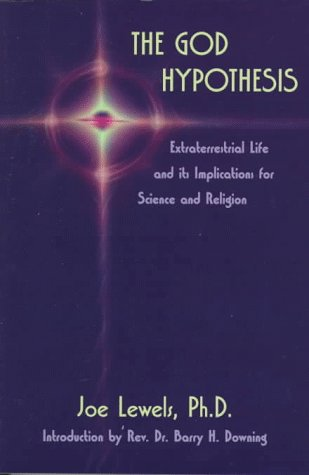
The book’s title announced the scale of its argument. Lewels was not simply asking whether some UAP might originate beyond Earth. He was asking whether encounters with advanced non-human beings could have contributed to humanity’s ideas about gods, angels, messengers, watchers, and divine authority.
This proposal appealed to readers because modern contact narratives frequently exceed the limits of a straightforward aerospace event. Witnesses may report an object, but they may also describe missing time, altered awareness, symbolic visions, telepathic messages, intense emotions, bodily effects, prophetic imagery, or changes in religious belief.
An explanation based only on vehicles and occupants may struggle to accommodate these elements. A purely psychological interpretation may account for some experiences while leaving others unsettled. A religious explanation may preserve meaning but risk assuming the nature of the event before establishing what occurred.
Lewels responded by questioning whether the conventional divisions among matter, consciousness, spirituality, and anomalous experience were themselves adequate.
In his view, the phenomenon could appear contradictory because human knowledge had been divided into disciplines that rarely communicated. A psychologist might study memory. A physicist might examine material effects. A theologian might interpret spiritual transformation. An anthropologist might compare narratives. A journalist might investigate testimony. Each could encounter part of the same case while describing an entirely different reality.
This interdisciplinary instinct remains one of the book’s strengths.
Its principal weakness is testability. A framework that includes physical contact, spiritual transformation, hidden history, consciousness effects, and ancient religion can become so flexible that nearly any new account can be incorporated. The broader the theory becomes, the more difficult it is to identify evidence that would disprove it.
That tension between explanatory range and falsifiability followed Lewels through his later work.
The controversy with David Jacobs
The methodological divide became public in May 1998, when the MUFON UFO Journal published Lewels’s essay “Picking Up the Gauntlet: A Response to The Threat,” followed by a response from historian and abduction researcher David M. Jacobs.
The disagreement concerned more than personalities. It represented two competing ways of reading the entire contact literature.
Jacobs’s work emphasized recurrent procedures, covert intrusion, reproductive activity, hybridization, secrecy, and possible long-term control. He argued that abductees’ reports displayed enough consistency to support a structured investigative model. His interpretation was predominantly adversarial. Whatever the phenomenon might be, he did not regard its concealed activities as benign.
Lewels objected to the narrowness of this conclusion.
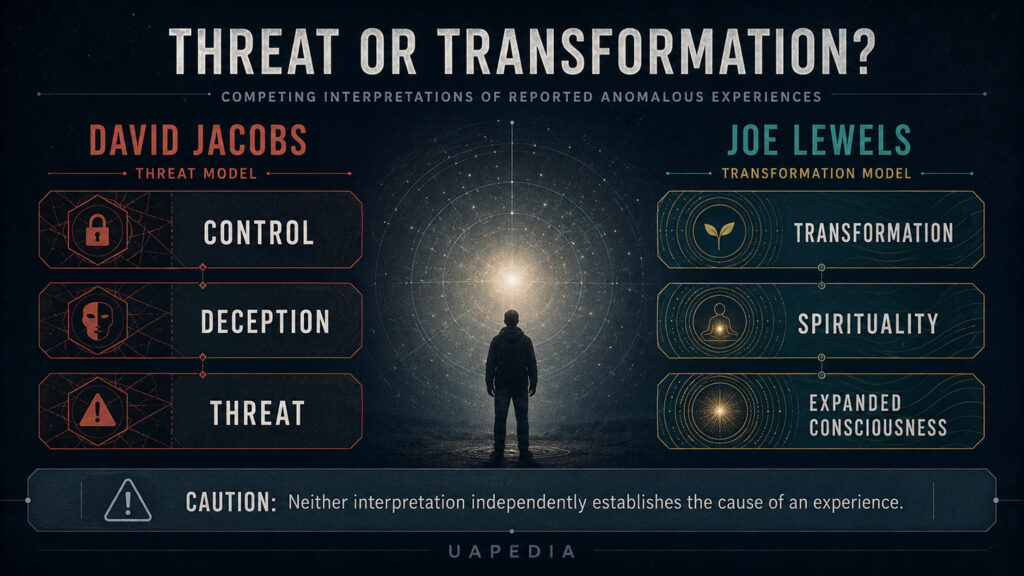
On page 15 of his essay, he argued that no single way of thinking could adequately explain a phenomenon that seemed to escape ordinary scientific categories. He called for researchers grounded in accepted methodology to work alongside those willing to consider ideas outside the current scope of science. He criticized Jacobs for treating spiritually oriented interpretations as departures from serious research and defended John E. Mack’s attention to meaning and transformation.
Lewels’s argument became most forceful when he discussed experiencers who reported psychological or spiritual growth. On the following pages, he described people who believed their experiences had helped them move beyond a purely victim-centered identity. He suggested that investigators had an obligation not only to gather information but also to consider the welfare of frightened witnesses.
Jacobs replied on page 17. He defended rigorous, systematic investigation and warned that religious, spiritual, or New Age interpretations should be treated cautiously when presented as explanations of the evidence. He acknowledged that supportive frameworks might help experiencers cope, but he argued that emotional value did not establish factual accuracy. He also stressed that investigators’ methods required critical analysis and peer review.
The exchange remains valuable because both men identified genuine risks.
A threat-centered model can become self-sealing. Fear, secrecy, missing time, and reproductive imagery are interpreted as evidence of hostile control. Positive or transformative accounts may then be dismissed as manipulation by the alleged beings.
A transformation-centered model can become equally self-sealing. Distress may be reinterpreted as spiritual growth. Fear may be seen as resistance to an initiatory process. Experiences that feel coercive may be absorbed into a larger narrative of cosmic development.
Lewels’s strongest point was that the witness should not disappear behind the investigator’s theory. Jacobs’s strongest point was that a helpful interpretation is not necessarily a correct explanation.
Their disagreement also demonstrates how investigator expectations can shape research. When a practitioner approaches a witness expecting a secret reproductive program, one set of details may become central. When another expects spiritual transformation, a different set may receive emphasis.
The debate was therefore not simply about whether contact was hostile or benevolent. It was about how researchers construct meaning from fragmentary, emotionally charged testimony.
Hypnosis and the problem of confident memory
Hypnotic regression became deeply associated with abduction research during the late twentieth century. It was used by investigators who believed witnesses might recover memories hidden behind missing time, fear, or psychological blocking.
Lewels’s work engaged with regression material, and his disagreement with Jacobs included broader concerns about investigative assumptions and the treatment of experiencers. The scientific literature on hypnosis offers important guidance for evaluating such cases.
John Kihlstrom’s review of hypnosis and memory found that hypnosis does not function as a reliable recording device for the past. Suggestions intended to increase recall can also increase false recollection, while raising a subject’s confidence in both accurate and inaccurate memories. That combination creates a major evidentiary problem. A witness may emerge from hypnosis feeling more certain without becoming more correct.
Susan Clancy, Richard McNally, Daniel Schacter, and colleagues studied people reporting recovered or repressed memories of abduction. Their findings indicated that the recovered-memory group was more prone than control participants to particular forms of false recall and recognition in laboratory testing. The study did not establish that every abduction memory was false, nor did it determine the origin of any individual experience. It demonstrated that memory confidence, sincerity, and accuracy must be evaluated separately.There is a point in many difficult contact cases when the central question changes.
At first, everyone wanted to know what happened. Was there a physical encounter? Was a non-human intelligence involved? Did the witness experience an altered state, an external event, or some combination of both?
In the case of Emma Woods, another question eventually became just as important: what happens when an investigator gains unusual power over the meaning of another person’s memories?
McNally and colleagues also examined physiological reactions among people recounting reported abduction experiences. Participants displayed measurable responses while listening to personalized scripts based on their memories. The study demonstrated that the experiences could be emotionally and physiologically powerful. It did not identify what originally caused them.
This distinction should be foundational in experiencer research.
A person can be sincere and mistaken. A memory can be psychologically real without accurately reconstructing an external event. A traumatic response can be genuine even when the cause remains uncertain. Conversely, the existence of memory distortion in laboratory research does not prove that every reported contact event is internally generated.
The proper question is not whether testimony should be believed or dismissed as a whole. It is how much evidentiary weight a particular statement can carry.
Was the account documented before hypnosis? Were questions open-ended? Did the witness encounter relevant books, films, lectures, or investigator theories before recalling specific imagery? Are there independent witnesses? Is there medical documentation? Are there photographs, communications records, environmental traces, or sensor data? Did the account change over time?
Lewels was right to resist the casual humiliation of experiencers. The scientific caution is that respect for a witness cannot substitute for validation of a proposed cause.
Ancient texts and Rulers of the Earth
Lewels’ later work moved more deeply into religious history.
Rulers of the Earth: Secrets of the Sons of God developed his interpretation of biblical watchers, the “sons of God,” ancient teachers, hybrid beings, reincarnation, and competing influences on human civilization. A contemporary 2007 MUFON UFO Journal review confirms that the book and its core arguments were in circulation by that year.
The book treated some scriptural beings not as purely supernatural figures but as potentially physical intelligences remembered through ancient religious language. Lewels compared these narratives with modern reports involving non-human entities, unusual reproduction, telepathic communication, and altered consciousness.
This method has an undeniable imaginative power. Across cultures, human beings have described luminous beings, aerial manifestations, sky teachers, divine messengers, spirit journeys, and unions between humans and non-human figures. It is reasonable to ask whether some narratives preserve memories of extraordinary encounters.
It is not reasonable to assume that resemblance establishes identity.
Ancient religious texts are not modern incident reports. They contain symbolism, poetry, theology, ritual language, political authority, oral tradition, literary editing, translation, and centuries of commentary. A being described as descending from heaven may represent a physical visitor, a visionary state, a literary convention, divine authority, or several layers at once.
Lewels tended to treat recurring motifs as clues to a common reality. Critics argue that similar motifs can arise from shared human cognition, cultural transmission, archetypal imagery, sleep phenomena, ritual experience, or later reinterpretation through technological language.
The responsible position is neither automatic dismissal nor automatic identification. Ancient narratives can be compared with modern contact reports, but the comparison must remain distinct from proof.
The Soul Trap and the darker cosmology
Lewels’s 2025 book The Soul Trap: Aliens, Ancient Scrolls, and Reincarnation carried his ideas into more explicitly metaphysical territory. Published by Wild Flower Press, the book connects ancient writings, modern contact narratives, reincarnation, hypnotic regression, and the possibility that human souls are being manipulated or recycled within a controlled system.
This represents a significant shift in emphasis.
The God Hypothesis asked whether non-human intelligence might stand behind some religious traditions and contact experiences. The Soul Trap asks whether the structure of death and reincarnation itself could be subject to external control.
No publicly available scientific evidence establishes this model. There is no verified instrument capable of detecting a soul, tracing its postmortem movement, identifying an imposed reincarnation mechanism, or demonstrating control by non-human beings. The soul-trap concept therefore belongs in the category of metaphysical hypothesis and researcher interpretation.
Its importance lies elsewhere.
The book reflects a broader development in contemporary contact culture. The central question is no longer always whether unexplained objects are real. For many experiencers and researchers, the question has become whether human identity extends beyond the body and whether the intelligence associated with UAP interacts with that deeper self.
That possibility may be spiritually meaningful, frightening, or both. It can also produce psychological risk when presented as certainty. A person who comes to believe that death, reincarnation, memory, and spiritual experience are controlled by hostile beings may experience profound anxiety. Researchers and publishers therefore carry a responsibility to distinguish evidentiary claims from metaphysical models.
Lewels’s work is most useful when it opens questions. It becomes less reliable when the architecture of those questions is treated as established reality.
Quantum language and the limits of analogy
Lewels’s 1998 essay criticized what he regarded as an excessively materialist approach and referred to quantum physics as relevant to a nonlocal understanding of consciousness. The claim appears on page 15 of “Picking Up the Gauntlet.”
This is an area where careful language is essential.
Quantum entanglement demonstrates correlations that cannot be reproduced by local hidden-variable explanations. It does not, by itself, demonstrate telepathy, survival after death, remote contact with non-human beings, or a universal consciousness field. Nor does it permit controllable faster-than-light communication.
Physics may eventually contribute to a more complete account of consciousness. It may also reveal aspects of reality that current models do not capture. Those possibilities do not allow quantum terminology to serve as evidence for a contact mechanism that has not been experimentally demonstrated.
Lewels’s wider intuition was that reality may be more interconnected than classical materialism suggests. That is a philosophical position worth discussing. The scientific error occurs only when metaphor is presented as a mechanism.
What Lewels changed
Lewels’s greatest contribution may be his insistence that an experiencer is not merely a defective sensor.
A contact report can include an observation, a memory, a bodily event, an emotional crisis, a religious transformation, and a social injury. A witness may lose relationships, professional confidence, or a stable sense of reality. Even when the external cause remains uncertain, those consequences deserve serious attention.
Lewels also recognized that every investigator brings a framework into the room. The threat researcher listens for coercion. The spiritual researcher listens for transformation. The clinician listens for trauma or dissociation. The journalist listens for a narrative. The physicist searches for measurable effects.
None of those perspectives is automatically wrong. Each can become distorting when it claims the entire case.
His media background added another lasting insight. Public presentation is not neutral. A poorly framed interview can alter how a witness remembers, describes, and understands an experience. A documentary can convert uncertainty into certainty through editing. An investigator can become an authority figure whose vocabulary is adopted by the experiencer.
Lewels’s work therefore points toward a layered research method.
Testimony should be recorded as early as possible and preserved in its original form. Memories reported before hypnosis should be distinguished from those emerging afterward. Interview questions and recordings should be retained. Medical findings should be documented by qualified professionals. Physical samples require a secure chain of custody. Cultural exposure should be recorded without being treated as automatic disproof. Independent witnesses, environmental records, digital data, and sensor observations should be pursued whenever available.
The witness should remain central, but the interpretation should remain open.
Implications for experiencer research
Lewels’s career exposes the deepest challenge in contact studies: the phenomenon may be approached as evidence, experience, or meaning, but responsible research must not collapse those categories.
An experiencer’s testimony is evidence that the person reported an event and understood it in a particular way. Corroborating testimony may strengthen the case. Medical records, physical traces, contemporaneous documents, or sensor data may strengthen it further. The conclusion that a non-human intelligence caused the event requires additional reasoning and should be stated at the level supported by the evidence.
This approach does not demean testimony. Courts, historians, journalists, clinicians, and investigators rely on testimony every day. Credible witnesses can establish facts, especially when accounts converge independently or are supported by records.
Testimony is not weightless. It is also not unlimited.
Lewels helped protect the first principle. His critics helped emphasize the second.
His legacy is therefore not a proven theory of contact. It is an unresolved but productive tension between the human meaning of extraordinary experience and the need for methods capable of testing extraordinary interpretations.
Claims taxonomy
Verified
Lewels’s documented biography includes his El Paso background, journalism education, military service, doctorate, and university career. His MUFON position, communications role, investigative partnership with Roberta Fennig, and authorship of The God Hypothesis are supported by contemporaneous records.
His publications include The God Hypothesis, Rulers of the Earth, and The Soul Trap. His public methodological disagreement with David Jacobs is documented in the May 1998 MUFON UFO Journal.
The cited research found that hypnotic memory-enhancement procedures can increase false recollection and confidence in both accurate and inaccurate memories. In the studied samples, participants reporting recovered abduction memories also demonstrated elevated susceptibility to specified laboratory memory errors. Separate research found measurable emotional and physiological responses among participants recounting reported abduction experiences.
Probable
The available record strongly supports the conclusion that Lewels sincerely regarded himself as an experiencer and sincerely believed that many people he interviewed had undergone consequential encounters.
It is also probable that at least some witnesses experienced genuine fear, trauma, altered identity, spiritual change, or long-term psychological effects, regardless of the ultimate origin of their experiences.
Disputed
The external non-human cause of Lewels’s personal experience and the publicly described Southwest cases remains disputed.
Claims that non-human intelligences shaped major religions, engineered humanity, conducted ancient hybridization programs, communicated through quantum mechanisms, controlled reincarnation, or operated a soul-trapping system are also disputed. The publicly accessible evidence does not resolve these propositions.
Legend
Narratives involving watchers, sons of God, divine messengers, descending teachers, heavenly beings, and ancient hybrids are classified as legend when presented as cultural or religious traditions.
They may contain historical memories, symbolic truths, visionary accounts, literary constructions, or combinations of these. Similarity to modern contact reports does not establish that ancient and contemporary narratives describe the same external beings.
Speculation labels
Hypothesis
Some reported contact experiences may involve an external anomaly whose perception, memory, and interpretation are mediated by consciousness, culture, physiology, and expectation. Under this hypothesis, physical and psychological components would not necessarily be mutually exclusive.
Lewels’s proposed connections among UAP, religious traditions, ancient beings, reincarnation, and spiritual transformation remain hypotheses unless testable mechanisms and independently corroborated evidence are established.
Witness Interpretation
Lewels interpreted his personal experience and the reports he investigated as evidence that some witnesses were interacting with non-human intelligence.
Experiencers associated with this research tradition have interpreted events as traumatic, spiritually transformative, educational, coercive, healing, manipulative, or some combination of these. Such interpretations document how witnesses understood their experiences. They do not automatically establish the identity or intent of the reported intelligence.
Researcher Opinion
Lewels’s God hypothesis, his reading of ancient religious figures as possible physical beings, and his soul-trap model are researcher opinions constructed from testimony, comparative religion, regression accounts, published literature, and personal experience.
David Jacobs’s threat model and John Mack’s transformative approach are competing researcher interpretations. None has been scientifically established as a comprehensive explanation for contact and abduction experiences.
References
All-domain Anomaly Resolution Office. (2024). Fiscal year 2024 consolidated annual report on unidentified anomalous phenomena (pp. 2, 5). Department of Defense and Office of the Director of National Intelligence. Official report.
Clancy, S. A., McNally, R. J., Schacter, D. L., Lenzenweger, M. F., & Pitman, R. K. (2002). Memory distortion in people reporting abduction by aliens. Journal of Abnormal Psychology, 111(3), 455–461. Study record.
Denzler, B. (2001). The lure of the edge: Scientific passions, religious beliefs, and the pursuit of UFOs. University of California Press.
El Paso Museum of History. (n.d.). Francisco Jose “Joe” Lewels Cisneros, Ph.D. DIGIE. Self-submitted biographical profile. Biographical record.
Kihlstrom, J. F. (1997). Hypnosis, memory and amnesia. Philosophical Transactions of the Royal Society B: Biological Sciences, 352(1362), 1727–1732. Study record.
Lewels, F. J., Jr. (1974). The uses of the media by the Chicano movement: A study in minority access. Praeger Publishers. ERIC ED105515. Archival record.
Lewels, J. (1996). Handling the news media: What MUFON members need to know. MUFON UFO Journal, 337, 12–13. Journal archive.
Lewels, J. (1997). The God hypothesis: Extraterrestrial life and its implications for science and religion. Wild Flower Press.
Lewels, J. (1998). Picking up the gauntlet: A response to The Threat. MUFON UFO Journal, 361, 15–17. Journal archive.
Lewels, J. (2007). Rulers of the Earth: Secrets of the sons of God. Galde Press.
Lewels, J. (2025). The soul trap: Aliens, ancient scrolls, and reincarnation. Wild Flower Press. Bibliographic record.
McNally, R. J., Lasko, N. B., Clancy, S. A., Macklin, M. L., Pitman, R. K., & Orr, S. P. (2004). Psychophysiological responding during script-driven imagery in people reporting abduction by space entities. Psychological Science, 15(7), 493–497. Study record.
NASA UAP Independent Study Team. (2023). Unidentified anomalous phenomena independent study team report (pp. 3, 9). National Aeronautics and Space Administration. Official report.
SEO keywords
Joe Lewels, Joe Lewels biography, UAP author, experiencer researcher, contact and abduction experiences, The God Hypothesis, Rulers of the Earth, The Soul Trap, Roberta Fennig, Southwest abduction research, MUFON investigator, David Jacobs debate, John E. Mack, UAP consciousness, hypnotic regression, experiencer testimony, non-human intelligence, UAP and religion, ancient contact narratives, spiritual transformation, abduction research methods, witness credibility, memory distortion, UAPedia