
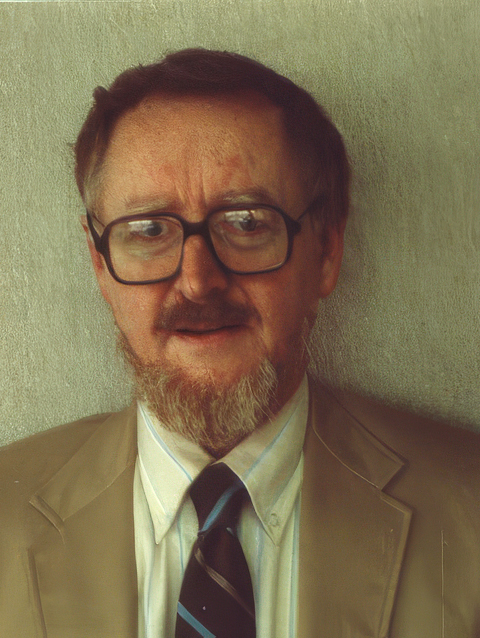
Richard H. Hall did not enter UAP history through an encounter of his own. A Washington Post profile based on interviews with his associates reported that he never claimed to have seen a UAP and never described an abduction experience. His importance came from a different kind of contact: thousands of reports were entrusted to NICAP during the years in which Hall helped manage its investigative and archival system. (Rojas, 2009)
Hall’s career poses an intriguing question. What role does a historian and archivist play in the study of contact and abduction experiences?
The answer lies in the fragile life of testimony. An unusual event may last seconds, yet everything researchers later believe about it depends on what happens next. Was the witness interviewed promptly? Were multiple observers questioned separately? Was the first sketch preserved? Did later investigators distinguish the original account from hypnosis, dreams, media retellings and evolving personal interpretation?
Hall spent much of his life trying to preserve that evidentiary sequence.
As a researcher, editor and administrator with the National Investigations Committee on Aerial Phenomena, better known as NICAP, Hall helped turn a civilian advocacy organization into an extensive network for receiving, comparing and archiving UAP reports. He was not primarily an abduction therapist, regression hypnotist or clinical investigator. His contribution to experiencer research was historical and methodological. He helped create a record against which later interpretations could be tested.
That distinction makes Hall especially relevant today. He showed that respecting a witness does not require accepting every explanation attached to the experience. Testimony can be credible while origin remains uncertain. Physical symptoms can be genuine while causation remains unproved. A case can resist conventional attribution without becoming proof of extraterrestrial visitation.
From New Orleans to NICAP
Hall became interested in unexplained aerial reports while serving in the U.S. Air Force during the early 1950s. He later studied at Tulane University, initially focusing on mathematics before changing his major to philosophy. In 1957, while still in New Orleans, he briefly published a newsletter called Satellite. He also wrote to retired Marine Corps Major Donald Keyhoe, one of the most prominent public advocates for civilian UAP investigation. Hall graduated in June 1958 and moved to Washington, D.C., where Keyhoe was directing NICAP. Hall later recalled that this decision began an undertaking that would dominate the rest of his life. (Hall, 1994)
Hall’s early experience at NICAP reveals much about his investigative temperament. In his own historical account, he recalled finding an organization divided over sensational contactee narratives. Some participants were willing to accept claims of meetings with benevolent space visitors with little critical examination. Hall worried that NICAP could become a credulous fan organization rather than a serious investigative body.
He raised the issue directly with Keyhoe. Hall was soon hired part-time and later became a full-time employee. He initially performed nearly every kind of office task, from correspondence and filing to routine maintenance. More importantly, he began developing the structure through which NICAP would receive and assess cases. (Hall, 1994)
Hall served in several capacities over the following years, including as Keyhoe’s assistant, organizational secretary, researcher, editor and assistant director. Calling him simply a “NICAP historian” captures his later archival work but understates his operational importance. He helped build the organization whose history he would eventually document.
Building a national investigative network
NICAP already had local affiliates when Hall arrived, but he helped transform that loose structure into a more formal subcommittee network. According to Hall’s account, local teams seeking NICAP recognition were expected to include people with varied scientific or professional skills and to follow agreed investigative procedures.
Hall also expanded NICAP’s Panel of Special Advisers. By 1964, he reported that the panel included 32 consultants in fields such as physics, chemistry, astronomy, aviation, engineering, aerospace, geology and photography. Investigators could consult these specialists when a case raised technical questions outside their own expertise. (Hall, 1994)
This was not a flawless scientific system. NICAP was a membership-supported civilian organization with limited funding, uneven local resources and investigators of varying experience. Reports often arrived after evidence had disappeared. Distance and speed estimates were frequently subjective. Medical testing, radar records and meteorological data were not always available.
Even so, Hall’s work can reasonably be interpreted as helping civilian UAP research move toward structured comparison. Instead of treating every report as an isolated marvel, NICAP attempted to record recurring features: object form, duration, movement, apparent response to aircraft, sound, radar detection, electrical interference, physical traces and physiological effects.
For experiencer research, the model offered an essential lesson. A witness’s social standing or sincerity is only one part of the evidence. Investigators must also ask what the witness was positioned to observe, which details were recorded contemporaneously and which elements are independently corroborated.
The UFO Evidence: Hall’s defining publication
Hall’s most consequential NICAP work was the 1964 report historically titled The UFO Evidence. Donald Keyhoe contributed introductory material, and NICAP’s Board of Governors endorsed the principal conclusions, but Hall was the report’s compiler and editor. His name and the date May 1964 appear at the end of the introductory statistical summary. (Hall, 1964)
The report was deliberately selective. Hall considered more than 5,000 signed reports, together with hundreds of newspaper and periodical accounts, before selecting 746 incidents. The main chronology contained 575 cases. Another 171 reports appeared in separate chronologies covering major concentrations of sightings. Hall wrote that trained or experienced observers were involved in approximately half of the 575 principal cases. The UFO Evidence, abstract and introduction, preliminary pages ii–iii. (Hall, 1964)
These figures have sometimes been used as though they represented the general population of UAP sightings. They do not. Hall assembled an evidentiary brief, not a random statistical sample. The report concentrated on cases NICAP considered unusually credible, detailed or difficult to explain. It therefore cannot establish what proportion of all reports involve genuinely anomalous phenomena.
Its value lies elsewhere.
Hall grouped reports according to evidentiary characteristics rather than relying solely on chronology. Separate sections considered military witnesses, pilots, scientists, engineers, police officers, radar observations, photographs, vehicle interference, physical traces and physiological effects. The report also examined recurring appearance and behavior patterns. (Hall, 1964)
Hall was, in effect, turning an inconsistent archive into a comparative dataset. The available records were imperfect, but the organizing question was sound: do independently reported incidents share enough characteristics to justify treating some of them as a distinct problem?
NICAP’s answer was yes. Its board proposed that a residual group of reports represented physical and artificial objects under intelligent control. The report presented extraterrestrial origin as plausible, not as established fact. Hall’s evidence could support continued investigation of unexplained cases. It could not uniquely establish who or what produced them. The UFO Evidence, abstract and Board of Governors statement, preliminary pages i–ii. (Hall, 1964)
The report also rejected the automatic fusion of physical UAP reports with religious or spiritual contact narratives. Hall stated that NICAP had not found adequate evidence for widely circulated stories of journeys aboard flying craft. This early position was notably cautious. His later publications became more willing to examine entity and abduction testimony, but Hall initially wanted NICAP’s physical-case argument judged independently of sensational contact claims. The UFO Evidence, introduction, preliminary page i. (Hall, 1964)
Case study: Waldo Harris over Utah Central Airport
One of the reports Hall presented in the opening section of The UFO Evidence involved private pilot Waldo J. Harris. On October 2, 1961, Harris was preparing to depart Utah Central Airport near Salt Lake City when he noticed a bright object in the distance.
Harris initially assumed that sunlight was reflecting from an aircraft. After taking off, he noticed that the light remained in approximately the same position. He flew closer and reported seeing an object without wings, a tail or visible control surfaces. He described it as disc-shaped, metallic-looking and apparently hovering with a rocking motion.
According to the signed NICAP report, Harris estimated its diameter at 50 to 55 feet. He believed he approached within approximately two miles. The object reportedly rose as he closed in, moved several miles away, hovered again and then departed rapidly during his second approach. Harris narrated his observations over the airport radio while ground personnel questioned him. He reported that eight to ten people at Utah Central also observed the object. The UFO Evidence, Section I, pp. 1–2. (Hall, 1964)
The Harris case illustrates both the attraction and limitation of professional-witness reports.
A pilot is familiar with aircraft forms, traffic patterns and ordinary flight behavior. Harris also communicated during the event, which is preferable to an account reconstructed years later. Ground witnesses support the claim that something unusual was visible in the reported area.
Yet Harris’s estimates were not calibrated measurements. An observer who does not know an object’s true distance cannot reliably calculate its size or speed. Even an experienced pilot can misjudge unfamiliar objects against a largely featureless sky. The ground witnesses would add greater evidentiary value if their original, independent statements could be examined alongside Harris’s account.
Hall’s archive therefore preserves a credible and unusual report, not a demonstrated extraterrestrial vehicle. That distinction is exactly what responsible experiencer research must maintain.
Case study: Levelland and converging vehicle reports
The incidents around Levelland, Texas, during the night of November 2–3, 1957, became central to NICAP’s argument because several motorists independently reported luminous objects and unusual vehicle failures within a relatively small area.
NICAP’s chronology listed ten broadly similar reports in less than three hours within approximately 20 miles of Levelland. The witnesses included farm worker Pedro Saucedo, Newell Wright, Jim Wheeler, José Alvarez, Ronald Martin, James Long, local motorists and law-enforcement personnel. The UFO Evidence, Section XII, pp. 163 and 168–169. (Hall, 1964)
Saucedo reported seeing a flash of light in a field before a torpedo-shaped object rose and approached his truck. He said the truck’s engine and lights failed and that the object passed overhead with heat, wind and a thunder-like sound. The lights reportedly returned after it moved away.
Wheeler described a brightly illuminated, egg-shaped object on or near the road. He said his engine and headlights stopped operating as he approached and returned after the object rose. Wright reported that his ammeter fluctuated before his engine and lights failed. After checking beneath the hood, he noticed a luminous oval object ahead of the car. He said the vehicle restarted after the object departed. Martin and Long reported related sequences involving illuminated objects and electrical failure. The UFO Evidence, Section XII, pp. 168–169. (Hall, 1964)
Sheriff Weir Clem and a deputy later reported seeing an oval red light while investigating the calls. Their observation does not independently verify the objects described by every motorist, but it adds a law-enforcement sighting to the broader sequence.
The strength of Levelland is cumulative. The accounts share a general pattern while retaining differences one would expect from separate observers. The weakness is the absence of controlled measurements. Investigators did not obtain synchronized electromagnetic readings, instrumented vehicle examinations or environmental sampling during the events.
The association between the luminous objects and vehicle failures is therefore documented as witness testimony, not established as a proven electromagnetic mechanism. A vehicle can fail for ordinary reasons, and stress may affect how a witness reconstructs the sequence. At the same time, explaining the cluster requires addressing the repeated timing claimed by several people rather than treating each account in isolation.
The Levelland UAP incident remains a useful case study in how converging testimony can increase evidentiary interest without resolving causation.
Case study: Leita Kuhn and physiological uncertainty
Hall also catalogued reports in which witnesses described physical symptoms after close encounters. Among them was Leita Kuhn’s November 10, 1957, experience near Madison, Ohio.
Kuhn told NICAP that she stepped outside during a snowy night and noticed that the sky had become unusually bright. She then reported seeing a large glowing object at low altitude. The NICAP account associated the incident with eye problems, a skin eruption and other physiological effects. The UFO Evidence, Section VIII, pp. 76–77, and Section XII, p. 166. (Hall, 1964)
The historical record verifies that Kuhn made the report and described symptoms. It does not establish that a UAP caused those symptoms.
A responsible medical assessment would require contemporaneous clinical records, information about her prior health, environmental testing, a defensible estimate of exposure and evaluation of alternative causes. Intense light, chemicals, heat, stress, infection and unrelated medical conditions could produce some of the reported effects.
This does not mean Kuhn imagined her symptoms. It means that temporal sequence is not sufficient to demonstrate causation.
Hall’s inclusion of the report is important because it preserved a category of testimony that official and civilian researchers often handled poorly. Some dismissed physiological claims without investigation. Others converted them immediately into evidence of exotic radiation or directed energy. Hall’s archive makes the report available while leaving later researchers responsible for judging its evidentiary limits.
That is a useful model for working with experiencers today. Investigators should document symptoms promptly, obtain consent before sharing medical information, preserve original records and avoid announcing a cause before ordinary explanations have been assessed.
Betty and Barney Hill: Hall’s indirect role
Hall’s place in abduction history is clearest in the Betty and Barney Hill case, although he was not its principal field investigator.
The Hills reported a close encounter while driving through New Hampshire on September 19–20, 1961. Their initial account involved a luminous object that appeared to follow or approach their vehicle. Barney Hill reported observing figures through what he interpreted as windows. The more elaborate abduction account emerged later, particularly through dreams and hypnotic sessions.
NICAP assigned astronomer and investigator Walter N. Webb to examine the case. The surviving NICAP archive is a directory containing multiple documents rather than a single continuously dated report. It includes Webb’s initial investigation, later case materials, correspondence and follow-up documentation from different stages of the case. The directory preserves the separation between the early sighting report and later developments. (NICAP Hill case directory)
Hall’s role was primarily organizational and archival. He helped operate the structure through which investigators such as Webb received cases, consulted specialists and preserved their reports. This distinction matters because Hall should not be presented as having personally investigated every prominent NICAP case.
The Hill record also demonstrates why chronology matters in experiencer research. The earliest account, later dreams, hypnotic recollections, published interpretations and decades of cultural influence are not interchangeable forms of evidence. Each layer should be preserved separately.
Laboratory research has shown that hypnosis can create convincing pseudomemories in highly hypnotizable participants. A later meta-analysis found that hypnotized participants could produce more uncued errors and pseudomemory while expressing greater confidence, although the effects on accurate recall were mixed. Hypnosis may therefore increase reported recollection and confidence, but it can also increase pseudomemory and uncued errors. Hypnotically elicited material requires independent corroboration. (Laurence & Perry, 1983; Steblay & Bothwell, 1994)
A later memory may be sincere and psychologically meaningful without being a literal reconstruction of an event. Hall’s archival approach provides a practical safeguard: retain the earliest statement so later additions can be identified rather than silently folded into the original story.
The case is examined in greater depth in The Betty and Barney Hill Abduction and Missing Time in UAP Studies.
From contactee skepticism to abduction history
Hall’s approach to contact claims evolved over time.
In the 1950s and early 1960s, he strongly resisted uncorroborated stories of friendly visitors, spiritual teachings and interplanetary journeys. His concern was partly evidentiary and partly strategic. He believed sensational claims could obscure reports supported by multiple witnesses, radar contacts or physical effects.
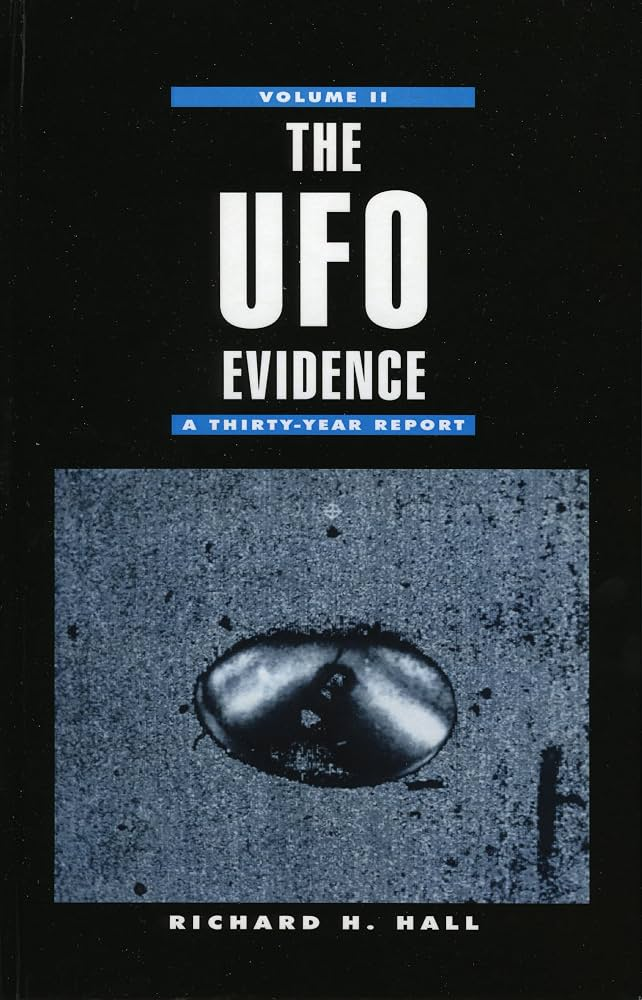
By the time he published Uninvited Guests: A Documented History of UFO Sightings, Alien Encounters & Coverups in 1988, Hall was treating reported beings, close encounters and abductions as part of the historical record. His 2001 reference work, The UFO Evidence: A Thirty-Year Report, Volume II, included sections devoted to landings, occupants, alien-human encounters and the abduction phenomenon. (Hall, 1988; Hall, 2001)
This did not make Hall a regression practitioner. His method remained comparative. Rather than attempting to recover an individual’s hidden memories, he examined whether reports separated by time and geography contained recurring structures.
Such comparison can reveal patterns, but the patterns do not interpret themselves. Similarities may indicate a common external phenomenon. They may also arise from popular culture, shared expectations, interviewer influence, common neurological experiences or repeated exposure to established narratives.
Hall’s value lies less in resolving that debate than in preserving the material required to conduct it.
NICAP and the Condon study
NICAP spent years pressing for a larger scientific investigation of UAP reports. When the U.S. Air Force funded a University of Colorado project under physicist Edward Condon in 1966, Hall and Keyhoe initially cooperated.
The Condon Report records that Keyhoe and Hall briefed project personnel and identifies Hall’s The UFO Evidence as a useful reference. It also describes an Early Warning Network consisting of approximately 60 volunteer field reporters, many connected with NICAP or the Aerial Phenomena Research Organization. These volunteers provided rapid notification and sometimes conducted preliminary investigations before Colorado personnel reached the location. The project acknowledged that some of this cooperation was valuable. Scientific Study of Unidentified Flying Objects, Section II, §8; Section III, Chapter 1; Appendix W. (Condon & Gillmor, 1969)
Hall’s own 1994 historical account adds that approximately 15 to 20 NICAP subcommittees participated in the network. He wrote that he attended project briefings, served briefly as a consultant, delivered a detailed Portage County investigation to Condon and helped arrange the copying and submission of NICAP case files. (Hall, 1994)
These details should be read with source awareness. The Condon Report is the project’s institutional record. Hall’s later account is first-person testimony from a participant who became a strong critic of the study. The two sources agree that NICAP personnel supplied reports and participated in the early-warning system, although they differ sharply in their interpretation of the relationship.
The cooperation deteriorated during 1967 and 1968. Hall wrote that NICAP became increasingly concerned about Condon’s public comments and the handling of submitted cases. NICAP formally ended its organizational cooperation in May 1968. (Hall, 1994)
The published Condon Report offered a more adversarial characterization. It accused NICAP of attempting to influence the study and later attacking it when those efforts failed. At the same time, the report acknowledged that NICAP-connected volunteers had provided useful field support. Scientific Study of Unidentified Flying Objects, Section II, §8. (Condon & Gillmor, 1969)
This disagreement should not be flattened into a simple contest between heroic civilians and dismissive officials. The two organizations had different assumptions, institutional pressures and standards for interpreting unresolved cases. NICAP believed repeated high-quality reports justified sustained investigation. Condon concluded that further study was unlikely to produce major scientific discoveries.
The report’s conclusion influenced the Air Force’s decision to terminate Project Blue Book in 1969. According to the U.S. National Archives, Blue Book received 12,618 reports, of which 701 were classified as unidentified. The Air Force concluded that the investigated cases showed no national-security threat, no evidence of technology beyond contemporary scientific knowledge and no evidence that the unidentified reports represented extraterrestrial vehicles. (National Archives)
Those are institutional conclusions, not individual explanations for all 701 cases. An unidentified classification does not prove an extraordinary origin. It also does not mean the case was successfully resolved.
The history is explored further in The Condon Report and Project Blue Book.
Hall’s publications and historical impact
Hall’s publications document the gradual expansion of civilian UAP research.
The Challenge of Unidentified Flying Objects, co-authored with Charles A. Maney in 1961, argued that the subject deserved more serious scientific consideration. The 1964 The UFO Evidence became his central methodological work, presenting selected reports by witness type and evidentiary characteristic.
Uninvited Guests, published in 1988, broadened the historical scope to include close encounters, reported entities, abduction claims and allegations of official concealment. The UFO Evidence: A Thirty-Year Report, Volume II, published in 2001, extended the earlier case catalogue across subsequent decades. (Hall, 1988; Hall, 2001)
Hall also edited the Journal of UFO History, which concentrated on archival reconstruction, organizational history and neglected cases. Its surviving index identifies Hall as editor and reflects his belief that UAP research required institutional memory.
His work can reasonably be interpreted as helping establish a comparative and archival tradition within civilian UAP studies. That is a historical assessment rather than a measurable scientific result. Hall did not invent standardized case reporting, nor did his methods achieve the precision of modern calibrated sensor systems. What he did was demonstrate the value of preserving witness provenance, separating case types and comparing reports across time.
Without that archival discipline, the same cases are repeatedly rediscovered, simplified and retold until later versions replace the original record.
Controverters and methodological criticism
Hall’s conclusions attracted criticism from several directions.
Astronomer Donald Menzel and Air Force public-information officer Lawrence Tacker argued that UAP reports could generally be attributed to conventional objects, atmospheric effects, astronomical sources and perceptual error. Hall explicitly directed readers to their books in The UFO Evidence, acknowledging that serious evaluation required access to competing interpretations. The UFO Evidence, introduction, preliminary pages ii–iii. (Hall, 1964)
Later critics emphasized the residual-case problem. Any large collection of imperfect observations will contain reports that cannot be resolved because essential information is missing. The existence of an unexplained percentage does not by itself establish unknown technology.
That criticism is sound, but it does not eliminate Hall’s research question. A residual case may reflect incomplete data, yet a recurring set of well-documented residual cases could still contain a genuine anomaly. The task is to develop methods capable of distinguishing those possibilities.
Selection bias presents another concern. Hall assembled strong cases to argue that further investigation was warranted. The collection was not designed to measure the prevalence of anomalies among all reports. Researchers cannot infer from the 746 selected incidents that most reported UAP were extraordinary.
Witness expertise must also be handled carefully. Pilots and engineers may be better equipped to describe certain technical aspects of an observation, but professional status does not make anyone immune to perceptual error. Expertise should increase evidentiary weight only where the witness’s training is relevant to the specific observation.
Finally, Hall’s movement from unexplained reports to intelligently controlled objects was an interpretive step. Apparent purposeful movement, structured form or response to aircraft may support that hypothesis, but such observations do not uniquely establish a living operator or extraterrestrial origin.
Implications for experiencer research
Hall’s work suggests that experiencer investigation should begin with preservation rather than interpretation.
The first account should be stored intact. Later memories, hypnotic material, dreams and researcher commentary should be recorded as subsequent layers. An investigator should never quietly merge them into a single narrative.
Observation should be separated from inference. “The light moved across the road” is a reported observation. “The craft deliberately blocked my vehicle” is an interpretation. “The engine stopped while the light was present” describes the sequence. “The object disabled the engine” proposes causation.
Multiple witnesses should be interviewed separately before discussing the event together. Agreement documented independently has greater evidentiary value than agreement reached after a shared conversation.
Medical claims require clinical caution. Investigators should obtain consent, preserve privacy, seek qualified medical assessment and avoid treating an unusual symptom as proof of unknown radiation or technology.
Hypnotically elicited material should be treated as a distinct evidentiary category rather than as recovered fact. It may contain meaningful subjective experience, but hypnosis can also generate pseudomemory, uncued errors and increased confidence. Independent corroboration remains essential. (Laurence & Perry, 1983; Steblay & Bothwell, 1994)
Explained cases should remain in the database alongside unresolved ones. A collection containing only mysteries cannot reveal which features distinguish an anomaly from a conventional misidentification.
Most importantly, investigators should be willing to conclude that a case remains unresolved. That classification is not a failure. It is often the most accurate description of the surviving evidence.
Why Richard Hall still matters
Yet his central insight survives those limitations. A subject cannot be evaluated responsibly when testimony is ridiculed, original records disappear and institutional conclusions exceed the quality of the collected data.
For experiencers, Hall’s legacy is particularly useful. Listening seriously does not mean suspending judgment. Questioning an explanation does not mean humiliating the witness. A person may be honest, competent and deeply affected while the origin of the experience remains unknown.
Richard Hall was not a contactee, abductee or therapist. He was a researcher, editor, organizer and historian who built a place for anomalous testimony within the evidentiary record.
Without that work, many experiences would have survived only as stories. Because of it, there remain cases that can still be questioned.Hall did not solve the UAP question. He did something less spectacular and perhaps more durable. He helped make the evidence retrievable.
A sighting may last half a minute. A close encounter may leave a witness confused for decades. The value of the report depends on whether someone preserves the first account, documents the conditions, separates observation from interpretation and keeps the case available for later review.
Hall sometimes moved beyond what his evidence could conclusively demonstrate. His extraterrestrial interpretation remains unverified, and his selected case collections cannot represent the entire population of reports.
Evidence assessment and claims taxonomy
Verified
Hall moved to Washington in 1958 and worked closely with Donald Keyhoe at NICAP. He served as a researcher, editor, administrator and organizer. He helped build NICAP’s subcommittee and advisory networks and compiled the 1964 The UFO Evidence. (Hall, 1994; Hall, 1964)
The report contained 746 selected sightings, including 575 cases in its principal chronology and 171 in separate wave chronologies. Hall later published Uninvited Guests in 1988 and The UFO Evidence: A Thirty-Year Report, Volume II in 2001. He also edited the Journal of UFO History. (Hall, 1988; Hall, 2001; Journal of UFO History index)
NICAP-connected volunteers participated in the Colorado project’s Early Warning Network. (Condon & Gillmor, 1969)
The historical existence of the Harris, Levelland and Kuhn reports is documented in Hall’s 1964 volume. The historical existence of the Hill investigation is documented in the NICAP Hill case directory and Walter Webb materials. Verification of these reports’ existence does not verify the identities or origins of the phenomena described. (Hall, 1964; NICAP Hill case directory)
Probable
Hall probably exerted substantial influence on the archival and comparative methods used by later civilian UAP historians. His organizational work also probably preserved witness material that would otherwise have been lost. The precise extent of that influence cannot be quantified from the surviving record.
Disputed
Hall’s conclusion that the strongest residual cases represented artificial objects under intelligent control remains disputed. His preference for an extraterrestrial explanation was a hypothesis, not a demonstrated result.
The alleged causal connection between luminous objects and vehicle failures at Levelland remains disputed. The same applies to claims that Kuhn’s symptoms were caused by UAP exposure.
The historical accuracy of memories produced under hypnosis in abduction cases remains disputed and should be evaluated separately from contemporary witness statements.
Legend
Hall’s career and publications are historically documented and do not belong in this classification. Legend may apply to later cultural retellings of famous cases when details cannot be traced to the earliest records.
Misidentification
Hall and NICAP acknowledged that many reports involved aircraft, astronomical objects, balloons, atmospheric phenomena and other conventional sources. A particular case should be classified as a misidentification only when the proposed source adequately matches its timing, position, appearance and behavior.
Hoax
There is no credible evidence that Hall deliberately fabricated his principal publications or the NICAP archive. Individual reports may have involved intentional deception, but that classification requires affirmative evidence of purposeful deceit.
Speculation labels
Hypothesis
Hall hypothesized that a residual category of reports involved physical, artificial objects displaying intelligent control. He considered extraterrestrial origin plausible. The archival evidence does not uniquely establish either proposition.
Witness Interpretation
Harris interpreted the object he observed as a structured craft with extraordinary performance. Levelland witnesses associated luminous objects with vehicle failures. Kuhn associated her symptoms with her encounter. The Hills interpreted parts of their experience as contact with non-human beings. These interpretations are historically relevant but remain distinct from verified mechanisms or origins.
Researcher Opinion
Hall believed official secrecy, inadequate investigation and dismissive public policy had obstructed UAP research. The assessment that his archival work anticipated aspects of modern standardized reporting is also researcher opinion, supported by the structure of his case collections but not equivalent to a scientific finding.
References
Condon, E. U., & Gillmor, D. S. (Eds.). (1969). Scientific study of unidentified flying objects. University of Colorado. Section II, §§4 and 8; Section III, Chapter 1; Appendix W. https://files.ncas.org/condon/
Hall, R. H. (Ed.). (1964). The UFO evidence. National Investigations Committee on Aerial Phenomena. Abstract and introduction, preliminary pp. i–iii; Section I, pp. 1–2; Section VIII, pp. 76–77; Section XII, pp. 163, 166, and 168–169. https://www.nicap.org/ufoe/UFO%20Evidence%201964.pdf
Hall, R. H. (1988). Uninvited guests: A documented history of UFO sightings, alien encounters & coverups. Aurora Press. https://archive.org/details/uninvitedguestsd0000hall
Hall, R. H. (1994). The quest for the truth about UFOs: A personal perspective on the role of NICAP. Proceedings of the MUFON International UFO Symposium. https://www.nicap.org/papers/hall-IUR1994.htm
Hall, R. H. (2001). The UFO evidence: A thirty-year report, volume II. Scarecrow Press. https://books.google.com/books/about/The_UFO_Evidence.html?id=GZVTAAAAMAAJ
Laurence, J.-R., & Perry, C. (1983). Hypnotically created memory among highly hypnotizable subjects. Science, 222(4623), 523–524. https://doi.org/10.1126/science.6623094
Maney, C. A., & Hall, R. H. (1961). The challenge of unidentified flying objects. Privately published.
National Archives and Records Administration. (n.d.). Project BLUE BOOK: Unidentified flying objects. Accessed July 20, 2026. https://www.archives.gov/research/military/air-force/ufos
Rojas, R. (2009, August 23). “Dean” of UFO studies devoted life to seeking others beyond Earth. The Washington Post. https://www.washingtonpost.com/archive/local/2009/08/23/dean-of-ufo-studies-devoted-life-to-seeking-others-beyond-earth/bf9657a2-c24b-4832-8417-ab86adab090e/
Steblay, N. M., & Bothwell, R. K. (1994). Evidence for hypnotically refreshed testimony: The view from the laboratory. Law and Human Behavior, 18, 635–651. https://doi.org/10.1007/BF01499329
Webb, W. N. (1961). Initial investigation materials concerning the Betty and Barney Hill encounter. In Betty and Barney Hill case directory, case 610919. National Investigations Committee on Aerial Phenomena historical archive. https://nicap.org/610919indianhead_dir.htm
Webb, W. N. (1961–1965). Follow-up reports, correspondence and later case materials concerning the Betty and Barney Hill encounter. In Betty and Barney Hill case directory, case 610919. National Investigations Committee on Aerial Phenomena historical archive. https://nicap.org/610919indianhead_dir.htm
Journal of UFO History. (n.d.). Index of issues edited by Richard H. Hall. NICAP historical archive. https://www.nicap.org/jufoh/JUFOH_Index.htm
SEO keywords
Richard Hall, Richard H. Hall, NICAP historian, NICAP researcher, NICAP editor, UAP experiencer research, UAP witness testimony, The UFO Evidence 1964, The UFO Evidence Volume II, Uninvited Guests Richard Hall, Donald Keyhoe, Betty and Barney Hill, Walter Webb investigator, Levelland UAP incident, Waldo Harris UAP sighting, Leita Kuhn case, UAP vehicle interference, physiological effects of UAP, civilian UAP investigation, Condon Report, Project Blue Book, UAP archival research, UAP case methodology, contact and abduction research